
Qwertyman for Monday, September 7, 2026
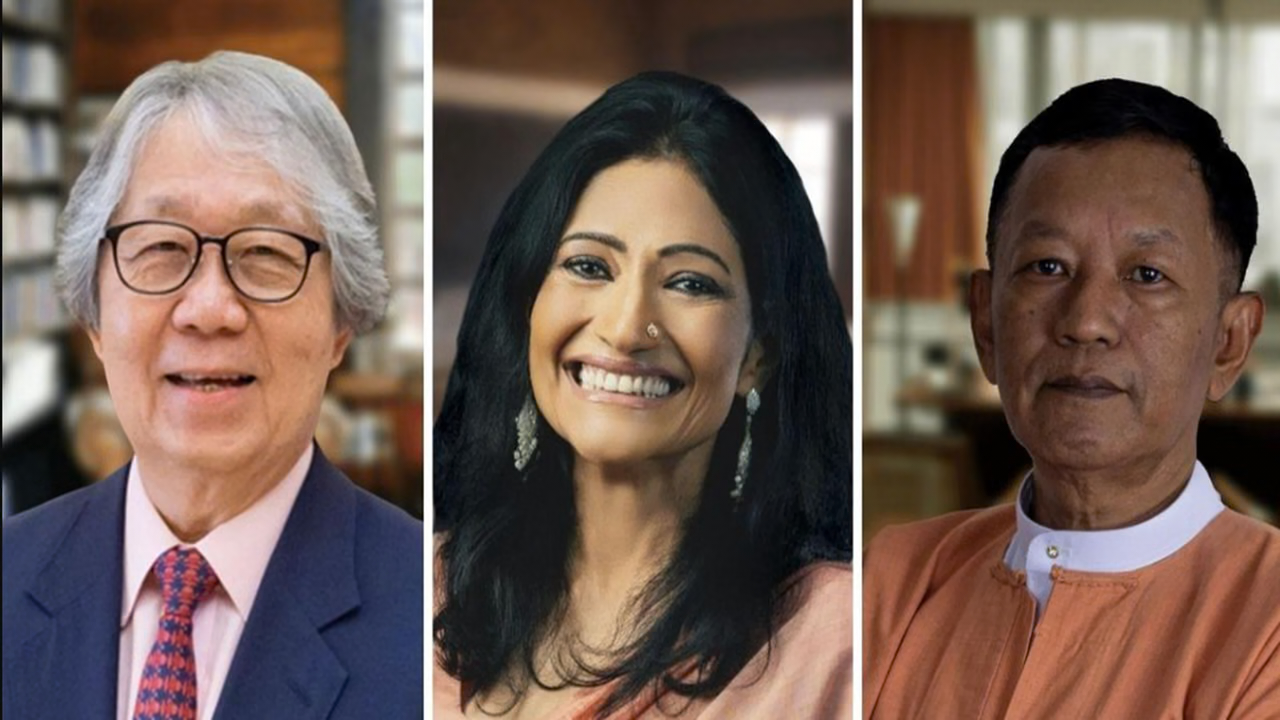
WITH THE announcement last week of its three new laureates for 2026, the Ramon Magsaysay Awards Foundation (RMAF) once again drew attention to that transcendent quality so sorely lacking in our public life today: “greatness of spirit,” the standard by which RM awardees are measured—a greatness achieved, but not aspired for.
This year’s awardees exemplify that spirit abundantly.
Twice imprisoned by Burma’s military junta for his work in the resistance, Bo Kyi fled to Thailand after his second release in 1998. But rather than simply fend for himself or seek a new life away from politics, Bo Kyi met with his fellow refugees and organized the the Assistance Association for Political Prisoners (AAPP), on the founding principle that “As long as political prisoners exist inside Burma, Burma will not be free.”
The AAPP documents these prisoners—it’s estimated that since 2021 when the military regained power in a coup after a brief civilian interlude, the junta has arrested over 30,000 people, releasing only half of them. As many as 100,000 may have been killed.
It is against these atrocities that Bo Kyi and the AAPP are crying out and mobilizing, providing support to the prisoners and their families, and raising the situation in Myanmar to global attention, knowing that the Burmese people are hardly alone in their plight. Honoring him, the RMAF board of trustees said that “His enduring commitment reflects extraordinary moral courage, personal sacrifice, and an unwavering belief that democracy and human dignity are always worth defending—and that even in the face of oppression, the truth must be told, justice must be pursued, and the freedom to believe must be upheld and defended at all costs.”
The second awardee could not have been more different from Bo Kyi in her circumstances. Born to a family of privilege in Bangladesh, Runa Khan (not to be confused with the movie star of the same name) could have remained in what she calls a “glass bubble”—but instead she chose to immerse herself in the lives of Bangladesh’s poorest and most vulnerable communities, the dwellers of the char.
In Bangladesh, chars are essentially temporary islands or sandbars formed by deposits at the delta of the country’s three great rivers—the Ganges, the Brahmaputra, and the Meghna. While these rivers give the country life, they also, along with the sea, bring terrible floods and disasters. Thus, literally and figuratively, the char people live on shifting sand, ever subject to the vagaries of the weather and climate change, and largely neglected by everyone else.
Runa stepped in to help meet their needs—first, with a hospital ship in 2002. But realizing the challenge was far too great to be met alone, she organized an NGO named Friendship Bangladesh to bring social services, education, and employment to the char, and thereby also dignity and hope to its people. The RMAF trustees noted that “In her hands, privilege became not an entitlement, but a responsibility; not a family legacy to protect, but a gift to be shared.”
The third honoree comes from a small Southeast Asian country now associated with wealth and influence, but when Tommy Koh was born in 1937, it was far from that, a colonial backwater with no mind or destiny of its own. Over his lifetime, Tommy would see all of that change—and be part of the change himself, articulating Singapore’s voice and vision at the United Nations as its youngest ambassador at 29.
That exposure would lead to larger and more significant contributions for Koh in international affairs—most especially in what we now know as the Law of the Sea, which he helped to nurse within the UN from a negotiating committee he chaired in 1978 to its adoption as a UN convention in 1982. This law is what maritime countries such as the Philippines are now holding on to in their definition and defense of their territorial waters, especially against the encroachments of larger and more powerful nations.
But beyond diplomacy, Tommy Koh has made sure that a new generation of Singaporeans could take over from where he and his peers have left off, through legal education and through his many advocacies, which include the rights of the disabled and even animal welfare. The Magsaysay trustees observed that “Through his steadfast faith in dialogue, the rule of law, and international cooperation, he has helped make peaceful coexistence possible in a world of unequal power.”
There are good reasons why the Ramon Magsaysay Awards—unlike even the Nobel Prize to which it is often compared—studiously avoid serving politicians when it considers possible laureates. Foremost, I would surmise, is that politicians are elected and paid to serve, so that whatever great social good they do was exactly what they promised and signed up for, and doesn’t need to be rewarded.
It’s a sign of the times that as soon as I say this, some worthy Filipino politicians leap to mind, basically because they are exceptionally honest, hardworking, intelligent, and selfless—qualities which, come to think of it, should be par for the course, but now so rare that we feel blessed to find even just a few still standing upright in a pit full of reptiles and roaches. So shamelessly hungry for recognition are these lower creatures that they plaster their names and faces on billboards for projects they probably stole from, and yet so dense and dislocated that they would wear designer outfits to flood-relief sorties.
Measure that against the Magsaysay awardees—and yes, Ramon Magsaysay himself—and understand why we Filipinos continue to be hounded by injustice, poverty, and despair (not to mention flash floods). If there’s a Pinoy out there with the greatness of spirit to keep our poorest safe, dry, and amply fed in this season of storms, he or she would be my next nominee for the Magsaysay, with possible sainthood to follow.
(Photo from news9live.com)

