
Penman for Sunday, August 6, 2023
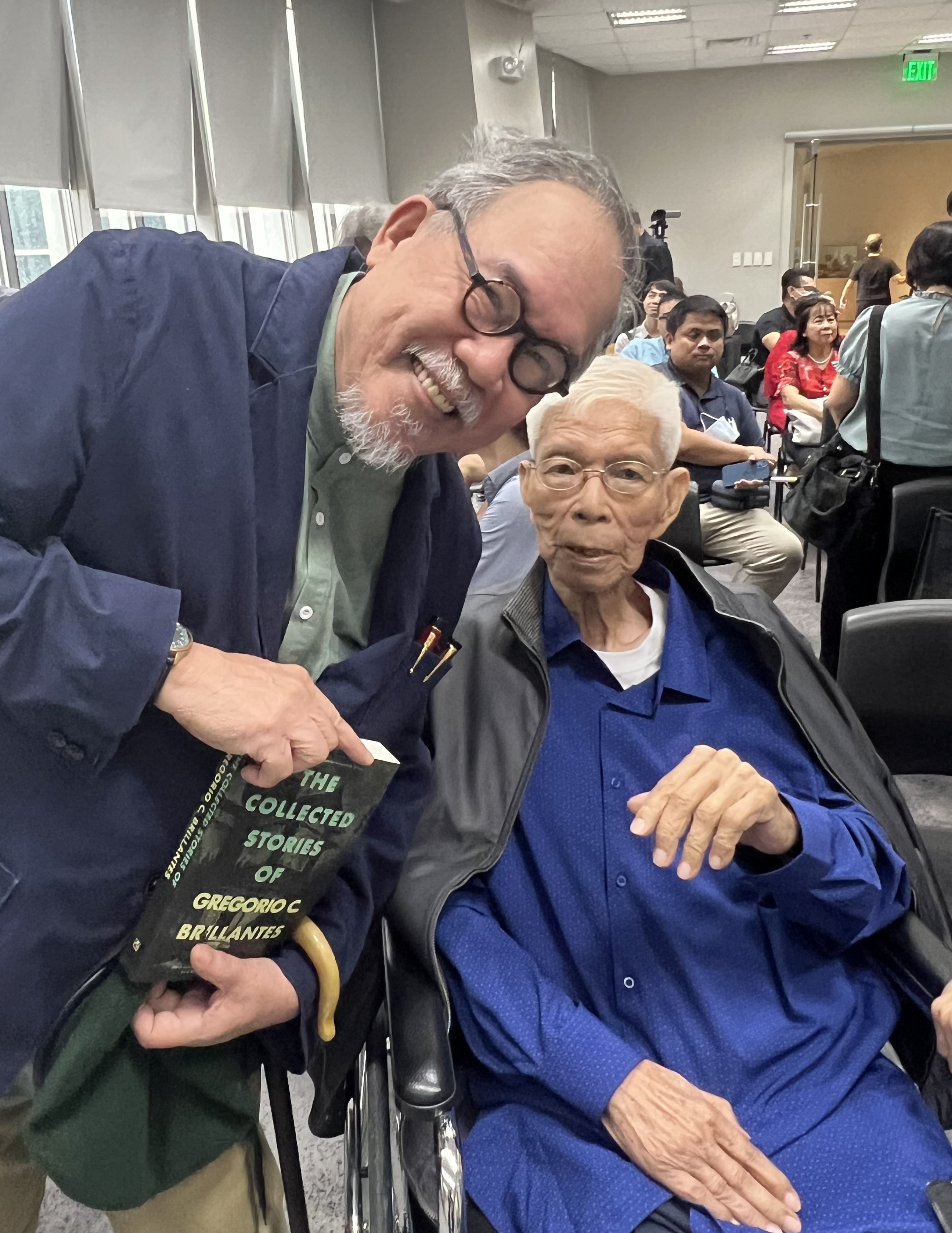
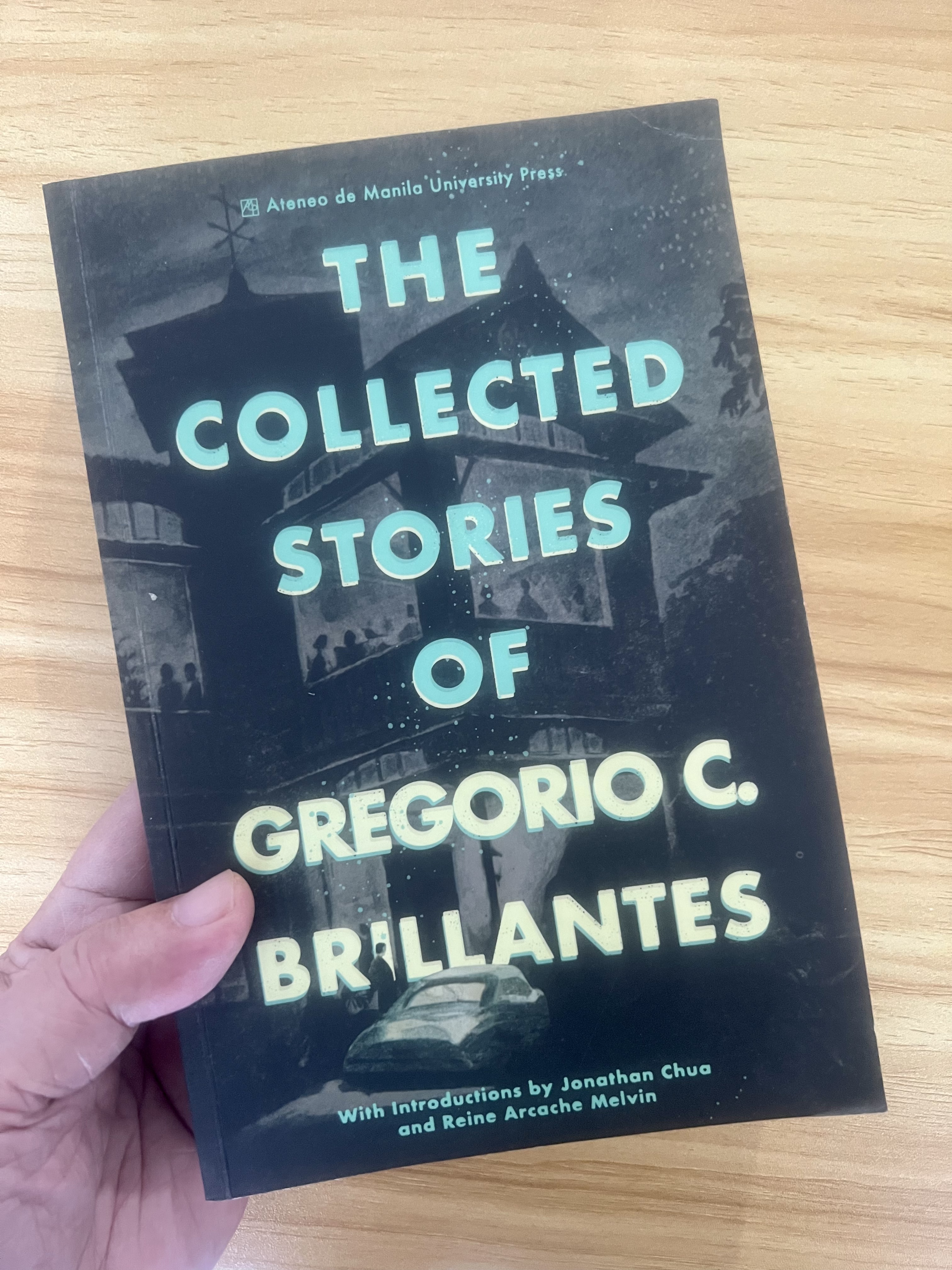
I’VE OFTEN written about how Gregorio C. Brillantes has been the bane of my writing life, a fellow short story writer and Palanca Hall of Famer whom I never had the pleasure of seeing in second place after me (the reverse has been the natural order of things). When the Ateneo Press recently launched his Collected Stories and asked me to speak at the event, I felt like a jealous juvenile again at 69, with the 90-year-old Greg in a wheelchair in front of me, and cheekily boasted that, at last, I had one over him: his collection had 39 stories while mine (Voyager and Other Fictions, 2019) had 44.
Of course, it was a hollow boast, because any one of Greg’s stories is easily worth two or three of mine. That’s how highly I hold this man in my esteem, and why I wrote this blurb for him: “Few writers turn me into a blushing fan. Gregorio C. Brillantes is one of them. Like his papal namesake Gregory the Great, who wrote a massive 35-volume commentary on the Book of Job, Greg Brillantes has been an untiring and unsparing chronicler of his time and place…. His fiction is infused with power and luminosity; he surprises, but never screams.”
In an art card that Ateneo Press used to promote the book, I said further: “More than a master of language, Gregorio Brillantes is a master of our Filipino sense and sensibility, particularly those parts we find hard to put into words or to recognize as our truest selves. We see life in his stories as through a gossamer screen that filters out the harshest light; that screen is his own sensibility, suffused with a deep and tolerant understanding of pain as pleasure’s shadow.”
(The young Greg with John Updike.)
But really—putting all the fanboy talk aside—why Brillantes? What did I and my students—and what can every young writer of fiction—learn from him?
To get right down to brass tacks, I’ll take one of his best-known stories and dissect parts of it that should show what not only good but masterful writing is all about.
“The Distance to Andromeda” has been mistakenly described by some as a science-fiction story, but it is not, although science fiction figures prominently in it. Without going into what the story means, what Brillantes demonstrates here, technically, is his acuity of observation and grasp of relevant detail, which is basic to any writer’s armamentarium. Too many young writers fuss over the elements of what their Ultrawave Galactic Terminator Machine should contain, glossing over the seemingly inconsequential gray matter of daily living that congeals into human drama.
In “Andromeda,” the boy Ben’s post-apocalyptic fantasies are foregrounded by domestic business. See how Brillantes constructs a scene: “He dribbles an imaginary basketball toward the kitchen, skidding on the floor, feints and jackknifes a neat shot through the door. His sister-in-law Remy is giving her baby his supper of porridge from a cup. The child gurgles a vigorous greeting at the boy, and Remy laughs at the wonder of her son’s knowing the infant-accents of his language. The kitchen is bright and intimate with its rich cooking smells: Pining bustles about the old Mayon stove, and the girl with the pigtails smiles her crooked-toothed smile from the lithographed calendar on the wall.”
It doesn’t seem much and the young reader may feel bored by the lack of “action,” but note how, in fact, the scene is full of action—physical and emotional action, of the kind absent from too many stories being written today about morose characters sipping cappuccinos at Starbucks and ruminating over their wayward romances and work-life balance. “Get your characters off their butts,” I always tell my students, and Brillantes does.
A Brillantes story is an accretion of impressions, ideas, and emotions. It’s that kind of preparation that earns Brillantes the right to orchestrate this kind of paragraph later in the story: “He catches the streak of a shooting star from the corner of his eye. Instantly his waiting becomes a sharp alertness: he holds his breath and the strangeness comes into him once more, the echo of an endless vibration. But it is no longer an abstract aching for the relief of words: it speaks within him, in a language full of silence, becoming one with his breathing, his being, and the night, and the turning of the Earth: incomprehensible, a wordless thought, an unthought-of Word: like the unseen presence of One who loves him infinitely and tenderly. The fear has gone, the lonely helpless shrinking he felt on the bridge, walking home: love surrounds him, and no evil can touch him here, in his father’s house.”
For a story written in the author’s mid- to late twenties, “The Distance to Andromeda” already lays out, in full, Brillantes’ talent and vision, his familiar themes of family and love, of doubt and faith, of Rilke’s God “who holds this falling / Gently in his hands, with endless gentleness.”
It is a story that I myself could not have written, as I inhabit a more sordid and much sadder world in my fiction, with little to draw on but my characters’ residual sense of goodness for their salvation. Brillantes celebrates—consecrates—the mundane joys of the middle class, even as he underscores their fragility and transience. I write as well about these people—doctors, teachers, boys on the verge of manhood—but they tend to be more visceral in their responses. My other literary hero and model is Bienvenido Santos, who can make music of melancholy, and I try to straddle the breach between these two gentlemen, although again my characters prefer the low life.
But young writers: read Gregorio Brillantes. Understand what truly breathtaking means by reading two of my favorite stories of his: “The Cries of Children on an April Afternoon in the Year 1957” and “The Flood in Tarlac.” If you read them and still wonder what good fiction is, then you might as well be looking up at the sky to find Andromeda, because that’s how far you have to go.
 Pinoy Penman 3.0
I can’t agree more, Butch! Greg’s fiction has a depth of thought and feeling (mind and heart) that conveys both saysay (meaning, significance) and diwa (soul or spirit: meaningfulness).
I can’t agree more, Dr. Abad, Sir: the nonacademic (especially), such as I am, requires depth of 𝘴𝘢𝘺𝘴𝘢𝘺 and 𝘥𝘪𝘸𝘢 that, often, only the telling line can give.
“If more people valued home above gold, this world would be a merrier place.” (The dying Thorin to Bilbo in 𝘛𝘩𝘦 𝘉𝘢𝘵𝘵𝘭𝘦 𝘰𝘧 𝘵𝘩𝘦 𝘍𝘪𝘷𝘦 𝘈𝘳𝘮𝘪𝘦𝘴 movie.)
The above line speaks for the entire trilogy for both the characters of Bilbo and Thorin. If that Thorin line were omitted, I could just imagine the artistically catastrophic, if not comedic, loss of 𝘴𝘢𝘺𝘴𝘢𝘺/ 𝘥𝘪𝘸𝘢 for the tragic scene: Thorin, like in some silent Charlie Chaplin film, just giving Bilbo the double thumbs-up on his way to rigor mortis!
Who Is Isko?
He’s a nobody:
He’s just Eliot’s harshest — and
Most ardent — critic.
The Showing Tell
(Versus Eliot’s Un-Telling Show)
Shakespeare’s told 𝘏𝘢𝘮𝘭𝘦𝘵
Apparition displays in
Subtle show the fear
Of being next on
A murder list, the foul smell
Of some suspect death,
The anger on Mom’s
Sleeping fancy — three faces
Of a complex rage!
Eliot’s showy dust
Handful muffles and obscures
A wimpy whimper.
There shines bright night lights
In Brillantes tell!
Isko Tabonon, 11 September 2023
This Filipino-Smeagol schizophrenic strongly suggests: showing by articulating and articulating by showing, doing both the style and the substance — not just one or the other — pleading the writing case to both the jury and Lady Justice.
As articulated by Gemino Abad, let us put back the saysay in saysay, the diwa in diwa.
Okay, I plead 𝘸𝘪𝘵𝘩 Lady Justice, guilty, 𝘵𝘰 my “prepositionicide,” the act of this human unintentionally killing the preposition 𝘸𝘪𝘵𝘩 on account of reckless imprudence. (Prepositions are that part of speech that is most difficult to master, in any language, so the experts say. I can only do my best, but, often, my best is not good enough.)
Pingback: This Short Story Reminds Me To Live Well – Word Chasing With Nancy
Following your advice, I went on to read “The Cries of Children on an April Afternoon in the Year 1957.” It’s a beautiful story. Thank you for recommending.