Qwertyman No. 2: Trouble in Cowlandia

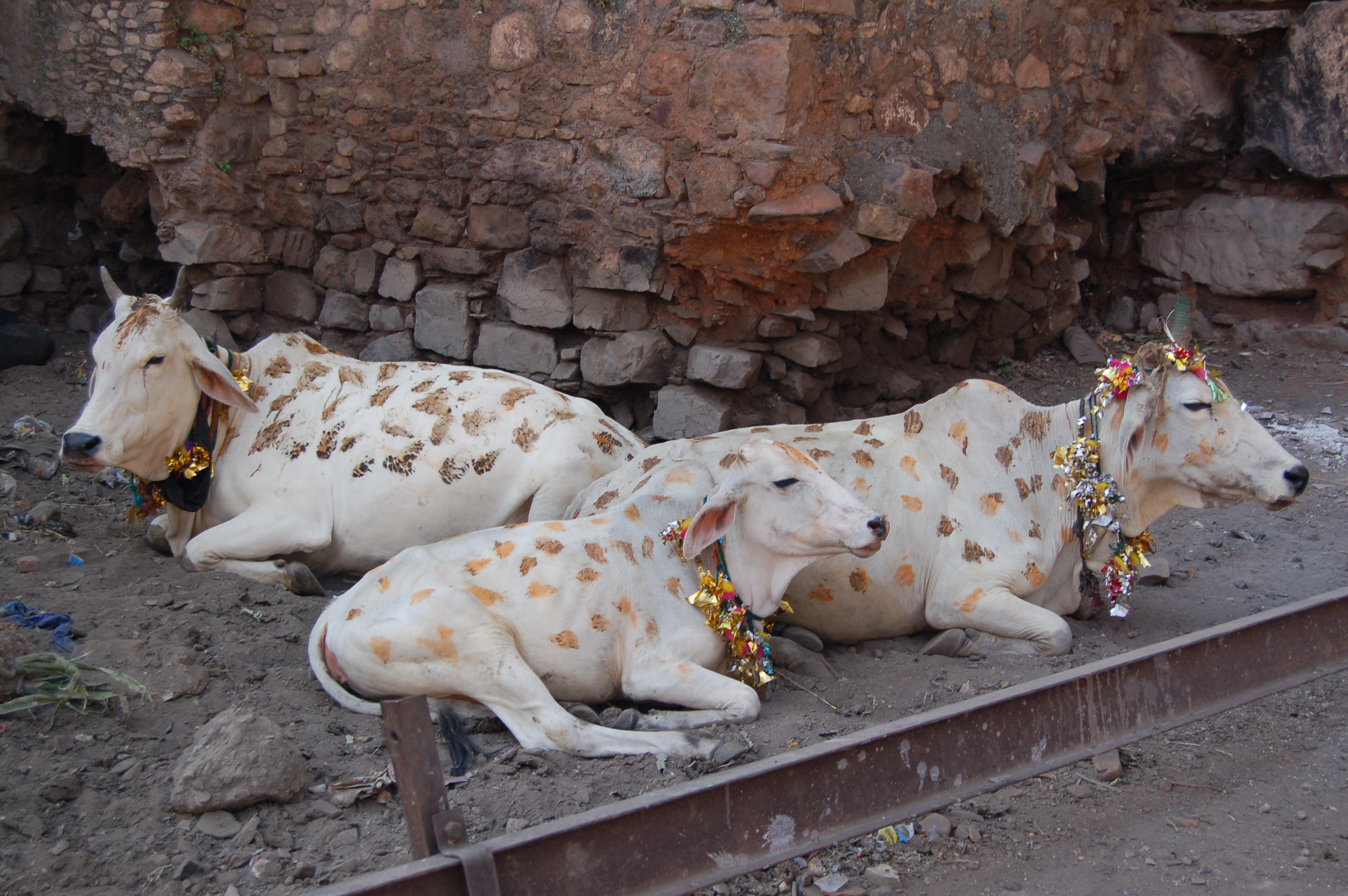
(Photo from wikiwand.com)

Qwertyman for August 15, 2022

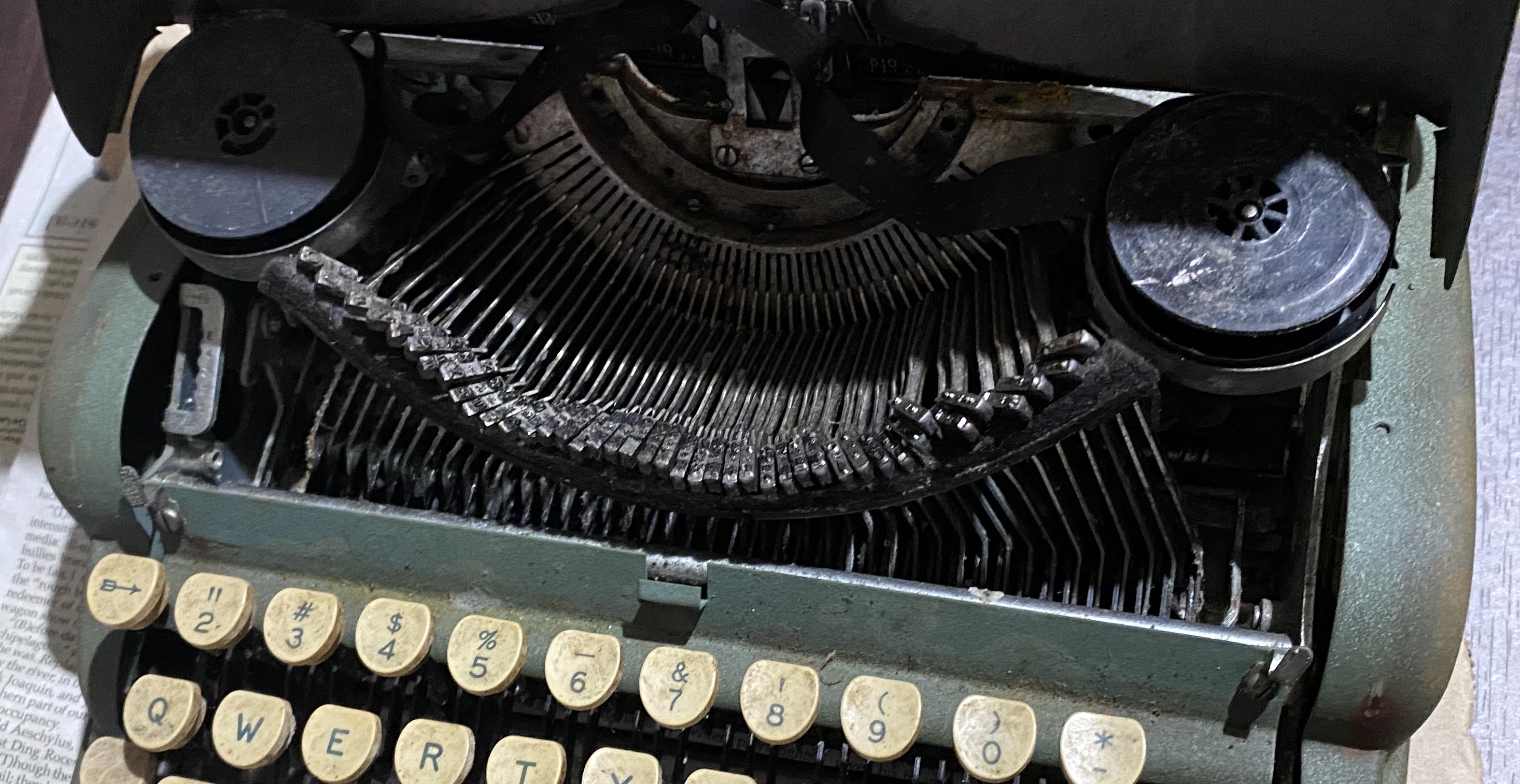
(Some of you may have noticed that since last week, and with my editor’s indulgence, I changed the title of this column from “Hindsight,” which I took the liberty of inheriting from Manong Frankie Sionil Jose, to “Qwertyman.” The reason was that, for more than two months now, I’ve been experimenting—okay, I’ll admit it, having fun—with fiction as opinion, which I thought could be my unique contribution to Philippine op-ed writing in this era. I became increasingly uncomfortable, however, with continuing to use FSJ’s column-title, since what I’m doing now bears very little resemblance to his work, so I asked to use “Qwertyman,” which will be my editorial persona as opposed to the arts-oriented “Penman.” It doesn’t hurt that I also collect vintage typewriters—the oldest one dates back to 1896, the onset of the Revolution—so my affinity with keyboards has always been there. So there, and now, on with the show.)

THERE WAS a great commotion in the pasture as the new Chief Bovine took his seat at the head of the Council of Beatified Bovines, enjoying the plushness of the leather (not cow leather, of course, heaven forbid, but the soft underbelly of crocodile). He was new on the job and was frankly ill-prepared for it, having spent most of his youth ogling the curvy heifers on his dad’s Playbull magazines and smoking grass (yes, there was a special kind of grass that cows could smoke). But his time had come, secured for him by his doting mother by dropping off bricks of special salt at each herd’s outpost and promising that it was just going to be a foretaste of things to come. There must have been something magical in the salt, because just a few licks made every cow believe that nothing better had happened to Cowlandia, that they were all going to be wallowing in imported hay very soon, and that the Chief Bovine’s late dad—himself a former Chief Bovine—was nothing less than a saint. 

“Hmmm, it looks like this seat wasn’t used very much,” said the Chief Bovine, pinching the leather and watching it spring back into shape. 

“Sir, your predecessor preferred sleeping under a tree,” said his Chief Minister. “Sometimes we called on him, only to find him snoring with a fallen mango stuck between his teeth.”

“Oh, that’s right!” said the Chief. “I forgot. The SOB was a boor. No manners. I’ll bet he never knew how to use a salad fork.”

The Chief Minister edged closer to the Chief’s ear: “I have it on good authority that he used a salad fork to torture 147 suspects to death, and even ate parts of them later, using the same utensil.”

The Chief shuddered. “Ewww, that’s gross! The stuff of Netflix documentaries. Remind me to issue an Executive Order prohibiting the use of salad forks for torture.”

“What about, uhm, breadknives and carving knives?”

“Let’s be reasonable. Those are perfectly valid instruments of torture. I know because I tried a breadknife on our cat once.” 

“Well, sir, you know he’s coming today, right?”

“What? Do I still owe him anything?”

“No, sir, he’s bringing up an issue that may be of some interest to you and to other members of the Council. It’s about that inquiry being launched by the International Court of Crocodiles. We need to come up with a unified position.”

“Gah! These bloody crocs! Why can’t we ever get rid of them? Haven’t we offered them enough goats to feed on?”

A cloud of dust began to form in the distance, accompanied by the deep-throated lowing of a dozen bulls. Any chickens or goats who got in their way were haplessly trampled underfoot. “Here he comes with his security escort. We better get ready,” said the Chief Minister, who had an underling lay down a bale of fresh hay for every member to munch on. The hay had been smuggled in through the far north where the impossibly ancient former Defense Minister still held sway. There were ugly rumors that, to stay alive, the old bull had drunk some secret potion mixed with crocs’ semen, which was also why he had a direct line to them. He sat in the Council, attended by a pair of hefty heifers who tickled his nose with stalks of exotic grasses.

The Chief Bovine got up to greet his predecessor. In truth, he felt exceedingly lazy and would have left matters of state to his Chief Minister so he could soak in the pond behind the Herd House and get his ears scratched, but his enemies were watching his every move, waiting for him to make some stupid mistake, so he forced himself to flash his best smile and do the customary tapping of horns with his senior. 

“Manong!” he mooed. “Good to see you again! What brings you to the Council?”

The fellow sat on his haunches, like he had been known to do even in the poshest of parties, and went straight to the point, starting with an obligatory curse. “Bakang ina, these crocs are too much! They want to investigate me and my ministers for allegedly goring to death at least 6,000 low-life goats who were illegally munching on our grass!”

“Well, did you?”

“Well, wouldn’t you? How else was I going to pay our tribute to Croclandia, which they keep raising every year? Where do you think those 6,000 bodies went? We had to put them in cold storage so they could arrive fresh and tasty. And now they want to indict me for it?” He stood up to his full height—which wasn’t very much—and began pawing the ground like he was about to charge, unsettling the gallery. “All I want to say is this: I’m willing to face these charges anytime, but only here in Cowlandia, to be tried by a court of my fellow cows, under the statutes of the Taurine Constitution!” A great moo of assent arose from the audience. 

“He’s right, of course,” the wizened ex-Defense Minister interjected. “This is isn’t about just him, or about just goats. It’s about all of us, about cattledom. What do you think tastes better than a goat? A big, fat cow! Our status as beatified bovines means nothing to them.” Horrified groans. 

“But—Manong—how do we work our way out of this?” said the worried Chief Bovine. “I heard that—that you have a special working arrangement with Croclandia….”

“Indeed I do,” said the old bull. “As I do with Monkeylandia, Vulturelandia, and so on. That’s why I’m still alive. I put my modest wisdom in political longevity at the service of others, for an even more modest fee.”

“Can I appoint you as my Special Counsel and Plenipotentiary?”

“Have I ever refused the call of patriotic duty? I shall serve you, sir, as faithfully as I served your father.” His gold incisor glinted in the sunlight.


Qwertyman No. 1: Maiden Speech

Qwertyman for Monday, August 8, 2022

(Image from Etsy.com)

THE FRESHMAN senator was worried. The Hon. Victor M. Dooley was due to deliver his maiden speech on the Senate floor in a week, and he still hadn’t come up with a brilliant idea to wow the media with, to assure his many millions of voters that they had chosen the right fellow over a couple of dozen lawyers, economists, professors, and retired generals.

No one was surprised when he won. He had all the proper credentials for a 21st century senator: his grandmother had married an American soldier, giving him square cheekbones, facial hair, and a Western surname; his father had been a commissioner of the Bureau of Customs, amassing a fortune in just a few years; he himself had been a matinee idol, a pop singer, a TV game-show host, and, when he got too old for the lover-boy roles, he reinvented himself as “Mr. Disaster,” the TV-radio hero whom you could count on to be there even before the first Navy rescue boats, the first aftershock, and the Chinese volunteer fire brigade. 

Mike in hand, and in a voice perfect for soap opera, Vic reported on the masses’ tragic losses while doling out relief bags containing a T-shirt with the “Mr. Disaster” lightning logo, a kilo of rice, three cans of sardines, five packets of instant noodles, and a prepaid phone card with P50 load, with which they could get online and thank him on FB. He had over 10 million followers on Facebook, seven children by three women, a warehouse full of supercars, his own chopper, and a new young thing named Yvonne, whom he had met in Boracay doing the TikTok dance.

It was Yvonne—once while they were playing footsie at the fish spa—who had dared Vic to run for senator, to prove that he really loved her and that he was really as popular as he claimed to be. She hadn’t even been born when Vic Dooley—sneaking out of his History class—joined a noontime TV show and shook, rattled, and rolled his way to showbiz fame. Vic giggled when she said, “Why not run for the Senate?” and she thought he was tickled by the idea, but it was only the tiny fish feeding on his toes. At any rate, like they say, the rest was history, and Yvonne stole the SONA fashion show with her see-through terno.

Now Yvonne liked to hang out in Vic’s Senate office, which she had decided to decorate with a marine motif—to remind her, she said, of her humble beginnings as a fisherman’s daughter in Caticlan. This distressed Vic’s chief of staff Roy, who was a professional operator Vic hired from a defeated incumbent, and who could not keep his eyes off Yvonne’s bare belly. She was tweaking the angle of a huge blue marlin painting on the wall behind Vic, who was too deep in thought to notice. Even now, when they were gathered around the big table to discuss Vic’s maiden speech, Roy’s gaze traveled below her navel. 

“Everyone knows me as Mr. Disaster. So we should come up with something disaster-related, right? Hmm, like maybe deputizing Boy Scouts and Girl Scouts for disaster relief operations?”

“But boss, if one of them drowns, it might be an even bigger disaster!” said Roy. 

Vic nodded reluctantly. “You’re right…. How about a change of image? Slowing down a bit to something softer, gentler. Like, uhm, Mr. Sensitive. Kuya Vic. Someone you can turn to….” He looked up dreamily at the ceiling, imagining his new persona.

“Hm, puede,” said Roy. “Instead of going out to every disaster, we can just set up a social welfare unit in the office—maybe something Ma’am Yvonne can head!”

“Did I hear my name? Are you giving me a table and a chair? Can it be in aqua?”

Vic struggled with his irritation. “I need an issue I can be identified with—something that will appeal to the heart of the masses, that they will thank me for forever…. That congressman’s anti-ghosting bill’s pure genius! I wish we’d thought of that first. Imagine all the heartache saved if people just—just told the truth! Are you there, are you alive, do you love me, what about our kids? And to think that he even linked emotional abuse to loss of productivity—” 

“If you criminalized emotional abuse, half of this country would be in prison, and mostly men,” Roy said dryly. “How’s that for loss of productivity?”

“Ohhh, you’re right again,” Vic said, remembering how he had skipped out on the three mothers of his children. “It’s a violation of—of human rights! Of the pursuit of happiness!” Instinctively he reached out for Yvonne, curling his arm around her waist. “What do you say, baby?”

“I think a sea turtle would be good for the other wall,” she said. 

Roy groaned, too audibly, and Vic frowned. Yvonne slid out of Vic’s grip and stretched her body like she was about to do calisthenics. “You know, I’d rather leave politics to you boys because I’m more interested in, uhm, the finer things in life, like beauty, health, and art. But let me give you a tip: you can’t legislate things like happiness or the truth. Ghosting? Did they even think of the implications of a law against ghosting? It would force people to tell the truth, to own up to their responsibilities, to face the consequences. Sounds good, but don’t you see where the opposition can go with this? Let me throw you a hypothetical question: if you owed someone a lot of money, like back taxes, and that person comes running after you but you pretend not to hear them, as if you never owed them anything, isn’t that ghosting?” 

She turned to Vic and planted both hands on the table, leaning into his face. This time Roy wasn’t looking at her midriff but at her eyes, which reminded him of his Math teacher in high school, when she was about to send him to the blackboard. “If you like this office as much as I do, pray for more disasters to happen, and keep doing what got you here. Novelty and political risk are directly correlated.”

“Where did you learn that?” Roy whispered.

“Western Aklan Institute of Technology, AB Political Science, magna cum laude, 2018. Best Undergraduate Thesis for ‘The Impact of Full Devolution on Environmental Compliance in Boracay Island.’”

“Can—can you write my maiden speech?” the Hon. Victor Dooley croaked. “Write whatever you want.”

“I thought you’d never ask,” said Yvonne, adjusting the tilt of the blue marlin yet again.

Hindsight No. 29: Mr. Kapwa

Hindsight for Monday, August 1, 2022

THE HONORABLE congressman tried to scream when he saw the motorcycle dart out from the huddle of cars and trucks ahead, too quickly and too late for his driver Pol to brake or swerve, and the Lexus hit the rider broadside, sending man and machine into a deathly spin on the avenue. Immediately this was followed by the screech of other vehicles trying to avoid the fallen rider. 

No sound had come out of Leonilo’s mouth but he was hearing a shriek, and he realized it was his wife Henrietta with her hands over her eyes, as if refusing to see what had just happened outside. Pol sat frozen, gripping the steering wheel, wondering which was worse: possibly killing a man or displeasing his master.

That day had begun with Leonilo and Henrietta having breakfast by the swimming pool—Henrietta had decided that their interiors needed a makeover, especially now that her husband had been named one of the House’s deputy speakers, and the new paint was still drying in their dining room. Leonilo had wanted them to move to a hotel during the renovation, but Henrietta was too mistrustful of their staff to leave her wardrobe and jewelry behind. She had been known to plant a cheap earring or a bar of Hershey’s in the kitchen or one of the bathrooms as a test, and they had always been returned to her until the chocolate had gone moldy, but she remained convinced that everyone was out to defraud her of her rightful possessions.

“I need a new bag,” she had told him, adding a dollop of whipped cream to her coffee and then a sprinkle of cinnamon. That and a sliver of toast would be breakfast for her, while he dug into his beef tapa, eggs, and fried rice. She knew she had married the son of a stevedore, but since he now owned a shipping company, he could eat with his bare hands as far as she was concerned. He had done that, in fact, throughout his campaign, supporting his claim to being “Mr. Kapwa.”

“You already have more bags than there are days of the year,” he said, chewing on his tapa

“I already brought the Birkin to the SONA. It was in all the papers. There’s a new one out in ostrich—”

“I can’t tell an ostrich from a pig when they’re skinned,” he said, annoyed at being burdened with so mundane a matter. His mind was on his pet bill. It was certain to gain support among his colleagues and mark him as a man worthy of their highest consideration, possibly even the Speakership, come the next vacancy. It was a bill “to criminalize the malicious criticism of public officials and law enforcers, through direct or indirect means, such as by editorial commentary or ridicule, whether in print, on broadcast media, or on the Internet, such malicious criticism being intended to diminish the public’s trust and confidence in their elected and designated representatives, promote divisiveness and subversion, and impede the government’s development programs.” All government officials were rapacious crooks, if you believed the videos.

“You don’t have to,” Henrietta said. “You’ll see it when it gets here—they promised to deliver it before noon. I can’t wait to bring it to the party! I’m sure no one else has this yet. You have to be on their priority list for months!” She had chosen a reputedly sustainable Stella McCartney outfit with pants to go with the bag, and had practiced her posing. The Speaker’s wife was throwing a party, and the President was expected to drop by.

The crowds were already gathering around the injured rider and the Lexus. Pol had finally stepped out to see if the man was alive. Surely everyone could tell who was at fault. Pol berated the fellow. “Didn’t you hear the wang-wang? How stupid can you get?” On ordinary days they would have had a police escort with more sirens and blinkers, but on weekends they were in short supply.

Henrietta was hyperventilating in the back seat, clutching her ostrich bag to her chest. “St. Christopher, pray for us,” she kept saying, as if they were the victims. Beside her, Leonilo sat fuming, knowing they were already an hour late, and instead of chit-chatting with the President and telling him all about his brilliant idea—with 33 other Deputy Speakers to contend with, visibility was key—he was stuck in traffic with a hysterical wife and a PR disaster brewing quickly. “If we didn’t have to wait for that stupid bag”—it had been delivered at 4 pm, after frantic phone calls—“this wouldn’t have happened!” 

Leonilo noticed that several onlookers had their cellphone cameras trained on him, while another was clearly shooting his license plate, all of it fodder for tonight’s YouTube and tomorrow’s broadcasts. He then saw that the rider was getting up, shaken and battered but in one piece. Instinctively he sprang out of the car in his size 54 Brioni blazer and rushed over to the rider who was still gathering his wits about him. The cameras trailed Leonilo’s every move. From somewhere came the squawk of an approaching motorcycle cop. 

Leonilo brushed his driver aside and made a show of checking the man’s bruises. Blood streamed out of the rider’s nose and a drop trickled onto Leonilo’s Ferragamo loafers, horrifying everyone. Even the injured rider gasped at the red blob. “I’m sorry—sir!” Pol dove for the shoe and wiped off the spot with his hankie. 

“It’s nothing,” Leonilo said, pulling out his silk Aquascutum and giving it to the rider to mop up the nosebleed. “I’m just glad you’re okay—but we need to get you to a doctor.” He looked straight into a raised Oppo camera and said, “It’s the least Mr. Kapwa can do.” People began clapping. “Pol, take this man to the car, and bring him to the hospital.” Henrietta shrieked again when she saw Pol dragging a bloody mess to the car, and jumped out. “What the hell are you doing?”

Leonilo bent over the fallen Skygo, lifted it up, and straddled it with the look of a cowboy in the heart of the badlands. He called to Henrietta and said, “Get on behind me.” She held up the Birkin and said, “What? Are you crazy? Ride that thing?”

He fired up the engine; these cheap Chinese motorbikes seemed meant to be banged up. A motorcycle cop appeared and saluted the congressman. “Sir! What happened? Can I help?”

“Clear the way,” Leonilo said. “We’re late to the party.” As Henrietta clambered, whining, onto the back seat, Leonilo stared ahead—at their dramatic entrance, at the viral videos, at the inevitable interviews on radio and TV, at the limitless horizon. Behind him, Henrietta wondered how she could hold on to both her husband and her bag. 

Hindsight No. 28: The Queen of Trolls

Hindsight for July 25, 2022

(Photo from philstar.com)

FROM THE street, the building still looked like the bank it had once been, with fluted columns crowned by precast acanthus leaves, but the paint and even the cement cladding had chipped off to reveal the pedestrian concrete underneath. It had been a branch of the old Fidelity Bank & Trust Co., which had gone under in the 1980s after its owner had fled to Southern Spain with P600 million in debts, and the building had served various lessees and uses—once, even, as a shoe emporium on its ground floor, with a restaurant in the mezzanine. But with the building of the LRT, the whole district was literally benighted, occupied by aging tenants with nowhere else to go, pitted with all kinds of booby traps for the unwary.

The former bank’s windows had all been shuttered or painted over, but a steady procession of young people still went in and out of the place through a side door at all hours of the day and night. The locals were made to understand that it had been converted to a call center, although a sign that said “Far Eastern Institute of Homeopathic Medicine” still hung beside the old entrance. Security guards—always two at a time—were posted at the side door, and they ran everyone’s ID through a screening device before letting them in.

The one exception to this routine was the woman they called Ma’am Ventura, a smallish, gray-haired lady in her late sixties who was always accompanied by her driver-bodyguard Bulag, so-called because he never took off his wraparound shades. Ma’am Ventura always wore a dark jacket, matching skirt, white blouse, and flat shoes, like a bank teller—which she had been, in this very same branch, which explained why she had chosen to lease it for her operation. 

She had had the mezzanine converted to an office with a window overlooking the cubicles below, and with a long table around which her floor managers assembled at 10 p.m. to assess the day’s metrics and discuss tomorrow’s messages. The dress code for the trolls below—the “social media specialists”—was strictly informal, the easier for them to vanish into the crowd, but for her managers, Ma’am Ventura insisted on ties, socks, skirts, and heels, so they could understand that they were professionals, as worthy of respect as any college instructor or law clerk. “Transforming society through democratic discourse” was the outfit’s pitch to its recruits.

But tonight, Ma’am Ventura was in a typically foul mood, reviewing some scripts that a new hire had prepared. “Puñeta! I’m not asking you to write an essay that will get a 1.0 from Professor Dadufalza! I want you to say, in 280 characters or less, and in words Bulag will understand, why historians lie! Can someone please show poor Ms.—uhm—Ms. Morales here how she needs to think if she wants to stay in this job?”

Ever eager to please, Nico raised his pencil from his seat on Ma’am Ventura’s right. “They’re people. Just like us. They make mistakes. We don’t even need to prove they’re wrong. We just need to show they could be.”

“Wasn’t the Code of Kalantiaw fake news? Someone just made it up,” came a voice from the far end. Nico winced, knowing it was coming. Angela never missed an opportunity to upstage him at these sessions, flaunting her UP degree—which she knew Ma’am Ventura had as well—like she was standing on a three-foot stool, spreading her arms wide. “Even historians can be fooled.” 

“How many Pinoys out there today even know about the Code of Kalantiaw?” said Bruce, Nico’s ally and Angela’s spurned suitor. “That might be good for TV or Kuya Obet’s column but it’s useless for us.”

“So what can we use? Ms. Morales, any ideas? Redeem yourself.” Ma’am Ventura lit up her first cigarette of the evening; smoking was forbidden on the shop floor but up here they would all reek of it by midnight. This was the part of the work Ma’am Ventura enjoyed the most. The business side of the meeting—impressions, reach, audience growth, engagement rate, etc.—just harvested stats for the client. The Q&A reminded her of the time, after the bank closed down, when she had to take on a teaching job at the college in her provincial hometown. She had begun by teaching Accounting, which she had studied for, but as often happened in these places, she was soon made to teach English and even History. 

At first she tried her best to keep a few chapters ahead of her students, reading the textbooks late at night and figuring out exercises to keep them busy and from asking questions she couldn’t answer. But then the load just became too heavy and she began resorting to what she told herself was just conjecture—that, for example, Josephine Bracken agreed to become Jose Rizal’s wife to escape a scandal in her family—and she soon found it so pleasurable that even her exams posed questions like “What if Japan had won the Second World War? What would you be eating and watching on TV today?” She graded them based on their inventiveness, which she took as another form of intelligence. They began with a set of known facts, and then embellished them, building speculation upon speculation. It was much more fun that just memorizing names and dates. History was a record of settled arguments—until you gave it a kick.

Ms. Morales struggled. “Well—ma’am—can we say that historians lie because—because they don’t really know what happened, so—so they may not even know they’re lying? I mean—they’re not bad people, just—”

“Historians lie because they get paid to lie—by the left-wing universities that buy their books, even by the priests who are always looking for somebody else to blame,” Nico interjected, holding his pencil like he was about to snap it. “We just have to show they’re no saints.”

Angela added, “Let’s dig up some dirt, surely there’s—”

Ma’am Ventura rapped the table. “So what’s the line, boys and girls, what are we going to feed the sharks?” Below them, the monitors from dozens of computer screens glowed like votive candles to a hungry god.

A little hand went up from Ms. Morales. Everyone stopped. A snicker escaped Bruce’s airways. Ms. Morales fidgeted with her Hello Kitty purse. “Kung—kung manghuhula binabayaran, historian pa kaya? I mean… they’re also fortune-tellers, right? Just looking backwards.” She zipped and unzipped her purse. No one spoke until Ma’am Ventura began clapping.

Hija, that’s brilliant! I want you all to write scripts around that punchline! Ms. Morales, I don’t know what you had for dinner, but I’m calling Grab to order it for everyone! Welcome aboard!” Ma’am Ventura blew a cloud of smoke so for a moment no one could see her face, but they could imagine her flashing that sweetest of smiles.

Hindsight No. 27: The Truthifier

Hindsight for July 18, 2022

IT HAD been a nightmare to create, but was—save for the occasional brownout—a dream to operate. The “Truthifier,” as the machine was called, occupied almost the entire fourth floor of the old Doña Salvacion Building on the northwest corner of Plaza Regina in the city’s warehouse district. Most other people would have insisted on a sleek, postmodern structure—or perhaps even an underground vault—somewhere in BGC, among the banks and condos that tried to outdo each other in smartness and attitude, but Arsenio would have none of that. He was a brilliant engineer who understood algorithms, quantum computing, event horizons, The Singularity, and all the other buzzwords that sci-fi junkies more than the scientists themselves loved to spout. But Arsenio was firmly old-school, with a prewar Pelikan 100 in his breast pocket and oxford brogues that he made sure were polished every day, even if he was headed nowhere else but the Factory.

The Factory was where he had built the Truthifier over seven years from the ground up, scrutinizing the assembly of every panel, bolt, nut, wheel, gear, vacuum tube, insulator, switch, dial, and the thousands of other parts that went into the machine, some of them turned out on a lathe by Arsenio himself, following his own blueprints. Arsenio was well aware that he could have programmed a computer the size of a pizza box to do his bidding, but Arsenio disdained software, which could be hacked. He believed in finely designed and intricately crafted machines that made noises like “ding!” and “zzzt!,” whose diodes glowed orange in intense concentration, then spat out text from a teletype printer at the far end.

The Truthifier had one basic purpose: to turn ugly statements, even lies, into something that sounded like the velvety truth, better than most people could. There were probably a few professors out there who could do the same thing, but like all people, professors could be distracted, they could forget, they could be bought, and they could refuse. They also lied. And they died. The Truthifier, being made of brass, wood, glass, ceramic, and copper wire, could do none of that. Arsenio had to acknowledge that he did recruit his old friend Dr. Lucas Tagbanua, retired Professor of Linguistics and Philology at the University of Wurzburg and most recently Chief Librarian at Dagupan City College, to assist him in setting up the tree of linguistic arguments which he would convert to mechanical and electronic pathways. They made history when, in their fifth year, Arsenio typed this carefully on the front-end keyboard: “I murdered my father.” After a few minutes of gears turning and bulbs flickering, Lucas received a message on the other end: “I sent my father to a better place.” It was all still very simple and unsophisticated, but the two men cheered and celebrated. And then, four months later, Dr. Tagbanua died after being hit by a truck delivering action-figure toys.

That, Arsenio sighed, was the problem with humans; they were organic. But he had gotten the fundamental logic down, and he pursued the project to the point that he now had a dial that offered Simple, Moderate, and Extreme options, where “I sent my father to a better place” (Simple) became “I relieved my father of the unbearable burden of life” (Moderate) and then “Against all my filial instincts, I decided to return my father—he of my own flesh and blood—to the source and the end of all human aspirations, to the trackless void of eternal peace and silence” (Extreme). 

“Does it bother you,” Dr. Tagbanua had asked just a week before he died, and after they had achieved success to the Moderate level, “that the Truthifier isn’t really saying the truth, but something that just sounds like it—maybe even a lie?”

“No,” Arsenio said impatiently, making miniscule adjustments on a master valve that regulated adjectives, comparatives, and superlatives. “What we’re doing is giving people a version of the truth that they will want to believe. What’s the use of the truth if you can’t believe it?”

There were many, he was certain, who would pay for Extreme, which would go a long way toward recovering his R&D costs and even make him a tidy profit. He had happily spent all the money he had won from the lottery on his project, so he was beholden to no one, but now that he had accomplished proof-of-concept, he looked forward to some payback, so he could indulge other fantasies like riding a Vespa around Rome with a footloose princess.

Sometimes, just for fun, he fed the machine outrageous fibs like “Jose Rizal was bisexual,” for which he received this Extreme result: “While Jose Rizal had many recorded relationships with women, his sexual preferences were likely as broad as his mind, and his natural curiosity would have encouraged him to explore novel possibilities with his cohort of male friends.”

As soon as word of the Truthifier got around, the clients came to the Factory, in a discreet but steady stream of cars and SUVs with dark-tinted windows whose occupants slipped into a service elevator large enough for a marching band, although they always came alone. A general wanted to explain why he had so many people executed without trial; a priest wanted to introduce his three children to one another; a woman wanted to tell her sister something about her husband. But mostly they were politicians looking for better ways to say the most mundane things, like “I will serve you” or “My opponent is a pedophile.” They paid just enough to keep the Truthifier running and re-oiled every three months.

One day a Rolls-Royce drove up to the Factory and out stepped a man in a gray three-piece suit and top hat, wielding a cane. He looked like a boy who had aged all of a sudden, his long hair hanging in graying strings. 

“How can I help you?” Arsenio asked, barely looking up from a console that monitored temperature levels within the machine. 

The man took off his hat and put it beside him on the couch. “My father was a crook. For a very long time. But I’d rather forget that. And while I’m at it, I’d rather that everyone forgot, as well. I hear your machine can help.”

“That’s—complicated,” Arsenio said, after figuring out how many propositions the statement involved. “It will cost you some.”

“You must be a very busy man, so I won’t waste your time,” said the customer, glancing at his rose-gold Nemo. “How much for the Truthifier?” With a finger, he drew a horizontal circle in the air. “The whole thing.”

Stunned speechless, Arsenio sized up his visitor, who had crossed his legs and draped his arm on the backrest, like he had all the time in the world. Despite his agitation, Arsenio began thinking of Audrey Hepburn hugging his waist, her perfume curling up his nose as their scooter drove past the Colosseum. 

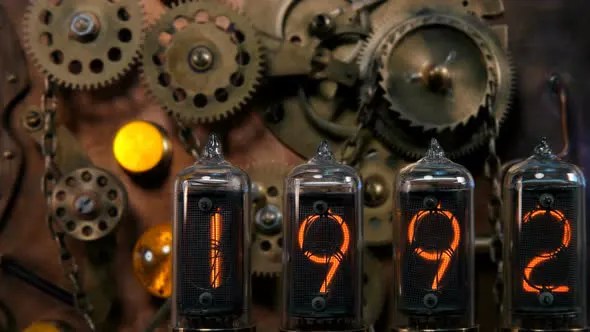
(Image from videohive.net)

Hindsight No. 26: The Quick Brown Fox

Hindsight for July 11, 2022

EXAMINING THE machine in front of him, Monching could understand why it had ended up in his shop. There weren’t too many people like him left in the city—or the entire country, for that matter—and he had been told he was the best of them, which he brushed off with a shy smile but happily acknowledged. At 62, he was also the oldest Manileño he knew still fixing typewriters—well, there was Mang Torio who was in his late seventies, but he had stopped five years earlier when his daughter landed a job in Dubai as a cashier in a shoe store, and besides Mang Torio really couldn’t work on anything more complicated than a 1970s Olympia Traveller or Lettera 32 when he retired. 

The older man had an encyclopedic mind, and Monching could still remember running to him when he was having problems he couldn’t sort out himself, like a Corona platen that felt too long (“Washer—washer could be too thick,” Mang Torio would say. “Or you can try filing down the carriage end bushing.”) But you needed good eyes and steady fingers to stay on the job, and Mang Torio had lost his touch when his wife died and he began drinking. At first Monching shared a few bottles with him to commiserate with his mentor, but he stepped back when he saw the old man sinking into an emotional abyss, and soon he was taking over Mang Torio’s jobs just to save his face. 

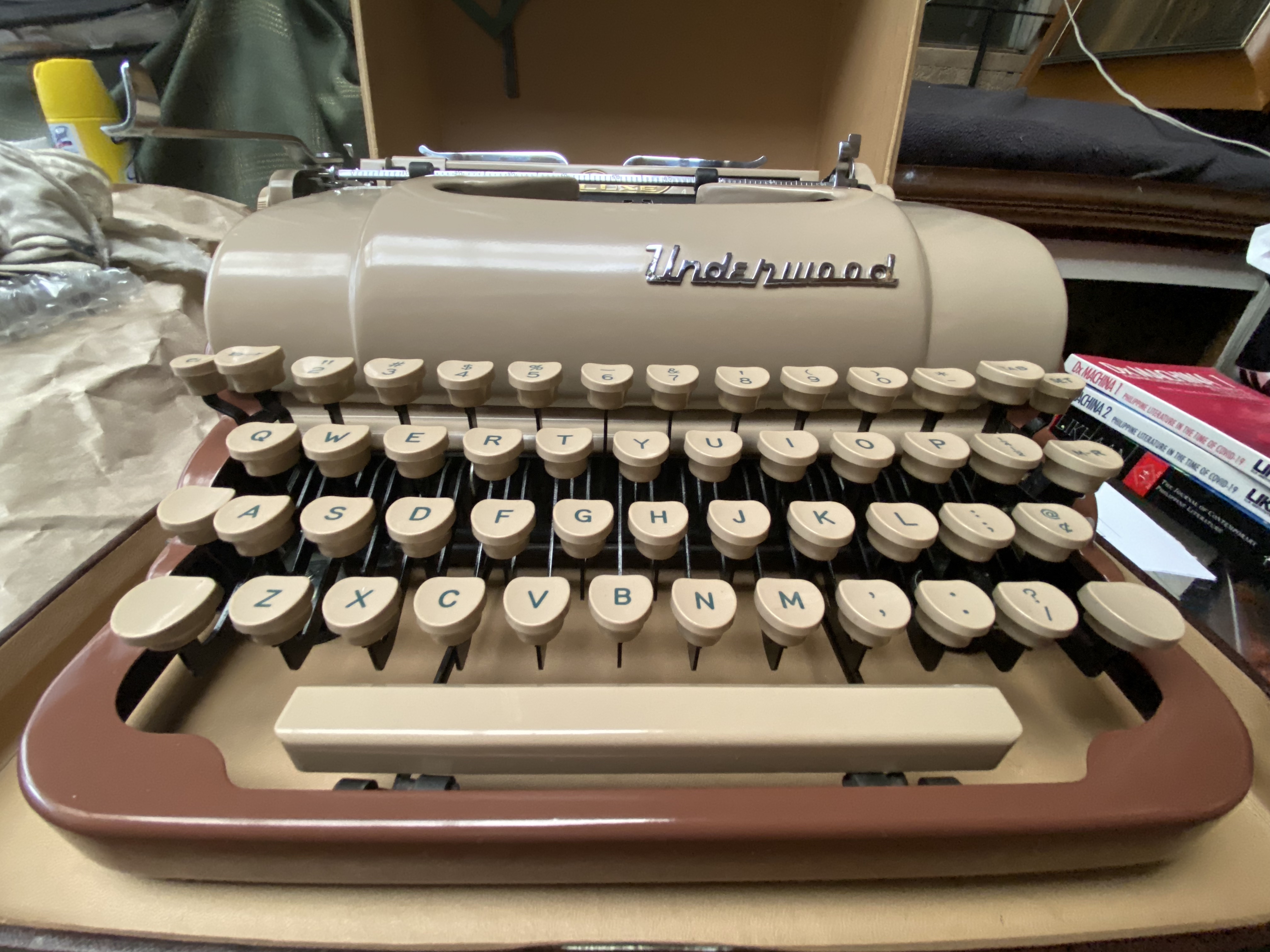
Now he was hunched over what looked like a bucket of rust, but he knew that beneath all that pockmarked paint was one of the most beautiful typewriters ever made—a mid-1950s Underwood Quiet Tab De Luxe, a two-tone model with sexy curves, like a rich man’s car. As its name suggested, it was top of the line among Underwoods of its time, and in his mind Monching could see it gleaming with new paint and chrome, after the requisite stripdown and rebuild. It had been brought in by an interior designer who was thinking of using it as a prop—she had found it among her grandfather’s effects on a visit home to Mabitac—but Monching had cleverly persuaded her to take a portable Brother 200 repainted in yellow in trade for the hulk. 

He knew what they wanted, young people who looked for “delete” buttons and giggled when they heard the bell “ping!” and who couldn’t care less if the typeface was pica or elite; they bought them for décor, an accent piece suggesting a connection to a golden age they never knew. There were years when it seemed like no one needed typewriters anymore other than the sidewalk clerks who helped make fake IDs and official-looking papers, but now they were back in fashion, and Monching knew that the Underwood could fetch a premium price once he’d fixed it up.

As he tapped the keys to see if they would even budge, he saw something unusual on the TV that was constantly on in a corner of his shop. He didn’t really care what program was showing, and just needed the tinny chatter in the background to help him concentrate on his pawls, drawbands, and adjustment screws. But today all the channels were carrying the same thing, the live broadcast of the new president being sworn into office. 

Monching had voted for the man, like his church elders had told him to do. He had no opinion of him, one way or the other, except to note the familiarity of the name and the implication that he knew more about the job than anyone else. Mang Torio, the last time they met, was all upset and kept mouthing off about how, back when the man’s father was president, he had been clubbed and dragged to jail for joining a rally protesting police corruption and extortion, so he wanted to vote for another candidate, but couldn’t leave his house. 

Monching would have none of that nonsense. He wanted a simple and uncomplicated life, just doing what he knew best, bringing machines that had typed their last words half a century earlier back to working condition. Most had produced office reports, term papers, affidavits, inventories, and such; others wrote love letters, or cut mimeograph stencils for anti-government propaganda. Monching didn’t think much about their past. He was happiest when, done with a reassembly, he could put a drop of 3-in-1 oil (“Never WD-40, it will dry up and stick!” said Mang Torio) between the Shift and Shift Lock keys, check that they worked, feed a fresh sheet of paper into the platen, and peck out “The quick brown fox jumps over the lazy dog.” It was beauty and order restored.

He watched as a column of armored vehicles rolled across the TV screen in a show of military might, and he wondered how old they were and if they had been refurbished and repainted like his machines. He found himself wishing that people were as easy to fix; Rita wasn’t, and so he left, and had led a quiet life since, sleeping on top of his shop. He had tried to train some apprentices, but no one stuck, preferring to sell dishwashers or to drive ambulances. Only the skeletons of Corona 3s, Hermes Medias, and Remington Model 5s kept him company. He kept his shop floor tidy, picking up the tiniest screw.

Mang Torio’s life, on the other hand, was messy beyond belief. Three wives, children whose names he’d forgotten, a stint on a cruise ship that sank in the Adriatic, sudden wealth, gambling, prison (where he learned typewriter repair), walking the straight and narrow, and then descent into the bottle. Over gin, the man dithered between memory and regret, and now and then, a vain hope for something different.

On the TV, a crowd of protesters struck out at the new president, like jagged letters leaping from an unadjusted keyboard. When he was done with the Underwood, Monching promised, everything would be in line, all crisp and clear.

Hindsight No. 25: The Museum of Suffering

(Photo from philstar.com)

Hindsight for July 4, 2022

PEPITO FANCIED himself a museophile, a lover of places where old and fascinating objects were exhibited for the public’s delectation. Having achieved a certain level of leisure in his life, he had been able to indulge in a bit of travel, the highlights of which were invariably visits to local museums and galleries. While other tourists spent time posing before the Eiffel Tower or throwing coins into the Fontana di Trevi, Pepito preferred to wander the hallways of more obscure attractions such as the Musée de la Magie, where golden swans and painted ballerinas moved as if of their own accord, or the Museo Nazionale delle Paste Alimentari, where he could follow eight centuries of pasta-making across the globe. 

He was an omnivore, as far as interests were concerned. He could spend hours poring over Etruscan vases, Masamune katanas, deep-sea organisms, and Calder mobiles. Being something of a self-taught snob (he had a degree in civil engineering, but had never built a bridge or even a bungalow after he married into his late wife’s family), he liked to play guessing games—observing objects without reading their captions, making inspired surmises about their origins or back stories. 

Once, staring at a death mask from the Lambayeque culture of Peru, he voiced his suspicion to the docent beside him that “The red paint on this mask could have been human blood,” to which the docent replied, rather dismissively, “A lot of people say that, but there’s no proof, so it’s likely just cinnabar.” Years later, he was overjoyed to find vindication in a scientific report on analyticalscience.wiley.com that “The blood proteins serum albumin, immunoglobulin G, and immunoglobulin kappa constant were all identified, strongly indicating the presence of human blood in the red coating of the mask….” Pepito wanted to print out that page and mail it to the docent—in a real, stamped envelope, so the poor fellow could appreciate the materiality of the truth.

He could have been a docent himself, of course—one of those doddering retirees with nothing better to do than recite memorized scripts to glaze-eyed visitors about patinated silver and the importance of ruffles to Elizabethan gentlemen—but he found more pleasure in trailing them and the tour groups they shepherded around museums to pounce on an overheard mistake or to add his own little flourish. “There’s no proof that Jesus was born on the 25th of December,” he told some Japanese tourists examining an 18th-century belen. “Scholars calculate that he was actually born between 3 and 6 BC—before himself!” He expected them to chuckle with him, but their interpreter seemed annoyed at his intrusion and kept quiet.

No matter; truly, he didn’t care what others thought. They were all opinions, from small, provincial minds. He declared the present uninteresting, a jiggly kind of frame for the past, and politics the folly of idealists who kept hoping that communal inventions like government would get better, against obvious evidence to the contrary. He had long resigned himself to accepting whatever came, keeping his head low, vanishing into the woodwork, luxuriating in his connoisseurship of the strange and wonderful. People came and went, but things survived, and the most interesting of them were to be found in museums.

When he received the hand-lettered invitation to attend the soft opening of the new Museum of Suffering in San Miguel, Manila, Pepito wondered if they had made a mistake. Although he had posted his museum sorties on Facebook and had amassed 31,629 followers (he accepted no friends), he did not think of himself as a social media celebrity. But with vloggers now covering the President in the Palace, he figured he had been found out and finally recognized for his expertise on—well, anything and everything.

He took a cab to the address indicated on the card—about 45 minutes through the traffic, according to Waze—and tried to guess what the Museum of Suffering might feature. Pepito had to admit to a special attraction to the grotesque—to medieval instruments of torture (Prague, Toledo, Amsterdam), medical curiosities (Philadelphia, Boston), and even cannibalism (San Diego, Onnekop). This new museum had to be something of the sort, in a Philippine setting—exhibits of massacres, famines, imprisonment, floods, volcanic eruptions, locust infestations…. He looked at his driver and saw the crusty scab on the man’s neck, which probably began as an insect bite. 

He was met at the door of the refurbished mansion by—of course—a docent, but a woman not a year older than he was, wearing a pink dress with a Chinese collar to go with her dimpled smile. “Mr. Tanglaw? I’m so glad you could come. My name is Winnie, and I’ll be your guide for this tour…. Oh, don’t be surprised, we arranged this just for you, given your followership. This way, please.” Pepito looked around, expecting to be led to a roomful of specimens under glass, but instead an apple-green Vios appeared at the driveway and Winnie led him to the back seat before sitting in front. “Tikoy, let’s go,” she told the driver.

“Where are we going?” Pepito asked as the Vios eased into the traffic. 

“To the Museum of Suffering,” Winnie said. “That was just our meeting point.”

“Is it far?” Pepito asked after they had crossed three traffic lights, headed south.

“We’re low on gas,” Tikoy butted in, and slid behind a long queue of cars and jeepneys at a gas station. “Prices go up tomorrow, so everyone’s here. It was on the radio.” He turned the radio on and settled on a program where the hosts discussed tax evasion. 

Pepito looked at the prices per liter and saw nothing but numbers. He watched a truck driver wiping his face with a soiled towel. Winnie was explaining something about rice importation, but all he could think of was the olfactory testing game he played at the end of his tour of the Musée du Parfum Fragonard. He struggled to recall the scent of Belle de Nuit. He wanted out of this place. “Is it far?” he asked, gasping. “Is it far?”

Hindsight No. 24: All Content and Settings

Hindsight for June 27, 2022

CHARLIE COULDN’T tell exactly what the phone was until he slid it out of its case and, even then, its other specifications—model and memory size, which would determine its price—could be known only once he turned the phone on and made it work. The problem, of course, was that it was locked with a passcode, and if you didn’t know your way around, it was easy to turn next month’s rent into a brick. 

There were other, more elaborate ways that involved cables, computers, and words like “jailbreaking,” “DFU mode,” and “GPP,” but they were Nick’s specialty, for which he had a stall in Greenhills. Charlie was smart enough to know what he was good at, which was thievery, and to stick to it. Had he gone past second year in Koronadal, he might have become a Nick, or even better, a Mr. Garcia, who bought whatever Charlie could sell with cold cash and then disposed of them online through aliases like “Triciababy” or “Sweet Loreen.” 

Charlie had spotted a Samsung Galaxy Note on FB Marketplace that was being sold by Triciababy with the story that she needed a kidney transplant, and he knew that it was one of his pickups because it had a tiny chip on the top right of its screen. Mr. Garcia had paid him 3K for it and was now posting it for 8.5, which seemed unfair but then he didn’t even know how to describe the phone, let alone make up a story. He scanned FB Marketplace to get some idea of what to ask Mr. Garcia for, but it always came down to what the man was willing to pay, because he could come up with reasons like “obsolete” and “digitizer,” which simply meant that Charlie could have chosen better if he wanted to get enough to buy a new bike with. It was easier to steal a bike than to get something past Mr. Garcia, which probably wasn’t even his real name. 

He could have told Mr. Garcia to try it himself to find out how difficult it was to pick a specific model—on most days. You had to be in the right place, with the right kind of people, to score something high-end, like an iPhone 13 or a Galaxy S21. You didn’t find those in the malls and markets Charlie felt comfortable in, in the shirt and sneakers that made him look like a college student waiting for a date or shopping for jeans on sale, especially when he carried a book or two. 

But the Kakampink rallies changed all that. It was a pickpocket’s dream—tens of thousands of people massed on the street, all wearing pink, which meant that all he had to do was invest in a pink T-shirt to lose himself in the crowd, going along with the chants and finger signs. Many of these people looked and even smelled like they had stepped out of a shower. Charlie didn’t pay much attention to the simpler folk who could have been his uncles or cousins, seeking out the clusters of privilege.

Charlie already knew who held which phone, and where they put them away when their hands were otherwise occupied. He had spotted the woman and her iPhone at least fifteen minutes before he moved in; her phone had rung and she tried to take the call but put it back in her shoulder bag when the noise made all talk impossible. Thirtyish and plain-looking, she didn’t seem particularly rich, but with the pink T-shirts you never knew.

It was during the candidate’s speech that everyone seemed most distracted. People cheered and raised their arms. Charlie had no interest in what they were all excited or angry about—like “martial law,” when terrible things supposedly happened, well before his time: killings, torture, rape, like some war movie, of which he had seen and enjoyed a few. None of that had anything to do with him. And if it was so bad, why did they keep coming back to it? 

It took Charlie no more than a few seconds to swipe the phone and to vanish into the monochromatic crowd. The woman never felt a thing. Charlie gave her a backward glance and saw that she looked ecstatic, swaying with both hands in the air, her eyes shut as if in prayer.

Back in his room in Paco, he turned the phone on—last among the four he had taken that day. A picture of the woman and a small girl filled the screen, typical wallpaper for people her age. It asked for a passcode. He had ten tries before it locked up for good, but Nick could take care of that, so just for fun he tried 1-2-3-4. It opened. People could be so simple. It was an XS, 64GB, a four-year-old model he could sell for, oh, 7 or 8K.

Instinctively he went for the photos. There was always something interesting to be found there, sometimes embarrassing secrets the owners would have been happy to pay for, so Charlie thought he was doing them a favor by wiping their phones clean and erasing the past. There didn’t seem to be too many pictures on this woman’s phone. One of her with a man, posing in front of a fountain, obviously shot from an old photograph. Many shots of a baby girl, the girl and mother, girl, girl, girl, mother in a bank teller’s uniform, girl in fairy costume. Here and there, office excursions, Hong Kong, Taal, Baguio. Third birthday party, then suddenly, girl in hospital bed, closeup of girl sleeping, closeup of girl’s hand, then a flower arrangement beside the girl’s framed picture. And then the girl with eyes closed, a dozen of them from different angles, because the light kept bouncing off the glass. He remembered the mother at the rally with her eyes devoutly shut; they looked alike. 

Charlie had lost his father when he was a boy and his mother was back in Koronadal grinding corn. He had not seen her in five years, but now and then he sent her pictures of himself through a cousin’s phone, posing in shades before a new car and on the Dolomite Beach. At least she knew he was alive.

He knew enough to wipe the phone; Mr. Garcia wanted them clean and usable, and doing it himself instead of Nick would save him money. But when his finger hovered over “Erase All Content and Settings,” he paused, and wished the passcode had been something other than 1-2-3-4.

Hindsight No. 23: An Unsolicited Draft (2)

Hindsight for June 20, 2022

(Photo from philstar.com)

LAST WEEK, I indulged in some wishful thinking to imagine what a truly different and refreshing BBM presidency would be, with the rosiest inaugural speech I could confect. This week, as we edge closer to the real inauguration of Ferdinand Marcos Jr. as our 17th president, I’m going to try my speechwriting hand one more time at a grimmer version of what he might say. 

Again, friends, this is all fun and games, a finger exercise, not to be confused with the real draft that a roomful of gifted (and expensive) wordsmiths, some of whom I probably know, are probably toiling over this very moment. (For those who missed last week’s installment, again, please look up what “satire” means, and smile.) This is what you get from a fictionist posing as a political pundit, with no spicy gossip to share and no entrée to the corridors of power. 

And so, meaning no disrespect to No. 17, here we go with the kind of speech his most ardent followers, some more BBM than BBM, might want to hear. His language won’t be this fancy, of course—his dad’s would have been—but since this is make-believe, let’s turn up the volume.

My countrymen:

Let me thank you, first of all—the 31 million of you, most especially—for entrusting me with this loftiest of honors. Not too long ago, our opponents laughed when one of you presented the prospect of my presidency as “an act of God.” 

I seem to hear no laughter from that corner now. Instead I hear the anguished sobs of defeat from those who cast themselves as the angels of the good, and us as evil incarnate, an army of witless orcs streaming across the plain. Why, they may be asking, has their God forsaken them? Could it be that in their self-righteousness, they forgot that pride is the most capital of the Seven Deadly Sins, because it usurps God’s judgment and arrogates unto oneself the inscrutable wisdom that He alone possesses? 

How could they have presumed that they were right and we were wrong—that you, my faithful friends, were  bereft of all moral discernment in selecting me as this country’s leader for the next six years? Put morals aside—they called you stupid, unthinking, unable to make intelligent decisions on your own behalf. 

But let me ask anyone who cares to answer: is it not a supreme form of intelligence to vote to win, to choose someone who offers the best hope for your survival, to cast your lot with someone who has proven his ability to endure, to bide his time, and then to seize the right opportunity and prevail over a motley legion of adversaries? With this victory—our victory—you have vindicated yourselves, and you can stand proudly before anyone—before any priest, any professor, any employer, anyone who ever lectured you about right and wrong, or pushed you down to your humble station—and declare: “You have nothing to teach me. I won.”

And let me tell you something else: it is not only the unschooled, the hungry, and the unshod that I have to thank for today. All over the country, I found doctors, lawyers, businessmen, teachers, and community leaders who may not have been as vocal in their support, perhaps for fear of persecution by the pink mobs, but for whom the name “Marcos” promised the return of discipline and progress to our benighted country. Now I say to you, my dear brothers and sisters: “Step out. Step up. We have a Strong Society to rebuild, and you will be its vanguard.”

But let us be magnanimous in triumph. To anyone who voted for someone else, even the most rabid of my detractors, I offer the hand of unity. “Unity” was the overarching—indeed the only—theme of my campaign, and I pledge today to ensure that it will be far more than a vapid slogan. 

National unity is every Filipino citizen’s choice: you are either for it, or against it. Any Filipino who rejects our generous invitation to unity and insists on treading the path of unbridled individualism and anti-authoritarianism will only have himself or herself (note how we observe gender sensitivity in our Strong Society) to blame. Self-exclusion by these disuniters—let’s call them DUs—will mean their willful abdication of social services and other resources that can be better devoted to patriotic citizens.

To this end, I am creating a National Unity Council—to be chaired by the Vice President, with representatives from the DND, DILG, NTF-ELCAC, CHED, DepEd, and NCCA—to formulate a National Unity Program that will be undertaken at all levels of government, from the LGUs and the military to our schools and cultural agencies. Its aim will be to forge and promote a truly Filipino culture, based on a truly Filipino ideology, that de-emphasizes conflict, promotes discipline and conformance, and upholds respect for duly-constituted authority. For this purpose, for example, we will practice mass calisthenics, sponsor competitions for patriotic songs extolling unity and discipline, and conduct workshops and seminars for the proper identification of DUs at the barangay level and their subsequent re-education and reintegration. We will review our curricula and our educational materials to ensure that they contain only our best stories as a nation, to instill pride in our people and to remind ourselves that, as my father said, this nation can be great again. 

Half a century ago, we stood on the edge of that destiny, in a bold experiment that would have transformed the Philippines into a bastion of democracy against communism and a beacon of development in Southeast Asia. That dream was thwarted by a perverse alliance between the CIA and the communists and their Yellow cohorts that resulted in my family’s forced exile. Today we resume that march to greatness, and we will brook no more interruptions, no more distractions, no more needless delays. A society’s strength radiates from its leader, and I vow to be that leader for you, so help me God.

Hindsight No. 22: An Unsolicited Draft (1)

Hindsight for June 13, 2022

(Photo from philstar.com)

HAVING HAD a hand in crafting presidential speeches and messages for many decades now, I thought I would give it the old try and produce an unsolicited draft for our presumptive President’s inaugural speech, just in case he wants to broaden his options. 

In fact, I’ll write two drafts: (1) for this week, the win-them-over version, representing a radical departure from what his detractors expect from him, a total refashioning not only of the Marcos image but of its substance as well; and (2) for next week, the thunder-and-lightning version, which those who dread the imminence of another Marcos presidency probably hear in their nightmares. (And before the trolls feast on me, kindly look up “satire” in the dictionary and double your erudition in three minutes.) So here we go.

My countrymen:

I acknowledge that I have come to this high office with much to prove, not only to the 31 million who have invested their hopes in my presidency, but also, and just as importantly, to the 81 million more who could not and did not vote, or preferred another candidate. Having chosen “unity” as the theme of my campaign, I am now obliged to realize that ideal and to take concrete steps that will prove the sincerity of my ambition.

Many of you know me only as “the dictator’s son,” a privileged wastrel who squandered your hard-earned money in youthful frivolity, a man bereft of substantial ideas and a genuine vision for our country’s future. Today I shall aim to correct that impression, with the adoption of several key measures that should smoothen the road to national reconciliation. 

As far as I am concerned, the time for rancor and divisiveness ended on May 10. I take the overwhelming mandate you have given me not as a license to persecute my enemies, but rather as a vote of confidence in my dream of unity. I will use this historic opportunity to address and reverse the injustices of the past, to chart a new course for our people and for my family, and to direct the energies and talents of my supporters to positive, nation-building pursuits. At the same time, I ask my detractors and former opponents to set our differences aside, and judge me for what I will do, and not what you thought I could not.

I am under no illusion that the measures I will announce will please everyone, not even within my own family. To those who were expecting a shower of favors and largesse, that will not happen. Henceforth we shall eschew political patronage and favoritism, and adopt merit and performance as the measure of one’s fitness to serve, which I hope will compensate for any personal shortcomings of mine in this respect.

Today I am announcing seven important measures that should set the tone for my administration.

First, I am directing the abolition of the PCGG, because it will no longer have a function, having been created to go after the assets of my family said to have been ill-gotten. Here before you today, I am signing a check to the Philippine treasury in the amount of P203 billion that should settle our tax liabilities once and for all. (Pause for ceremonial signing and applause; hold up signed check for cameras.)

Second, I am directing the abolition of the NTF-ELCAC, and replacing it with a People’s Peace and Development Council that will coordinate with NEDA and be its citizens’ arm in the planning and implementation of community-based development programs. All funds appropriated for the NTF-ELCAC will be transferred to this council. I am also pleased to announce that this PPDC will be headed by none other than my esteemed fellow candidate, former Vice President Leni Robredo, whom I thank deeply for responding positively to my invitation. (Pause for VP Leni to rise and acknowledge the crowd’s applause; go over and shake her hand for photo opportunities.)

Third, I am asking Congress, as their first priority, to pass a law abolishing political dynasties. My relatives to the third degree now occupying elective office will not serve beyond one term. None of my relatives to the third degree will be appointed to any government position, in any agency or GOCC, under my administration.

Fourth, for greater transparency and accountability, I am directing the immediate release of the SALNs of all government officials, both elective and appointive, above Salary Grade 28 or bureau director. My own SALN will be published in all major news media and online within 48 hours. I am also granting a blanket waiver to enable the appropriate government authorities to access information on all my personal accounts.

Fifth, as a gesture of reconciliation, I am directing the immediate release from detention of former Sen. Leila de Lima. Her persecution has gone on long enough. Furthermore, I will direct the Secretary of Justice to review all cases of political detention and to expedite the release of the individuals concerned. National unity cannot be achieved if those we wish to unite with have to speak through prison bars. 

Sixth, I will adopt a pro-Filipino foreign policy that will assert our sovereignty over what has been rightfully ours, and resist all encroachments in unity with ASEAN and our other multilateral partners. My first visit will be to China to impress upon their leadership the seriousness of our intentions. Incidentally I am appointing former Justice Antonio Carpio as our ambassador to China, given his mastery of the issues and his desire for their peaceful resolution.

Seventh, I am personally guaranteeing the academic freedom of the University of the Philippines and of all other universities and colleges in the country, toward which I am directing the establishment of a P100 billion endowment fund for UP that will help ensure its fiscal autonomy and help it achieve even greater excellence. In token return, I will request our esteemed historians and political scientists from that university to write a revised and updated Philippine history that will faithfully and factually record the period of martial law, leaving no stone unturned, as well as the aftermath leading to my election. This history will be taught in all high schools. 

Unless our people fully understand our past—and unless I myself confront and accept its dark reality—they will not appreciate the significance of what I am doing today, in the spirit of reconciliation, restitution, and redemption. Never again, so help me God.