Qwertyman for Monday, September 8, 2025

A FRATERNITY brother—even older than I am and a longtime emigrant—asked in our group chat, “Didn’t we have corruption before? Why all this outrage now?” So I had to bring him up to speed. “It’s the scale, brother. We’re talking billions, possibly even trillions of public funds being pocketed by contractors who don’t deliver the goods and put people’s lives at risk, in cahoots with politicians they’ve bought or are related to.”
I told him the story of Rudy Cuenca, the self-confessed Marcos crony and boss of the Construction and Development Corporation of the Philippines, which built some of the largest infrastructure projects under martial law, including the North and South Expressways and San Juanico Bridge, and made Rudy a very rich man.
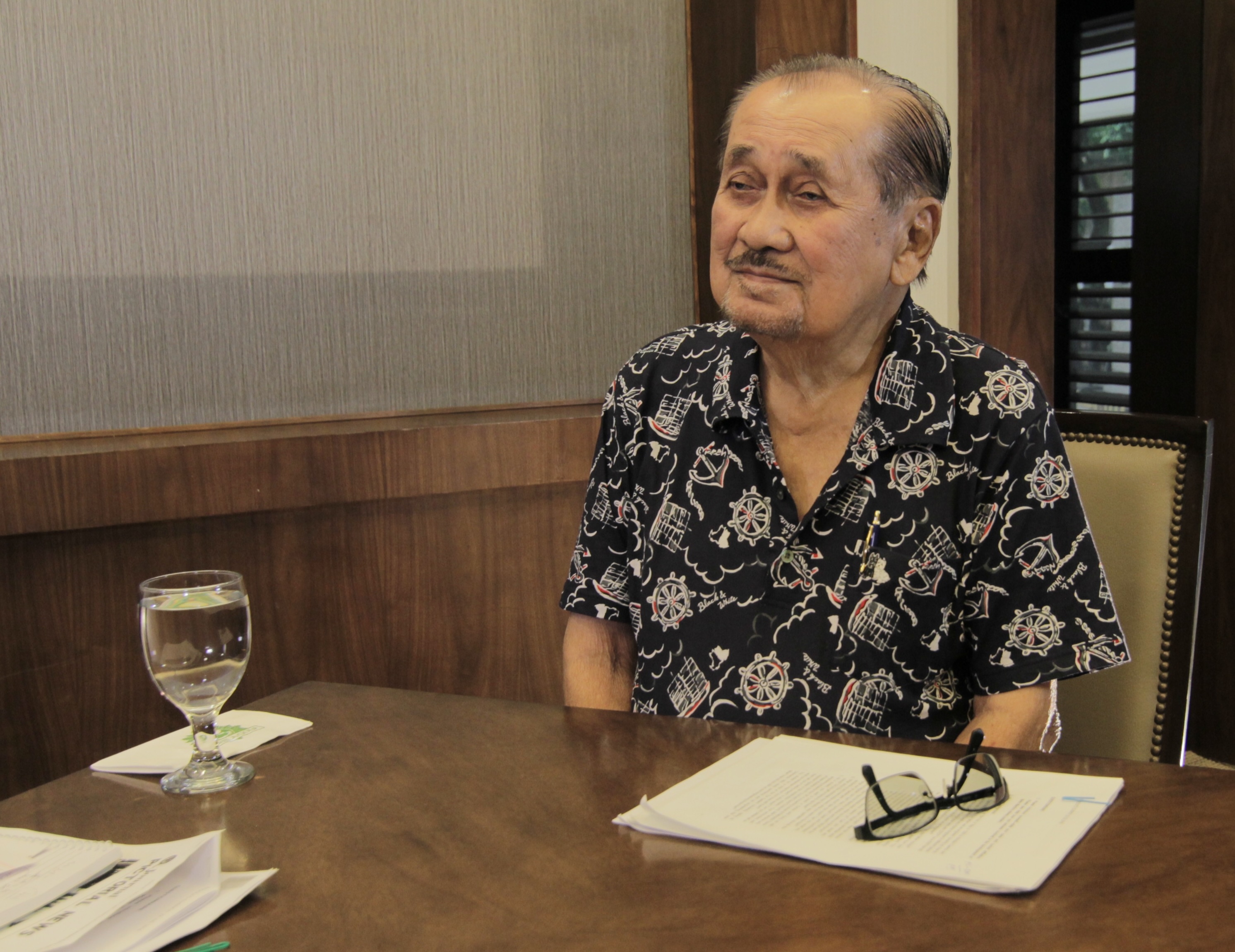
I happened to co-write Cuenca’s biography (Builder of Bridges: The Rudy Cuenca Story, Anvil Publishing, 2010, unfortunately long out of print), after initially refusing to do so. “Why should I write your book,” I told him at our first meeting, “when your boss put me in prison?” “I have stories to tell,” he said, and did he. It wasn’t the money—which ironically was a pittance—but the curiosity that got me on board. And just to show it wasn’t a hack job on my part, the book became a finalist for the National Book Awards for that year.
Rudy—who died two years ago—wasn’t an engineer and didn’t even finish college, but he learned the ropes of contracting doing small bridge projects under the watchful eye of US Army engineers who had him redo the job at a loss if it was substandard. Because American reparations money was involved, the Americans made sure it was well spent.
Cuenca soon learned the other, non-technical aspects of the business. To move up, you had to pay up. I interviewed him in 2009-2010 in his modest office along EDSA near Guadalupe—any aura of big wealth and power had long been dimmed by years of exile and dealing with lawsuits—and at that time, he lamented the fact that corruption had gone over the top. A cool and down-to-earth kind of guy, he told me in so many words that (and I paraphrase) “In my time, nobody asked, but you gave. The amount was reasonable, and you dealt with just one person. Today, you’re told up front how much to pay, an outrageous sum, and you keep paying up the ladder.”
While his statements may be self-serving and certainly liable to be interrogated, they should and do raise eyebrows:
“In the late ‘60s, we were looking for funding and supplies for the food terminal. We talked to a bunch of German suppliers, and during our discussion they asked us, why is it that the Japanese get called to work with Philippine projects? I said, you know, the Japanese have a style of business that you don’t understand—they know how to give gifts. And they don’t give gifts before, they give gifts after. But you guys are so decent, that’s why you don’t get jobs here.
“There was already corruption at that time, but it was not rampant and as grossly done as it is done now. If before people would overprice by about 5 or 10 percent, now it’s about 30 percent.
“You know, construction is the best source of graft. What Imelda did were seven-day wonders. I didn’t want to have anything to do with those. I was only involved with the reclamation of the area for the Cultural Center. They paid us, but her manager wanted his kickback. Imelda had her own group of contractors, and that’s where they all made money.
“But it wasn’t just then. Do you remember when Pinatubo erupted? The job then was to clear lahar. Now there’s a place in Daly City, San Francisco, that’s known as Lahar City. The people who live there are Pampangueños who earned lots of money because of the lahar.
“Also during Ramos’ time, Ambuklao Dam was silting. As the dam silts, the ground level goes up, and the water gets smaller, so you have to desilt it. Here comes the contractor with a dredger. But instead of doing a proper sounding first, they raised everything, so that difference got factored into the job.
“I don’t have any concrete proof of corruption in the current administration, but I think it’s safe to say that graft and corruption will always be present, especially in our government. I have heard that contractors—my brother is still a contractor himself—supposedly deliver money to a Cabinet member, who then turns it over to someone in the Palace. But nobody can say that. If you’re at the top, you have a fence, and only the closest people should be able to touch you so that you’re isolated.
“I once told Secretary Vigilar that to reduce corruption in Public Works, they should follow a 10-year plan for big projects, meaning that you will pay the contractor 10 years after the project has been completed to your satisfaction and has been transferred to you. That way the contractor will not be as willing to pay off anyone while the project is ongoing because if he does, he’ll be liable for the quality of the work that he has done.”
When I asked him why the roads in places like Malaysia seem much better than ours, he said: “It’s simply a matter of greed. In Malaysia there’s also corruption—I’ve lived there, I should know—but the thieves there make their money by overpricing the materials. Here in the Philippines people are extraordinarily greedy. Not only do they overprice, they also steal the materials. The cement’s deficient, the gravel’s deficient. So the thing crumbles that easily.” In other words, there was honor among thieves; sure, they stole, but at least they built up to spec.
That was 15 years ago, back when the Discayas and their like were probably driving around in Toyota Corollas and buying microwaveable meals at the 7-11.
One day Rudy got up from our interview and said he was going somewhere—to meet up with the new DPWH secretary, Rogelio “Babes” Singson, to offer some unsolicited advice on how to reduce corruption in his department. I don’t know if that meeting or that chat ever happened, but barely a month ago, in a TV interview, Singson was quoted as saying that “In my full six years at the DPWH, I spent only P182 billion for flood control. Look at the 2025 budget with this insertion—where did the P350 billion go?”
I never thought I’d miss a Marcos crony, but I’m missing Rudy Cuenca now, as an expert witness to help us sort out this sordid mess.
 Pinoy Penman 3.0