Qwertyman No. 66: Beyond Reportage

Qwertyman for Monday, November 6, 2023

IT WAS probably fitting that I finished reading Patricia Evangelista’s highly acclaimed account of “murder in my country,” Some People Need Killing (Random House, 2023), over a holiday devoted to remembering the souls of the departed. I had received a pre-publication review copy from the publisher months ago under a strict embargo not to talk about it until its formal launch. As it happened, it lay under a pile of other books to be read until a flurry of posts and reviews reminded me that it was out in the open, and that the secret—not just the book, but also what it contained—could now be shared.

I can still recall the day—May 15, 2004—while we were celebrating Pahiyas in Lucban when I got the news on my phone that our representative to the English Speaking Union’s annual public speaking competition in London—a bright and pretty wisp of a teenager named Patricia Evangelista—had won the top prize. We were new to the ESU—subsequently we would produce two more global champions—and it was a grand way to announce to the world that we Filipinos could produce more than boxing heroes and beauty queens. Here was 18-year-old Patricia who could think on her feet and speak to issues of international importance, the poster child of Filipino intelligence and audacity, whose command of the English language led her to meeting no less than Prince Philip, the Duke of Edinburgh, in what amounted to a mini-coronation in recognition of her talent.

As magical as that moment was, I can only imagine how, in the months and years following, it must have begun to grate on the young Patricia to be asked to deliver her prizewinning speech in public forums over and over again, like a wind-up doll, and suffer the fate of prodigies who peak too soon. Surely that was just a beginning; surely there was more she could do—had to do—to outlive her Cinderella-like debut in London. 

I would see some of that when she enrolled in my undergraduate Fiction Writing class in UP. I knew who she was and made sure to give her no special treatment—indeed to lean even a little harder on her, knowing she had what it took—but she got a “1.0” all the same, one of the few I ever gave. I can’t claim to have taught her much how to write imaginatively—her own reading had likely primed her for that—but I can’t pretend not to be proud of what she turned out to be, my pride tempered only by fatherly concern.

Today, almost 20 years later, the sometime ingénue returns to the global stage as a hard-bitten, chain-smoking investigative reporter—a “trauma journalist,” in her own words, very possibly one of the world’s best yet again. But there is no real prize, no princely reward, for this kind of distinction, only pain and sorrow which—subdued too many times as a matter of professional discipline—exact their toll on the body and spirit. Patricia has had to suffer that to be able to tell her story as clearly as she could, unimpeded by the hand-wringing and the preachiness that often accompany such exposés of grave misconduct. 

This is not a review of the book’s explosive investigation into the thousands of extrajudicial killings that happened under the Duterte regime—that’s been done very capably by others, and is already the subject of international inquiry. The book will deserve all the journalistic accolades coming its way as an exemplar of excellent reportage. 

I will not even quote from the book, as there are simply too many quotable paragraphs to choose from. Rather, I want to note, from my privileged perspective and for the benefit of younger writers, how Patricia works with language to best serve the truth. Quite apart from its journalistic merits, Some People Need Killing is one of the best textbooks out there for what we now call “creative nonfiction,” a compound of reportage, memoir, history, and fictional technique. Indeed, beyond reportage, the book is a long personal essay in which the author is inextricably part of the story, a significant step away from the impersonal and largely mythic “objectivity” that we associate with traditional journalism.

Probing murder after ghastly murder—sometimes even coming on-scene to prevent one—Patricia is both chronicler and agent, witness perhaps not to the killing itself but to the larger crime of its planning and the exoneration of its perpetrators. Handling the most sensitive and dangerous of material, she draws on more than skill to tell her story; she demonstrates raw courage, an increasingly rare quality among journalists easily seduced and silenced by pragmatism. She names names, which surely will bear consequences both ways. 

I’ve often remarked in my lectures that the most endangered writers in this country are neither the poets nor the novelists, but the journalists who cannot hide behind metaphor and simile to tell the truth. We fictionists make artful lies which governments rarely have the intelligence or the patience to grapple with. Journalists live in the literal world inhabited as well by cops and crooks; what’s interesting is how the flimsy but oft-repeated fictions of “killed while resisting arrest,” so pervasive in this book, emerge from that reality.

Evangelista’s overarching technique is one of narrative restraint, informed by an English major’s awareness of how language and reality shape each other. She constantly parses the perversions of language—how words like disappearsalvageencounterverification, and even her own name assume different uses and meanings over time, in specific contexts. She knows—as I remind my students—that for dramatic effect, less is often more, that short sentences and blunt, single-syllable Anglo-Saxon words rather than the long, Latinate ones favored by lawyers hit closer to the gut and heart.

She is keenly aware of the power of irony—of professed liberals supporting EJK, of a morally ascendant Noynoy Aquino showing little empathy for ordinary folk, of her own journalist-grandfather affixing his signature to a petition supporting the older Marcos, and of communal complicity in the reign of terror. She uses people’s own words against them, quoting from the record. She avoids direct editorializing, or speaking in lofty generalizations like “justice” and “civil liberties,” and instead, in the best noir tradition, sees “sagging two-story tenement buildings (that) opened into dirt roads layered with garbage and last week’s rotten Happy Meal.”

After I had finished the book, I woke up at 4 am from a nightmare about running shirtless down a wet, earthen road. I was lucky. Patricia Evangelista lived through it, and I don’t even know if she’s woken up yet. Have we?

(Image from Rappler.com)
Penman No. 203: Another Filipino Winner at the IPSC

unnamed.jpg

Penman for Monday, June 13, 2016


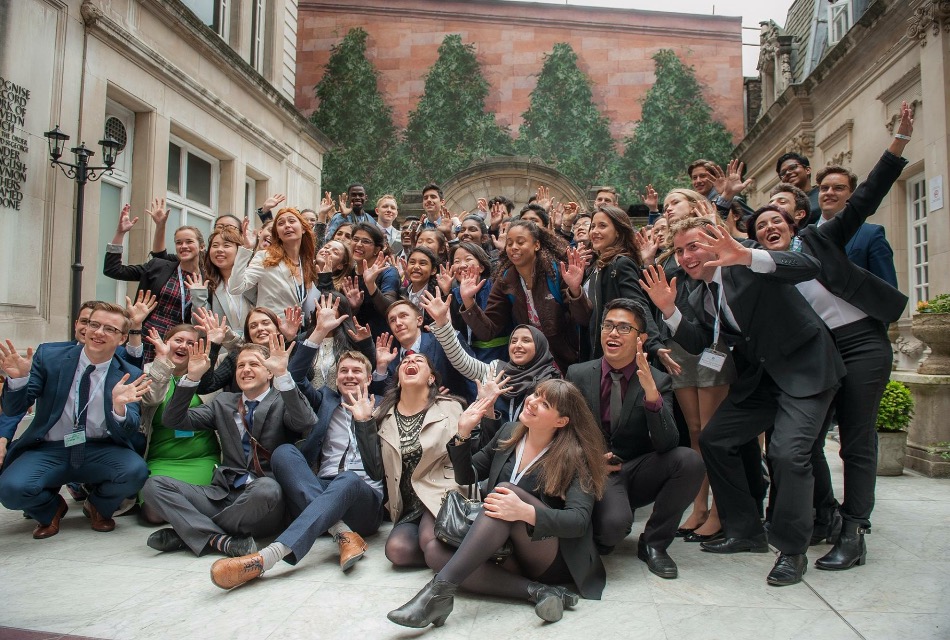
EVERY MAY, at Dartmouth House in London, about 60 young men and women from all over the world gather to represent their respective countries at the International Public Speaking Competition (IPSC). Sponsored by the English Speaking Union (ESU), the IPSC is the world’s premier public speaking event for young people, bringing together the best minds of their generation to share their ideas about the planet’s most pressing concerns.

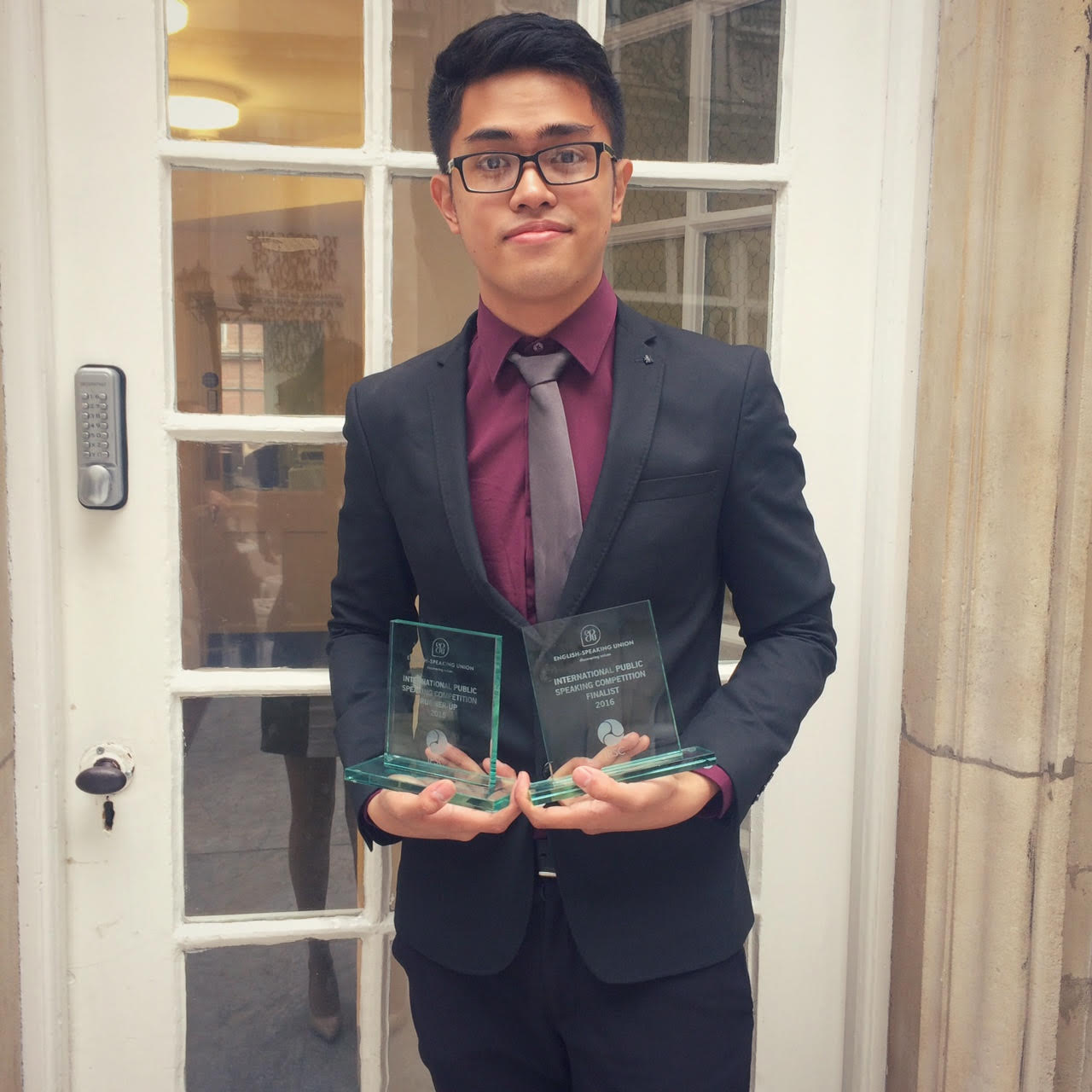
The Philippines has been sending representatives to the IPSC since 2002, and was granted International Charter Membership in October 2005. As a country we have performed superlatively, producing two world champions and at least four semifinalists. This 2016, I’m very happy to report that we notched another spectacular achievement, with Marco del Valle being named global first runner-up, after the representative from Mexico.

Just 20 and a Business Administration junior at UP Diliman, Marco is no stranger to competition, having already won six titles in business and marketing competitions, including the Henkel Innovation Challenge in Vienna, where he and his partner represented the Philippines and also placed second. Marco’s success comes as the latest in a long string of stellar finishes for young Filipino public speakers at the IPSC.

In 2004, 17-year-old Patricia Evangelista stunned everyone when she was named IPSC champion, presaging a successful career in print and broadcast journalism. In 2008, Gian Karlo Dapul became our second world champion at the IPSC, besting 57 other participants from 35 countries—an achievement made even more remarkable by the fact that he was only a Philippine Science High School senior then, competing against mostly college students. (The third-place winner that year, Rajab Ali Sayed of Pakistan, turned out to be half-Filipino.) In 2012, Bryan Chua made it to the semifinals, as did Germaine Chuabio in 2011, and Ervim Charles Orbase in 2010. (In 2012, Hong Kong’s representative in the finals, Ramon Joseph Valentin Romano, was actually a Filipino born of migrant parents.)

This year’s Philippine participation at the IPSC was made possible by the generous support of longtime partners Pilipinas Shell and Far Eastern University, led respectively by Ed Chua and Lourdes Montinola, who both sit on the board of ESU-Philippines. ESU-Philippines Chairperson Gigi Virata and President Marlu Vilches ably led this year’s selection process, along with ESU-Philippines regulars Linda Panlilio, Krip Yuson, and myself. As elated as we were by Marco’s performance, our joy was overshadowed by the recent and unexpected passing of two ESU-Philippine stalwarts—Ambassador Cesar Bautista, our chairman emeritus, and Loline Reed, who had very patiently and kindly guided our representatives in London, along with her husband Ken.

This year’s theme for the IPSC finals was “Integrity has no need of rules,” and Marco drew deeply on his personal experience to address the topic, declaring at one point that “Too often, we demonize people… who don’t live by our religious or social rules. But moral integrity isn’t about obeying rules. It’s about recognizing the fact that while we all make mistakes, we’re all capable of rising above them.”

He explains further: “Overall, my speech was about my relationship with my family, particularly my mother. In the speech (which is the same speech I gave for the national finals), I talked about the sacrifices my mother made in the face of different social norms, the same sacrifices that millions of people make every day. I talk about how our culture stigmatizes families who don’t fit the norm, and how that makes it harder for these families to function. I conclude, however, that the sacrifices we make for those we love will always outweigh any rules or social norms we might break.

“I’d have to say that my favorite part of the whole experience was getting to know the other contestants and hearing their stories. It’s one thing to place countries on a map, but it’s an entirely different thing to actually be roommates with someone from Serbia, to learn about Moroccan weddings and Estonian startup culture, and to hear stories of African democracy as told by someone from Ghana.

“As we went through the competition, I think the feeling we all got as contestants was that we weren’t competing against each other as much as we were sharing our own experiences. I was really happy to be able to show a bit of my culture to the world and share what makes Filipino culture special. Yet when you hear speech after speech from so many brilliant young minds around the world, you start to realize that there’s really not that much which separates us from other countries: we share the same dreams, the same fears, and the same ambitions. Above all, this is what I think the ESU IPSC really helped showcase: that it’s possible to celebrate our differences as individuals and as nations, while also respecting and recognizing the things we have in common. And in a world where fear and intolerance are rapidly becoming the political weapons of choice, I think it’s a lesson more people should learn.

“When I entered this competition, all I really hoped for was the chance to share my story and talk the causes I believe in. Thankfully, I’ve been given the chance to do so much more. Winning 1st runner-up is, for me, more than just a personal accomplishment. It’s a chance to show the world that the Filipino spirit is capable of anything.”

Marco’s IPSC experience mirrors that of his predecessors, most of whom have gone on to distinguished careers in public service, media, education, and business. Dr. Renzo Guinto of UP Manila, our IPSC representative in 2008, recalls that “I learned to understand, appreciate, and respect cultures and perspectives that are different from my own, which in turn bolstered my sense of empathy. I could say that the ESU contest played a crucial part in preparing me to become the global health advocate that I am today.”

Ryan Kaliph Buenafe, who as an FEU student was our first IPSC contestant in 2002 and who now serves as Global E-Learning Manager for the TelePerformance Group, attests that “The ESU content was about practice, revisions, then more practice and more revisions. Preparing for it meant that I had to tell a compelling story and message in a limited amount of time and engage the audience so they would be inspired by my story. This is not easy when you’re young. There’s no Wikipedia or Google shortcut. I had to work hard, then practice and revise. This is, as I have found out as an adult, a great preparation for life. We practice what we do so we can do it better and allow others to share their greatness (such as Dr. Jimmy Abad and Krip Yuson who helped me improve and revise my speech). It is our small but significant opportunity to share with the world, on a global stage, the story of our people and our selves…. If we are to learn from history and combat terrorism and hate, we need to connect as one people. ESU is a forum where such a connection is made possible and it has been the greatest experience of my youth.”

We can only hope that more young Filipinos like Marco will emerge to speak for the Philippines on the global stage and be heard for what they have to share. Mabuhay!

image2.PNG

(Photos by Giulia Rampinelli)