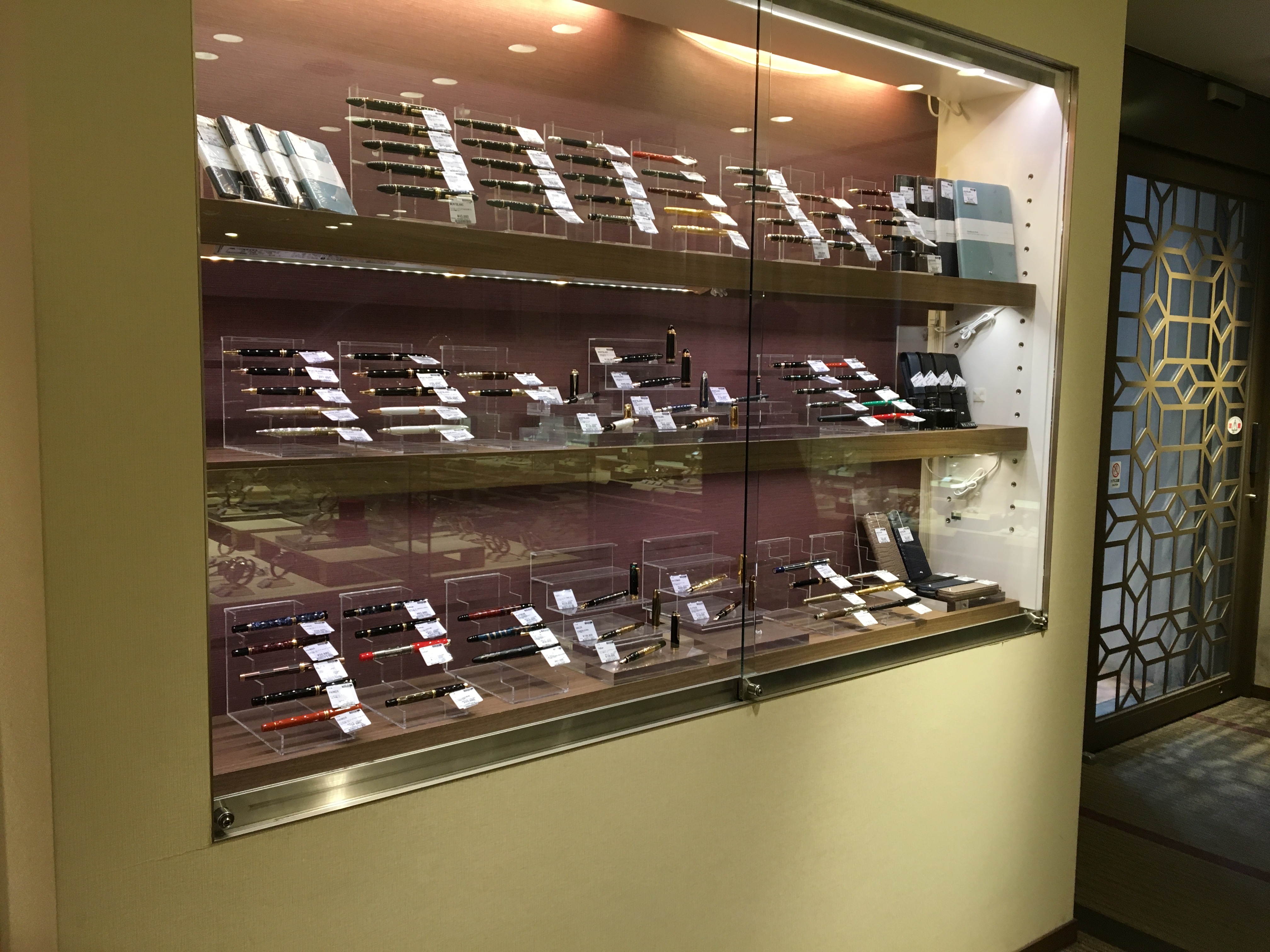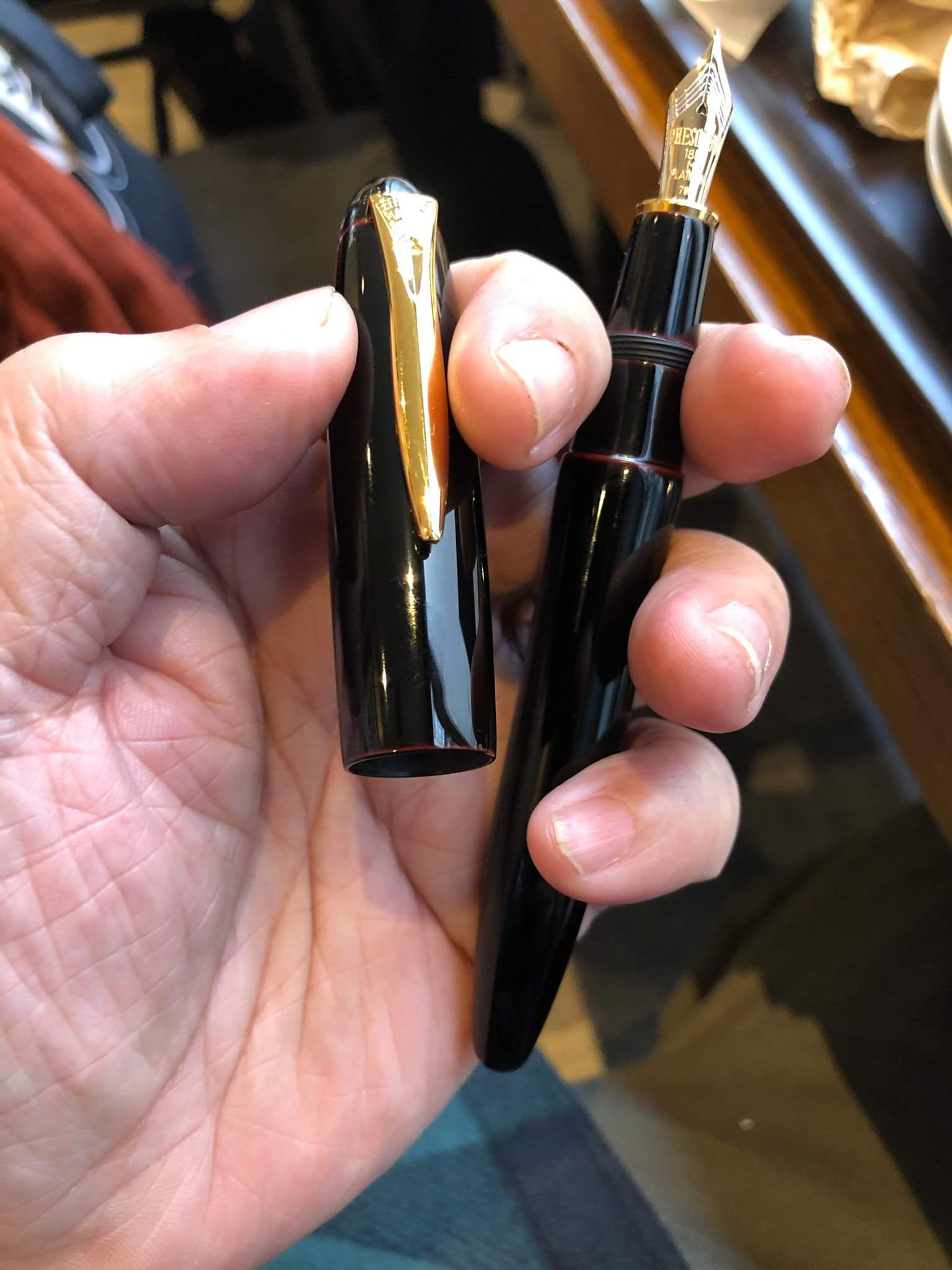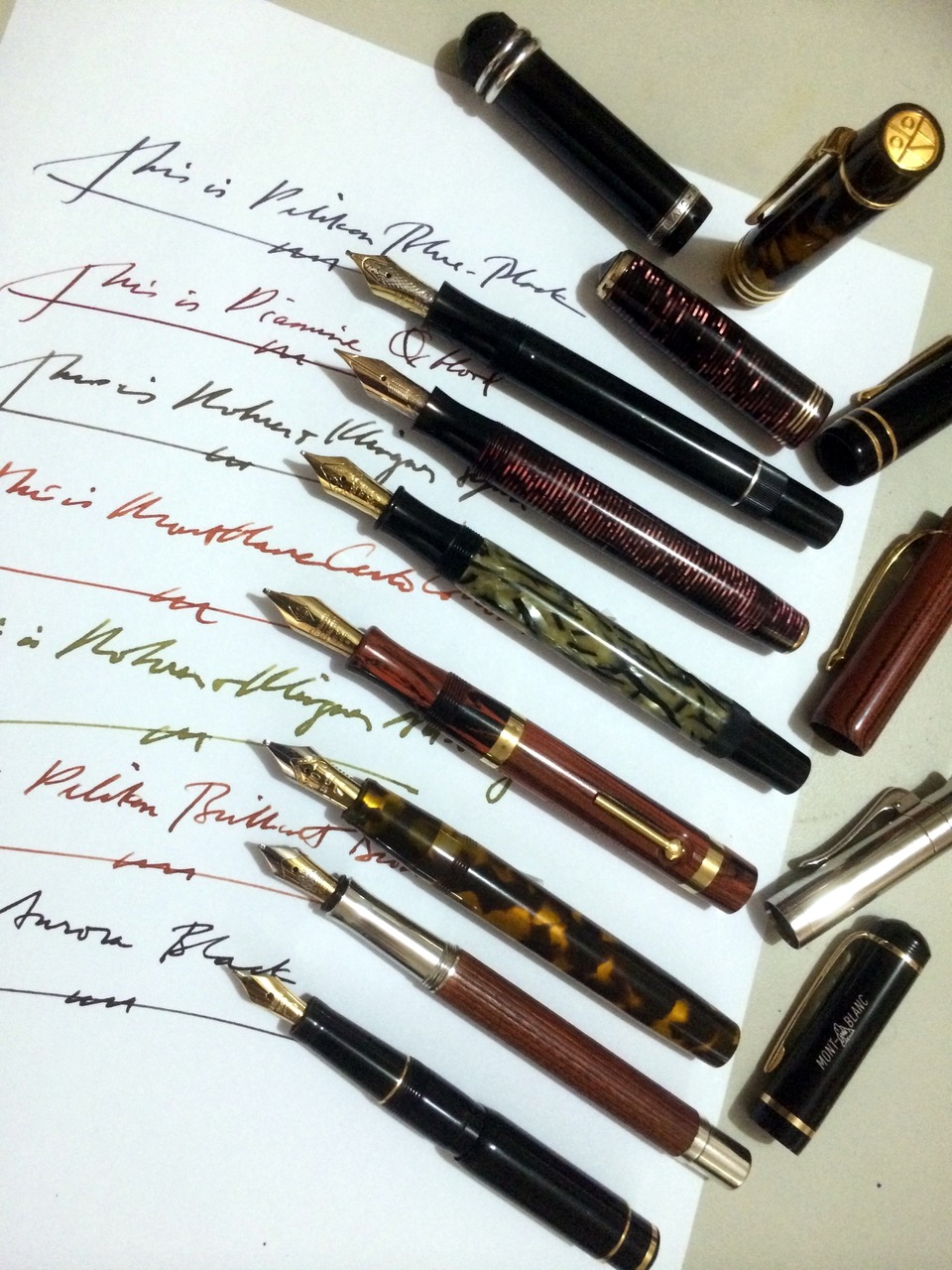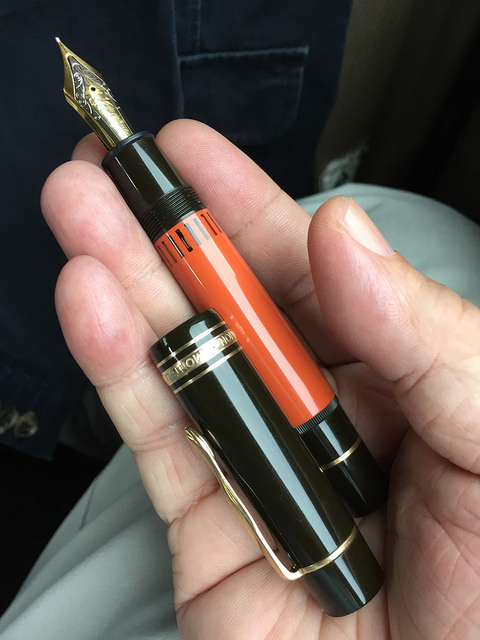
Penman No. 472: Manila Pen Show at Manila Pen

Penman for Sunday, March 9, 2025
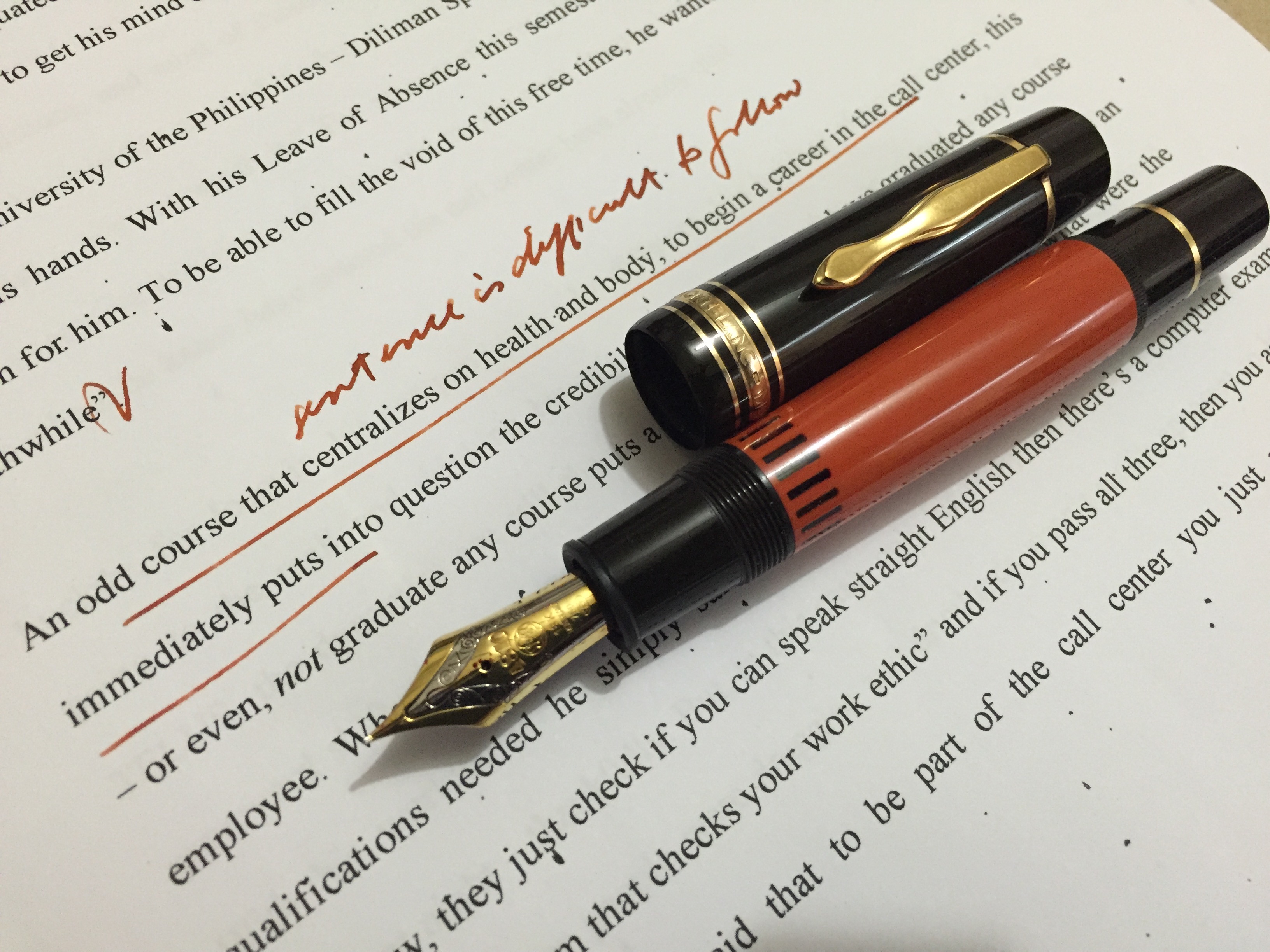
FOR A group that began in our Diliman front yard with less than 20 people almost 17 years ago, the Fountain Pen Network-Philippines (FPN-P) has come an awfully long way. With over 14,000 members online, meeting physically by the dozens in regular “pen meets” held in hapless cafes and restaurants, and thousands more informal recruits among families and friends, FPN-P should really register soon as a partylist devoted to “spreading the joy of handwriting with fountain pens.” We have active chapters in Baguio, Bacolod, and Davao, among other places; quite a few members even reside abroad but keep in regular touch through the group’s FB page.
As I’ve often written here before, the allure of fountain pens lies in their rediscovery by digital natives as a means of self-expression—of recovering one’s uniqueness in a universe homogenized and anonymized by computer code. Our ranks include Supreme Court judges, Cabinet undersecretaries, artists, professors, doctors, and lawyers, but most of our members are young professionals in their twenties and thirties for whom writing in cursive is itself an adventure. There are probably hundreds of thousands of pen fanciers (as they used to be called) around the world, mainly in the US and Europe, but what distinguishes FPN-P is its youthful vibe and the infectious fanaticism of its members.

Some fall in love not just with the pens but with penmanship itself, and become calligraphers. Others grow enamored of inks and papers of a bewildering assortment—inks that shimmer and sheen, combining lustrous gold with a deep oceanic blue, and papers that range from silken smoothness to almost parchment-like toughness.

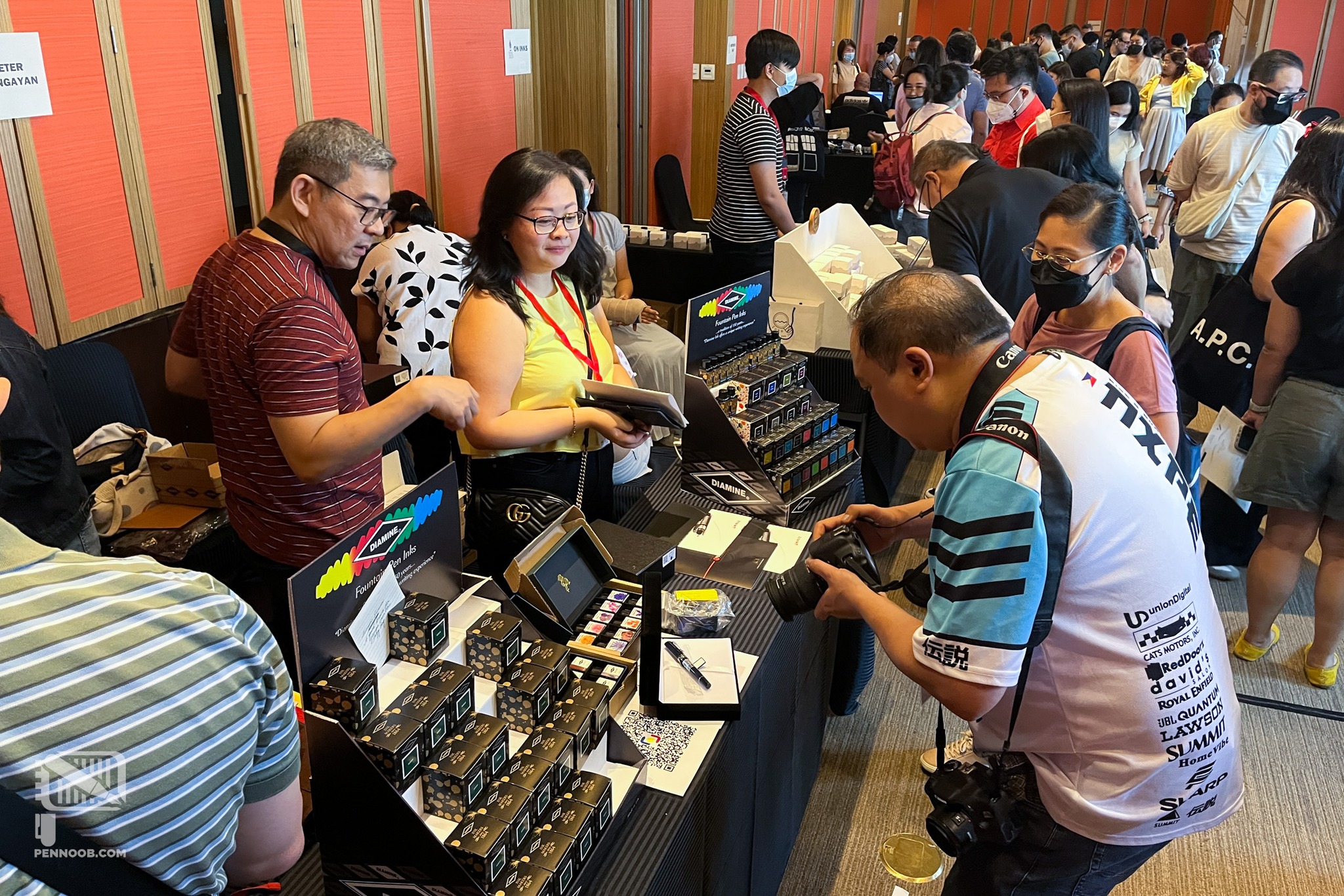
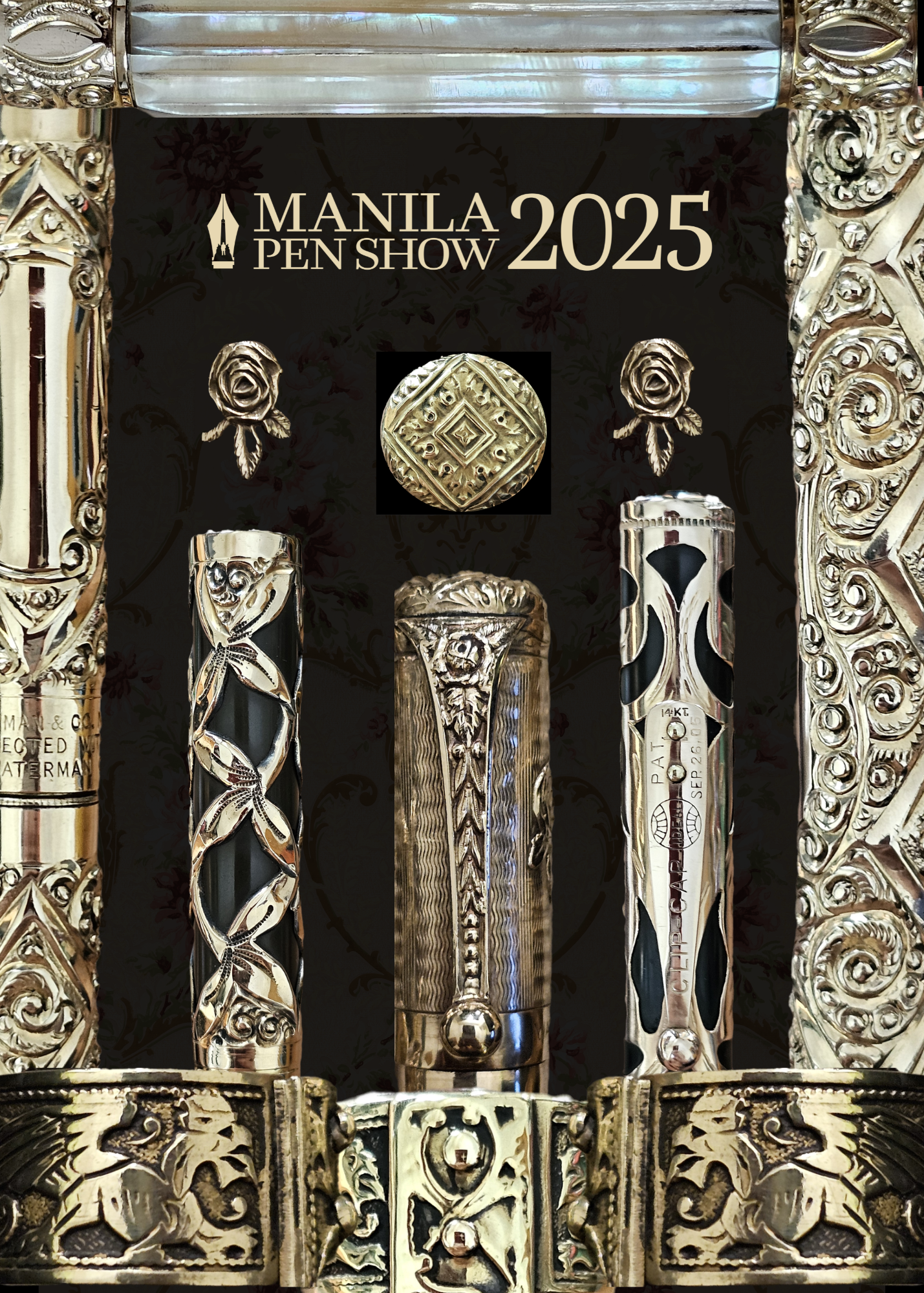
Next weekend, hundreds of these penfolk (and the general public) will converge at the 5th Manila Pen Show that will be taking place March 15 and 16 at—fittingly enough—the Peninsula Manila. 
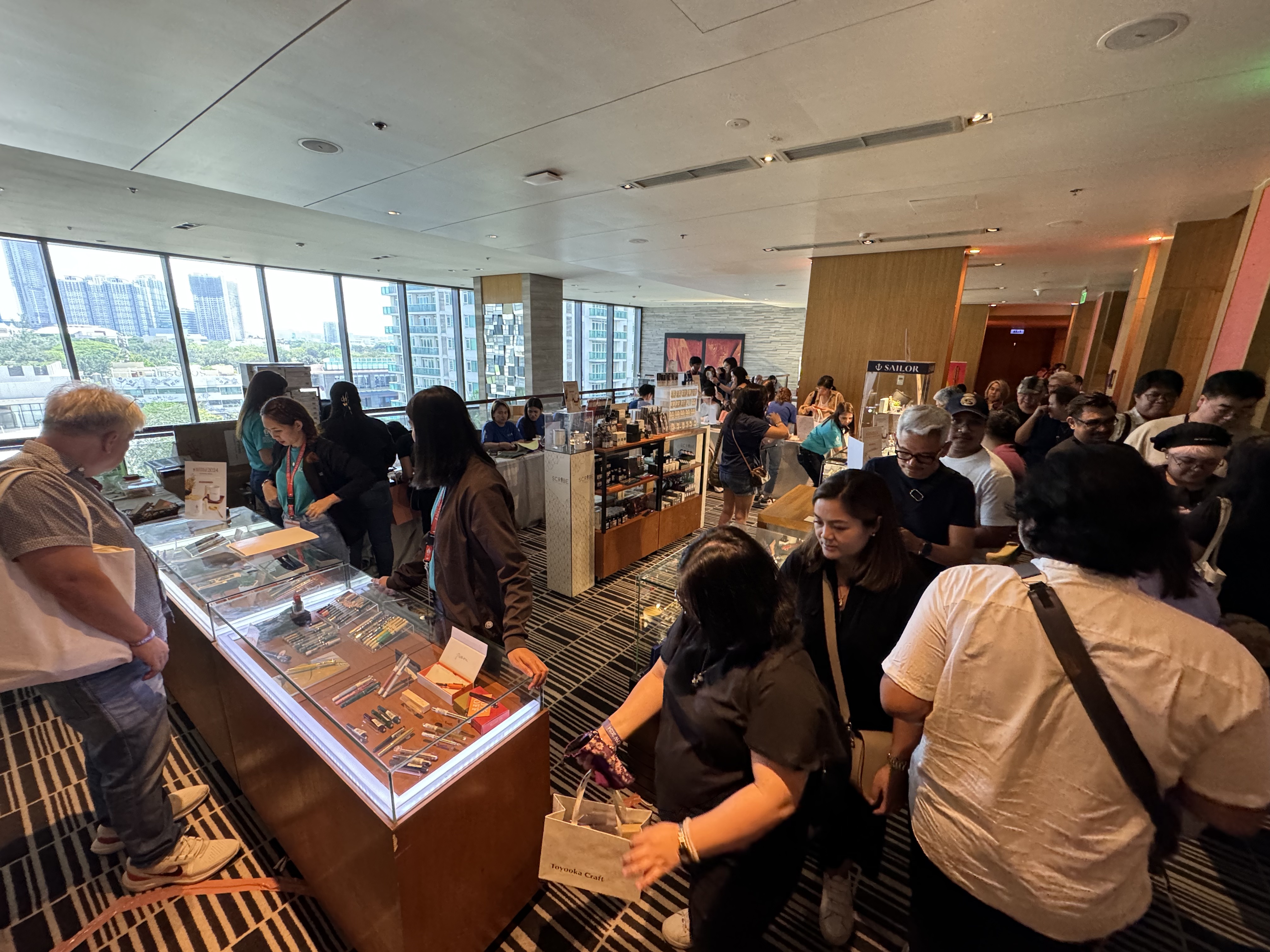
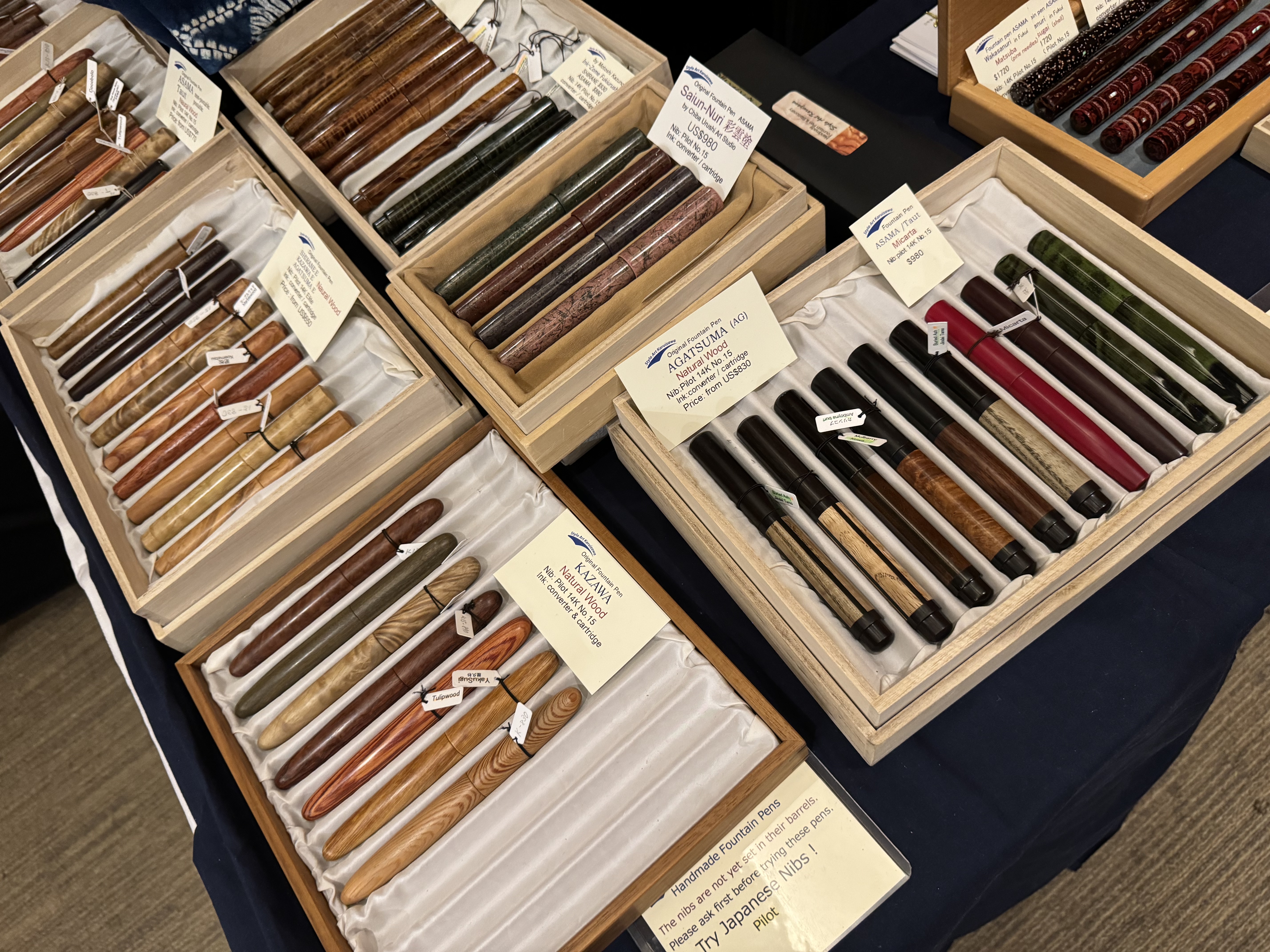
Top pen makers and dealers from Japan, Hong Kong, Singapore, and Malaysia have been coming to the MPS, attracted and impressed by the level of sophistication—and the deep pockets—of Filipino pen collectors. While the MPS has pens for everyone at every price point—from the low hundreds for students to six figures for the big guns—Filipino pen collectors and users at any level have been known for their deep knowledge and obsessive familiarity with all aspects of the hobby. 

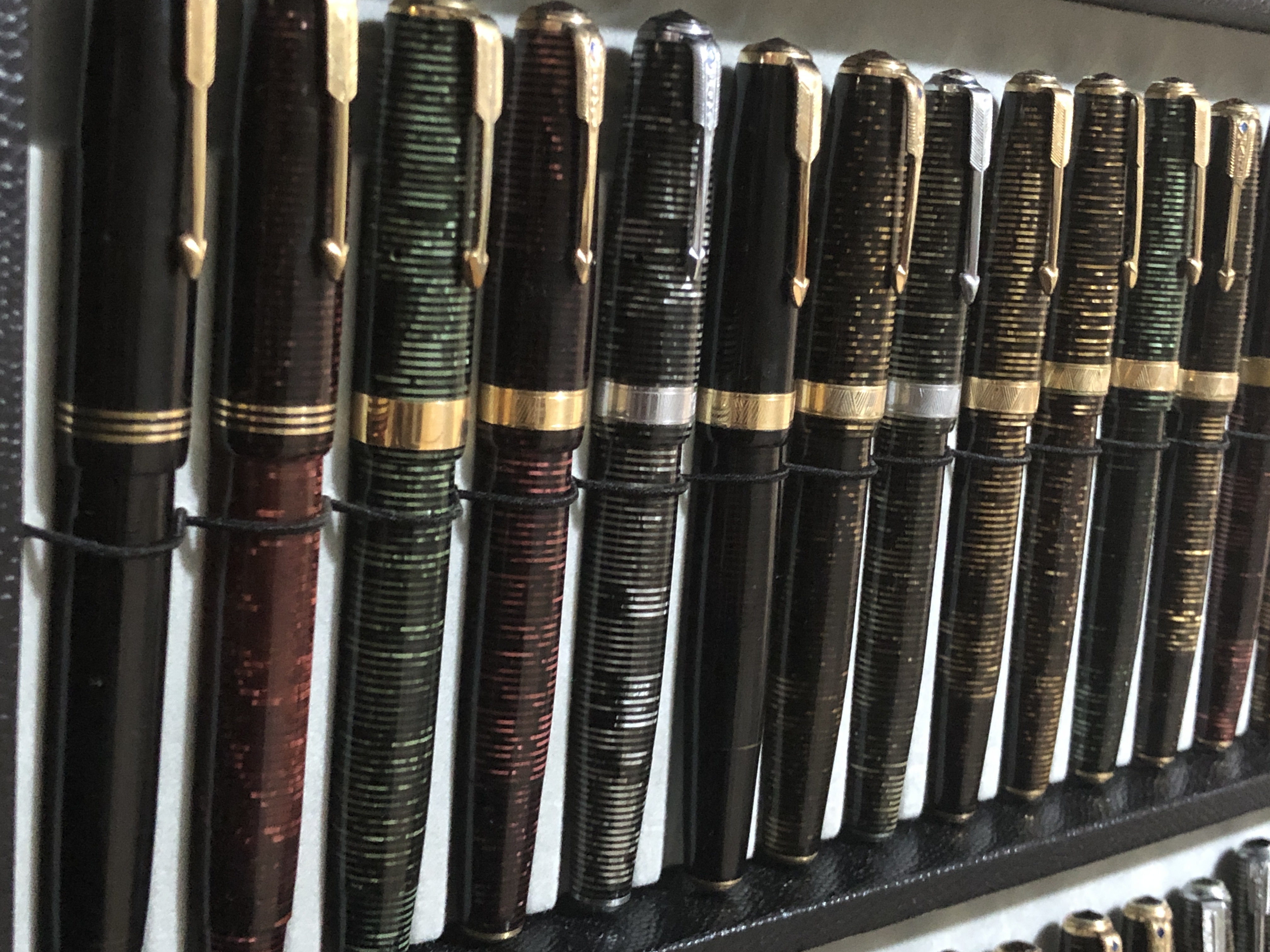
They can tell you how Japanese artisans produce the various kinds and textures of urushi resin that renders pen surfaces impermeable to even acid. They can discuss minuscule but hundred-dollar differences in Parker Vacumatics from the 1930s, or argue passionately for vintage Pilot Myus and exotic inks like the perfume-scented De Atramentis.
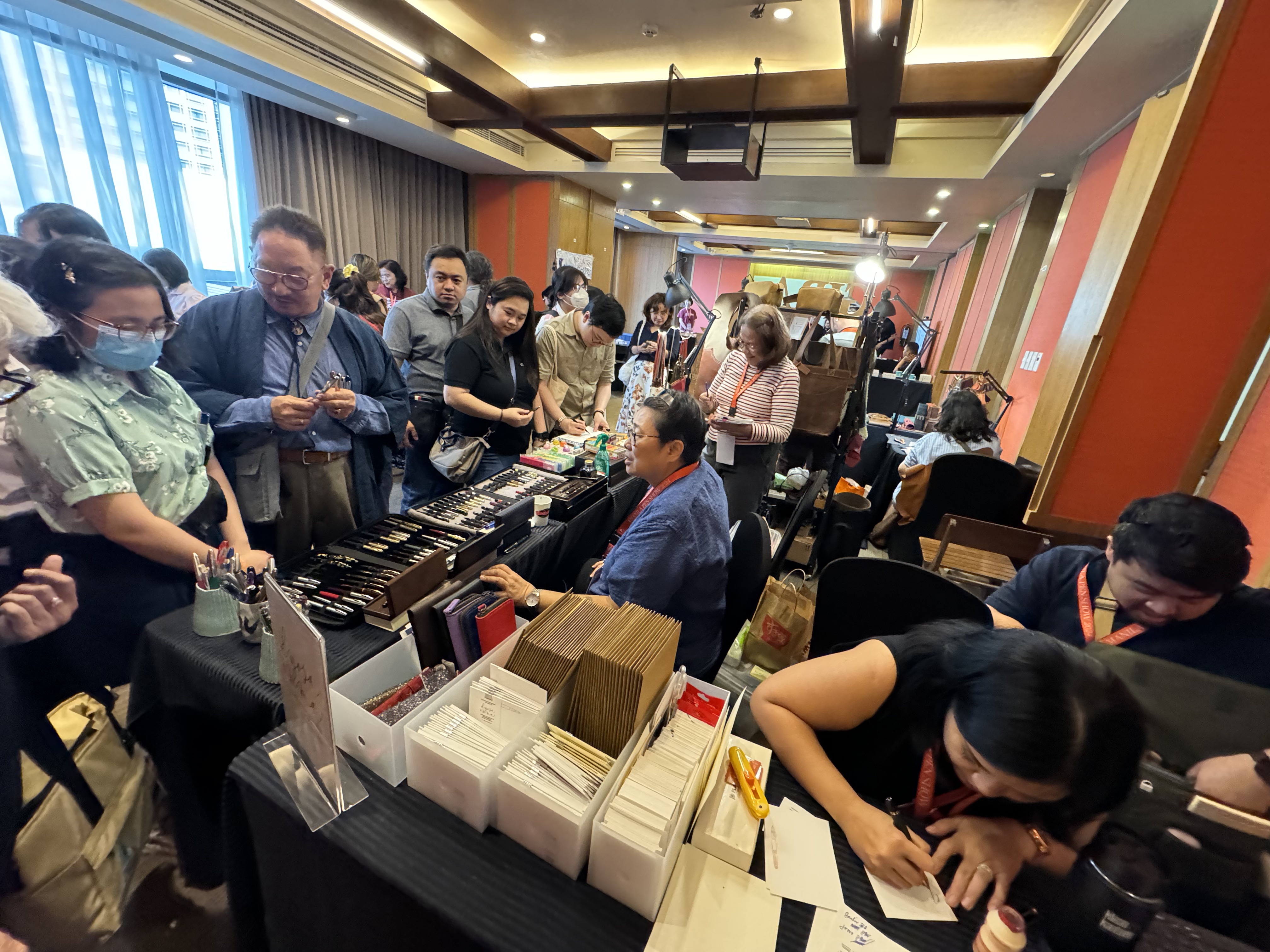
This year’s MPS will not only bring sellers of pens and assorted writing paraphernalia, but also feature workshops and panel discussions on topics ranging from nature journaling and nib care to Art Nouveau and Deco pens (and, most intriguingly, “Your Pen and Your Brain: A Love Story,” to be conducted by Gang Badoy Capati). A group of advanced collectors will discuss the finer points of pen connoisseurship (including that point when pens stop just being writing instruments but become jewelry or even art). 

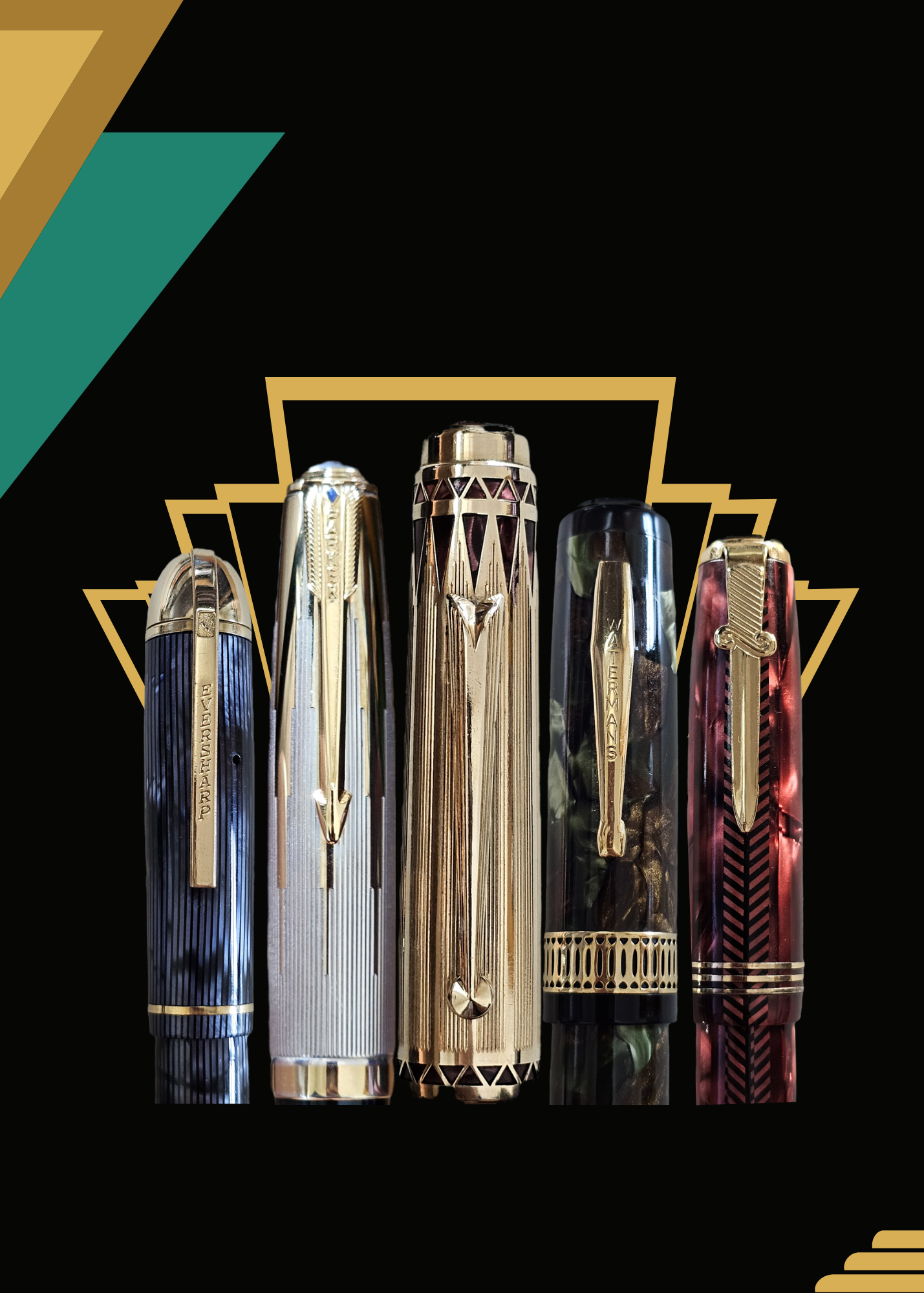
I’ll be on the Art Nouveau and Deco panel, but this time, instead of discussing pens (which others will do this time, all of them experts at particular models and periods), I’ll talk about the peripherals and accessories of the writing trade—the desk pen sets, inkwells, and ink blotters of the kind you would have seen in a typical office desk of the 1930s. 

As with past Manila Pen Shows, nibmeisters or professional pen repairmen will be around to fix that Montblanc nib you dropped on the kitchen floor or your Lolo’s gunked-up Sheaffer that’s been lying in a drawer since he died. One thing most people don’t realize is that most pens, no matter how old, can be fixed (I myself routinely revive 100-year-old Parker Duofolds among other vintage pens in my workshop—you’ll need some special skills and parts, but it’s not rocket science).

You don’t have to be an FPN-P member or even a current fountain pen user to come and enjoy the show. Indulge your curiosity and feel free to see, touch, and test the pens on display (with the exhibitor’s permission, of course, as some pens may require very careful handling). Most sellers will take credit cards or online payment. There will be a modest charge for entry and for the presentations, but all funds raised will be donated after expenses to the Save the Children Philippines, FPN-P’s sponsored charity for the past MPSes. You can find more details about the show at https://manilapenshow.helixpay.ph.
(Image thanks to Raph Camposagrado)
Penman No. 449: Sharing the Joy of Pens

Penman for April 2, 2023

With the successful holding of the 2023 Manila Pen Show last March 18 and 19 at the Holiday Inn Makati, the Philippines firmly established itself as Southeast Asia’s Pen Central—the largest and liveliest marketplace of items and ideas related to one of the world’s fastest-growing hobbies: collecting fountain pens and other writing peripherals (inks, papers, and cases). 

The last MPS in 2019, just before the pandemic, had brought in 700 visitors. This year, that number was eclipsed on just the first day, and by closing time Sunday, over 2,000 pen lovers—from hardcore and advanced collectors picking up $2,000 Nakayas to eager newbies thrilled to get sub-P200 Wing Sungs—had showed up. The turnout wasn’t totally surprising, considering that Fountain Pen Network-Philippines (FPN-P), the pen show hosts and organizers, now counts more than 12,000 members on its Facebook page.

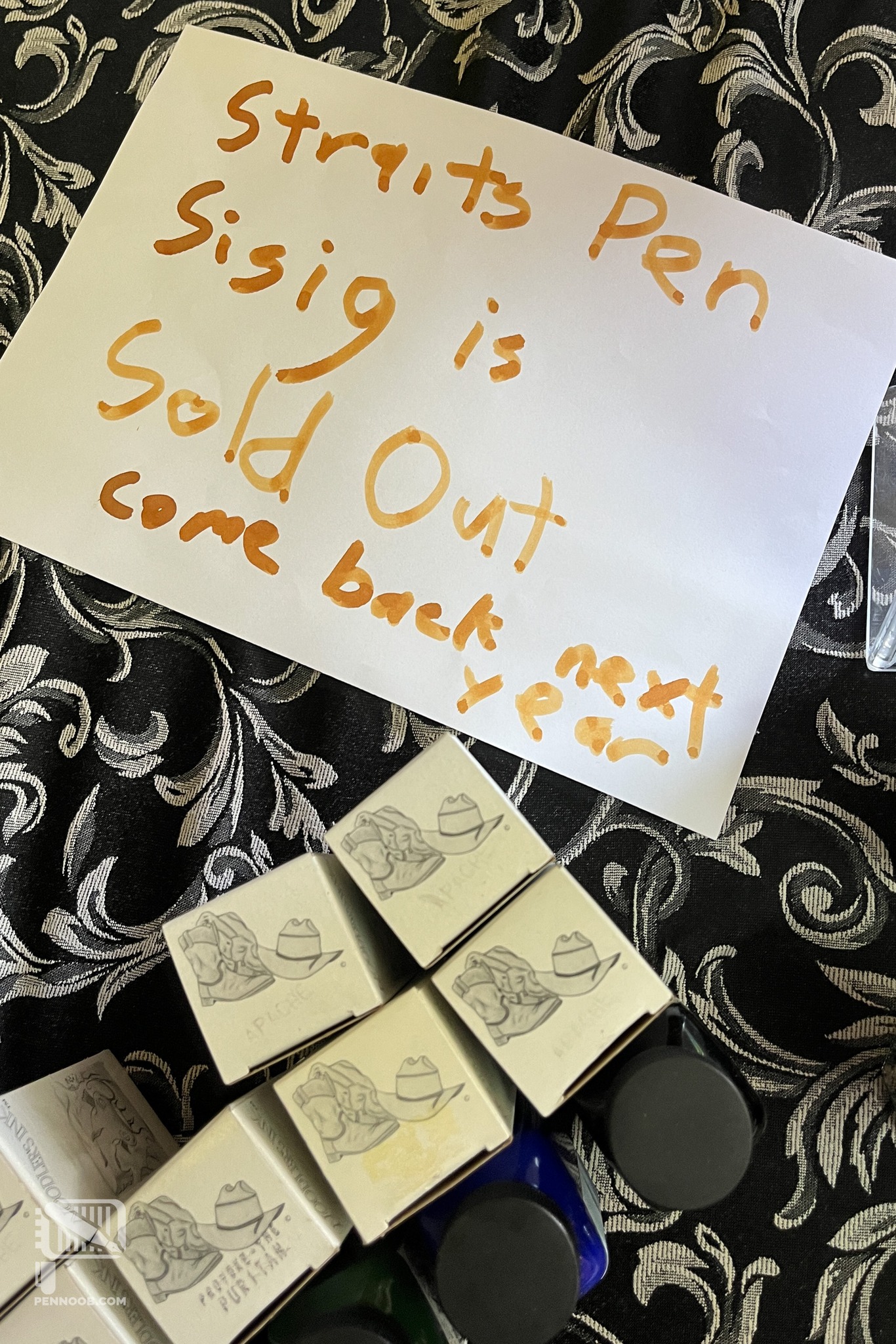
Aside from the country’s leading purveyors of writing paraphernalia—familiar names such as Scribe, Everything Calligraphy, Pengrafik, Stationer Extraordinaire, Leather Library, Leather Luxe, Shibui, Gav N Sav, JumpBid, and Kasama—foreign sellers from Singapore, Malaysia, and Japan such as Aesthetic Bay, Pen Gallery, Straits Pens, Musubi, and Toyooka Craft flew in just for the show. Nearly all the sellers reported robust sales at all price points.

As a longtime pen collector and co-founder of FPN-P, I’m proud of how the hobby has taken off in this country over the past decade, and also frankly amazed by how different our demographics are from the rest of the world. Fountain pen collecting, especially in the West, has long been the domain of predominantly old white men, inclined like I am toward vintage pens and high-end, limited-edition modern pens. 

FPN-P’s profile is distinctly different: mostly young professionals between 20 and 40, with far more women than men, happy to purchase the entire color range of inexpensive Chinese-made Jinhao 82s (and inks to match) but just as savvy about the latest Montblanc release, keen on using and enjoying their pens rather than keeping them in boxes. As the MPS attendance showed, ours is an exuberant, generous, and democratic community, with little sense of entitlement or competition, dedicated to sharing the joy of pens, of expressing your individuality and artistry with the ink on your nib, of doing something personal and authentic in this age of artificial intelligence.

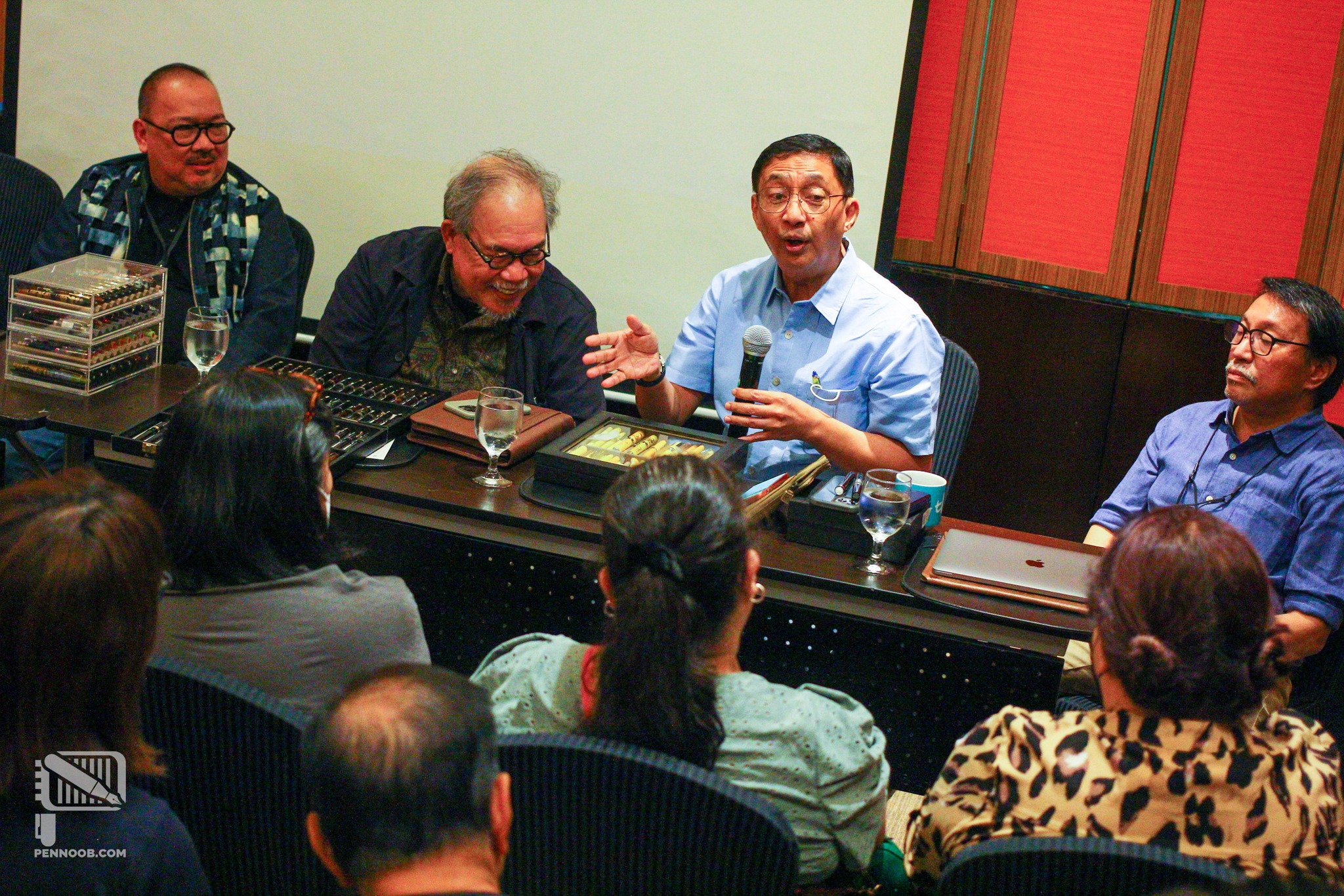
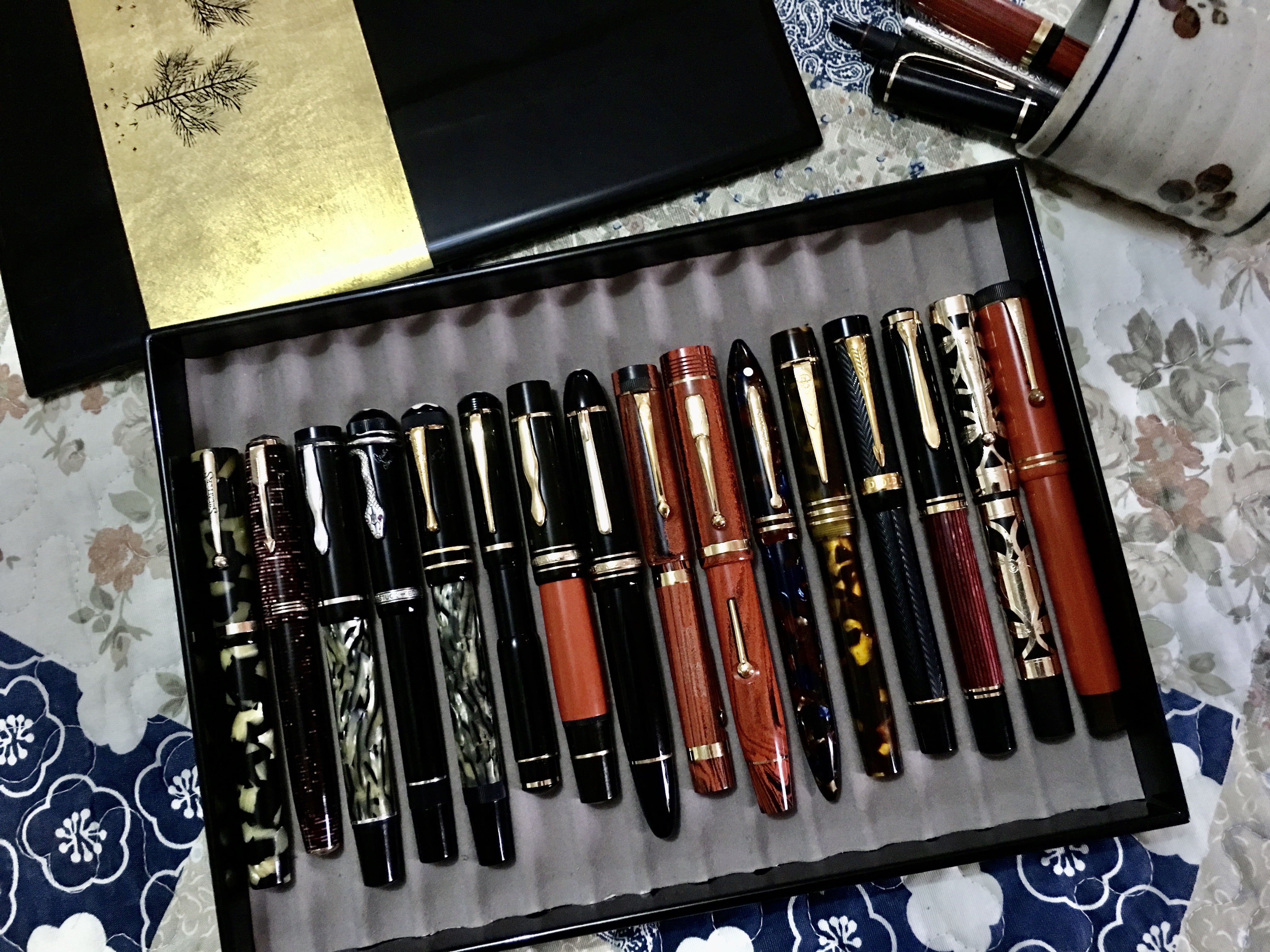
A highlight of MPS 2023 was a panel discussion devoted to the topic of “Curating a Fountain Pen Collection,” and I was privileged to share the table with fellow collectors Reggie Reginaldo, Amanda Gorospe, Jun Castro, Ronnie Geron, and Raffy Aquino. Each of us said a few words about how and why we put our collections together, given that each of us had a different focus: inexpensive pens, high-end pens, vintage pens, yellow pens, and so on.

Before talking about my passion for vintage pens (i.e., pens at least 50 years old, in many cases a hundred years old), I tried to explain what “curation” was all about. Here’s part of what I said:

Every collection begins as most love affairs do—with fleeting glimpses of the loved one, then seemingly chance encounters, then long chats over coffee before the steep and blissful freefall into a dizzying madness. 

For a moment, happiness and contentment reign. And then sadly follow the inevitable regrets, the disaffections, the “It’s not you, it’s me’s,” the parting with the old object of desire and its replacement by a new flame.

Today we’ll try to introduce some sense into this seeming cycle of bliss and despair. Curation means bringing some method into the madness, finding the inner logic that threads many disparate elements together.

The word “curation” is rooted in the Latin curare, “to take care of,” or to treat an illness, and here clearly the illness is in the collector, whom curation treats by providing guideposts to follow and guardrails against excess.

There are several kinds of collectors:

  1. Those who want anything and everything, although they might be more properly called accumulators (this describes 90 percent of us at the beginning);
  2. Those who want everything of a kind (this applies to my fetish for Parker Vacumatics);
  3. Those who want the best or the most impressive of everything (this implies having the budget to go with your taste);
  4. Those who want some very specific things, for personal or even idiosyncratic reasons; and
  5. Those who get only what they need or can afford—perhaps the rarest of all collectors, the practical and disciplined kind.

Vintage collecting relies heavily on connoisseurship—on knowing the field and knowing what to look for. Surprisingly, it often involves less money than buying new pens. Of course there’s a cost to factor in for restoration and repairs, but even so few vintage pens reach the stratosphere of the thousands of dollars you would pay for a shiny new Montblanc.

You can collect based on brand, material, filling system, size, and of course price. For vintage you can add age and scarcity. Good working or repairable condition is presumed, although vintage collectors should always be on the lookout for cheap parts pens. 

Every quest for collectibles also involves what we might call “unicorns”—ultra-rare or one-of-a-kind pieces that exhibit some distinguishing hallmark of quality or technical innovation. These could be prototypes, custom jobs, or things in almost mint condition despite their age.

It also helps to know what you don’t like, or no longer like. For example, I generally don’t go for small and light pens, nor for blingy or too colorful pens. My pens are “lolo” pens—staid, conservative, almost severe, corny to most young collectors today.

Culling or cutting down is a good exercise, financially and mentally. I built up my collection over the years by selling five good pens to get one better pen. I have also sold very good pens that I once lusted after, but no longer spoke to me.

Curation, ultimately, is about knowing yourself. At a certain point in your collecting life, you have to take stock of your collection and ask yourself, “What do these objects say about me?” Is this the self-image I want to project, the one I’m happiest with? 

My answer to my own question is, I’m an old guy who likes old things, because they offer physical proof of life after death. We die, but our words—and the wording—go on. A vintage pen is an old guy lucky enough to find a new home. I’m happy to give him a shower and a warm bed, and all the ink he wants to drink.

Penman No. 363: A Singapore Swing

IMG_0941.jpeg

Penman for Monday, July 22, 2019

I’VE BEEN visiting Singapore nearly every year for one reason or other, usually for a conference or at least passing through Changi on my way elsewhere, but this month Beng and I decided to fly there just to have a little fun.

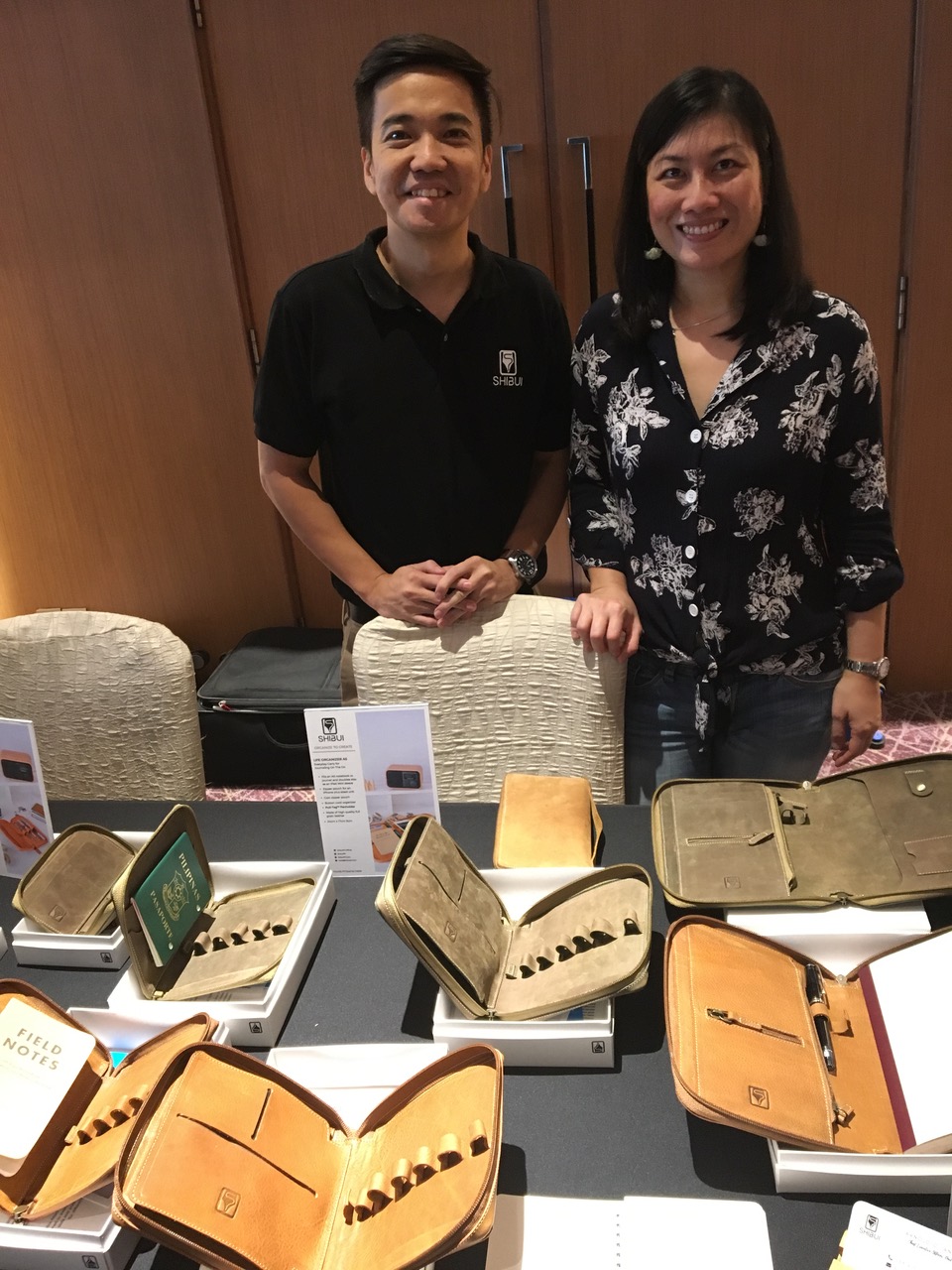
I did have an official excuse, sort of, for this particular swing—the 3rdSingapore Pen Show held at the Marina Mandarin on July 13, which brought together the country’s and region’s premier sellers of pens and related products. I thought I would drop by for a look-see as the “old man” of Philippine fountain pen collecting, and happily I was accompanied by a small but very knowledgeable Pinoy contingent that included adwoman and artist Leigh Reyes (who also happens to be the new president of our Fountain Pen Network-Philippines), medical executive Joseph Abueg, and avid collector Micah Robles, among others. We were all proud to see two major Filipino companies represented at the Singapore show and generating brisk sales and inquiries: Jillian Joyce Tan’s Everything Calligraphy, which was showing off its new line of Philippine-made Vinta inks, and Arnold Ang’s Shibui leather pen cases, which can easily compete in quality and design with the world’s best.

IMG_0335.jpeg

I’ve been to many other pen shows around the world, chiefly in America where they happen year-round, and while Singapore’s may be relatively smaller because newer, it also showcased Asia’s strengths as the producer of some of the world’s finest pens—the high-end Japanese Nakayas, for example, which are rarely seen in the West. Eurobox, which has a formidable collection of vintage pens, came in from Tokyo; and André Mora of the renowned Mora Stylos flew in all the way from Paris with a bevy of their coveted Oldwins. Pen shows are as much about people as they are about pens, and I was delighted to see some old friends like Lai Kim Hoong of Malaysia’s PenGallery, as well as make some new ones like Tan Fong Kum of Singapore’s Aesthetic Bay and Ng Lip Sing of Singapore’s Straits Pens.

So did I buy anything? I normally step out of pen shows with a wild man’s stare, clutching four or five precious finds in my fists, but the great thing about having too many pens is that you know when to stop and to just enjoy the scenery, which is what I did. I came to Singapore to talk pens with kindred spirits, and brought a selection of 12 of my most interesting vintage and modern pens, and had lively conversations about a few of them. Unlike our Manila Pen Show—the next one of which will take place November 16-17 this year—which is far busier and which features more side events like lectures and demos, Singapore’s was still more of a market than a community, and I would’ve liked a longer chat over coffee with our local counterparts, but maybe next time.

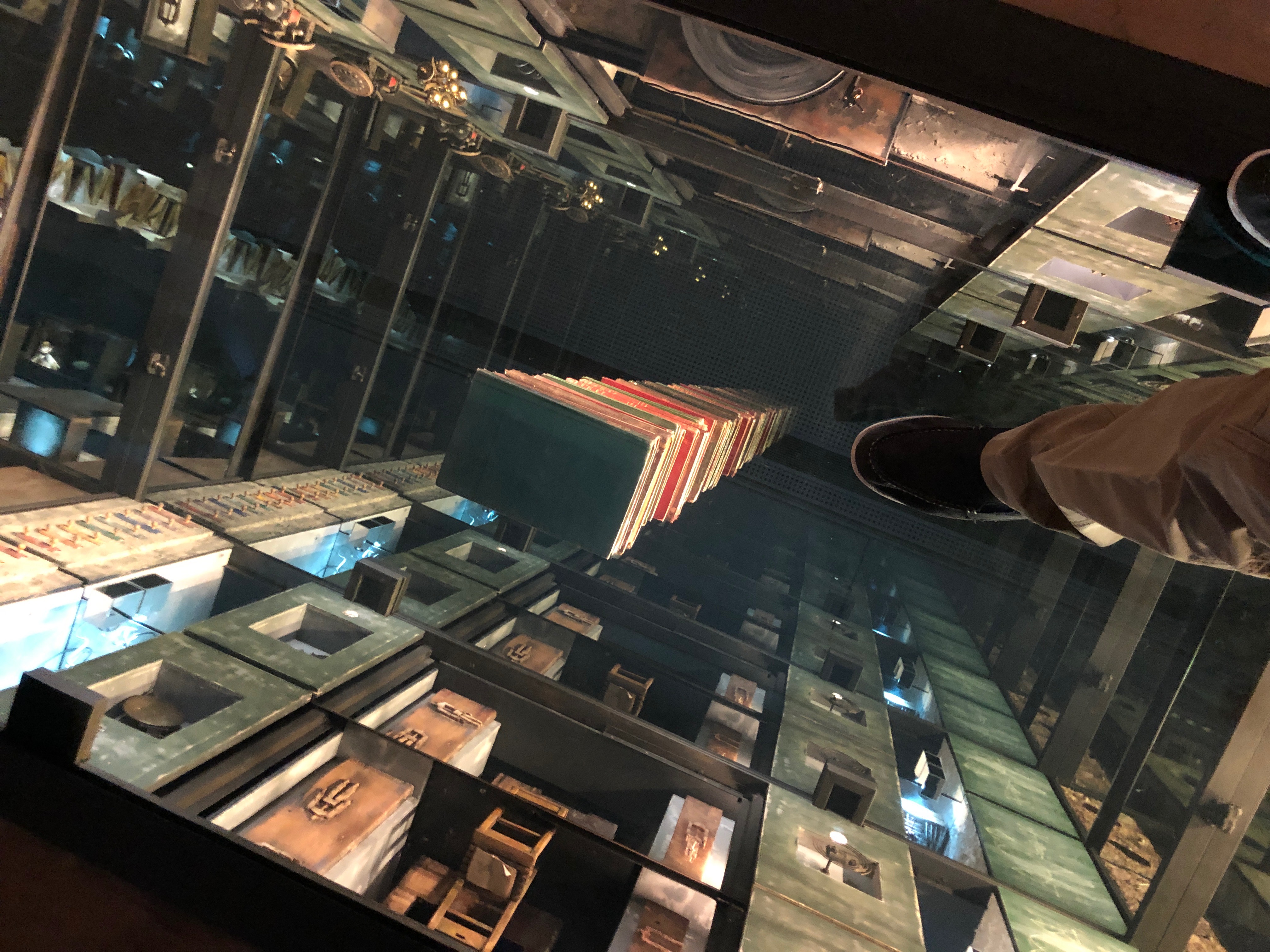
Our other objective for this Singapore trip was to visit the National Gallery, which somehow doesn’t figure on most tourist itineraries like the Marina Bay Sands or the Gardens by the Bay. Built where the old City Hall and Supreme Court stood, the National Gallery is both an imposing but also welcoming structure, with guides and docents ready to walk you through the exhibits. Aside from Singaporean art, of course, the gallery’s strength lies in its collection of Southeast Asian art, which is breathtaking in its range of styles as well as in its commonality of themes—nation, nature, people. Filipino talent is well represented throughout the exhibit—from the ground floor, where Mark Justiniani’s mind-blowing (and, for the vertiginous like me, unnerving) “Stardust” bridge obliges the visitor to take a literal walk through bottomless space, to the succession of galleries on Levels 3-5 where “Between Declarations and Dreams: Art of Southeast Asia since the 19th Century” is on show.

IMG_0924 2.jpeg

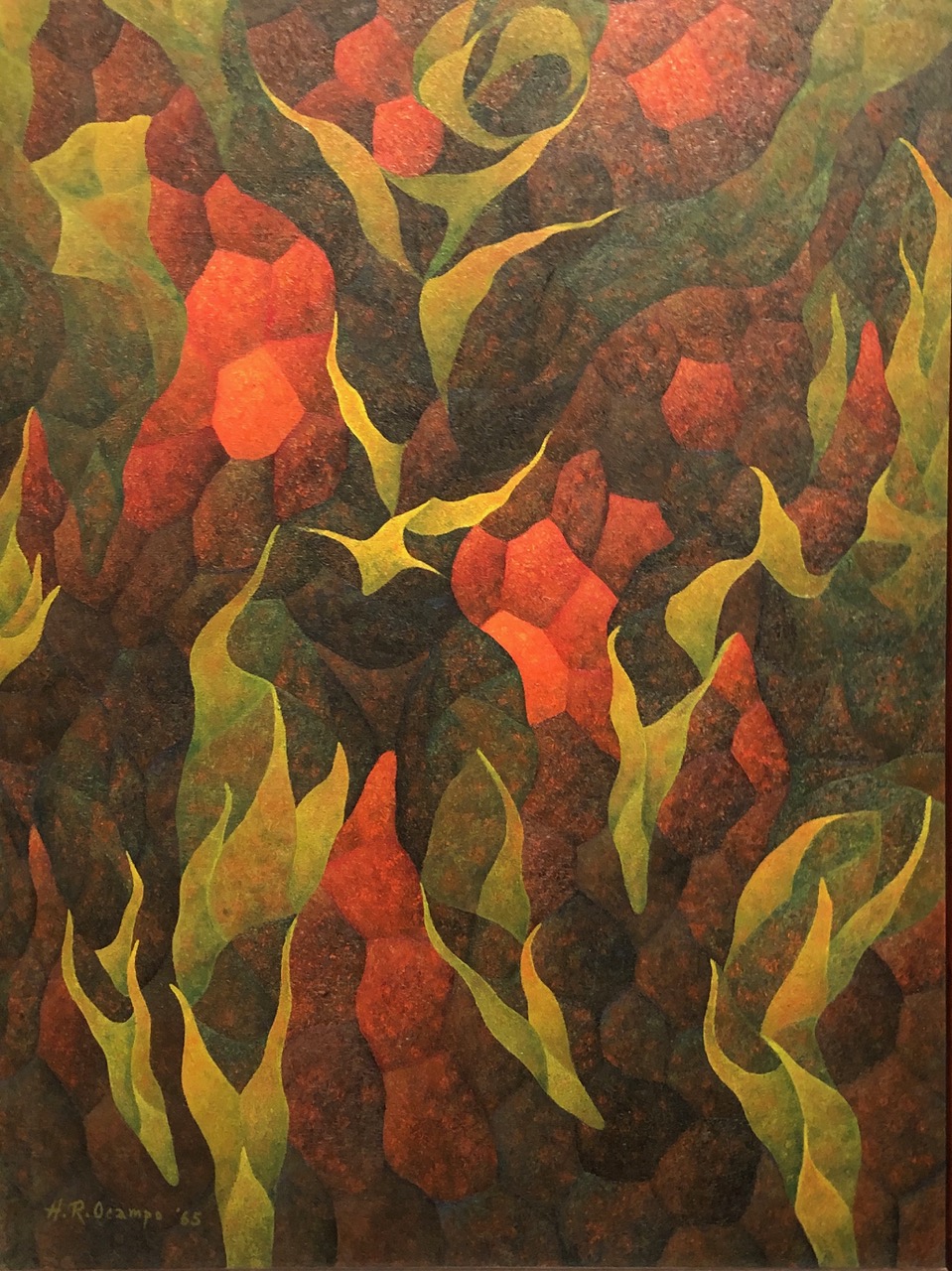
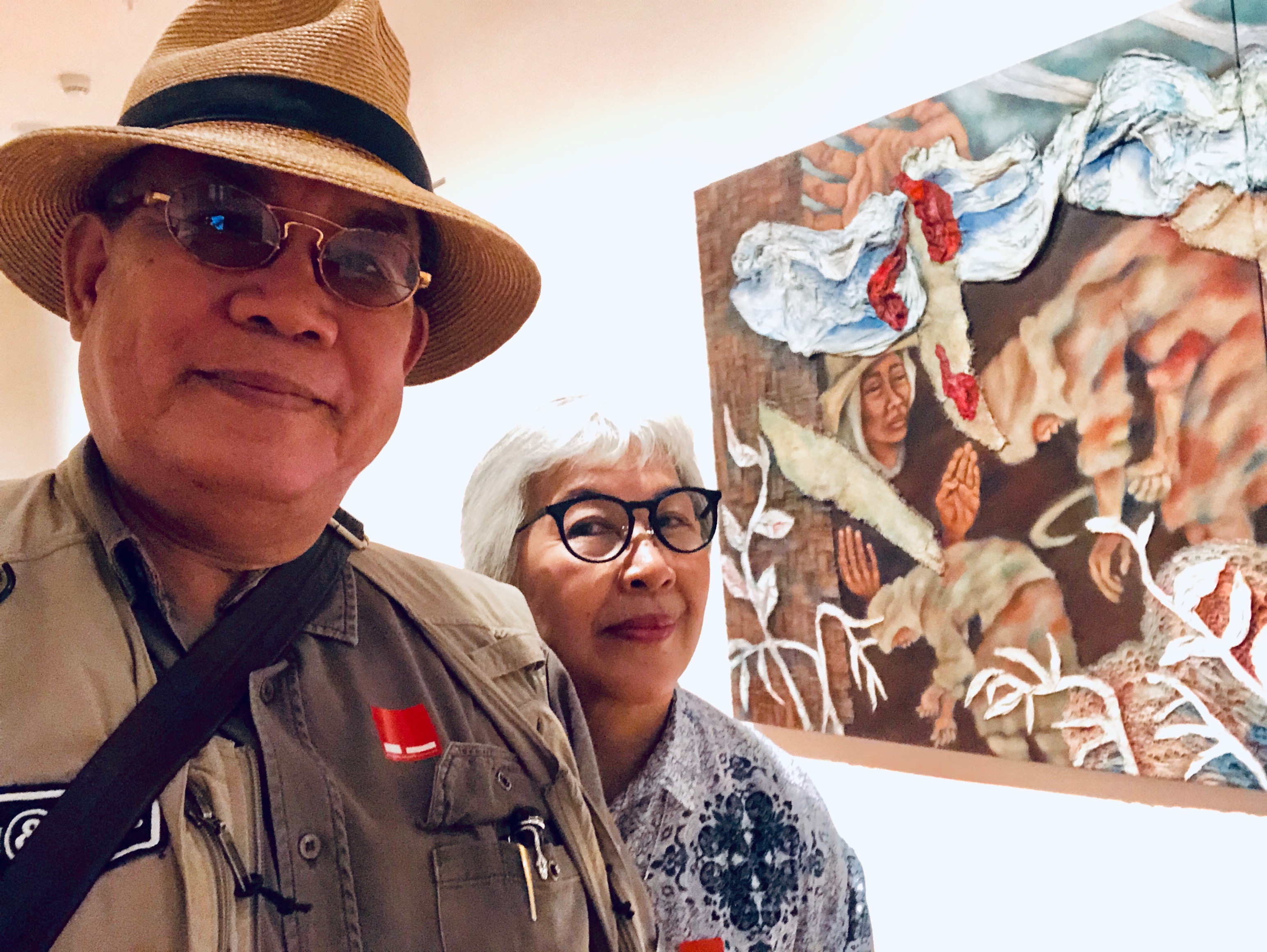
A trio of less-known 1940s Amorsolos is flanked by the orchestrated chaos of a Purugganan; an early and dark Edades exudes primal energy; elsewhere are exemplary pieces by Galo Ocampo, Arturo Luz, Anita Magsaysay-Ho, Napoleon Abueva, Bobby Chabet, Ray Albano, Santy Bose, and Imelda Cajipe. But the piece de resistanceof Filipino modernist representation is H. R. Ocampo’s Dancing Mutants, encountering which made our whole Singapore trip worth it. And the curators themselves must have been aware of the specialness of this stunning work from 1965, according it its very own corner in the gallery, almost altar-like. I’ve seen many Ocampos (with Beng restoring quite a few of them), but this one made me want to fall on my knees in praise of its creator.

IMG_0957.jpeg

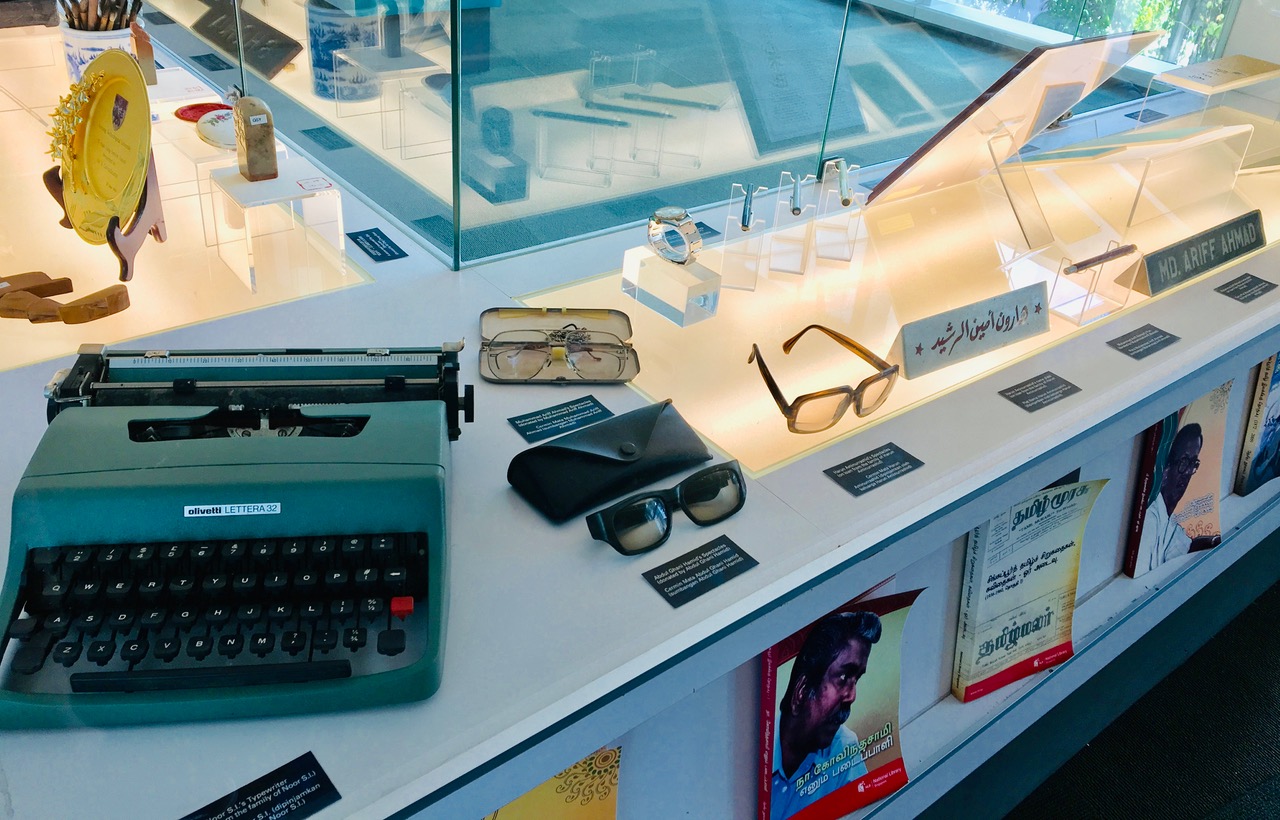
And purely by serendipity, when we stepped out of a mobile-phone shop on North Bridge Road, I noticed that the building across the street was none other than the National Library, which I’d visited as a journalist on a previous assignment. Let’s go in, I told Beng, I want to show you something. So we did, and there on the 11thfloor was a permanent exhibit on “Singapore’s Literary Pioneers”—featuring not only the books of the country’s best writers, but also their pens, typewriters, and even their eyeglasses. This, I told Beng wishfully, is how writers should be revered. Always better than a pen show is seeing what comes out of those pens, at their very finest.

IMG_0344.jpeg


Penman No. 349: Pen Hunting in Japan

JapPens.png

Penman for Monday, April 15, 2019


MOST TOURISTS visit Japan, sensibly enough, for the sushi, the sakura, and the swords. I like all of the above, and chased after all of them during our recent trip to Tokyo (a highlight was seeing a 13th-c. Masamune katana at the Tokyo National Museum). But I had one more item on my personal agenda that I couldn’t possibly leave Japan without—or at least, without looking for it.

That desideratum, of course, was the fountain pen, and there’s a very good reason why fountain pens should be on the discriminating tourist’s Japanese shopping list. Just as they’ve excelled in practically all the arts and crafts, the Japanese have made some of the world’s best fountain pens, many with uniquely Japanese materials and production processes, and some very special nibs.

With fountain pens undergoing a global resurgence in both the corporate and personal spheres as instruments of individuation—a means by which you can literally leave your own signature on a stack of digitized documents, and set yourself apart from the ballpoint-clicking herd—many Filipinos now know familiar American brands like Parker, Sheaffer, and Waterman. Lawyers and doctors typically want German-made Montblancs, and might even try Pelikans, Lamys, and Faber-Castells. But a growing number of mostly young professionals have discovered the Japanese Big Three—Pilot, Sailor, and Platinum—as well as newer brands like the Taiwanese TWSBI. They’ve been helped along by the emergence of local fountain pen, ink, and stationery specialists like Scribe Writing Essentials, Everything Calligraphy, Noteworthy, and PenGrafik.

The Japanese pens I was looking for in Tokyo exist in a whole other realm of connoisseurship. These are artisanal masterpieces, the culmination of centuries of fine workmanship. I’ve often said that pens fascinate me as the perfect fusion of art and engineering, and nothing exemplifies that more than the best Japanese pens. You’d think that the Japanese would be more inclined toward brushes—and they still may be—but a fine pen is considered a personal treasure, as distinct as the swords carried by the samurai of old.

In 2002, Pilot Pen Company—one of Japan’s pen pioneers—opened a pen museum at its headquarters in Kyobashi. Beng and I made a beeline for it, walking the couple of kilometers from the Tsukiji Fish Market, only to discover to our dismay that it had closed a few years earlier. But Tokyo’s fabled pen shops are in themselves museums, and more, so armed with a 72-hour subway pass, we made the rounds of the usual suspects. (Earlier, at the Tokyo City Flea Market in Shinagawa, I had treated myself to a defective but repairable Pelikan M805, a Pilot Custom 74, and a prewar Pilot with a flexible shiro steel nib.)

IMG_9994.jpeg

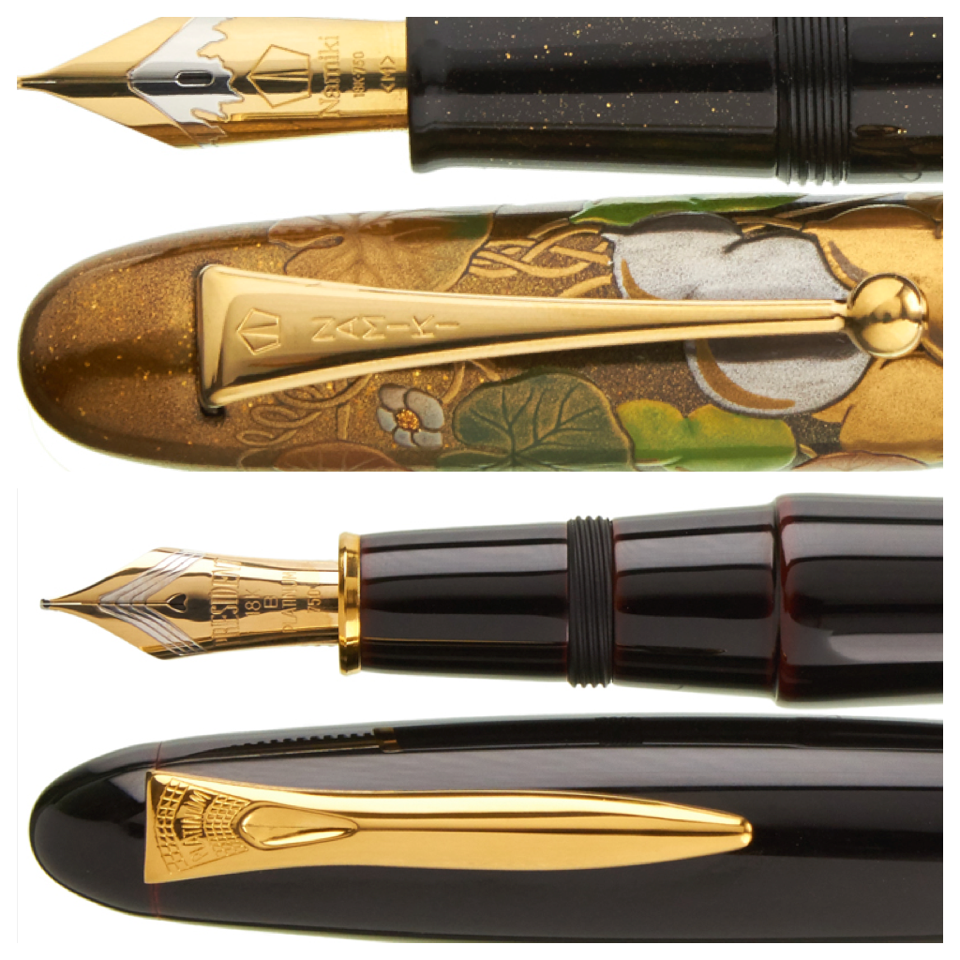
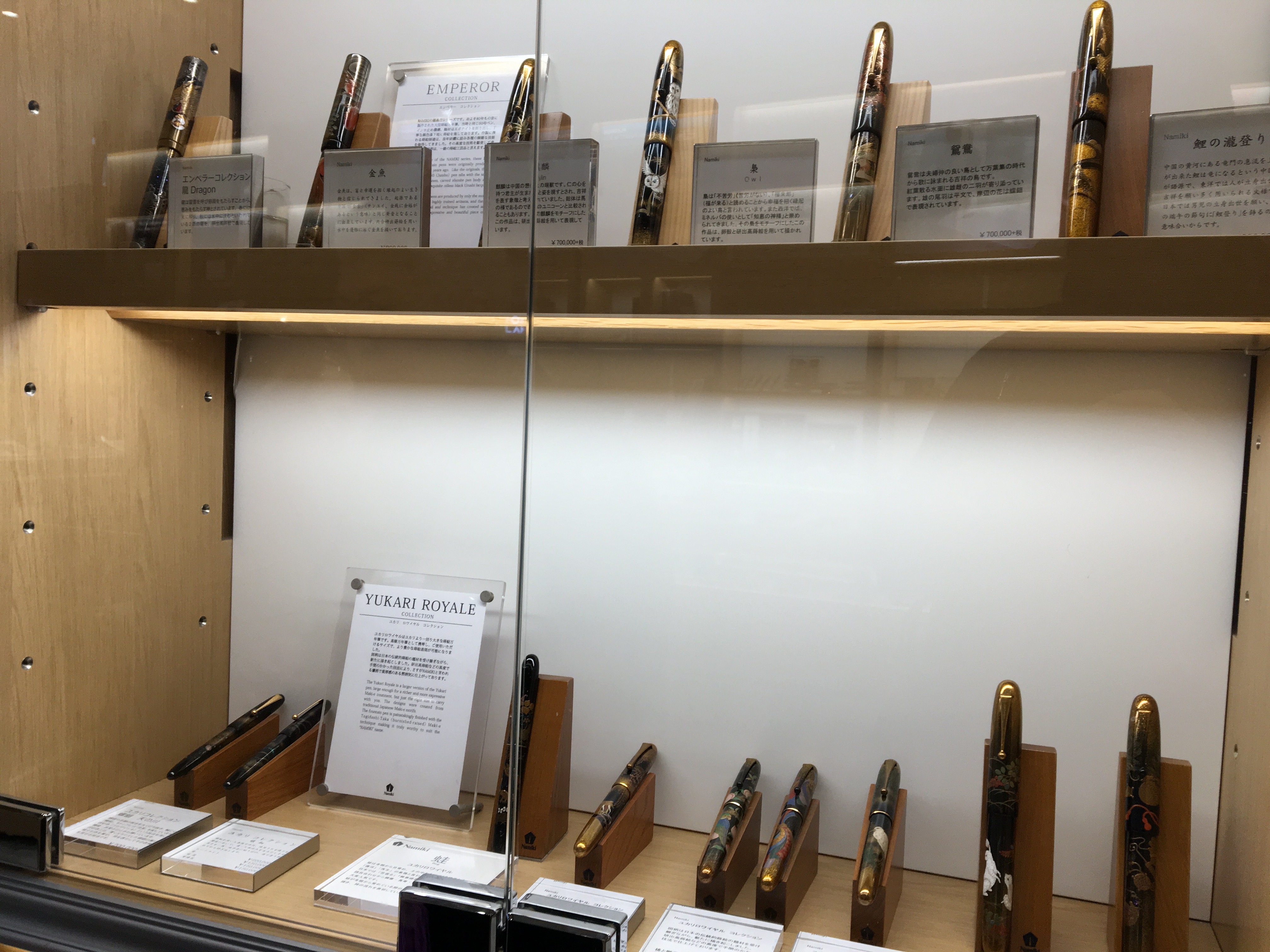
A fountain pen tourist’s first stop in Tokyo should be Itoya in Ginza. Japan’s oldest stationery store, Itoya has a whole floor devoted just to fountain pens, and not just your everyday Sheaffer either but the very finest examples of Japanese penmaking. The Japanese pride themselves in the art of maki-e (literally, “sprinkled picture”), which involves creating intricate designs with gold dust and hand painting on ebonite or hard-rubber barrels and caps, on which many layers of hard urushi lacquer are applied. In the 1920s, Pilot—then known as Namiki—partnered with Dunhill to create exquisite examples of urushi/maki-e pens, which have since sold for over $250,000. These urushi and maki-e pens—now also produced by such makers as Nakaya, Danitrio, and Hakase, aside from the Big Three—are hand-made by master craftsmen in small shops, and are typically ordered months ahead. Or you can go to Itoya (or online, to www.nibs.com or www.penchalet.com, among others) to find yours.

IMG_0039 2.jpeg

A couple of blocks away from Itoya is Eurobox, a small room on the fourth floor of an old building stocked full of vintage pens, mainly Western, very well chosen and sold at competitive prices. Another must-see is Maruzen’s large pen section at the basement of its Nihonbashi store. And no Tokyo pen visit would be complete without stepping into Kingdom Note in Shinjuku, which specializes in used but top-tier pens, both Japanese and Western. One pen store that takes and ships orders for Pilot urushi pens with special nibs like the so-called Waverley and Falcon nibs is Tokyo Pen Shop Quill in Kugahara, which unfortunately we missed because we took an express instead of a local train on our last full day in Tokyo.

That diversion turned out to be serendipitous, because Beng and I got off on a whim at Sengakuji Station, only to realize that we were within walking distance of the graves of the famous 47 ronin who had attacked and beheaded a despotic ruler in 1702, paying for their deed with their own lives. As we paid our respects to these noble warriors under the cherry blossoms, I seemed to hear voices urging me to “Buy a big Japanese pen to fight evil overlords!”

IMG_0066.jpeg

So off we went to our last pen stop, Komehyo Ginza. Komehyo is a resale chain that sells mostly high-end used goods but also some new items, including fountain pens, and this was where I found my “grail” pen, by which I was going to remember Japan this time around—a large, new, and thankfully affordable urushi Platinum Izumo pen, its deep red undertone sheening through the rich lacquer. As with many things Japanese, it’s simplicity itself, but breathtakingly elegant. Unlike some places we know, Japanese stores accord their customers extraordinarily solicitous service—you can hold and try out any pen you want for as long as you want without any dagger looks from the staff—and even Komehyo lived up to that standard, processing my 8 percent tourist rebate without any fuss (a few stores ignore it, or require you to collect it at the airport).

IMG_9988 2.jpg

As we flew home with the Izumo sitting smartly in my pocket, I munched on my 100-yen rice crackers from Daiso, and dreamed about whipping out my pen and slashing a few bile-filled throats in the name of truth, beauty, and justice.

(Top pen images from http://www.nibs.com)


Penman No. 219: The Chase and the Company

Pens3.jpg

Penman for Monday, October 3, 2016


THERE COMES a time in every collector’s life when he or she realizes that the road has suddenly ended—that there’s hardly anything more to be found, no further byway to be explored. It’s a sad acknowledgment but also in some ways a relief, knowing that one’s disposable income (and better yet, one’s savings) can go to more prosaic but in all likelihood more practical objects—a roof repair, or new tires for the car, or a larger fridge, all long overdue.

None of those, of course, will quite compare with the gleam of a 1786 Carolus III dos reales or an early edition of the Noli or Fili, or a 1950s Mercedes 180 (nothing too special, just one of my favorites) tucked away in an old garage. Or, in my case, a 1936 Wahl Eversharp Coronet, widely upheld to be the “acme of Art Deco pen design.” I’ve lusted after a Coronet in more than 30 years of pen collecting, even keeping a picture of it in my burned-out Faculty Center office, and maybe came close to acquiring it once. But like all “grail” pens, it remained a wisp of a dream, within tantalizing sight but always beyond one’s feeble grasp.

I knew I’d come to the end of my collecting road when the thought struck me the other day that if a Coronet were to be offered to me tomorrow for a reasonable price, I would probably smile and politely decline, preferring to keep it a pretty phantom forever. If I actually held it in my hand it might seem dull and stale, its Pyralin inserts (whimsically described as “Dubonnet red”) somehow lacking in the fire of fantasy.

Come to think of it, I’ve bought only two or three pens over the past three months—at least one of them for resale—when I used to acquire one almost every week. At its peak three or four years ago, my collection of vintage and modern pens numbered more than 300, ranging from the 1890s to the present and representing many of the best pens of every period (excepting the Coronet), by brand and model. It was a collection put together over many years of patient pursuit, of moving up from one model to the next tier, of selling five average pens to buy a first-rate one, of foregoing ampler lunches in my grad-school days in the American Midwest to be able to afford mid-range Parker Duofolds, Vacumatics, and 51s.

Some of those early buys turned out to be bargains and lifetime keepers. Back in 1987, I agonized for a week over whether to purchase an ebony Wahl Eversharp Doric from 1934—another Art-Deco icon, with a 12-sided cap and barrel and a latticed cap band—for the princely sum of $28. Thankfully beauty won over economy and I still keep the Doric, now easily ten times its purchase price.

Another classic I found at a Milwaukee antique shop in 1990 for a small fraction of its true value was a Parker Duofold Senior in Mandarin Yellow, a large fat pen from the mid-1920s, much sought after for the rarity of its color. Bought for $68, I had to resell it a year later for $380—still well below what it would fetch today—when I was living on turkey backs and trash fish on my meager stipend. And how can I forget the gorgeous 1938 Parker Vacumatic Oversize in burgundy red which I found in Edinburgh in 1994 and based my “Penmanship” story on?

It was stories like these that kept my interest in collecting alive, almost as much as the pens themselves, the remaining 150 or so of which I can’t possibly all use and learn to love, even if I rotated them every other day. I still value my best pens as marvels of both art and engineering, which also just happen to lay exquisitely shaded lines and whorls of glorious ink on fallow paper.

I suppose the end began a couple of years ago, when I turned 60. I started selling pens from my collection—even pens I had kept for over 25 years—to allow the members of our pen club, especially our millennial newbies, the privilege of owning and writing with something their grandparents may have used. That’s also when I began using my best pens, like the Montblanc Agatha Christie, on a regular basis—a bit like driving a Rolls to the 7-11—but my reasoning was, as we UP people like to say, if not now, when? What might have been ostentation at age 35 can now only be fondness in a senior, and the silver-snake-clipped Agatha gives me sublime pleasure even in the pocket, and many times more so when I sign my name—even on office forms—with its double-broad stub nib and sepia ink.

Such, I think, are the pleasures of aging, when one turns from sheer accumulation to discernment, and to the dawning acceptance of the finitude of all things, including and especially material objects, no matter how lovely and intricate and painstakingly acquired, be they pens, cars, watches, or Persian carpets.

Whereas I used to check eBay literally a dozen times a day (employing a special search term to ferret out the most desirable vintage pens), today I hardly blink when, say, a 1928 Parker Big Red sails under my nose for less than $100—let someone enjoy the bargain, as I’ve done myself many times. It was the hunt that kept me in the game, but I’ve learned that spotting the target but letting someone else take the shot could be just as satisfying.

In what was likely my last big pen adventure, a few months ago, I found another of my “grail” pens—the much-coveted Montblanc Ernest Hemingway from 1992—being sold online for about half its usual price (if you really want to know how much these babies cost, try Google). The seller was in Malaysia—reason, perhaps, for Western buyers suspicious of anything too far East to shy away, but to me a heaven-sent circumstance.

19408949056_7cabfd53d3_z.jpg

I closed the deal (drawing deeply on my savings, but what the heck, a Hemingway appreciates better than a time deposit) and, in a moment of inspiration, I did some quick computing and figured that it was only marginally more expensive and a lot safer to fly out to KL on a budget fare and pick up the pen personally the next day than to entrust everything to PayPal and a courier service. And that’s what I did. I always enjoy KL for whatever excuse takes me there, but I daresay no Argonaut ever crossed the South China Sea just to pick up an orphaned Hemingway and bring it home. (To be honest, it’s my second Hemingway—I use the other one, the gift of a generous friend, exclusively to grade student papers, in a bright orange ink.)

Over the next few years, I’ll be trying to bring down my remaining stash to an absolute core of about two dozen pens, which will be our daughter Demi’s inheritance from me (sorry, anak, no tracts of sugarland or bubbleback Rolexes here). They won’t necessarily be the most expensive pens—Demi can sell those off, if I don’t—but the ones most laden with story, blobbing like ink at the very top of the nib, eager to be disgorged. It’s been a privilege playing steward to these fine shapers of fine words, and I may miss the chase but not yet the company.

Penman No. 173: Lines and Letters

IMG_8288

Penman for Monday, November 2, 2015

IT’S BEEN a while since I’ve written about my favorite pastime (aside from my weekly poker binges and my foot-massage-and-movie dates with Beng), so indulge me this break from the headaches of literature and politics and let me talk about those obscure objects of my writerly desire—pens and all things appurtenant thereto, as my lawyer friends would say.

We have, not incidentally, a good many lawyers among our members at the Fountain Pen Network-Philippines (FPN-P), which isn’t surprising, given how lawyers have traditionally used pens in their work, and at least in taking their bar examinations. Those pen-wielding members of the Philippine bar include Undersecretaries Albert Muyot, Ronnie Geron, and Rey Cruz; SEC Chairperson Tess Herbosa and SEC lawyer Joanne Ranada; pro-gun advocate Ticky Tabujara; former ACCRA lawyer Elsa Divinagracia; and Aboitiz lawyer Anthony Goquingco. While he hasn’t formally signed up with FPN-P, Supreme Court Justice Marvic Leonen, an avid pen user, has turned up at a meeting or two.

We also have a sizeable representation of doctors—among others, Novartis executive Aileeen Dualan, surgeons Jojo Hosaka, Joy Grace Jerusalem, and Leo Ona III, Healthway Medical head Eleanor Bengco-Tan, barrio doctors Edrie Alcanzare and Jim Lopez, Dagupan-based rehab specialist Hazel Gazmen, company physician Kristine Arabaca, and new Med graduate Mark del Rosario. Predictably, there’s a special thread in our forum devoted to providing specimens of our doctors’ handwriting—the more unreadable, the more impressive.

Alongside these professionals come teachers, writers, artists, businessmen, bankers, students, and all manner of writing enthusiast, drawn to the group if not by pens then by inks, papers, calligraphy, or drawing. What started out in my front yard in Diliman seven years ago with less than 20 people has grown to over 500 members on our dedicated website at http://www.fpn-p.org/, and more than 2,000 on our Facebook page (being FB-averse, I stay out of that group, but you’re welcome to sign up there if FB’s your thing).

Once or twice a month, we get together—typically for a long Saturday lunch in a Makati or Ortigas restaurant—to play with our pens and to doodle away in wild abandon. While we may talk politics in the corners of the meeting and devote some attention to tangential interests like watches and knives (you’d be surprised how many pen people have one or the other or even both as secondary hobbies), the focus is clearly on fountain pens, inks, and papers.

Whatever for? There’s no better way I can explain it than group therapy. As I’ve said in this column many times, it’s the sheer tactile pleasure of laying down lines and letters on a page, of watching the ink spread through the paper’s fibers, creating networks of meaning, or otherwise an impression of beauty, an entirely handmade beauty at that. This is what you can’t get from a ballpoint or a rollerball—a soft or shaped nib that can create breathtaking line variations from from extra-fine to triple-broad, that can be so sensitive to the touch that the merest tremor can betray some deep-seated emotion. With every stroke of the pen, another worldly care is banished, another rampant anxiety quelled. There’s nothing more intimate yet more revealing than that stroke, the physical commitment of thought to paper.

Fountain pen collectors (among other creatures infected by the same virus of compulsive acquisition) often speak of their “grail” pen, that one elusive, near-unattainable pen that calls to them in their dreams and shimmers like a mirage on the horizon of their consciousness. That pen could be as simple as a Parker 51 that they recall their father used, or as weighty as the Montblanc 149 favored by Supreme Court Justices, or as uncommon as a custom-made Nakaya or Hakase epitomizing the finest of Japanese craftsmanship.

Over the past 30 years of immersing myself in the hobby, I’ve had many such “grail” pens cross my fevered brain, and have actually had the good fortune of realizing most of them—a 1938 Parker Vacumatic Oversize in burgundy, a Parker “Big Red” Duofold from 1926, a Montblanc Agatha Christie from 1993, and, most recently, a Montblanc Ernest Hemingway from 1992. Almost as interesting as the pens themselves, each of these pens has a story behind it, a near-mythical chase across decades and continents.

Unlike many collectors, I don’t keep my best pens in a case, under lock and key. I rotate them for daily use, praying that I’ll never lose one, although that’s almost a statistical certainty. It isn’t ostentation that impels me to do this, but rather an acute and growing awareness of time passing—of the sense that, at my age, I probably have another ten good years left, and what a waste they would be if I let my happiest acquisitions moulder away in some dark drawer, never having kissed paper.

If all this talk of pens makes you want to reach for one—whether in memory of a long-forgotten practice or in anticipation of a novel experience—then join us this Saturday, November 7, at the Cinema VIP Lounge of Century City Mall on Kalayaan Avenue in Makati as we celebrate International Fountain Pen Day (yes, such a day exists) around the theme of “Celebrating Analog Writing in a Digital Age.”

Open to the general public, the day’s events will include a pen-and-ink art exhibit, a calligraphy workshop, a sketching session, as well as an introduction to fountain pens for children. Guests may also avail themselves of services such as vintage pen restoration, appraisals, and nib tuning.

For supporting this project, FPN-P would like to thank Manila’s leading purveyors of quality writing instruments such as Everything Calligraphy, Faber‐Castell, Lamy, Parker, Scribe Writing Essentials, Sheaffer and Wahl‐Eversharp/PenGrafik. Our special thanks go as well to Asia Brewery for their assistance.

Entrance is free, so take those leaky old pens out of your grandfather’s desk drawer and bring them to us for a cleaning and a good chat. But I warn you: fountain pen use can be highly addictive, and leave your fingers stained in the most wonderful colors.

Flotsam & Jetsam No. 10: Sundays Are for Pens

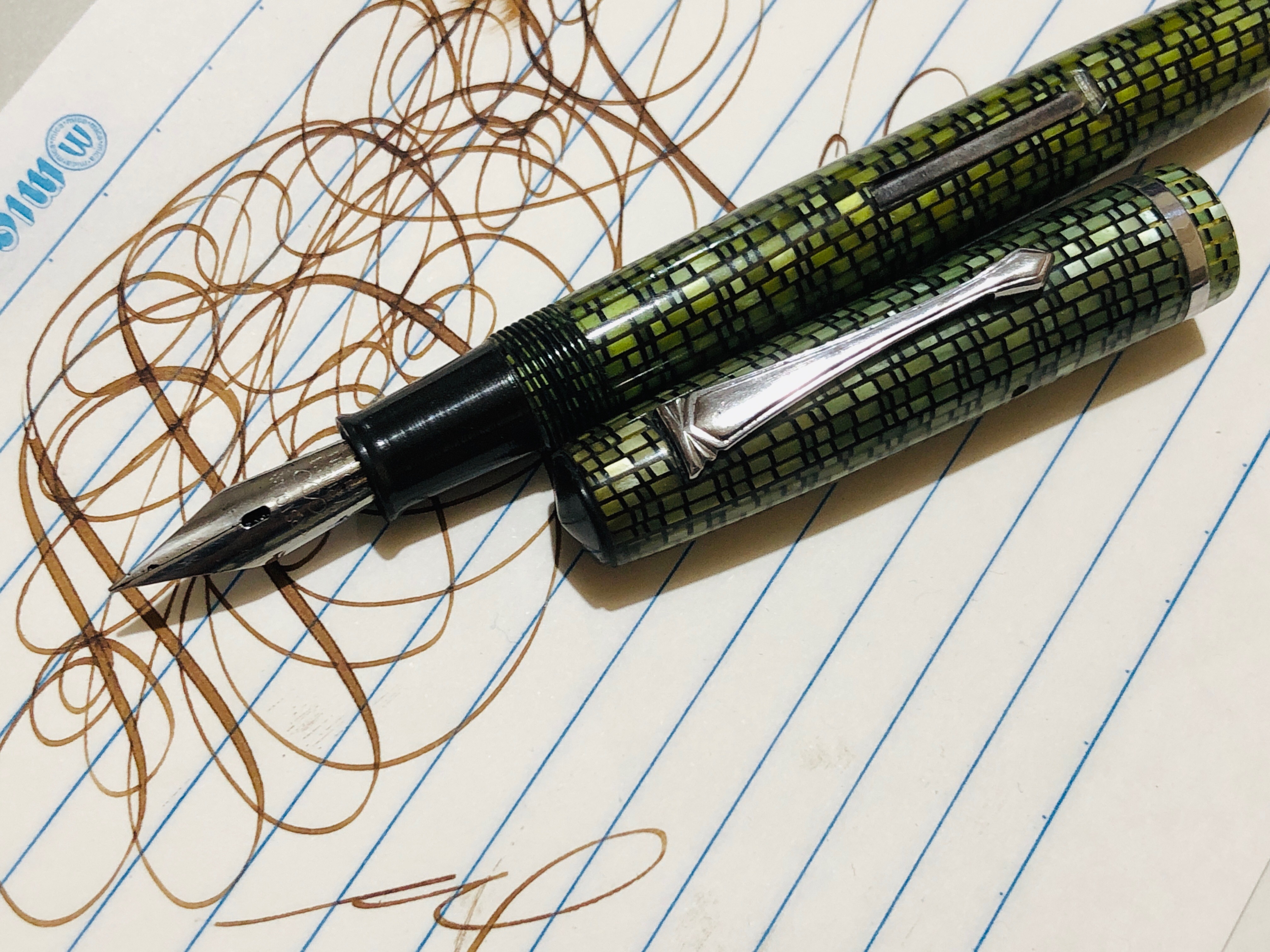
IT BEING a rainy Sunday here in Manila, I thought I’d take out some of my fountain pens—vintage and modern—for some routine maintenance (read: boy plays with toys). I took this shot of the pens with my iPhone, and I rather like its antique-y look.

And while we’re at it, here are the pens in my current rotation. Can you identify them?

Flashback No. 1: Another Pen Story

Since I’ve opened this new blog with very little in it yet, I thought I might as well fill the wait between my weekly Star columns with selected reposts (or, in some cases, just posts, since they’d never been posted before) from columns past—from Penman, which began in the Star in 2000; Barfly, which ran in Today from 1994 to 1999; Man Overboard, from Men’s Zone in the early 2000s; T3; and Manileño from Filipinas magazine from 2003 to 2010. So here goes.)

Penman for August 21, 2000

FOR PHILIPPINE Star readers who may not know me from my earlier incarnations (no offense meant to the Gautama; the only thing Buddha-like about this Butch is his midsection) and who may be wondering about the column title, “Penman” refers both to a story I wrote a few years ago, “Penmanship,” and to my long and abiding fascination with old fountain pens, about a hundred of which I’ve collected over the past 15 years.

Most of these beauties from the 1920s up to the 1940s came from antique fairs and garage sales in the American Midwest, where I lived for a few years, and from more exotic nooks and crannies such as a backstreet pen shop in Edinburgh and a sidewalk vendor in Saigon. Some I’ve received as generous gifts from friends (a clutch of Parkers and Sheaffers from Franz Arcellana—pens he actually wrote his stories with—and a breathtaking Japanese maki-e lacquered pen from poet Jimmy Abad).

Now and then—say, after a few months without adding a new-old pen to the trove—I satisfy my urges by getting one on the Internet or, less often, by taking a deep breath and paying full price at the local mall (although I once found a very nice pair of new Parker Duofolds selling at practically half-price in a department store in Cebu). Still even more rarely, I’ve come across some astounding bargains in my own backyard—an antique stall in Ermita (a Montblanc 146 and a much-sought-after 1959 Sheaffer PFM V for P650 each), and a stationery shop in Binondo (a rather uncommon Parker VP for P350).

Never mind what these names mean, if you know or care nothing about pens: just think of them as exquisitely lovely, useful, and—to some people who collect them for more than aesthetic reasons—quite valuable objects, some which have sold at auction for over $10,000 (no, that’s not your grandfather’s Wearever or Esterbrook, for which you’d be lucky to get enough for a movie and a hotdog sandwich). I have an awful suspicion that most of the good pens we must have once had in this country—any colony with a highly-literate bureaucracy should have been swimming in a sea of blue-black ink—would have long had their gold nibs pulled and melted down in the smithies of Meycauayan to make someone a pretty trinket or a gleaming incisor.

Imagine my surprise when, last weekend—on one of those trips to the mall where the sleepy-eyed husband gets deputized by the wife in resolute quest of a wedding present—I strayed into a tiangge stall selling the usual santos and hardwood benches and spotted, in a corner of a glass case, the unmistakable flat-top cap and gold pocket clip of a 1920s pen. I asked to see it, and my hands shook as I confirmed that I was holding a near-perfect example of a Swan Eternal No. 48, a huge fountain pen as fat as a cigar (it’s a boy thing, this pen envy) in a gold-trimmed rosewood finish and the biggest nib you ever saw, a No. 8 (most fountain pens, by comparison, sport nothing bigger than a No. 2). The patent date on the clip said “Jan. 19, 1915” although the pen itself was made, according to my trusty references, between 1924 and 1929. Hallelujah! But first I had to ask, in a dry croak, “How much?”

The man behind the counter consulted a woman who was doing the books. “Five hundred,” she said casually. I felt faint: P500 for a fancy Bic may be outrageous to you, but if they had ten of these and I had P5,000 on me I would have bought them up and retired on the profits. The pricing also told me that the sellers had probably found the pen among other effects in a large estate (you had to be very rich to own an accessory like this in the late ’20s) and had, themselves, paid very little if anything for it; many old pens come as bonuses to buyers of many-drawered antique cabinets, or even of cigar boxes, where they tended to be kept and forgotten.

I forked the money over. The man hesitated and my heart skipped a beat. “I’m sorry,” he said, “but we don’t have a small box to put it in.”

“Oh, that’s all right,” I managed to say, taking full and final possession of the Swan and sticking it into my pocket, where I was certain that God Almighty had always intended it to belong. Surely, there was more than a touch of justice here. How many times, during my months in England, had I revisited and salivated over the fabulous pens on Portobello Road, going home to Norwich with little more than a jar of bagoong and a packet of Chippy from the Filipino food store at Earls Court? Just how many of the half-dozen Pinoys who can tell a Swan Eternal from a Rubber Ducky stumble into one, in a mall buzzing with Nokia ringtones, and get to bring it home for the price of a phone card?

I treated Beng out to a lunch of noodles and siopao and proudly showed her my prize find. She herself prefers to pick up old blue and ruby-red bottles, but has developed a grudging respect for and even some expertise in my objects of choice—once spotting, at a cowshed fair in Ohio, a circa-1930 lapis-blue Parker Duofold Junior which I bought for $5 and later traded for my first Montblanc. “It’s gorgeous,” she agreed, “but you should have asked for a discount.” Spoken, I suppose, like a true shopper.

But this wasn’t shopping, Beng. This was serendipity, for which I can only thank my lucky stars and, yes, you, for dragging me out of my Sunday-morning stupor to find kitchenware for newlyweds.