(I wrote and published this story twenty years ago for the Christmas issue of The Philippine STAR, and I’m posting it here as a Christmas offering to my readers, who may not have come across it yet.)
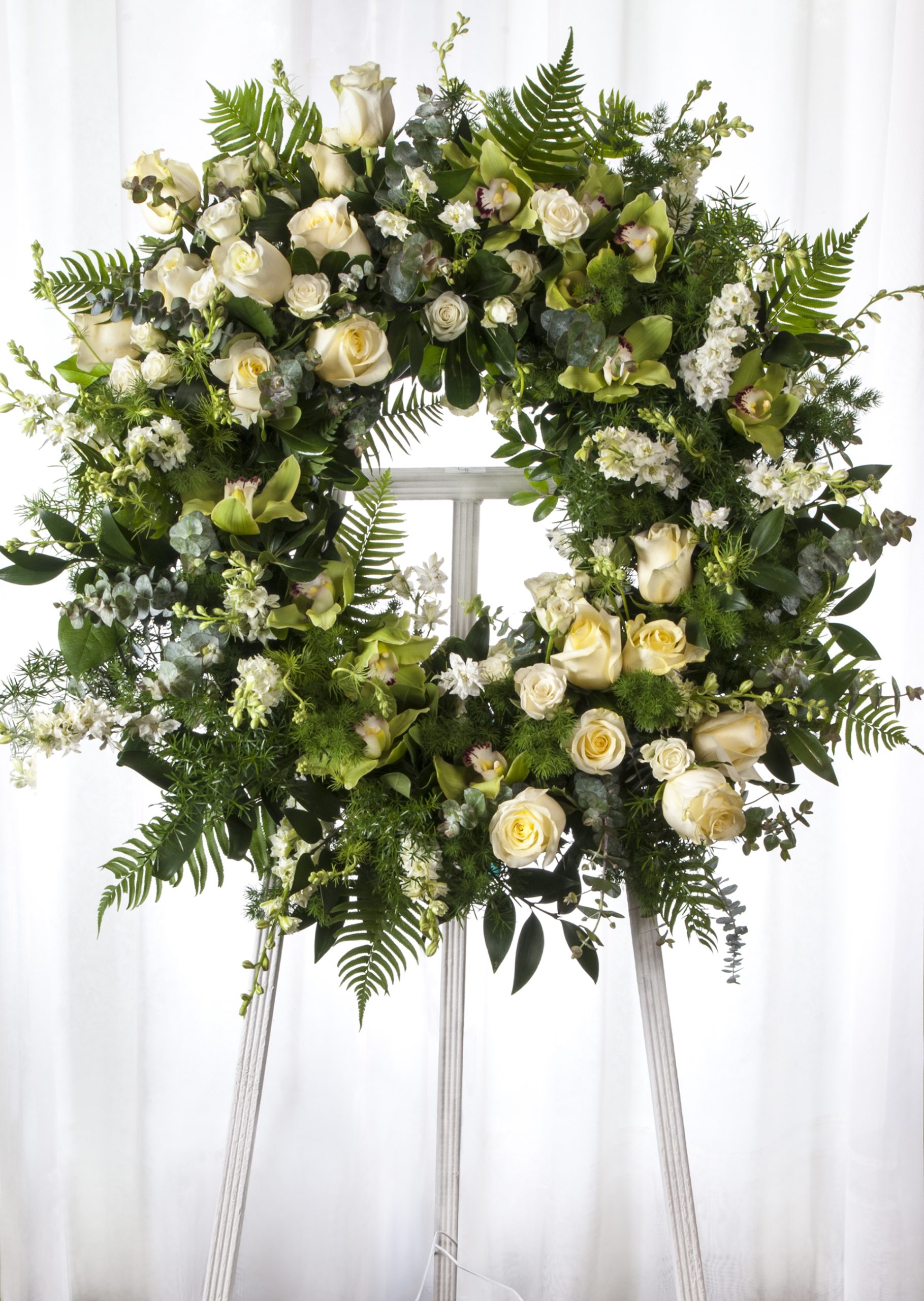
A FUNERAL parlor was the last place Sammy expected to be on Christmas Eve—especially since no one he knew had died. And despite his father’s assurances that the man who lay in the shiny white coffin was a distant uncle of his—maybe one of those people who had come over for games and drinks and had mussed his hair—Sammy could not remember the long, rat-like face in the picture that hung over the burial announcement.
Sammy was only nine, but he had a good head for faces. The names escaped him—his father kept teasing him for being hard of hearing—but he made a game of attaching a face to something else: mud-caked shoes, yellow nails, pitted cheeks. Most of them were his father’s friends, and while he had seen very few of them between this Christmas and the last one, he felt reasonably sure he could recognize any of them again, if he met them on the street. They had walked many streets that morning, and he had seen many new faces, but he had met no one even vaguely familiar.
Sammy also knew something about death and funeral wakes. When he was six, his playmate Leo had drowned in the black froth of the estero. He had watched from the bank as they fished out the boy’s body with a hook-tipped pole. Leo looked very fat and very oily, and his tongue stuck out of his mouth like a peeled banana. They had stuffed him into a coffin and set up a wake on the sidewalk, where the borrowed candelabra outshone everything else at night, and passersby threw coins into a plastic can, which Leo’s mother emptied into a large pocket in her apron now and then. Leo’s mother sold fish at the talipapa, like Sammy’s own mother, who sold vegetables when she wasn’t turning scraps of fabric into hand mops.
But she was gone now, like many things they had let go of over the past few years: the motorcycle, his mother’s sewing machine, the television set, even a typewriter said to have been used by his grandfather, a writer of dramas for radio. Indeed, a small transistor radio was the only thing they had left over from the old times, and Sammy would sometimes imagine hearing his grandfather on it, saying all kinds of important, grown-up things, although the man had died many years before Sammy was born.
That morning, his father had shaken him awake with an unusual gleam in his eyes. “Eat and get dressed,” his father had said. “I’m taking you out.”
Sammy shot up. “Where?” It had been weeks—months—since they had gone anywhere interesting, like the seawall or the basement of the mall, where there were all kinds of food—and rides, fabulous rides on pastel dragons and rampant horses and bug-eyed fish. That was the one time his father had won anything big—five thousand pesos, his father had said, although Sammy couldn’t imagine what five thousand pesos could buy. It certainly was enough for a few days of roast pork, fried rice, and noodles, and he could run to the corner store and ask for anything without having to mumble that word he had learned to dread, “Lista.”
That moment came and went, replaced by the old routine of making his own meals—opening a can of sardines and dunking a piece of bread into the red mush, leaving the best parts for his sleeping father—before rushing off for the twenty-minute walk to school. He had never come around to hating his father, although he had many questions to ask. His child’s instincts told him that something was terribly wrong, but his father seemed to have an explanation for everything: Mama had gone back to her hometown, very far down south, to take care of her own dying father, and the government was having a hard time keeping her island from drifting farther away into the ocean; Papa lost his job as a filing clerk at the factory because someone didn’t like the way Papa cheered for his favorite basketball team; the kind and quantity of food on their table depended on one’s success at dilhensya, which was in turn dependent on one’s abilidad.
These two words burned themselves into young Sammy’s brain: they were what got you ahead in the world, or at least what saved you from curling up in a spasm of hunger. That was a man’s most important job, Papa said: to put food on the table, no matter what. Sammy had some vague idea of what his father did: a classmate said that he had seen Sammy’s Papa at the jeepney stop, barking out destinations and herding passengers onto waiting rides. When Sammy asked him about it, the father said that he was actually a kind of policeman’s assistant, a volunteer enforcer of traffic rules and regulations. People needed to be told where to go, and how to get there fast. People paid for that kind of abilidad.
That day, they had visited three houses on opposite ends of the city. They waited all morning outside the gate of a large compound on Roberts Street in Pasay. Through a vent in the wall, Sammy could see a lawn as wide as the sea, and a fleet of cars and vans on the far side. There was an armed guard just inside the gate who spoke to them through perforations in the iron. “He’s my congressman,” his Papa said. “We were born in the same hometown. I voted for him in the last election. I just wanted to say Merry Christmas. I brought my son to greet him as well.”
The guard snickered and said, “I’ll send him your compliments. Go home, he’s not here, he left very early.” A metal panel dropped in front of the holes.
“I’ll wait! We’ll wait! He knows me, he shook my hand once at a wedding!” They stood outside and then sat on their haunches for another hour.
“Let me tell you something. This guy,” his Papa whispered to Sammy, “this guy, I saw him hand out crisp new five-hundred peso bills during the campaign, like he was giving away mint candies. I know he’ll be good for something.” At a quarter to eleven, the heavy gate swung open, and a large Mercedes-Benz the color of midnight slid out. Father and son jumped to their feet. The Mercedes paused just out of the gate for a second as the guard exchanged words with the unseen passenger, then the car lurched forward and sped rightward, and the gate closed again before Sammy’s father could say anything. “I don’t think he recognized me,” the man said to the boy. “The last time he saw me, I was wearing a barong.”
They next went to Concepcion in Marikina to look for one of Sammy’s godfathers, whom neither Sammy nor his father had seen since his baptism, but when they got to the neighborhood and the address that Sammy’s Papa remembered, there was nothing there but the charred hulk of a plastics factory that hadn’t even been there the last time. Sammy’s father had only a hundred pesos left on him, and they used some of that for a lunch of two bowls of arroz caldo at a roadside stand. Sammy loved arroz caldo, and would have been happy to let the day end there, but his father had another address on his list. Sammy didn’t mind moving around—the rides themselves were interesting, and he marveled at how his father knew so many places. Even so he was getting tired and teary-eyed, his eyes and nostrils smarting from the dust and the gas fumes. Many jeepney transfers later, they reached Damar Village in Quezon City, where his father convinced the guard to let them into the village.
They found the place they were looking for—a large white house with Roman columns and statues of fish with coins in their mouths. This, the father said, was the home of his former employer, Mr. Cua. Mr. Cua always had a soft spot for him and would not have let him go, he added, but too many people felt threatened by his smartness, and in the end Mr. Cua had no choice but to sacrifice him for the sake of industrial peace. Sammy’s father announced himself to another guard—this was, Sammy thought, truly a city of guards, and he wondered if his father had ever considered becoming one himself, seeing how they held the keys to everything—and again they waited while the guard checked them out with Mr. Cua. But even before the guard could get in the door, Mr. Cua himself emerged, wearing a Santa hat and leading a group of children out to the yard, where small tables had been set. Some of the children wore masks that made Sammy’s heart leap with envy—Batman, King Kong, and other cartoon and fairy tale characters he could only guess at. Sammy stared at a pigtailed Chinese-looking girl who stared back at him, and his father stepped forward to get to Mr. Cua before he could vanish. The guard still stood between the two men and Mr. Cua shrank back as if by instinct, but Sammy’s father began to speak. “Mr. Cua! How are you, sir? I was a clerk in your factory, remember me? My name is Felipe Dinglasan—” At this point the guard drew his gun and the children shrieked, and Felipe Dinglasan, not knowing what else to do, seized Mr. Cua’s hands and said, “I just came to say Merry Christmas, Mr. Cua! Look, I brought my son Sammy, he’s only nine, but he knows—I told him—what a great and generous man you are! Say good afternoon to Mr. Cua, Sammy!” The boy stepped forward and said, gravely, “Good afternoon, Mr. Cua.” The guard lowered his gun. Still shaking from what he thought might have been an assault on his life, Mr. Cua forced himself to laugh—to come up with his best Santa ho-ho-ho—and patted Sammy on the head. “Good afternoon, Sammy! Ho-ho-ho!” Sammy’s father sidled up to them and said. “Wait for your present, Sammy. Santa will give you a present.” Caught in the middle of another ho-ho-ho, the befuddled Mr. Cua reached for his wallet, looking desperately for small bills, but finding nothing smaller than a five hundred, he peeled out a bill and made a show of presenting it to the boy. “Merry Christmas, Sammy! Be a good boy!” All the children cheered as Sammy mumbled his thanks and as Mr. Cua glared at Felipe Dinglasan, who had the good sense to begin walking backwards, flashing his most non-threatening smile.
“What did I tell you, boy?” Felipe said as he flipped the five-hundred-peso bill between his hands, before folding it neatly and sticking it in his wallet. “All you need is a little ability—well, more than a little, more than a little!” Sammy got the feeling that he, too, had done something marvelous for the both of them, and the boy smiled in anticipation of a reward—a movie, perhaps, or, dare he say it, the one Christmas present he wanted most, the battery-powered laser sword he had seen at a Rizal Avenue shop window.
The sun had fallen now, and Sammy could imagine that incandescent saber cutting swaths in the gathering darkness.
But they walked past that store, and as large as the lump in his throat was, Sammy did not complain. “You must be getting hungry,” his father said, and Sammy nodded. “There’s this special noodle place I know, just around one of these corners, your mother and I used to go there. We deserve something special—special beef noodles, what do you say?”
“You’re the boss!” Sammy chirped, and they veered off into a warren of streets and alleys. Half an hour passed and still they could not find the noodle shop Felipe remembered. In the dark the streets looked even more alike. Sammy trudged behind his father, wishing, praying to be carried, but he was too big for such favors now, and he soldiered on as one alley led to another. Finally they emerged into a street with one side lit up like a carnival and smelling like flowers. Boys Sammy’s age ran from one end of it to another, and men and women sat in chairs on the sidewalk, smoking and chatting, scratching their ankles. Vendors sold fried bananas, jellied drinks, and duck eggs on the street. It seemed incredibly alive, this nook of the city, and Sammy soon understood why: it was a street of funeral parlors all in a row, and even Christmas saw no let-up in business here. Sammy himself felt his senses quicken, awakened by the sweetness of caramelized sugar.
Felipe Dinglasan felt revived as well, for in a trice he had spotted a group of men in a corner, huddled over what he did not need to see to know. Breathing even more hoarsely than when he had been walking, Sammy’s father drew a ten-peso bill from his wallet—the remainder of his last hundred—and gave it to the boy. “Get yourself something to eat,” he said. “I won’t be long.”
The money was enough for a large glass of gulaman and a packet of cookies. Sammy watched his father insinuate himself into the group of men—at first watching, then chatting the others up, then finally taking a place in the circle, his back to Sammy. Once or twice, Felipe cast a furtive glance over his back toward his son, knowing the boy would never stray too far away. When Sammy approached him, wanting only to ask if they were waiting for someone again, Felipe excused himself from the game and quickly found themselves a solution. “Aniceto Navarrete,” read the sign on the door, but it meant nothing to the boy. “You wait here,” his Papa said. “I knew this man, he was a cousin of mine in Dipolog, it’s always good to meet new family at Christmas.”
And this was how Sammy—finally yielding to boredom and fatigue—found himself straying into the quietest and most desolate funeral parlor of the lot, the Funeraria Dahlia. Indeed there was no one and nothing in it but the white coffin when Sammy stepped in. A weak bulb kept flickering overhead like a solitary Christmas light. Sammy took one of the back pews, and soon fell asleep.
When Sammy awoke hours later, jarred by the retort of a tricycle on the street, there was a woman seated beside him, holding a glass of milky coffee in one hand and a lighted cigarette in the other. A curl of lipstick marked the coffee glass. She had a large, hooked nose, and she looked much older than Sammy’s mother. She wore a collarless black dress, and her hair towered above them both in a pile of buns. The first things that struck Sammy were the bags under her eyes, and her broad red lips.
“What’s your name, boy?” the woman said.
“I’m sorry, I’m sorry!” Sammy cried. “I was just waiting for my father!”
“I wasn’t telling you to go,” she said, flicking her ashes on the floor. “I was just asking who you were.”
“Sammy,” the boy said. “Samuel Dinglasan, ma’am.”
“Thank you,” the woman said, bowing to the boy. “My name is Mrs. Concordia Navarrete, and that’s my son Necing over there. Do you want some coffee? Are you old enough for coffee? Go get something to eat.” There was a small table on one side of the room with a thermos bottle, a jar of coffee, three or four Chinese apples, and a tin of butter cookies.
“No, ma’am, thank you, ma’am.”
“Well, then, suit yourself. Where’s your father?”
“Out there, ma’am.” Sammy could see his father, still hunched over the card game.
Mrs. Navarrete looked at the men and blew a cloud of smoke in their direction. “He’ll be there all night. Unless—”
“Unless what, ma’am?”
“Nothing. My son Necing, he was going to be a lawyer. Do you know what a lawyer is?”
“No, ma’am.”
“A smart person—but never mind.”
“I know about smart persons, ma’am. My Papa is very smart.”
“Oh, is he, now?” Sammy noticed that Mrs. Navarrete’s eyebrows had no hair on them. “And just how did you find that out?”
Sammy began telling Mrs. Navarrete about his father, and the events of the day, as far as he understood them. When he got to the part about Mr. Cua and the guard with the gun, he giggled, although Mrs. Navarrete seemed very upset. “What’s so funny about that?” she asked.
“Well,” Sammy said, gesticulating breezily, “they were pointing a gun at Papa—and then they gave him lots of money!” It wasn’t how things worked—even Sammy knew that from the movies and from their games at recess.
“Well,” Mrs. Navarrete said, mulling over the story, “I suppose that’s funny. And where’s your mother, by the way?”
Sammy fell silent, and he looked fervently in Felipe’s direction, wanting to go home. The lady took his hand and her fingers felt like a bony animal perching on his. “Some families are large, very, very large,” she said. “Some families are small—very, very small.”
“My Papa says—” Sammy began, then paused, seized by a sudden doubt.
“Your Papa says?”
“My Papa says he knew your son. My Papa says they were cousins in Dipolog.”
“Is that soooo?” the woman said, arching her eyebrows again.
“What did you say your name was, again?”
“Samuel Dinglasan, ma’am. Samuel Occeña Dinglasan.”
“Dinglasan…. Weeell….. Like I said, some families are very large. What else did your Papa say?”
“Papa says—”
“Papa says we should go home,” a voice behind them said, and there Felipe Dinglasan was, looking for all the world like he had lost everything, and while Sammy could not recall Mrs. Navarrete ever coming to their house, it did seem to him that she and his father had met before by the way she was sizing him up and his fortunes, that they were all relatives like he said, and therefore family. “I’m sorry if he’s been bothering you—”
“Not at all,” Mrs. Navarrete cried, getting to her feet. “Mr. Dinglasan, how good to see you, how nice of you to come and to pay your respects, it’s been such a long time!”
“But how—”
“Sammy here, of course, told me everything, reminded me of our connections—Dipolog, wasn’t it? Yes, Necing often told me about Dipolog, and how well he was treated by family when he came to visit. Please, have a seat—”
“But we really have to—”
“Go where, do what? It’s Christmas Eve—what should I call you again?”
“Ipe, ma’am—”
“Don’t call me ma’am, it’s always been Tita Connie. Lola Connie to you,” she said to Sammy. “But of course everyone forgot. That’s just how things are these days. I’m used to it. Tonight we meet, tomorrow no more, maybe never again. So take a look at your, uhm, cousin, go pay your respects—you, too, little boy, don’t be scared of the dead—while I make us some coffee.” Without taking another look at Felipe, she went to the small table and busied herself, lighting up another cigarette while pouring the water.
Sammy’s father lifted him up so he could see into the coffin, so they could both look very closely at Aniceto Navarrete for any kind of family resemblance. The dead man’s skin was very dark, and long thin whiskers stuck out stiffly from both sides of his mouth.
“You were right, Papa,” Sammy whispered.
“Here, have an apple,” Mrs. Navarrete told Sammy when they regathered in the back row. “Rest up a bit and tell me stories, that’s all I ask, tell me stories. You, too, Ipe.” Leaning closer to him, she added, “And I’ll give you your fare in the morning.”
“Thank you,” Felipe croaked.
The woman made like she didn’t hear, and took the lid off the can of butter cookies. “Dunk these into your coffee, then close your eyes, and imagine you’re having ham and cake and grapes and cheese. The imagination, it’s a wonderful thing.” She demonstrated her technique with flair, holding the coffee and a cookie out as far as she could in front of her and shutting her eyes while joining the two.
“Yes!” Sammy shrieked, aping the woman. Even Sammy’s father found his own eyes closing.
The errant bulb flickered again and finally gave out, but not one of the three or the four of them knew it, not for a long moment.
(First published in the Philippine Star, December 24, 2001)



 Pinoy Penman 3.0