Penman No. 467: Recovering Our Memory of the Sea

Penman for October 20, 2024
I’VE OFTEN remarked, in academic conferences, about the glaring absence of the sea in our mainstream and modern literature, beyond serving as a decorative backdrop or romantic element. I recently learned that this may not be so true of the native literatures of the Philippine South, for whose people the sea is their economic and cultural lifeblood, but for most of the rest of us, the only sea we’ll ever know is Boracay, or the Dolomite Beach.

That’s a sad thing when we consider that the Philippines—the world’s second largest archipelago after Indonesia—also has one of the world’s longest coastlines (over 36,000 kilometers), is rich in marine biodiversity, and can look back to a long, proud, and continuing seafaring tradition. Despite the alarming depletion of our marine resources due to overfishing and damage to marine ecosystems, we continue to rank high among the world’s fish producers; ironically, our fishermen are among our country’s poorest citizens. And for many decades now, the Philippines has sent out its seafarers to crew the ships of the world—over 550,000 of them last year, making up a fourth of all the world’s seaborne workers.
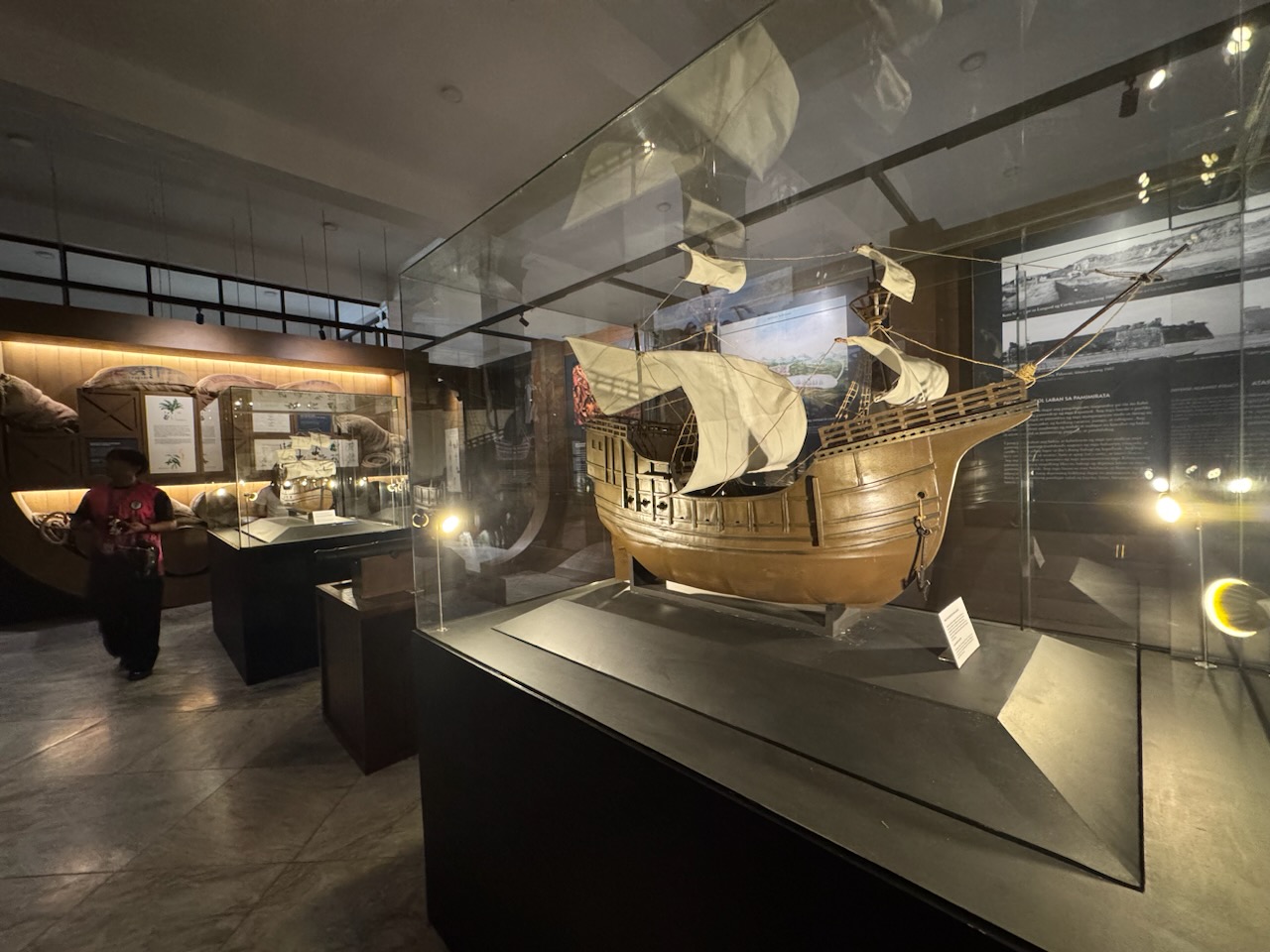
To go back even farther into the past, pre-Hispanic Filipinos built the balangay that helped populate Austronesia as well as the speedy warship, the caracoa; in Spanish times our ancestors built the galleons that crossed the oceans. In Moby Dick, Herman Melville referred to Filipinos aboard the whalers as “Manila men.”

Behind these figures runs a compelling human and social drama, but it’s a story largely unknown and untold to our own people, and what little we know is fading even faster as more of us leave our islands for the big cities, slowly but surely losing our personal connections to the sea. We encounter sea life only in the fish market or the seafood section of the grocery, or in tin cans; our children do not know the names of fish, which many now refuse to eat, in favor of sausages and noodles.

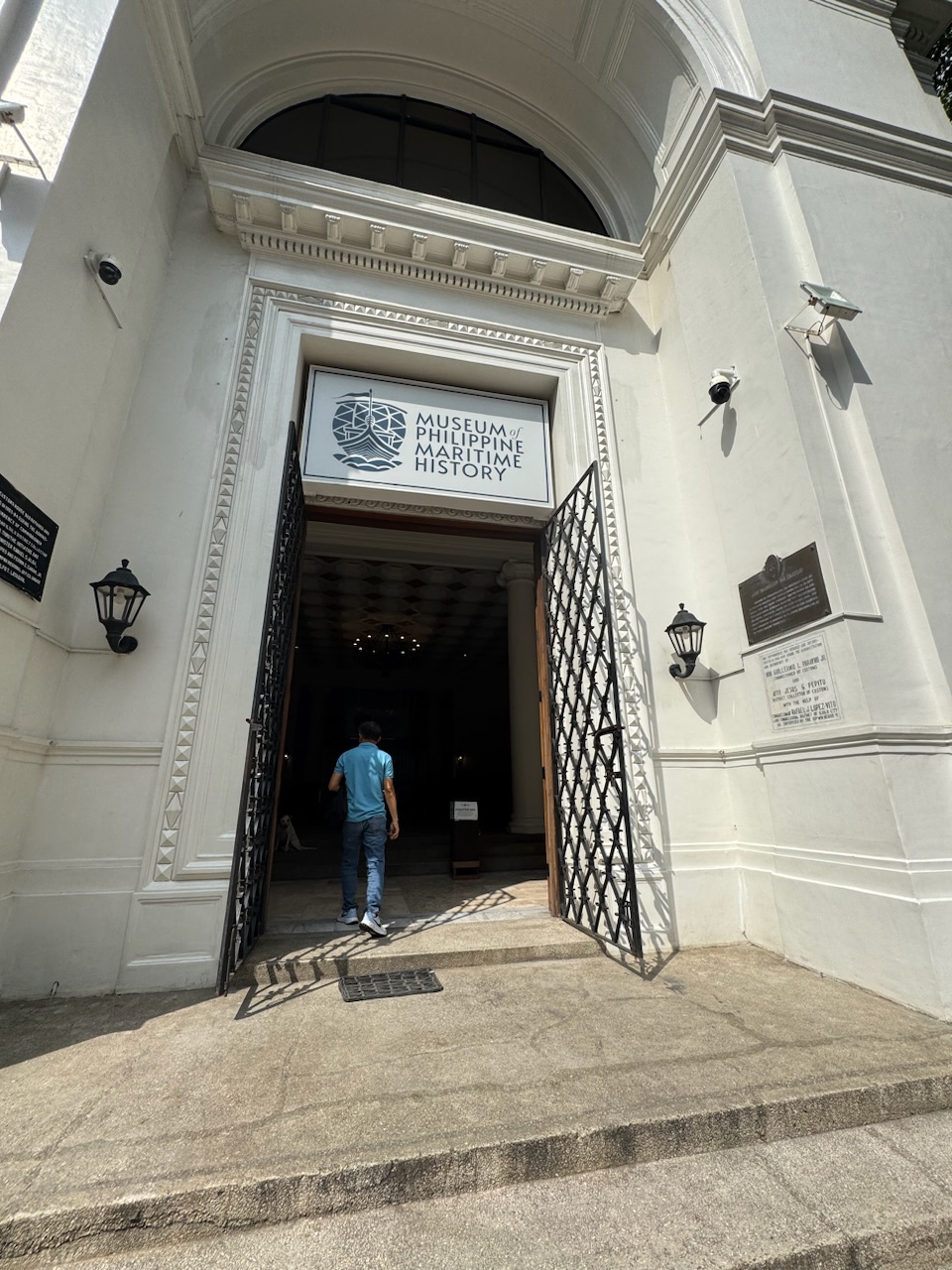
Thankfully, the National Historical Commission of the Philippines (NHCP) has done something critically important to fill this gap in our collective memory—by establishing a Museum of Philippine Maritime History (MPMH) that tells the story of our seafaring past. And it’s significant that this museum isn’t located in Manila, which would seem to be the logical first choice given Manila Bay and its port, but in Iloilo, which has also had a long and continuing affinity with the sea. Iloilo has historically supplied many if not most of the country’s seafarers to the global market. The city has a plethora of schools offering maritime courses, ensuring the continuity of talent.
I stumbled on the MPMH during a recent visit to Iloilo—among my favorite local destinations for all the obvious reasons (the food, the Esplanade, the heritage houses, the churches, the hospitality, the culture, and of course the people). The amazing boom it’s undergone over the past two decades under the sponsorship of former Sen. Frank Drilon and his local counterparts has dramatically transformed the city’s physical and economic landscape, but it hasn’t forgotten its past as it moves resolutely forward. 

Iloilo has long been known as the city of museums. Aside from the Museo Iloilo and any number of restored mansions, it now boasts the Museum of Philippine Economic History, which chronicles the city’s and region’s central role in sugar, shipping, and commerce; the Rosendo Mejica Museum, which celebrates Iloilo’s journalistic heritage (and I’m proud to say that my wife Beng descends from a Mejica); and the Iloilo Museum of Contemporary Art, which places Iloilo squarely in the center of cutting-edge art production.
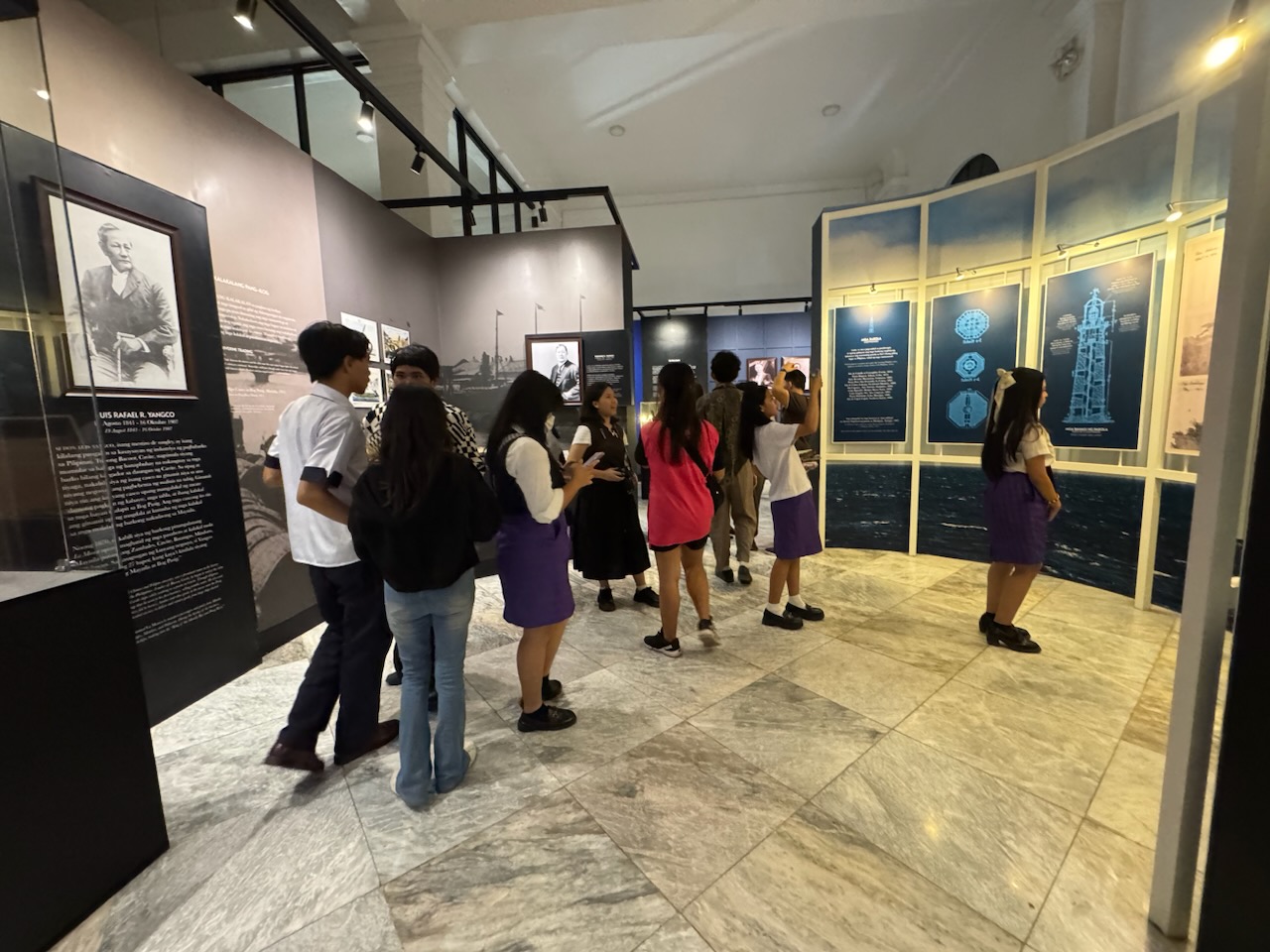
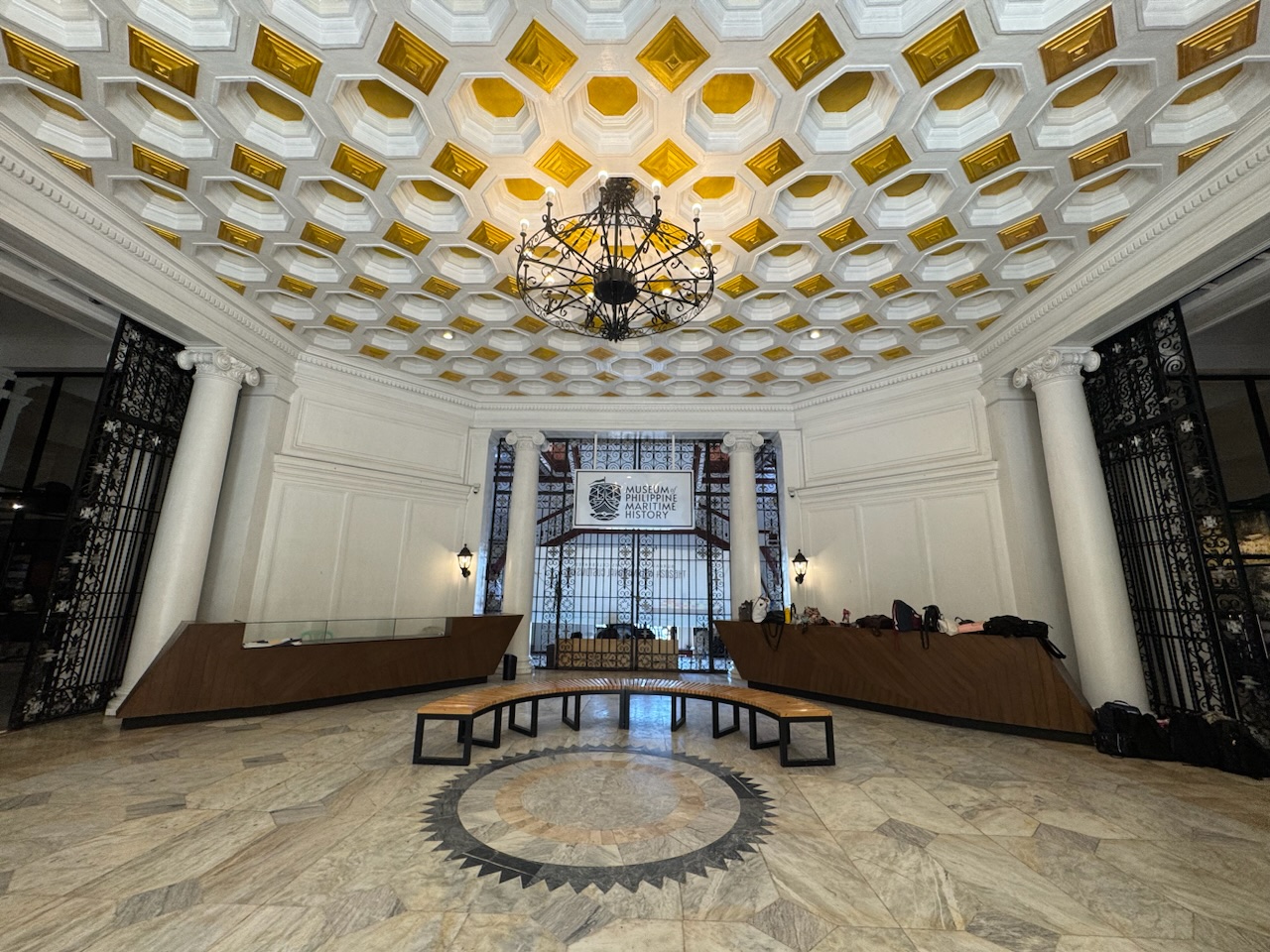
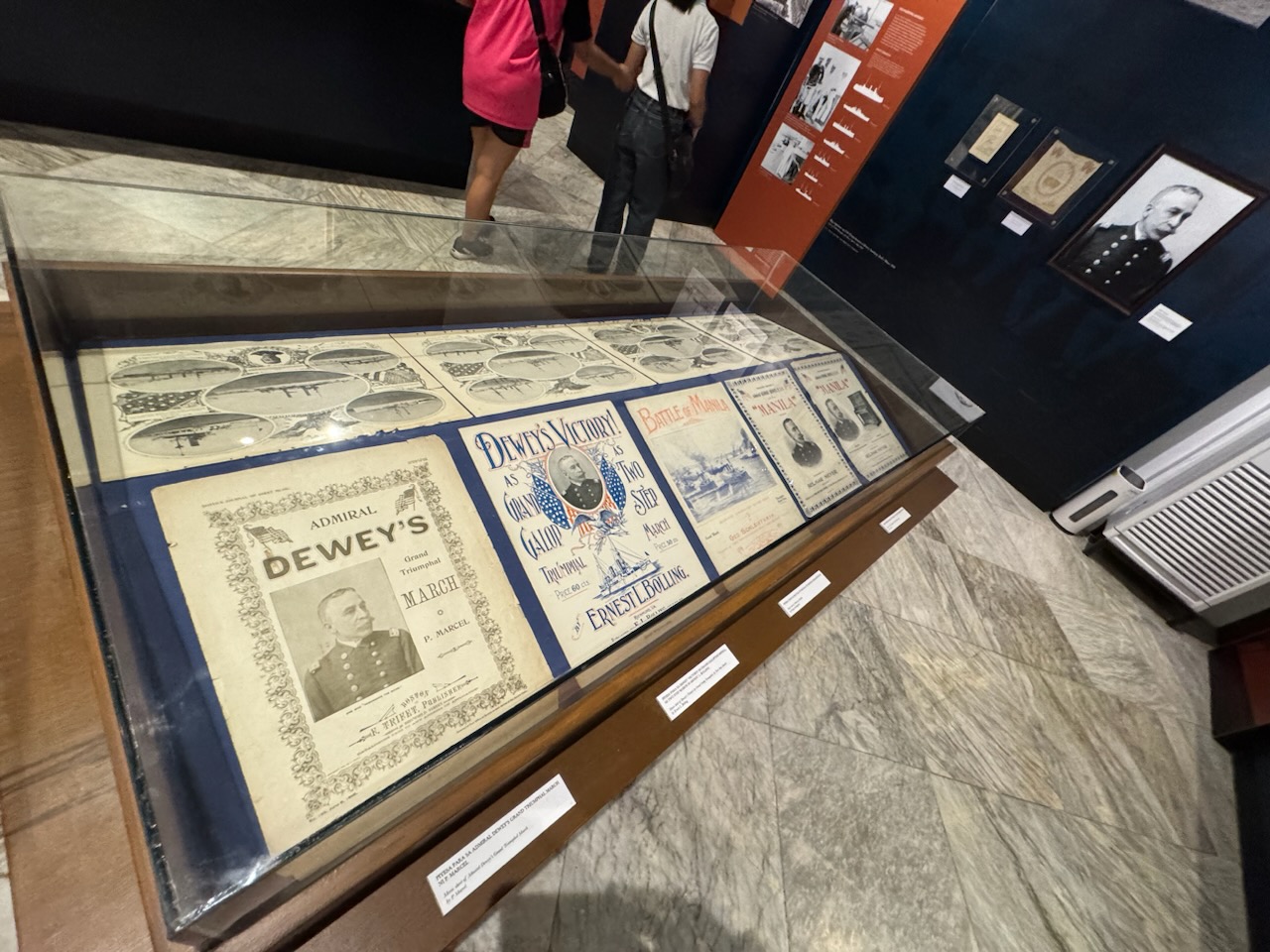
The MPMH, which opened in January 2023 at what used to be the Old Customs House on Calle Loney and Aduana in City Proper behind Sunburst Park, walks the visitor through exhibits covering the past until the Spanish era, and the American period to modern times. One very informative section presents the variety of Philippine boats (biray, casco, vinta, batil, etc.); scale models bring some to life. Key figures in our maritime history such as Luis Yangco (1841-1907), who had a shipping empire and supported the revolution are introduced. Historical photographs, posters, and other artifacts provide vivid visual proof of how vital the maritime industry was to our economy and society. Another panel notes the many waterborne festivals we Filipinos hold throughout the country, such as the Pista ‘Y Dayat in Lingayen, Pangasinan every May, and the Bangkero Festival in Pagsanjan, Laguna every March.

It’s not a huge gallery, and one wishes there were even more artifacts on display to ponder, but in terms of curation and presentation, the MPMH can hold its own, given its present limitations, against other international museums of its kind, with crisp, clear graphics, well-chosen items, and useful and interesting detail. (I’ve had the privilege of visiting the National Maritime Museum at Greenwich in the UK and the Museo Naval in Madrid, so as global standards go, those two maritime giants would be tough to match.) The MPMH’s best come-on—which probably accounted for the hordes of students present when we came by—is that it’s absolutely free, although donations are welcome. That’s a great start, with the kids, toward recovering our memory of the sea.
Penman No. 444: A San Diego Sojourn

Penman for Sunday, November 6, 2022

A FEW weeks ago, for the first time since the pandemic, my wife Beng and I took a plane out of the country, and I can’t tell you how liberating that felt after three years of being landbound. I’d had few complaints about the long lockdowns, because I’m used to working and writing in isolation, and have become much less sociable as I age. But I did miss the travel, the foreign air, the view from the other side of the ocean. 

Just before the pandemic hit, Beng and I had spent my first year in retirement (and a good chunk of my retirement kitty) gallivanting around seven countries, against the advice of family and friends who thought that we were overdoing it; perhaps we were, but now we know that the world we saw then will never be the same again, and that we ourselves—in or approaching our seventies—will never be able to do that again. And so it was with a huge sigh of relief that we boarded our flight to San Diego, where our daughter Demi has been living with her husband Jerry for the past 15 years. We’d visited San Diego often before, but probably not with this much anticipation, having been away for years. 

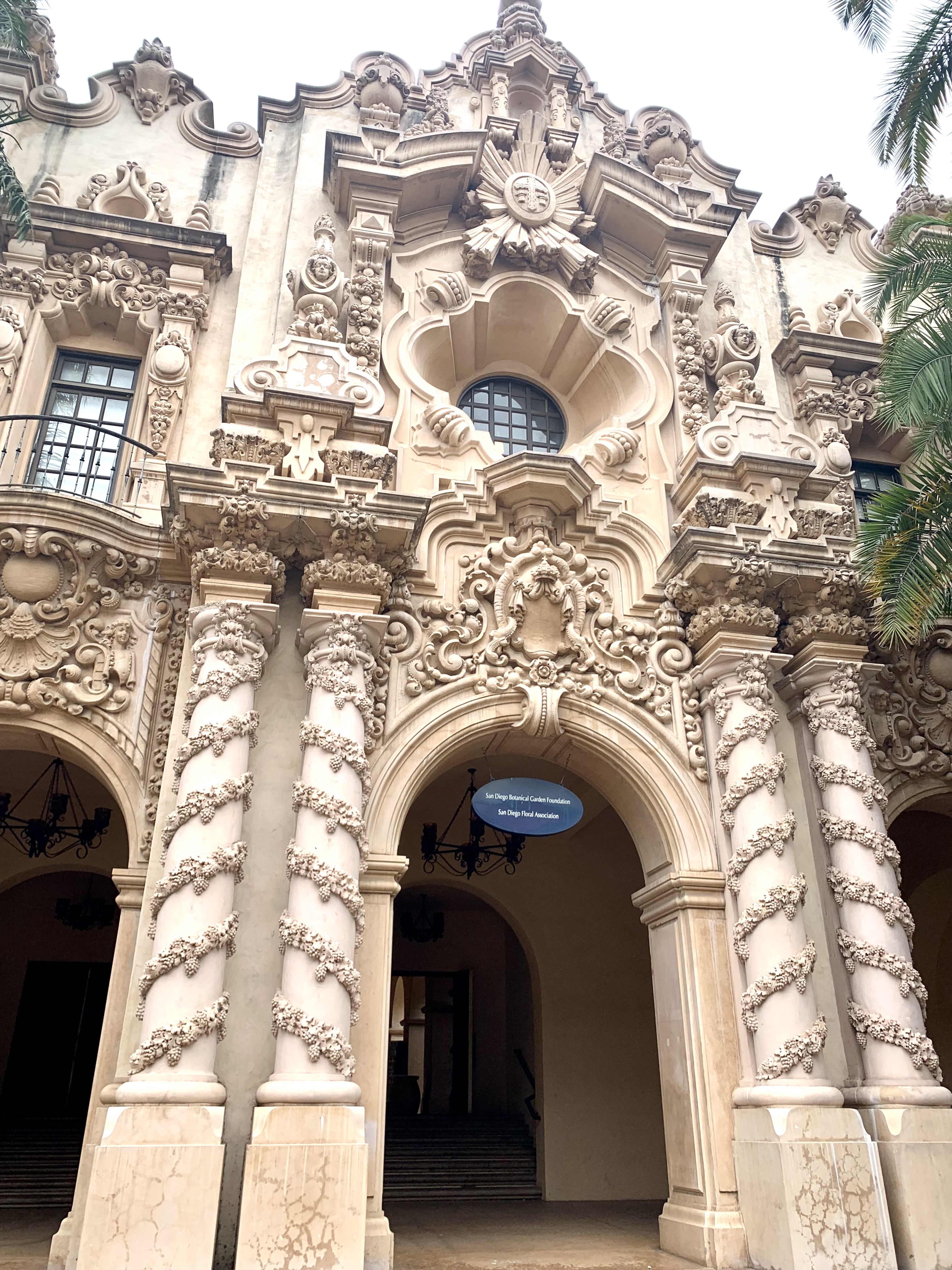
Sitting on the Mexican border, San Diego isn’t the first place most Filipinos would choose when they think of visiting America, unless, like us, they have personal reasons to go there. Los Angeles and San Francisco seem to be more exciting places, have large Fil-Am communities, and have long been the ports of entry for Pinoys landing on the West Coast. (Our Japan Airlines flight was that rare straight flight via Tokyo to San Diego.) But San Diego has its own charm and its own attractions, most notably Balboa Park, the San Diego Zoo, and Comic-Con, that annual extravaganza of pop culture that draws about 150,000 fans from around the galaxy. (Much to my young students’ chagrin, I’ve been to Comic-Con twice, happily ignorant of much of what I was looking at.) 

And whether you’ve lived there for decades or are just passing through, San Diego will always give you a taste of home, with dozens of Pinoy foods stores and restaurants, especially in National City and Chula Vista where you can shop at Seafood City for daing na bangus and Chocnut and at Goldilocks for your party cake while dropping packages off at LBC—or you can run to Mira Mesa for your Jollibee fix. (For me, an American sojourn would be incomplete without a trip to Arby’s and Red Lobster.)

Inevitably San Diego also has its own spotted history of East-West relations, in which Filipinos have figured; the better part of that history was celebrated last month as Filipino-American Heritage Month in the city. The worst part remains in the archives, in the memories of early immigrants such as Emeterio Reyes, who recalls that “I asked the driver if he could take me to a Catholic church. As soon as we got there, I told him to wait for me because I had a funny feeling I might not be welcome at this church. As I entered the door, a priest approached me and told me that the church was only for white people. That moment, I wanted to cry and die!” 

When Sebastian Vizcaino sailed into what he would name San Diego Bay on November 10, 1602, he found that he had “arrived at a port which must be the best to be found in all the South Sea, for, besides being protected on all sides and having good anchorage, it is in latitude 33½o. It has very good wood and water, many fish of all kinds, many of which we caught with seine and hooks. On the land there is much game, such as rabbits, hares, deer, very large quail, royal ducks, thrushes, and many other birds. On the 12th of the said month, which was the day of the glorious San Diego, the general, admiral, religious, captains, ensigns, and almost all the men went ashore. A hut was built and mass was said in celebration of the feast of Señor San Diego.”

As a major port facing the Pacific, San Diego has long been home to the US Navy’s Pacific Fleet, its base harboring over 50 ships. The naval presence defines much of San Diego’s character, and provides a good part of the reason why about 200,000 Filipino-Americans live there today. Since early in the American occupation, Filipinos have signed up with the US Navy as their passport to what they hoped would be a better life and to a bit of adventure. 

I just learned, for example, that the first Filipino to have joined the US Navy, back in 1903, was a seminarian in Manila named Potenciano Parel who snuck out of his vows to be a sailor, but not having the right papers, he used those of a friend and assumed his identity, Tomas Dolopo; the Dolopos continue to be San Diegans. Demi’s late father-in-law, Ric Ricario, joined in 1957; his eldest son, Ray, followed him into the Navy; Ray’s brother Jerry met and married Demi. And so we find ourselves now tied by blood to that long tradition, as did many thousands of others before us.

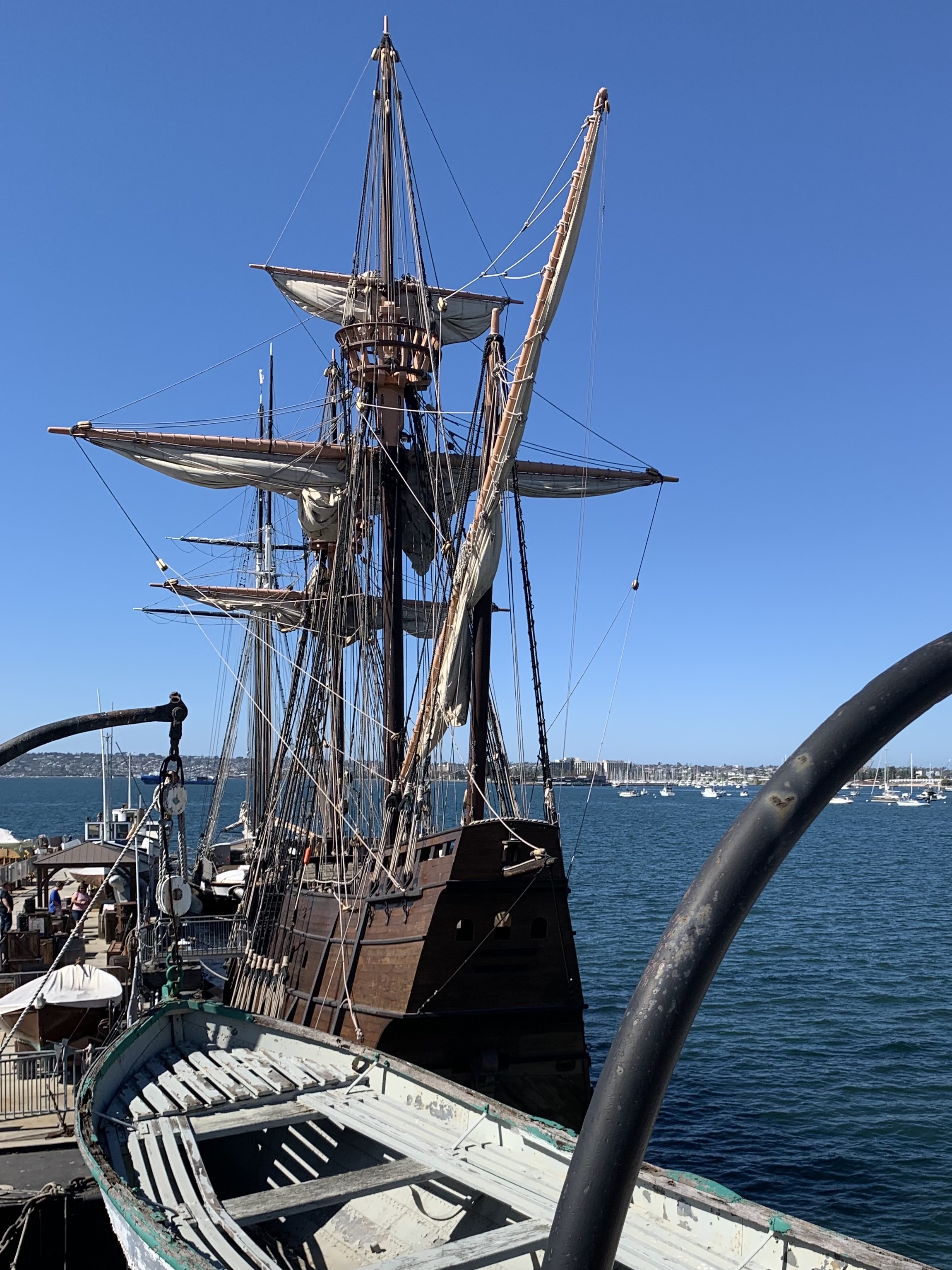
Despite having visited San Diego many times before, and having enjoyed its more popular attractions, we felt more acutely aware of history this time around. We finally stepped into the city’s Maritime Museum, a complex of many ships from various centuries that allows visitors a hands-on experience at traveling the world on water. The ships on display range from a full-size and fully functional replica of a Spanish galleon ca. 1542, the San Salvador, to the world’s oldest sailing ship, the grand, mid-1800s Star of India, to a ca. 1970s submarine that still holds the record for the deepest dive, the USS Dolphin. For just $15 for seniors and just slightly more for others, you can hop from one ship to another, and imagine what it was like to cross a tempestuous ocean with only the stars to light the way and nothing to eat but stale bread and salted pork. 

We enjoyed history of another kind by having dinner with our in-laws in a National City dive that our son-in-law Jerry chose for its unique ambience, which you can either call seedy or loaded with character. (There was a famous sailor’s bar in the area called the Trophy Lounge, Jerry told us, that used to be run by ladies from Olongapo…. But that’s another story, and San Diego has books of them, yet to be told.) La Maze is the kind of leatherbound ‘50s restaurant that the Rat Pack and other Hollywood celebrities frequented when in San Diego, and you can still order the same great steaks they had. A local band played dance music, and to the tune of “Solamente Una Vez,” I took the pretty silver-haired fox next to me to the floor and slow-dragged the night away.