
Qwertyman for Monday, October 20, 2025

iN GERMANY right now attending the 77th Frankfurter Buchmesse or Frankfurt Book Fair as a member of the Philippine delegation, I’ve been fortunate to engage in many interesting discussions with German journalists and fellow writers from all over. But one of the most important and frankly troubling conversations was one I had with a Filipino writer now based in Italy, someone with a deep knowledge and understanding of the political situation in his home country and particularly in Mindanao.
“There are two Philippine embassies in what most of us simply call Italy,” my source explained to me. “One is in Rome, and the other, called the Philippine embassy to the Holy See, is in Vatican City, which is a sovereign city-state. Most overseas Filipinos in Italy—over 100,000 of them, mostly domestic helpers and nurses—cast their votes for Philippine elections in our embassy in Rome. Those in the Vatican—priests, nuns, and other religious workers—vote there.”
“And so?”
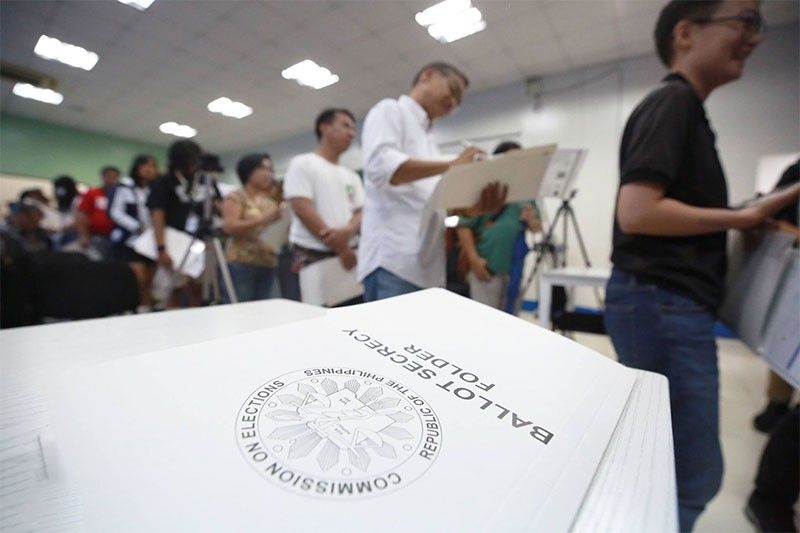
“This is where it gets interesting. During the most recent midterm elections, where OFWs could vote for senator, there were 23 votes cast at the Vatican for Apollo Quiboloy.”
I had to let that sink in for a moment. “Wait a minute—you’re telling me that two dozen Catholic priests, nuns, and whoever at the Vatican voted for a disgraced and now imprisoned cult leader who calls himself the Appointed Son of God and New Owner of the Universe? Are you sure?”
“I couldn’t believe it myself,” he answered, “so I double-checked that with our embassy there, and they confirmed that it was true: Pastor Quiboloy got 23 votes in the Vatican. Now, I can try to understand if some Filipino Catholics would still vote for Duterte despite everything, but Quiboloy?” He shuddered. “That shows how far we have to go, and how we can’t assume that the Dutertes are spent as a political force.”
I had to laugh at his story, but it was laughter of the nervous kind, born out of irony than mirth. “Here we are in Frankfurt,” I said, “attending the world’s largest and oldest fair devoted to books and literature, to novels and fiction of the most imaginative variety, with many of us having a hard time selling our stories, and then comes along this Quiboloy tale that seems to show that people will believe the craziest things. This is fiction, popular fiction!”
You had to see the humor in the situation—I can easily imagine a cartoon depicting a soutaned priest receiving absolution from Quiboloy garbed in, well, shiny robes befitting a New Owner of the Universe—but its implications were anything but comic. It meant that presumably sane deeply spiritual men and women, living and working at the very heart of the Catholic faith that defined their lives, had found common cause with an accused sex trafficker and abuser of minors. Sure, the accusations remain just that until they’re proven, and sure, these Vatican voters were merely exercising their democratic rights.
But really? Quiboloy? Might the pastor’s claim of bearing “the exact DNA of the Almighty Father and the New Jerusalem” and of being “the bodily manifestation of the unseen God” have resonated with them? Could they have been enticed by his devotion to “enthroning prosperity and abundance, and (being) a trustworthy steward of the Father’s financial business on earth”?
Whatever the reason, it’s clear that the Pinoy’s political imagination is capacious enough to combine disparate perspectives and philosophies into one noggin. Pope Leo? Sure, obey. Senator Quiboloy? Sure, support.
All throughout my talks here in Frankfurt, I’ve been asked who and what the modern Filipino is, and my best response has been to assert that the Filipino (and the Filipino nation) continues to be a work-in-progress, a compound of various historical and cultural influences contending for primacy. An example I conveniently cite is that of a New People’s Army cadre, presumably Marxist, who remains a practicing Christian and prays to Jesus, but who also begs the indulgence of resident spirits when he passes an anthill in the forest. We’re seguristas, investing in alternative fortunes.
That’s not to say we don’t have people who think only one way and not the other—thankfully many if not most of us still stand on some kind of principle—but the exceptions make more interesting subjects of study. In this regard, Quiboloy’s Vatican voters may have been DDS who saw no contradiction between their Catholic faith and Dutertismo (something we’ve seen and continue to see among the religious, especially in Mindanao).
I suddenly recalled an article published on Rappler in July 2020 by Fr. Amado Picardal, CSSR, who wondered aloud why so many of his colleagues, including a university president, openly rallied behind a man who cursed God and the Pope. He wrote: “In the religious community where I was living, most supported his candidacy, and I felt like a lonely voice warning them about the dire consequences…. One confrere proudly told me to my face that he was voting for Duterte, knowing my stance. A seminarian wore a Du30 bracelet. There were three confreres who posted their photos on Facebook doing a fist bump. A contemplative nun campaigned on Facebook for him and even made her pet dog wear a Du30 collar.” Fr. Amado offered some explanations: regionalism, the Left’s deluded belief in Duterte’s progressive pretensions, his strongman appeal.
Given these, the Vatican result makes more sense, without offering any comfort to those of us who might have been under the illusion that proximity to the Vicar of Christ and Successor to the Prince of the Apostles induced enlightenment. Being the New Owner of the Universe apparently exerts more power, even from prison, and we should be afraid, be very afraid.
(Image from aleteia.org)
 Pinoy Penman 3.0