
Qwertyman for Monday, September 15, 2025

“Enormity” is a word I rarely use in my writing, because I still take it in its traditional, original meaning, which is that of “a great evil, a grave crime or sin.” I would use it in the sense of “the enormity of the Holocaust, in which Adolf Hitler exterminated six million Jews” as well as in “the enormity of Israel’s genocidal assault on the people of Gaza, employing bombing and starvation to bend Palestinians to its will.”
But it has so often been misused as an alternative to “enormousness,” to mean “very large” or “very big” in relation to size, that most modern dictionaries have relented and accepted that secondary definition.
Last week, listening to Sen. Ping Lacson’s revelations about gargantuan sums of money changing hands and being blown at the casinos not by business magnates or heirs to billions but by subalterns at the Department of Public Works and Highways, I saw no inconsistency whatsoever between the word’s two meanings. It was both one and the other, wrongdoing on such a scale that made you wonder if this was still our country, if we still had laws to fall back on, and for how much longer our people would be willing to endure this kind of abuse before the dam breaks and a biblical flood of justice bursts forth to sweep away the evil in our midst.
The quoted sums were mindboggling enough: five DPWH district and assistant engineers in Bulacan accounted for almost P1 billion in casino losses, as reported by Pagcor to Lacson. A district engineer—there were 186 of them at the DPWH last year, according to the Department of Budget and Management—earns a monthly salary of almost P230,000. It’s nothing to sneeze at (my salary as a Full Professor 12 in UP was half that when I retired in 2019, and Filipino minimum wage earners still make less than P20,000 a month), and you could live very comfortably on it if you lead a prudent existence. But who needs prudence when you have tens of millions of pesos in kickbacks to play with at baccarat or roulette?
The theft isn’t even the real crime, the true enormity here; it’s what that money should have been used for, but wasn’t—the prevention of human suffering through public works projects that have instead remained unfinished or grossly substandard. Those engineers weren’t playing with cash and chips—they were playing with lives and futures, the fortunes of entire families and communities gone with a wrong turn of the dice, followed by a casual shrug and a reach for more of the endless chips.
Forgive these murderous thoughts, but for this alone, once proven guilty, those miscreants deserve to be hanged, or banished to a prison that floods at high tide. One might add that if Digong Duterte had launched a tokhang campaign against the corrupt—but we all know why he couldn’t have—perhaps he wouldn’t be watching windmills from his window now.
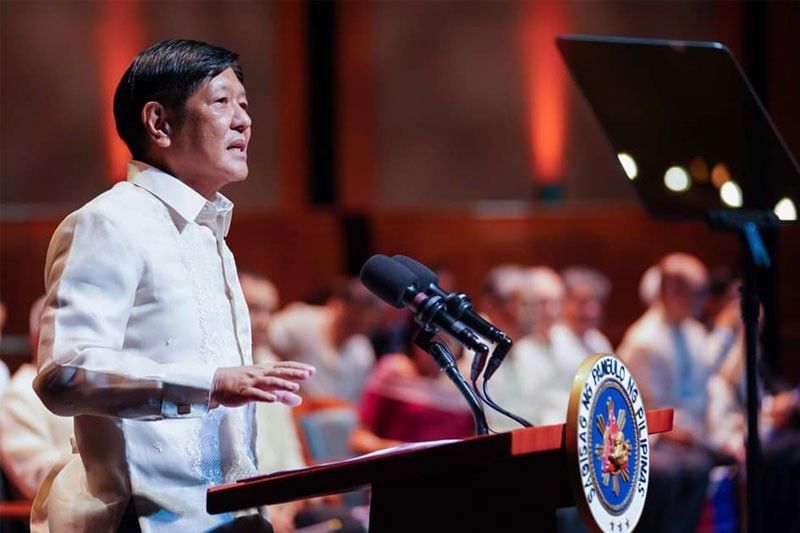
Our righteous indignation aside, it’s clear that the buck should and will stop with no other than President Bongbong Marcos, who after all began all this with his surprising and explosive public revelation of the top contractors’ names. Whatever his initial or ulterior motive may have been, that’s practically been rendered moot by the massive outrage and political drama arising over the past few weeks as a result of his action and of the continuing Senate and Congressional investigations.
In the immediate future, much will hinge on the independent commission that BBM is organizing to probe the issue and on its efficacy. In an ironic turn of history, its credibility will have to match that of the Agrava Commission, whose conclusion that Ninoy’s assassination was the result of a military conspiracy helped to eventually bring his father’s regime down.
But since irony seems to be a strong and inescapable feature of our political life, it may be the perfect time and opportunity for the dictator’s son to become his own man, to redeem his part of the family name, and to prove his doubters and detractors (this martial-law ex-prisoner among them) wrong. He can do that by finding the courage and resolve to pursue this business of weeding out systemic corruption—just beginning with our public works—to its farthest possible conclusion, no matter who or what gets in the way.
Surely PBBM would not have trumpeted this initiative against corruption if he did not expect the money trail to lead back to some of his closest associates and supporters, and even to his family—who, as no one will or should forget, have long stood accused of plunder in the billions, well before the Discayas and their company discovered the short road to riches. The Marcoses may have dodged payment for those debts through favorable court rulings predictably secured upon BBM’s presidential victory, but he cannot escape this responsibility now.
Any attempt to pause or to mute the investigations into this ugly mess will only backfire on BBM and his presidency and invite suspicions of his complicity in these scandals. His only real option is to seize the moment, press on, and do the right thing even if and until it hurts.
I can see many of my liberal cohorts grimacing at the notion that a man we once derided for his profligacy and lack of discipline could lead such a brave and sweeping reform of our society and government, and I have to admit that I too shall remain a skeptic until I see solid results coming out of these investigations. Dismissals and bans won’t be enough for the erring officials and contractors; we want jail time for the guilty and adequate restitution, we want the big fish to fry.
But I’m a great believer in the possibility and the power of redemption (think Saul of Tarsus and Ignatius of Loyola). Even in this seemingly quixotic mission of reforming government, very few people will come to the table with perfectly clean hands—or remain unsullied to the grave. Ultimately less important than their private faults is their public performance—what they did, over the course of their lifetime, to serve the public good and/or to make amends for their past misdeeds and shortcomings.
BBM may be far from the path to sainthood, but he can still employ the vast powers of his office to strengthen constitutional governance in this country, in dramatic reversal of his father’s legacy. If he fails to do that, then he will merely confirm what we have suspected all along. I pray, for once, that we were wrong.

 Pinoy Penman 3.0