PenmanNo. 483: High School Is Forever

Penman for Sunday, March 8, 2026
ASK YOUR Boomer uncles and aunts what period of life shaped them the most, and I’ll bet you anything I have that their answer won’t be grade school, when they were still wetting their pants and wondering why God had to make the other, completely unnecessary sex as well. It won’t be college, either, by which time you were convinced you had the world figured out and that it was obliged to conform to your vision for it.

No, it’ll be that time of our lives that never seems to lose its vividness—not the metamorphosis of one’s body and of its most secret parts, not the quivering thrill of a first kiss or the crushing finality of a rejection, not the ecstasies and the embarrassments. That period, of course, is high school, when we all suddenly grew up, perhaps more in body than in mind.

If there’s any doubt that high school stays with us longest for the rest of our lives, just take a look at Facebook—today the social dominion of Boomers and Gen Xers, deserted by the young ones for Instagram, TikTok, and Discord. Some days you just don’t want to open Facebook because of all the flickering candles you’re bound to see—but you do, anyway, because you’re curious to know if Classmates X and Y are still together, how Classmate Z surely must have botox’ed or AI’d her way to that profile picture, and—on your Messenger or Viber group chat—when and where the next batch reunion is going to happen.

Ah, the high-school reunion! Time to look one’s best, to line-dance and to cha-cha, to trot out the family pictures, to share stories of doing the Camino and of struggling with sciatica, to scan the poundage on one’s old crush, to revive rumors and recriminations dormant for fifty years, to compare maintenance meds, Holy Land tour packages (well, maybe not right now), dermatologists and urologists, and adobo recipes. Most reunions are fun and happy, but not a few end up with someone grumbling, “I knew I should’ve stayed home!” While they say that time heals all wounds, nothing will tear the scabs off like a class reunion.

But then of course it all depends on the class chemistry, and I’m glad to report that mine has been blessed with extraordinary goodwill—maybe because, unlike many alumni batches, we don’t have class officers, we never published a jubilee yearbook (a surefire prescription for High School Horrors Part 2), and we don’t handle money beyond pooling it for impromptu causes.

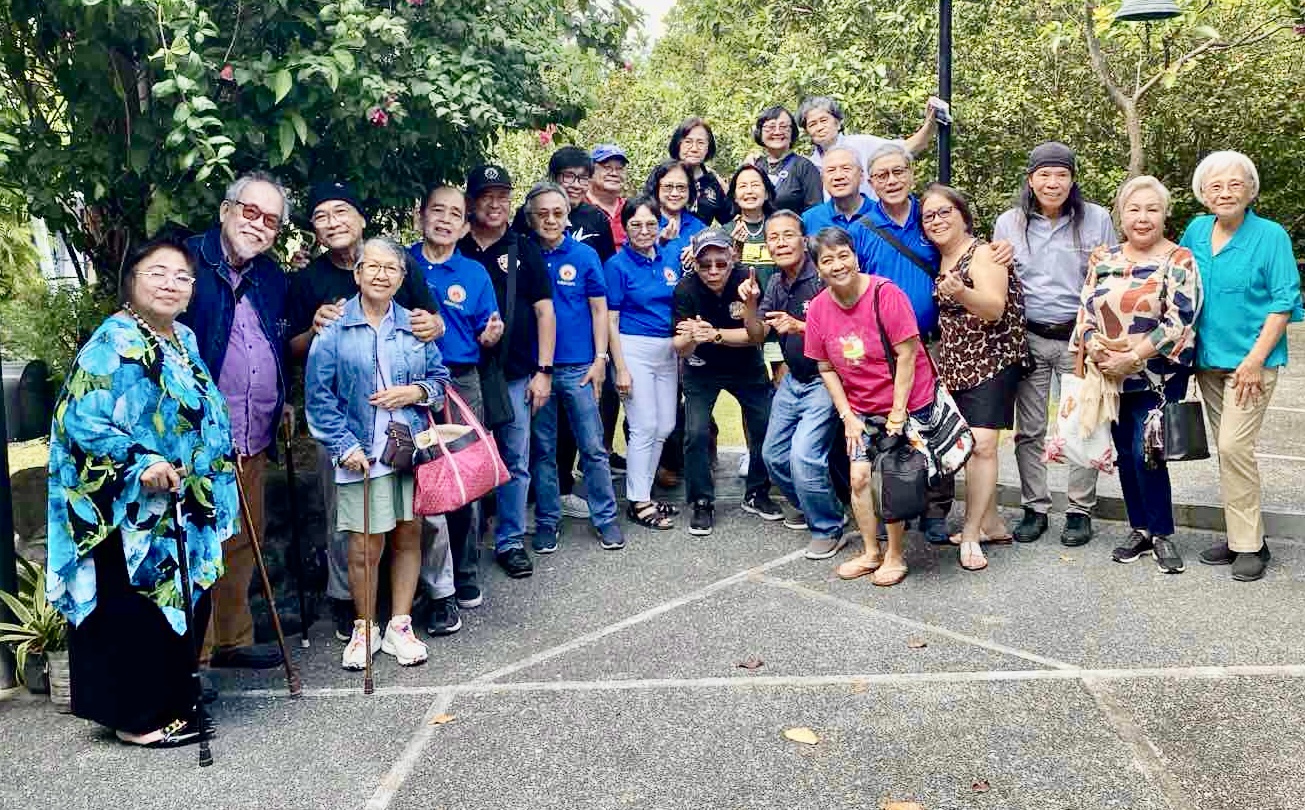
A Subic sortie last weekend with my batchmates in the third cohort of the Philippine Science High School, which we entered in 1966, proved exactly that—get together for fun and food, no great overarching agenda like “Let’s contribute our talents to the betterment of the Filipino future!” (we’ve been doing that for half a century), just spend time chilling out, healing and commiserating, and feeling good to be alive, given that class reunions never really get larger over the years.

If there’s a group of people I know I should speak plainly and humbly with, it’s these guys and gals. If I think I’m smart, well, many of the folks I went to Subic with are certainly smarter—not just in math and science but in the complicated business of life itself (and I don’t mean just in making money—although some of them have done that quite nicely—but in such existential decisions as spending years in the revolutionary resistance and resurfacing to seek social justice in other ways). My friends are engineers, chemists, physicians, managers, educators, pastors, etc., all achievers and leaders in their own ways. But what I appreciate about them is that, in each other’s presence, no one feels obliged to boast about this and that—except perhaps about grandchildren. (Fair warning: if you start a bragging war in this company, you will lose.)

The thing about high school is that forty years down the road you could become a hotshot CEO or a senator, but your classmates will never forget when you were caught caricaturing the teacher or were busted by a crush or locked yourself in the restroom. High-school truths are for life, and you will never outlive your high-school self. That weekend in Subic allowed us to revert to those younger selves, albeit burdened by excess avoirdupois and challenged memory. 
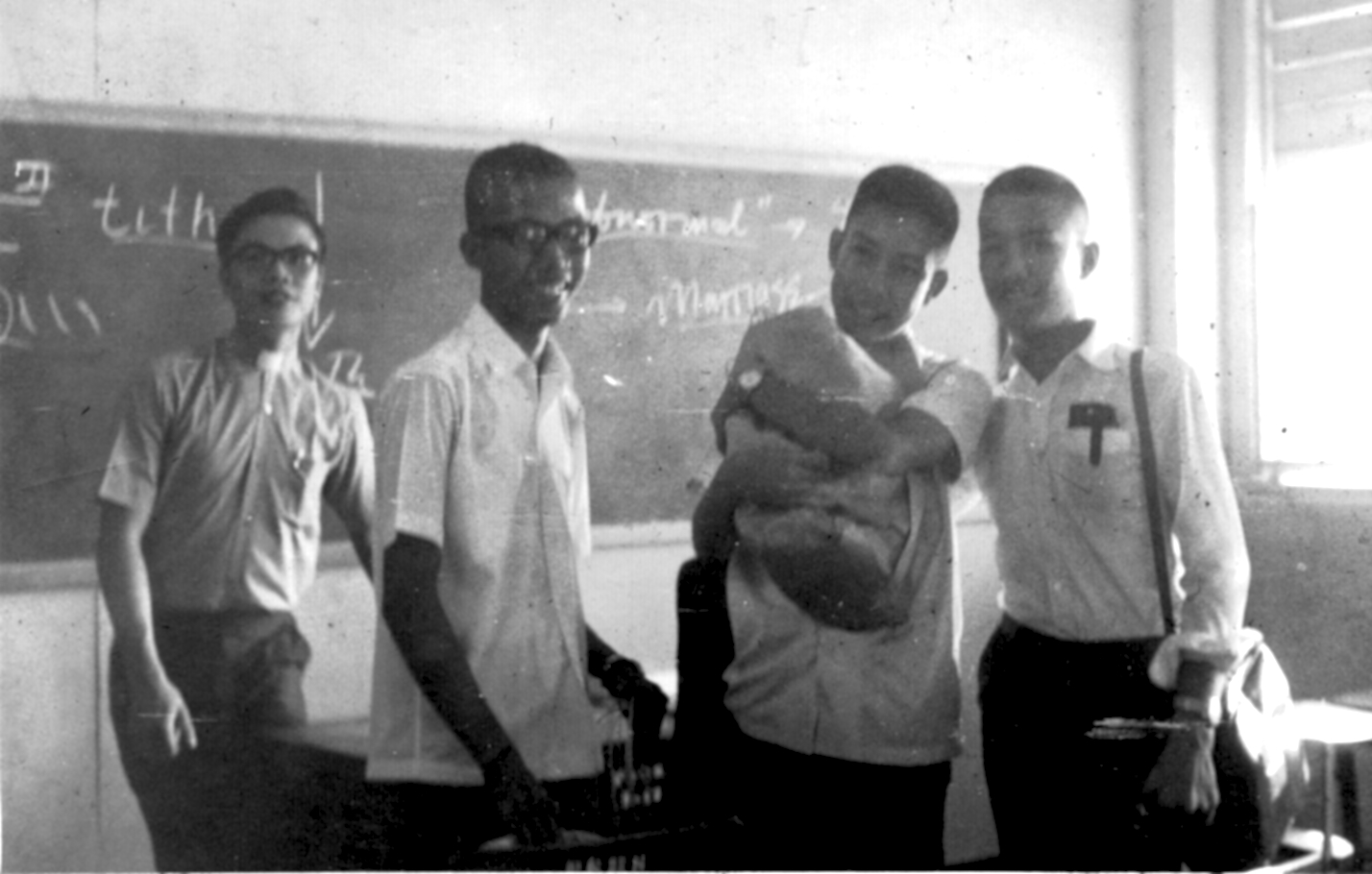
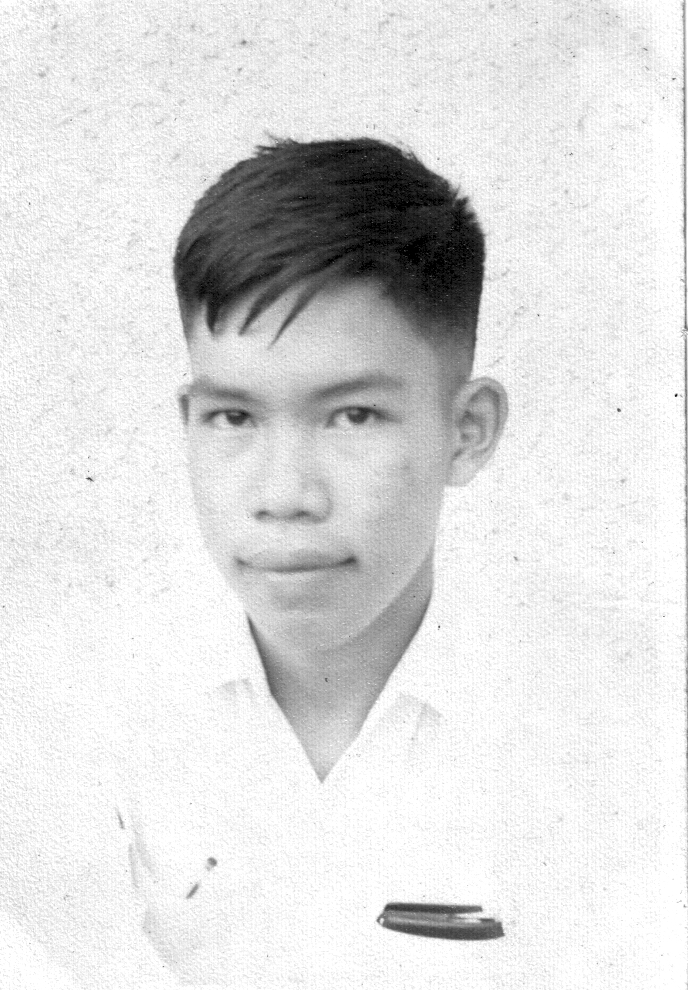
My PSHS life was anything but studiously boring. I came in as the entrance exam topnotcher in 1966, almost got kicked out after our freshman year (my grade in English was 1.0 but in Math was 5.0, saved only by a letter of appeal in my best 12-year-old, 1.0 English).

Having gone to an all-boys elementary school, girls were an exciting mystery to me and I became something of a party animal and I jerked, boogalooed, and shingalinged to the Beatles, the Rolling Stones, DC5, the Bee Gees, Herman’s Hermits, the Monkees, Spiral Starecase, Procol Harum, the Hollies, Freddie and the Dreamers, Gerry and the Pacemakers, etc. etc. I sometimes came to these dances in a green-and-white striped turtleneck and red-and-green checkered bellbottoms. 
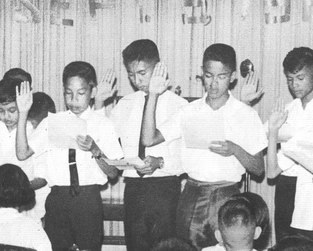
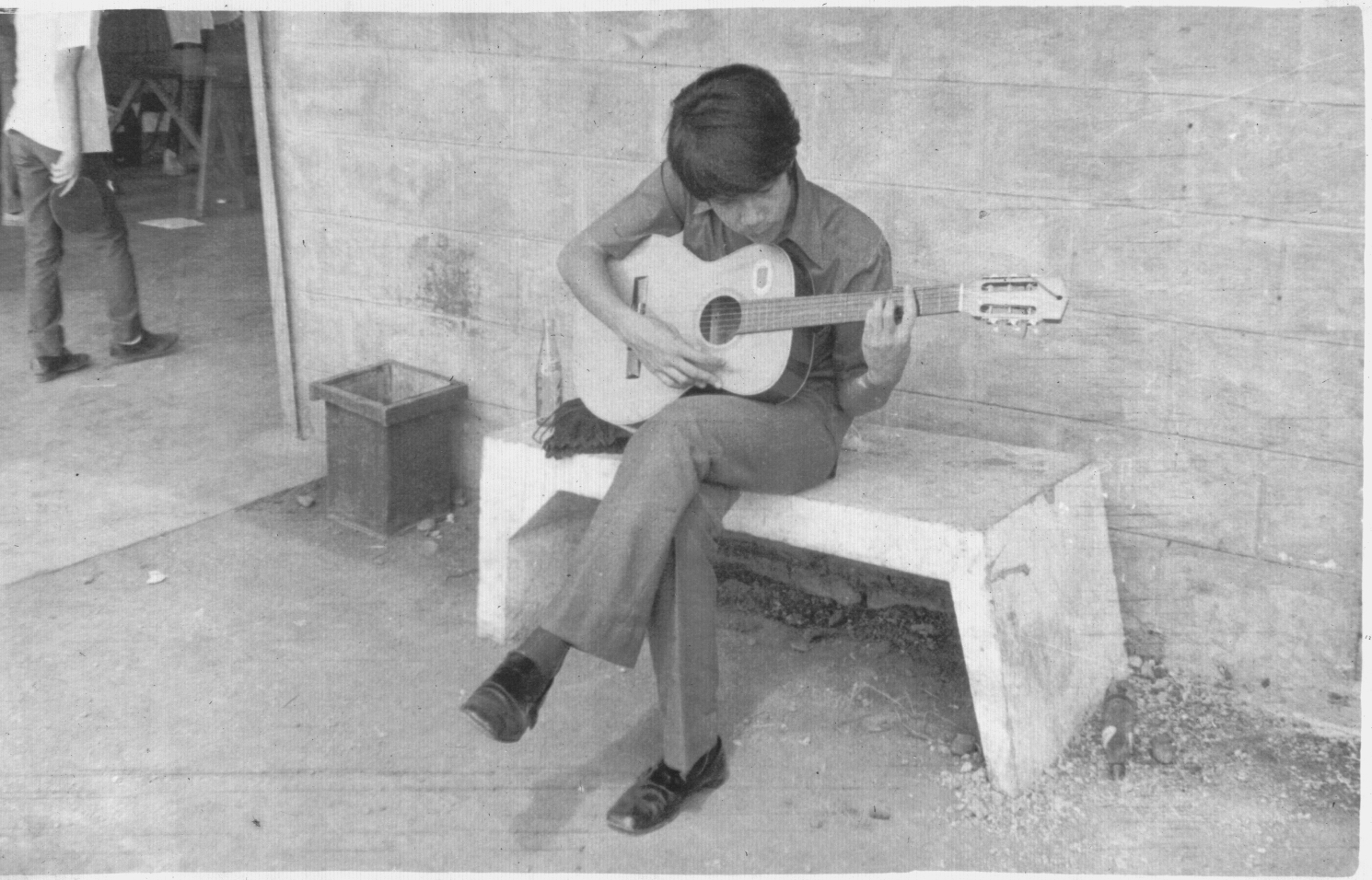
We watched “Woodstock,” “The Graduate,” and “Camelot” in the moviehouses of Avenida and Cubao, huddled around a black-and-white TV in a boarding house on Maginhawa Street to watch the moon landing, and marched in the streets shouting “Student Powah!” Our eyes popped when we stumbled on a cache of Playboy magazines in a friend’s house. We bought Lumanog guitars in Raon and followed “Shindig” and “Combat” and “Ang Hiwaga sa Bahay na Bato” on TV. Despite the Vietnam War and the stirrings of activism in our ranks, there was an innocence about the ‘60s that vanished in a poof when the ‘70s opened and the tear gas and the truncheons began to hurt us more than heartbreaks.

That weekend we didn’t talk about anything much more serious than ER and OR survival stories—followed by the familiar catalogue of metformin, statins, saw palmetto, vitamin XYZ—the sort of chatter that would turn Gen Zers catatonic. 

A war broke out above our heads and we all sadly agreed that the world we were leaving was worse than the one we entered. We knew something about wars, but thankfully also knew something about having a good time, in spite of time. We went home thinking that indeed, like it or not, high school is forever.

Penman No. 217: We Were Young Together

PSHS10.jpg

Penman for Monday, September 18, 2016


I HAD the honor of being asked to speak at the 50th anniversary reunion of my Philippine Science High School batch (we chose to celebrate our entrance year, 1966, fearing that there’d be fewer of us to gather in five years). It was, I joked, the valedictory I never got to deliver, for reasons that will be shortly obvious. You’ll forgive the chest-thumping; every high school has a right to think it’s the best on the planet—perhaps some more so than others. Herewith, an excerpt:

I’ll begin with a shameless boast, and the boast is that over these past four decades, I’ve won quite a few awards and prizes for my work as a writer and teacher. But none of them has given me as much pride and pleasure as the knowledge that once upon a time in 1966, for one brief shining moment and for some miraculous reason, I topped the entrance exam to the Philippine Science High School.

It was a fleeting glory, and if I ever imagined myself a real genius I would be quickly disabused, because as you all know, after our first year, my grade in English was 1.0 and my grade in Math was 5.0. Only the kindness or perhaps the embarrassment of our administrators persuaded them that I was worth giving another chance and putting on probation, a break I’m forever thankful for.

I have never felt in more distinguished company than yours. Individually and collectively, you are the smartest people I have ever known, and it has nothing to do with PhDs or awards or high positions in government and business or least of all material wealth—although I’m sure we could all use a little more money. I know that I can sit with anyone of you and have an intelligent and funny conversation about anything from interstellar travel and Dutertean diplomacy to hugot lines and Pokémon—well, maybe not Pokémon.

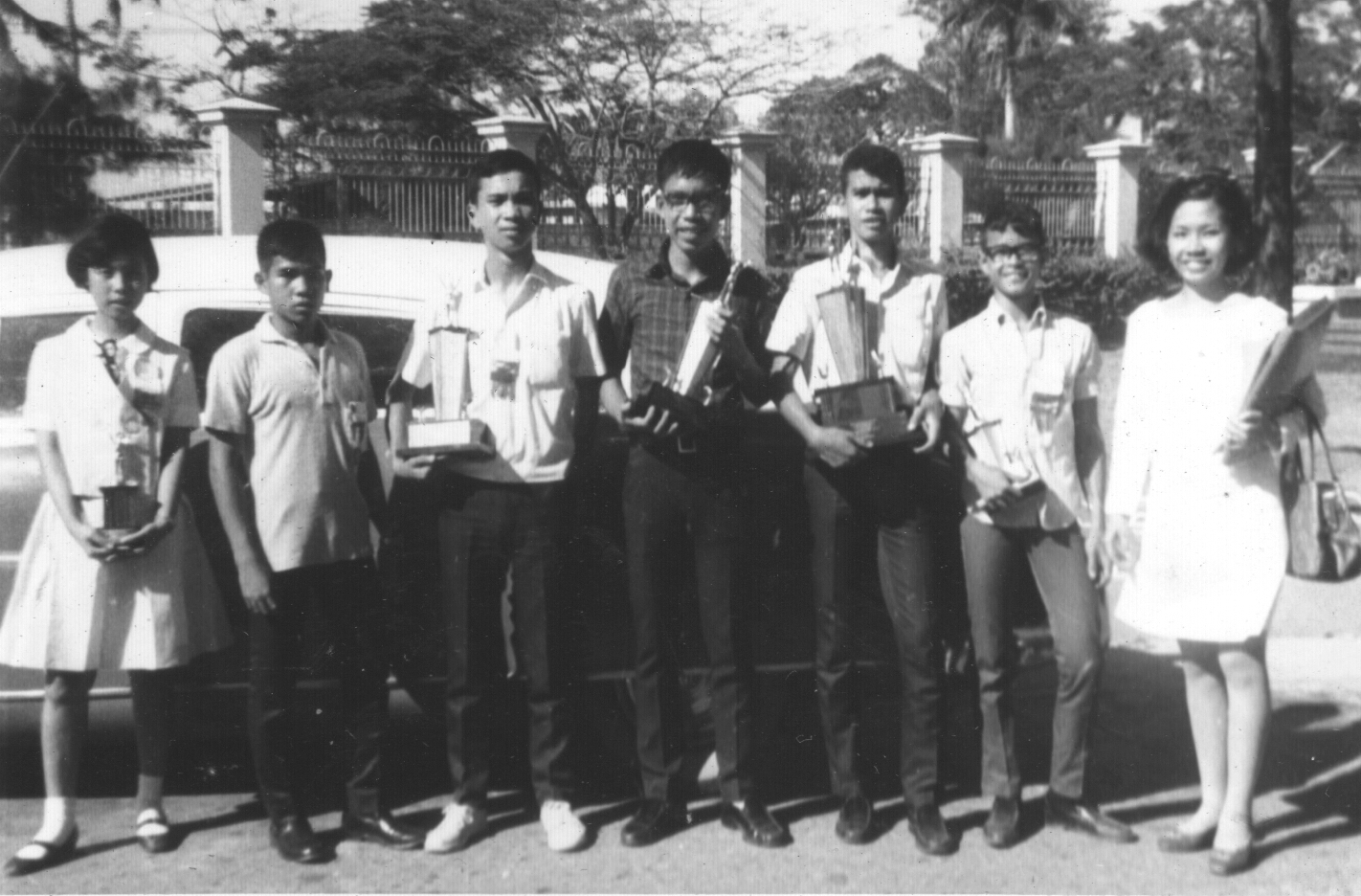
Long before buzzwords like “world-class” and “globally competitive” came into fashion, there were smart kids who passed an entrance exam that decimated whole regiments of lesser beings, leaving a few good boys and girls standing after the slaughter, calmly noting the distinction between cousins and cosines, avocados and Avogadro, halitosis and mitosis.

PSHS2.jpg

Hey, these kids were us—gangly, smelly (after a good day’s work at the biology garden, or the agawan-base arena), cocksure in the classroom, and curious as hell about the opposite sex. Not surprisingly, boy-girl questions dominated the school’s philosophical life.

“What Is a PSHS Boy?” asked the Science Scholar ca. 1969, and the soul-searching answer came (courtesy of someone who should have known—a PSHS girl): “A PSHS boy is a new sociological specimen of the human race… a hardworking nekti achiever [who keeps] a well-tended garden near the bio pond…. a longhaired mod swinger around the campus [who] wears kooky sunglasses, stylish baggy pants, and necklaces… He crams love letters in his notebooks. When Mr. Mozrah asks him ‘What is social interaction?’, he recites his lovelorn adventures with Jennifer, Corrine, Paulette, etc….”

PSHS11.jpg

This penetrating study naturally occasioned a companion piece, published a year later under the thought-provoking title of “What Is a PSHS Girl?”, written by an expert on the subject, a PSHS boy.

“A PSHS girl,” this savant said, “is a rare biological specimen… She is only emotional, temperamental and irrational sometimes (well, half of the time… would you believe almost always?). Anger is not a word in her dictionary. You see, her dictionary starts with ‘boy’… A PSHS girl is the reading type. She reads Emily Loring and the like.”

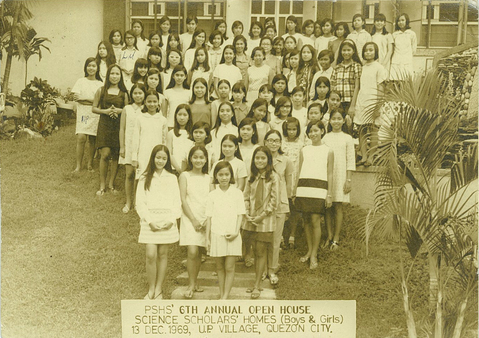
PSHSGirlsDorm.jpg

It didn’t take too long for a PSHS girl—uhm, PSHS young woman activist—to trash that silly, bourgeois, sexist view. “Now is the time for awakening,” this budding feminist would write in the same Science Scholar just a year later. “Do you realize that today you are a mere tool of the man?… Our bourgeois-oriented society adds insult to injury by picking up things for you and opening doors for you—reminders of sexual disparity—the very chains you should set out to break.”

We don’t know how many chains were broken; some precious objects certainly were (er, windows, petri dishes, innocence, and rules). Talk about rules! A famous one—dated September 29, 1970, and issued by the PSHS Board of Trustees—decreed that PSHS scholars “remain single and be discreet about their boy-girl relationships in order to continue their studies at the PSHS.”

Perhaps another topic of passionate discussion—“Should Smut Movies Be Allowed?”—had something to do with this heated  state of affairs.

The guidance counselor warned: “If they only display the human body for art’s sake, then there’s nothing wrong.  But if what they show are the acts sacred to man and woman, and those which arouse man’s sexual instincts and cause him to do something about it, then definitely, smut movies should be banned!”

Not too definitely, a freshman objected: “In European countries, especially in Scandinavia, sex movies have become so ordinary that they now seem to be part of the people’s lives.  In the Philippines, there is indifference towards these movies.  The Board of Censors should allow more of them and let us see what the attitude of the public toward them will be in the future.” [Brilliantly said, young man, an answer truly worthy of a science scholar—we’re not watching smut movies, here, we’re watching popular attitudes!]

Ah, the times, they were a-changing.  “The opening of the intramurals ushered in a new sight on our campus,” reported a sports columnist (a distraught boy) in the Science Scholar in 1970.  “Where once only boys were seen, girls have materialized…. The girls’ presence cannot be ignored…. In so short a period, many can be said to equal the boys at their own game. Complaints have been heard from the girls that the boys have been monopolizing both the basketball court and the ping-pong tables.”

That should’ve told us that the days of the Young Gentlemen’s Club and the Girls’ Club—no one had the gumption then to set up a Young Gay and Lesbian Club—were coming to an end. Some brazen soul in our freshman class organized the UBAG (United Boys Against Girls), but that didn’t last too long. Biology would teach boys that uniting with girls instead of fighting them was the more natural and pleasurable thing to do.

For a few of us after high school, life may have been a breeze, but for most, I’m sure it’s been an uphill climb, full of rough patches, and you were just as astonished as I was to find that a high IQ did not guarantee happiness or prosperity or success and may even have made things worse because of our more acute awareness of the meaning of things. We learned that the smartest people can make the dumbest mistakes in love, money, and politics, and that sometimes we just don’t know squay about the things that truly matter. I even learned that you could be happily married to someone from UP High.

Most important of all lessons and legacies, we learned to serve the people. Whether we grew up to be NPA cadres or CEOs or lab rats or barrio doctors, we knew that our high school scholarship had to be repaid in faithful service to community and humanity, employing the scientific, rationalist outlook that even those of us who strayed from S&T never quite lost.

We were young together, and we will grow old together. As we’ve all learned from life, it isn’t who leads at the start of the race but who finishes first at the end who wins—although again I suspect that in the race of life, we’d rather finish last.

PSHS6671.jpg