Qwertyman No. 161: Torre for Senator

Qwertyman for Monday, September 1, 2025

CAN THERE be any question that the logical next step for cashiered PNP Chief Gen. Nicolas Torre is to run for senator?

The next elections are still three years away; the newly sworn-in senators haven’t even warmed their seats. But the public disgust with the current crop—coupled with Torre’s elevation to hero status—just might create enough momentum and leave enough time for a new wave of Torre-type do-gooders to emerge and coalesce for 2028. The ongoing swell of public outrage against massive corruption in our public works could well become the trigger for a broader and more enduring coalition for good government. 

Many remain skeptical of President Bongbong Marcos’ resolve to pursue this drive to its politically torturous conclusion, but such a coalition—which can tap moderate elements from within the administration’s ranks—could force BBM’s hand, being the only viable option to a DDS resurgence in 2028. 

Let’s get this clear: BBM may not be our idea of a progressive democrat, and he’s been making the right noises not because he found religion, but because a Duterte comeback will threaten the Marcoses with more vicious punishment than they ever got from Cory Aquino. 

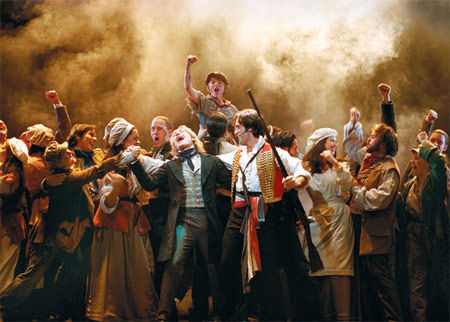
Still, it can only be a boon for the middle forces if he helps rather than hinders this brewing tsunami he was at least partially responsible for initiating when he publicly called out those divinely blessed contractors by name. We still don’t know what impelled him to take that extraordinary step, but now that the cat is out of the bag, there’s no pushing it back in, and the people won’t take anything less than decisive action against the greedy rich. You can feel the anger forming out there, the mob right out of Les Miserables taking to the streets, prepared to lynch the next billionaire who flaunts his or her Rolls-Royce umbrella while the poor drown in the floods. 

And the message is getting through: ostentation is in retreat, the Birkins and the Bentleys vanishing from Instagram beneath temporary covers until the wave subsides. But will it? How can it, when, trembling and fuming in their fortresses, the objects of our attention continue to manifest consternation rather than contrition? I love it when one of these clueless ingenues, in the midst of the uproar, protests that her family “owes nothing to the Filipino people, because the government paid for services (they) delivered.” 

The pretty miss obviously never heard Lady Thatcher, or even saw her meme reminding us that “The government has no money. It’s all your money.” (The full quotation, from a Conservative Party conference in Blackpool in 1983, goes thus: “Let us never forget this fundamental truth: the State has no source of money other than money which people earn themselves. If the State wishes to spend more it can do so only by borrowing your savings or by taxing you more. It is no good thinking that someone else will pay—that ‘someone else’ is you. There is no such thing as public money; there is only taxpayers’ money.”)

This brings us back to Gen. Torre, who showed the kind of resolve we’ve long hoped to see in our leaders by attempting to clean up and straighten out a national police force badly begrimed by President Duterte’s tokhang campaign and by its continuing involvement in such nefarious cases as the apparent murder and disappearance of at least 34 sabungeros

It seems odd that we civil libertarians should be supporting a general—and one who was ostensibly fired for ignoring his civilian superiors—but this was a man who went against the grain, who employed his authority for the tangible public good in ways that his predecessors (and yes, those civilian superiors) never did. Can people be blamed for thinking that one Torre is worth more than two or three Remullas when it comes to the delivery of public service?

And Torre was right in rejecting the notion of being designated an “anti-corruption czar” in charge of prosecuting corrupt contractors and their cohorts in government. It’s a trap and a setup, for the inevitable failure of which Torre will once again be the fall guy. Does anyone really believe that yet another toothless commission—on top of all the anti-graft and anti-corruption agencies we’ve seen come and go, and all the laws we already have in place—will solve this mess? 

The Senate could and should have been that commission, but it’s too laughably compromised to investigate its own, and their brethren in the Lower House. Perhaps we should begin by driving the crooks out of both Houses of Congress, and replacing them with men and women of fundamental virtue, honor, and decency: our Vico Sottos and Heidi Mendozas, among others. And yes, I would even include Baguio Mayor Benjamin Magalong in this list, despite his professed and unapologetic gratitude for President Duterte’s assistance to his city during the pandemic. His loyalty, he says, is to the people of Baguio, and I would rather believe him than all those jokers and poseurs in power who speak of corruption and even of establishing “Scam Prevention Centers” when they should be holding up a mirror to their own faces.

Hmmm, maybe that’s a good idea for our next rally against corruption—let’s bring hand mirrors, the way Hong Kong protesters carried yellow umbrellas to fight for their rights in 2014 and South Koreans lit candles to demand President Park Geun-hye’s resignation in 2016—the “Mirror Movement” to shame public officials and the filthy rich. Mga kapal-mukha, mga walanghiya. Not that we truly expect them to change, but that we expect to change them. Torre for senator!
Qwertyman No. 114: That Viral Picture

Qwertyman for Monday, October 7, 2024

IT’S TOO bad that we don’t have space on this page for cartoons, because I would have asked for one to illustrate this piece for this week. Imagine this: a scene at the NAIA baggage claim area on a busy day, with throngs of passengers crowded around the carousel, waiting for their luggage. Behind the yellow line stands a slim senior lady in a simple black outfit, holding on to a cart, chatting casually with her companion. Across them, let’s show two other passengers, both watching the woman intently. The elderly man has this thought bubble: “Oh, wow, that’s Mrs. Billionaire CEO, waiting for her luggage.” The grim-faced young woman beside him is thinking: “Heartless capitalist! Too cheap to even pay a porter!” 

Now how and why did image cross my mind?

Last week, a picture I took of that same scene and which I (perhaps stupidly) posted on Facebook went viral. If I got a peso for every time that image was liked and reposted, I could get myself a new iPhone 16. But what really surprised me wasn’t the velocity with which my post went out there, but how sharply it divided the people who responded to it and the intensity—sometimes the vehemence—with which they expressed their thoughts. Maybe I should’ve expected that, knowing how social media works. As psychologists will tell us, the same picture can mean very different things to different people.

Most responses—especially the initial ones—were positive, and praised the subject for her “just-like-us” simplicity and humility. I saw a lot of messages attesting to this being her usual behavior, harking back to her family’s rise from modest and hard-working origins to their present prominence and affluence. Sure, some of the praise may have been effusive, but it was consistent and anecdotal, drawn from personal knowledge of and encounters with the lady (whom, I have to say, I’ve never formally met, although I interviewed her briefly once on Zoom for a book project). 

And then, perhaps inevitably, the backlash came. Someone accused me of being a stalker and a marites, of invading a celebrity’s privacy. And what was the big deal, someone else said, when we all have to wait for our luggage? In other places like Scandinavia, even prime ministers carry their own bags. Why praise a billionaire for doing what the rest of us do? Why get starstruck by the rich and powerful?

That puzzled me, because I thought that was the whole point. The rich are not like you and me, as Fitzgerald said: they have others do their menial chores for them. (When was the last time you saw a senator or a CEO pick up his or her own bags?) This is the Philippines, not Scandinavia, where entitlement is king; the lady’s noteworthiness comes not from her being one of us, but her being one of them doing something like one of us.

It went on from there to a dissection of the lady’s family fortune and how it was allegedly fattened by the blood and sweat of underpaid contractual workers, particularly at her family’s department store chain. “You’re blind to capitalist exploitation!” someone screamed. (I was aware of the labor issues, which have yet to be fully resolved, but all I decided to reply was “If you say so.” I was blind because it wasn’t what I saw at that moment or was looking for.) “How many UP students have been truncheoned by the police because they marched with that company’s striking employees?” another asked. (I honestly don’t know, but UP being UP, it would have been quite a few. “How many UP students shop at that department store?” I had to ask back. I’d be a hypocrite if I didn’t admit to being a suki of that store and a holder of its card; I can’t afford upscale boutiques.) And so on.

I could’ve been snarkier in my retorts, but what for? I’m a quiet and largely benign (I think) presence on Facebook, a platform I eschewed for the longest time before finally giving in a few years ago, out of the need for its marketplace (yes, I was looking for things, not people, which probably tells you something). Since then, despite my natural tendency to stay away from what the Desiderata calls “loud and aggressive persons… vexatious to the spirit,” I’ve run into a good number of them—some even happen to be my friends with good reason to be loud and aggressive over causes they feel passionate about. When you get into social media, that comes with the territory. But at my age, I have to pick my fights, no longer having the kind of moral stoutness that can comprehensively and intensely feel outrage at every instance of perceived injustice; I keep trying to do right, but am happy for small graces in an unkind world.

Much of this goes to how we view the rich from our middle-class perches. There’s a part of us that suspects that all that wealth has to be the fruit of evil, with so many exemplars around to prove it, and another part that yearns for all that ease and comfort (or the lifestyle and the luxury, for the younger set). Having dealt with a number of them because of my work, I’ve come to see the rich and famous as characters in stories with surprisingly unsurprising and fairly predictable arcs, so I’m gratified when now and then I come across an interesting deviation. 

Historians, journalists, and critics will exhaust the complexity of the big picture; they like landscapes. My inner fictionist responds to telling moments in isolation; I draw portraits. To write good stories, we script the unscripted. I often say at lectures that characters become most interesting when they go out of character—when they do something that they were never expected to do, whether good or bad, but which had always been in them in wait for the right confluence of conditions to emerge. I challenge my students to bring their characters out of their usual context to reveal more of their true selves: don’t show a priest in church, but bring him to a fish market, or a construction site (or even a girlie bar, but Somerset Maugham already did that, sort of, in “Rain”).

Social media is a huge lens that hyper-magnifies everything—virtue and vice alike. It’s also a mirror that ultimately tells us that what we see (or decide to see) is who and what we are. My little experiment with a picture that went viral just showed us how.