Qwertyman No. 160: Not More Ampao

Qwertyman for Monday, August 25, 2025

IT MAY be too soon if not downright foolish to believe that President Bongbong Marcos’ recent focus on massive corruption in public works projects represents a turning point in his presidency, and is more than another political stunt designed to shore up his popularity after the disastrous results of the recent midterm election. Critics have been quick to point out the irony of a man from a family accused of shamelessly plundering the nation’s coffers and winning back the presidency to avoid restitution now manifesting his “anger” over the billions lost to crooked contractors from the same rapacious elite—even singling out a flimsy dam project in Bulacan as just so much air-filled ampao.

And yet, despite all the predictable and understandable skepticism, I’m willing to bet my low-budget house that many millions of Filipinos of all political stripes would grudgingly if not happily forgive BBM for all his perceived debts and shortcomings if he were to follow through on this initiative with unflinching resolve. Let’s not even talk about sincerity, of which only concrete action and results will bear ample proof. 

What we need and want to see is BBM employing all the powers of his office to bring the massively corrupt to justice, to ensure the full delivery of what the public paid for with its hard-earned money, and to redeem himself and the Marcos name with acts of virtue redounding to the public good. Those acts could be worth more than the many billions his parents were charged with spiriting away—some of which has been recovered, and the rest of which the courts have effectively condoned and we will never see. With three years left on his presidency, BBM might as well use the time to attempt to do what all of his predecessors miserably failed at—go against the grain of the political culture that brought him to power and, for once, uphold the public over personal interest.

As even his detractors concede, BBM has already scored highly on two counts: his departure from Rodrigo Duterte’s catastrophic “war on drugs” that claimed thousands of innocent lives, and also from Duterte’s craven submission to China’s takeover of our territory in the West Philippine Sea. Whatever his ulterior motives may have been, his banishment of former President Duterte to the International Criminal Court at the Hague was widely applauded as a definitive step forward for human rights albeit a major political risk and a clear severance of ties to his “Uniteam” running mate, VP Sara Duterte. 

These measures—and the government’s dismissal of POGOs—were enough to make self-avowed “Kakampink” influencers such as the writer behind the Juan Luna Blog declare that “So here I am—a Kakampink still rooted in my principles—saying this with guarded optimism: This version of Bongbong Marcos is not the Marcos we feared. And if he keeps choosing accountability over loyalty, and stability over revenge, then maybe—just maybe—the Philippines has a chance to move forward.” 

Even among the moderates and indeed the Left, there seems to have arisen the general consensus that for all his problematic pedigree and personal flaws, Bongbong Marcos remains infinitely better and more “presidential” than his predecessor. And I’m sure he knows it, well enough to cultivate the image of a reasonable and well-spoken leader, the kind we porma-prone Pinoys find reassuring, at ease in the company of the world’s A-listers, in crisp barongs and smart gray suits, and most recently wearing glasses that make him look more thoughtful than ever. In short, pretty much everything the old man Digong was not (which, it should be noted, may have been the very same bugoy traits that sent the Davaoeño to the Palace and continue to endear him to the DDS faithful). Whoever his stylist is, she’s earned her keep. 

That said, his administration has been far from stellar in its performance. BBM has had the benefit of good Cabinet members such as Defense Secretary Gilberto Teodoro and Transportation Secretary Vince Dizon, as well as a capable and adept spokesperson in Atty. Claire Castro. (Let’s not forget that, on paper, his father had some of the best-educated Cabinet members ever—none of whom proved strong enough to bridle that regime’s excesses.) But Filipinos cannot and should not easily forget the fiscal folly of the Maharlika Fund with which Marcos II began (and about which we have since heard almost nothing), as well as our runaway debt, the dismal state of our primary education, the lack of housing and basic social services for our poor, and yes, those infernal floods that brought up all the corruption in our infrastructure programs to the surface, so starkly that BBM had no choice but to name names and point fingers.

The question now is where all that finger-pointing will lead. Some fingers will be pointing back at the President’s own political entourage as the enablers behind the billion-peso scams that he now seems so outraged by, as if they had been hatched just yesterday behind his back. Observers have noted that Congress can’t even investigate these scams, with so many of its own members likely to be implicated as either the contractors or beneficiaries in question. And for the cherry on top of the icing, consider the absurdity of a sitting senator—whose family business profited vastly from road diversions and who himself did nothing as a Cabinet member to staunch the outflow of public money into private pockets—now filing a bill to establish the Philippine Scam Prevention Center. Good Lord. Did I just hear someone say “Regulatory capture?”

Whatever we may like or dislike him for, right now, only Bongbong Marcos can sort out this mess and let the axe fall where it may—if he’s really serious about righting historic wrongs and leaving a positive legacy behind him. There’s time enough to do it—but is the will there? In his message acknowledging Ninoy Aquino Day last week—something we didn’t really expect—BBM called the occasion “an invitation to govern with sobriety, conscience, and foresight. Our commemoration achieves meaning when the lessons of the past are reflected in our actions and in the moral architecture of (our) institutions.” I hope that lofty rhetoric has real substance to it, and not just more ampao.

Qwertyman No. 24: Barangay Magulang

Qwertyman for January 16, 2023

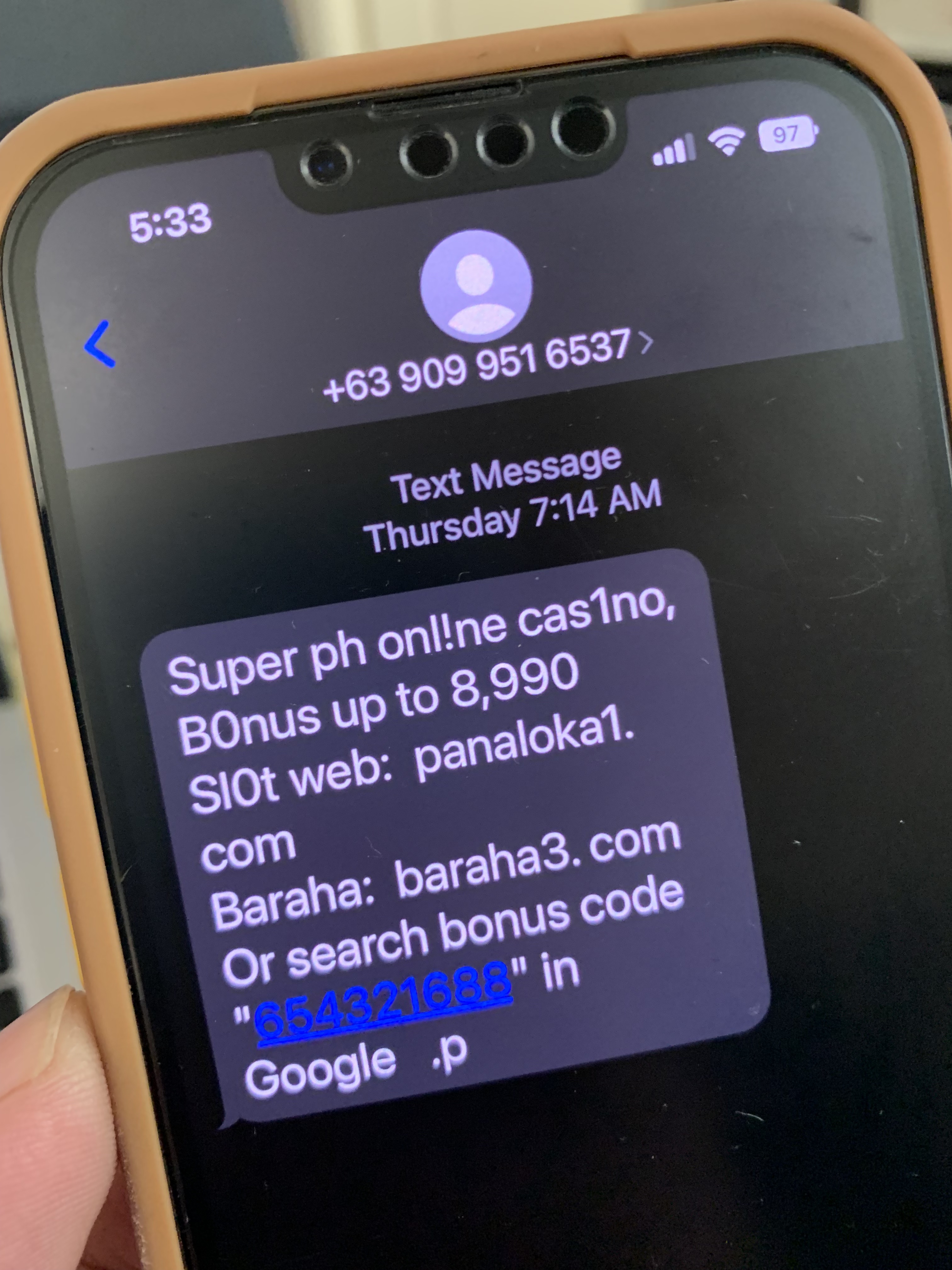
(“Smishing: the fraudulent practice of sending text messages purporting to be from reputable companies in order to induce individuals to reveal personal information, such as passwords or credit card numbers; a form of phishing.”)

MANG KANOR had a problem. He was a contractor for a scamming operation that involved using 50 burner phones to ferret out people’s personal details with, which he ran from the basement of his house in Bgy. Magulang. It was all going well, thanks to his wife Fely, who also happened to be the barangay kapitana, and who could guarantee the peace and quiet his business needed. No one really understood exactly what the boys and girls hired by Kanor were doing—and to be honest, neither did Kanor, who could barely text a message to Fely, let alone spell “phishing” or explain what it meant. But the barangay loved them, because they employed Mang Tining’s son and Tita Ruby’s daughter, and even Sgt. Choy’s handicapped nephew.

It was their teenage son Boogie who had everything figured out, who had introduced the scheme to his parents for them to finance. He had dropped out of the novitiate, realizing that his true calling lay elsewhere, in the world of Dota, Tiktok, and Instagram. When Mr. X offered him a smishing franchise after seeing how adept he was at computers, he jumped at the opportunity. He would harvest personal data and turn it over to Mr. X, who mined it for money.

But he needed capital, and only his mother—who had a steady revenue stream from jueteng—could provide that. She bankrolled him for the 50 phones, three computers, and the ten high-school graduates he needed to man them, plus their snacks of bottomless iced tea and banana cue. His father Kanor provided the muscle—building the cubicles, laying out the wiring, and fronting as the shop’s manager.

The money poured in—Mama Fely was immensely proud of her baby’s entrepreneurial bent—until Kanor ran in one way, panting and waving a newspaper in Fely’s face.. “Boogie! Fely! Have you heard? They’re now requiring all SIM cards to be registered! They want the names and addresses of all SIM card owners. No registration, no activation!”

“Whatever for?” cried Fely. 

“It says here that they want to weed out scammers—people who use prepaid phones to get into other users’ accounts and take their money—I think they mean us!”

“But we just get their information, someone else takes their money, it’s not fair! We’re not subversives, we have privacy rights—”

Boogie didn’t seem bothered. “I’ve been telling you, if we expanded, we could do both, end-to-end—get data and make money. Then we wouldn’t need Mr. X anymore.”

“Are you crazy?” shrieked Fely. “That’s asking for trouble! You’d need protection all the way to the top, which we can’t afford. We’re only good for this barangay.”

“That’s the problem with us, Ma! We think too small. If we go bigger, you could become the mayor!”

“Wait, let’s solve this SIM problem first!” said Kanor, who was easily rattled by things he couldn’t understand.

“Leave it to me, Pa. I’ll look into it. From what I’ve seen on TV, there isn’t a law in this country without a loophole! You can even get away with murder if what they call the ‘chain of evidence’ is broken!”

“Oh, you’re such a smart boy,” gushed Fely. “If you’d gone on to become a priest you could be the Pope! But I’m glad you didn’t because we need grandchildren to continue the proud family tradition—”

“Ma, how many times do I have to tell you, I’m gay!”

“Oh, you’ll get over it, don’t worry. I’m setting you up next week with Mareng Siony’s daughter Olive. She’s sweet and sexy.”

“Wait, what will we do with this SIM law?” Mang Kanor screamed.

A few days later, Boogie had an answer. “I tried the system, and it’s pretty simple. You go to your provider’s website, and they ask for your name, address, official ID, and photo. That’s it, your SIM is registered to you.”

“So they’ll know it’s us who are running this racket? That’s not a solution, that’s the end of our business! Son, you have to do something. I don’t want to have to go back to chopping up cars—this is my first decent job!”

“Don’t worry, Pa, I have it all figured out. We can get around the system.”

“Really? How?” asked Fely.

“What else? By registering.”

“You mean, we go honest?” Kanor couldn’t believe it.

“Of course not, Pa. If they want names, addresses, IDs, and photos, we’ll give it to them.”

“And risk being caught? I’m a respected and responsible public official, son, I can’t afford the scandal!” said Fely.

“They’d be chasing ghosts. Can’t you see, Ma, Pa? All we need to do is to fake everything! There’s nothing in the system that checks to see if what you’re saying is true. So we just fill in the blanks, and we’re done.”

Kanor tried to wrap his head around the plan. “Do you mean we cheat the system?”

Boogie laughed. “Is it cheating if we give it what it’s asking for?”

“But how and where do we get the names and the pictures and so on? What about the IDs?” asked Fely.

“Ma! We’ll make up the names of people. Who was that councilor who called you a crook? We’ll use his family’s names. And which barangay was it that dumped their garbage here? We’ll use addresses there.”

“Oooh, that sounds like fun! But what about the IDs and the selfies?”

“What’s the computer for? We can copy any school, office, or senior ID you want. As for pictures, we can scan yearbooks, wedding albums, Facebook profiles—we can even create a whole new person through artificial intelligence! We can do anything, Ma!”

Doubts persisted in Kanor’s mind. “Surely they’ll verify the entries? What if they find out?”

“Find out when, Pa? Let me ask you—you and Ma applied for your National IDs, right?”

“Yes. Three months ago.”

“Well, do you have them?”

“No, not yet.”

“There you go. Everything in this place takes at least three months to happen. In three months, we buy new SIMs, and do the same thing all over again.”

“Why, if we can do this for ourselves, we can do it for others, for a fee—tell Mr. X!” said Kanor.

“You’re a genius, son! Oh, I love this family. I can’t wait for you to meet Olive! She’s studying accounting—your kids will be so cute and so smart!”

Qwertyman No. 11: Good-Better-Best

Qwertyman for Monday, October 17, 2022

DOLANDS COULDN’T believe his good fortune; he had received his third SMS message that day offering him a bonus for playing pusoy online. Pusoy—also known as “good-better-best” to its players—was Dolands’ game of choice, allowing him to exercise what he believed was his sharply analytical mind. Dolands was one of those people who felt that life kept dealing him the wrong cards, obscuring his true potential, and he kept waiting for the opportunity to prove himself—to his Papang, to his friends, and to that snooty waitress Letty, who wouldn’t give him the time of day—that he was an achiever.

Today Dolands worked as a troll—a “social media specialist”—in an operation run by the famous Madame Venus, and while the pay was good, the job itself felt mechanical, involving nothing but the methodical execution of orders from the managers in the loft upstairs. Dolands wanted to turn “good” into “better” by becoming one of those necktied managers himself; but “best” was to be his own man, enriched by nothing but his talent, and the online gambling offers he kept receiving seemed to open that door. Sometimes Dolands suspected that his supervisors thought he was stupid, by the way they frowned at his haircut and at his fake Crocs shoes. 

Dolands was amazed that whoever texted him knew his full name and had used it in the message: “Rolando Quibuyen, now’s your chance! Here’s a P500 bonus for joining our 24-hour game of Cyber Pusoy at bahaybaraha.com. More prizes await you, including a 2023 Riva Riviera 2.0 in our grand raffle draw. Sali na!” Now, being a troll, Doland of course knew how it easy it was to get hold of mega-lists of people’s names, phone numbers, and email addresses; he knew that Madame Ventura even kept a special roster of influencers’ data for personalized messages, including death threats masked as hypothetical questions. But as lonely and lowly as he felt, Dolands wanted to believe that someone had actually taken the trouble of getting to know him and his penchant for pusoy, to craft a special message for him, and to throw him a lifeline across the water. Never mind that it was probably a bot, a faceless algorithm racing through a library of names and numbers; someone or something out there thought him worthwhile enough to bait; he existed.

He was itching to respond to the text and to click the link on his phone to start playing, but his shift wouldn’t be over for another four hours and any private use of his office computer was strictly prohibited. The managers upstairs not only had a birds’ eye view of the floor, but they could and did tap into any terminal to see what was going on. It was no different from the BPO outfit Dolands had been recruited from, except that that other job was more tedious because you had to talk people into buying this and that, which involved reason, whereas trolling played to the imagination, to what people believed and feared in their deepest of hearts. Everyone wanted to feel a sizzle of power, to say something outrageous without facing the consequences, and the trolls gave them the words for that. It was a lot more fun during the pre-election campaign when Dolands and his gang could attack a candidate’s daughters or the candidate herself with gleeful malice; today, defending the winner’s son or the winner himself when they did or said something incredibly stupid was boring and dulling. Doland looked forward to more challenging assignments where he could prove his mettle, and now he was about to get a taste of that.

“Quibuyen!” said his supervisor on the headphones. “Come up to the loft for a minute. Madame Ventura wants to talk to you.”

Dolands felt a lightning bolt shoot up his spine. He had never gone up to the loft before, nor had the madame ever spoken to him. He wondered what they needed him for, but today was truly his day to shine (although it was just past midnight, so his days were always dark). Things just got better.

Dolands fidgeted as Madame Ventura assessed him from behind her trademark dark glasses and wisp of smoke. He wished he had worn something other than the Nirvana T-shirt a US cousin had bequeathed him, to project a more professional vibe, but it was too late for that. They had to take him for what he was.

“They say you worked for the card verification and security service of a bank? You can spot fake numbers and accounts?”

“Yes, ma’am, I did, but—but I was just testing some software when—when they said, when they claimed, that I was misusing numbers—” Dolands began to sweat, amazed that they had found that sordid detail about his past that he had tried to bury and forget. 

“You mean you didn’t actually steal anything?” Madame Ventura sounded disappointed.

“No, ma’am—I mean, I just wanted to prove it could be done, so I did it.” He stole enough to buy a new car with, but he had to give it all back to escape prison, plus plugging all the digital holes he had punched into the system.

She blew another cloud of smoke into his face. “Can you still do it? Work with numbers and fake identities? Are you still that good?”

“Well—if you put it that way—”

“Let me tell you why, Mr., uh, Quibuyen. They just passed a new law requiring all SIM cards to be registered, to be attached to names of people with official IDs. We need SIMs—but we don’t want to bother real people to line up for us. So we need an official-ID generator to go with names, birthdates, addresses, maybe even pictures. Is this something you find interesting?”

“Uhm—yes—at least as proof of concept—”

“Forget concept. I want you to produce IDs for 100,000 SIM cards, just for starters. I know many people who will need this service. You do it and do it well, and I’ll make you a manager in charge of your own division. I think it’s about time we branched out from calling ugly people pretty, and vice-versa.”

Multicolored starbursts popped in Dolands’ mind—shiny shoes, flowery neckties, citrusy colognes. It was like he had been dealt 13 cards that broke down into a straight flush, a full house, and a high pair. I can’t believe I almost fell for those effing scammers, Dolands thought. This was good-better-best in real life.