Qwertyman No. 176: Remembering CAB (1929-2025)

Qwertyman for Monday, December 15, 2025

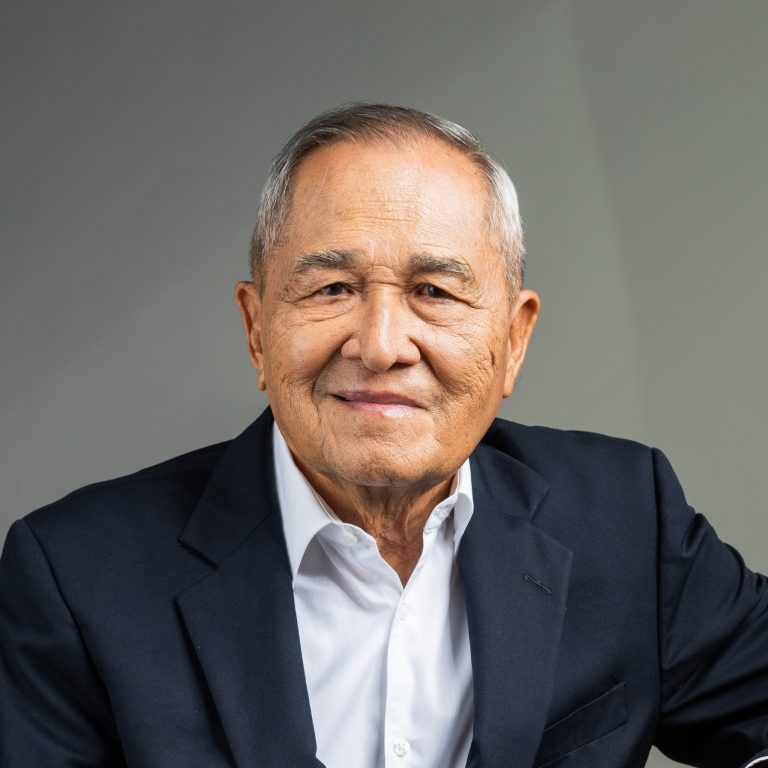
THE DEATH last week at the age of 95 of Cesar Augusto Buenaventura—known to his friends and associates as CAB—marked the passing of yet another member of that golden generation of Filipinos who lived through the Second World War and almost literally built and shaped Philippine industry and society in its aftermath. An engineer by training, CAB was also a management pioneer, a business leader, a civil libertarian, and a valued adviser to presidents. (As a former member of the UP Board of Regents, CAB would often text me for news about goings-on in Diliman, concerned as ever with the state of Philippine higher education and of UP’s role in it.)

I had the privilege of writing a yet-unpublished biography of the Buenaventura siblings (Cesar was followed by social worker Elisa, lawyer Chito, and banker Paeng). And while Cesar chose to self-publish his own three-volume biography a few years ago (I Have a Story to Tell), the original draft has many interesting anecdotes worth sharing with young Filipinos who barely know their economic history. Let me pull up this except you can keep in mind the next time you gas up at a Shell station, visit the UP Chapel, or see a DMCI building.

As soon as he graduated from UP in 1950, Cesar started looking for a job, and almost immediately found one with a man who would become an important influence in his life and a titan in the Philippine construction industry, David M. Consunji. Right after the war, Consunji began building houses—a skill then in high demand in the war-ravaged city—competing on the principle of “price plus quality.” David also made sure that he got the best people and paid them the best wages. And so a strapping 21-year-old named Cesar Buenaventura, fresh out of college, strode into Consunji’s office and got his first job, as Consunji himself recounts:

“In 1951, I hired my very first engineer, Cesar Buenaventura. He was then a young civil engineering graduate from UP who was waiting for the results of the board exams he had just taken. It was my brother Raul, his classmate in UP, who told him to see me because I was starting my own construction company. I thought he was very capable so I hired Cesar. 

“Soon after, we started doing our own projects, and among Cesar’s first assignments were three houses we were building in Forbes Park. Forbes was not yet a posh village then; land there was selling at just P4.00 to P6.00 per square meter. After that, Cesar and I did some more houses. I made Cesar the cost engineer and field engineer for our various other projects. He also took care of the payroll, which amounted to P15,000 to P20,000 a week.

“It was in the Laguna College project that Cesar took on greater responsibilities. While we were doing the plans, Cesar said, ‘Don’t bother hiring a structural engineer, I’ll do it. I asked him if he was sure he could do it and he said ‘Yes.’ Every time I would see him, long after the building was finished, I would tell him that it was still standing intact, even after several earthquakes, without a single crack on a wall.

“Cesar was my very first assistant, and even then, I could see that he would go far. I wanted him to stay with us, but he decided to go to the United States for graduate studies in 1952.”

(Upon returning from Lehigh University with his MS in Civil Engineering), Cesar rejoined Consunji for some work on the UP Chapel, which had been designed by a young architect named Leandro Locsin. Locsin had impressed Fr. Delaney with a small church he had designed in Victorias, and now he took on what would become one of his signature pieces, the UP Chapel. Fred Juinio served as structural engineer, with Dave Consunji as the builder. 

But armed with his Lehigh degree and eager to make full use of his new learning, Cesar could now consider more options. And the offers came. UP, for one, wanted him to teach, and was willing to pay him P400 a month. But a big petroleum company offered him P300 more, with his salary to be raised upon completing probation as an executive trainee. In 1956, Cesar went with Shell—a decision that would define the rest of his professional life.

In 1975, Cesar Buenaventura achieved what no other Filipino had up to that point by becoming president of Shell Philippines and Chief Executive Officer of the Shell Group of Companies.

Cesar’s rise to the helmsmanship of Shell also got the attention of someone in great need of executive talent: Ferdinand E. Marcos, president of the Philippines and, at that time, the country’s martial-law ruler. With the global oil crisis still hurting the Philippines in the wake of the Arab-Israeli war, Marcos put up the Philippine National Oil Company to explore for oil and develop alternative energy sources, and was scouting for the right man to head it. His eye fell on Cesar, who had just stepped up to the Shell presidency; surely such a man had the skills and the vision to head the new PNOC. Marcos had Buenaventura called to Malacañang. 

While he may have been honored to be offered the position, Cesar remembered his father’s admonition against serving in government. He went to see Marcos in the Palace. Luckily, before Marcos could make his pitch and demand Cesar’s commitment, a phone call from the First Lady, who was in New York, interrupted the conversation. Cesar used that break to gather his wits and to come up with the argument that such a move to government would be premature, coming so soon after his appointment as the first Filipino head of a major multinational company. Cesar suggested that he could serve the country’s interests better if he were able to persuade Shell to search for oil in the Philippines—which they eventually did. Marcos did not press the point, and Cesar was spared.

Yet more of Cesar’s friends would join Marcos’s Cabinet: David Consunji, as Secretary and later Minister of Public Works, Transportation, and Communication, then by Dean Fred Juinio in the same post, followed much later by Totoy Dans, when the Cabinet post was divided into two departments—Public Works, and Transportation and Communications. Consunji labored mightily to fight corruption in that notoriously graft-ridden department, only to find himself unceremoniously removed for refusing to play along. Dans followed the same straight and narrow path when took on the job in 1979, but he would later be, in Cesar’s eyes, unjustly vilified for his association with Marcos, even if he hadn’t enriched himself. 

So instead of taking what could have been a personally and politically costly detour into the Marcos government, Cesar Buenaventura managed to stay on at his beloved Shell, in a position he would hold with distinction for the next 14 years. 

Qwertyman No. 175: A Lid on a Dream

Penman for Monday, December 8, 2025

LAST WEEK I used the words “tone-deaf” and “cross-eyed” to describe certain quarters with admirably exact and exacting political positions, people of stature and authority—but who then do or say something incomprehensibly off-the-wall that betrays a fundamental disconnect with reality, or with what most people feel. 

In the wake of last weekend’s huge anti-corruption rallies at the Luneta and EDSA, critics were quick to chastise, albeit politely, Cardinal “Ambo” David for seeming to drive a wedge between the two crowds by declining to ally himself with those calling for a transition council. Was he being unnecessarily divisive? 

I almost thought so (we were out of town and couldn’t attend either rally), until I read the statement from Tindig Pilipinas explaining that “The organizers chose… not to adopt calls for the simultaneous resignations of both the top two leaders of the country, or a transition council, because they recognize how easily such demands can be weaponized by insidious forces waiting in the wings…. There have always been differences because the people… are not homogenous. Unity arrives when a critical mass comes together to effect change, through the open and deliberate discussion of differences between actors of good will.” I think that’s something I can understand and even identify with; difference is not necessarily division, for so long as we share a common overarching goal.

“Disconnect” seems more applicable to the case of Trade Secretary Cristina Roque, who got a ton of bricks dumped on her head on social media for proposing that P500 could be enough for a Pinoy family’s noche buena, or traditional Christmas-Eve meal. What planet is she living on, most comments asked. Doesn’t she know that the current price of (name your ingredient) is X per kilo at (name your public market)? What do they expect us to eat at noche buena, canned sardines? Why don’t the DTI secretary and her undersecretaries stick to P500 for their own noches buenas? And so on. 

Never mind that the government later whipped out its calculators to prove, mathematically, that a P500 Christmas dinner was possible—and here’s the magic menu, if you missed it, from the Philippine News Agency: ham (500g): P170; spaghetti noodles (250g): P30; macaroni (200g): P24; mayonnaise (220ml): P121.30; cheese spread (24g): P12; queso de bola (300g): P211.60; fruit cocktail (432g): P61.76; all-purpose cream (110ml): P36.50. 

Maybe it all adds up when you punch the “equals” sign, but not politically, it doesn’t, because a Pinoy Christmas isn’t a numbers game. It’s laden with emotion and not a little illusion—the fantasy of a family coming together for a shared meal, despite the past year’s tribulations, of a door opening and Papa or Ate making a surprise appearance from Dubai with presents in hand, of sick Junior miraculously rising from his bed, to ask for some sweetened ham.

Giving them the benefit of the doubt, I know the DTI meant otherwise, to show possibilities rather than limits. But that P500 figure dropped like a lid on a dream, a clattering reminder of how difficult things are rather than how hopeful we should be. I guess it’s just the old playwright in me, attuned to the urgings of human hearts and minds, that keeps scripting this scenario of mismatched intention and reception.

At the bottom line, it’s never a good idea, whatever the math says, for the well-off to tell the poor to live within their means, and especially to blame them for their poverty (like “You make yourselves poor and miserable because all you do is make babies, you lack initiative, you don’t save for a rainy day” etc.). That just makes them resent you even more, and start asking questions like, how’d you get so rich, anyway? 

Now of course Sec. Roque never said or even suggested any of those nasty things. All she probably really meant was, hey, let’s all have a merry Christmas—look, even you can afford it at this price point, with the economy doing so well. But again—ooops—up goes the red flag, because however the government may argue that the Philippine economy is performing at a faster clip (reportedly 4.0 percent during the third quarter of 2025) than even neighbors like Singapore, Malaysia, and Thailand, that can’t mean much to consumers grappling with the rising costs of living (in New York and much of America, the “affordability” issue that the Democrats have seized upon as a winning theme, and which Donald Trump of course dismisses as a figment of his enemies’ imagination). 

It doesn’t help that Christmas comes at yearend, a time for stock-taking and reflection, for year-on-year comparisons of one’s well-being. What was 2025 all about? Did it make our lives any better, or give us something to feel better about in 2026? I suppose that depends on whether you’re looking at the problem (can you help it, if it’s right in your face?) or at the solution (which remains largely wishful thinking).

True, it was good that—by design or inadvertently—President Bongbong Marcos opened a can of worms with that speech on corruption, leading to the flood-control exposés and to an explosion of public outrage not seen since EDSA days. But now those worms are all over the place—some crawling back to the Palace—and it looks like Junior’s going to need a nuclear solution to bring them under control, at the risk of some damage to friends and family, maybe even himself. Whatever happens, the people’s awareness and rejection of massive corruption can’t be undone, and will be a major issue come 2028. That’s progress by any standard. We’ve rediscovered our voice, found our footing, and won’t be duped or silenced. 

On the other hand, it’s never good to realize you’ve been stolen from in the crazy billions. If PBBM can only get that money back into the treasury—and toss in a few billion of his own—then we’d have a truly merry Christmas to look forward to in 2026, with considerably more than P500 to budget for the holiday ham.

Qwertyman No. 174: Doing the Doable

Qwertyman for Monday, December 1, 2025

AS NOT a few placards in yesterday’s big anti-corruption march would have said, both President Bongbong Marcos and VP Sara Duterte should resign, along with everyone in public office implicated in the flood-control scandal and all the other shenanigans that have come to light over the past couple of months. 

That probably means half the government, but given the current public mood, the more the better, to give the nation a chance to rebuild itself on new foundations of moral rectitude and accountability. At least that’s the long view, supported by the Left among other parties who think that anything short of a national reset will simply paper over the problems and guarantee their comeback. 

It all sounds good, and it does make sense—except that, as we all know, it ain’t gonna happen. 

It’s about as realistic as the expectation that BBM will fall to his knees, own up to the Marcos billions, and ship all that money back to the Philippines on a FedEx plane for mass distribution, any more than VP Sara will admit to her father’s drug-fueled bloodlust, seek forgiveness of all the tokhang victims, and forsake her presidential ambitions. Let’s face it: the Marcos and Duterte dragons will be clawing at each other all the way to 2028. Meanwhile, what are we mere mortals supposed to do or to hope for? 

In the very least, we can ignore the DDS calls for BBM to step down and for Sara to take over, because there’s even less appetite for that than the Both-Resign demand. The Dutertes want to make hay of the moment, but the sun isn’t exactly shining on them. Despite their strong and well-funded social media efforts, the DDS camp seems pretty much in disarray, with Digong in jail, Sara in limbo until February (it tells me something that they approved the OVP’s 2026 budget in full—it’s for the office, not VP Sara, although she doesn’t seem to know the difference), Bato de la Rosa suddenly scarce, and their shot at a junta takeover badly misfiring. 

(The ICC’s predictable decision not to grant his interim release could in fact prove to be an ironic win. Digong at this point is useful only as emotional capital for Sara’s survival and triumph. His camp, I suspect, secretly wants him to stay in The Hague as a symbol of the Marcoses’ unforgivable perfidy. Bringing him back home will mean having to take care of a grumpy old man whose greatest ability—cursing—isn’t helping him much in his present situation; he was never a Leila de Lima, and certainly no Ninoy Aquino.)

All the players’ moves are interesting in this grand melodrama. I frankly can’t trust the Left, either, to show the way forward. Like a religion (did I hear someone say “Iglesia ni Cristo”?), the Left likes to flaunt its moral ascendancy—to “virtue-signal,” in today’s parlance—and its rock-solid grasp of the global and local situation from the Marxist standpoint. And yet it gets all tone-deaf and cross-eyed when it comes to picking its horses—ditching EDSA, but backing billionaire capitalist Manny Villar and then pseudo-nationalist and butcher Rodrigo Duterte for the presidency (should we even mention slaughtering comrades it deemed wayward in the Ahos campaign?). 

Interestingly, the INC also supported Duterte in 2016, and then BBM and Sara Duterte in 2022. While adopting some progressive liberals like Franklin Drilon, Risa Hontiveros, and more recently Bam Aquino and Kiko Pangilinan into its senatorial slate, it has also flexed its machinery behind Duterte surrogates Bong Go and Bato de la Rosa, as well as corruption-tainted Senators Joel Villanueva and Jinggoy Estrada. During its last mass rally last November 25 for “peace, transparency, and accountability,” however, it was careful to distance itself from recent calls for BBM’s resignation. In other words, the INC is the perfect straddler, the seguristathat makes sure it will survive and prosper under any administration, reportedly to secure key government appointments for its favored nominees.

That leaves us and our own wits, which—considering everyone’s else’s brain fog—might yet prove the most trustworthy.

In the realm of the doable, I want to see heads roll—as close to the top as the situation will allow. One way of looking at this, and strangely enough, is that the Filipino people aside, the party with the greatest stake in seeing this anti-corruption campaign through to the end (i.e., just short of the Palace) is PBBM himself. Having opened this Pandora’s box, he well knows that the only way he can keep his own head and hold sway over 2028 is to catch all those demons he released. I don’t know about you, but right now I’m desperate enough to let BBM finish his term in relative peace if he achieves nothing else than the herculean task of cleaning up the stables.

VP Sara’s impeachment trial should resume in February and will be a more efficient and definitive way to shut her out for good. But we have loads of senators, congressmen, department secretaries and undersecretaries, and lesser flunkies all caught up in this mess who should be held to account for their thievery. Hold the big bosses, the ultimate signatories, accountable, sure. But don’t let the second- and third-level enablers and functionaries off, because the message needs to be sent that complicity won’t pay—and that your sponsors will ditch you when things get too hot.

I want to see our courts work, overtime, to expedite the prosecution of these corruption cases. No pussyfooting, please, no Maguindanao massacre here. Let’s put a quick and decisive end to the kind of legalistic foolishness that lets a senator off the hook for a P30-million “private contribution,” with the judgment rendered by the Comelec commissioner who had previously served as that senator’s lawyer. How the heck can that be allowed to happen? What ethical universe are we in? The same goes for former Ombudsman Samuel Martires’ “forgetting” why he had kept secret his decision junking his predecessor’s carefully crafted case against Sen. Joel Villanueva. 

If the Comelec accepts Sen. Rodante Marcoleta’s ridiculous excuse that he kept millions of political donations off his report of campaign expenses because they were meant to be “secret,” then we should launch a million-people march not just against the likes of Marcoleta but also specifically against the Comelec to hound those charlatans out of office. That commissioner who couldn’t find the shame to recuse himself from his former client’s case should be impeached if he doesn’t resign.

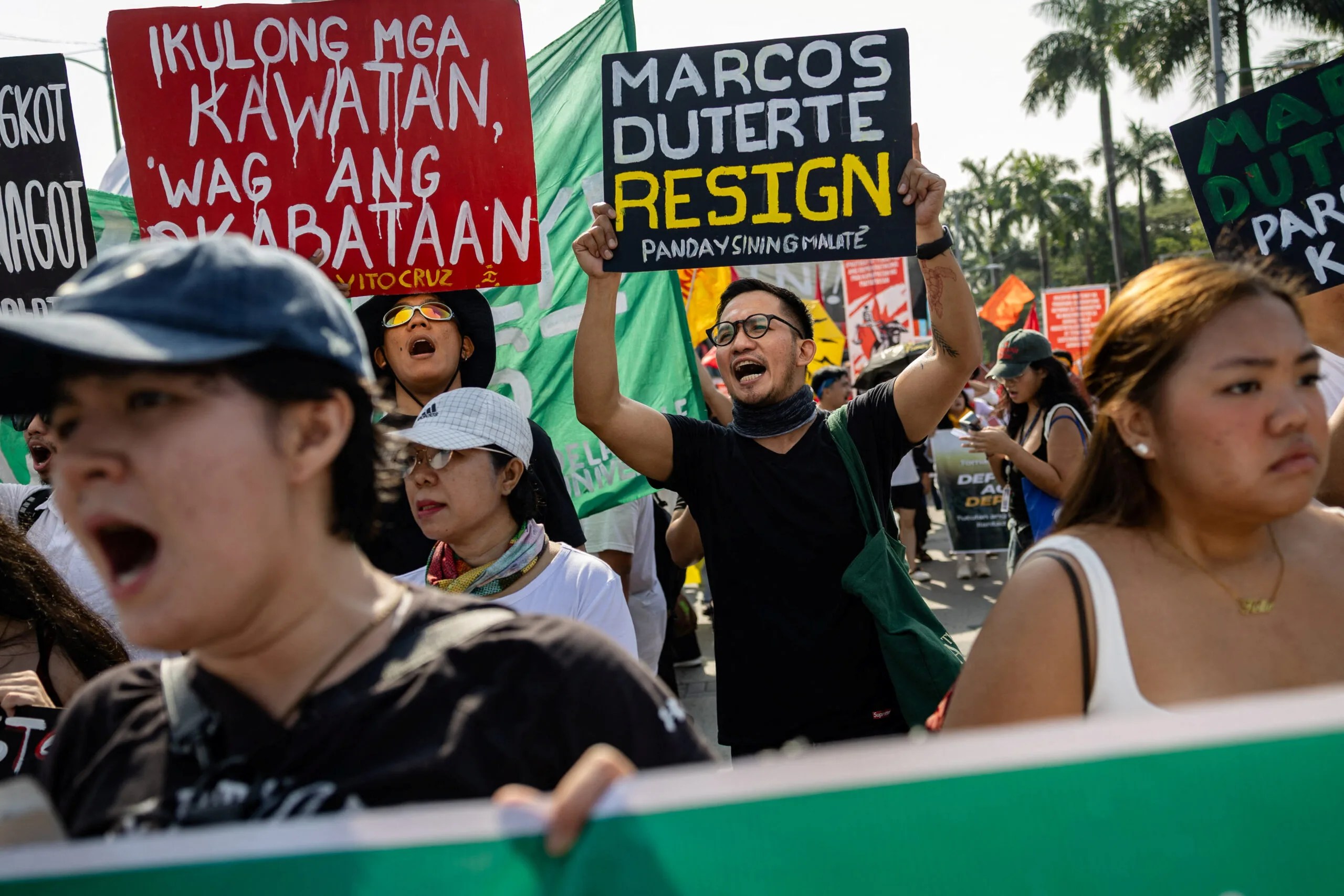
I have no problem with people marching and screaming “Marcos, Duterte, resign!”, because we have billions of reasons to be upset with both. But I hope that doesn’t keep us from going after immediate and tangible if less-than-perfect results. Look at it this way—gut the body, and you’ve effectively chopped off the head.

(Photo from rappler.com)