Flotsam & Jetsam No. 32: An Ode to My iPen 5s

I’M CALLING it my “iPen,” but yes, it’s the new iPhone 5s (the 32gb “slate gray” version) that this incorrigible Apple fanboy couldn’t resist during a recent sortie to Bangkok’s MBK shopping mall, which had loads of these gray-market goodies coming out a few days or even weeks ahead of its scheduled launch in most parts of the world. It came at a considerable premium, of course, but if you factor in US sales taxes and shipping (plus how much you would pay for that ineffable factor called instant gratification), it all evens out, or at least I convinced myself so. What does the 5s have over the 5 (mine’s not even a year old, picked up in the US last October)? Not much—they’re the exact same size, so I just slipped the new phone into the old, custom saddle-leather case—but it does have this cool fingerprint-ID technology that saves you a lot of passcode and password keystrokes, and the camera is blazingly fast and sharp. Worth all the extra bucks? I guess. Do I really need it? Very probably not. Do I really want it? Absolutely. Here’s a visual ode to what I’ll be signing with as my “iPen”:


Penman No. 67: Found in Translation (2)

IMG_2078Penman for Monday, Oct. 7, 2013

AS YOU read this, I should just be returning from Bangkok from another conference of writers and translators, and I’ll be reporting on that encounter next week.

But before anything else—and given this context of world literature in which I’ve been immersed for the past two weeks—let me voice my concern over a development I’d heard about in my absence pertaining to some contemplated changes in our high school curriculum. With our educational system shifting to the K-12 scheme—which I’m in favor of, just to be clear about that—our teachers and school administrators have had to review the curriculum to adjust it to the opportunities presented by the extra class time.

The plan being prepared by the Department of Education and the Commission on Higher Education was for high school seniors to have two semesters of literature—regional and world literature, meaning, literature by Filipinos outside of Manila and literature written by everybody else. Those of us who teach literature in college were elated to hear about this, because we see how valuable literature is to exposing young Filipino minds to the dynamic realities and challenges of the world around them—beginning with us as still a nation-in-progress, which regional literature helps to build, and with our growing engagement with Southeast Asia and the rest of the planet, which world literature makes sense of and amplifies.

Comes now the news that the DepEd has decided to compress these two semesters into one and to treat both regional and world literature as one subject, which doesn’t make sense for the teachers of these subjects and disperses the intended focus of our concerns in these areas. Makes me wonder what we added those extra semesters for, and, worse, if literature is going to continue to be treated as a disposable frill without any real bearing on national development. Have any of our government officials figured out by now that part of the reason we have a “Zamboanga hostage crisis” or a “Mindanao problem” is that we’ve never really introduced and explained ourselves to ourselves—which is what art and literature do for a people? Let’s hope that the DepEd rethinks its position on this matter, before it’s too late and before we fall farther behind our Asean neighbors in using culture as a foundation for nationbuilding.


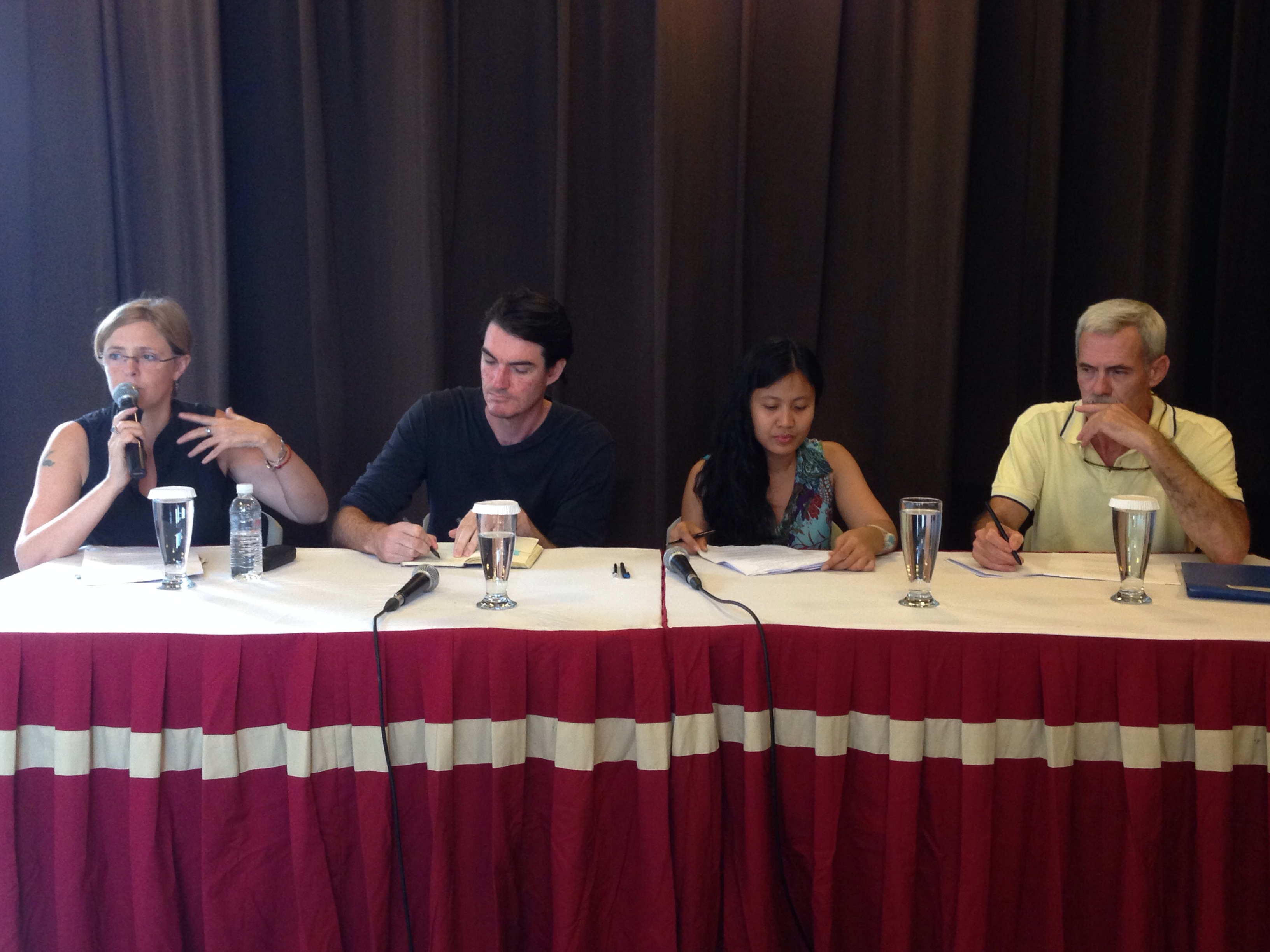
AND NOW back to Jakarta, where I spent a few days with a large group of very enthusiastic and talented translators-in-training and with experienced translators and language specialists from as far away as the UK and Norway. As Kate Griffin of the British Centre for Literary Translation put it, the Jakarta workshops were something of a “translation boot camp,” a quick and memorable immersion for the participants into the unique challenges and wonders of translation as a bridge between cultures. (The BCLT promotes the translation of foreign authors into English, in support of what it calls “bibliodiversity,” the opening of minds and hearts through a richer and more accessible fare of reading material.)

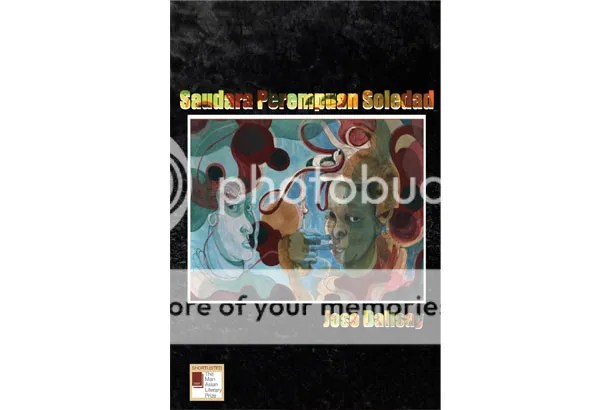
As I reported last week, the experience of having parts of my second novel Soledad’s Sister translated into Bahasa Indonesia (where it reads as “Saudara Perambuan Soledad”) reminded me of other fruitful encounters I’d had with my previous translators: Clara Nubile, who translated Soledad into Italian for Isbn Edizioni, Marta Alcaraz, who translated Killing Time in a Warm Place into Spanish for Libros del Asteroide, and Jean-Pierre Aoustin, who translated Soledad into French for Mercure de France. I’d had lively discussions with all of them, especially Jean-Pierre who turned out to be an old Manila hand and who met with me on a recent vacation here.

I think it was Salman Rushdie who once said that “the most interesting parts of a language are the untranslatable ones.” Be that as it may, translators have to do their best to come closest to an author’s original intentions, knowing that it is an impossible and fruitless task to strive for 100% fidelity and accuracy, but creating a space for negotiation and understanding between cultures in the middle of the two languages, the source and the target.

Clara, I recall, asked me to describe what kind of a criminal operation a bukas-kotse gang was. Marta had a load of questions about juego de prenda, the tuta in “Marcos Hitler diktador tuta!”, and why I had chosen to call the ruling party under martial law the “PNR, or the Party of the Newly Risen”; I explained to her that the actual martial-law government party was called the Kilusang Bagong Lipunan, or Movement for a New Society. I used PNR as something of a private joke, as the initials also stand for Philippine National Railways (a reference to how everything was railroaded under martial law) and for the Filipino phrase “puwede na rin,” or “it will do” (a reference to mediocrity). Jean-Pierre wondered about my use of “laundry on the clothesline” and if it had any cultural resonances; I told him that we Pinoys still hang our clothes out to dry, and that you can half-expect to find your favorite jeans and shirts gone from where you left them if you don’t watch out.

In other words—literally, I guess—translation involves much more than figuring out equivalents for individual words and phrases; the translator keeps looking for similar, familiar experiences in the target culture to convey a working sense of the author’s meaning.

In Jakarta, my group and I—with the Bali-based translator and art critic Arif Prasetyo facilitating—went over words and phrases that the Indonesians had flagged. Why did I use “cloud-curtained” to describe a rainy evening instead of just “rainy”? (Because it was the novel’s opening scene and I wanted a touch of the theatrical.) Why did I say “a million gas stoves roared to life”? (Because I wanted both the sound and the image of the gas fires coming awake, mirroring the headlights of motorists and even the flowers in the plane’s cargo hold.) When I wrote that the sudden downpour “blurred glasses and windows,” did I mean “eyeglasses”? (Yes, to set up a motif having to do with seeing and perception.) We had fun with the word duhat, which I’d kept in the Filipino original, not knowing its English equivalent; some Googling with images established that, in Bahasa, it was the local jamblang, also known as the duwet or the black plum (but if I’d used “black plum” in my novel, not a single Pinoy would have known what I meant).

Just as interestingly, my translators found a couple of mistakes in my novel, which I acknowledged with equal amounts of embarrassment and gratitude. One was a small typo, the other a major boo-boo: I’d said that the flight from Jeddah to Bangkok had “stretched the daylight with it,” but an alert member of the team who had actually been to Jeddah (I never had) noted that it worked the other way around, that one flew more quickly into the darkness. I promised to correct this in the next edition.

And so my adventure with the translators went, full of surprises and revelations. I learned much from listening to Kate Griffin talk about how, in the UK, interest in translation has been drummed up through popular word games, and how the BCLT (which is based at the University of East Anglia in Norwich, where I began Soledad’s Sister as a David TK Wong Fellow in 1999) combines teaching, research and expertise with an ambitious outreach program. Eric Abrahamsen, an American who has been based in Beijing for the past 12 years, spoke about how he helped form Paper Republic to band translators of Chinese together to professionalize their trade.

John McGlynn, an American translator who works with the Lontar Foundation which translates and publishes Indonesian writing into English, brought up the painfully obvious point: translators don’t get paid enough for their work. Ideally, he suggested, translators should get at least $20 (or, to us, P1,000) per page, given that the US State Department paid professional translators like him $30 per page for contracted work. In reality, however, Indonesian translators got a tiny fraction of that suggested amount. “Factor in the cost of printing and distribution, plus royalties for the author, and you really have very little left for the translator,” said John.

Indeed, translators around the world have a long way to go to attain the same respect and consideration given to the authors whom they lend their voices to, but like the writers themselves, they have no choice but to persevere, the unacceptable alternative being silence and ignorance.

Penman No. 66: Found in Translation (1)

Penman for Monday, Sept. 30, 2013

I HADN’T been back to Indonesia in 30 years—the last time being in 1983, when Manong Frankie Sionil Jose brought five fellow Filipino writers to an idyllic lakeshore in Bali to meet with other Asian writers—but last week, I flew in to Jakarta again, thanks to the Inisiatif Penerjamahan Sastra, the Initiative for the Improvement and Promotion of Literary Translation in Indonesia.

The event was the 2013 Literary Translation Workshops, sponsored by the IPS with the support of the program Creative Encounters: Cultural Partnerships between Asia and Europe, promoted by the Asia-Europe Foundation (ASEF) and Arts Network Asia (ANA), in collaboration with Trans Europe Halles (TEH). Further support was provided by the Royal Norwegian Embassy, TransCon, the Lontar Foundation, Komunitas Salihara, Pusat Dokumentasi Sastra, Yayasan Reproduksi Cipta Indonesia, and our own Department of English and Comparative Literature at the University of the Philippines.

I had been brought in by IPS’ Eliza Vitri Handayani in my capacity as a novelist—the author of Soledad’s Sister—whose work had been selected as a subject for the workshops’ translation exercises. Going beyond the usual practice of laboring in the dark on a foreign manuscript with just the help of one’s own knowledge of two languages, a dictionary, and the translator’s best understanding of the text, the IPS had brought in the authors of the chosen texts for a conversation with their translators, to clarify the authors’ intentions behind writing specific passages and to establish the best translations for them based on those intentions.

The translations went several ways: from Bahasa Indonesia to English (author Triyanto Trikwitromo, in a group led by literary translator Pamela Allen); from English to Bahasa Indonesia (me, led by Arif Bagus Prasetyo); Norwegian-English-Bahasa Indonesia (Kari Fredrikke Braenne, led by Kari Dickson and Miagina Amal); and Chinese-Bahasa Indonesia and Chinese-English-Bahasa Indonesia (Su Cici, led by Eric Abrahamsen and Yusi Avianto Pareanom).

In choosing my novel for their English text—for which I, of course, felt deeply honored—the workshop organizers underscored the need for us Southeast Asians to restore and strengthen our cultural connections to one another, instead of always turning to the West for inspiration and affirmation. Indeed, as I told the dozen or so young Indonesian translators at my table, it was colonialism that broke us apart and led us down different historical paths; but now, ironically, it was a colonial language—English—that was bringing us back together as a bridge.

Also ironic for me was the fact that my novel was now being translated into Bahasa Indonesia (even if only for an exercise), after it had been translated into Italian and French, and released in a US edition. This, I heard, was a point made in last year’s workshop—how we Asians often have to be validated first in the West before being recognized in our own regions, let alone in our home countries. Sitting down with the Indonesians and listening to their concerns, I was reminded of the many exchanges of emails I’d had with my Italian, French, and Spanish (for Killing Time in a Warm Place) translators, and of what a difficult, precious, and yet little-appreciated skill literary translation is.

The emphasis now being put by the Indonesians on the development of good literary translators also called to mind our own budding efforts in this respect, and of how far behind we are in using translation to promote the best of our literature abroad and within our own shores. I suspect that, for one, we haven’t pushed for translation as hard as we should because many of us naturally assume that we don’t need translation, since we write in English and therefore have direct access to global publishing. But what about our treasure trove of literature in Filipino and other non-English languages? How many capable and willing translators do we have who will devote years of their time and talent to the resurrection and promotion of what could be classics of our literary heritage?

I’m thinking, for example, of the work put by Cecilia Locsin-Nava into her well-received translation of Ramon L. Muzones’ epic 1946 novel Margosatubig (Ateneo Press, 2012), hailed by National Artist Bien Lumbera as “a wonder-work of an English translation, literate and literary, a rare, readable English version of a regional literary treasure. It is a lucid, unornamented rendition of the original Yuhum novel that manages quite effectively to suggest the delicious sensation of following the development, chapter by chapter, of the serialized popular novel.” This was a novel so popular that it reportedly caused Yuhum’s weekly circulation to soar from 2,500 to 37,000 copies. Surely it deserves to be read beyond its original Hiligaynon audience? Thanks to Cecile Nava, this will now be possible.

As the Jakarta organizers reminded everyone, literary translators today have assumed an expanded role. Not only do they render works into another language; they also help promote these works and draw the attention of global publishers to the emergence of vibrant new writing from around the world. Indeed, how could we have read Gabriel Garcia Marquez without the intervention of Gregory Rabassa, or Pablo Neruda without W. S. Merwin, or Italo Calvino without William Weaver?

What kind of relationship do translators have with authors? Here’s part of what Weaver told the Paris Review about working with Calvino: “I had problems with Calvino because he thought he knew English. He would fall in love with English words. Every now and then he would fiddle with a sentence in his English. At one point he fell madly in love with the word feedback, and he didn’t realize that in America feedback is like closure or spinning out of control, something you hear constantly on television. It’s jargon and cliché, and you can’t use it anymore. The word is dead to literature, but to him it was new and fascinating. He thought it was fun and so he kept putting it into this story where it really didn’t belong, and I kept taking it out. Finally the last proofs came, and I took it out definitively. And I’m sorry to say he died before he had the book in his hands, so he never knew that I’d done this to him.”

Authors can be a handful enough, but translators face an even bigger problem beyond the text: getting due recognition and remuneration for their work. I’ll dwell on this—and on the questions I fielded from my Indonesian translators—next week.

(Illustration courtesy of the STAR’s Igan D’Bayan)

Flotsam & Jetsam No. 28: Traveling Companions

AM DOWN in Jakarta for a conference this week and brought two workhorse pens with me for signing books: my ever-reliable 1993 MB Agatha Christie and a 1928 Parker Duofold Senior, the classic “Big Red.”

I originally bought the Big Red for resale, but decided to keep it when I saw how clean it was. Look how sharp the milling is on the black hard rubber part of the cap:

Penman No. 65: Tried and Tested

Penman for Monday, Sept. 23, 2013

LAST WEEK’S piece on the kind of open-book exam I give my students reminded me of the toughest exams I myself had to take as a student. It’s been more than two decades since I last stepped into a classroom and sat opposite the professor’s table and chair, but the memory of those exams remains vivid—in some cases, distressingly so.

I have to declare, at the outset, that unlike most students, I liked exams, especially in subjects that I knew I would do well in. I got a thrill from being tried and literally tested; I saw the exam as a game of wits between me and my professor, and while my professor certainly knew much more than I did about the subject, I was always on the lookout for angles and insights that my professor might never have considered, and would therefore appreciate as something fresh. I disdained what professors call “spitback”—the rote regurgitation of points already discussed in class—knowing that many of my classmates were going to do just that.

I was, in other words, something of a smartass, and like all the annoying smartasses you remember and loved to hate from high school and college, I deserved and got my occasional comeuppance. Returning to college after a ten-year absence, I thought I could wing it in my Lit classes, but instead got the loudest wake-up calls I possibly could, from two professors known to be formidable “terrors” in the English department—Filonila Tupas and Damiana Eugenio—both of whom gave me a “5.0” in the objective quizzes that they began the semester with. Thankfully these were diagnostic quizzes, and the diagnosis was clear: I had to hit the books to do well, so I became a textual bloodhound, memorizing odd details and references (plants from Shakespeare: wild thyme, oxlips, woodbine, eglantine). I would not embarrass myself again—or so I thought.

Shakespeare and the Elizabethan age became a passion for me, a period fraught with dark political intrigue and steeped in grime yet also ennobled by some of the most sublime poetry ever written. It wasn’t even Shakespeare so much as the lesser poets and dramatists around him—Sidney, Wyatt, Webster, Middleton, Marlowe—who piqued my interest, thanks to a teacher who took kindly to an older student making up for lost time (I was 27 when I returned as a freshman to UP; my Paulinian colegiala classmate, Judy Ick—who would go on to become Dr. Ick, the real Shakespeare expert in the department—was just 17).

That teacher was the impeccably fashionable Prof. Sylvia Ventura, commended (as Shakespeare himself might have put it) by all the swains but feared by most of her students for the spot-passages exams she gave. (A spot-passage exam gives you nothing but an obscure passage drawn from the text of a play or a poem, for you to identify, contextualize, and discuss.) I thought I was doing pretty well in her class until the final exam, when I ran into a passage that might as well have been Greek. Knowing that I had absolutely no chance of identifying the passage correctly, I gathered my wits and used Shakespeare himself to explain my predicament, beginning my answer (whatever it was) with a quote from Act I, Scene 1 of A Midsummer Night’s Dream: “So quick bright things come to confusion!” Apparently it worked, because I escaped with a 1.25.

The toughest teacher I had in UP, however, was the legendary Wilhelmina Ramas, whose final exam on “The Idea of Tragedy” took us five hours and several bluebooks to finish—a herculean effort rewarded, in my case, with a niggardly (and probably accurate) 1.75. Soon after, I flew off the US for graduate school, and it was only then that I appreciated the rigor that my UP “terror” profs had put me through. Their American incarnations were tweed-suited dons rather than coiffed matrons, but they were no less demanding. I had come well prepared.

In my Shakespeare class at Michigan, taught by the pipe-smoking Russell Fraser, I felt like I had orchids coming out of my ears when Dr. Fraser commended me for being the only one in class to be able to answer his question about differentiating “hypotaxis” from “parataxis” (no, it has nothing to do with paid transportation). That still didn’t save me from the pain of Fraser’s final exam: a spot-passage exam, employing two totally unheard-of quotations from Shakespeare’s plays, with one question to answer: “Which is early and which is late Shakespeare, and why?” This was also an open-book exam that we had one day to complete; we were free to roam the library and to read Shakespeare from end to end.

Now, mind you, this was 1986, well before the Internet and Google; students were still using 5.25” floppy disks, if they were using computers at all (I wasn’t; I’d dragged my Olympia portable with me across the Pacific). Today my students would take seconds to find the answer to “early” and “late”, and maybe an hour to cough up a reasonable “why.” Back in ’86, it was all intelligent guesswork, knowing that no amount of speed-reading and cramming could possibly turn up those passages, let alone contextualize them. And Fraser knew that; whether we had the “early/late” part of the question right or wrong, he wanted to see us reasoning our way through our answers, given what we knew from class of the younger and the older Shakespeare. (Only later, in the age of Google, would I discover that Fraser was then at work on two books: Young Shakespeare, and Shakespeare: The Later Years.) I can’t recall how I scored on that exam—I passed the course with an A-minus—but it was the kind of exam that was both gut-wrenching and exhilarating at the same time; I loved it.

Still later, now doing my PhD at the University of Wisconsin-Milwaukee, I had a professor in Bibliography and Research named James Kuist. As mild-mannered as he was, Dr. Kuist had a fiendishly difficult task for us to complete. His exam question went like this: “The year is 1663 and I am a Fellow of the Royal Society. What books would be on my bookshelf?” So off we went to the library on a wild goose chase, and like an eager labrador retriever, I enjoyed the hunt, searching the stacks for the spoor of these antiquarian volumes.

Now that I’m the one giving the exams, I hope to come up with questions and problems that my students will remember 20 years from now, and still get a bit of a headache from—or let’s make that the pleasant buzz, the distant refrain, of an unusually agitated mind.

Flotsam & Jetsam No. 27: My iOS7 Home Screen

IT WAS time to move to Apple’s iOS7 this week. I think the new, simplified icons actually work best against a black or plain background. I’ve retained my old wallpaper (a shot of one of my pocket watches) for the lock screen, but for my home screen, I use plain black (you just take a pic in the dark, or shoot a dark colored object and save the pic).

Come to think of it, it’s not much different from how my very first iPhone screen looked like (yes, I saved this image from Oct. 8, 2007, nearly six years ago!):

Penman No. 64: The Outsider in the Story

Penman for Monday, Sept. 16, 2013

AS MY literature students know, there’s only one kind of exam they can expect me to give them—a 90-minute, essay-type, open-book exam. This means that, over a class period, they’ll be answering two or three questions with short essays that they can compose with the help of their notes, their readings, and their brains.

The first time they hear this, some students will cheer, thinking that an open-book exam will be a walk in the park, and that they can catch up on two month’s worth of reading and comprehension with 15 minutes of furtive cramming. (As they like to say on Pawn Stars, “That’s not going to happen.”) The smarter ones know that the best way to get my attention from this point on will be to say something fresh, beyond spitting back what we’d already said in class or quoting some ponderous French critic.

Just like answering them, writing exam questions is something of an art. Ideally, you want to frame questions that are hard to answer but easy to check—in other words, you should be able to sense, within a couple of paragraphs, if the student has a handle on the material or not. You also want questions for which there are no set or obvious answers. In this way, literature and the humanities are different from math and the sciences, in that there is no one correct answer that, with diligence and practice, everyone can theoretically arrive at. I grade responses based on the student’s appreciation of the problem and his or her reasoning; sometimes I might even give a high mark to an answer that doesn’t directly answer the question, but which sets up and pursues such an interesting tangent or dissent that I find myself provoked and educated by it.

Over the years, I’ve built up a battery of questions that I periodically revisit, tweak, and let loose on a new batch of students. Today, I’m taking one of those questions out of commission by putting it out here in the open, and answering it myself. It’s a question I used a few weeks ago for my midterm exam in my course on The Short Story, and while I may change the phrasing from time to time, it basically runs this way: “The Irish writer Frank O’Connor once described the short story as ‘the story of the outsider.’ Using at least three of the stories that we’ve taken up in our reader, discuss how and why O’Connor could have made this statement about the short story.”

What am I looking for when I ask that question? The bottom line, of course, is evidence that the student has read and understood the stories in the syllabus—this is where my passing grade begins—but beyond that, going from competence to brilliance, I look for insight and (this being, after all, a course in literature) articulation. In the case of the O’Connor statement about the short story and the outsider, two immediate possibilities present themselves: one, the outsider as the typical or ideal protagonist in the short story; and two, the short story as the ideal form for the depiction and development of the outsider-character. So we’re looking both at substance or subject and form, both of which the Lit major and budding creative writer should have a keen feel for. (And before anyone lectures me about ending my sentences with prepositions, that’s one of those mythical no-no’s, like the split infinitive, that have been elevated by sheer repetition into dictum.)

Taking the outsider as subject, it’s not too difficult to find and cite instances where the protagonist in the short story is an outsider in society—a nonconformist, a rebel, an outcast. Perhaps the best known example of such a character I can cite is that of Sammy in John Updike’s 1962 story “A&P,” a 19-year-old clerk in a convenience store who quits his job when the conservative store manager admonishes three girls who come into the store in bathing suits, the beach being not too far away. Sammy seems to come to the girls’ defense—ironically, the girls don’t even notice his chivalry—but the girls are really just an excuse, a catalyst for an explosion that had been long brewing within Sammy, who sees most of his customers as “sheep” and who feels oppressed by his environment. So he dramatically, heroically, quits his job, but realizes almost immediately that a nonconformist’s life is not going to be an easy one, as the story’s ending unequivocally states: “… my stomach kind of fell as I felt how hard the world was going to be to me hereafter.” (Having taught it for nearly 30 years now, I’ve been using “A&P” as a kind of litmus test to sense the drift of the current generation. My own First Quarter Storm cohort would have roundly applauded Sammy’s idealism; not surprisingly, most of my present students thought he was irresponsible if not stupid to have quit his job to make a point.)

Another example of such a character is Paul from Willa Cather’s “Paul’s Case.” Although published in 1905, the story could easily be transported to the “selfie” present, given 16-year-old Paul’s egotism and high ambition; he thinks himself well above his peers in intelligence and taste, and imbibes the world of the theater, even if his only role in it is that of an usher. When Paul suddenly finds himself with several thousand dollars entrusted to him by his father for depositing in the bank, Paul runs away with the money to New York, lives the life of a prince for a week, then—with the long arm of the law just about to reach him—he hurls himself in front of an oncoming train. Here, the outsider willfully chooses to be one, the exclusion achieved by arrogance and self-delusion (or, to be more generous, by indulging the high-romantic impulse that most of us will suppress).

The outsider might also become one not by choice but by social fiat; Katherine Mansfield’s “Miss Brill” is one such outcast, one who feels herself to be in the very center of things, observing people in a park with directorial authority, only to be spurned by that society. Society can also exert its pressures subtly but no less firmly, as in the case of Miss Mijares in Kerima Polotan’s “The Virgin,” where a thirtyish spinster’s longing for a man’s touch overrides her primly preserved composure.

The more difficult part of the answer involves form and technique: what in the short story qualifies it as ideal for the exploration of the outsider-character?

The short story’s relative brevity, for one, compels the action to be focused on a crucial moment, often a decision to be made by the protagonist, that will reveal the truth of his or her character. In this sense, short story characters live in a pressure cooker; at some point, we expect them to crack and break, and it’s these moments of rupture that yield the most valuable insights into the human condition, whether it’s the extent of human greed or of our capability for love and self-sacrifice. Arguably, these moments create departures from the norm and transform the protagonist into something other than he or she was, rendering the protagonist an outsider unto himself or herself.

But the best answer I got in the midterm exam was something I hadn’t even thought of: the short story brings out the outsider in us, the readers, by creating sympathy for characters in situations that our ordinary, rational selves would probably avoid. And that’s the magic and the power of literature—its ability to transform and transport us into other realms and possibilities, so that, for one brief moment, we stand on the outside looking in, and see things about ourselves that we never saw before.