Penman No. 474: Looking Back and Letting Go

Penman for Sunday, June 1, 2025
AS ANY friend who’s had the privilege of being invited to his Makati home quickly realizes, Ambeth Ocampo is more than the engaging public intellectual we all know, whose Looking Back series has made history come alive for young Filipinos. He’s also an inveterate collector of rare Filipiniana—books, ephemera, art, and historical objects—all of which come with the territory he works in. 

There have been many Filipinos of a similar bent—the legendary Alfonso Ongpin and the late Ramon Villegas come to mind, as well as the more contemporary Jimmy Laya, Melvin Lam, and Edward de los Santos, among others—but the way Ambeth has amassed his collection is noteworthy on its own, as it folds the personal almost imperceptibly into the professional. 

It comes pretty close to the classic prescription for murder—means, motive, and opportunity—all captured in his classic story of how he stumbled on and picked up Emilio Jacinto’s silver quill, a writing prize, from an antiques dealer who didn’t bother to learn what it was and let it go for its scrap value. (Having as much of Ambeth’s desire for antiquarian junk but with much less knowledge and certainly less means, I’ve often joked, between the two of us, that Ambeth’s the scholar and I’m the scavenger.)

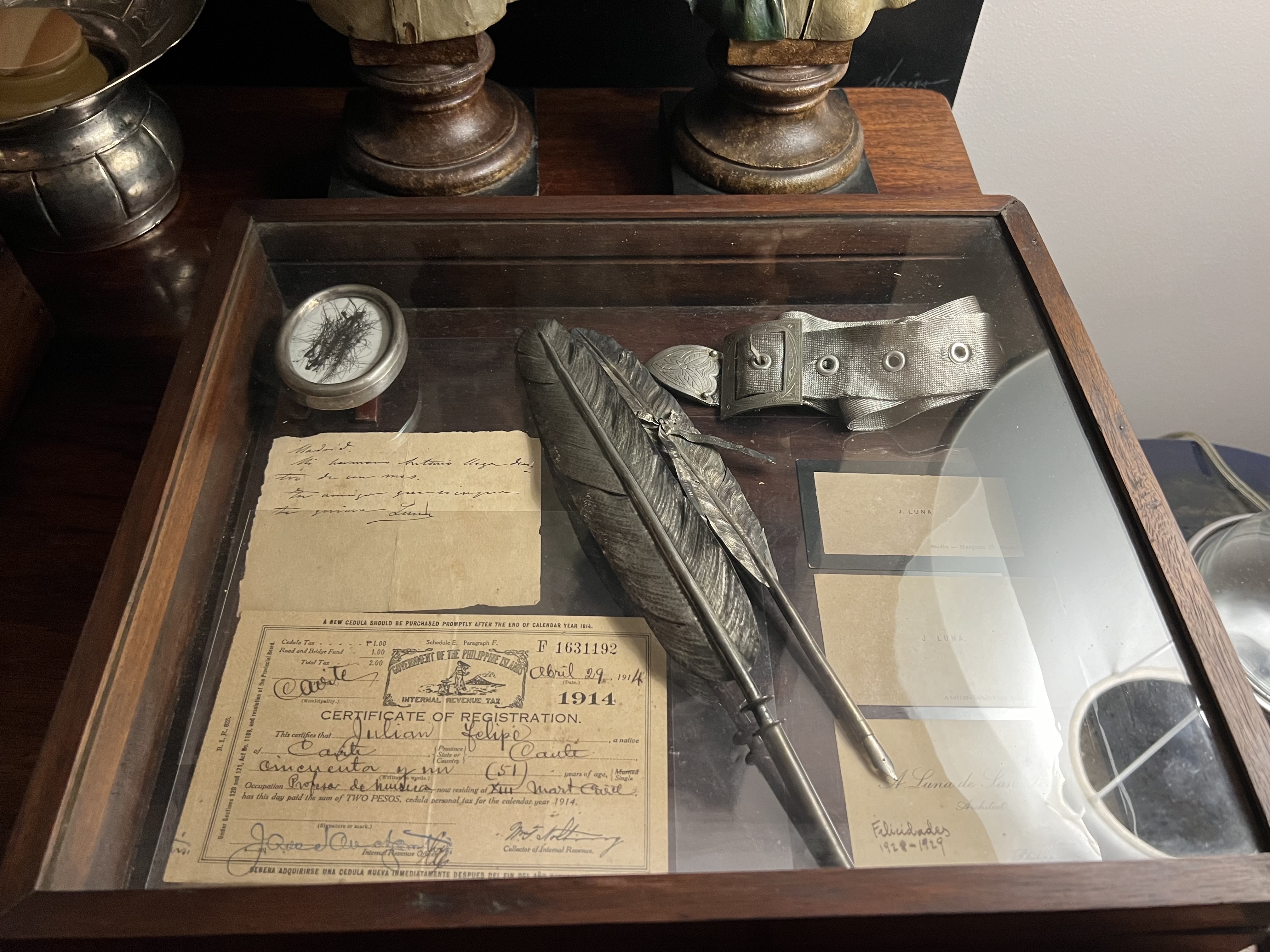
Jacinto’s quill, along with a trove of other historical treasures from Ambeth’s personal collection, will be up for auction on June 7 at Leon Gallery. They include Juan Luna’s silver belt, Felix Resurreccion Hidalgo’s walking stick, an official copy of the Malolos Constitution, Philippine maps from 1616 and 1647, and the Noceda and Sanlucar Vocabulario de la Lengua Tagala from 1860, among many others.

Knowing how precious these objects were, I had to ask Ambeth more about them, and this is what he said.

What made you think of selling these treasures now? Surely it can’t be easy letting go of them after being their caretaker all this time?

Over the years, I have come to the realization that collecting is not the hobby it used to be. As a boy I collected stamps and learned geography, history, and the culture of foreign countries in the process. I was fortunate that my father’s company had an international correspondence, so every week his secretary would send me a batch of envelopes to sort out.

I started collecting Filipiniana books in the 1980s, stocking up from the National Bookstore Quezon Boulevard branch bargain bin where I completed my Nick Joaquin essay collection because they cost one peso each. After school, I went to the Heritage Art Center in Cubao that I learned only years later was the site of the old Philippine Art Gallery. It was a ramshackle grouping of rooms upon added rooms made from old house parts that Mario Alcantara, the owner, bought from mambubulok. I had a favorite nook where I did my homework and when bored I would explore the rooms that I think gave me an eye for art and the ability to choose what I thought was good or not.

Looking back my collecting, and my life, has been the happy intersection of skill and opportunity. Napoleon once said “ability is nothing without opportunity.” I have always seen collecting as a responsibility. Collecting significant Filipiniana is not a hobby. It is not an investment. Collecting is a responsibility, the collector a steward who preserves the collection for the next generation. 

The objects I put at auction have enriched my life in many ways and I think they will enrich the life of their next steward. Some of the lots like the Malolos Republic one-peso banknote and the printed copy of the Malolos Constitution have been tucked away in a drawer. If I drop dead tomorrow these might be carelessly thrown away as trash. They should go where they are better appreciated. Collectors de-accessioning keeps the market alive and buzzing.

Let’s get this out of the way: it’s none of our business, but what will you do with the money?


Since I am not a dealer the material reward does not really factor in the equation. I have sold other things before at cost or even at a loss, just thinking that my gain was the enjoyment I got chasing after them and acquiring them. What will I do with the proceeds? When I started selling my rare Filipiniana I thought that instead of having shelves of books, maybe I should just sell and use the proceeds to buy one or two incunabula or samples of early Philippine printing from 1593-1640. Instead of caring for a whole library I will just care for half a dozen very important books.
How did you start out as a collector of historical objects? How and where did you find them? Aside from Jacinto’s pen, what was your most serendipitous find?

Collecting historical objects came naturally from my work as a historian. I would find things in used bookstores and when supply was still plentiful in the Ermita antique shops. One of the serendipitous finds was the cedula or residence certificate of a certain Julian Felipe, a musician from Cavite. It was in a heap of old papers, initially priced at one hundred pesos. I haggled it down to fifty, paid, and ran away. 

Another time my favorite antique dealer brought a “European painting” of a Virgin and Child to my home. I looked at it and knew it was Philippine. When I opened the frame to inspect the painting, hidden under the frame was the signature of the Filipino master Mariano Asuncion (1802-1855). The silver belt of Juan Luna and the bank draft in his name were acquired from Mario Alcantara. It came with the famous trove of paintings inherited by Grace Luna de San Pedro that are now in the National Museum. While everyone was going wild over the paintings, I spent many afternoons browsing the boxes of memorabilia that included the bloodied uniform Antonio Luna wore when he was assassinated, the palettes and brushes of Juan Luna, the memorabilia, some architectural plans of Andres Luna de San Pedro, and much more. I offered to buy the palettes and brushes and the painter’s smock but Mario said these were destined for the National Museum. There was also the last letter Juan Luna wrote to his son from Hong Kong, written a day before his death, not only was this letter significant, Luna did a watercolor of Hong Kong Harbor on the first page of the double-sided letter. All I could afford was the silver belt that came with Luna’s black suit that Mario said was also destined for the National Museum. Unfortunately, the Heritage Art Center burned down and with it all these memorabilia.

Do you or can you separate the collector from the scholar? Did the collecting happen naturally as a consequence of the scholarship?

The collecting grew and was enriched by my research and scholarship. If I had a PhD in Math I probably would not have recognized these odds and ends now considered treasures. I have been divesting over the years. A large part of my Filipiniana collection was donated to the Center for Kapampangan Studies, Holy Angel, Pampanga. All I keep at home are the books I need for work for teaching, lecturing, and writing, but now that I am retired from Ateneo (but still employed on a post-retirement appointment) it is easier to let go. 

The full catalog of Leon Gallery’s Spectacular Mid-Year auction can be accessed on its website at https://leon-gallery.com

Penman No. 430: Rizal’s Typewriter

Penman for Monday, December 20, 2021

NOW THAT I have your attention, let me backtrack quickly and clarify that title: I’m talking about a typewriter that Jose Rizal or the Katipunan could have used, had they been tech-savvy enough and infected with 19th-century FOMO.

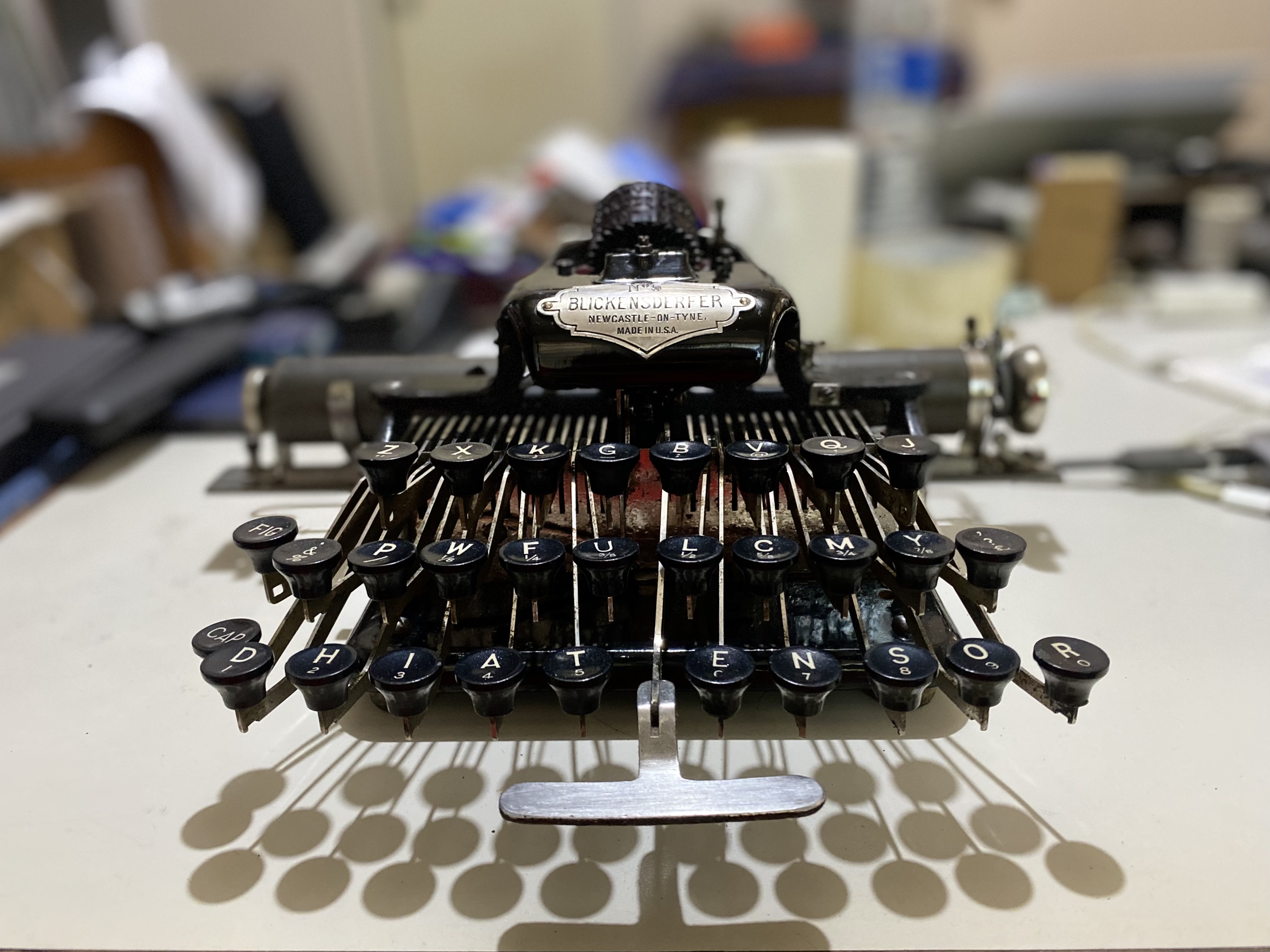
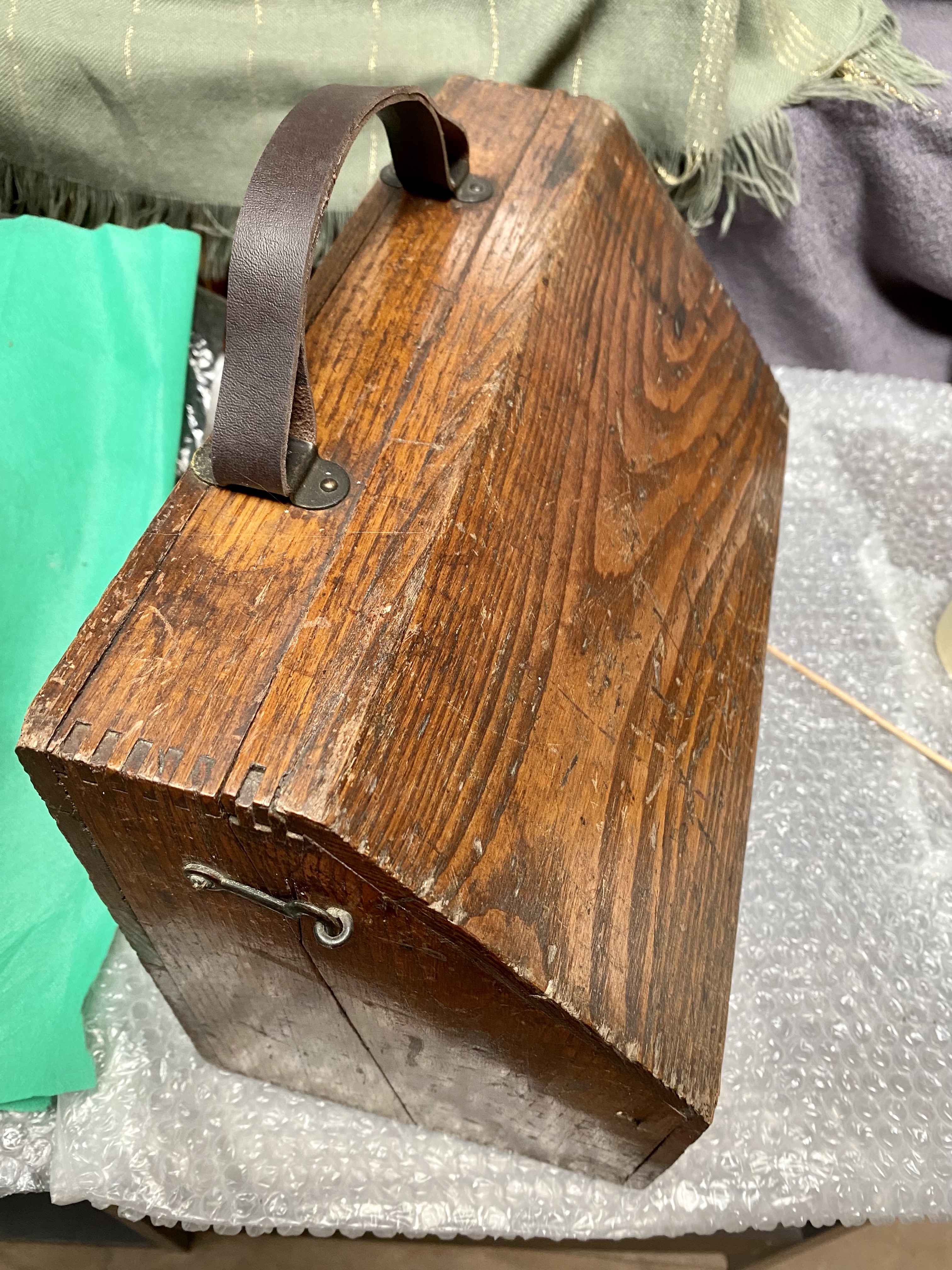
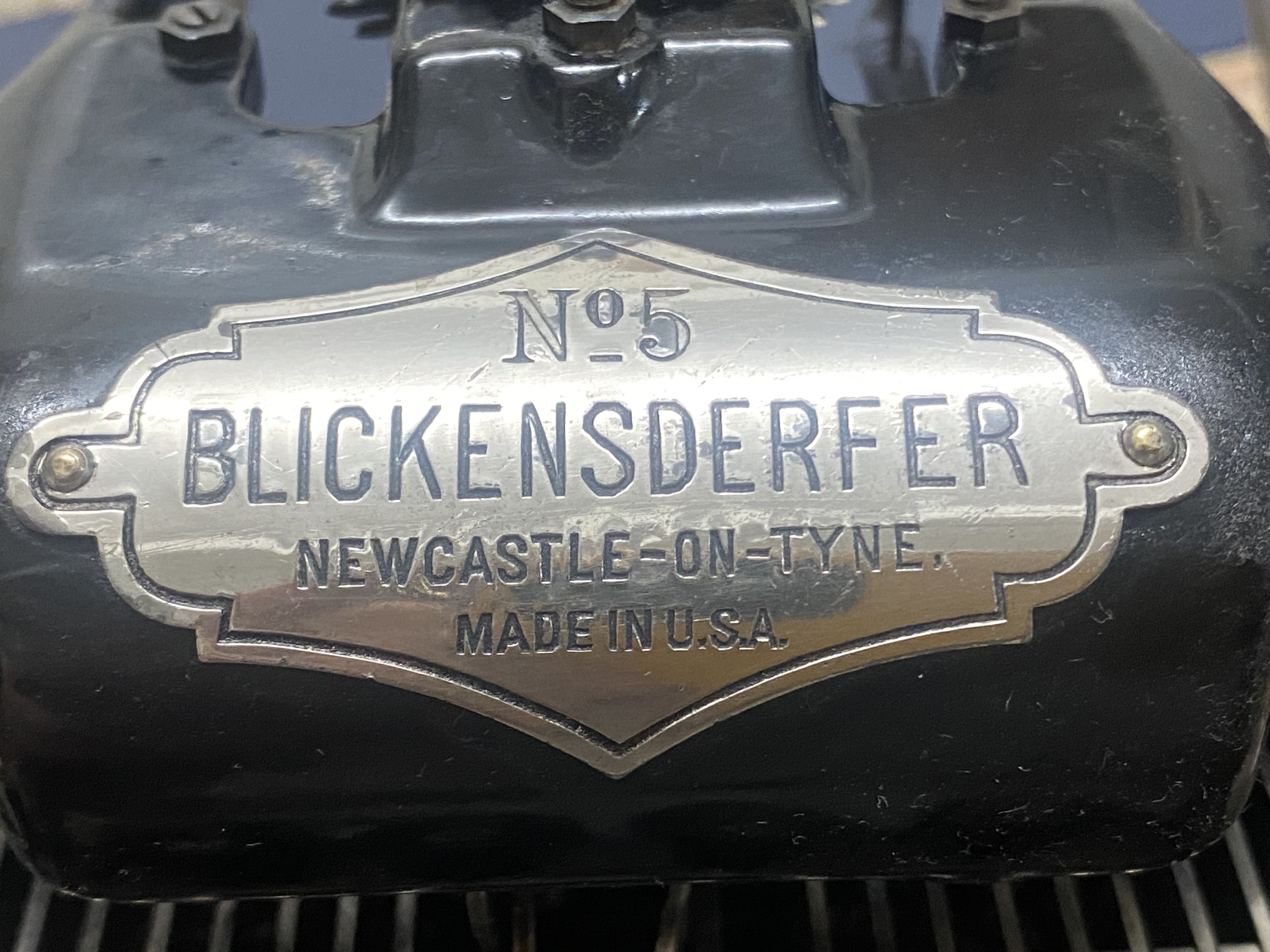
Early this month, a box I had been eagerly awaiting arrived from England, where I had found the machine on—where else?—eBay, selling for a reasonable price (“reasonable,” that is, to oddball collectors like me). Inside the box was a wooden case, visibly old, with a latch on each side. I undid both latches and the case opened to reveal what I expected to see: “an antique Blickensderfer No. 5 typewriter with spare typewheel in original oak case,” according to the ad I saw. But the first thing that struck me wasn’t the machine itself—it was the fragrance of oak, still embedded in the wood after more than a century.

Why did I even want the Blick, as the typewriter invented by the American George Canfield Blickensderfer came to be known? By the time the first Blick was patented in 1891, the typewriter had been on the market for about 17 years (many prototypes preceded the Sholes and Glidden, but were never mass-produced, except for the sci-fi-worthy Hansen Writing Ball, ca. 1870). But most were big and bulky, and—surprise—wrote on the other side of the typist, who couldn’t see what he or she was typing. 

The Blick No. 5 was the first typewriter that could truly be called a portable, with a keyboard and a front-facing platen or paper roller, much like its modern counterpart. Think of it as the MacBook Air of its time. It looked like an insect with a big head and spindly legs, and even more strikingly, it employed what its inventor called the “scientific” DHIATENSOR keyboard—those bottom-row letters supposedly figuring in 85 percent of the words in English. QWERTY had already established itself as the standard layout early on, and later Blicks would use it, but I preferred the quirkiness of DHIATENSOR.

The Blick No. 5 was given its public debut at the 1893 at the World’s Columbian Exposition in Chicago, a monumental event meant to showcase such novelties as a moving walkway, AC electricity, and the Ferris wheel. The small, lightweight typewriter became a hit, helped along by the fact that it sold at a third of the 100 dollars that most other typewriters cost at the time.

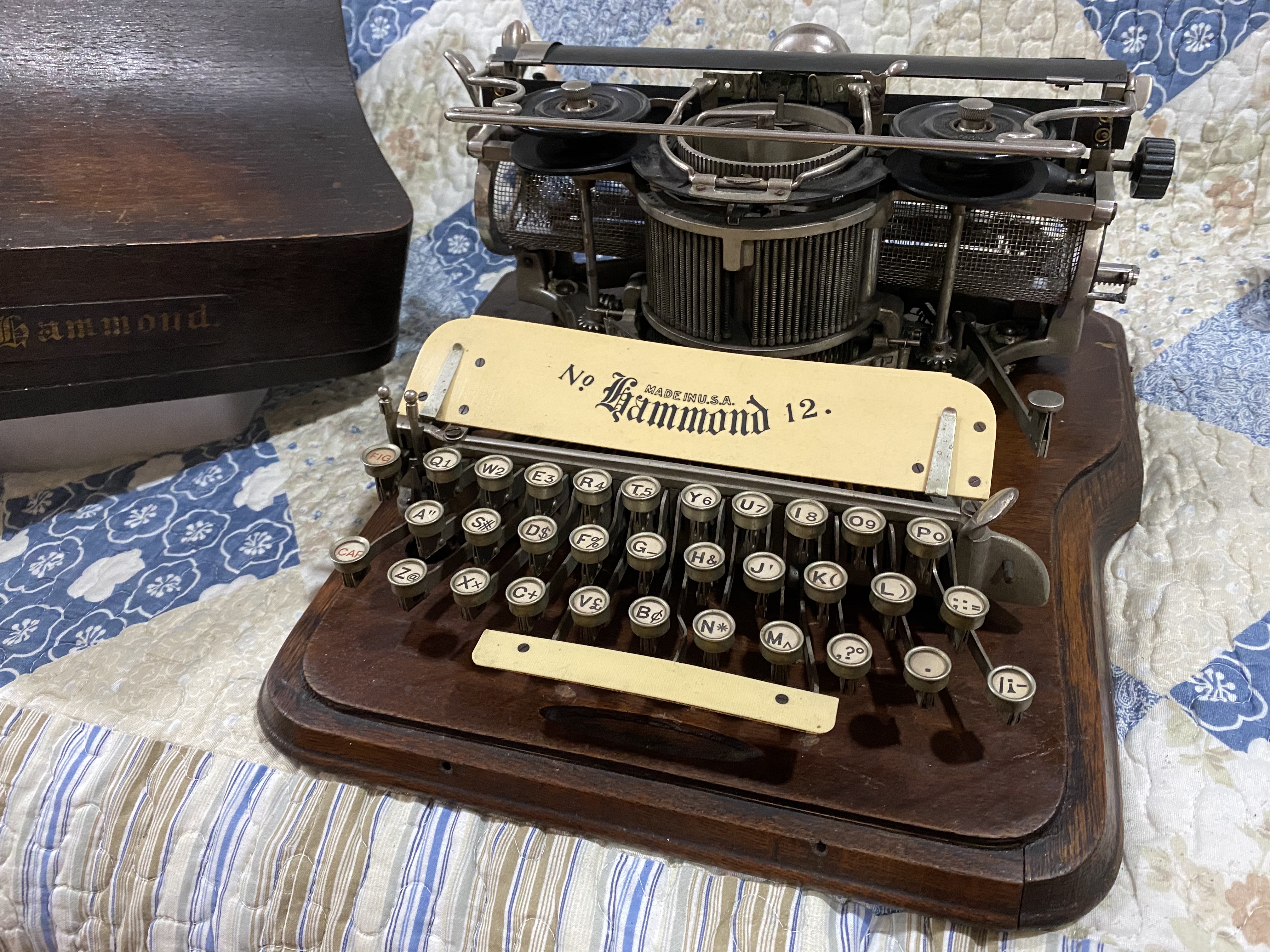
So I wanted one in my collection for historical purposes; prior to this, my earliest machine was a larger and grander-looking Hammond 12 from around 1905. That Hammond got to me, also in its original wooden case and all the way from Ohio, luckily in one piece. 

That’s the trouble with collecting any machine with scores of tiny parts a hundred years old—iron corrodes, rubber shrinks, wood warps, paint fades; screws come off, joints get fused solid, whole sections vanish, and often all you have left is a rusty lump of metal better tossed into the garbage. 

Most Blicks and other old typewriters you can find on eBay will manifest at least a few of these problems. Missing parts—obscure and ancient—can be hard to find; thankfully a global network of typewriter enthusiasts exists to offer help and advice online. Reviving a machine with frozen typebars is another major chore; but again expert repairmen still remain to come to the rescue. (Among them is our own Quiapo-based Gerald Cha, whom I’ve written about, through whose hands all my machines pass for the requisite CLA—cleaning, lubrication, and adjustment.) Shipping is yet another potentially harrowing complication—fragile, valuable, and irreplaceable machines can be turned into scrap with one drop of a poorly padded box.

It was a miracle that the Blickensderfer turned up at my doorstep whole, complete, and needing just a bit of lubrication. When Gerald typed out its first few letters in script, it was as though a mute singer had found her voice after a century.

But one more ritual had to be performed: dating the machine to the year it was manufactured (mine was an English model, made in America but sold out of Newcastle-on-Tyne). For this, typewriter collectors have an online resource to fall back on: typewriterdatabase.com, which has been painstakingly crowdsourcing and cataloguing the serial numbers of hundreds of brands of typewriters. I first had to locate the number on my Blick; it was there on the upper right of the bottom of the frame—68403. A quick check yielded the year it was made: 1896. More than liking the Blick, I now stood in awe of it.

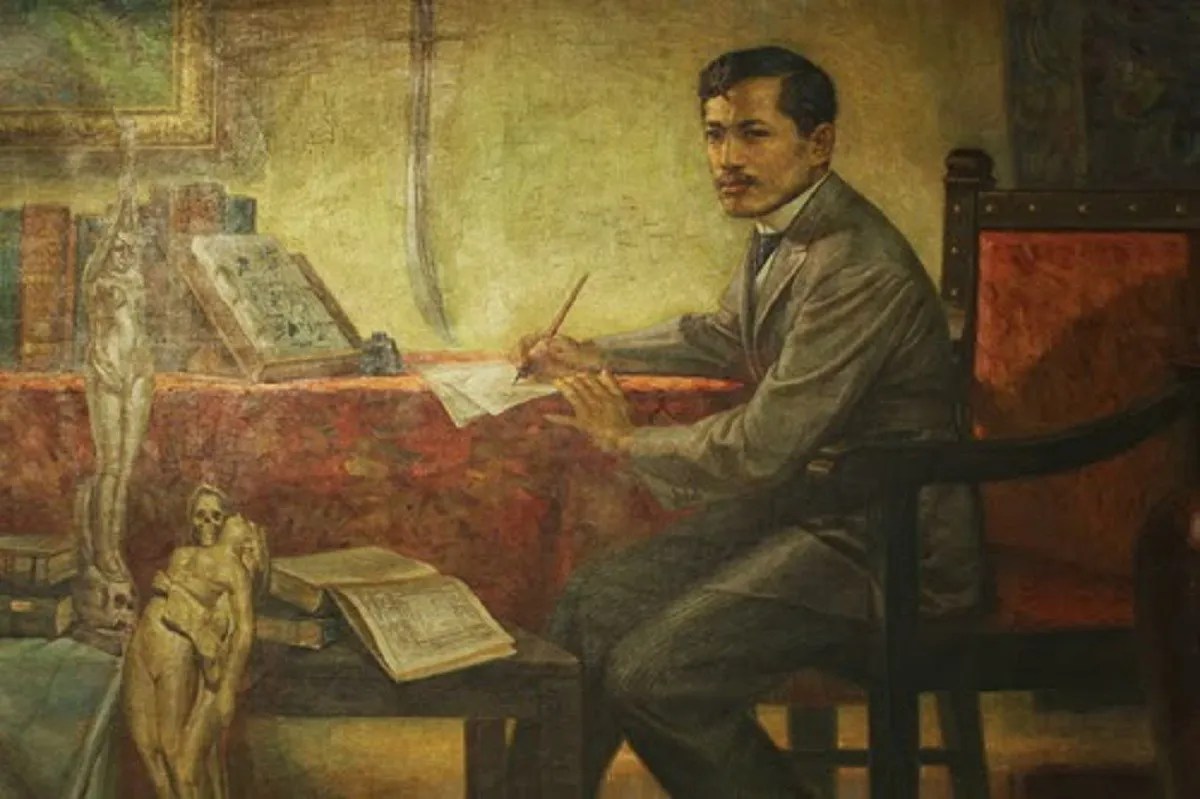
I’d like to fantasize that some of these machines made their way to Manila and figured, somehow or other, in the Revolution, although I do have to admit that the standard image of Rizal poised to write “Mi Ultimo Adios” with a quill pen in hand is much more appealing than him pecking away at a keyboard. 

(Image from joserizal.com)

I asked Ambeth Ocampo about it, and he said that while he hadn’t come across any connection between Rizal and a typewriter, our hero surely would have encountered it in his many travels abroad. Rio Almario seems to recall having seen a copy of the Katipunan’s Kartilya in typescript, but we can’t be certain when that was made. With the Americans came the Remingtons—and it’s no small coincidence that the same company made the firearms that subdued us and the typewriters we began writing in English on. I can only stare at my Blickensderfer No. 5 and wonder what stories sailed across its paper horizon.

Penman No. 368: Scavenging a Smith-Corona

IMG_9518.JPGPenman for Monday, August 26, 2019


I HAD the privilege of being mentioned last week in the column of my historian-friend and fellow connoisseur of all things older than ourselves, Ambeth Ocampo, for having facilitated his acquisition of a 1962 Ferrari-red typewriter sporting a rare cursive typeface. Ambeth and I had run into each other at the recent Philippine Readers and Writers Festival in Makati, where we had separate events but both attended the visiting Gina Apostol’s talk on her new novel Insurrecto. Strangely enough, the last time we met was also in last year’s PRWF, where we realized to our mutual amusement that we were both carrying Agatha Christie fountain pens. (For the record, he has also been a lifelong penman.)

Occasionally—like I suppose his legions of fans do—I email him for his professional opinion of my recent antiquarian pickups, like a French book from 1706 about the Jesuits in “Nouvelle Philippines,” which got me all excited until Ambeth burst my bubble by telling me that “Nouvelle Philippines” didn’t exactly mean Manila or even Mindanao but a group of little islands out there in the stormy Pacific. That’s why I always hasten to explain that he’s the scholar and I’m the scavenger, although the things that he himself has scavenged—like Emilio Jacinto’s silver quill pen—are pretty fabulous.

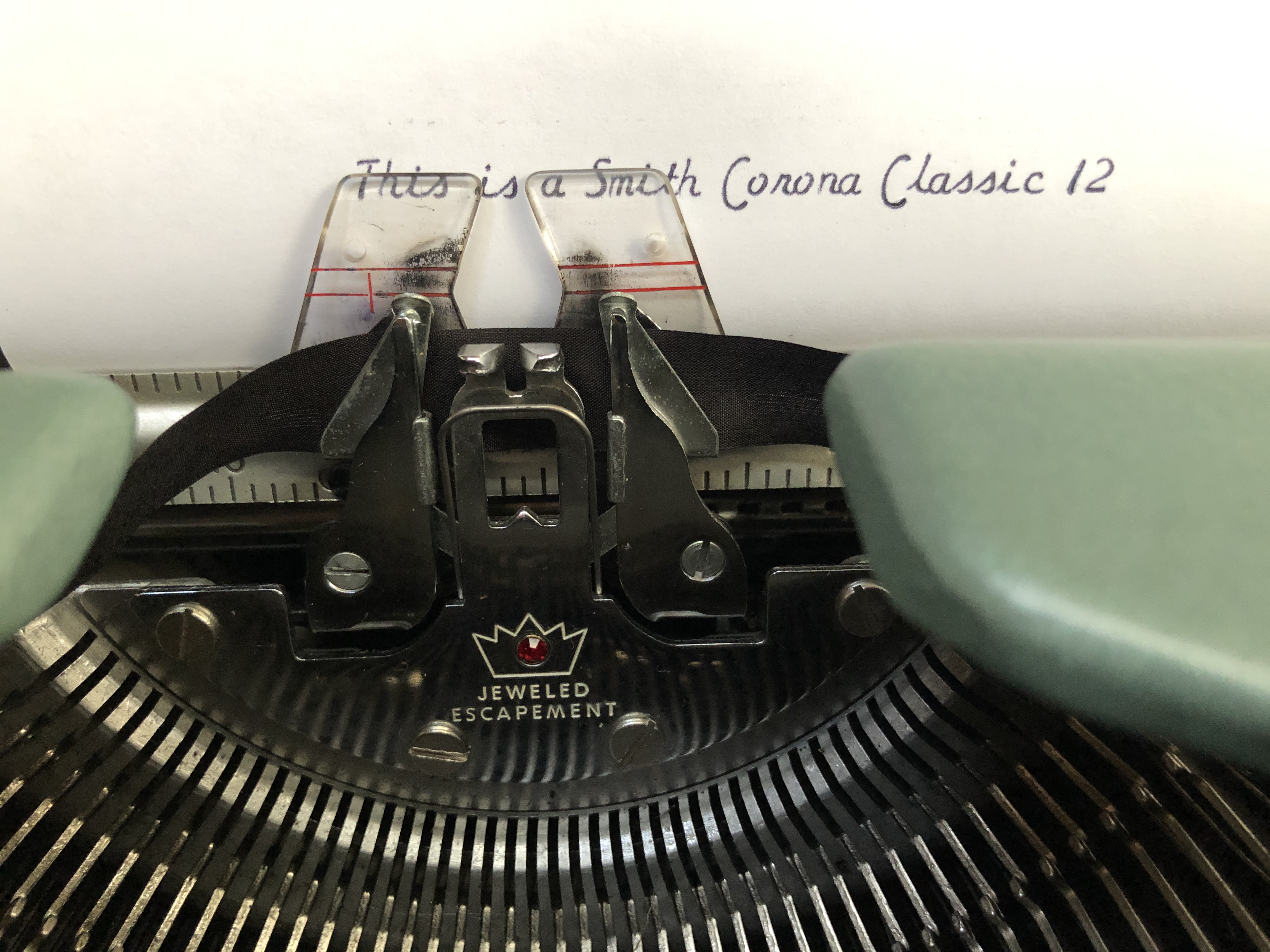
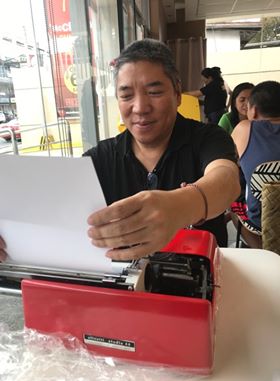
At the PRWF, he asked me if I knew of any cursive (or “script”) typewriters for sale; I said I did not, but would ask a collector-friend, Dennis Pinpin, if he had any. I have about two dozen typewriters (yegads) in my stable, and only one of them has script (that’s it up there, an SCM Classic 12), but Dennis has over a hundred, so he had to have one or two to spare. Indeed, when I asked Dennis, he did—a 1980s Olympia Traveller de Luxe, a sturdy German workhorse on which I had begun my first novel back in graduate school, and an older, fire-red Olivetti Studio. Which one should I get, Ambeth asked me. The Olivetti, I said, will likely have softer keys. The two gents met in a burger joint, had an enjoyable conversation, and a red machine crossed the table for what I knew was a bargain, Dennis being a soft touch for serious writers interested in having some fun with noisy old contraptions.

68253810_2592140314151181_4481874673470013440_n.jpg

But that wasn’t the end of my typewriter week. Like all true collectors, I keep telling myself “Okay, that was the last one,” knowing perfectly well that I’m lying through my teeth. For a couple of days midweek, I got all worked up about acquiring a 1920s Remington that had belonged to a Bulakeño associate of Jose Rizal; I had an agreement with the seller on the price and meeting place, only to be later told that some mysterious stranger had bought it from under my nose. (Ambeth, was that you?) I was beside myself with dismay and disgust, muttering oaths about palabra de honor, but then (like many of you would do, fess up) I sought to soothe my injured feelings by looking for something else to buy. I got lucky over the weekend on a sortie to Bangkal, picking up two lovely paintings by minor masters for the same coin I would have handed over for the typewriter.

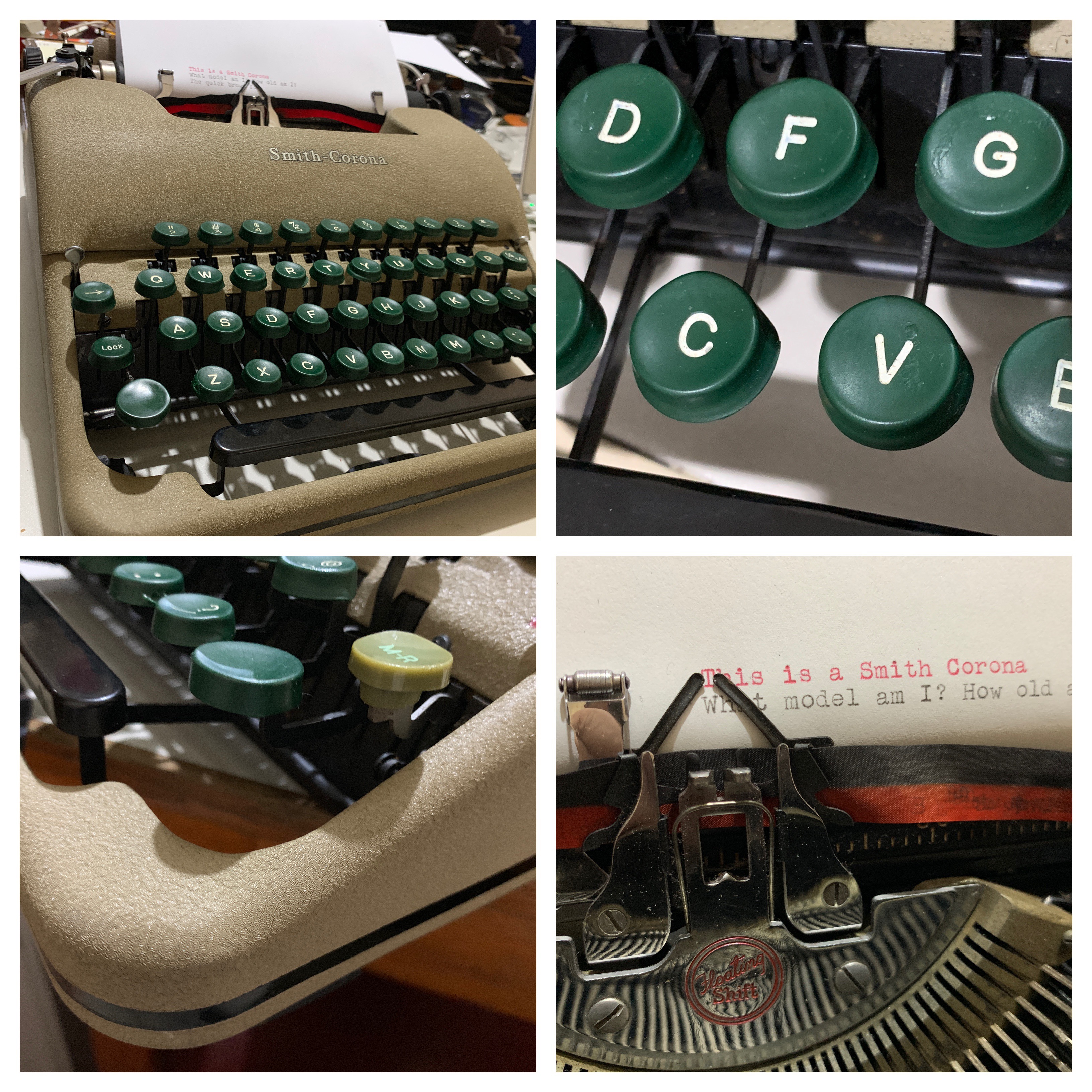
And it still didn’t end there, because—idly scanning the online ads while desperately finishing another corporate history (which puts the butter on my bread, and allows me the folly of these pursuits)—my eyes fell on a bright, clean-faced Smith Corona in a crinkle-paint finish they used to call “Desert Sand,” being offered by a seller not too far from me for the price of, shall we say, a couple of dinner-and-movie dates with Beng (sorry, Beng!). I PM’ed the seller, who said the machine had been reserved by someone else. Drat, I thought, but nobly messaged back that I respected dibs, and that if that deal fell through, then I was next in line.

The next day I got a message that the other fellow had failed to show up, and that the Smith Corona was mine to take: destiny! Now I should admit that this was going to be my sixth Smith Corona, the typewriter equivalent of either gluttony or a very unimaginative diet, but as all true collectors know (I really should have an official True Collectors T-shirt made), redundancy is never a problem, except to spouses (and thankfully Beng prefers redundancy in my collectibles to redundancy in spouses). I drove out and picked up the machine, which was being sold out of a Japan-surplus stall in Tandang Sora.

IMG_0230.jpg

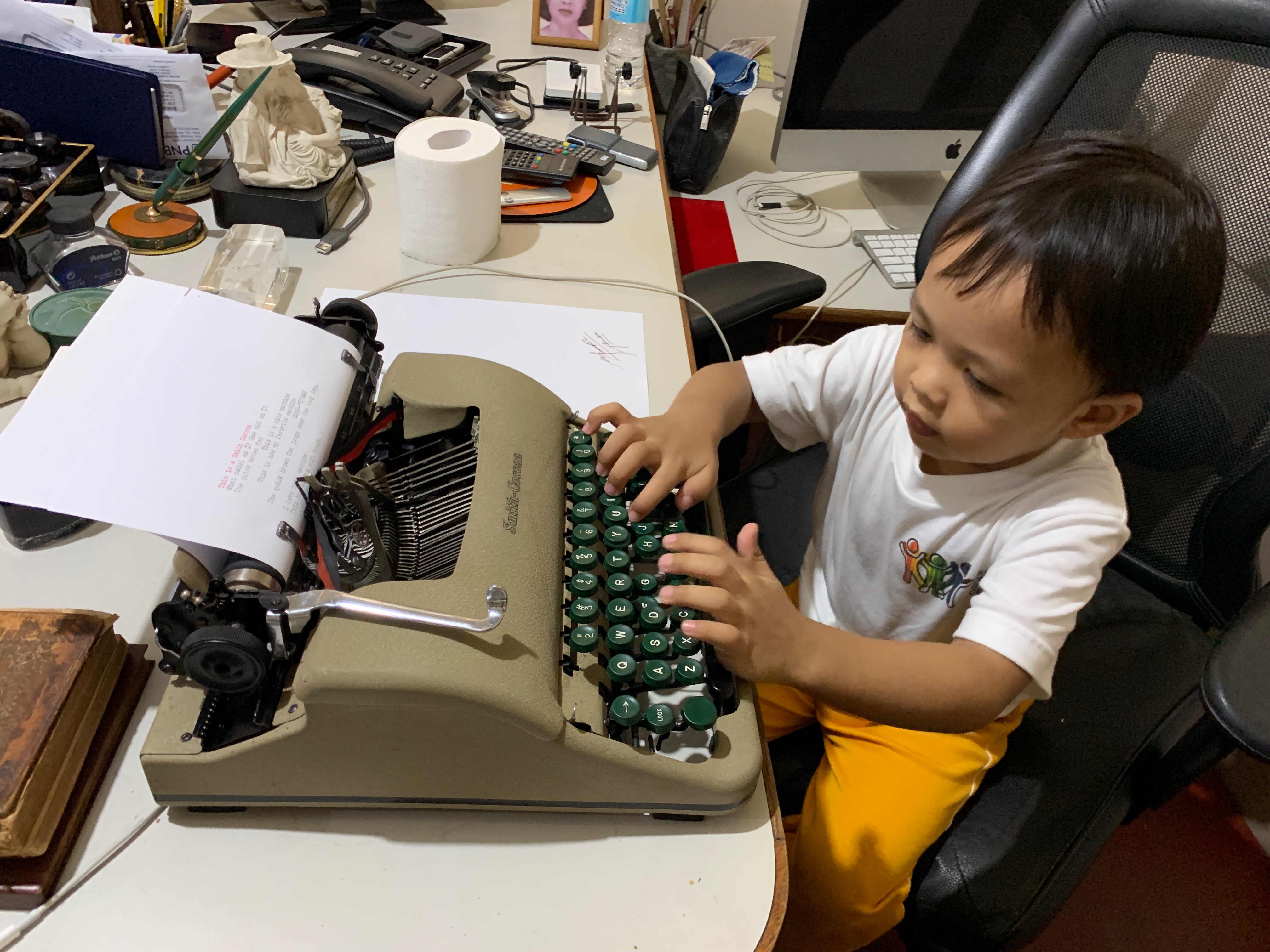
Back home I gently opened the case, and began drooling at the sight of a near-pristine Smith Corona Standard, whose serial number marked it as having been made in 1941; it had obviously never seen any action, like firing off a desperate message from a bunker in Bataan or Okinawa. After I had wiped and oiled it, the soft clatter of keys striking the platen, probably for the first time in decades, filled the air in my home office like Debussy’s Reverie. (That’s our apu-apuhan Buboy below, trying out the new toy.) How do these beauties, I would later tweet, find their way to ugly old me? I imagined Ambeth across the city, pecking away at his Olivetti, maybe wondering if Rizal had ever used a Hammond or a Blickensderfer.

IMG_0241.jpeg

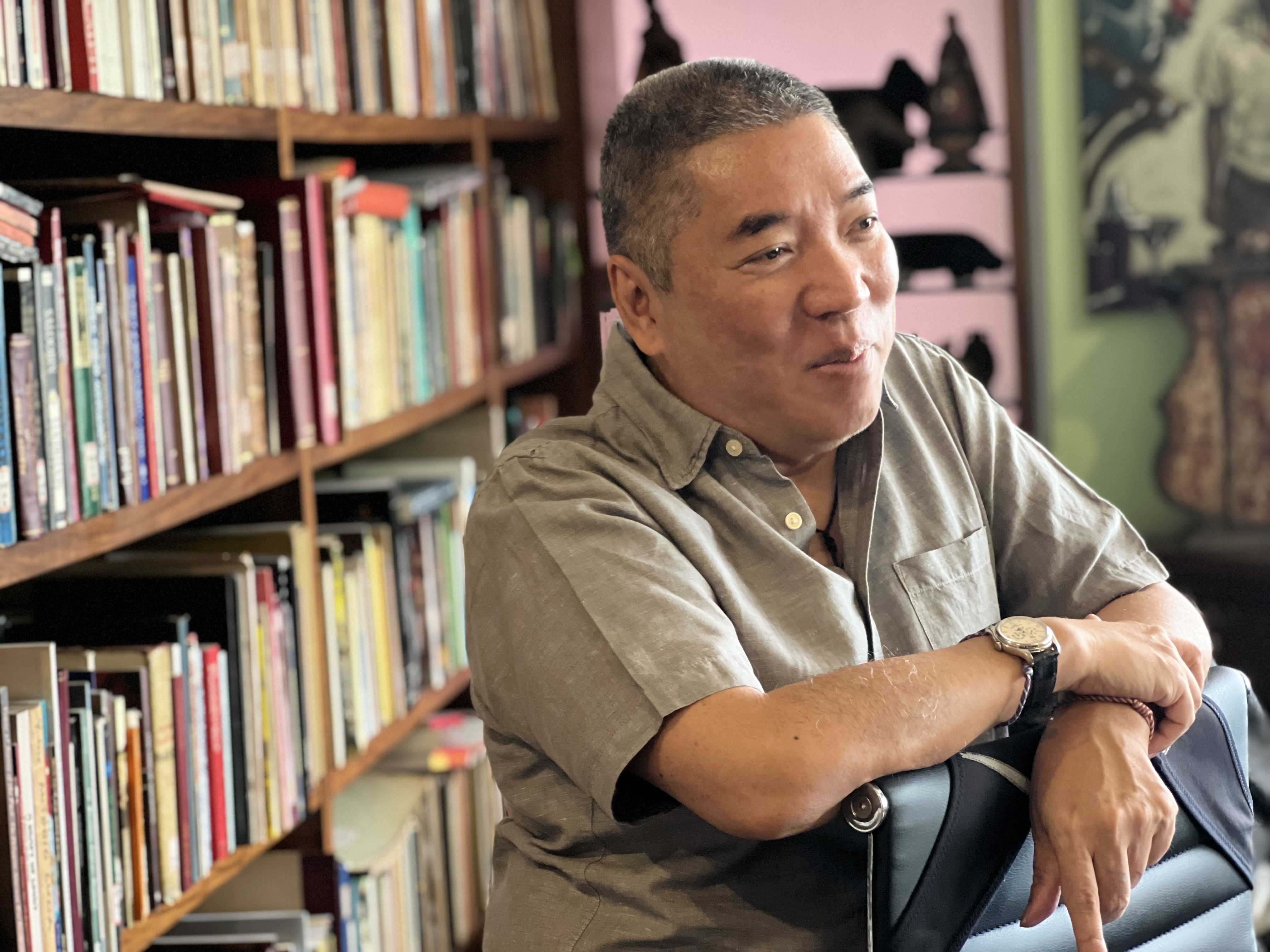
(Photo of Ambeth Ocampo courtesy of Dennis Pinpin.)