Qwertyman No. 124: In Sin and Error Pining

Qwertyman for Monday, December 16, 2024

IT WAS at an early Christmas lunch when a friend asked if I thought that Vice President Sara Duterte would be impeached, with all the motions now on the table to that effect. I wasn’t expecting politics to be taken up over the merrymaking, but this is the Philippines where we breathe politics, so I obliged. 

I said that while I certainly believed that the VP was fit to be impeached for all the obvious financial irregularities happening under her watch, I very much doubted that it was going to happen. And why not? Because it was going to come down to the votes in the House and in the Senate, and while President BBM and his allies doubtlessly had the muscle to push the motion through, I just didn’t see why they would. And again why not? You don’t think they can come up with the evidence to find her culpable for the misuse of hundreds of millions of public money in confidential funds? They could, if they want to, I said—but again, why would they? 

Think about it this way, I said. Impeachment is political, so the facts don’t really matter much, except for propaganda purposes—especially with elections coming up in a few months. Don’t get me wrong—there are people who take the process and its reasons seriously, as we all really should, because millions going to non-people like “Mary Grace Piattos,” “Chippy McDonald,” and “Fernando Tempura” in the guise of “intelligence operations” insults our non-artificial intelligence. 

VP Sara’s refusal to explain these strange endowments paints her further into a corner—which, it seems, is exactly where she wants to be. When she says, “I’ll be at peace when I’m impeached,” and when her drumbeaters exclaim that the hearings are turning the Dutertes into “folk heroes,” then you know that she’s not going to get what she wants. 

Why would PBBM let her go? What would be in it for him? He doesn’t need a functioning Vice President—he never had one; this VP can’t point to a single memorable deed beyond publishing an expensive book. Cutting off his “Uniteam” partner and depriving her of her last official job would simply give her free rein to wreak more mayhem with no accountability to the government or the people. 

Keeping her on the official payroll—but fundamentally powerless—would be the smarter thing. It was never in Sara’s nature to do a VP Leni, and turn political Siberia into a veritable factory of good deeds. She’ll stew in the OVP, sans her confidential kitty, until she can’t take it any longer and resigns, which could easily be spun into a form of surrender or an abandonment of her sworn duties.

The other reason, of course, is that while VP Sara is drawing fire, PBBM can enjoy some peace of mind, and make benign speeches at this and that forum with a heartfelt smile. He knows that he has benefited immensely from the odious alternative the Dutertes represent in the eyes of many Filipinos, even those who staunchly opposed his candidacy in 2022. 

The Dutertes have done Marcos Jr. the priceless favor of making him and whatever he does look good by comparison—a difference he has substantively emphasized by rejecting his predecessor’s slavishly pro-China policy and (despite reports of continued EJKs under his regime) withdrawing Digong’s murderous tokhangcampaign. He has had his missteps, like that bizarrely ill-conceived Maharlika Fund, but I have been hearing murmurs of approval from otherwise progressive friends—albeit grudging and cautious—for many of his positions, an unthinkable proposition just a year ago, when the wounds of 2022 were still fresh. 

But with more than half his term yet ahead of him, there’s opportunity aplenty for unraveling and for even graver misdeeds. Even now, while we profess shock and dismay over the P500 million spent by the OVP in confidential and intelligence funds for 2023, the House has given BBM a free pass on the even more staggering P4.57 billion his office disbursed for the same purposes that year. 

And that’s why I think it’s wiser to keep the focus on the Dutertes and to keep the VP where you can see and hear her, flailing around and squealing like a stuck pig. The impeachment drama will play itself out in the New Year with more twists and turns than a telenovela, and then, for some reason, the votes will fall short, and the VP will be censured and chastised before being sent back to the pen. For what it’s worth, I don’t think impeachment is the proper penalty here; criminal prosecution, conviction, and punishment should be, but that’s a whole other game.

* * * * *

Christmas will soon be upon us—my 70th, in my case, a milestone I never expected to reach given the many young deaths that marked my generation, but one I thankfully accept as the ultimate gift and blessing, no matter the turmoil in our world today. I personally have much to cheer about and be grateful for—so why can’t I be merrier?

We associate Christmas with joy and new life, with the Christ child’s coming, but there is nothing to be jolly about where wanton greed and senseless death are concerned. 

Everything today points to a headlong dive into a global cataclysm, a World War III that may not have a clear and time-stamped beginning like the invasion of Poland or the bombing of Pearl Harbor, but a prolonged and widespread series of provocative and catastrophic events occurring all over the planet—Russian incursions into Eastern Europe, Chinese occupation of Southeast Asian waters, Israel’s pyrrhic extermination of its enemies, North Korea’s incessant saber-rattling and nuclear brinkmanship, America’s surrender of the asylum to the lunatics, and the inexorable degradation of the environment—all of which will come to a head. It will be horrific, but a side of me wonders if we need this cataclysm to remind us of our most basic values and virtues as humans, beyond ideology, religion, power, and wealth.

The other week I had a reader, a pro-Israel partisan, writing me to contend that there was no one else to blame for all the dead children in Gaza but their parents who refused to stand up to Hamas. It saddened more than infuriated me to see that this is where all our presumably educated reasoning has come to—a justification for the slaughter of innocents. I wanted to shake the man by the shoulders, across the Internet, to awaken the terrified and hungry child in him.

Our world will become yet darker and more difficult before it comes to its senses, rediscovers the value of truth, beauty, and courage, and pulls back from the brink of self-annihilation. Yes, I remain optimistic about the future of humanity, about a time when reason and justice will prevail, but I am quite sure I will not live to see this “new and glorious morn.”

Qwertyman No. 111: Justice Fever

Qwertyman for Monday, September 16, 2024

A DANGEROUS outbreak of justice fever has hit the Philippines these past few weeks, threatening to make that country’s startled citizens believe that their government is intent on doing right by the people, no matter what and come what may.

In quick succession, Bamban ex-mayor Alice Guo, alleged to be a Manchurian candidate, was picked up in Indonesia and flown back to the Philippines; another on the Philippines’ most wanted list, the self-styled “Son of God” Pastor Apollo Quiboloy, emerged from his subterranean kingdom to surrender to the Pharisees, er, authorities; why, even former Palawan governor Joel Reyes, wanted for the murder of an environmental crusader and long out of sight and out of mind, turned himself in; and it should only be a matter of time before ex-Rep. Arnie Teves comes home from his extended Timorese vacation to face murder charges in Negros Oriental. (I don’t think the return of former Iloilo Mayor Jed Mabilog, hounded out of office by the former President on trumped-up charges of drug trafficking, counts in this category.)

What on earth, you might ask, is going on? Is the government running some secret—and wildly successful—“balik-fugitive” campaign? Were there possibly offers and assurances made of kid-gloves treatment, fully furnished jail cells, state-witness options, conjugal visits, and lifetime colonoscopies?

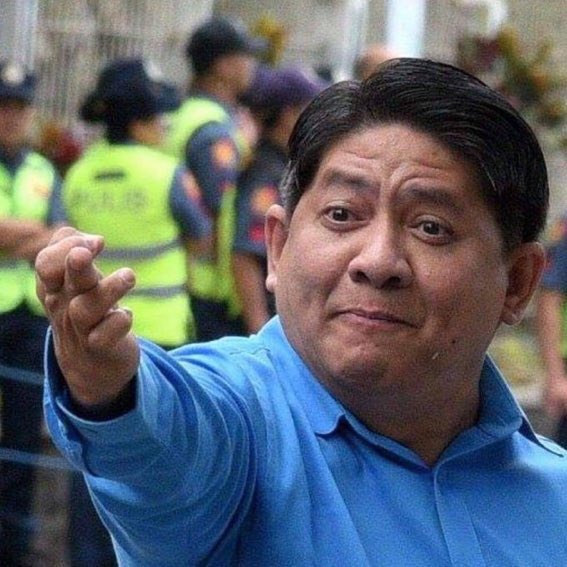
For a while back there, it seemed like the old regime hadn’t completely vanished—you know, the chummy-chummy-with-criminals vibe, which that viral photo with the chinita mayor smiling sweetly and flashing “V” signs between her two captors seemed to suggest. But justice fever is vicious when it takes hold of its victims, and by the time Pastor Apollo Quiboloy was caught in Davao, the afflicted authorities had learned their lesson, and quickly whisked him away in a C-130 to Manila. Why, President Marcos Jr. even fired the chief of the Bureau of Immigration, Norman Tansingco, over the Guo affair. Illegal POGOs were raided, and captives freed.

As if this spate of high-profile catches and prosecutions wasn’t enough, in the Senate and the House of Representatives—once safely Duterte territory—lawmakers were outdoing each other poking holes into Vice President Sara Duterte’s P2-billion budget proposal. Her friend Harry Roque was found in contempt of Congress and served a warrant of arrest for failing or refusing to account for his unexplained wealth. 

Duterte ally Sen. Bong Go also caught the fever, proclaiming in a tweet that he had always been against POGOs, seeing them as a threat to peace and order. “For the record,” he emphasized, “I really hate POGOs.” Justice fever apparently induces amnesia, because the good senator forgot that three years ago, he voted in favor of RA 11591, taxing and effectively legitimizing POGOs in the country.

All this would have been unimaginable then, but here’s something even more incredible: former President Rodrigo Duterte—who routinely ordered his supporters and the police to “shoot” drug suspects without worrying too much about the finer points of the law—seems to have woken up from a kind of coma, suddenly remembering that he was, once upon a time, a lawyer wedded to the idea that people have human rights. 

We know that because Atty. Digong, probably still in a slight daze but overcome with a resurgent sense of right and wrong, filed charges of malicious mischief against Interior Secretary Benhur Abalos, PNP chief General Rommel Marbil, and PNP Region XI chief Brigadier General Nicolas Torre III in the wake of his patron and spiritual adviser’s arrest. 

Not being a lawyer, I had to look up exactly what “malicious mischief” means. Here’s what I found online: “Malicious mischief is a crime of property damage. In order to convict someone of malicious mischief, the prosecutor must prove the damage done to the property was not accidental. A person is guilty of malicious mischief when he or she ‘knowingly or maliciously’ causes physical damage to another person’s property.”

From what I gather, malicious mischief requires a certain, uhm, finesse, a delicacy that appreciates degrees of injury, and even ironic humor. “Mischief” isn’t like the sledgehammer of bloody, first-degree murder; it’s more like a yap rather than a roar, a pinch rather than a punch. You commit malicious mischief by, say, kicking your neighbor’s dog or unpotting his daisies. It’s meant more to annoy and enrage rather than to kill. (Interestingly, under the Revised Penal  Code, “destroying or damaging statues, public monuments or paintings” and “using any poisonous or corrosive substance; or spreading any infection or contagion among cattle; or who cause damage to the property of the National Museum or National Library” also qualify as special cases of malicious mischief.)

I haven’t read the charges in their entirety, so I don’t know exactly what Atty. Digong was complaining about—I’m guessing door locks broken and, okay, egos pricked. But the mere fact of Digong the Terrible sallying forth into a court of law on a matter as grievous as upended flower pots suggests to me—as I wrote about a few weeks ago—that the man has truly undergone the kind of religious conversion that now allows him to believe in, well, judicial justice. He, too, has caught the fever, and now reposes his faith in a judicial system he once decapitated with pronouncements such as this one from April 9, 2018, referencing then Chief Justice Maria Lourdes Sereno: “I’m putting you on notice that I’m your enemy, and you have to be out of the Supreme Court!”

The only problem with this rash of righteousness and conscience is, how long will it last, and what will happen when it wears off and we return to our old jolly, reprobate selves? 

The Dutertes are easy targets, no thanks to their patriarch’s resolve to establish himself as the least presidential president in Philippine history. His successor is reaping the low-hanging fruit of that unpopularity, enjoying, no doubt, the unfolding spectacle. BBM should be warned, however, that like many afflictions, the effects of justice fever can be long-lasting. Once its victims get used to it, their delusions could linger, and they’ll keep expecting and wanting more, and more.

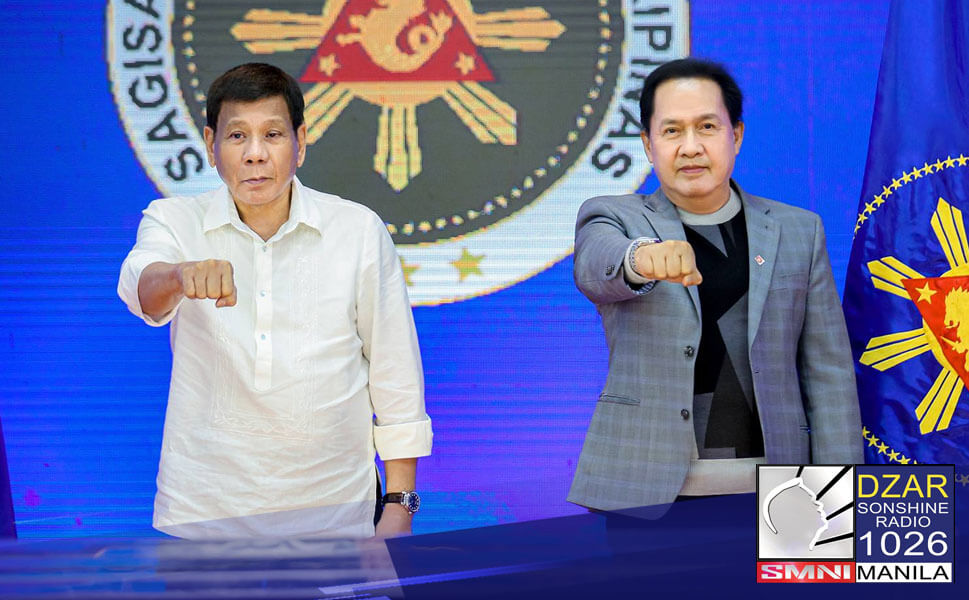
(Photo from dzar1026.ph)

Qwertyman No. 100: The Political Doghouse

Qwertyman for Monday, July 1, 2024


TO NO one’s great surprise, Vice President Sara Duterte resigned from her concurrent posts as Secretary of Education and vice-chair of that long-named (short name: red-tagging) council. Maybe because I was far away from Davao when the news came in, I heard no wailing and gnashing of teeth. A tree fell in the forest. The world moved on.

Inday Sara promised to continue to be a mother to the country’s teachers—the same people she had ordered to strip their walls bare of teaching aids. She was back in the news a week later after reportedly announcing that her father and two brothers were going to run for senator in next year’s elections. Her name was brought up as a possible “leader of the opposition.” None of these silly propositions generated the kind of groundswell she may have been hoping for, as someone once touted to be a shoo-in for the presidency who just got suckered into sliding down to No. 2 (to her Papa Digong’s boundless dismay) in a deal craftily brokered by former President Gloria Macapagal Arroyo.

To Duterte diehards—and let’s face it, there are still quite a few, although being out of office tends to lose people by the day—Sara will always be their golden girl, the victim of craven betrayal by their erstwhile “Uniteam” ally. To her non-fans, she will always be the bratty bureaucrat who demanded P650 million in confidential funds and who bragged about spending P125 million of DepEd money in the time it takes you to say “low PISA scores.”

Where she goes from here is the big question. In a touch of supreme irony, she now finds herself in almost exactly the same position as her predecessor, Leni Robredo, who was boxed out of Digong Duterte’s Cabinet and pretty much left on her own.

And there the inevitable and (for Sara) unfortunate parallels arise, because VP Leni shunned privilege, turned her exclusion into a challenge, and made the OVP a model of what a government office with meager funds could do, with honest, visionary and purpose-driven leadership. Leni became, and continues to be, beloved, as close to a saintlike figure as any elected official could aspire to be. That this quality failed to propel Robredo to the presidency says more about our electorate and political culture than about her—the dark, mutable, and serpentine side of Philippine politics that the Dutertes thrive in.

I have no doubt whatsoever that Sara Duterte will continue to be politically engaged and even run for the presidency in 2028, no matter what. In that, she will have less to worry about from Leni Robredo, who has expressed her desire to return to local politics in Naga, than from the likes of the eminent Sen. Raffy Tulfo, who topped Pulse Asia’s latest survey of presidential contenders at 35 percent against Sara’s 34 and Leni’s 11. Yes, that’s the kind of electorate we have, which can’t tell between meritocracy and mediocrity, so Sara will prosper in that environment and may even win against BBM’s anointed (Speaker Martin Romualdez scored a dismal 1 percent in the same survey).

Still, 2028 is four long years down the road, a lot of time for things to congeal and to unravel. Familia Duterte will close in and consolidate behind the name and the tough-guy brand, and in the event that all three Duterte boys make it to the Senate—an absurdity moderated only by the presence today of so many DNA matches in that august body—then Sara’s path to the Palace will have been cleared by a bulldozer. 

Of some minor interest is the fate of the two Digong acolytes in the Senate—Sens. Bong and Bato—who seem to be feeling orphaned. Both have been making the requisite pledges of fealty to the Dutertes, despite Bong Go being slammed by Davao Mayor Baste Duterte for not defending their home turf loudly enough from the lofty positions to which their patron raised them. Chastised, the two said they would support a Senate inquiry into the “excessive use of force” in the police raid against fugitive pastor Apollo Quiboloy, whom Sen. Bato had vowed to guard with his life should he appear in the Senate under subpoena—a degree of sensitivity and solicitude profoundly absent from the murderous “tokhang” campaign that both men supported.

So the Dutertes are far from dead and gone, but BBM—and let’s not forget the Kakampink forces simmering below the surface—has four more years to vaporize the Uniteam that never really was. (And then again, BBM claims that the Uniteam remains intact—nothing to worry about, folks!—because the Dutertes’ political party, the PDP, was never part of the coalition. Say that again?)

More important than preserving the fiction of the Uniteam, the opening provides Marcos with yet another opportunity to shore up his political capital—already boosted by his turnaround from his predecessor’s policies on Chinese aggression and on the war on drugs—by selecting a qualified, full-time professional for the post. Several names have been mentioned in a hypothetical shortlist, none of them apparently an expert in basic education, where most of our problems begin. And while it may be true, as Inday Sara herself noted, that you don’t have to be a teacher to be DepEd secretary, you have to understand that Philippine education needs more than mandatory toothbrushing to brighten up.

Ultimately, Sara Duterte’s resignation from her DepEd post may yet be her most valuable service to the nation, by opening the door to someone vastly more qualified to take on that critical job—unless, again, the DepEd is made to serve its other purpose as a doghouse for political strays.

Qwertyman No. 98: Panahon Not

Qwertyman for Monday, June 17, 2024

WHOEVER URGED President Marcos Jr. to issue that memo mandating all government agencies and schools to sing the new “Bagong Pilipinas” hymn and recite the accompanying pledge at flag ceremonies should be banished to the farthest reaches of Malacañang, in the archives chronicling his predecessors’ most stupid mistakes.

PBBM was already riding a cresting wave of nationalism (bordering, let’s admit it, on Sinophobia for many) because of Chinese aggression in the West Philippine Sea and scandals related to offshore gambling operations run by Chinese in the country. He also earned grudging points from even his staunchest critics and detractors for seemingly being open to investigating the human rights excesses of his iron-fisted predecessor and sanctioning the arrest of one of that man’s most notorious cronies (an unsuccessful operation that Vice President Sara Duterte found the delicacy to deplore for its “excessive use of force,” which you never heard her say about her papa’s murderous tokhang campaign). 

Bongbong Marcos, in other words, was beginning to look and sound like what Rodrigo Duterte never could: a president with a grasp of the issues and a sensitivity to public opinion. Even former Associate Justice Antonio Carpio, a prominent figure in the opposition in 2022, praised BBM for the latter’s recent foreign policy speech in Singapore, where he cited the Treaty of Washington whereby Spain ceded Philippine territory beyond what was stipulated in the Treaty of Paris. “This finally corrects the greatest misconception in Philippine history,” said Carpio, a militant advocate of Philippine territorial rights, “a watershed moment in our fight to defend our island territories and maritime zones in the West Philippine Sea.” 

No, it didn’t mean that the old pre-EDSA issues were forgiven and forgotten, nor that new ones like the dubious Maharlika fund haven’t emerged over the first two years of his tenure, on top of his wanderlust. But BBM has had the good luck—if you can call it that—of inheriting Chinese expansionism and the Duterte legacy, and the good sense to get on the right side of these thorny concerns. 

Granted, there’s no real way to know if his deviation from Digong’s Sinophilia and trigger-happiness is sincere and not just a ploy to torpedo Inday Sara’s claim to succeeding him and install his own man. At this point, it doesn’t seem to matter much; so brazen has Chinese aggression been that even Duterte’s boys in the Senate have felt compelled to wear “West Philippine Sea” T-shirts, even as their lesser allies pose as “peaceniks” who somehow saw nothing wrong with the former president waging war on his own people.

So did BBM’s team—or BBM himself—think that this was the right time to reap some of that PR dividend, consolidate his gains, and foist the “Bagong Pilipinas” brand on the country through a new song and pledge?

The implicit rationale, we can understand. It’s a page right out of his dad’s New Society playbook: use music—indeed, use culture and education—to generate team spirit, or at least some semblance of it. That’s what anthems, hymns, and fight songs are for, from the American Civil War’s “Battle Hymn of the Republic” to the quintessentially English “Jerusalem” and the Nazi “Horst Wessel Lied.” Here in the Philippines, no martial-law morning was complete without the “Bagong Lipunan” (its real title was “Bagong Pagsilang”) song playing on the radio. 

To be fair (if it’s even possible to say that, given that the regime put me in prison for seven months in 1973), it was a catchy, well-written song, with a martial (what else) rhythm; that we still remember at least the tune five decades later attests to the success of its imprinting. It resurfaced on the airwaves shortly after BBM took office in 2022, reviving apprehensions of a New Society 2.0, but it seems to have been pulled shortly after, leading me to suspect that BBM, after all, wanted to be taken on his own and move away from his father’s shadow, which would have been the smart (if nearly impossible) thing to do.

But the imposition of this “Bagong Pilipinas” hymn and pledge again invites uncomfortable parallels and comparisons with what FM Sr. did—and I don’t mean just having the martial-law anthem composed and played, but everything else that came with the New Society: the corruption, the arrests and killings, the submission of our institutions to autocratic rule. 

If you don’t want to go there, let’s talk about just the “Bagong Pilipinas” song itself—have you even heard it? I’m not a music critic, but even I can tell that it’s barely singable, with an uneven tempo, with immemorable lyrics, the constant refrain of which is “Panahon na ng pagbabago” (“It’s time for change”), probably the tritest political message there ever was. You need a trained choir and a band capable of trumpet flourishes to render the piece effectively; I can be convinced that this will work only if I see and hear the President himself and his Cabinet singing the song from memory at the Malacañang flag ceremony (and let’s add the new Senate President, who has embraced the directive).

I don’t know how many millions went to the lyricist and composer of the song, who have mysteriously remained anonymous; clearly, they weren’t the late National Artists Levi Celerio and Felipe de Leon, who worked together on the “Bagong Lipunan” hymn. Perhaps BBM’s critics should be happy that they weren’t that good because, presidential mandate or not, this hymn and its equally problematic pledge seem fated to be ignored and forgotten for their sheer unusability, superfluity, and irrelevance.

PBBM should have been advised that at a time when the nation needs to pull together against a visible external threat, we need constancy, not change, not confusion over who and what we are. We need our one and only National Anthem more than ever, and the same Pledge of Allegiance we have been reciting since our childhood years. Panahon naPanahon not.

Qwertyman No. 59: Counterintuitive

Qwertyman for Monday, September 18, 2023

ON MY way to NAIA to catch a flight early one morning a few weeks ago, I snapped out of my half-sleep when I heard a song on the radio station that my Grab driver was tuned in to. I hadn’t heard it in almost half a century, and I was surprised to realize that I still knew the lyrics—not that I sang it back then, but because it was inescapable, flooding the airwaves with its bootstep optimism: “May bagong silang, may bago nang buhay, bagong bansa, bagong galaw, sa Bagong Lipunan!” The only difference—and what troubled me even more—was that it was a new arrangement, sung by a solo male voice, obviously a remake for a new generation. We were back in 1973, and whoever was behind that broadcast was making sure we knew it.

But of course, despite all the ironies that have been pointed out with the accession of another Marcos to power, and all the parallels that both the Junior and his detractors have drawn with the Senior’s reign, 2023 isn’t exactly 1973. The convenient conclusion would be to assume that Marcos Part II would be a replay of Marcos Part I—and many Filipinos, myself included, warned of that possibility in the run-up to the May 2022 election. But is there any possibility that President Ferdinand E. Marcos, Jr. might want to break out of his father’s mold and be, to some extent, his own man?

As soon as I say that—and before I get social media all riled up with my seeming revisionism—let me add that it’s the dramatist in me that appreciates the classic bind that Marcos Jr. must find himself in. Drama is premised on the possibility of character change—and even if the character reverts to his old self in the end, a brief flirtation with one’s opposite can be revealing.

In political caricature, characters are reduced to their extreme and basest versions—black and white, sinner and saint, damned and blessed. Oversimplification makes for effective propaganda, just so you don’t forget who the enemy is and which side you’re on. In realist drama, we move beyond types to explore the complexities of human character, taking the individual as a compound of many different—and sometimes even conflicting—traits and predispositions. Thus (goes the playwright’s conceit), no one is totally good or totally evil; the inner monster and the inner angel are in constant contention, and depending on the specific circumstances, one side will prevail at some key point that then defines that character for the history books. 

Motivations are key to what characters ultimately become—or decide to become, as personal agency and moral responsibility attend every important decision we make. Pride, love, honor, greed, revenge, and lust are powerful motivations, and often get the better of characters who are well aware of right and wrong, but who succumb to what’s been described as “human nature.” The good can become the bad; there’s a whole category of English Renaissance drama called “revenge tragedy” where, like Hamlet, a virtuous hero aggrieved by injustice plots to gain retribution, only to be so consumed by his vengeful passions that he becomes the very evil he condemns.

Now back to Marcos Jr. I’m trying, as the playwright and screenwriter I once was, to see him as the protagonist of our present play, shorn of my personal biases. Improbably—though some would say inevitably—he’s back where his father was, and with the weight of history on his shoulders. He’s firmly seated in power, and has all the opportunity and the resources to do what he wants. 

Independent and even critical observers I’ve spoken with have noted how generally cautious Marcos has been, so far, to avoid the kind of issues that will bring masses of people out onto the streets. Yes, the legitimacy of his election remains under serious question (something his handlers still have to convincingly address), but the “single IP” finding hasn’t been as politically incendiary as it probably would be in a more tech-savvy society (no, our appetite for TikTok and Facebook doesn’t count for tech-savvy). Yes, he travels and spends too much, but people—his 31.5 million, real or not—expect that to come with being a Marcos. Yes, he’s backed terribly risky if not silly ideas like a sovereign wealth fund and price ceilings, but again he knows that the economics of it will go over most people’s heads. 

On the other hand, he’s made all the right noises with regard to Chinese expansionism, in a dramatic and popular break from his predecessor. In our porma-conscious society, he looks and sounds more presidential than that predecessor who felt choked by a necktie and visibly lost in a roomful of younger, more articulate world leaders. Like his senior, Marcos Jr. understands imagery and pageantry. His rambling ad libs have been his bane, so he stays on script in his major speeches. He made some inspired and popular Cabinet choices such as the late lamented Toots Ople, although he quickly undermined any suggestion of sagacity with the appointment of the likes of Larry Gadon. 

Clearly he’s not going to repudiate his father’s legacy. His camp will continue to move to revise history and gild the rust and the rot of martial rule. In his recent speech before Singaporean businessmen, he couldn’t resist crowing that the Philippines’ 7.6% growth rate in 2022 was last achieved in 1976, “under my father’s administration.” Thanks to a DepEd edict, Filipino students will no longer learn about the “Marcos dictatorship” but simply “dictatorship,” which would be like talking about World War II without ever mentioning Hitler. The mechanical erasure of Marcosian martial law will be pushed forward by such measures as Sen. Robinhood Padilla’s proposed law designating September 21 as “Unsung Heroes Day,” to honor anti-communists.

But again the playwright in me wants to ask, is there room or possibility in Marcos Jr.’s character to make a clean break from the past and start over as his own man—or will self-interest, political habit, and family pressure prove too strong to overcome? One fellow columnist told me that his sense was that BBM was out to rehabilitate the Marcos name, to do better than his dad. Can that happen without admitting and making restitution for the wrongs of the past? We sentimental Pinoys will understand if the son will never speak ill of the father, but can he go beyond that to repair the damage done and build a bridge of trust toward his detractors—such as by releasing all political prisoners, squashing red-tagging, and putting the government’s massive intelligence funds to better use? Can and will he risk his political alliances to effect good governance?

Or will it be—to use that word that Executive Secretary Bersamin picked in his letter terminating Finance Undersecretary Cielo Magno for her unsolicited lesson in economics—too “counterintuitive” to do the right thing and accept wiser counsel? Only time and Ferdinand R. Marcos, Jr. will tell.

Qwertyman No. 49: The Best We Can Do?

Qwertyman for Monday, July 10, 2023

“IS THIS the best we can do?” That question has been ringing in my mind since a couple of weeks ago when two issues came up that, for me and apparently many others, define the level of mediocrity to which governance and decision-making in this country has sunk. Both concerns have already been well ventilated in social media, which is far more scathing and cruel than a Monday column like mine can afford to be—I hate to start my readers’ week with something likely to leave them with an upset stomach—but let’s just think of this as a gargle to relieve our mouths and throats of unpleasant flavors.

First, ex-Atty. Larry Gadon. I don’t know the guy; I’ve yet to meet him and frankly I hope I never have to. I’ve heard the diatribe for which he was rightfully disbarred by the Supreme Court. It’s an awful slurry of verbal excrement that no one but its own source deserves to experience, and there’s doubtlessly more where it came from, disbarment or not. I can live with that, because I know that there’s an even higher court that will render judgment on this fellow and his kind, and it will come with a harshness commensurate to the totality of one’s character. 

What I find more odious is what came after: the Palace’s affirmation of its trust in its appointee as Presidential Adviser on Poverty Alleviation, and Gadon’s own vague reference to certain corporate managerial skills that supposedly qualified him for the job. I had been chatting with a lawyer the day after the disbarment, wondering what Malacañang would do next. “Oh, that won’t get past Justice Bersamin,” he said, adverting to the Executive Secretary. “Just you wait, they’ll take him down.” The next day Bersamin issued a lame press release echoing Gadon’s argument that he didn’t need to be a lawyer, anyway, to take on the Cabinet-level, Salary Grade 31 post, alleviating at least one person’s shortage of cash. (As Full Professor 12 in UP, after more than 30 years of teaching, I retired at Salary Grade 29. Am I envious? Of course I am—shouldn’t anyone be?)

At this point I was pulling hairs off my balding head. So, okay, he doesn’t need to be a lawyer to lead poverty alleviation. But what else does he bring to the job? Is choosing him the best BBM can do? Or does his selection merely confirm what Palace critics believe to be the lack of any genuine commitment to effective and legitimate governance, to give way to the dispensation of favors to political allies? Just when even skeptics were beginning to give their grudging approval to some appointments that made sense—Jimi FlorCruz as ambassador to China and Gibo Teodoro to Defense being two of them—we slid right back into the muck of patronage politics.

Does BBM think so poorly of the poor that he would entrust their fortunes to a man who, using the Supreme Court’s own words, was booted out of lawyering for his “misogynistic, sexist, abusive, and repeated intemperate language”? How will Presidential Adviser Gadon deal with the hundreds of poor women who will be flocking to his office seeking relief for their plaints? Now that he’s beyond the pale of the Supreme Court, will Gadon feel suitably chastened, or will he be emboldened to spread even more nightsoil around the yard? (The dramatist in me is whispering that true character will assert itself, and bring on its own downfall.)

Issue No. 2, the new “Love the Philippines” tourism slogan and the plagiarism mess that followed with its video. I never liked the word or expression “Meh,” which seems a lazy way to express dissatisfaction, but as 99% of social media seems to agree, “Love the Philippines” was triple-meh, totally uninspiring and unimaginative, and visually cluttered. I’m not even complaining about the P49 million reported to have been paid by the government to the ad agency that conceptualized the slogan; we know that the right few words, properly chosen, could make a world of difference in sales, many times more than the investment. (Nike’s “Just Do It” campaign, credited to the American Wieden+Kennedy agency, reportedly boosted Nike’s worldwide sales from $877 million in 1988 to $9.2 billion ten years later. We don’t know how much Nike paid for those three words, but its trademark and stunningly simple “swoosh” was drawn by a female college student who was paid $2 per hour in 1971.)

I also understand that we seem to be too self-critical and terribly hard to please when it comes to tourism slogans, maybe because they’re supposed to encapsulate and project our national identity—on which we have yet to arrive at a consensus, a century and a quarter onward. 

Dick Gordon’s “WOW Philippines” and the subsequent “It’s More Fun in the Philippines” earned their share of brickbats. But whatever those criticisms were, I’d have to agree that either one of them is infinitely better than “Love the Philippines,” whose imperative voice sounds tonally off. (Not to mention its susceptibility to parody, which the Palace’s PR watchdogs should have caught—a “Rob the Philippines” meme has been making the rounds, a tamer verb choice than others I’ve seen.) 

Social media is abuzz with what reportedly happened behind the scenes and what a Palace-favored director supposedly did to screw things up—but again, I’m not even going there, and will limit my dismay to the poor result that often emerges when money, politics, and egos get the better of creatives. The use of video clips from foreign sources to prop up a campaign for Philippine tourism was almost absurdly hilarious and totally inexcusable, and it’s hard to believe that a company as experienced and reputable as the contracted ad agency would have done that knowingly, although it owned up to it. 

At any rate, these missteps don’t do any good for any administration trying to earn the people’s trust, and the ultimate question is, what are they going to do about it? The answer will tell more about those in charge than the minor figures in these scandals.

Hindsight No. 23: An Unsolicited Draft (2)

Hindsight for June 20, 2022

(Photo from philstar.com)

LAST WEEK, I indulged in some wishful thinking to imagine what a truly different and refreshing BBM presidency would be, with the rosiest inaugural speech I could confect. This week, as we edge closer to the real inauguration of Ferdinand Marcos Jr. as our 17th president, I’m going to try my speechwriting hand one more time at a grimmer version of what he might say. 

Again, friends, this is all fun and games, a finger exercise, not to be confused with the real draft that a roomful of gifted (and expensive) wordsmiths, some of whom I probably know, are probably toiling over this very moment. (For those who missed last week’s installment, again, please look up what “satire” means, and smile.) This is what you get from a fictionist posing as a political pundit, with no spicy gossip to share and no entrée to the corridors of power. 

And so, meaning no disrespect to No. 17, here we go with the kind of speech his most ardent followers, some more BBM than BBM, might want to hear. His language won’t be this fancy, of course—his dad’s would have been—but since this is make-believe, let’s turn up the volume.

My countrymen:

Let me thank you, first of all—the 31 million of you, most especially—for entrusting me with this loftiest of honors. Not too long ago, our opponents laughed when one of you presented the prospect of my presidency as “an act of God.” 

I seem to hear no laughter from that corner now. Instead I hear the anguished sobs of defeat from those who cast themselves as the angels of the good, and us as evil incarnate, an army of witless orcs streaming across the plain. Why, they may be asking, has their God forsaken them? Could it be that in their self-righteousness, they forgot that pride is the most capital of the Seven Deadly Sins, because it usurps God’s judgment and arrogates unto oneself the inscrutable wisdom that He alone possesses? 

How could they have presumed that they were right and we were wrong—that you, my faithful friends, were  bereft of all moral discernment in selecting me as this country’s leader for the next six years? Put morals aside—they called you stupid, unthinking, unable to make intelligent decisions on your own behalf. 

But let me ask anyone who cares to answer: is it not a supreme form of intelligence to vote to win, to choose someone who offers the best hope for your survival, to cast your lot with someone who has proven his ability to endure, to bide his time, and then to seize the right opportunity and prevail over a motley legion of adversaries? With this victory—our victory—you have vindicated yourselves, and you can stand proudly before anyone—before any priest, any professor, any employer, anyone who ever lectured you about right and wrong, or pushed you down to your humble station—and declare: “You have nothing to teach me. I won.”

And let me tell you something else: it is not only the unschooled, the hungry, and the unshod that I have to thank for today. All over the country, I found doctors, lawyers, businessmen, teachers, and community leaders who may not have been as vocal in their support, perhaps for fear of persecution by the pink mobs, but for whom the name “Marcos” promised the return of discipline and progress to our benighted country. Now I say to you, my dear brothers and sisters: “Step out. Step up. We have a Strong Society to rebuild, and you will be its vanguard.”

But let us be magnanimous in triumph. To anyone who voted for someone else, even the most rabid of my detractors, I offer the hand of unity. “Unity” was the overarching—indeed the only—theme of my campaign, and I pledge today to ensure that it will be far more than a vapid slogan. 

National unity is every Filipino citizen’s choice: you are either for it, or against it. Any Filipino who rejects our generous invitation to unity and insists on treading the path of unbridled individualism and anti-authoritarianism will only have himself or herself (note how we observe gender sensitivity in our Strong Society) to blame. Self-exclusion by these disuniters—let’s call them DUs—will mean their willful abdication of social services and other resources that can be better devoted to patriotic citizens.

To this end, I am creating a National Unity Council—to be chaired by the Vice President, with representatives from the DND, DILG, NTF-ELCAC, CHED, DepEd, and NCCA—to formulate a National Unity Program that will be undertaken at all levels of government, from the LGUs and the military to our schools and cultural agencies. Its aim will be to forge and promote a truly Filipino culture, based on a truly Filipino ideology, that de-emphasizes conflict, promotes discipline and conformance, and upholds respect for duly-constituted authority. For this purpose, for example, we will practice mass calisthenics, sponsor competitions for patriotic songs extolling unity and discipline, and conduct workshops and seminars for the proper identification of DUs at the barangay level and their subsequent re-education and reintegration. We will review our curricula and our educational materials to ensure that they contain only our best stories as a nation, to instill pride in our people and to remind ourselves that, as my father said, this nation can be great again. 

Half a century ago, we stood on the edge of that destiny, in a bold experiment that would have transformed the Philippines into a bastion of democracy against communism and a beacon of development in Southeast Asia. That dream was thwarted by a perverse alliance between the CIA and the communists and their Yellow cohorts that resulted in my family’s forced exile. Today we resume that march to greatness, and we will brook no more interruptions, no more distractions, no more needless delays. A society’s strength radiates from its leader, and I vow to be that leader for you, so help me God.

Hindsight No. 22: An Unsolicited Draft (1)

Hindsight for June 13, 2022

(Photo from philstar.com)

HAVING HAD a hand in crafting presidential speeches and messages for many decades now, I thought I would give it the old try and produce an unsolicited draft for our presumptive President’s inaugural speech, just in case he wants to broaden his options. 

In fact, I’ll write two drafts: (1) for this week, the win-them-over version, representing a radical departure from what his detractors expect from him, a total refashioning not only of the Marcos image but of its substance as well; and (2) for next week, the thunder-and-lightning version, which those who dread the imminence of another Marcos presidency probably hear in their nightmares. (And before the trolls feast on me, kindly look up “satire” in the dictionary and double your erudition in three minutes.) So here we go.

My countrymen:

I acknowledge that I have come to this high office with much to prove, not only to the 31 million who have invested their hopes in my presidency, but also, and just as importantly, to the 81 million more who could not and did not vote, or preferred another candidate. Having chosen “unity” as the theme of my campaign, I am now obliged to realize that ideal and to take concrete steps that will prove the sincerity of my ambition.

Many of you know me only as “the dictator’s son,” a privileged wastrel who squandered your hard-earned money in youthful frivolity, a man bereft of substantial ideas and a genuine vision for our country’s future. Today I shall aim to correct that impression, with the adoption of several key measures that should smoothen the road to national reconciliation. 

As far as I am concerned, the time for rancor and divisiveness ended on May 10. I take the overwhelming mandate you have given me not as a license to persecute my enemies, but rather as a vote of confidence in my dream of unity. I will use this historic opportunity to address and reverse the injustices of the past, to chart a new course for our people and for my family, and to direct the energies and talents of my supporters to positive, nation-building pursuits. At the same time, I ask my detractors and former opponents to set our differences aside, and judge me for what I will do, and not what you thought I could not.

I am under no illusion that the measures I will announce will please everyone, not even within my own family. To those who were expecting a shower of favors and largesse, that will not happen. Henceforth we shall eschew political patronage and favoritism, and adopt merit and performance as the measure of one’s fitness to serve, which I hope will compensate for any personal shortcomings of mine in this respect.

Today I am announcing seven important measures that should set the tone for my administration.

First, I am directing the abolition of the PCGG, because it will no longer have a function, having been created to go after the assets of my family said to have been ill-gotten. Here before you today, I am signing a check to the Philippine treasury in the amount of P203 billion that should settle our tax liabilities once and for all. (Pause for ceremonial signing and applause; hold up signed check for cameras.)

Second, I am directing the abolition of the NTF-ELCAC, and replacing it with a People’s Peace and Development Council that will coordinate with NEDA and be its citizens’ arm in the planning and implementation of community-based development programs. All funds appropriated for the NTF-ELCAC will be transferred to this council. I am also pleased to announce that this PPDC will be headed by none other than my esteemed fellow candidate, former Vice President Leni Robredo, whom I thank deeply for responding positively to my invitation. (Pause for VP Leni to rise and acknowledge the crowd’s applause; go over and shake her hand for photo opportunities.)

Third, I am asking Congress, as their first priority, to pass a law abolishing political dynasties. My relatives to the third degree now occupying elective office will not serve beyond one term. None of my relatives to the third degree will be appointed to any government position, in any agency or GOCC, under my administration.

Fourth, for greater transparency and accountability, I am directing the immediate release of the SALNs of all government officials, both elective and appointive, above Salary Grade 28 or bureau director. My own SALN will be published in all major news media and online within 48 hours. I am also granting a blanket waiver to enable the appropriate government authorities to access information on all my personal accounts.

Fifth, as a gesture of reconciliation, I am directing the immediate release from detention of former Sen. Leila de Lima. Her persecution has gone on long enough. Furthermore, I will direct the Secretary of Justice to review all cases of political detention and to expedite the release of the individuals concerned. National unity cannot be achieved if those we wish to unite with have to speak through prison bars. 

Sixth, I will adopt a pro-Filipino foreign policy that will assert our sovereignty over what has been rightfully ours, and resist all encroachments in unity with ASEAN and our other multilateral partners. My first visit will be to China to impress upon their leadership the seriousness of our intentions. Incidentally I am appointing former Justice Antonio Carpio as our ambassador to China, given his mastery of the issues and his desire for their peaceful resolution.

Seventh, I am personally guaranteeing the academic freedom of the University of the Philippines and of all other universities and colleges in the country, toward which I am directing the establishment of a P100 billion endowment fund for UP that will help ensure its fiscal autonomy and help it achieve even greater excellence. In token return, I will request our esteemed historians and political scientists from that university to write a revised and updated Philippine history that will faithfully and factually record the period of martial law, leaving no stone unturned, as well as the aftermath leading to my election. This history will be taught in all high schools. 

Unless our people fully understand our past—and unless I myself confront and accept its dark reality—they will not appreciate the significance of what I am doing today, in the spirit of reconciliation, restitution, and redemption. Never again, so help me God.

Hindsight No. 19: Plot and Character

Hindsight for Monday, May 23, 2022

(Photo from philtstar.com)

WITH THE counting all but over—setting aside some issues not likely to change the outcome—it’s clear that our people have spoken, and that, by a 2-to-1 majority, they have chosen Ferdinand Marcos Jr. to lead this country for the next six years. 

It’s no huge secret that I, among many others, voted for somebody else. Of course I’m unhappy, but what I feel doesn’t really matter much in the scheme of things. Given that the life expectancy of the Filipino male is 67.26 years, I’m already on borrowed time at 68 and would be lucky to see the end of this next administration, let alone the one after that. I’ve told my mom Emy—who voted at age 94 and who shed tears of dismay and disbelief when the results rolled in—that living for six more years to vote one more time should now be her goal. Just surviving will be her best revenge.

I wonder how it is, however, for the young people who took to the streets for Leni and Kiko, believing that they would make a difference. They did, although not in the way they expected, to ride a pink wave all the way to Malacañang. They realized, as we ourselves did ages ago, that money and machinery are always heavy favorites over hope and idealism, and that issues, ideas, and the truth itself can be made to look far less important than image and message, if you can buy the right PR consultant.

They will also have learned, as has been pointed out by other commentators from both sides, that it wasn’t all disinformation—that Marcos Jr. appealed to the genuine desperation of the poor with a promise of relief, however illusory. Since most of Leni’s young supporters were visibly middle-class, first-time voters, it was a rude but necessary awakening to the realities of class politics in this country, which politicians of all kinds—none of whom have to worry about where their next litson baka is coming from—have learned to negotiate and manipulate. 

Defeat, it’s been said, can offer more lessons than victory, and while we may have metaphorically won in some significant respects—chiefly the aggregation of “middle” forces not tied to any traditional political party into a burgeoning progressive movement—there will be much to review and refine in the years ahead. This very dissociation of the Kakampinks from the old parties and their command structures, for example, was a blast of fresh air for many volunteers, but also a liability for operators used to the old ways.

Understandably there’s been much wringing of hands and gnashing of teeth in the trenches, in the desire to meld seething resistance with grudging acceptance. I see it in both young and old activists—the young, because they’re heartbroken for the first time, and the old, because they didn’t expect to find themselves facing a Marcos all over again. The bashing and taunting they’re getting online from galleries of screeching monkeys doesn’t help. 

Being one of those old fogeys, I tend to be more subdued in my reaction to Marcos Jr.’s victory, and advise my young friends to cool down, ignore the bashers, and steel themselves for a complicated and challenging future. As someone who went through and survived martial law—I was eighteen when I was arrested and imprisoned for alleged subversion (although I was never charged or tried in court, just locked up for the state’s peace of mind)—I can offer them living proof that we can survive dictators and despots, with faith, resourcefulness, and courage. My parents survived the Second World War, and many other people have gone through worse.

I’m neither predicting nor wishing that a Marcos presidency will be bound to fail. I’d hate for the country to suffer just to prove a point. Besides, whatever I think today won’t matter one bit to what will happen. Whatever Marcos does, he will do so of his own will, by his own nature, out of his own character. What that character really is will emerge in the crucible of crisis—and crisis is the only thing the future guarantees, whoever the president happens to be. Beyond and regardless of the propaganda for and against him, Mr. Marcos Jr. will have ample opportunity to display what he would not have us glimpse in a public debate, and that revelation will do more than a million tweets calling him a thief or praising his acumen.

Speaking of character, I had an interesting discussion last week with an old friend, a renowned professor of Business Administration, who brought up the possibility of “luck or destiny” to account for the Marcos victory. He added that luck was an important factor in business, and that he would flunk a student who thought otherwise. 

I disagreed; as a teacher of creative writing, I said that I wouldn’t accept “luck or destiny” as a resolution for a student story. We’d call it deus ex machina—a helping hand—which thwarts the logic of the narrative with an artificial and improbable ending. I know: it happens in real life, but not in good fiction. As Mark Twain says in one of my favorite quotations, “Of course fact is stranger than fiction. Fiction, after all, has to make sense.” 

Whether factual or fictional, stories are really less about events—the plot—than character. The plot is simply there to enable character development. Things happen for a reason: to test and reveal our character, to show ourselves and others what kind of people we really are, with dramatic clarity and inevitability.

If you’re wondering why I strayed from the May 9 election to a mini-lecture on writing, it’s because we can look at that election and its aftermath as a long and continuing narrative that will establish our character as citizens, and as leaders. The next crises—the post-pandemic economy, China’s ambitions, a crackdown on civil liberties, getting deeper in debt—will come to try us. That’s the plot. And when that happens, Bongbong will be Bongbong, and all Filipinos—31 million of them, especially—will see exactly what they bargained for.

So if you’re still smarting, just chill, recuperate, get back to something you enjoy doing, and let this drama take its course. Like my mom Emy, endure and survive. Give Marcos Jr. a chance to achieve his “destiny,” which could yet be everyone’s best education.

Hindsight No. 5: The Dropout Factor

Hindsight for Monday, February 14, 2022

(Image from thetimes.co.uk)

HOW MUCH of a factor is Ferdinand Marcos, Jr.’s being a college dropout in making people decide whether he’s worthy of being voted President or not? The anti-Marcos forces seem to think it’s a viable issue, on two counts: first, that Junior failed to complete his studies at Oxford and subsequently at Wharton, despite the extravagant resources put at his disposal; and second, that Junior and his people have repeatedly asserted that he graduated from both institutions, despite clear evidence to the contrary. 

One would think that, in a country where higher education is widely seen to be the only ticket out of poverty, Junior’s profligate ways should have turned off if not outraged large swaths of the CDE electorate that everyone now acknowledges will effectively choose our next leader.

The picture of him posing as a top-hatted dandy in front of a Rolls Royce when he should have been sticking his nose into a book in the library should be sickeningly ridiculous to anyone who has had to take three sweaty and dusty jeepney rides to school. That he or his cohorts would insist that he has a BA and an MBA from the world’s top universities without proof of an actual diploma should offend anyone who failed to finish college, despite a bright mind and high grades, for lack of money—like my father did.

But sadly I suspect that for many of Junior’s supporters, the dropout factor is a non-issue, for a number of reasons. To begin with, going by the statistics, ours is a nation of dropouts. Even well before the pandemic, according to one study, the graduation rate from college was only 61%, which means that two out of every five students fell off the rails. So Junior should be in good company. 

I myself dropped out of UP in my freshman year because I was becoming increasingly more involved with student activism, and I was also itching to get a job and earn some money. Like many dropouts who managed well enough on their own, I wore my undergraduate status for many years like a badge of honor. But there came a point when I simply longed to learn in a more structured way, so I went back to school, and graduated with my AB at age 30.

To Junior’s defenders, dropping out of Oxford is understandable. “Oxford is even harder to get into than UP!” said one online. And besides, said another, he did get a special diploma, which “is already equivalent to having a degree. UK educ system is different from PH system. Between him showing certification vs emailing Oxford, I would believe him.”

As I noted in last week’s column on “Denial and Dissonance,” the politically captive mind will fashion creative explanations for everything from the “fake” landing on the moon to Donald Trump’s “stolen victory” over Joe Biden.

A Reddit thread on the topic overwhelmingly agreed that being a dropout wasn’t the problem; rather, lying about it was. “At least Erap admitted to being a dropout, and he still became President,” said one poster.

Publicly exposed, Junior back-pedaled. His official Senate resume in 2014—digitally preserved for all time on archive.org—clearly showed him claiming a master’s degree in Business Administration from Wharton and a Bachelor of Arts in Political Science, Philosophy, and Economics from Oxford. This has since been amended to “graduate coursework” for Wharton and a “special diploma” for Oxford.

(Image from rappler.com)

But there’s another side to this college-dropout issue that’s worth thinking about: what’s a diploma really worth, anyway, and what exactly have we done with ours?

We have many thousands of college graduates working well beneath their professional capabilities as domestic helpers overseas, or in jobs that require more use of their hands than their brains. So a diploma has never guaranteed success (and as Junior’s example shows, you can get very far in life without one). 

But also, since when was a college degree a measure of intellectual ability and, even more importantly, of moral probity? What has our incumbent Palace dweller done with his law degree, beyond assuring the tokhang brigade of his full protection and threatening to defy the Supreme Court? At least Ferdinand Sr. used his to cloak his every ploy with a veneer of legality. 

In terms of intellectual caliber, Marcos had probably the most illustrious Cabinet members in our history, with PhDs from the world’s foremost universities, but even they could not rein in his regime’s excesses, and some even abetted them. The good ones left early; a few tried to draw a line; others became willing accomplices to dictatorship and plunder. As idealistic and upright as they may have been or started out, Marcos suborned many of these technocrats and forever compromised the edukado in Philippine society, turning that respected figure into a minister at the foot of a despot, his wife, and their whimsy.

Our incumbent burnished anti-intellectualism into a virtue to curry favor with the crowds, and got flunkies with LLB’s to explain away his bad behavior like auditioning comedians. You listen to their tortured spiels and you ask, was this what they went to college for?

Wealth and power hold far more charm for many of us than schooling, because we see education as but a means to those ends. To be rich is to be smart and praiseworthy enough. If the rich behave imperially, impudently, irresponsibly—well, they earned it, didn’t they? We can forgive and excuse them no end; we still think like tenants thrilled to be invited into the big house for a cup of chocolate. 

We seem surprised and suspicious when a well-educated person with an honest heart claims to love and understand us, and promises to improve our lives, because we no longer recognize real goodness and ability when we see them. So we go with the devil we know, and who cares how he fared in History or Philosophy? As Ping Lacson puts it, logic was never our strong suit: “Ayaw mong manakawan, tapos, boboto ka ng magnanakaw?” I have a PhD, and I can’t figure that one out.