Penman No. 462: Exit This Gatekeeper

Penman for May 5, 2024


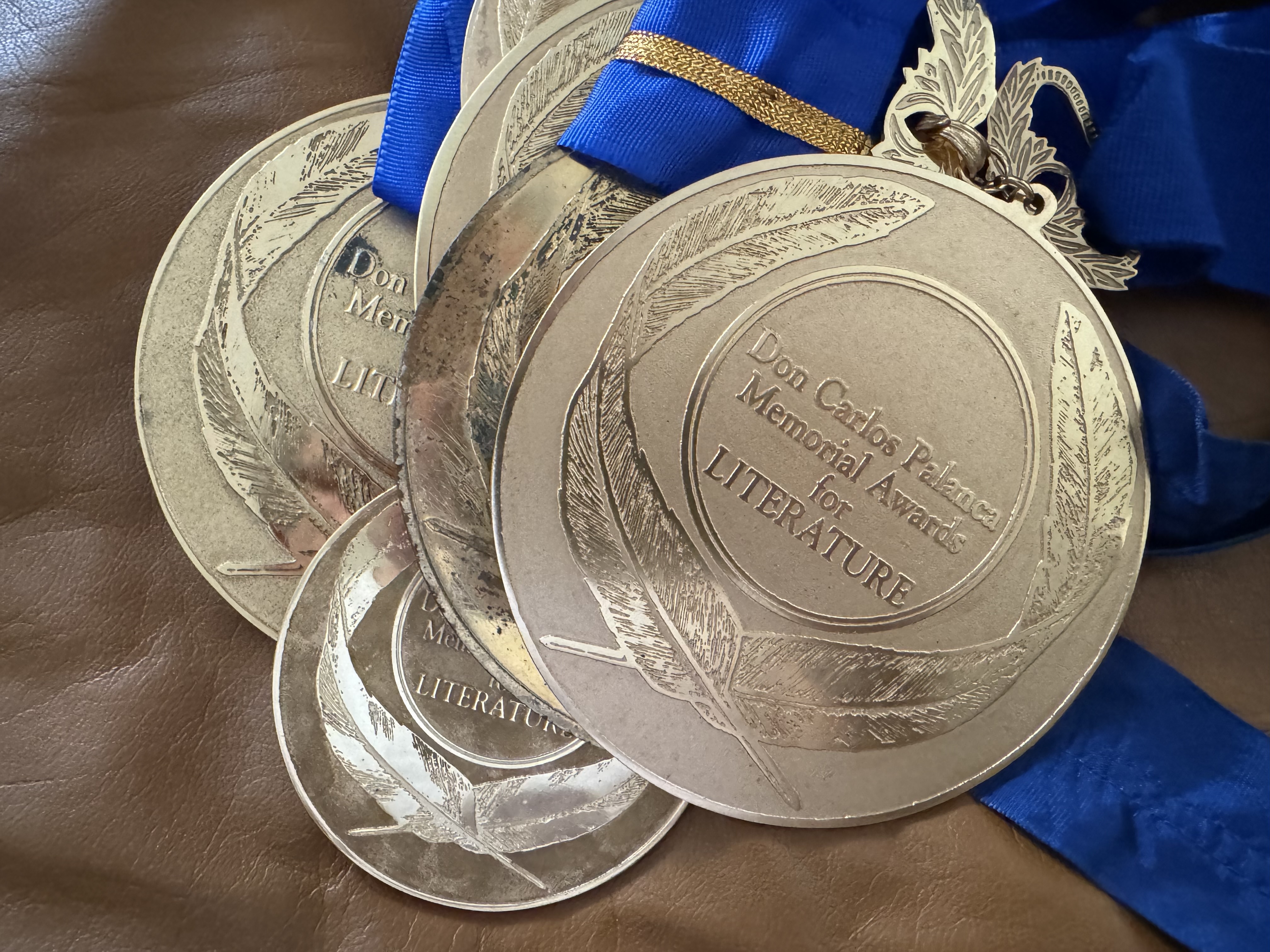
INDULGE ME this bit of self-reflection, which I suppose will also speak for many writers of my generation. After much thought, I have decided that I will no longer be judging literary competitions, having just completed my last one.

My first reason is that I’m 70, a good age at which to pause and plan out the rest of my life, however long or short that may be. (The life expectancy of a Filipino male today is 72, although actuarial science seems to think that if you’ve come this far, you’ll likely hang around for another ten years.)

There are just a few things I want to devote that time to—primarily, to write my own books (not books for others, so I’m also announcing that upon completion of my current commitments, I will desist from seeking or accepting book commissions—unless I fall into grave and sudden need.) I want to travel more with Beng and Demi while we can, look after Buboy’s growth, play poker all night twice a week, and enjoy my strange hobbies. I’ll teach for as long as I can—I’m enjoying my undergraduate class right now—but will limit my participation in workshops, conferences, festivals, seminars, etc. to the few I am committed to, like the UP Writers Workshop. 

Judging competitions doesn’t seem that much work (unless you’re a judge looking at over 100 stories) and of course it’s a signal honor to be asked to help pick the best of new writing. It remains a tremendous responsibility and privilege to be thankful for. You get to go up a stage, say some nice things about literature and writers, receive a modest fee, and feel somewhat useful and relevant. That’s all well and good.

When I transitioned from being an active literary combatant (that’s how many of us felt back then, with the likes of Rene Villanueva and Ed Maranan breathing down your neck) to a judge after getting my Palanca Hall of Fame plaque in 2000—I never joined a contest after that—I felt that I had turned a corner and found a kind of inner peace. It wasn’t that I had nothing more to prove; one illusion that local literary competitions encourage in the young is that winning them is the be-all and end-all of writing, when all they are is a formal pat on the back to get you started. The true challenge for the young or beginning writer is not to win prizes but to write and publish books that will be read and appreciated by others, that hopefully will matter, that will outlive you, that for better or worse you will be remembered for and remembered by; publication is the ultimate prize, readership the ultimate validation. So I went on to write books, teach, have fun, and discover wonderful things outside of writing and literature (yes, there are such bright and shiny marvels). 

Judging competitions seemed to be a good way of keeping a foot in  the door, so I’ve been doing a lot of that, also as a kind of payback for all the people before me who took their time to recognize and reward my efforts with a prize. At some point, I realized that the foremost reason I kept joining and judging the Palancas was because I wanted to be there on Awards Night, to enjoy the company of writers I admired (the piano-playing Greg Brillantes being one of them), and to feel good about being a writer on the one night of the year that they took center stage. The great luck of Hall of Famers is that they can now attend all the Awards Nights they want without having to work for it—so I won’t.

The most important reason is that I’ve already read enough, perhaps too much, for far too long, and it’s no longer healthy for me or for those I may be judging. Our literary community certainly doesn’t lack for younger people who can do this job as well as if not better than I can.  I’m still and always delighted to see brilliant new work emerge from the pile, but it’s getting harder—more laborious, more fatiguing, and ultimately more disheartening to be asking, “ls this the best they can do? Don’t people know what a good story is anymore?” Or have I become the problem?

The word “gatekeeping” has been going around much lately, evoking the image of a surly senior (a Boomer, for sure), out of touch and out of step, insisting that his students and young writers should write like him or like Hemingway, playing favorites, and slamming the door shut on entire genres he doesn’t like or understand. That sounds a lot like me, except that I’ve never expected or driven my students to write like me; they come to my classes with their own experiences, their own material, their own talents and insights, and  the best of them have written stories that are nothing like mine, except perhaps that they’re realist, because that’s the kind of fiction I best know and teach. I’ve always been open to other forms and genres, even if I hardly write in them (I think I’ve tried everything at least once), because the world would be a terribly boring place if we all wrote about everything the same way. Think of much of the political rhetoric going around these days, no matter which flag is being waved: labels and slogans—the shorthand of groupthink—have replaced and diminished personal narrative and reasoning. (As if people will care when you die if you were “correct” all the time; they will ask if you were good and kind.) This is also why I have long resigned from anything resembling organized ideology or religion, whose avatars often seem so, so sure of themselves and of what they’re saying to the point of arrogance. 

I value the doubt and ambiguity, the constant self-questioning (what can we be capable of, despite ourselves?) that are fiction’s domain. Fiction humbles us by exposing our infirmities, but it also exalts us by offering the possibility of redemption.

In the end, what I have always looked for in a prizewinning story, aside from being exceptionally well-written (smooth and stylish when it needs to be, tough and visceral when it needs to be) is that it be moving and memorable. It should burn a hole and leave a scar in my heart, my guts, and my memory. I can enjoy clever and inventive stories as much as anyone else, but if it’s a passing amusement, like a joke, it won’t leave much behind. Some of the most memorable stories I’ve  come across weren’t even what you’d call grand in a sonorous or elaborate way. They took place in small places within relatively short periods of time, and involved ordinary people in situations that brought out their extraordinariness (by which I don’t mean some blinding heroism, but a part of them, dark or light, they didn’t even know was there).

Too many of the thousands of stories I’ve had to read over the years have been poorly written, dull, and forgettable. That’s not even a complaint, just par for the course for any kind of open literary competition here or anywhere else. People can’t be blamed for hoping and trying with their graceless prose, and I’m sure that many have nursed precious ambitions of being published and read. Not to be snarky, but the problem here really isn’t so much a lack of writing talent than of self-awareness, the kind of honesty and humility that will tell you, in your heart of hearts, that you will never be a nuclear scientist or an F-1 driver. Unfortunately, literary self-awareness can happen only when one has a sense of what truly good writing is. 

But could it possible that I myself have fallen so far behind that I can no longer recognize the new “good,” or apply the “new standards,” whatever they may be? Could my notions of “good fiction,” however liberally applied, be standing in way of some young genius’ debut?

I’ll be holding on to those notions, but now only for myself. I’m not urging my fellow seniors to do the same; we all operate on different clocks and their patience could be longer than mine. Some might say “Good riddance” and the feeling could be mutual, but I depart this task with a light and happy heart, looking forward to producing new work that will be judged by others.

Email me at jose@dalisay.ph and visit my blog at www.penmanila.ph.

Penman No. 446: Our Oldies

Penman for Sunday, January 1, 2023

IT’s BAD enough to be out of touch with the present, so it must be worse to be out of touch with the past—or at least, someone else’s past. 

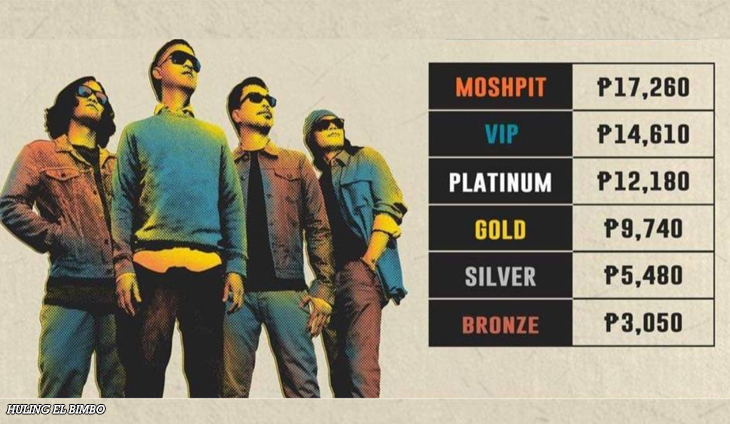
Nothing reminded me more starkly of the great divides that exist between generations than last month’s Eraserheads reunion concert, hailed by its attendees as nothing less than the Second Coming. “A spectacle unto itself. It was like mix-mashing the Super Bowl’s half-time show and a rock concert. Except it went one better as it was also like one four-hour-long karaoke set,” wrote reviewer Rick Olivares in the Inquirer. “The four-hour, three-part show was filled with nothing but singing our hearts out, jumping for joy, and all the while taking in the fact that yes—this is the Eraserheads, and we are ever so lucky to hear them live again,” gushed Nikka Olivares on GMA-7. 

What struck me was how so many of my younger friends—writers, artists, and teachers now in their 40s and 50s—posted pictures of themselves waving their concert tickets like some generational badge of honor. And indeed it was, if the reported crowd of 75,000 that drove out to the reunion was to be believed. It was a paean to the 1990s and to Generation X, to 486-DX PCs and clunky cellphones, to mixtapes and dressing down, to self-reliance and partying on. (Hold it—why is this so familiar? Now I know why I should know—our daughter Demi, born 1974, is a card-carrying Gen-X’er. “I caught up with the Eraserheads in UP,” she told me from California, “and I used to watch them at the UP Fair at the Sunken Garden!”)

I’ll take my former students’ word for it and believe that the Eraserheads were the best Pinoy band of their time, and that their songs captured the heartbeat of their generation. I’m sure that there’s a thesis or dissertation to be written there somewhere, if it hasn’t been done already—a project that will go far beyond melody and rhythm to dissect the E-heads’ contributions to political and social commentary (not much fun, but academia is the land of the morose). 

For Demi’s mom Beng and me, however, much of that remains a mystery, because it all begins with the music, which somehow went past us. “Do we know any of their songs?” Beng asked me. “Well, yes, one of them,” I answered, “the one that goes ‘Magkahawak ang ating kamay at walang kamalay-malay….’” And I went on to hum the tune for her, and she remembered. “I think its title is ‘Ang Huling El Bimbo,’” I added helpfully. Totally geriatric dialogue, but there we were, trying to figure out a context for that snippet of a song. Of course we knew the original El Bimbo dance, where your conjoined arms opened like a fan, but that was about it. We were lost in this strange territory.

That reminded me of that time, maybe thirty years ago or more, when drove Demi to school in our VW, and turned the radio on. Demi asked if she could change the station, because she wanted to hear some “oldies.” Oh, great, I thought, finally, my daughter’s wising up to the classics—maybe to some Sinatra? And then she played Earth, Wind, and Fire. “Do you remember, the 21st night of September…” (I remembered another September 21!)

So, all right, my oldies aren’t your oldies, and we respond to music on different wavelengths. There’s nothing that unites us more than music—think Christmas carols, church hymns, fight songs, and national anthems—and also nothing that divides us more than music.

I suppose we Boomers can be typecast as Beatles fans, and that won’t be unfair, as it was de rigueur for teenagers of the ‘60s to know the Beatles songs by heart if not to play them on a Lumanog guitar, with the aid of a chord book. But to be even fairer, I don’t think our taste in music could be pegged to any one band or genre. The fact is, we were incredibly eclectic, and liked everything from crooners like Tony Bennett, folk singers like Joni Mitchell, and bossa-nova masters like Antonio Carlos Jobim to rock bands like Queen, divas like Barbra Streisand, and disco kings like VST & Co. And let’s not forget the birth of OPM at the first Metro Pop festivals, with the Circus Band and the New Minstrels.

Life was a big jukebox, and you had a song and a singer for certain moods and certain days. (That probably explains the Beatles’ popularity—they could go from soulful ballads like “Michelle” and “She’s Leaving Home” to barnburners like “Rock ‘N Roll Music” and “She Loves You.”) Feeling, more than idea, was key to a song’s full enjoyment, and much of that feeling was generated by the melody and arrangement. 

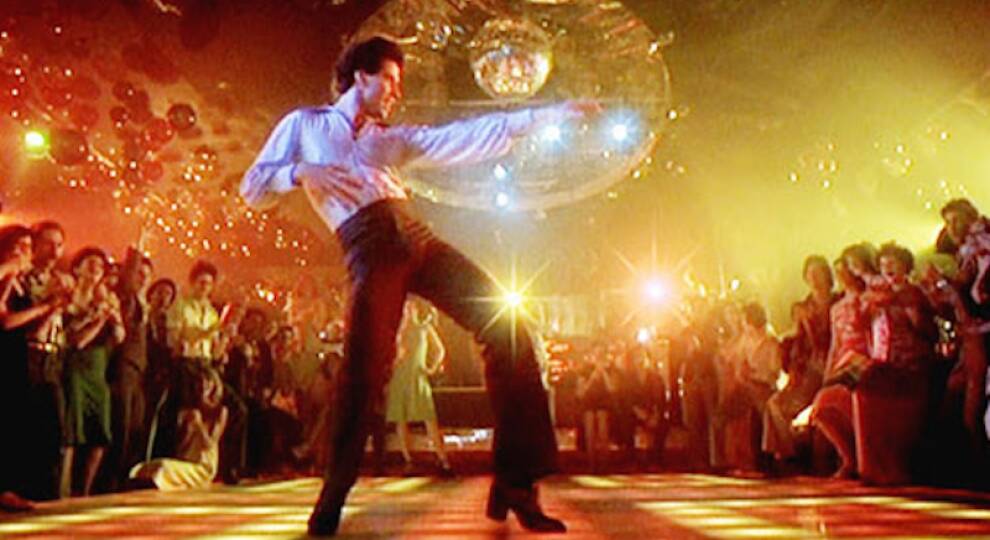
Bottom line, a song had to be singable. (The master of singability for me was Burt Bacharach.) For a while back there, we might have put on snooty airs and publicly disdained cheesy acts like ABBA—only to embrace them and warble along at their revival. Danceability was another important factor. The shift from the ‘70s to the ‘80s was the golden age of disco, spurred on by “Saturday Night Fever.” (Miserably, my dancing skills never went beyond the jerk and the boogaloo, so doing the hustle with Beng remains on the bucket list.)

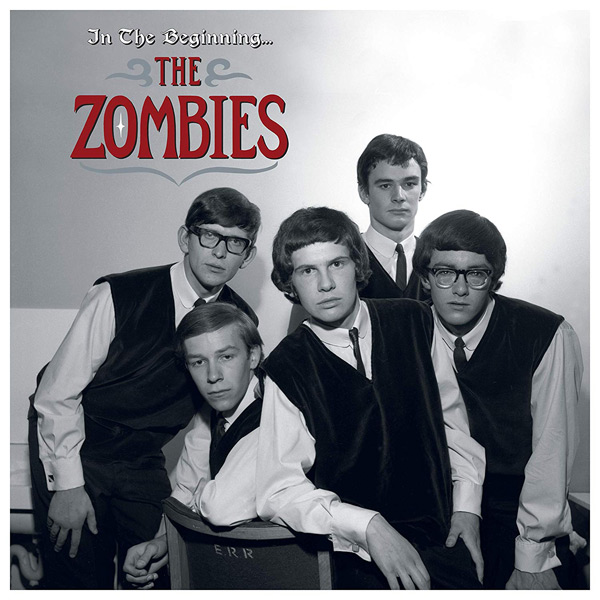
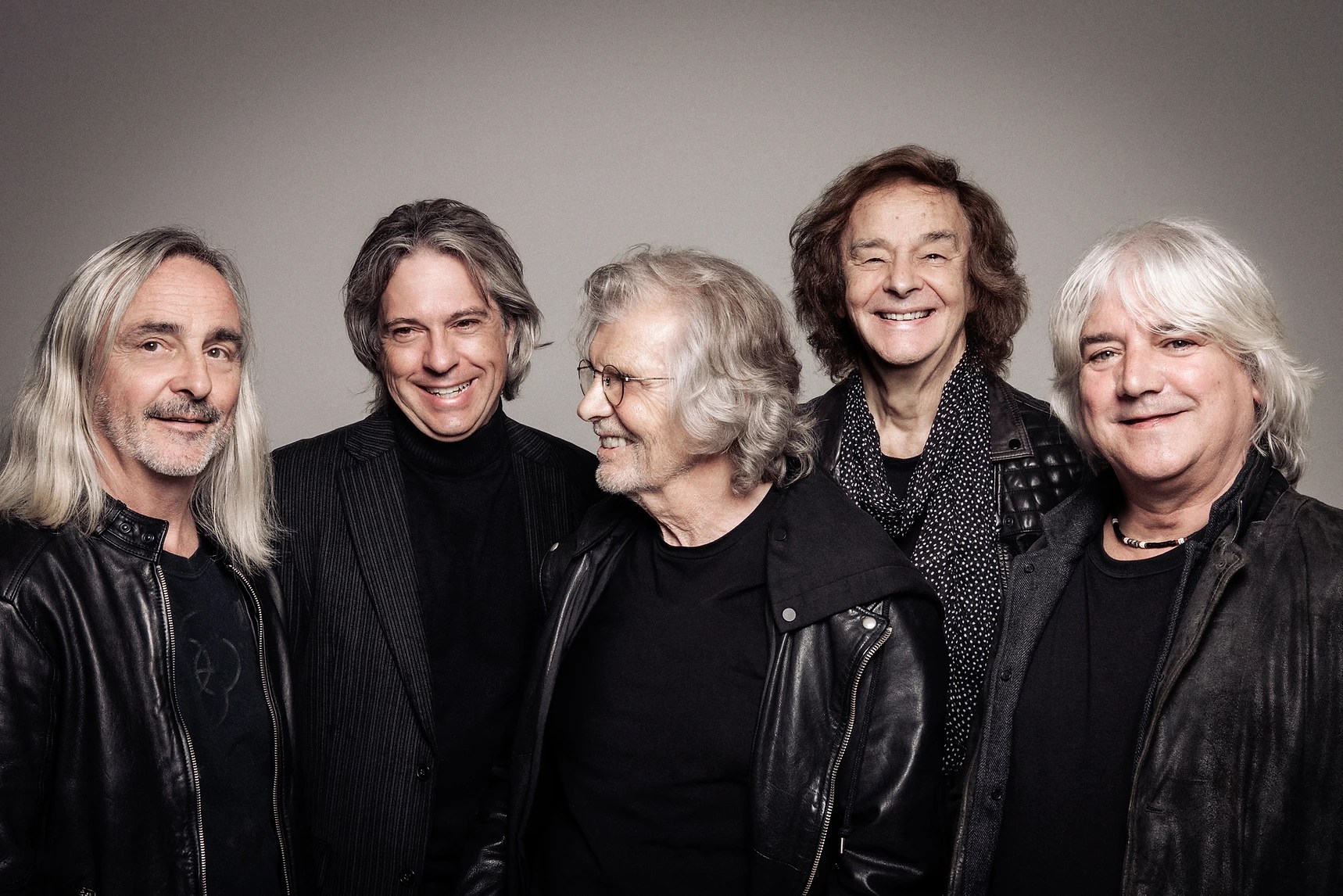
I guess this all means we have a lot of “reunion concerts” to look forward to—the only problem being, most of the singers we’d like to hear have croaked their last. The last one Beng and I attended, a few years ago at the Araneta Coliseum, was that of the Zombies (yes, they were big, cool, and British). Instead of 75,000 screaming fans, ours was a crowd of several hundred white-haired, well-behaved seniors, happily humming along to “The Way I Feel Inside” and “She’s Not There.” Maybe we forgot the lyrics here and there, but hey, we were feeling groovy, as we might have said back in 1969. So, kids, here’s to the next Eraserheads reunion, sometime in 2042.