Qwertyman No. 162: Honor Among Thieves

Qwertyman for Monday, September 8, 2025

A FRATERNITY brother—even older than I am and a longtime emigrant—asked in our group chat, “Didn’t we have corruption before? Why all this outrage now?” So I had to bring him up to speed. “It’s the scale, brother. We’re talking billions, possibly even trillions of public funds being pocketed by contractors who don’t deliver the goods and put people’s lives at risk, in cahoots with politicians they’ve bought or are related to.”

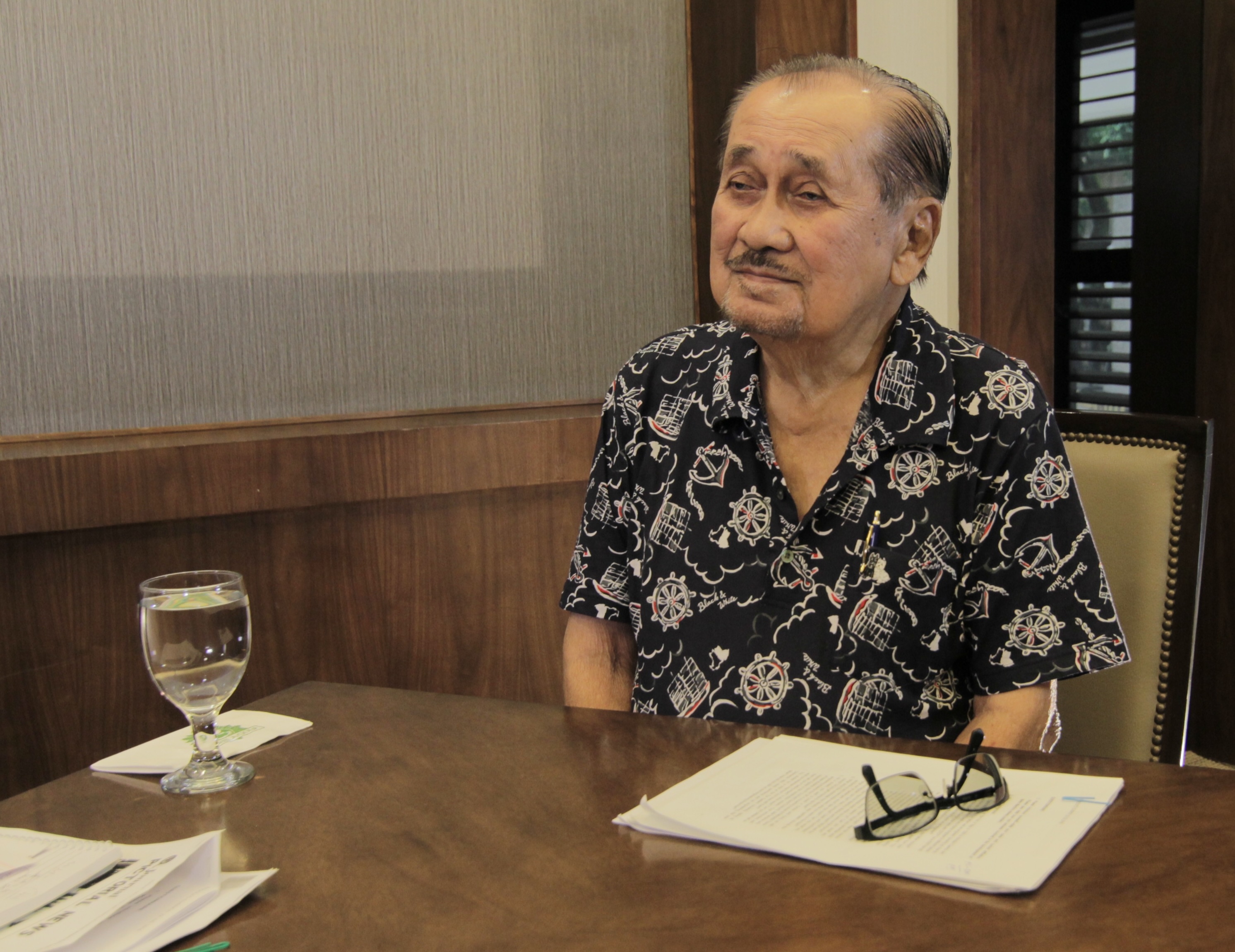
I told him the story of Rudy Cuenca, the self-confessed Marcos crony and boss of the Construction and Development Corporation of the Philippines, which built some of the largest infrastructure projects under martial law, including the North and South Expressways and San Juanico Bridge, and made Rudy a very rich man. 

I happened to co-write Cuenca’s biography (Builder of Bridges: The Rudy Cuenca Story, Anvil Publishing, 2010, unfortunately long out of print), after initially refusing to do so. “Why should I write your book,” I told him at our first meeting, “when your boss put me in prison?” “I have stories to tell,” he said, and did he. It wasn’t the money—which ironically was a pittance—but the curiosity that got me on board. And just to show it wasn’t a hack job on my part, the book became a finalist for the National Book Awards for that year.

Rudy—who died two years ago—wasn’t an engineer and didn’t even finish college, but he learned the ropes of contracting doing small bridge projects under the watchful eye of US Army engineers who had him redo the job at a loss if it was substandard. Because American reparations money was involved, the Americans made sure it was well spent. 

Cuenca soon learned the other, non-technical aspects of the business. To move up, you had to pay up. I interviewed him in 2009-2010 in his modest office along EDSA near Guadalupe—any aura of big wealth and power had long been dimmed by years of exile and dealing with lawsuits—and at that time, he lamented the fact that corruption had gone over the top. A cool and down-to-earth kind of guy, he told me in so many words that (and I paraphrase) “In my time, nobody asked, but you gave. The amount was reasonable, and you dealt with just one person. Today, you’re told up front how much to pay, an outrageous sum, and you keep paying up the ladder.” 

While his statements may be self-serving and certainly liable to be interrogated, they should and do raise eyebrows:

“In the late ‘60s, we were looking for funding and supplies for the food terminal. We talked to a bunch of German suppliers, and during our discussion they asked us, why is it that the Japanese get called to work with Philippine projects? I said, you know, the Japanese have a style of business that you don’t understand—they know how to give gifts. And they don’t give gifts before, they give gifts after. But you guys are so decent, that’s why you don’t get jobs here. 

“There was already corruption at that time, but it was not rampant and as grossly done as it is done now. If before people would overprice by about 5 or 10 percent, now it’s about 30 percent. 

“You know, construction is the best source of graft. What Imelda did were seven-day wonders. I didn’t want to have anything to do with those. I was only involved with the reclamation of the area for the Cultural Center. They paid us, but her manager wanted his kickback. Imelda had her own group of contractors, and that’s where they all made money.

“But it wasn’t just then. Do you remember when Pinatubo erupted? The job then was to clear lahar. Now there’s a place in Daly City, San Francisco, that’s known as Lahar City. The people who live there are Pampangueños who earned lots of money because of the lahar. 

“Also during Ramos’ time, Ambuklao Dam was silting. As the dam silts, the ground level goes up, and the water gets smaller, so you have to desilt it. Here comes the contractor with a dredger. But instead of doing a proper sounding first, they raised everything, so that difference got factored into the job. 

“I don’t have any concrete proof of corruption in the current administration, but I think it’s safe to say that graft and corruption will always be present, especially in our government. I have heard that contractors—my brother is still a contractor himself—supposedly deliver money to a Cabinet member, who then turns it over to someone in the Palace. But nobody can say that. If you’re at the top, you have a fence, and only the closest people should be able to touch you so that you’re isolated. 

“I once told Secretary Vigilar that to reduce corruption in Public Works, they should follow a 10-year plan for big projects, meaning that you will pay the contractor 10 years after the project has been completed to your satisfaction and has been transferred to you. That way the contractor will not be as willing to pay off anyone while the project is ongoing because if he does, he’ll be liable for the quality of the work that he has done.”

When I asked him why the roads in places like Malaysia seem much better than ours, he said: “It’s simply a matter of greed. In Malaysia there’s also corruption—I’ve lived there, I should know—but the thieves there make their money by overpricing the materials. Here in the Philippines people are extraordinarily greedy. Not only do they overprice, they also steal the materials. The cement’s deficient, the gravel’s deficient. So the thing crumbles that easily.” In other words, there was honor among thieves; sure, they stole, but at least they built up to spec.

That was 15 years ago, back when the Discayas and their like were probably driving around in Toyota Corollas and buying microwaveable meals at the 7-11. 

One day Rudy got up from our interview and said he was going somewhere—to meet up with the new DPWH secretary, Rogelio “Babes” Singson, to offer some unsolicited advice on how to reduce corruption in his department. I don’t know if that meeting or that chat ever happened, but barely a month ago, in a TV interview, Singson was quoted as saying that “In my full six years at the DPWH, I spent only P182 billion for flood control. Look at the 2025 budget with this insertion—where did the P350 billion go?” 

I never thought I’d miss a Marcos crony, but I’m missing Rudy Cuenca now, as an expert witness to help us sort out this sordid mess. 
Penman No. 469: Seniors and Their Stories

Penman for Sunday, December 8, 2024

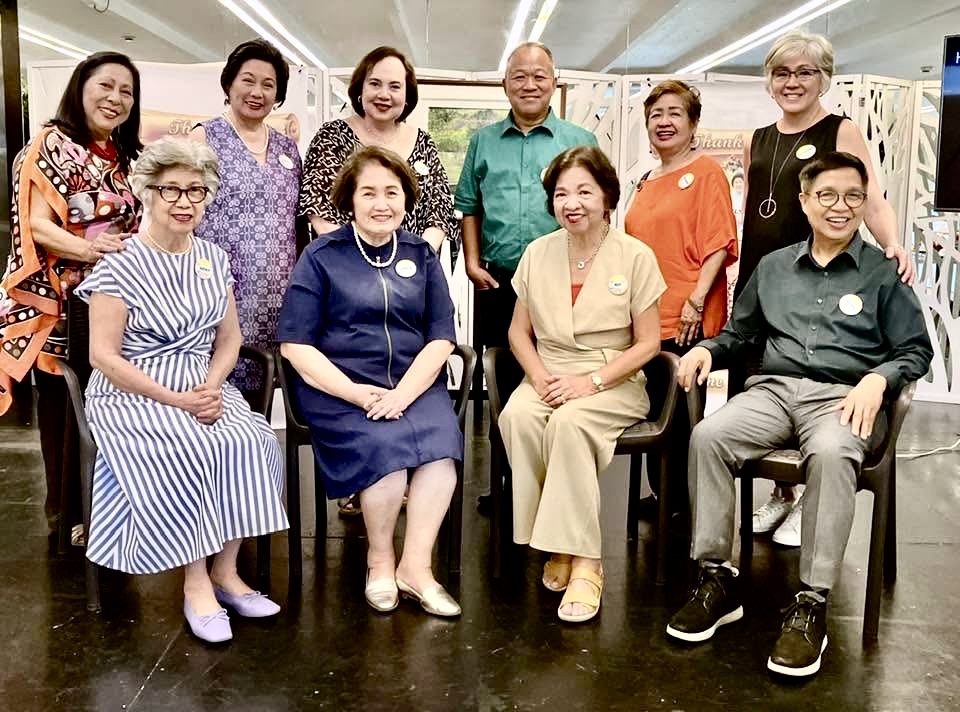
I HAD the privilege of attending the private launch of a book in Makati recently, a book titled Bridges of Memory produced by a group of seniors who had each contributed their poems, stories, and essays to the collection. None of them was a professional writer; I gathered that they came from distinguished backgrounds in banking, law, public service, and other pursuits. 

Prior to publishing the book, they had been mentored by an accomplished and experienced writer, the San Francisco-based poet Oscar Peñaranda, who just happened to be an old friend of mine. Oscar was in the US when the launch took place, so he sent a congratulatory video. I was pleasantly surprised to learn that this was already the “Sunshine” group’s (so named because they meet at the Sunshine Place for seniors in Makati) second such book.

As you might expect, the book contains the authors’ musings on life, love, and loss, the funny with the sad, the joyful with the tragic. The styles and the quality of the writing predictably varied, but the enthusiasm was palpably even, with all the contributors present eager to share their work.

At that very same moment, way across town, another mass book launch was being held at a major university, where one of the featured books was a long and distinguished biography that had partly been edited by me. I had also been invited to that event, but chose to attend the Makati one despite the Christmas traffic, because I had the feeling that it would somehow be a more enjoyable occasion, at least for me, as it would put me in touch with writers of a gentler disposition.

Having been caught in a whirlwind of literary activities over the past two months—from the Frankfurt Book Fair to the Palanca Awards to the PEN Congress—you’d think that I’d shy away from a small book launch, but aside from the fact that some of the authords were friends, I wanted to show my support for this kind of more personal writing and publishing that we too often take for granted as self-indulgence.

I’d seen books like this before, the output of writing groups, barkadas, high-school chums, and fellow alumni. They’re often triggered by an impending milestone, like a 50th anniversary or a grand reunion and homecoming.

The professional crowd might think of such volumes as vanity projects published by people who could never put out their own books. But then that’s the whole point: one person’s vanity is another person’s self-empowerment, and such private publishing reclaims the right to self-expression from the academic and commercial gatekeepers. The works they contain may not win any literary prizes, but they are as honest and heartfelt as writing can get, and satisfy the most basic urge that impels all good writers: to use words to give shape to one’s thought and feeling, and to share those words with others so they might think and feel the same way. They’re written neither for fame nor fortune, but to leave some precious memories behind for a very specific audience—although some pieces may be of such merit as to be more widely appreciated.

I’ve always said, even in my own creative writing classes at the university, that I believe that every person has at least one good story in him or her—and that it’s my job as a teacher to bring that story out. And people know this, too—many of them are dying to tell their story, but don’t know where and how, and who will listen. That’s particularly true for digitally-challenged seniors, who don’t have access to blogging, and who use Facebook for little more than “Happy Birthday!”

I’m particularly taken by the fact that these books are produced by seniors, who are increasingly being left out of a social world ruled by schemes and products for young people. Even within families—let’s admit it—very few grandchildren now have the time nor the patience to listen to their elders’ stories, much less to ply them with questions; they’d rather scroll through their social media than ask what a typical summer vacation was like half a century ago, or what people did before there were cellphones, computers, and satellite TV.

Years ago, fearing we would lose her soon because of her illness, I’d asked my mother to write down her memoirs in notebooks which I still keep. As it happened, she recovered magnificently, miraculously, and is approaching 97, still strong and alert, albeit a little slow. She walks every day, plays games on her iPad, and navigates Netflix on her own. When she’s staying with us (we siblings share her company), Beng and I pepper her with questions about her childhood in their village in Romblon, where she rode a horse and scooped fish out of the plentiful sea. The youngest of a dozen children, she was the apple of her father’s eye, and the only girl he sent to Manila for high school and college at UP. They had a rice mill, and snakes roosted in the large straw bins that kept the unhusked rice. But the snakes were to be feared much less than the beautiful encantos that came down from Kalatong on fiestas and lured their victims to join them with offerings of black rice. How could you not like and want to retell stories like that?

Our seniors are a treasury of stories to be told. They just need to be asked, encouraged to write, and published.

(For your copy of Bridges of Memory, email marketing@sunshineplaceph.com.)

Qwertyman No. 64: The Death of a Crony

Qwertyman for Monday, October 23, 2023

WHEN A friend asked me, about 15 years ago, if I would meet with another friend of his who wanted me to write his biography, I almost fell off my chair when I learned who my prospective subject was.

“It’s Rudy Cuenca,” I was told. 

I knew who he was, of course—a “Marcos crony,” which had become an almost generic term at one point, there being so many. I had actually met the man once before, on a bus trip to the Pahiyas festival in Lucban arranged by the late Adrian Cristobal. My first impression had been a surprisingly positive one: he was polite, urbane, funny, hardly the obnoxious and domineering person I had imagined a crony might be.

Still, he was who he was, and I didn’t know that writing a book about his life was the right or smart thing to do. I has already written Wash SyCip’s biography, and that man was almost saintly, or sainted by the acclaim of his peers and juniors. A Marcos crony was something else.

“How can I work with someone whose boss put me in prison?” I told my friend. As a student activist, I had spent seven months in Bicutan under martial law.

“Just meet with him, listen to what he has to say,” he said. “No commitments, no promises.”

And so I did. “I have a story to tell,” Cuenca told me over coffee. I knew what he was saying: he had been privy to the Marcos regime’s internal workings, and had been one of the President’s closest golfing buddies, but, at one point, had found himself fallen from favor, eased out of the inner circle by a more unctuous lieutenant. As stories went, it was irresistible. 

I took a deep breath and told him in so many words what I’ve said to many other clients since: “I’ll help you tell your story, but I won’t lie or lawyer for you; your story will speak for itself. What I leave within quotation marks will be you speaking, not me. I’m under no illusion that you will tell me everything you know, but to the extent possible, I’d appreciate your being honest with me, so I can tell your story the best way I can.” He agreed. What followed was Builder of Bridges: The Rudy Cuenca Story, co-authored by a former student of mine, Antonette Reyes. It was published by Anvil Publishing in 2010 and became a finalist for the National Book Award the following year.

A college dropout, Cuenca taught himself the basics of business and civil engineering, and went on from small public-works contracts to some of the country’s biggest infrastructure projects such as the North Luzon Expressway and the San Juanico bridge. It was widely believed that Cuenca’s Construction Development Corporation of the Philippines (CDCP), then the region’s largest construction company, benefited from his closeness to Marcos, whom he had supported since his first presidential campaign.

Most interesting were Rudy’s stories of Palace life. Herewith, some excerpts from the book:

“I was a member of Wack Wack and Valley Golf for a number of years before I joined Manila Golf’s ‘Mafia’ group in 1973 with Charlie Palanca as the head man. Golf helped me gain some ground in business. I became a Marcos golfing crony around 1969. Marcos ended the afternoons at the nine-hole Malacañang course. Typically, a call came from the Study Room—either golf at 4:30 in the afternoon or party organized by the First Lady. The afternoon golf was meant to be the President’s peaceful time, but this was taken advantage of by those who wanted to get his undivided attention. The HIS and HERS were with their folders and envelopes for endorsement or approval. The HERS usually could not get to see him, so they were inserted as part of the regular golfing group.

“The Study Room was operated by Presidential Security Command personnel. Blue Ladies and cronies alike waited for this office to call them to major Palace functions. If no such call came, they would run around like headless chickens in search of that awaited invitation. One crony got the message that the President no longer wanted his company through the Study Room, obviously on Imelda’s instructions. As Marcos was the sole source of dispensation, those seeking approval tried to find parings or sponsors. Sometimes, those projects were so absurd that they were rejected outright.”

Rudy remembers that “Every morning, Marcos got a written report from Fabian Ver about what was going on in the country. But Marcos also got two more reports, one from Alex Melchor, and one more I think from Johnny Ponce Enrile. Marcos read these three reports at breakfast, so he knew what was going on everywhere. These reports contained lots of information—who was the boss of who, who went where, and even who was fooling around with who. He knew everything.”

Rudy doesn’t deny the systemic—but relatively small—pay-offs that got projects approved and claims processed and released in the ‘50s, ‘60s, and ‘70s. But he also says that they were amateurs compared to today’s pros, and that the scale of greed has grown exponentially. “In the old days, nobody asked you to give,” he says. “If you did, you gave them dinner. Today, people are told outright and up front what they’re expected to pay, and those amounts are outrageous. No advance payment, no contract.” 

When asked why, for example, Philippine roads seem visibly inferior to those of even other Southeast Asian countries like Malaysia, he says: “It’s simply a matter of greed. In Malaysia there’s also corruption—I’ve lived there, I should know—but the thieves there make their money by overpricing the materials. Here in the Philippines people are extraordinarily greedy. Not only do they overprice, they also steal the materials. The cement’s deficient, the gravel’s deficient. So the thing crumbles that easily.”

Rodolfo Magsaysay Cuenca’s passing last week at the age of 95 reminded me of how many stories about Ferdinand Marcos and martial law remain to be told. Fifteen years ago, it might have been considered safe for the members of that generation to spill their secrets (or justify their choices—no one will deny that these biographies are essentially self-serving), but the present dispensation will likely make people think twice about being so candid. 

I will leave it to more qualified scholars and more intrepid journalists to sift through the material and annotate the margins of my Cuenca biography, but I feel privileged to have listened to the man and to put him on the record. By any measure, it was a remarkable life. (In an even stranger twist, another crony approached me after I had done the Cuenca book, wanting me to do the same for him—the late Herminio Disini, of Westinghouse fame. I completed a draft but had to walk away, and the book never came out—but that’s another story.)

(Photo from riles.upd.edu.ph)