
Qwertyman for Monday, December 1, 2025
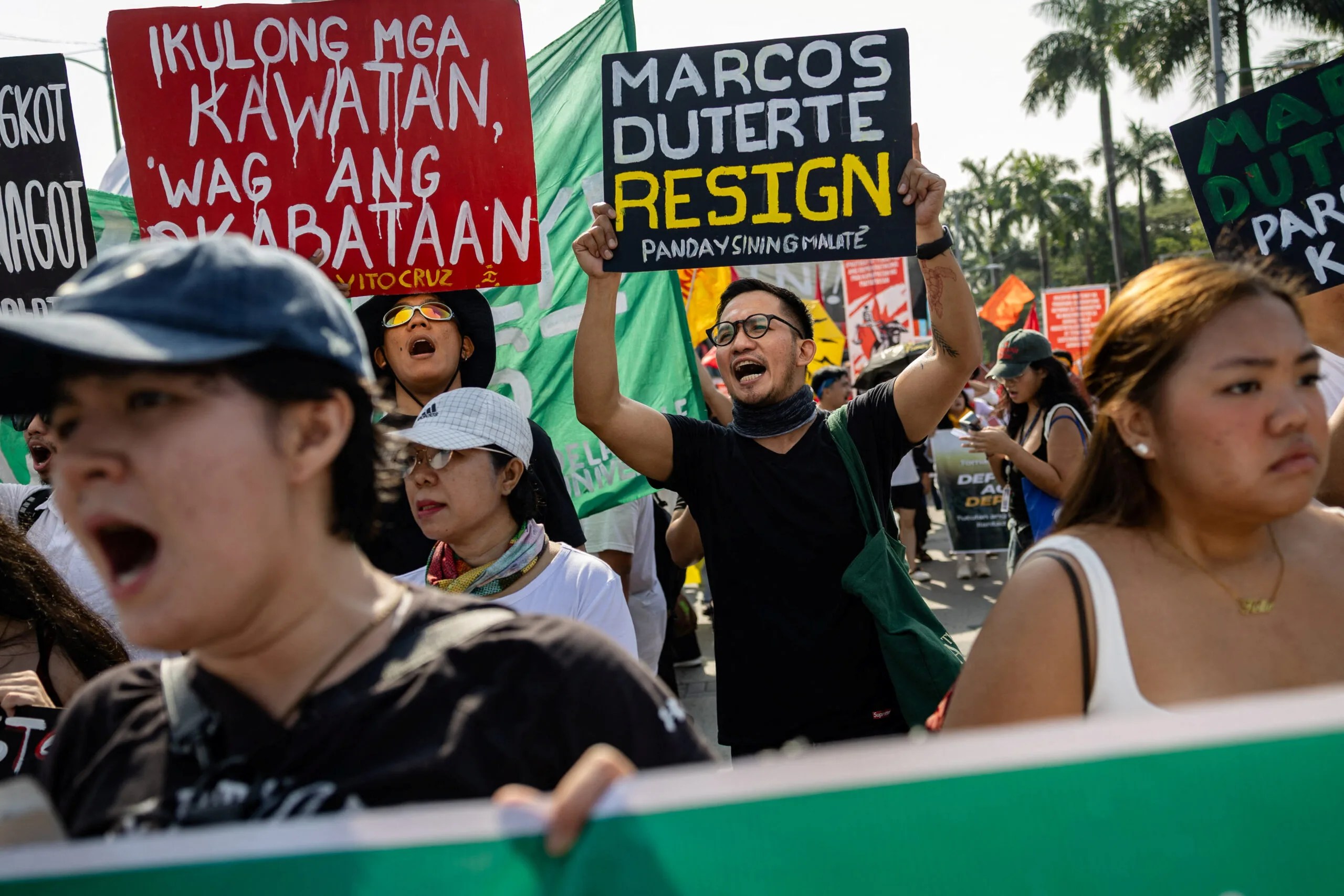
AS NOT a few placards in yesterday’s big anti-corruption march would have said, both President Bongbong Marcos and VP Sara Duterte should resign, along with everyone in public office implicated in the flood-control scandal and all the other shenanigans that have come to light over the past couple of months.
That probably means half the government, but given the current public mood, the more the better, to give the nation a chance to rebuild itself on new foundations of moral rectitude and accountability. At least that’s the long view, supported by the Left among other parties who think that anything short of a national reset will simply paper over the problems and guarantee their comeback.
It all sounds good, and it does make sense—except that, as we all know, it ain’t gonna happen.
It’s about as realistic as the expectation that BBM will fall to his knees, own up to the Marcos billions, and ship all that money back to the Philippines on a FedEx plane for mass distribution, any more than VP Sara will admit to her father’s drug-fueled bloodlust, seek forgiveness of all the tokhang victims, and forsake her presidential ambitions. Let’s face it: the Marcos and Duterte dragons will be clawing at each other all the way to 2028. Meanwhile, what are we mere mortals supposed to do or to hope for?
In the very least, we can ignore the DDS calls for BBM to step down and for Sara to take over, because there’s even less appetite for that than the Both-Resign demand. The Dutertes want to make hay of the moment, but the sun isn’t exactly shining on them. Despite their strong and well-funded social media efforts, the DDS camp seems pretty much in disarray, with Digong in jail, Sara in limbo until February (it tells me something that they approved the OVP’s 2026 budget in full—it’s for the office, not VP Sara, although she doesn’t seem to know the difference), Bato de la Rosa suddenly scarce, and their shot at a junta takeover badly misfiring.
(The ICC’s predictable decision not to grant his interim release could in fact prove to be an ironic win. Digong at this point is useful only as emotional capital for Sara’s survival and triumph. His camp, I suspect, secretly wants him to stay in The Hague as a symbol of the Marcoses’ unforgivable perfidy. Bringing him back home will mean having to take care of a grumpy old man whose greatest ability—cursing—isn’t helping him much in his present situation; he was never a Leila de Lima, and certainly no Ninoy Aquino.)
All the players’ moves are interesting in this grand melodrama. I frankly can’t trust the Left, either, to show the way forward. Like a religion (did I hear someone say “Iglesia ni Cristo”?), the Left likes to flaunt its moral ascendancy—to “virtue-signal,” in today’s parlance—and its rock-solid grasp of the global and local situation from the Marxist standpoint. And yet it gets all tone-deaf and cross-eyed when it comes to picking its horses—ditching EDSA, but backing billionaire capitalist Manny Villar and then pseudo-nationalist and butcher Rodrigo Duterte for the presidency (should we even mention slaughtering comrades it deemed wayward in the Ahos campaign?).
Interestingly, the INC also supported Duterte in 2016, and then BBM and Sara Duterte in 2022. While adopting some progressive liberals like Franklin Drilon, Risa Hontiveros, and more recently Bam Aquino and Kiko Pangilinan into its senatorial slate, it has also flexed its machinery behind Duterte surrogates Bong Go and Bato de la Rosa, as well as corruption-tainted Senators Joel Villanueva and Jinggoy Estrada. During its last mass rally last November 25 for “peace, transparency, and accountability,” however, it was careful to distance itself from recent calls for BBM’s resignation. In other words, the INC is the perfect straddler, the seguristathat makes sure it will survive and prosper under any administration, reportedly to secure key government appointments for its favored nominees.
That leaves us and our own wits, which—considering everyone’s else’s brain fog—might yet prove the most trustworthy.
In the realm of the doable, I want to see heads roll—as close to the top as the situation will allow. One way of looking at this, and strangely enough, is that the Filipino people aside, the party with the greatest stake in seeing this anti-corruption campaign through to the end (i.e., just short of the Palace) is PBBM himself. Having opened this Pandora’s box, he well knows that the only way he can keep his own head and hold sway over 2028 is to catch all those demons he released. I don’t know about you, but right now I’m desperate enough to let BBM finish his term in relative peace if he achieves nothing else than the herculean task of cleaning up the stables.
VP Sara’s impeachment trial should resume in February and will be a more efficient and definitive way to shut her out for good. But we have loads of senators, congressmen, department secretaries and undersecretaries, and lesser flunkies all caught up in this mess who should be held to account for their thievery. Hold the big bosses, the ultimate signatories, accountable, sure. But don’t let the second- and third-level enablers and functionaries off, because the message needs to be sent that complicity won’t pay—and that your sponsors will ditch you when things get too hot.
I want to see our courts work, overtime, to expedite the prosecution of these corruption cases. No pussyfooting, please, no Maguindanao massacre here. Let’s put a quick and decisive end to the kind of legalistic foolishness that lets a senator off the hook for a P30-million “private contribution,” with the judgment rendered by the Comelec commissioner who had previously served as that senator’s lawyer. How the heck can that be allowed to happen? What ethical universe are we in? The same goes for former Ombudsman Samuel Martires’ “forgetting” why he had kept secret his decision junking his predecessor’s carefully crafted case against Sen. Joel Villanueva.
If the Comelec accepts Sen. Rodante Marcoleta’s ridiculous excuse that he kept millions of political donations off his report of campaign expenses because they were meant to be “secret,” then we should launch a million-people march not just against the likes of Marcoleta but also specifically against the Comelec to hound those charlatans out of office. That commissioner who couldn’t find the shame to recuse himself from his former client’s case should be impeached if he doesn’t resign.
I have no problem with people marching and screaming “Marcos, Duterte, resign!”, because we have billions of reasons to be upset with both. But I hope that doesn’t keep us from going after immediate and tangible if less-than-perfect results. Look at it this way—gut the body, and you’ve effectively chopped off the head.
(Photo from rappler.com)

 Pinoy Penman 3.0