
Qwertyman for Monday, August 18, 2025
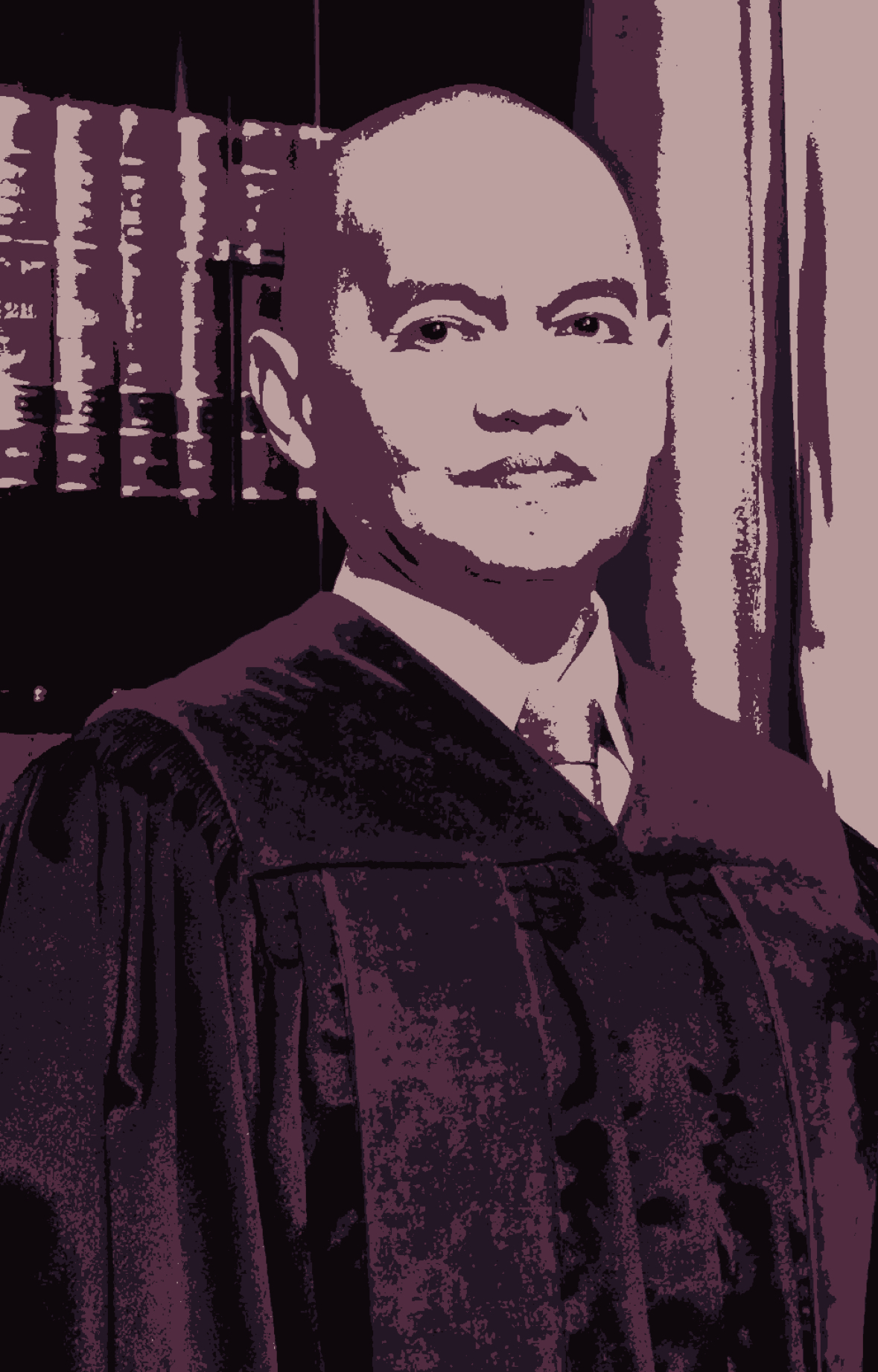
LIKE MANY of his friends from the University of the Philippines and the legal profession, I was extremely saddened last week by the events surrounding and following the announcement of Senior Associate Justice Marvic Leonen of the Supreme Court’s unanimous decision in the case of Duterte v. House of Representativesthat effectively stalled the impeachment process against Vice President Sara Duterte. As someone inclined to believe in the VP’s culpability, I was of course disappointed by the decision, and dismayed that it was Justice Leonen justifying it as the ponente.
Scores of former justices, lawyers, editorialists, and activists have since weighed in to expound on the perceived infirmities of the decision, and on the damage it has wrought on both our political and judicial institutions. Not knowing any better than these sharper minds, I can’t add anything much to those arguments, except to observe that from my layman’s point of view, it does seem that Justice Leonen went well out of his way to make impeachment more difficult even for those deserving of it.
I was saddened, but not surprised, when Marvic—both the justice and the man—was pilloried in the press and social media for his role in the matter. Insinuations floated that Leonen had been “bought” by the Dutertes in exchange for a promise of being eventually appointed Chief Justice under a Sara presidency. Other critics pointed to supposed flaws in his character, even equating him with Senate President Chiz Escudero, under whose clever management the VP’s impeachment did not push through “forthwith,” but has instead been “archived” for at least the next sixth months.
I don’t mean or need to defend Marvic, who can very well speak for himself. He was and remains a friend—we worked together in UP administration, where he served as VP for Legal Affairs and then Dean of the College of Law and I served as VP for Public Affairs—although I don’t know him nearly as well as his own compañeros in the profession. One of them, a mutual friend, came out with a stinging rebuke of the decision, while attesting—like many who know the justice and his background closely—to his personal and intellectual integrity.
I know a bit of that background, having mentioned and quoted Marvic in my recent biography of Justice Conchita Carpio Morales. He was among the four justices who dissented when, in July 2016, the Court dismissed the plunder case against former President Gloria Macapagal-Arroyo for lack of evidence. His remark then was simple but damning: “The scheme is plain except to those who refuse to see.” Earlier, as UP Law dean, Marvic had served as chief negotiator for the Philippine government in talks with the MILF, leading to a comprehensive agreement. He had also led the call asking a sitting justice to resign for alleged plagiarism; instead, the Court cleared its colleague and got back at the complainants (Carpio Morales dissented). Even before that in 2004, as a young lawyer, Leonen had argued for indigenous peoples in the La Bugal case questioning the constitutionality of the Mining Act. The Court agreed with him, only to reverse itself later.
Marvic Leonen’s performance as a lawyer, a legal academic, an advocate for the oppressed, and a justice are a matter of public record—which understandably, most Filipinos likely don’t know or care about. The question that bothered me in the aftermath of the Duterte decision was, “Should one act—widely perceived to be wrong—occlude a lifetime of good and right deeds? Are we judging the decision, or judging the man?” (The flipside of this is the sudden elevation of heels to heroes, because of one popular stance taken, as in the Senate vote.)
I asked this only because of the increasingly personal nature of the attacks against Marvic—which of course in today’s environment he had coming, even from those of us who deplore the personalistic nature of our politics. The term “cancel culture” has been often brought up in this context, a phrase more likely to be used by those on the receiving side of it.
There are pluses to this form of public outrage, in that it can be unequivocal, if sometimes crude and over-the-top. As a way of telling public personalities that “You’re wrong” or “You suck,” there’s nothing like a torrent of posts and memes deploring or ridiculing their actions, taking minutes to form a tsunami of public opinion. In propaganda, we might call this the art of posterization, of reducing complex issues and character traits to one clear image and message, of stripping out the nuances, the “but’s” and “maybe’s,” the kind of hand-wringing I’m doing now in an effort to understand why people do what they do.
From this perspective, and to use one of this century’s most telling cliches, at the end of the day, only the public impact of your actions count. No one needs to know or to understand your personal motivations; no one owes you the benefit of the doubt. Public opinion can sway (Shakespeare famously called it “the vagabond flag”), can be savage and cruel, but as with bees in a swarm, it’s in the nature of the hive mind to congeal and to move as one, with no room nor time for demurrers. Social media assists the formation of that hive mind exponentially, in post after repost, seeking and gaining affirmation in numbers.
On the other hand (a phrase you hardly ever hear online), the dramatist and fictionist in me—as opposed to the propagandist—likes to individuate the caricature, to tease out the nuances of characters and situations, to explore context and subtext. That viewpoint might appreciate Marvic as a person whose own brush with impeachment made him the ideal spokesman for eleven other gray justices, serving as both lightning rod and fall guy, putting his own hard-won reputation at risk.
Duterte v. House of Representatives wasn’t and shouldn’t have been about Justice Leonen, and not even the judiciary itself, but rather about seeking justice over the gross misdeeds attributed to a high public official. To the extent that we’re not talking about the massive and blatant corruption that prompted the impeachment in the first place so much as we’re dwelling on our disappointment with a perceived champion of the public interest, then the dark side continues to win by distraction. Methinks we should refocus on the real crooks—there’s a few more to root out in the Senate, and they were never even the good guys to begin with.






 Pinoy Penman 3.0