Qwertyman No. 66: Beyond Reportage

Qwertyman for Monday, November 6, 2023

IT WAS probably fitting that I finished reading Patricia Evangelista’s highly acclaimed account of “murder in my country,” Some People Need Killing (Random House, 2023), over a holiday devoted to remembering the souls of the departed. I had received a pre-publication review copy from the publisher months ago under a strict embargo not to talk about it until its formal launch. As it happened, it lay under a pile of other books to be read until a flurry of posts and reviews reminded me that it was out in the open, and that the secret—not just the book, but also what it contained—could now be shared.

I can still recall the day—May 15, 2004—while we were celebrating Pahiyas in Lucban when I got the news on my phone that our representative to the English Speaking Union’s annual public speaking competition in London—a bright and pretty wisp of a teenager named Patricia Evangelista—had won the top prize. We were new to the ESU—subsequently we would produce two more global champions—and it was a grand way to announce to the world that we Filipinos could produce more than boxing heroes and beauty queens. Here was 18-year-old Patricia who could think on her feet and speak to issues of international importance, the poster child of Filipino intelligence and audacity, whose command of the English language led her to meeting no less than Prince Philip, the Duke of Edinburgh, in what amounted to a mini-coronation in recognition of her talent.

As magical as that moment was, I can only imagine how, in the months and years following, it must have begun to grate on the young Patricia to be asked to deliver her prizewinning speech in public forums over and over again, like a wind-up doll, and suffer the fate of prodigies who peak too soon. Surely that was just a beginning; surely there was more she could do—had to do—to outlive her Cinderella-like debut in London. 

I would see some of that when she enrolled in my undergraduate Fiction Writing class in UP. I knew who she was and made sure to give her no special treatment—indeed to lean even a little harder on her, knowing she had what it took—but she got a “1.0” all the same, one of the few I ever gave. I can’t claim to have taught her much how to write imaginatively—her own reading had likely primed her for that—but I can’t pretend not to be proud of what she turned out to be, my pride tempered only by fatherly concern.

Today, almost 20 years later, the sometime ingénue returns to the global stage as a hard-bitten, chain-smoking investigative reporter—a “trauma journalist,” in her own words, very possibly one of the world’s best yet again. But there is no real prize, no princely reward, for this kind of distinction, only pain and sorrow which—subdued too many times as a matter of professional discipline—exact their toll on the body and spirit. Patricia has had to suffer that to be able to tell her story as clearly as she could, unimpeded by the hand-wringing and the preachiness that often accompany such exposés of grave misconduct. 

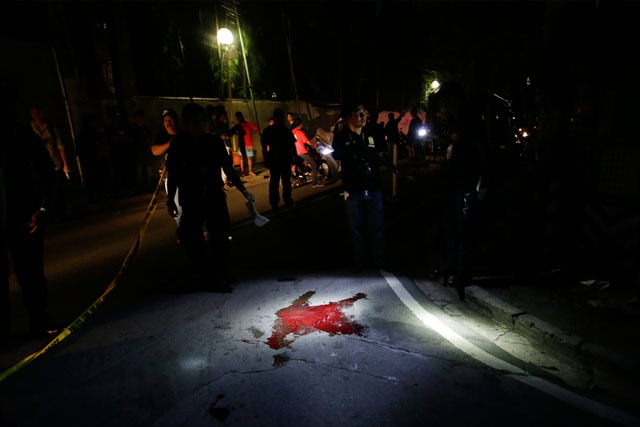
This is not a review of the book’s explosive investigation into the thousands of extrajudicial killings that happened under the Duterte regime—that’s been done very capably by others, and is already the subject of international inquiry. The book will deserve all the journalistic accolades coming its way as an exemplar of excellent reportage. 

I will not even quote from the book, as there are simply too many quotable paragraphs to choose from. Rather, I want to note, from my privileged perspective and for the benefit of younger writers, how Patricia works with language to best serve the truth. Quite apart from its journalistic merits, Some People Need Killing is one of the best textbooks out there for what we now call “creative nonfiction,” a compound of reportage, memoir, history, and fictional technique. Indeed, beyond reportage, the book is a long personal essay in which the author is inextricably part of the story, a significant step away from the impersonal and largely mythic “objectivity” that we associate with traditional journalism.

Probing murder after ghastly murder—sometimes even coming on-scene to prevent one—Patricia is both chronicler and agent, witness perhaps not to the killing itself but to the larger crime of its planning and the exoneration of its perpetrators. Handling the most sensitive and dangerous of material, she draws on more than skill to tell her story; she demonstrates raw courage, an increasingly rare quality among journalists easily seduced and silenced by pragmatism. She names names, which surely will bear consequences both ways. 

I’ve often remarked in my lectures that the most endangered writers in this country are neither the poets nor the novelists, but the journalists who cannot hide behind metaphor and simile to tell the truth. We fictionists make artful lies which governments rarely have the intelligence or the patience to grapple with. Journalists live in the literal world inhabited as well by cops and crooks; what’s interesting is how the flimsy but oft-repeated fictions of “killed while resisting arrest,” so pervasive in this book, emerge from that reality.

Evangelista’s overarching technique is one of narrative restraint, informed by an English major’s awareness of how language and reality shape each other. She constantly parses the perversions of language—how words like disappearsalvageencounterverification, and even her own name assume different uses and meanings over time, in specific contexts. She knows—as I remind my students—that for dramatic effect, less is often more, that short sentences and blunt, single-syllable Anglo-Saxon words rather than the long, Latinate ones favored by lawyers hit closer to the gut and heart.

She is keenly aware of the power of irony—of professed liberals supporting EJK, of a morally ascendant Noynoy Aquino showing little empathy for ordinary folk, of her own journalist-grandfather affixing his signature to a petition supporting the older Marcos, and of communal complicity in the reign of terror. She uses people’s own words against them, quoting from the record. She avoids direct editorializing, or speaking in lofty generalizations like “justice” and “civil liberties,” and instead, in the best noir tradition, sees “sagging two-story tenement buildings (that) opened into dirt roads layered with garbage and last week’s rotten Happy Meal.”

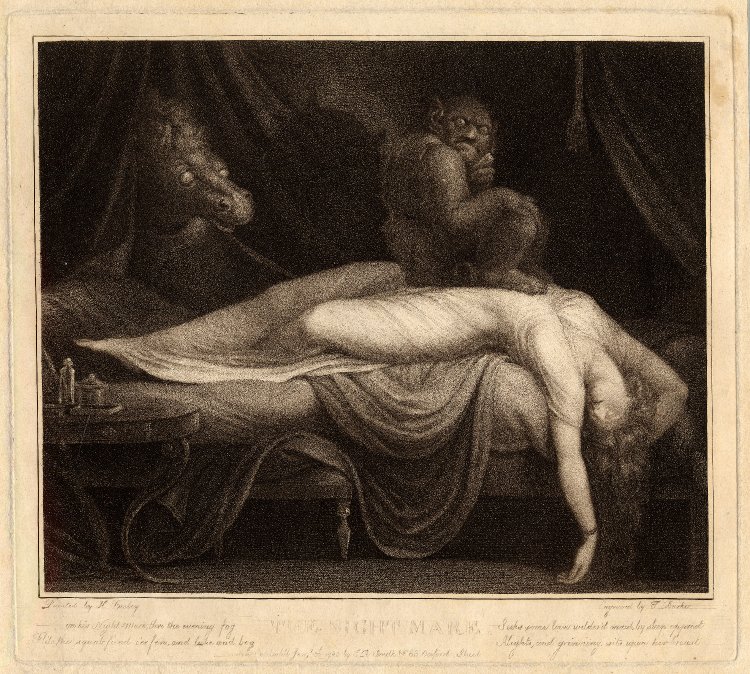
After I had finished the book, I woke up at 4 am from a nightmare about running shirtless down a wet, earthen road. I was lucky. Patricia Evangelista lived through it, and I don’t even know if she’s woken up yet. Have we?

(Image from Rappler.com)

Penman No. 265: Photography as Propaganda

Empire.jpg

Penman for Monday, August 21, 2017


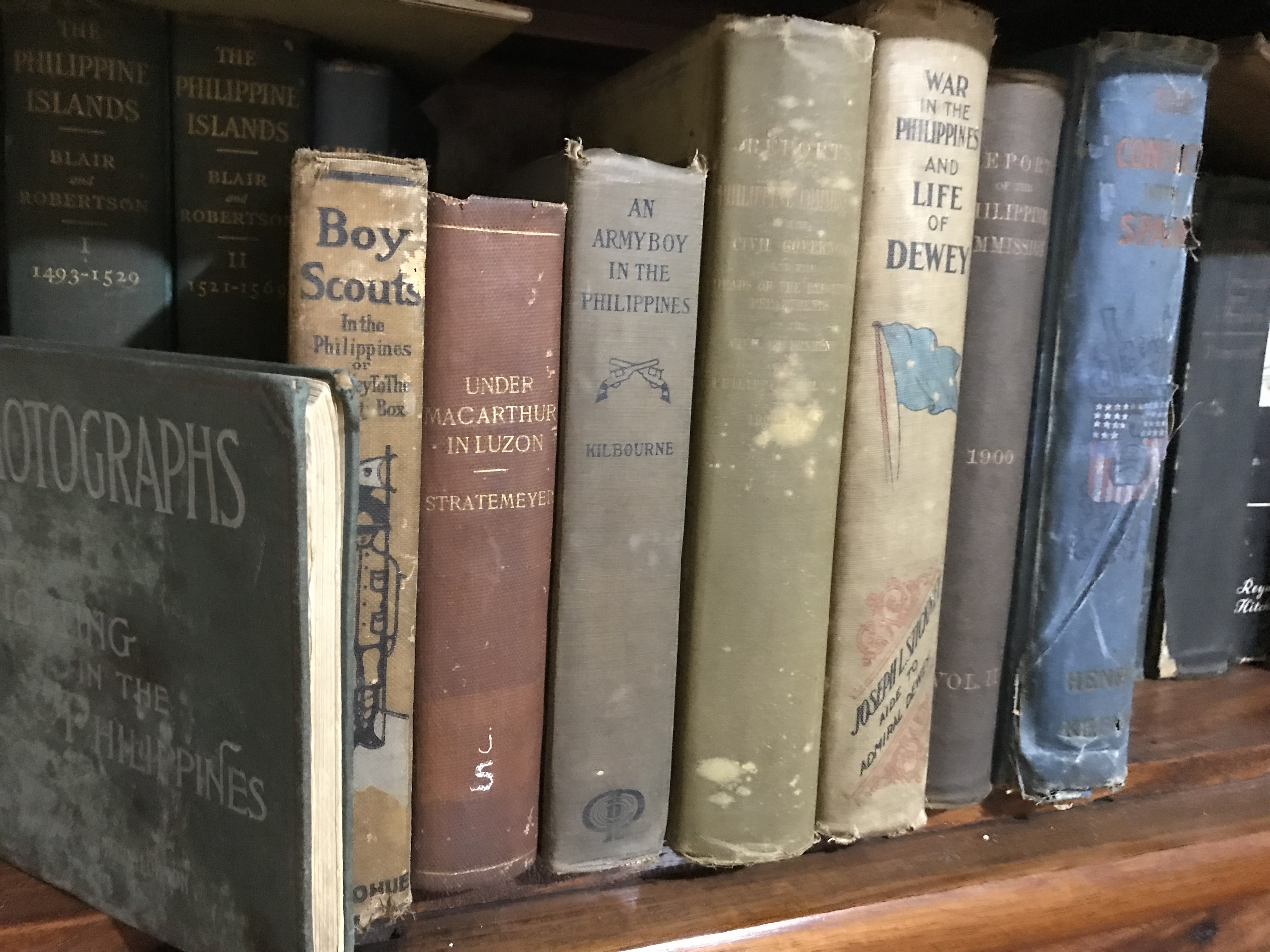
I HAVE a cabinet in my home office where I keep shelves of my most valued books—first editions, signed copies, antiquarian volumes, and such. One shelf is occupied by a special mini-collection of books from the turn of the 20th century, from the late 1800s to the early 1900s, most of them having to do with what we’ve come to call the Philippine-American War. Bearing titles like War in the Philippines and Life of Dewey, Under MacArthur in Luzon, and An Army Boy in the Philippines, the books purport to chronicle—“celebrate” might be the better term—the occupation of the Philippines by the United States from 1898 onward.

I picked up many of these books more than 20 years ago when I was a graduate student in the American Midwest and on the prowl for Philippine-related material in used bookstores and flea markets. When eBay came along, I found many more, and was pleased to secure a few, often for less than $20 plus shipping.

While old, these books weren’t necessarily rare, because they must have been printed in the high tens or hundreds of thousands as a form of patriotic propaganda that straddled journalism and popular entertainment. Often written in a triumphal tone and exulting in the victory of America—then a rising naval and imperial power—over decrepit Spain, they blended into travelogues exploring the US’ new possessions—Cuba, Puerto Rico, Hawaii, and the Philippines—turning a military project into a story of adventure in exotic lands.

Shelf.jpg

These stories—and their accompanying illustrations—were very much on my mind last week when Beng and I attended a fascinating lecture at Ateneo de Manila University by an expert who had made that dark period (which few Americans and, sadly, just as few Filipinos seem to remember) part of her academic specialty. Dr. Nerissa Balce was in Manila to read from and talk about her book Body Parts of Empire: Visual Abjection, Filipino Images, and the American Archive (AdMU Press, 2017; U of Michigan Press, 2016), and we thought it was a good opportunity to catch up with and learn from an old friend (she married my Trivial Pursuit antagonist, the poet Fidelito Cortes).

After working as a journalist in Manila, Nerissa went to the University of California-Berkeley for a PhD in Ethnic Studies, took a postdoc at the University of Oregon, and taught at the University of Massachusetts-Amherst before joining the State University of New York-Stony Brook’s Department of Asian and Asian American Studies.

Through photographs and a refreshingly lucid lecture shorn of much of the academic jargon that often renders these presentations impenetrable to many listeners—even fellow professors like me—Nerissa showed how American photographers who were (to use a later term) embedded with the US military forces used their work to celebrate but then also obliquely if unintentionally criticize the violence of a colonial war. Photographs, she would argue in her book, have a life of their own, once taken and published; they may have been originally meant to depict the power of one side over another, and the abject position of the presumptive loser in the conflict, but seen or used a different way, they can convey other messages, like the subject’s insistent humanity or resistance.

I’d seen many such images in my books from that war; one of them—F. Tennyson Neely’s Fighting in the Philippines—typically portrays American soldiers towering angularly over the slack corpses of Filipino “insurgents” (as our fighters would be referred to for the longest time) as Filipino gravediggers prepare to bury their compatriots. This was what Washington wanted the American public to see: visual proof of American power and dominance. It must have been effective propaganda, especially when accompanied by narratives explaining America’s “civilizing” mission.

Soldiers.jpg

But, as Nerissa and other scholars point out, the very same photographs proved useful to those opposed to America’s imperial expansion. The Anti-Imperialist League published a collection of antiwar poems using a picture of a corpse-filled trench as its frontispiece. “The different political uses for the same photograph suggest the paradoxical power of the photographic image, and how photographs can celebrate as well as expose the violence of colonialism and war.” She goes beyond the battlefield to discuss how the empire shaped our image, and how that image, in a way, shaped the empire. Pictures of native women doing embroidery suggested a colony stabilizing into happy domesticity under a benign regime.

I’m not a historian, but if you want a reasonably reliable account of that period, read Brian McAllister Linn’s The Philippine War 1899-1902 (The University Press of Kansas, 2000); to see how that war was waged on the cultural front, Balce’s book makes a great companion piece. In this present time when, more than ever, pictures speak louder than words, and dead men’s bodies have begun to pile up again, we’d have to wonder what new empire is growing out of the shadows.

ph-china-drugwar.jpg

[Photo from philstar.com]


Penman No. 250: Literature in the Time of Tokhang (2)

nightmare-after-henry-fuseli-print-made-by-thomas-burke-london-1783

Penman for Monday, May 8, 2017


IT’S BECOME almost a cliché in itself to say that a writer’s first responsibility is to the truth. This is no truer than today, in this age of fake news, post-truths, and alternative facts. Someone has to figure out what really happened, who’s lying, and why.

The fact that we respond to the news today mostly with consternation and skepticism only shows how difficult that task is, and how successful and how good the professional purveyors of lies, half-truths, and nuanced positions are at their job. Call them trolls, call them spin doctors—and yes, call them spokespersons—but whatever their motives are, whether they may be mercenaries or true believers, they have raised the bar for their white-hat counterparts.

The easiest and perhaps the most attractive role to take as an antagonist is that of a propagandist, especially online—to respond tweet for tweet, post for post, insult for insult, meme for meme.

But the harder and therefore the more important task is to see beyond the moment and to engage the reader on a deeper and more thoughtful level.

Clearly we need investigative journalists with the courage, integrity, and tenacity to uncover the facts. Clearly we need scholars and critics who can sift through the facts and data to make sense of this cleverly contrived and well-implemented confusion. For these writers, their mission is much more obvious.

But what can the rest of us who know nothing but to write stories, poems, plays, and essays do?

Propagandists employ the broad strokes of caricature, and there’s a time and place for that. But beyond propaganda, beyond memes and hugot lines, I submit that the creative writer’s true task is to do as we have always done, which is to go beyond the simple and the obvious to get at the truth of life—the complicated truth, the inconvenient truth, the truth that will drive evil out of the shadows into the withering light.

And by this I don’t mean just establishing the facts, although that is difficult and deserving enough. I mean the persistent affirmation of our worth and our infinite complexity as humans, against the political powers that seek to oversimplify and dehumanize people by affixing labels of convenience on their bloodied chests.

This we know as writers: life is complex; people are complex. The most trustworthy-looking person can tell a lie; the most damnable crook can tell the truth.

Our poems and stories return to this premise over and over again: things are never what they seem. Fiction is all about character revelation and transformation. Poetry dissects one moment into many. What others accept as conclusions, we take as beginnings. Our lodestar is our natural curiosity and skepticism, without which we merely echo what others have already said, and blindly accept the official narrative. The two most important words in our verbal armory are not even “truth” or “justice”—it’s “What if?”

And this is how we must respond to the stereotyping, the homogenization, and the dehumanization of people that takes place in a time of terror—to rescue and preserve the individuality and humanity not only of the victims but also of their killers, because even evil must have a recognizable face.

Fight the cliché. Resist the simple story. Refuse to be idiotized.

In the American Literature class I taught this semester, we took up three classic short stories that we could all learn from. (Not incidentally, whenever I teach American literature, I always make a point of reminding my students that we are studying the subject not to become Americans, but to become better Filipinos by replacing our awe of that country with critical understanding.)

These three stories are “The Lottery” by Shirley Jackson, in which a whole town gets together in an act of communal murder; “Good Country People” by Flannery O’Connor, in which a Bible salesman is revealed to be a perverted cynic; and “Going to Meet the Man” by James Baldwin, in which a Sunday picnic turns out to be the backdrop for the gruesome lynching of a black man.

These stories suggest to me that in the not too distant future, our own great stories, novels, and films will emerge out of this dark and turbulent period. We need a “Lottery” and a “Good Country People” and a “Going to Meet the Man” for our time and place. And when they get written, the story will no longer be just that of the rogue police going after innocent citizens, but also that of our collective complicity in it, in our people’s acceptance of EJKs as the norm. The biggest casualties of this present war have been justice and conscience.

I will not argue that the war on drugs is a popular war, and that much of that popularity derives from the fact that drugs have destroyed many lives while enriching others. But as writers, we have to remind our people and our government that there are things far worse than drugs, and that the most powerful narcotic of all is the lust for power.

Not all of us can be investigative journalists or soul-searching novelists. But I will consider that even the conscious assertion of life and beauty against a backdrop of death and terror can be an act of political resistance.

During the Second World War, when Leningrad was under siege by the German army and the Russians had resorted to eating leather belts, cats and dogs, and even flesh from corpses, a group of starving musicians came together to premiere Dmitri Shostakovich’s 7th Symphony. They played it on the radio, and even the Germans could not believe what they were hearing. The records say that “After the war, captured German officers admitted that it was when they heard The Leningrad, as the Seventh Symphony became known, that they knew they could never defeat the city.”

So our art, my friends, is what keeps us alive, and what keeps us human. Our art is our faith, the faith that will sustain us through our doubts and fears.

As Leo Tolstoy reminds us, “God sees the truth, but waits.” Only God knows when to impose justice upon the deserving. Meanwhile, we writers can serve as his eyes, his witnesses, keeping our faith in him, in our art, and in each other, praying for truth and justice to ultimately prevail.

(Image from ibtimes.com)