Hindsight No. 13: The Imperfect Good

Hindsight for Monday, April 11, 2022

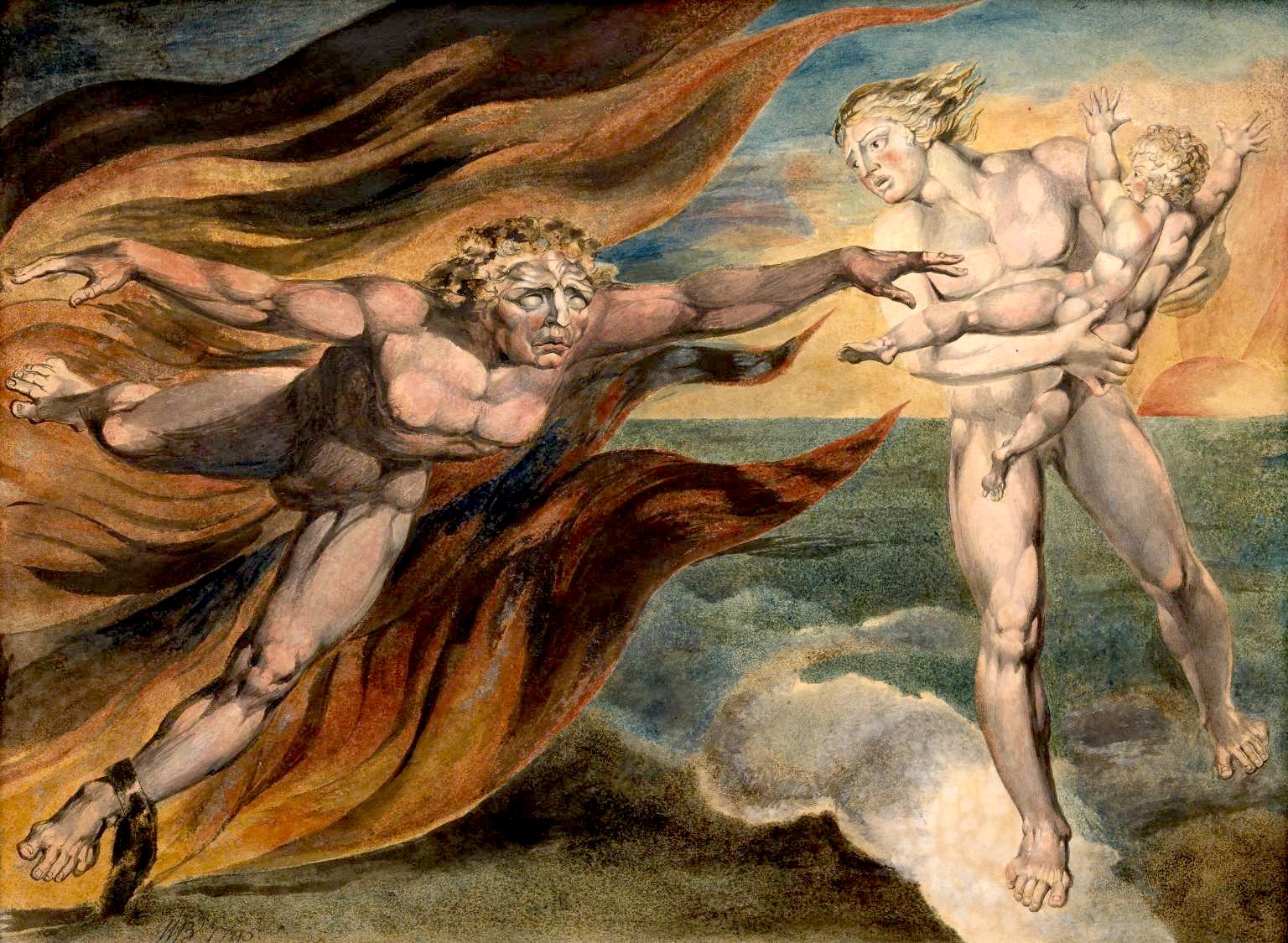
The Good and Evil Angels 1795-?c. 1805 William Blake

I’VE RECENTLY come across a number of posts online by people complaining about the “self-righteousness” of campaigners for a certain candidate to explain why they might, or will, vote for the other guy—yep, the tax evader, debate dodger, academic cipher, political under-performer, and, if the surveys are to be believed, our next President. 

Now, I can understand their irritation. Nobody likes to be told they’re wrong to their faces, or have the truth shoved down their throats. 

I can just hear someone muttering: “How can you be so sure of your manok? Don’t you know she’s an airhead, lost in space, a Bar flunker, an unwitting decoy for the (choose your color—Reds or Yellows)? There may not be much I can say for my bet—and okay, I’ll admit I don’t really know or care what he thinks because he’s not telling—but I prefer him to your insufferable assumption that you and your 137,000 friends are torchbearers for the good, the right, and the just. (And you’re such a hypocrite, because I know what you pay your maids, which isn’t more than what I pay mine, but at least I don’t pretend to be some crusading reformer.) To be honest, it’s you I can’t stand, not since you put on that silly all-pink wardrobe and plastered your gate and walls with pink posters. But guess what—you’ll lose! All the polls say so, and I can’t wait to see you crying your eyes out on May 10.”

Whichever side of the political fence you’re on, I’ll bet my favorite socks (which I haven’t worn for the past two years) that you know someone on the other side who’s thought of or verbalized what I just wrote. The forthcoming election has become a test not just of friendships, but of how far some of us are willing to pretend that all politicians are the same, all opinions are equal and should be equally respected, XXX number of people can’t be wrong, and that whoever wins, democracy will, as well.

This presumes a parity of political, financial, and moral power that just doesn’t exist and probably never did, at least in this country. The playing field is far from even. It’s been horribly distorted by disinformation, vote-buying, intimidation, and who else knows what can happen between now and May 9 (and the days of the vote count, after). The dizzying game of musical chairs that preceded the final submission of candidacies to the Comelec last October (resulting, ridiculously, in the ruling party being frozen out of serious contention for the top two slots) was but a preview of the seeming unpredictability of Elections Ver. 2022. I say “seeming” because there may be outfits like the former Cambridge Analytica that will presume to be able to game everything out and bring a method to the madness that will ensure victory for their clients.

What we know is that this will be the first presidential election, at least in recent memory, where the presumptive frontrunner refuses to be questioned about important issues, faces legal liabilities that would crush anyone less powerful, campaigns on little more than a vapid slogan, ignores China’s encroachment into Philippine territory, claims to know next to nothing about his parents’ excesses, and takes no responsibility for them. Even more alarmingly, his lead in the polls suggests that these issues don’t matter to many voters, thanks to miseducation and disinformation. 

So, no, not all politicians are the same, and not even all elections are the same. But for all its surface complications, May 9 truly and inevitably comes down to a simple choice: that between good and evil—between those who stand for truth, freedom, justice, and the public interest and those who side with falsehood, dictatorship, oppression, and corruption. If you can’t distinguish between the two, or refuse to, or prefer to obfuscate the matter by repackaging it into, say, a war between families or between winners and losers, then you have a problem. 

This isn’t just self-righteousness; it’s righteousness, period. You can’t justify preferring evil because of some perceived shortcoming in the good. It’s in the nature of things that “the good” will forever be imperfect, forever a work-in-progress. It can be clumsy, patchy, plodding, long drawn out, and sometimes, if not often, it will lose skirmishes and battles to the enemy; fighting for it can be wearying and dispiriting. On the other hand, evil is well thought-out, comprehensive, well-funded, and efficient; it can attract hordes to its ranks, and promise quick victory and material rewards. Evil is often more fascinating and mediagenic, from Milton’s Lucifer to Hitler and this century’s despots. But none of that will still make it the right choice. 

Commentators have pointed out that Volodymyr Zelensky, Ukraine’s embattled president, may not be the shining hero that the media has served him up to be, because he had repressed his enemies before the Russian invasion and had established links with neo-Nazi groups. Now that may well be true, although it will be hard to believe that the Zelensky that emerges out of this crisis—if he does—will be the same man he was before.

But none of that excuses Vladimir Putin’s murderous rampage, nor elevates his moral standing, nor permits us to turn our eyes away from the carnage in the smoking rubble. The “Western media” and “Big Tech”—the favorite targets of despots, denialists, and conspiracists—may have their problematic biases, but only the radically lobotomized will accept the alternative, which is the Chinese, Russian, and North Korean interpretation of what constitutes journalism, and of an Internet within a net. 

We cannot let the imperfections or even the failures of the good lead us to believe that evil is better and acceptable. You don’t even have to be saintly to be good. If you’ve led a life of poor decisions, making the right one this time could be your redemption. There are far worse and darker crimes than self-righteousness in others.

Hindsight No. 10: A Princely Welcome

Hindsight for Monday, March 21, 2022

IT WAS a little burp in the flood of election-related stories that we’ve been wading through all month so it may have gone unnoticed by most, but it piqued my interest strongly enough to take note of it for a future column, and here it is.

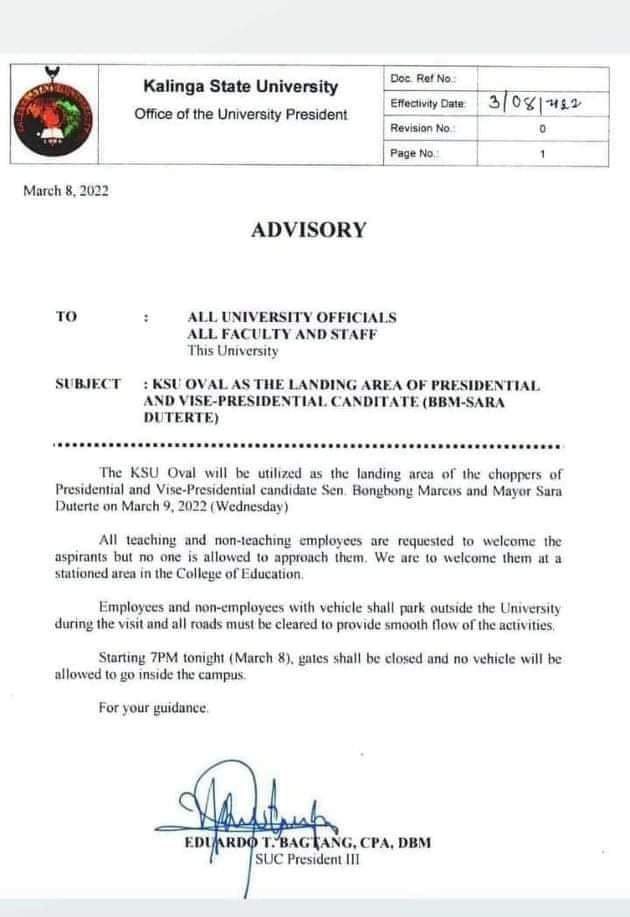
Last March 8, the faculty and staff members of Kalinga State University in Tabuk, Apayao received a memo from their president, Dr. Eduardo T. Bagtang, informing them that the KSU Oval was going to “be utilized as the landing area of the choppers” of presidential and vice-presidential candidates Bongbong Marcos and Sara Duterte the following day. Accordingly, all teaching and non-teaching employees were “requested to welcome the aspirants but no one is allowed to approach them. We are to welcome them at a stationed area in the College of Education.” 

The memo was replete with misspellings and other small infelicities that initially caught my attention as an English teacher, but let’s get past those to the substance of the memo, which was clearly aimed at giving the “Uniteam” combo a warm and hospitable reception. 

Was there anything wrong with that, legally or morally? I’m not entirely sure, which is why I’m raising the question. To be honest, my knee-jerk reaction—as a self-declared non-fan of candidates who avoid debates—was to say yes. To be fair, however, it’ll be good to look at it from both sides, as a study of our culture and its political aspects. The DepEd, the Civil Service Commission, and the Comelec all have rules prohibiting public officials and employees from electioneering. Did the KSU memo cross that line? Was a “request” tantamount to an order?

Just between us Pinoys, it seems the polite and civil thing for a state university president to welcome political candidates. State universities and colleges depend on government support, and whichever parties or officials come to visit, we deem it acceptable if not adroit for SUC presidents to (let’s not say “curry favor”) establish cordial relationships with those in power, or expect to be. (And before we forget, let’s congratulate CHED Chairman Dr. Prospero “Popoy” de Vera, last year’s KSU graduation speaker, for having been named an “adopted son” of Kalinga just this month on the occasion of his visit to KSU.)

Hospitality is arguably ingrained in the Filipino. When then vice-presidential candidate Mar Roxas visited Davao City in November 2009, then Mayor Rodrigo Duterte pulled out all the stops to give him a royal welcome, and even endorsed him for being “clean.” Of course seven years later, running against each other, Rody was calling Mar “the most incompetent Filipino ever to run for president,” but they could both look back to happy memories of walking the streets of Davao together, and of Mar even driving Rody’s pickup truck then. 

Political incumbents routinely welcome campaigning candidates to their territory, which the visitors can spin to their advantage. When Isko Moreno visited Cotabato to meet with BARMM Interim Chief Minister Ahod Ebrahim last month, newspapers were quick to interpret the Manileño’s introduction by Ebrahim as “our incoming president” as a “virtual endorsement” of his candidacy. It was denied the next day by the BARMM spokesman, but denials don’t stick that well in the memory. 

Of course there are thorny exceptions to this ritual politesse. The logistical obstacles reportedly thrown in the way of VP Leni Robredo’s massive rallies by some local politicians and their allies come to mind. Not only were these hosts inhospitable but openly hostile, as if they had been visited and threatened (they probably were) by a pink virus. 

In contrast to the red carpet prepared by KSU President Bagtang and his staff for the BBM-Sara team, a “welcome activity” being planned by the Baybayog National High School in Alcala, Cagayan for Leni set for March 12 had to be scrapped after questions about its “official” nature. The school had sent consent forms for parents to allow their children to attend the activity—deemed “official” because Leni was still, after all, the sitting Vice President, and waving as her convoy passed would have been part of their “civic duty”—but the plan was dropped, to avoid controversy.

This reminds me how it used to be pretty normal for us, when we were kids, to stand at attention under the hot sun for visiting dignitaries, wave flags or flowers, and cheer like our lives depended on it (and maybe, in some ways, they did). We thought politicians, priests, generals, and CEOs were all respectable people and worthy of our admiration. When we realized they were not, the flags and flowers turned into streamers and placards. This is why all but the bravest and most progressive politicians have been loath to set foot in liberal citadels like UP, where a reception of another kind awaits them.

Now, KSU is clearly not UP, by which statement I do not wish to denigrate the strides KSU has made in higher education, which can be found on its website. I refer to the intellectual atmosphere and spirit that inhabit each school and how these are fostered by their constituencies and leadership. KSU, I now recall, was also one of three SUCs that pulled out “subversive” books from their libraries last year in compliance with a much-criticized CHED memo urging them to toe the anti-Red line. Given that background, I shouldn’t have been surprised to find it opening its arms wide to the “Uniteam,” which says it wants national unity for and with everyone—as long as they don’t read, teach, and keep certain naughty books. 

But let’s not be too judgmental, as the campaign season is far from over, and it’s possible that candidates Robredo, Lacson, Pacquiao, Moreno, and de Guzman might yet decide to visit Tabuk, and land their choppers on the greens of KSU. In that case I expect Dr. Bagtang to be his old congenial self and to issue more memos requesting the faculty and staff to welcome the visitors, although I doubt that VP Leni and Ka Leody will be landing in such princely fashion.

Hindsight No. 7: Disinformation and Democracy

Hindsight for Monday, February 28, 2022

(Image from designtaxi.com)

LAST FRIDAY—the 36th anniversary of EDSA 1—I spoke to a group of university students who wanted to know what I thought of Filipino democracy. 

I told them that at EDSA, along with millions of other Filipinos, I jumped for joy at the news that Ferdinand Marcos had fled with his family. We did not know—and might not have cared too much then—that they had brought two planeloads of gold and cash with them to Hawaii. All we wanted to hear was that they were gone, presumably for good, and that we were off to a fresh start at peace, freedom, justice, and prosperity. The darkness of the past twenty years would lift, and a new Philippines would emerge, truly democratic and firmly opposed to any form of despotism.

Today we realize what a fantasy that was, what a temporary reprieve. Under Rodrigo Duterte, if the polls are right, most of our people have once again embraced authoritarian rule, implicitly accepting its attendant excesses. The dictator’s son is back, and may even become our next President—to the delight of his supporters for whom martial law never happened; or if it did, then it was a golden age to which we will soon be returning, an age of new roads and bridges, clean streets, industrial peace, Miss Universe pageants, and eternal sunshine. 

Indeed it would be as if the past half-century between 1972 and 2022 were a confused and hazy dream, and now we were waking up where we had left off yesterday, when Ferdinand E. Marcos was poised to “save the Republic and build a New Society.” His son is making sure that we don’t miss the connection by heralding his entrance at his campaign rallies with the anthem of martial law, “May Bagong Silang.” Most of his followers today have never heard that song, or understand its chilling context, or the price we paid—in blood and in billion-dollar loans—for that “new dawn.” To them, it is a catchy jingle, in marching tempo. It comes with the smell of money and power in the air, the promise of a shower of gold for the hopeful masses. 

This, of course, is also a fantasy, but a powerful one—and I think I will be correct to surmise that many of the students I addressed, and even their teachers, fully believe it. And why not? They were never taught in school about the horrors of martial law. Instead, they were told that those were good times, that the Marcoses were good leaders who were deposed by their enemies and the CIA, that rich people don’t steal, and that the Marcos billions came from the gods, Yamashita, and anywhere but the Philippine treasury. That diet of lies has now become a catered banquet. 

The biggest enemy of democracy today—more than at any other time in our or even the world’s history—is disinformation: the willful distortion or fabrication of information to create false beliefs or impressions in the minds of people, turning bad to good, wrong to right, and vice versa. 

This is happening not only here in the Philippines, but in many other places around the world—including America, where Donald Trump has been pushing the “Big Lie” of a stolen election, despite the lack of any credible evidence. Even earlier, in what has by now become a cliché, Josef Goebbels thundered that if you repeat a lie a thousand times, it becomes the truth. 

During and after WWII, military experts engaged in what was called “psywar” or psychological warfare to weaken the enemy’s mental defenses, lower morale, and make people switch sides. This was done through radio, leaflets, newspapers, and other media available at the time.

Today the prevalence of the Internet and social media has magnified the means for disinformation by a magnitude of millions. And this is scary, because according to a recent survey, every other Pinoy can’t tell real news from fake. How can a society so prone to disinformation—to fake news—function well as a democracy?

Last month, the Akademyang Filipino (on whose Board of Trustees I serve) sponsored a forum on the topic of “Can Democracy Win in May 2022?” Most such questions are meant to be rhetorical, with obvious answers. But this time, the more I thought about it, the more I was bothered by its actual complexity. The problem, I realized, is that we no longer have a clear and common idea of what “democracy” means.

There are as many definitions of democracy as there are politicians eager to appropriate it. “Democracy” has to have been one of the most ambiguous and most abused words of the 20th century, going into the 21st. When a brutal totalitarian state like North Korea styles itself as the “Democratic People’s Republic of Korea,” you know something somewhere has gone awfully wrong. Dictators will call their actions democratic—as Ferdinand Marcos and Muammar Ghaddafi did—by asserting that they are acting on behalf of the people, a responsibility that presumably entitles them to extraordinary powers and compensations.

In my layman’s understanding, democracy is the rule and exercise of power by the people through representatives they choose by a free and fair election. It seems simple, but immediately we can see how vulnerable this definition of democracy is to interpretation and manipulation. What is a “free and fair” election? Does it simply mean an election free of vote-buying, coercion, and fraud?

If a candidate wins more than 51% of the vote without obvious coercion or cheating, then will that candidate have won a democratic election? But what if those voters had been fed provably false information? What if they willingly believed that information to be true, and voted on the basis of it? Would this still be democracy at work? 

Arguably, yes, because democracy never promised only intelligent outcomes. Elections are emotional, not rational, exercises. This disturbs me deeply, but again I have to ask myself, am I idealizing democracy as something that can be perfected? Or should I just accept that democracy, like society itself, is inherently messy, mercurial, and manipulable? 

What kind of democracy do we Filipinos have, and what kind of democracy do we want? The vote this May will help provide the answer. 

Hindsight No. 3: A False Nostalgia

Hindsight for Monday, January 31, 2022

SINCE MY belated debut on Facebook just over a month ago, I seem to have acquired something of a reputation for my posts about the past—not in the scholarly mode of a real historian, which I most certainly am not, but as a collector and keeper of objects that evoke strong associations with times and people long gone. These include century-old fountain pens and typewriters, and even older books and documents steeped in the accumulated oils of the hands that held them.

I’ll admit to having an intense, almost fetishistic, interest in the past—the 1930s are of particular significance to me, because I’m writing a novel set in that period—and I can identify with the romance conjured by postcards of ocean-going liners and of the old Manila Hotel. If you play “Smoke Gets in Your Eyes” on a turntable, you’ll float to the ceiling in my esteem. In my dreams, I fantasize about strolling into the Crystal Arcade one fine day in 1937 and stepping out with a fistful of Parker Vacumatic Senior Maxima pens while towing a cart with all 55 volumes of Blair and Robertson.

But that’s where the nostalgia ends. In many if not most respects—as I’ve told friends who, for example, ask me if UP’s fabled Cadena de Amor ceremony is worth reviving—there’s one place the past deserves to be, which is exactly where it is. Nostalgia is comforting precisely because the past is over, and because we tend to remember just the good parts, and even burnish them to perfection.

But it was never really all that good. Amorsolo’s maidens all seem fresh out of the batis and every Joseon prince’s robes on K-drama seem immaculately pressed even after a swordfight, but the past was literally a filthy place. Queen Elizabeth I was said to take a bath once a month. William Shakespeare and his friends wore those fluffy collars around their necks because that’s all they changed. The lovely ladies of Versailles doused themselves in perfume to quell the odor of their unwashed bodies. The “buntis” window grilles we now admire in old Manila houses were once drenched with dubious liquids being dumped on the street below.

Neither was it so peaceful. Even without counting the devastation of war, the past was fraught with danger, hardship, and unrest. It may have been a grand and glorious time for the rich in their cars and villas, but the masses were suffering in the farms and factories. Power was brazenly exercised, as in the torture and murder of Moises Padilla in 1951. Postwar congressmen carried .45s at their waist into the session hall. As a young police reporter in 1972, I learned where you could find a gun for hire for P500 per target.

We like to think that the past was simple, with fewer choices to be made. But it was never that simple for many without real choices. Poverty was and is never simple, because every morning the mind races to figure out where supper is coming from, and if Nanay can survive on a third of her prescribed dosage or on plain salabat.

All these come to mind when I hear Filipinos today—many of them not even in their 40s—talking about how a return to the “glory days” of Marcosian martial law would set this country back on track and bring us the prosperity, the peace, and the prestige we once enjoyed. I wonder what it is exactly they are “remembering,” and if they understand what putting a Marcos back in Malacañang will mean to this country. This goes beyond the historical amnesia we often hear about these days; the Dictionary of Obscure Sorrows calls it “anemoia,” a nostalgia for a time someone has never known, or that never happened.

No, I’m not calling them stupid or wicked by any means. In many cases they’re simply innocent or uninformed, and therefore suggestible. If they feel oppressed by the present and are facing an uncertain future, the past will acquire the appeal of the womb, offering safety and security. The idealization of martial law as a time when streets were wide and clean and when new buildings were rising right and left is a more inviting prospect for those who can’t be bothered with facts and figures about debt-driven growth, cronyism, and horrific abuses under military rule. (For those facts, check out https://newslab.philstar.com/31-years-of-amnesia/golden-era)

That even oldtimers can wax nostalgic over the Marcos years isn’t hard to understand. Like the Germans under Hitler, many if not most Filipinos then never saw a prison camp, never had a son or daughter tortured and salvaged, never had a business taken over by the regime. Those of us who actively resisted dictatorship were in a distinct minority—as we still are today. Complicity has to be endemic for despots to thrive.

But now once again we are called to arms, in a battle for the imagination—a battle of competing narratives and modes of narration. Will the cold, hard truth alone triumph over romantic fantasy, or will we need to be more inventive in our messaging to get through to those unlike us? Instead of just revisiting the past, should we dwell more on a rosy but realizable vision of the future? Instead of staking out May 9 as a referendum on martial law, should we double down on what a presidential election should be—a competition between platforms and qualities of leadership? (And then use the next six years to correct our history textbooks.)

It’s true that we have good reason to long for seemingly lost or threatened graces like statesmanship and civility (not to mention intelligence) in politics, as well as plain good manners and delicadeza. There are good things we can yet recover and revive from better days, with the right leadership and inspiration. But to do that, we have to save the future from those who would drag us back 50 years into a past that was as morally sordid, as violent, and as dispiriting as anything that ever happened in our history. 

My Wishes for the New Year

EVEN AS we all wish for a more benign 2022, free of Covid and conflict, we know deep within that our biggest battles lie ahead in the war between good and evil that it has always been—not between parties nor personalities nor platforms, but between those who will lie and steal and kill, and those who will fight for truth, justice, and prosperity for all.

Good and evil is as stark and simple as it gets, and no amount of spin or sophistry and certainly no surveys will change that. Even one good person in a roomful of the malignant and misled will still be right, and worthy of our praise and emulation.

And whatever happens in May, our struggles will not cease. Evil is a virus with infinite mutations. Our corrupt and power-hungry politicians are worse than Covid, and have infected the masses of our people with their lies and false promises. But they can be arrested and contained, with vigilance and resolve.

For myself, I cannot be a friend to anyone who willfully supports and benefits from those who will plunge our country into another six years of moral and economic ruin.

I look to 2022 as an opportunity to stand up and be counted among the forces of the good, whatever my personal faults and impairments may be. The only survey or judgment that will matter will be God’s, and I would like to be able to tell my Maker that I did the right thing when it mattered—that I managed to remember the difference between good and evil, and chose rightly.

I can only wish you feel the same, so we can have a truly happy and liberating New Year!

(Image from candles.lovetoknow,com)

Penman No. 427: Lights and Loudspeakers

Penman for Monday, November 8, 2021

THE ELECTION season is upon us, and for Pinoys for whom Christmas begins in September, November 15 can’t come soon enough to start figuring out who they’ll be voting for on May 9, a full half-year down the road. That date should really have been October 8, the official deadline for the filing of candidacies, but given our penchant to further complicate the already-complicated, we just had to set the stage for the last-minute substitution dramas we expect to happen by next Monday.

What couldn’t wait for November 15 or even October 8 was the onset of the propaganda war—the long series of campaigns and battles for our hearts and minds, with the prize being the right to seat someone you think you know and who thinks they know you in the Palace by the Pasig. And if there’s anything we can depend on to display Pinoy character and creativity at their best and worst, it will be a political exercise like a presidential election, during which people who had been largely content with watching telenovelas, munching sweet corn, playing pusoy, and sharing some kakanin with the neighbors suddenly rediscover their convictions, prejudices, longings, and peeves, and jump onto one bandwagon or another, many with knives drawn. (Of course, there are others who had been suffering in silence and gritting their teeth for the past five years, just waiting for the trumpet to sound from the top of the hill.) 

As a boy in the 1960s whose father kept getting roped into some politico’s campaign, I reveled in the hoopla that heralded every election. The contending parties held rallies in the plaza or the bukid (depending, I guess, on whose side the incumbent mayor was), and places more often attended by dog poo and carabao dung were transformed into one-night circuses. 

The stages were festooned with banderitas, and the lights and loudspeakers promised an evening of entertainment, at least from the movie stars, singers, and comedians whom the people really came for, before the real jokers running for congressman or mayor came onstage. Bands played as pickpockets worked the crowd. They gave away fans, hats, key fobs, stickers, and anything they could stamp a candidate’s face on, and if you were lucky you got a T-shirt—flimsy as hell and reeking of paint thinner or whatever it was they used for silkscreening. I’m sure some folks got more than that, but being too young to vote, I missed out on the serious stuff backstage.

The speeches were loud and bombastic, and you stood in rapt attention, feeling like a droplet in a huge surging wave about to engulf the nation. (Decades later, someone would call this “astroturfing.”) One particularly artful speaker might weave a tale of woe, of how the people had only themselves to blame for all the misery they had sunk into, because they had cast their lot with the other party in the previous election. (Decades later, someone would call this “gaslighting.”) Every candidate promised the moon, the stars, and a galaxy or two of blessings dependent on his or her election: more artesian wells, more puericulture centers, free dental clinics, free coffins, and a lechon for every barrio’s fiesta (loud applause). At some point, some bags of rice and boxes of milk might even go around, the word “RELIEF” overstamped with its new donor’s name.

No self-respecting campaign today would not claim a party color or motif—pink, white, blue, checkered, etc. (What was that? Pink as well? Maybe I should have said “No self-respecting campaign today would claim another party’s color.”) Back in the day, this didn’t seem to be a big deal. The Nacionalista Party’s colors were red, white, and blue, while the Liberal Party’s colors were—well, red, white, and blue. At least, if you were a Liberal today and a Nacionalista tomorrow, which sometimes happened, you didn’t have to change your wardrobe or your paraphernalia.

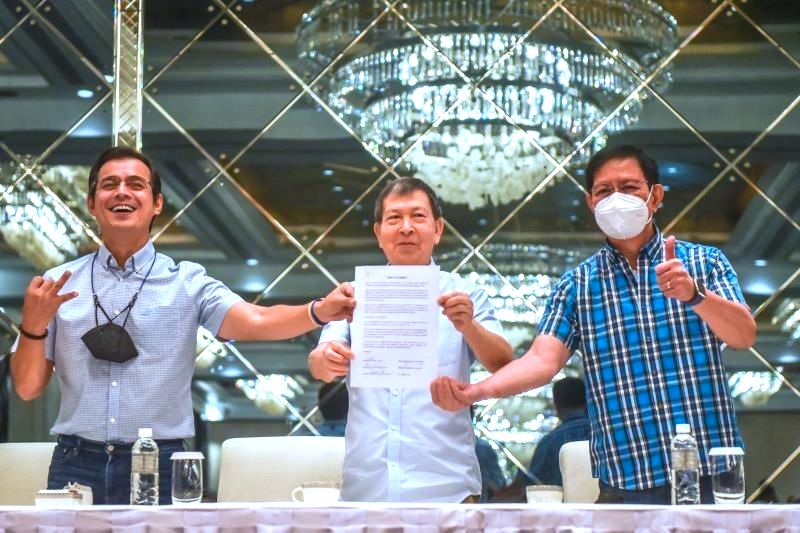
Neither do I recall proprietary hand signs then, like the Cory-Laban “L” that helped to overthrow her predecessor, and FVR’s jaunty thumbs-up. Ferdinand Marcos flashed the “V” sign, but that had been around for ages, and is now more widely associated with young girls in white socks trying to look their cutest for the camera. I suppose it stands for “victory,” although the “V” word that springs to mind most quickly when I hear that particular name is “vaults.” (Is there such a word as “villions,” like a billion billions?) Mayor Isko has appropriated the “No. 1” sign, with the forefinger pointing up, as if to suggest he has nowhere else to go. (That other mayor who became President, which must inspire Isko, prefers raising the next finger.) 

Frankly Leni’s hand sign remains a bit of a mystery to me, and I haven’t seen one from the boxer and the police general. At any rate I doubt this election will be won with carpal contortions. After all, there are only so many things you can do with your fingers, and the Vulcan “Live long and prosper” hand salute is difficult enough to master.

The fight, as everyone says, has gone to the Internet and the airwaves, and while we may like to believe that everything has changed in half a century, the very players on the field tell us they haven’t—only the lights and the loudspeakers have. So now, as ever, truth, reason, and justice will remain the underdogs, and those who root and clap for the jokers will end up getting their pockets picked.

(Photo from asiatimes.com)

The President We Deserve

I GREW up a Marcos believer.

He was the guest of honor at my grade school graduation in 1966. Newly elected, he looked every inch the hero he said he was—handsome, dashing, gifted with a golden tongue. Watching him I thought that a President was a great man, greater than all of us.

Just seven years later, I spent most of my 19th year in martial-law prison. I was there because the President I admired as a child had lied to me. He said he wanted to make the Philippines great again. Instead he acquired more power and more wealth, for which he stole from both the rich and poor, and punished those who opposed him. 

That included young students like me. They called us “radicals” and put many of us in prison, and many of my friends suffered horrible deaths. Sadly, many more Filipinos didn’t care. Happy to see new roads, they did not know that billions that should have gone to their food, housing, and education went to secret bank accounts abroad.

I was at EDSA when Marcos left, and I was overjoyed that a good and honest woman would now bring change. But even Cory couldn’t do it alone. The system was too strong. Many Presidents followed Cory, some better than others, but the lust for wealth and power did not leave with Marcos. And instead of being remembered as the man who destroyed Philippine democracy, Marcos became a model for some of his successors, who not only buried him as a hero but who now want to resurrect him in his son.

When VP Leni Robredo offered herself for the presidency and said “Mas radikal ang magmahal,” I had to think long and hard about what she meant, and what kind of difference she would make in our lives and futures. Was she asking us, like Jesus, to love our enemies? After all the evil—the corruption, the oppression, and the despotism—we have been through, could we find it in ourselves to love those who clearly do not love us?

And then I remembered what another visionary, Martin Luther King, preached on the same subject. He said: “In the final analysis, love is not this sentimental something that we talk about. Love is creative, understanding goodwill for all men. It is the refusal to defeat any individual. When you rise to the level of love, of its great beauty and power, you seek only to defeat evil systems.”

And that’s when it struck me that the real enemy is not people, but the “evil systems” that have created and supported the Marcoses among us. It is not one man or family we must vote against, but what they represent.

The easy temptation is to focus on personalities and their shortcomings. The harder option is to fight for the good and the positive.

These are the values and ideals that many of our national leaders, by their speech and behavior, have forsaken over the past five years. These are what VP Leni reminds us are worth loving and living for. And in today’s environment of violence, fear, and falsehood, to love them is to be radical indeed:

God. Country. Freedom. Justice. Peace. Truth. Life. Beauty.

Big words, they take big hearts and minds to accommodate. If I can find that largeness in me, then I can be a radical again, and instead of imprisoning us, our new President will free us from our past to become the nation we aspire to be. And that President—the President we deserve—can only be as great as we ourselves can be.

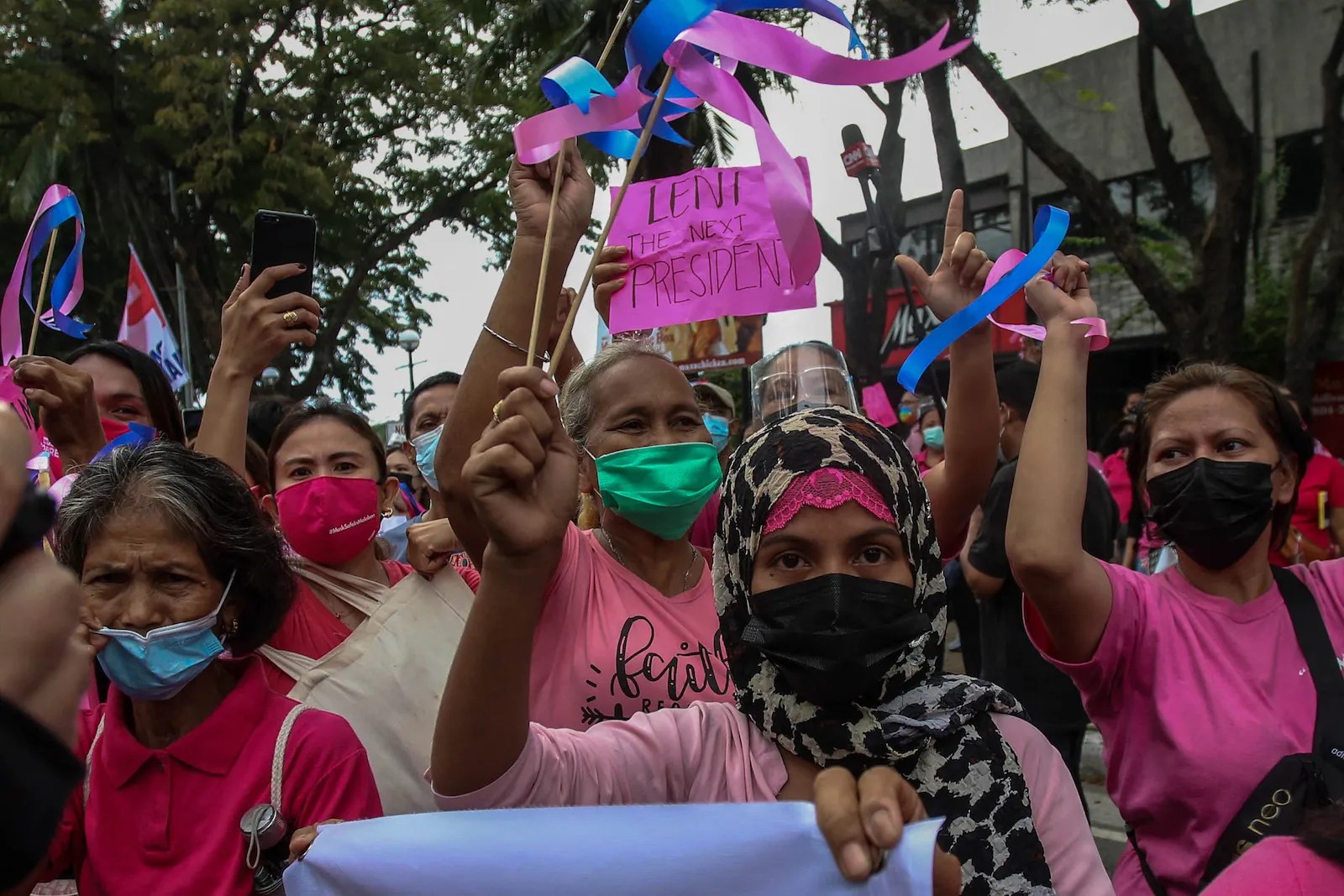
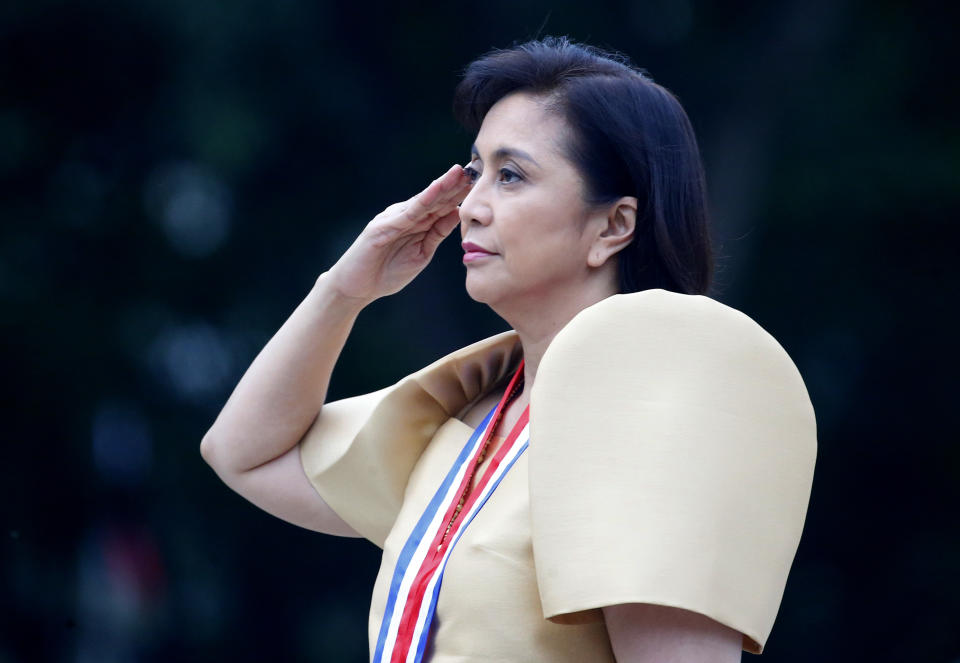
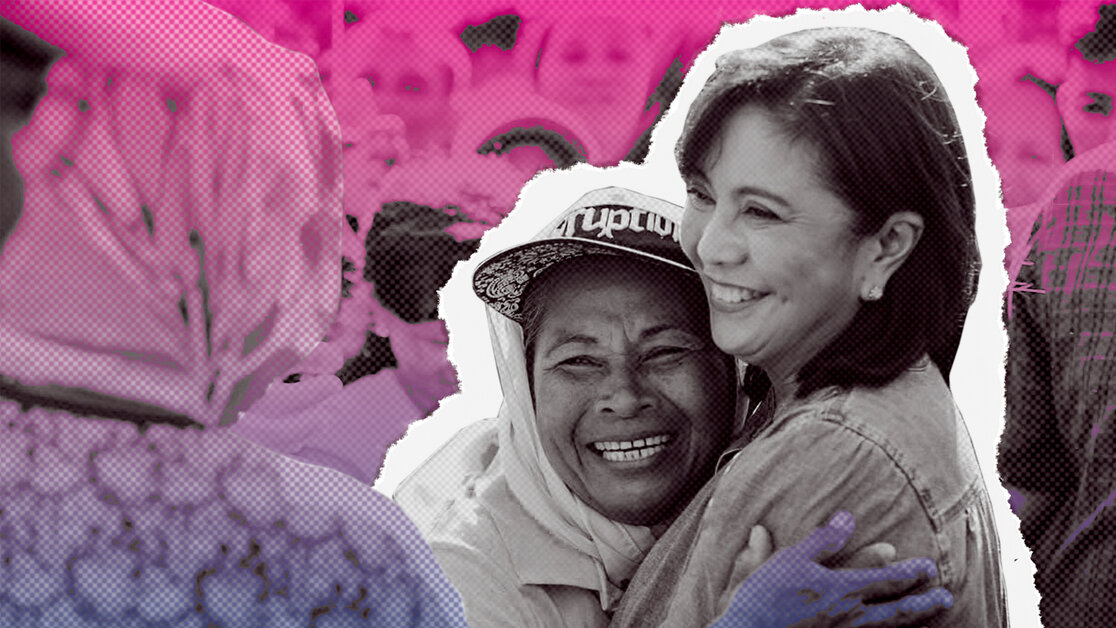
(Photos from ph.news and the Friedrich Naumann Foundation.)