Penman No. 473: Taking Care of Emy

Penman for Friday, May 9, 2025

MY MOM Emy turns 97 today, May 9. Some years, her birthday coincides with Mothers’ Day, saving us a celebration. But that’s a bit deceptive, because when you have a parent this old living with you, every day is a blessing worth celebrating. 

It’s hard to believe that Mommy Emy is a lot healthier than she was a quarter-century ago, when we all feared that we were about to lose her, just a few years after our dad Joe Sr. passed away in 1996 from a ruptured aneurysm. After all, the stories usually went that way—one spouse dies, the other follows soon after, out of grief or a sense of life suddenly losing its purpose and meaning. Whatever caused it, Mom fell ill with tuberculosis, with the disease progressing so devastatingly that she was coughing blood and feeling terribly weak. Luckily, her doctor put her on a menu of cutting-edge pills that, over two years, miraculously banished the TB, well enough for her to secure a US visa to join my sister Elaine in California.

Over the next decade, she regained her strength, and even as she sorely missed our dad, indulged in a newfound zest for life—traveling with my sisters in the US, Canada, and Europe, visiting glaciers, going up the Tower of Pisa, and settling into in the quiet suburbs of Virginia just outside of DC with Elaine and her husband Eddie. She stayed there long enough to gain a green card, and we would visit her every now and then, sensing that, despite Elaine’s and Eddie’s loving care, she was pining for home. Eventually she did return to Manila, giving up her green card. “I want to die here,” she stated with finality, and that was that. 

One thing I love about my mom is her eminently practical sense. Since at least five years ago, she has written out clear instructions about what to do in case she was dying—no intubation, no extraordinary efforts to prolong her life, just as quiet and as painless a departure as could be managed. Last year we went out with her to the department store to pick out her funeral dress—a macabre chore to some, but for us, and especially for her, a cheerful excursion, with much discussion about this cut or that shade of blue (yes, she’s going in blue). 

She was born in Romblon a landlord’s youngest daughter, the apple of his eye, the only one to go to UP in Manila, from where she graduated with an Education degree. Growing up, she rode a horse on the farm and accompanied my Lolo Cosme on his trips to Manila. She remembers how easy and provident life was back then: “We would go to the beach and Papa would throw a net into the water, not far from shore, and it would come up teeming with fish, and the fish were everywhere, jumping in the air.” 

My father was a sharecropper’s grandson, too poor to finish college but with a sharp mind and a gift for words that must have swept Emy off her feet. Like many couples of their time and place, they decided to seek their fortune in Manila a few years after I was born. Their love was deep but often tested, given that there were five of us to raise. There was even a time when Dad was a barker for jeepneys, and Mom worked as postal clerk for minimum wage. Life sometimes felt like a soap opera, but we all pulled through, and often it was Emy’s internal toughness that made sure we were fed and ready for school.

Since her return from Virginia, my mom has been staying with us in UP Diliman, occasionally spending time with my three other siblings (Elaine is now in Canada). Still figure-conscious despite her age, she watches what she eats, but we indulge her every whim. It doesn’t take much to make her happy—almost daily Facetime calls from Elaine in Canada and our daughter Demi in the US, a weekly manicure, visits from her brood, and Tuesday Circle get-togethers with her group of neighborhood friends, among whom she is now most senior. 

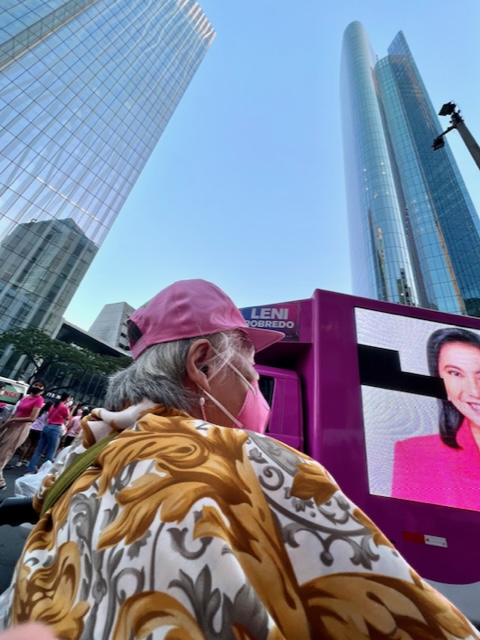
What surprises people who meet her for the first time is how strong and alert she is. She uses a cane and a walker (but only because we insist), but she takes long walks daily around the yard and just outside the house. Her steps are getting slower and harder, but she marched for Leni in 2022, in gratitude for which the VP sent her a video greeting on her 95th birthday. She reads without glasses, and plays word games on her iPad with a passion; she follows Netflix, and watches the news with tart commentary. She’s as prayerful and religious as they come, but is staunchly liberal in her politics. “All my friends are dead” is her frequent complaint, quickly balanced by “But I’m so thankful for my children!” She and Beng share long meals and laughter-filled conversations. We have no doubt that as long as she takes her maintenance meds and doesn’t suffer a bad fall, she’ll live to be a happy hundred. 

Emilia Yap Dalisay’s name will never make it to the society pages, but she’s the biggest star in our small stretch of sky, and taking care of her has been our grandest privilege. Happy birthday, Mommy Emy, and may you have as many more years to come as God’s kindness will allow.
Qwertyman No. 39: My Mother Emy

Qwertyman for Monday, May 1, 2023

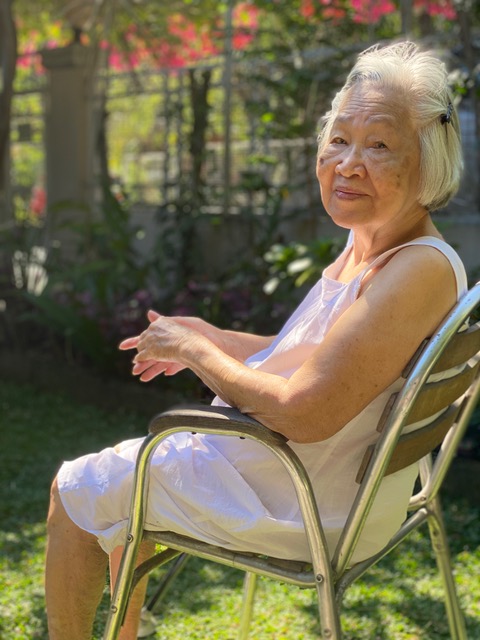
Pardon me if my column this week is a bit personal, because its subject is my mother Emilia, who will turn 95 next week, against all odds and through the grace of the One she prays to every night and every morning, and in the loving embrace of her five children and many grandchildren and great-grandchildren.

In this age of murderous Covid, rampant cancers, devastating disasters, and political turmoil, to reach 95 is extraordinary. To be 95 and be reasonably healthy, free of dementia (but for a few memory lapses that even I at 69 am prone to), able to walk a few hundred meters for her daily exercise, read without glasses, and comment tartly on the day’s political and entertainment news is almost superhuman. 

Like today’s children, my mom Emy can’t be removed from her iPhone and her iPad; she loves to play word games, beats my wife Beng at Scrabble, devours Netflix by the series, and has her telenovela programming graven in stone. She has daily Facetime audiences with our daughter Demi in California and my sister Elaine in Toronto. She even gave up her US green card to spend, she says, the rest of her time at home. In her “Tuesday Circle” of elderly friends, she is now the most senior, but hardly the most infirm. Best of all, she looks forward to reading my books and columns, and although I suspect that they sometimes bewilder her as much as they do my other readers, she invariably likes them because they were written by her first-born, who cannot possibly write anything badly. (This week’s surprise column, I think, will be a hit with her.)

A quarter-century ago, shortly after my father Jose Sr. died, we thought we were going to lose her as well. That’s what they say often happens—one dies, and then the other follows, in the utmost expression of devotion and sympathy. Emy was diagnosed with tuberculosis, so serious and advanced that we felt we were gathering at her deathbed, her sheets spotted with the blood she was coughing up. I had never seen her so frail and so helpless. She was missing my father terribly, and I’m sure she wouldn’t have minded leaving us to join him at that moment. 

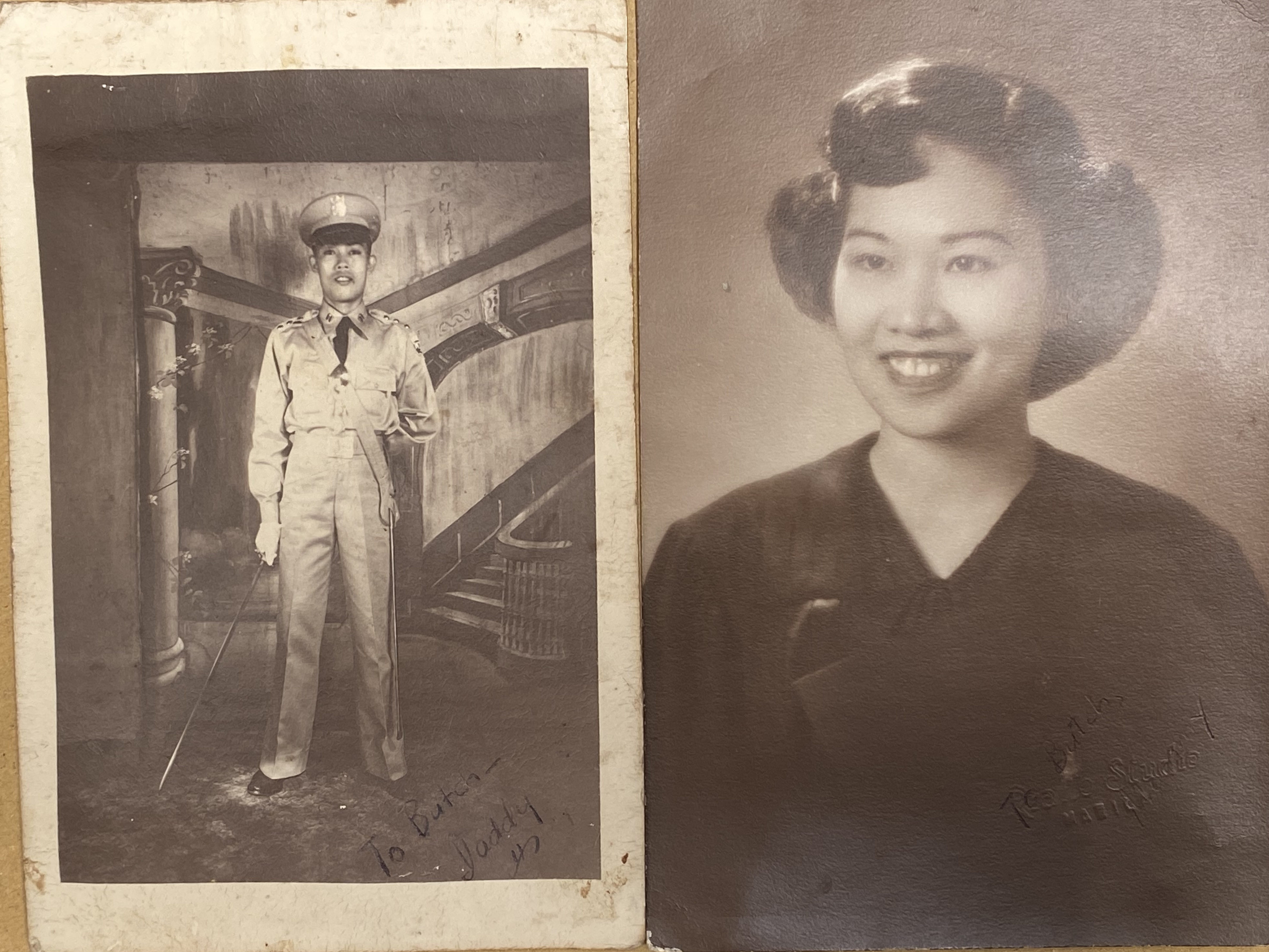
Theirs had been a storybook, whirlwind romance. She was the youngest daughter of a landowner in Romblon, the only one in their brood of twelve whom her father had trusted to study and go to college in UP in Manila. She was her father Cosme’s pet, a girl who rode horses on his farm and who accompanied him when he took a boat to the big city to off-load his copra harvest and to buy necessities and a few baubles for his large family. It must have pained him when she decided to finish her high school in Manila (“I was walking on Padre Faura and saw UP High, and so I went in to see how I could study there,” she says) and to stay there so she could study to become a teacher.

My father Joe was the brightest boy in his school and, so the local legend goes, in the whole province. He was an eloquent writer and speaker and cut a dashing figure. The only problem was, his family was poor—his grandfather had been a sharecropper, his father a farmer. His parents had separated shortly after he was conceived—another story that deserves a telling of its own—and lived about a kilometer apart for the rest of their lives. Raised by my grandmother Crispina, Joe seemed destined for great things far beyond Romblon. He already had a girlfriend, among the town’s prettiest bachelorettes (I met her once when I was a boy, unaware of why she was looking at me a certain way.)

One day Emy and Joe met at the pier in Manila waiting for other people and other things. Some sparks must have flown, because not long after, they were together and engaged to be married. I was the first outcome of that improbable union, born in a nipa house in Alcantara, Romblon, pulled out of my mother by a midwife (whom I would meet about twenty years later, walking barefoot on the asphalt road, and whom I would rather awkwardly gift with a pack of Marlboros in token thanks for my delivery).

The decades following would be a mixture of toil and triumph, of struggle and hope. Both my parents had enrolled in law school, but the need to sustain us foiled that dream. Joe had even gone to the police academy, in the class of James Barbers. He clerked for Public Works, became a Motor Vehicles Office agent with a shiny badge, and took on all kinds of jobs to support us. My mother Emy, despite her pride as a UP Education graduate, soldiered on beside him and sold stamps as a postal clerk. We went through some very rough times, constantly moving around the city with all our worldly possessions on the back of a truck in search of more affordable lodgings. Sometimes my father would be gone for long periods, working as far away as Mindanao to be able to send us some money. 

But one thing they always held up for us was the value of education. My parents slaved and my siblings sacrificed so I could go to a private school, thinking like most Filipinos of their generation that a facility in English would be my ticket to success. It was a huge relief for all (and a good excuse to buy our first TV) when I got a full scholarship to the PSHS. So it must have felt like a stab in my mother’s heart when I announced, shortly after entering UP on the swell of activism, that not only was I not going to be a scientist (my Math grades were miserable) but that I was also dropping out of college to find work (which I did at 18, to write for the Philippines Herald). Despite everything, I wanted to follow in my father’s footsteps and gamble on my talent.

But I did come to my senses and many years later returned to school, where I remain to this day, with a lofty title my wife Beng prefers to downplay to “Chauffeur Emeritus.” Instead of following Joe to his grave, my mom Emy fought back, miraculously recovered, traveled the world, and cradled her great-grandchildren. So good things do happen to those who persevere and survive, for as long as we’re willing to give life another chance.

I honestly don’t think I’ll reach 95 myself, but I have the privilege—and the challenge—of living with someone to inspire me every day. Happy 95th, with all our love, Nanay!

Hindsight No. 17: The True Winner

Hindsight for Monday, May 9, 2022

(Photo from lumina.com.ph)

I HAD another column all lined up for today—Monday, the 9th of May, arguably the most important Monday of this year if not the next six years. But I’d forgotten that the ban on electioneering, which started yesterday, won’t end until midnight tonight, so I’ll shelve that piece for another time—with major revisions likely, depending on the outcome of today’s vote.

Maybe it’s just as well that that happened. It forced me to pause and simmer down for a while, just when emotions and tempers were rising to a boiling point and nothing else seemed to matter but politics and the colors of our T-shirts.

I’m sure I’ll be speaking for many of us—and even across the political divide—when I recall that just a year ago, we all led what seemed to be normal lives, or at least as normal as lives could get under a crippling pandemic. We were in deathly fear of a virus we couldn’t see, of getting infected by some pasaway neighbor or relative, and of dying by our lonesome in a strange hospital ward with a tube stuck down our throat. Our chief concern was survival—as individuals, as families, as communities. We walked around like inter-galactic travelers in face shields and face masks, soaked in 70-percent alcohol, hands raw from constant washing. We felt lucky to be alive, never mind that the cinemas were closed, restaurant food was takeout-only, and we all became talking heads in little Zoom boxes. Today we can afford to chuckle a bit at the memory of those days, even if we know—or have to be reminded—that those days are far from over. 

But just as the influx of vaccines brought a steep drop in Covid rates, another contagion appeared on the horizon—election fever. Its symptoms included not only indifference to other diseases like Covid, manifest in the sudden and universal disregard for “social distancing.” They also showed in an increased propensity for loudness and even bellicosity in public discourse—especially online, where sticks and stones came free by the ton. The emergence of candidates and choices meant the emergence, as well, of our long-cherished biases and preferences. 

Our candidate defined who we were, and because of that, we took everything personally, responding to every swipe and gibe as though not only civilization itself were under attack, but also our gut, the precious and tender core of our very being. We felt hot under the collar every time our champion was maligned, and often returned the gesture with equal vehemence, thankfully with a dash of Pinoy humor. Whichever side we were on, we believed that nothing less than the nation’s survival was at stake, something larger than ourselves. We could survive Covid, but the loss of one’s candidate seemed like an even graver existential threat. 

Many years from now, the drama of this election will be remembered for its intensity and divisiveness, for the rancorous fervor with which many partisans fought for their beliefs, or for their scripted spiels. Some operators showed us just how low and how nasty a campaign could go, with the leanest of morals and the fattest of budgets. Never has so much been spent on promoting falsehood and obscuring the truth. Never was the public’s intelligence valued less by candidates expecting to coast to victory without having to be asked difficult questions and to account for their liabilities. Never did surveys, scientific and otherwise, seem so opaque and perplexing, like hazy oracles supposed to convey some prophetic message. 

But it will also be remembered for its creativity, its outbursts of spicy wit, its spontaneity of generosity and the communal spirit. Never have we witnessed a campaign so heavily reliant on the kindness of strangers, who ceased to be strangers in an instant of mutual recognition. Never have we seen crowds so huge—wait, yes, we have seen multitudes mourning a martyr’s death, or forming a human tidal wave to sweep a dictatorship away—but not hundreds of thousands massed for the sheer joy of congregating for the good. Never have rallies—once gatherings devoted singularly to the expression of popular anger and dismay—been so uplifting and flush with hope, like a cathedral without a roof raising its prayers to the sky.

And whatever happens today and in the weeks and months to follow, those rival strains will remain in the air—the noxious fumes of the devil’s workshop and the cool and cleansing breezes coming down summits too high for us to see. I think we will realize and understand that this election, as titanic a clash of values as it was, is but another episode in the larger and longer story of our continuing quest for nationhood, another tentative answer to the question of who and what it is we want to be. That story and the conflict at its heart will go on for generations more, and every six years our people will have a chance to choose between right and wrong, between redemption and damnation, between wisdom and ignorance.

Those of us who feel that they chose rightly today have no cause to regret their action, regardless of the outcome. You voted not just for your candidate, but for the best Filipino in you, which can never be a loss; you have passed the test of faith in the good and just. It may take longer for others to reach that point of peace with oneself. The results might suggest that there are more of them right now than you—which only means that there is more patient work to do, and also more time to do it, beyond the frenzied crush of the past few weeks.

On a personal note, today my mother Emy turns 94. She is eager to cast her vote, knowing that it could be the last time she will choose a president to lead our people. She cares about who will win, for our sake. More importantly, she cares about choosing wisely, for the sake of her soul. She knows something many of us have forgotten in the flood of surveys and fake news: that the only true winner in these elections is the one who can show God his or her ballot with honest pride and joy.