Qwertyman No. 141: Purity and Perfection

Qwertyman for Monday, April 14, 2025
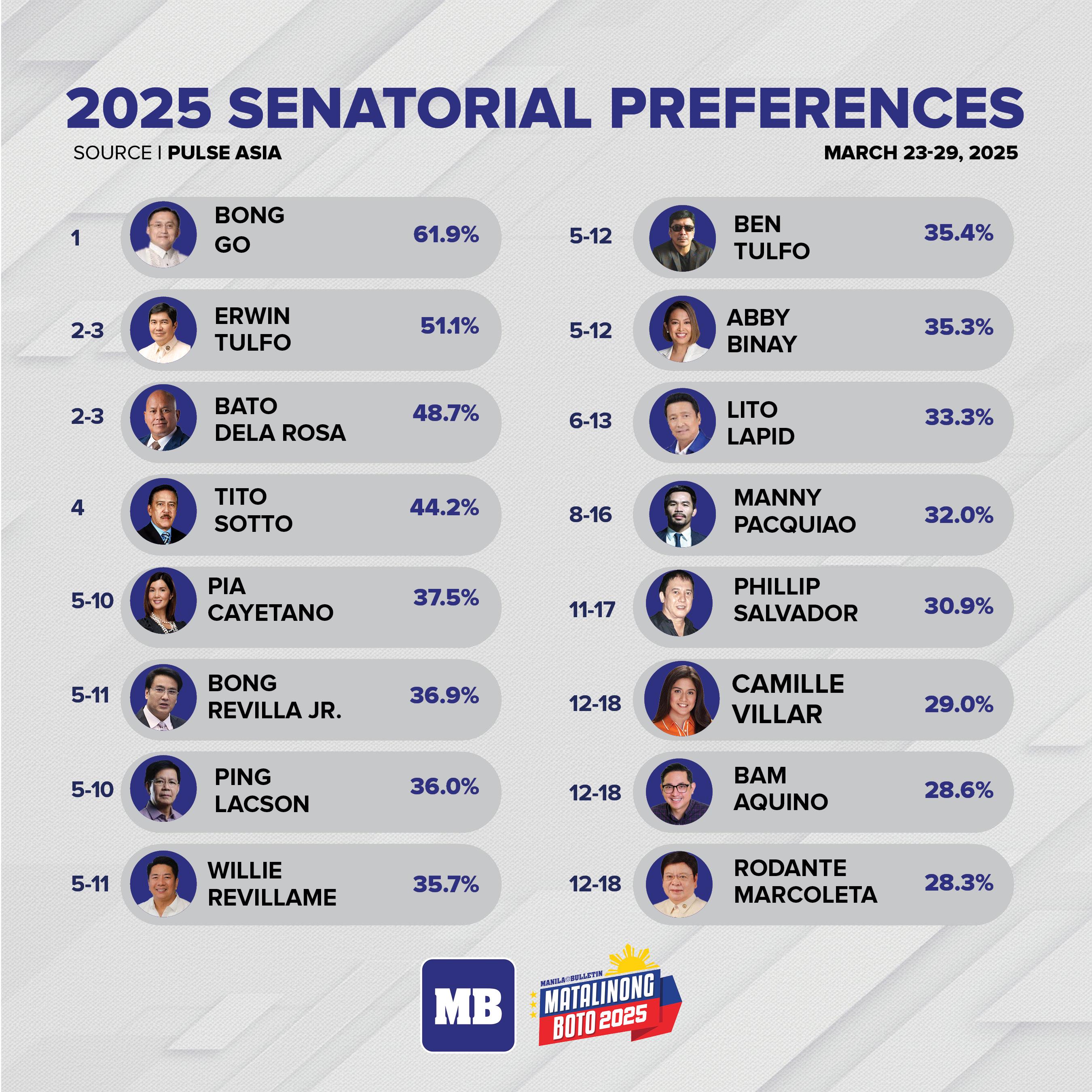
LAST WEEK, former Commission on Audit Commissioner and senatorial candidate Heidi Mendoza—a staunch exponent of good governance and nemesis of crooks—drew flak from some people who would have been her natural allies on the liberal side of the political spectrum: the LGBTQ community. At issue was her expressed disagreement with same-sex marriage, as a personal belief she did not seek to impose on anyone else. That still wasn’t enough for some same-sex marriage advocates, who announced their withdrawal of their support for her candidacy.

Of course both Heidi and her detractors have a right to their opinions, but I can’t help thinking that the only people chuckling at this situation are avatars of neither good governance nor gender rights, but the enemies of both.

Heidi Mendoza hasn’t been alone in this position of being seen to have been right on many things but wrong on—well, something, but something big enough to destroy and erase whatever good they’d done before. “Being seen” is important here, because it’s a matter of perception; like beauty, “wrongness” is in the eyes of the beholder. 

Today’s social media is populated by such beholders who can’t wait to see personalities make what they deem to be mistakes, and often to point those out with all the hawkish attentiveness of dancesport judges and the ruthless certitude of Pharisees. 

I’m sure you’ve come across many more such instances of people whom you thought you knew and whose ideas you had largely agreed with, only to find them—suddenly one morning—the object of the nastiest vitriol the Internet can be capable of dishing. Once blood is spotted in the water, the sharks start circling and a feeding frenzy follows. Many comments simply echo the previous one, seeking to be even louder and crueler; little attention is paid to context and nuance.

Witness what has happened just these past few weeks:

A political scientist and commentator who had grown a substantial following for his liberal positions got skewered for comparing Mindanao to sub-Saharan Africa. Never mind his explanatory reference to a scholarly study which made that comparison based on certain criteria. In the verbal shorthand of a TV interview, the soundbite was all that mattered to many.

An expert on infectious diseases—globally recognized in that field—was savaged for opining that former President Rodrigo Duterte should have been tried by a Philippine court instead of being bundled off to The Hague. Never mind that the good doctor made it clear that he was against EJK and all the wrongs that the old man is now in the dock for. Netizens seemed to take it against him that he tried to explain how many Mindanawons felt about Duterte, and that he had worked under that administration to help stop Covid during the pandemic.

A prominent journalist and exponent of ethical journalism—also a fervent convert to evangelical Christianity—upset and lost many friends when he declared his disagreement with the idea of transgender athletes competing with their biological counterparts. (It was a view shared by a former student of mine, a lawyer and legal scholar of the same religious persuasion.) This man’s longstanding commitment to the truth and to justice seemed trivial compared to what he had to say on this one issue.

No doubt these issues are centrally important to some, the litmus test by which they judge people’s character and their “true colors.” But which color is truly “true”—the mass of blue or the spot of yellow? And what effect does single-issue politics have on the big picture?

I wonder what all those Arab-Americans who withheld their vote for Kamala Harris because she didn’t sound pro-Palestinian enough are thinking now that the man they effectively helped return to power is speaking unabashedly about Gaza as “an incredible piece of real estate.” I know that some continue to insist that they did the right thing in holding on to the one issue that mattered to them, and of course it was their right to do so. But I can’t help thinking of all those Fil-Ams who trumpeted the Orange Guy’s alleged support for the rights of the unborn, in disregard of all the pain and misery he’s causing to the born. 

Me, I’m as liberal as they come, with all of that word’s pitfalls and contradictions. I believe in civil liberties and human rights, in free speech, in freedom from censorship, in the equal application of the law for all. I also support divorce, same-sex marriage, abortion rights, transgender rights, and gun control. I stand neither with Zionists nor Hamas but for peace for the people of Israel and Palestine. I believe in and pray to God—a God who is good and just—but mistrust organized religion and both extreme Right and Left (indeed, anyone who claims to know how life should be lived) and resist doctrine of any kind, whether Church, State, or Party. If you’re my FB friend and you find any of these too reprehensible for comfort, feel free to unfriend me, or to stop reading this column. 

I have to admit that, following major upheavals like the 2022 election and the Duterte arrest, I’ve lightened my roster of Facebook friends by offloading a number of characters whose preferences I loathed. I didn’t have any qualms about that, because they were “friends” only in the shallowest Facebook sense of the word. (I find Facebook useful, but blame it for its degradation and devaluation of “friendship.”) Most had never interacted with me, and neither of us would miss the other.

But there are friends you have in real life who are arguably worth more than their politics or religion. By this I don’t mean that they fatten your bank account or make your life easier (although some might); if anything, they remind us how much more complicated people and life can be, and how ideological purity or moral perfection may ultimately be less important (and certainly more boring) than the challenge of finding some common ground and surviving together. In continuing to talk with them, we talk with ourselves and those parts of us still capable of doubt and wonder. 

So disagree as I may with her on this particular point, I’m voting for Heidi Mendoza. I suspect I stand a better chance of convincing her to support same-sex marriage than of straightening out the crooks and dimwits eager to take her place in our already benighted Senate.


Penman No. 433: Finally, Facebook

Penman for January 16, 2022

My Lifestyle column in the Philippine STAR, “Penman,” has now been moved to every other Sunday, to avoid the awkwardness (and extravagance) of having two of my columns appear in the paper on Mondays. My takeover of F. Sionil Jose’s “Hindsight” on the Op-Ed page debuts tomorrow.

I WAS sixteen years late to the party, but I finally gave in and opened a Facebook account last June under my name, initially just for family. A few weeks ago I began accepting “friends,” of which I now have about 600, and I don’t intend to add too many more, although time and tolerance could change that reticence as well.

I resisted joining Facebook all those years for all the reasons some of my real-life friends remain staunch holdouts. Foremostly, it seemed to diminish and commodify the idea of friendship, replacing what should have been forged over conversation, coffee, and even conflict with a few keystrokes. Even now, looking at the roster of my newfound “friends,” I know—and do not really regret—that less than half of them are people I have actually broken bread or raised a toast with.

Honest to God, not being a politician, I don’t need 5,000 friends; I wouldn’t even know what to do with 1,000 of them. If they all pledged to buy my next book, then maybe I’d reconsider and lower the bar by a foot or two, in the cause of promoting literacy and my Fountain Pen Rescue Fund.

And then of course Facebook is a total timesuck, defined by the Urban Dictionary as “the void that gets created by engaging in an activity that seems like it will be short but ends up taking up huge amounts of time.” It’s just not human not to read and then not to respond to comments on your posts, and then not to read the posts of others and not to react to them.

Every “tag” might as well be a distress call; somewhere out there you’re being praised or reviled, and you just have to pause that report you’re drafting for the Board of Regents or that article you’re refereeing for the Journal of Linguistics to see what Cookie has been saying about that encounter in Boracay or Chef Dodo’s opinion of your dinuguan recipe.

As it is, even deciding who gets to be your Facebook “friend” or not raises all kinds of vexing and time-consuming moral dilemmas. I don’t know how others do it, but I review nearly every request I receive, going through that person’s profile—and not just our common “friends”—to see who and what’s behind the name. My rule of thumb is, if I really know you—and like you—then you’re in; if I know you by reputation, I might even feel honored, and click “confirm.” If I’ve never met or heard about you at all—which isn’t your fault or any fault for that matter—then I evaluate your application for virtual “friendship” using my shamelessly subjective criteria.

First, I check to see if you’re a real person, or that you are who you say you are. Early on in this “friendship” game, I received a slew of requests from impossibly pretty and shapely ladies, which made me wonder why I had waited sixteen years to enter paradise. (They all seemed to have one or two common “friends” with me, always the same persons, so I know who’s been extraordinarily amiable out there.) Out of curiosity (I swear!), I accepted one such request, and almost instantly got a private message that invited me to become her digital pen pal, because she was lonely and unoccupied in some far-off country. I wanted to tell her to buy my book of funny essays, or even my short stories, to relieve her boredom, but I had an inkling that creative nonfiction wasn’t going to be the bridge between us.

I checked out her posts—all of them suggestive of her good health and weight maintenance, and of her preference for clothes that did not consume too much fabric (kudos for sustainability)—only to notice that they had all been posted on the same day! My wonderment quickly turned to dismay, realizing that I, among other papas of the world, was being suckered into hell by this honeypot, who was very likely some ugly fellow like me named George or Brando. And so I sadly punched “delete,” as I did for the many others who would follow in Ms. Lonely’s wake.

Second, I check to see if you’re interesting and if we’ll get along. If all you can show me are endless updates of your profile picture—here’s me on the beach, here’s me with my dog, here’s me with a balloon, here’s me lifting weights—then we really don’t need each other, thank you. I have a soft spot for all kinds of artists, and I don’t necessarily just go for the famous or abundantly talented ones; I’ve signed in struggling young people because I admire honest effort.

If you’re a benign plantita proud of your grandkids, your succulents, and your muffins, you’re in—the world needs you! If you became my friend just to sell me something, you’re out (unless you buy my book first). Now here’s a killer: if I see even the slightest sign of you supporting dictatorship, book-banning, EJK, and fake news, you’re out. (I know we’re supposed to make friends across the political divide, hold hands, and sing “Kumbaya,” but I didn’t join Facebook to get my daily dose of aggravation.)

Penman No. 99: The Bromance of Fred and Wash

FredWashPenman for Monday, June 2, 2014


IT WAS with great sadness that I read last week about the passing, at age 92, of Alfredo M. Velayo—an outstanding accountant, teacher, citizen, and philanthropist. Fred Velayo was best known as the “V” in SGV or Sycip Gorres Velayo & Co., the pioneering accounting firm that he co-founded with Washington SyCip and Ramon Gorres after the Second World War.

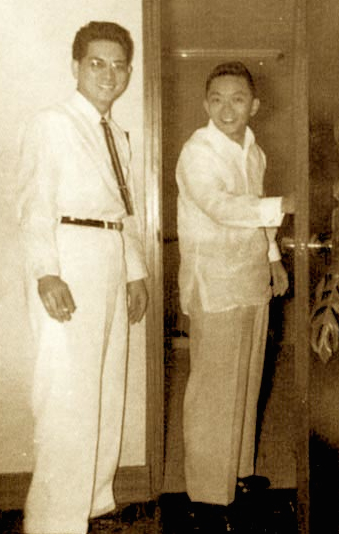
I had the great privilege and opportunity of writing Wash SyCip’s biography some years ago, and among the delights of that assignment was meeting and interviewing Fred Velayo—who, like Wash, was already well advanced in years but still sprightly and brimming with boyish mischief. Tall, handsome, genial, and an irrepressible joker, Fred was the perfect foil for the more private and more formal Wash.

Fred and Wash had one of the most memorable friendships (today they call these unusually durable male bondings “bromances”) I’ve ever come across—certainly one of the longest ones, starting in the 1920s at the tender age of five, when both boys attended Padre Burgos Elementary School in Sampaloc, Manila. Their first meeting, on the first day of school, wasn’t too auspicious. The children started crying when their mothers and yayas had to leave—except Wash’s mother, who was a good friend of the principal’s, and was allowed to stay. So Wash sat there unperturbed, and Fred would remember with a chuckle that “Right that first day, of course, we all hated him. Naturally. He was looking at us, saying ‘Why the hell are you little kids crying?’”

With his brilliant mind and work ethic—qualities that Fred himself displayed—Wash would never again have to lean back on privilege to get ahead. But a little luck never hurt. Bright as they were, both boys got accelerated in grade school—not once, but twice. In Wash’s case, it didn’t occur just twice, but thrice. Fred always wondered how that happened when he was just as smart as Wash—and Wash didn’t tell him the real reason until they were in their mid-70s in 1996, when Wash let slip that there had been room in the upper class for just one more boy, and the teacher chose him—alphabetically.

Fred and Wash caught up with each other in V. Mapa High; they both lived in Sta. Mesa and walked to school together. The friendship—and the rivalry—continued over high school, then went on to college at the University of Sto. Tomas, from which both graduated summa cum laude. As I would note in my book, “To no one’s great surprise, Wash finished his four-year course in two-and-a-half years, graduating a full year ahead of Fred, and ending up being Fred’s teacher in one subject at the ripe old age of 17. Amazingly, Fred would close the gap a bit by also getting to teach in his junior year, also at 17.”

Wash went to Columbia in New York for his PhD and was caught by the War there, and joined the US Army as a codebreaker in India; Fred stayed behind and married the girl who would become his wife of over seven decades, Harriet. After the War, their paths crossed again—Wash came home, and Fred went to the States with Harriet and joined the Army.

But when Wash had to go back to the US to fulfill a residency requirement (he had to take US citizenship to be able to work as a codebreaker), he needed someone to mind the small accounting business he had started in Manila, and there was no other person who could fit that bill but his old pal Fred Velayo. He wrote Fred a letter that would become part of SGV lore. He told Fred, on December 16, 1946: “Dear Fred, Received your letter from Alaska the day after I mailed my last letter—but hasten to write you this note. You should try to return as soon as possible as the top opportunities here are excellent—the earlier you start the better. Master’s degree doesn’t mean much—ninety percent of the FEU accounting faculty do not have anything more than a bachelor’s degree—including some of the highest paid ones. But now is the time to get started as I believe that the more you put it off, the greater will be the competition when you get settled. There’s a lot of accounting work—and you can combine this with teaching and importing (with Miller-Gates)—the returns are much larger here than in the States and the competition for a capable person is much less. So cabron, get the hell on that boat and come out here. The various bills before Congress will undoubtedly increase the work of CPAs—but you have to get in on the ground floor… some come over fast. You can also try your hand at insurance—good and profitable line. Cost of living has been going down during the past month in spite of strikes in the States. Housing isn’t worse than in the States—so make up your mind—be your own boss—and come to virgin territory! See you soon. Wash.”

At first, Fred said no—he and Harriet had just begun to settle down in the US—but in January 1947, Fred changed his mind and took a plane home. The rest, as they say, is accounting history. Fred had a funny story about what supposedly happened next:

“One day, years later, Wash came back. He was still earning a little more than me. And so he came to my room. (WS) Fred, this has got to stop. (AMV) What are you talking about? (WS) The fact that I’m earning more from the firm than you. From now on everything will be equal. Our monthly drawings, even perks, club membership, everything, the same. It’s not fair to you that I’m getting a little more. (AMV) SOB, how come it took you so long? (WS) Never mind, from now on we’ll be equal partners. As he walked out of my room, he started laughing. (WS) Anyway, you’ll always be my junior partner. (AMV) After you said we’re equal from now on? (WS) I can’t help it. I’m 57 days older than you. He even counted!”

When we interviewed Fred for Wash’s book (Fred already had his own biography published before Wash), he told us a hoary joke, often recounted at SGV reunions, about dying ahead of Wash and getting to heaven sooner. I guess he knew something Wash didn’t. Bon voyage, Fred Velayo.