
Penman for Sunday, November 17, 2024
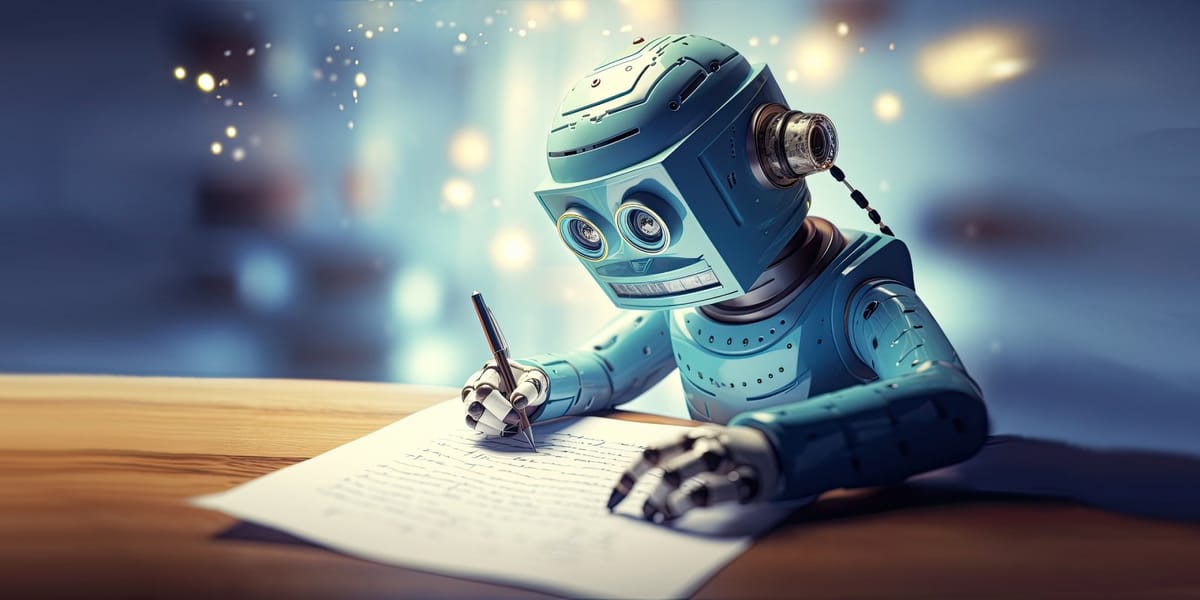
I WAS in Dumaguete recently for a seminar organized by the Intellectual Property Office of the Philippines to encourage local authors and publishers to break out into the international market, following through on our participation at the Frankfurt Book Fair. I was asked to talk about “The Future of Literature,” but I chose to turn that around and talk instead about the literature of the future.
Taking off from the challenges and opportunities posed by artificial intelligence, I put forth a series of “provocations” that writers and publishers could think about. Let me share part of what I said:
My first provocation: the literature of the future, or some part of it, will be a game of prompts: not just or not mainly to copy existing writers, but to produce results that will be a hybrid of the author’s creativity in prompt-making and AI’s selectivity, drawing from its enormous stock of possible responses. This will be writing as a form of play, of co-authorship between man and machine.
Following through from this is Provocation No. 2: Expect the growth of the literature of hybridity—of more crossovers from one genre or form to another, from one language to another, from one sensibility to another. This is by no means new and has been happening for some time now, but there will be an even greater and more deliberate blurring of traditional boundaries, more experimentation.
To some extent, that will be because—and here’s Provocation No. 3, and to use this generation’s favorite trigger-word—there will be less gatekeeping. Or, if not less, then more resistance to or disregard of it. There will be more independent publishing and self-publishing to counter the influence of traditional publishing houses. But this free-for-all will also likely lead to a general decline of standards, as writers forgo the services of editors and the critical evaluations of quality- and market-minded publishers.
Provocation No. 4: The big novel will survive, simply because of the power of inertia, and because there will always be a need for something as capacious to contain and possibly comprehend the ever-growing complexity of human life. Our exposure to the international market at the Frankfurt Book Fair will also provide more impetus to the production of novels, something at which we Filipinos have not been particularly good at, historically speaking.
On the other hand—Provocation No. 5—there will be a general shortening and simplification of form, as writing seeks to approximate the meme, or Tiktok. I don’t know exactly how this will happen, or what form it will take, but when I look at the frankly scary popularity of Lang Leav, I worry that people will see that kind of poetry as the new standard. Of course Emily Dickinson was just as short if not even shorter 150 years ago; she would have made a fine poet for our time.
Given what the world is going through, and the even bleaker future humanity faces, I propose—Provocation No. 6—that the literature of the future will be one of survival, of coping, of enduring. I have recently been advocating the need to produce a literature of hope, but that will be a difficult ask for young writers just trying to keep their heads above the water, and more understandably concerned with this life than with anything that may follow. Science fiction and fantasy will always go over the visible horizon, anticipating a distant future albeit in often dystopian terms, but for most, it will be the literature of next week.
And in that increasingly diminishing and threatening universe—Provocation No. 7—when our precious selves are all we have left to cling to, the literature of “I am,” the first-person narrative, and the politics of identity will prevail. When we no longer trust the government, business, education, our parents, the Church, and even God, and on the verge of losing control of our own petty lives, we will desperately fight to be recognized, acknowledged, and maybe even loved. We will leave nations and societies to the editorialists and social scientists; in fiction and poetry, we will seek solace and sense.
Let me just say a few words about the Frankfurt Book Fair, the 2024 edition of which I and some of us here attended last month. As you know, the Philippines will be Guest of Honor next year, which will do much to project the visibility of Philippine literature overseas. Even this year, many gains were already achieved by our writers and publishers, with dozens of deals signed for the translation and publication of our books in foreign markets.
Post-Frankfurt, Filipino writers will think of writing for the world—not necessarily in English although that’s always an option, but through translation, which will be the great equalizer. The huge surge in translation coming out of Frankfurt—not just from Filipino to English but from our other Philippine languages, including English, to other global languages—will forever change our literary culture, which has traditionally and quite unfairly favored our writers in English when it comes to recognition beyond our shores.
Also, and this may be a controversial point, I’ve long had this suspicion—and maybe Frankfurt proves it—that the rest of the world doesn’t really care about (because it doesn’t know about nor understand) the differences between Tagalog, Iluko, Bikol, and Cebuano etc. literature. When we reach foreign readers in translation, we’re all Filipino—and only Filipino—just as African or Indian literature appear to us as cultural blocs rather than deeply variegated constructs. This has its positives and negatives, but I tend to lean on the positives, which are a reminder that our literature helps define a cohesive national experience and identity above the regional and ethnic markers otherwise so precious to us.
In one of my sessions in Frankfurt, I was asked a question, to which I replied: “I will always be more optimistic about literature than politics.” Given what has just happened in America, and what that will mean for the rest of the world, I have to believe this even more than ever.

 Pinoy Penman 3.0