Qwertyman No. 187: No Better Time for Philippine Publishing

Qwertyman for Monday, March 2, 2026
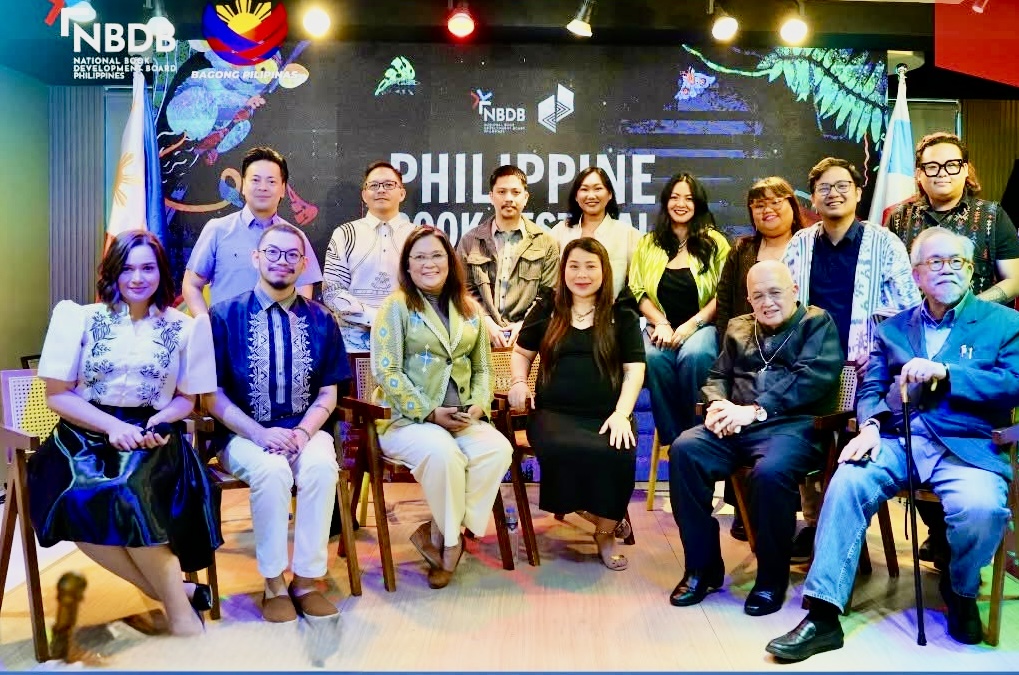
I WAS asked by the National Book Development Board to give brief remarks last week at the media launch of this year’s Philippine Book Fair, which will take place from March 12 to 15 at the SM Megamall’s Megatrade Hall. I spoke alongside publishing stalwart Atty. Dominador Buhain of Rex Book Store, who laid out a legislative road map for the book industry in the Philippines.

For my part, I addressed myself to the young Filipino writer, speaking as a senior often accused of being a capo in our so-called “literary Mafia”—my tongue-in-cheek acceptance of which has been taken in dead seriousness by some parties intent on proving that a conspiracy exists out there to rob of them of their literary fame and fortune.

It was a happy coincidence that we were launching the PBF on the 40th anniversary of EDSA 1, because it provided a natural frame within which to appreciate the growth and progress of Philippine writing and publishing, from martial law to where we are today.

Forty years ago, in 1986, I had exactly one book, my first collection of stories. Today I can count more than 45, both fiction and nonfiction, so I guess I’ve been pretty busy (in fact I have another book deadline to meet over the weekend, after I turn in this column). But what many people don’t know is that it took me about a decade to come up with that first book, which was launched in December 1984, and I might have waited longer had it not been for a bet I had made with a dear friend, the late playwright Bienvenido “Boy” Noriega, that we would both come out with our first books by our 30th year (we did).

Having dropped out of college as a student activist after my freshman year, I had very little literary training beyond my own reading. I knew no one and no one knew me; no literary network, no doting mentor or sponsor. I sent out stories to the very few publications open under martial law, like Focus and the Manila Review. I joined all the literary competitions in sight, and lost as many times as I won. I never attended the UP Writers Workshop as a fellow, although I did get invited to the Silliman Writers Workshop in 1981 after the Tiempos came across a published story of mine, after which I felt fired up enough to resume my studies in UP and graduate with my AB in 1984 at age 30. 

My biggest stroke of luck was having a friend from martial-law prison, Raffy Benitez (who would found the Erehwon Arts Center), who ran a small printing press in Quezon City, and who offered to publish my first book from the scrap paper left over at his press. And so Oldtimer and Other Stories (Asphodel Books, 1984) was born. We had no marketing, no bookstore access. Somehow, the books got sold. 

I told this story—which wasn’t mine alone, but my generation’s—to emphasize that there has never been a better time for Philippine writing and publishing than the present. The PBF, now on its fourth year, is the best proof that hundreds of publishers exist out there for all manner of material, from ghost stories, romances, and comic books to big novels, biographies, and collections of essays. Add to that the support network that writers get from writers’ workshops, writing programs, book festivals like the PBF and Frankfurt, literary contests, and of course social media, print-on-demand, and online marketing.

What every writer needs to do to get published is what all writers have done from the very beginning: persevere, get those words on the page, and find a publisher (who will also hopefully provide good editing and marketing). 

There are, of course, writers who believe that “gatekeepers” like me (professors, editors, publishers, reviewers, etc.) merely stand in the way and spoil what should be a great literary experience accessible to everyone. To them I say that if you want complete control over your work and not have to engage in mainstream publishing, you can always publish yourself online, for free, without having to worry about contracts, royalties, launches, and such. 

Otherwise, if you want your book published and put out there, do your homework, find a publisher or agent, and prepare to compromise and negotiate. At its core, publishing remains a business, which has both its good and bad aspects, so learn to navigate the territory, because for the professional writer, it doesn’t end with that final period on the screen—you’re just halfway to your reader. If you think this is too sordid for you, too much of a sellout, then stay away and again, publish yourself (or look for an academic publisher, if your book is worthy enough) and be happy with your reading circle Contrariness can be a virtue; just don’t preach like you’re the only virtuous soul left on the planet.

I may sound like another hard-hearted Boomer, but I won’t echo what one senator said about Gen Z’ers being “weak”; they just deal differently with their realities. Still, there are realities that cut across generations. No one in the world owes you a reading, a publishing contract, a positive review, a spot on the syllabus, and a fistful of money. The demands that matter most are those you make on yourself. Sure, as in any business, contacts and networks count in publishing—but only to a point; again as in any business, no publisher will invest in something too poorly conceived or executed to connect with an audience.

Just write, and don’t let yourself get too distracted by the politics of writing or even of everyday life. If you believe strongly enough, the politics will find its way into your poem or story in the best ways possible—organically, without the shrillness or snarkiness of those who can’t make themselves heard otherwise. If it resonates with others, it will find its way to publication. The usual critics will pile on me for this, but I think there’s too much noise, too much drama, too much flag-waving out there; indulge in it if you will, but I’m too old to care, and I’d rather hole up in my home office with a cup of coffee and peck away at my next novel than prove that I’m more, uhm, Polynesian than thou.

Write your heart out, but with craft and composure; write something moving and memorable, and get that book out with your name on the spine. Me, I’ll be at the PBF to sign books all day on March 15.
Penman No. 462: Exit This Gatekeeper

Penman for May 5, 2024


INDULGE ME this bit of self-reflection, which I suppose will also speak for many writers of my generation. After much thought, I have decided that I will no longer be judging literary competitions, having just completed my last one.

My first reason is that I’m 70, a good age at which to pause and plan out the rest of my life, however long or short that may be. (The life expectancy of a Filipino male today is 72, although actuarial science seems to think that if you’ve come this far, you’ll likely hang around for another ten years.)

There are just a few things I want to devote that time to—primarily, to write my own books (not books for others, so I’m also announcing that upon completion of my current commitments, I will desist from seeking or accepting book commissions—unless I fall into grave and sudden need.) I want to travel more with Beng and Demi while we can, look after Buboy’s growth, play poker all night twice a week, and enjoy my strange hobbies. I’ll teach for as long as I can—I’m enjoying my undergraduate class right now—but will limit my participation in workshops, conferences, festivals, seminars, etc. to the few I am committed to, like the UP Writers Workshop. 

Judging competitions doesn’t seem that much work (unless you’re a judge looking at over 100 stories) and of course it’s a signal honor to be asked to help pick the best of new writing. It remains a tremendous responsibility and privilege to be thankful for. You get to go up a stage, say some nice things about literature and writers, receive a modest fee, and feel somewhat useful and relevant. That’s all well and good.

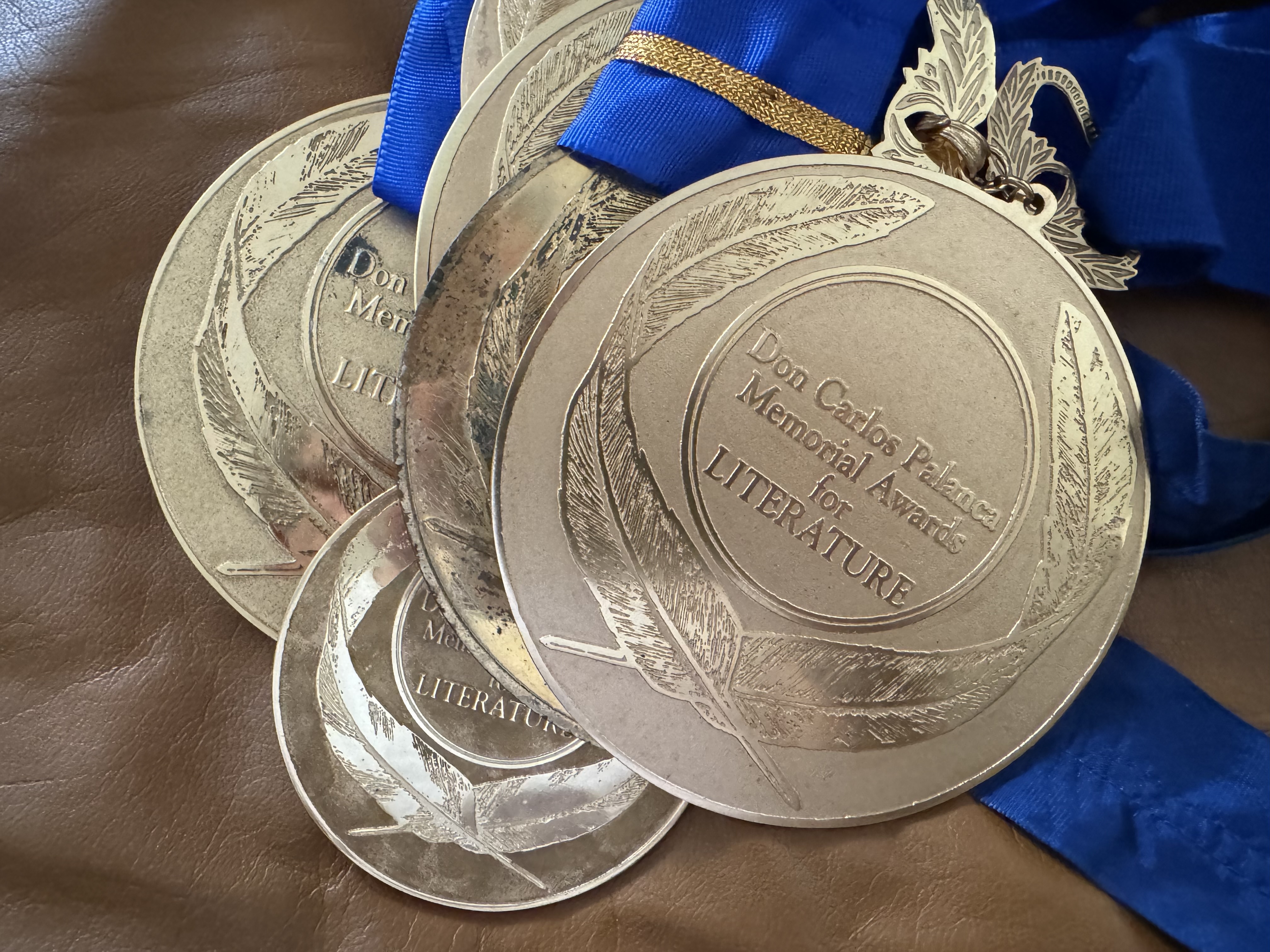
When I transitioned from being an active literary combatant (that’s how many of us felt back then, with the likes of Rene Villanueva and Ed Maranan breathing down your neck) to a judge after getting my Palanca Hall of Fame plaque in 2000—I never joined a contest after that—I felt that I had turned a corner and found a kind of inner peace. It wasn’t that I had nothing more to prove; one illusion that local literary competitions encourage in the young is that winning them is the be-all and end-all of writing, when all they are is a formal pat on the back to get you started. The true challenge for the young or beginning writer is not to win prizes but to write and publish books that will be read and appreciated by others, that hopefully will matter, that will outlive you, that for better or worse you will be remembered for and remembered by; publication is the ultimate prize, readership the ultimate validation. So I went on to write books, teach, have fun, and discover wonderful things outside of writing and literature (yes, there are such bright and shiny marvels). 

Judging competitions seemed to be a good way of keeping a foot in  the door, so I’ve been doing a lot of that, also as a kind of payback for all the people before me who took their time to recognize and reward my efforts with a prize. At some point, I realized that the foremost reason I kept joining and judging the Palancas was because I wanted to be there on Awards Night, to enjoy the company of writers I admired (the piano-playing Greg Brillantes being one of them), and to feel good about being a writer on the one night of the year that they took center stage. The great luck of Hall of Famers is that they can now attend all the Awards Nights they want without having to work for it—so I won’t.

The most important reason is that I’ve already read enough, perhaps too much, for far too long, and it’s no longer healthy for me or for those I may be judging. Our literary community certainly doesn’t lack for younger people who can do this job as well as if not better than I can.  I’m still and always delighted to see brilliant new work emerge from the pile, but it’s getting harder—more laborious, more fatiguing, and ultimately more disheartening to be asking, “ls this the best they can do? Don’t people know what a good story is anymore?” Or have I become the problem?

The word “gatekeeping” has been going around much lately, evoking the image of a surly senior (a Boomer, for sure), out of touch and out of step, insisting that his students and young writers should write like him or like Hemingway, playing favorites, and slamming the door shut on entire genres he doesn’t like or understand. That sounds a lot like me, except that I’ve never expected or driven my students to write like me; they come to my classes with their own experiences, their own material, their own talents and insights, and  the best of them have written stories that are nothing like mine, except perhaps that they’re realist, because that’s the kind of fiction I best know and teach. I’ve always been open to other forms and genres, even if I hardly write in them (I think I’ve tried everything at least once), because the world would be a terribly boring place if we all wrote about everything the same way. Think of much of the political rhetoric going around these days, no matter which flag is being waved: labels and slogans—the shorthand of groupthink—have replaced and diminished personal narrative and reasoning. (As if people will care when you die if you were “correct” all the time; they will ask if you were good and kind.) This is also why I have long resigned from anything resembling organized ideology or religion, whose avatars often seem so, so sure of themselves and of what they’re saying to the point of arrogance. 

I value the doubt and ambiguity, the constant self-questioning (what can we be capable of, despite ourselves?) that are fiction’s domain. Fiction humbles us by exposing our infirmities, but it also exalts us by offering the possibility of redemption.

In the end, what I have always looked for in a prizewinning story, aside from being exceptionally well-written (smooth and stylish when it needs to be, tough and visceral when it needs to be) is that it be moving and memorable. It should burn a hole and leave a scar in my heart, my guts, and my memory. I can enjoy clever and inventive stories as much as anyone else, but if it’s a passing amusement, like a joke, it won’t leave much behind. Some of the most memorable stories I’ve  come across weren’t even what you’d call grand in a sonorous or elaborate way. They took place in small places within relatively short periods of time, and involved ordinary people in situations that brought out their extraordinariness (by which I don’t mean some blinding heroism, but a part of them, dark or light, they didn’t even know was there).

Too many of the thousands of stories I’ve had to read over the years have been poorly written, dull, and forgettable. That’s not even a complaint, just par for the course for any kind of open literary competition here or anywhere else. People can’t be blamed for hoping and trying with their graceless prose, and I’m sure that many have nursed precious ambitions of being published and read. Not to be snarky, but the problem here really isn’t so much a lack of writing talent than of self-awareness, the kind of honesty and humility that will tell you, in your heart of hearts, that you will never be a nuclear scientist or an F-1 driver. Unfortunately, literary self-awareness can happen only when one has a sense of what truly good writing is. 

But could it possible that I myself have fallen so far behind that I can no longer recognize the new “good,” or apply the “new standards,” whatever they may be? Could my notions of “good fiction,” however liberally applied, be standing in way of some young genius’ debut?

I’ll be holding on to those notions, but now only for myself. I’m not urging my fellow seniors to do the same; we all operate on different clocks and their patience could be longer than mine. Some might say “Good riddance” and the feeling could be mutual, but I depart this task with a light and happy heart, looking forward to producing new work that will be judged by others.

Email me at jose@dalisay.ph and visit my blog at www.penmanila.ph.