Qwertyman No. 179: Omitting Flowers

Qwertyman for Monday, January 5, 2026
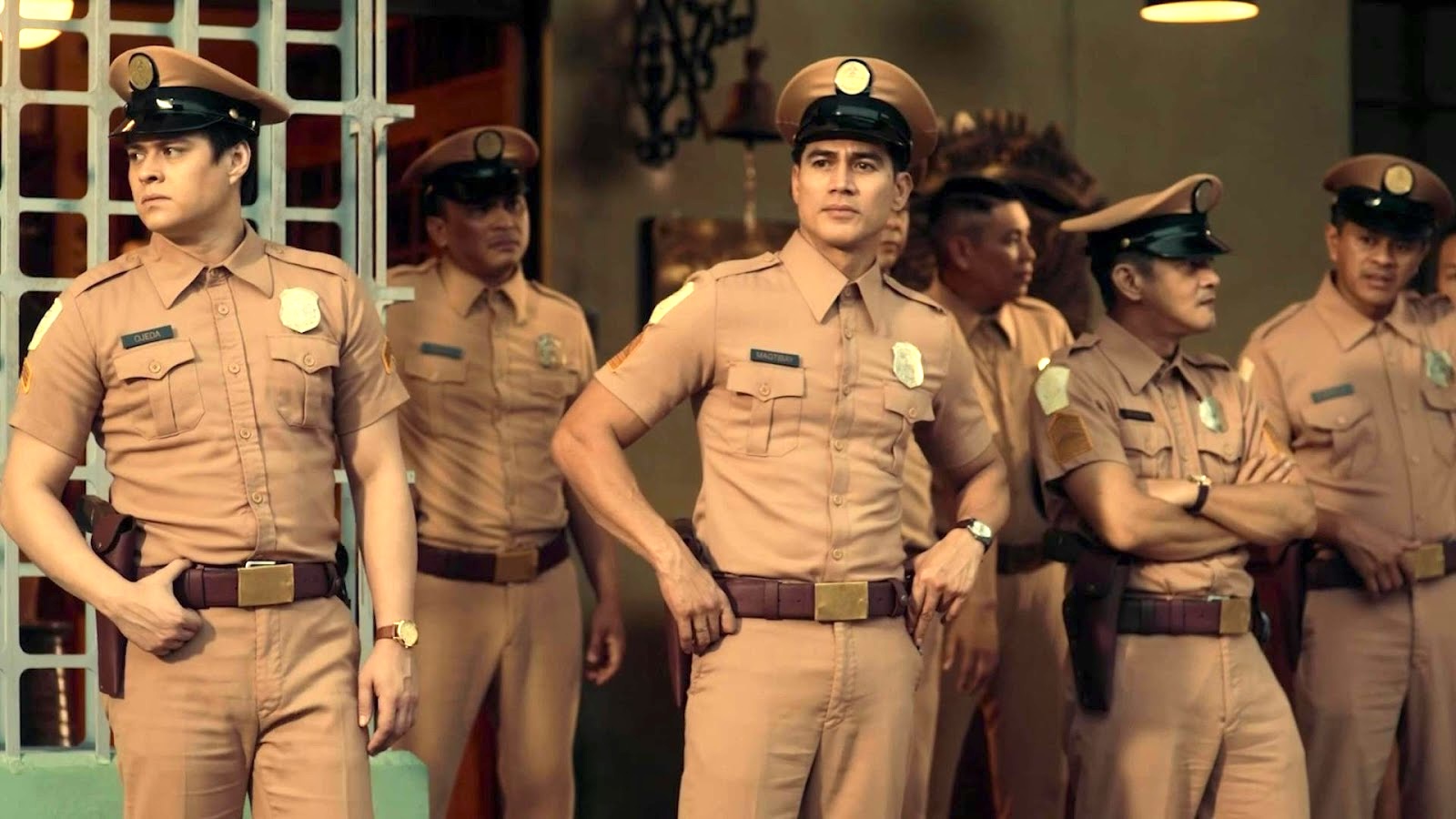
THIS COMES a bit too late to affect the box office in any way (and it’s not as if anything I write sends people scurrying anywhere), but my wife Beng and I just saw “Manila’s Finest,” and we left much impressed and hopeful for Philippine cinema.

We were out of town for most of the Christmas holidays so we unfortunately got to see only this one film among all of the Metro Manila Film Festival entries. We’d heard good things about the other entries as well, and the fact that “Manila’s Finest” ended up in only third place for Best Picture tells me that we probably missed out on what seems to be a bumper crop. But this isn’t about the MMFF, and I won’t even call it a formal review. It’s more of an emotional reaction to a period and a milieu I happen to have some familiarity with.

“Manila’s Finest” is set in a precinct of the Manila Police from 1969 to 1972, a time of great social and political turmoil. It revolves around the character of Lt. Homer Magtibay (very capably played by Piolo Pascual), a policeman who, despite his flaws, holds on to an old-fashioned sense of duty just when the police service is becoming more politicized in preparation for martial law. He has his hands full with a gang war, only to realize that an even deadlier kind of factionalism is emerging within the force itself, with the rising power of the Philippine Constabulary’s Metropolitan Command, or Metrocom. He also has to deal with trouble at home, as his daughter has become a student activist, the kind that he and his fellow cops have to face with truncheons at the rallies. It dawns on him that it isn’t petty crooks creating chaos in the streets, but the government itself, setting the stage for a crackdown. The movie ends, rather abruptly, on a dire note of warning, hinting at darker times ahead.

The film appealed to me on many levels—the political, the aesthetic, the narrative—but most strongly at the personal, because of the memories it inadvertently brought up. To begin with, my late father Jose Sr. was a cop—or almost. A law student who never finished (like the movie’s Homer), he joined the police academy, in the same batch that produced the future MPD chief James Barbers. The very first picture in my photo album is that of him in police uniform, at parade rest. He never joined the force, perhaps because he married, but he did become an agent for the Motor Vehicles Office, and I remember how impressed I was by his silvery badge when he flashed his wallet open on the jeepney rides we took. That was the kind of thrall in which lawmen at the time were held, or at least I so imagined; they kept the world safe and peaceful, and held evil at bay. (I was too young to understand that my dad’s MVO badge got us free rides.)

I became an activist in college and joined many rallies and street marches; this changed my view of the police, who became fascist pigs, the enforcers of laws for the rich and powerful. During the Diliman Commune of 1971, I held a kwitis that I was supposed to fire if I saw cops approaching on the perimeter of UP’s Area 14. And then something happened that would reverse my perspective: I dropped out of school to find a job. At age eighteen, I finagled my way into becoming a reporter for the Philippines Herald, with zero units in Journalism but with loads of pluck and some writing talent. Seeing what they were dealing with, my editors led by Oskee Villadolid and Joe Pavia decided to give me a crash course in journalism by designating me as General Assignments reporter and making me do the rounds of the beats: police, education, sports, and so on.

Of course, the police beat turned out to be the most challenging and instructive. I was stationed at MPD headquarters on UN Avenue, and put on the graveyard shift that ra through midnight until the morning. When nothing much was going on, we played ping-pong and waited for the fire alarm bell to ring (we ran out only for major fires, like the Family Clinic fire where my job was to count the dead). I kept a little black book of phone numbers where I could ring up hospitals to ask if any major accidents had come in. I learned of a restaurant near the Luneta where killers could be hired for not too much. Being a snot-nosed newbie, I trailed veterans like Ruther Batuigas to avoid being kuryented or bum-steered. I covered murders and suicides, visited the city morgue at three in the morning, and joined cops on their drives along Ermita, checking on vagrants, just like in the movie. It was all heady stuff for an eighteen-year-old.

But what proved to be most stressful was covering demonstrations, now that I was looking at them from the other side of the barricades, parked in a Herald jeep with a driver and photographer. Despite my job, my sympathies strongly remained with the activists, and I dreaded watching the police donning their riot gear and preparing for certain trouble. These being the days long before cellphones and pagers, there was no way I could warn my comrades about what I thought to be snipers or provocateurs or just agents taking their pictures from the rooftop of the Shellborne Hotel near the US Embassy. When the tear gas canisters began flying all I could do myself was duck and run, and I remember visiting some wounded marchers in the ER later. After I covered the funeral of a rebel killed in combat, praising him effusively and playing up the drama, an editor cleaned up my prose and gave me a very dry lesson in reportage: “Omit flowers.”

That’s the kind of treatment director Raymond Red gives his material in “Manila’s Finest.” Nothing is romanticized, no hero left unsullied, except perhaps for the young activists whose further awakening yet lies ahead of them. This well-crafted and well-acted film deserves all its plaudits; the mature Piolo Pascual is outstanding, as is the period production design (except again perhaps for everyone’s new-looking uniform, the bane of period movies, and a few questionable references time-wise—“barangay,” “the New Society,” and Pierre Cardin-style barongs all came after 1972, if memory serves me right). Most of all, “Manila’s Finest” deserves and indeed demands a sequel, into the time of tokhang, when the moral choices facing the police became even starker. But as it is, at least for me, “Manila’s Finest” may indeed have been the finest of its kind this year.

(Image from walphs.com)
Qwertyman No. 50: Doro’s Times and Ours

Qwertyman for Monday, July 17, 2023

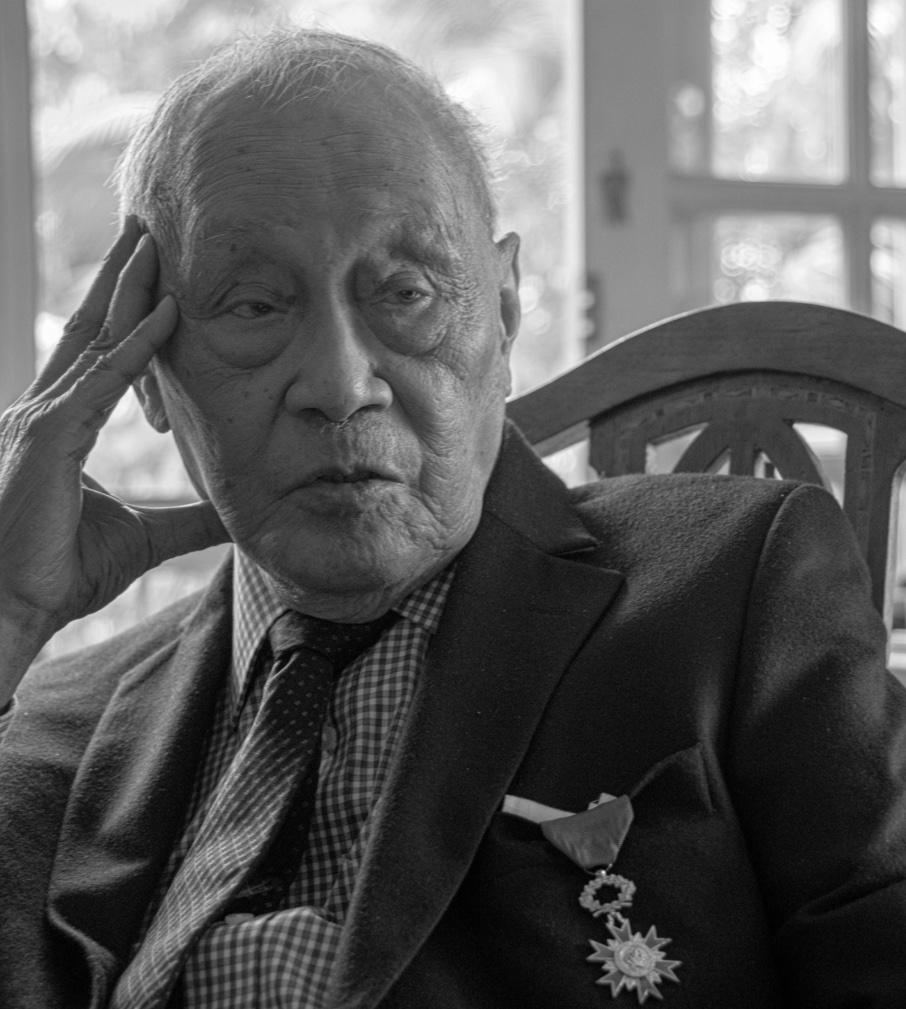
THE NEWS of Amando “Doro” Doronila’s recent passing in Canberra at age 95 marked the end of an era, as Doro was the last of his generation of journalists who made newspapers and their Op-Ed pages compelling reading. Whichever side of the political fence they were on, these journalists and columnists gave it all they had; many reveled in their prominence and some shamelessly parlayed their influence into all manner of profitable enterprise, back when it seemed the sensible thing to do, before the darker complicities of martial law set in.

Doro seemed to me to be above all this. His personality was, shall we say, poorly suited for TV or even radio, which was just as well, because it drew a clear line between journalists who did nothing better than think and write deeply, and those who confused their calling with show business.

I didn’t really know Doro personally. My one memorable encounter with him was when I was 18, a freshman dropout from UP who was dying to get into the newspapers, by hook or by crook. (Like some precocious teenagers, I was convinced I had the writing talent to skip journalism school. I would later pay for that hubris in tearful rewrites in the newsroom.) 

One of the doors I knocked on was that of the Manila Chronicle, which Doro was the editor of in 1972. I remember striding into its office and walking up to Doro’s desk, sucking in my stomach. He seemed puzzled to see my pimply face, which probably belonged to a messenger boy’s, except that I came empty-handed. “Yes?” What did I want? “Sir, I want to apply for a job—as a reporter,” I must have croaked, mumbling something about my writing for the Collegian and my high school paper. “How old are you?” I said that I was “going to be nineteen soon”—“soon” being about nine months away. 

I can’t recall if he looked back at me with pity or sympathy, or if he was laughing inside. I do remember him saying something like “Why don’t we talk again in a few years?” I was disappointed but not dejected; at least he didn’t throw me out of the place, or ridicule me before a roomful of the kind of people I wanted to be—hunched over typewriters, smoking up a storm, shaping tomorrow’s news, their bylines embedded crisply and imperishably on fresh paper.

Eventually, sometime that summer, and through sheer persistence, I did land a newspaper job, as a features writer and then a general-assignments reporter with the Philippines Herald, very likely the youngest fellow working full-time for the papers then. With the Herald and later Taliba  just before martial law, I met all kinds of journalists on the job, and saw how human we all were, the creatures of our noblest ambitions and pettiest grievances. One reporter I was on the police beat with loved playing cop, interrogating suspects each one of whom he was convinced was nursing a confession. Many had an enormous capacity for alcohol and the unapologetically macho bluster that came with it. Despite their gruffness, some had marshmallow hearts; two or three even took me under their wing to spare me from the usual gauntlet that rookies had to undergo. We were the peons of the profession, entry-level Hemingways and Woodwards chasing stories down the city’s tenebrous alleyways, and we loved every minute of it.

That was our world, but when I reported to the newsroom in the afternoon to file my story, I was ever aware that even above the copyeditors’ desk was another tier of men (as they mostly were) who perorated boisterously in a corner office on the day’s politics over scotch and cigars, the people whose opinions mattered and who made opinion matter. Never having worked with or for Doronila, I could only imagine him in that company, sitting sagely with his fingers crossed while allowing the thunder to roll above his head.

Today, half a century later, and finding myself just as old or even older than those titans of Philippine journalism then, I can savor the irony of having the privilege to write an Op-Ed column in times that mirror, in many ways, the early 1970s—with a Marcos in Malacañang, an opposition at bay, a scandal a week, and yet a people hard at work, striving for economic and moral deliverance. 

The great difference is that newspapers no longer have a monopoly of opinion-forming; that ground has been taken over by the Internet and social media (and elsewhere, by early-morning and late-afternoon AM radio, perhaps the hardiest of public platforms). Certainly, some Op-Ed stars remain—again on either side of the political divide—with faithful followers in need of sharper articulation and affirmation of their own sentiments. But even those readers tend to be aged or aging, people with the time and patience to read prose in paragraphs instead of bullets and memes, and who might even look for and appreciate that elusive quality called “style.” (Doronila’s no-frills prose, to be honest, was straight and guileless to the point of being starchy.) These 1,000-word pieces we produce now belong to what they call “long-form” writing, as if to write and read them were a test of endurance. 

But against the cheeky punchiness of Twitter and the ugly street brawls on Facebook, and above all stylistic considerations, I have to applaud this new generation of journalists (not all of them for sure) for their adherence to the truth and to fact-based reporting, and for holding themselves up to a higher standard of ethical behavior than their predecessors. Battling the bots and trolls of disinformation, they put their lives and well-being on the line, story by story, column by column; most are young, many are women, some even gay—the old gray men of the newsroom no longer dictate the headlines or the editorial slant. I think Doro himself would have been happy to see this, having mentored many of his successors.

And so as we grieve Amando Doronila’s demise at an age few of us can hope to approach, we can celebrate the continuity of upholding courage, virtue, and incorruptibility in Philippine journalism, with deepest thanks for the example the man set for us to follow.

(Photo by Pablo Tariman on FB)

Penman No. 162: To Be a Journalist (2)

Byline

Penman for Monday, August 17, 2015

LAST WEEK’S look back at my early days as a journalist brought back a flood of memories that hadn’t crossed my mind in ages, so I’ll beg my reader’s indulgence with this extended reminiscence of what it was like to be a young newspaper reporter just before martial law was declared in September 1972.

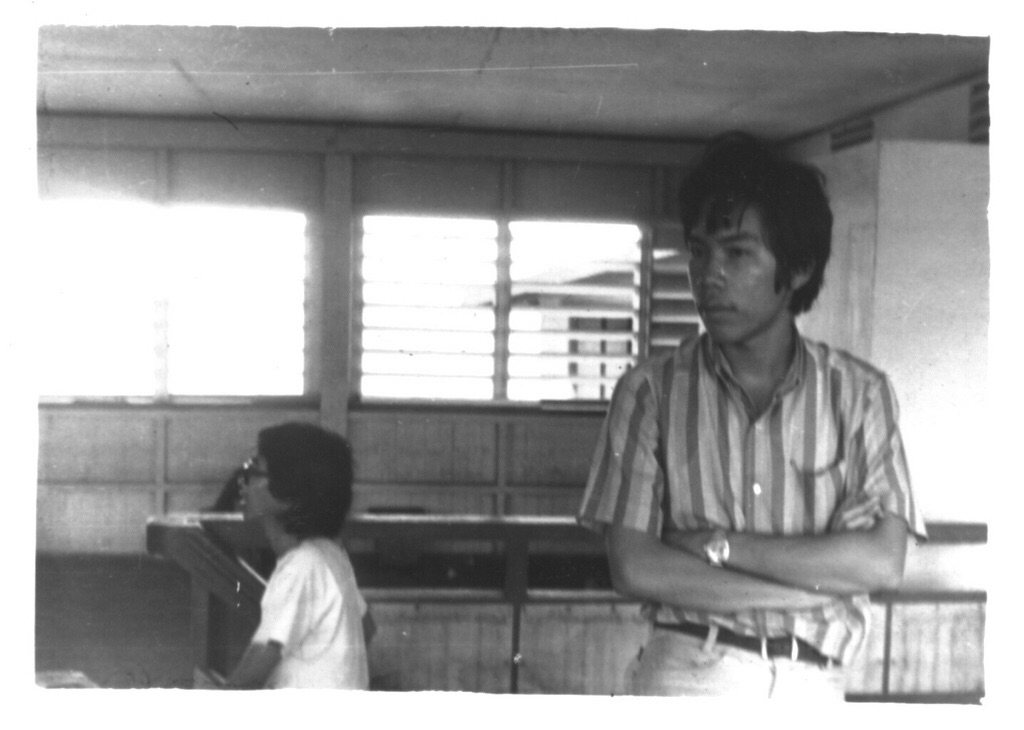
Come to think of it, that first stint in journalism didn’t last too long, from April to September of that fateful year. (I keep saying “first” because I would return to newspapering more than 20 years later in 1993, as an editorial writer and then Lifestyle columnist for the late, lamented newspaper TODAY.) To recap, I was 18, and my bosses at the Philippines Herald had taken a chance on a college dropout who barely knew a thing about professional newspapering but who seemed to be able to string sentences together decently enough—and fast.

Man, was I fast—I was so eager to impress my editors that I jumped at assignments the way a dog goes after a ball, and when my editors found out about the new boy in the room, they assigned me to fill up half of Page 5—the features page—every day. The topic was up to me. That sounded like the most wonderful thing in the world—imagine, my own corner of the newspaper, all mine to fill up!—for about three days. I took stories out of history books and turned them into features; I wrote about the latest crazes like fun houses and pool halls; and when, inevitably, I ran out of ideas, I took a bus out to Tagaytay, got off, and looked around for anything that I could weave a feature story from (I saw a drug rehab center in the distance and got a story out of that; I did the same thing in Muntinlupa another day and interviewed a Death Row convict).

Thankfully my editors pulled me out of Page 5 and designated me a general assignments reporter—meaning, I would report for work every morning and take on whatever odd assignment they tossed me. But before I could do that, and to give me some training, they had me spend a few weeks each on a specific beat—police, sports, and City Hall. On each beat, a senior Herald reporter took me under his wing, and while they may not have been too happy to babysit me, I soaked up their streetsmarts and tried not to be a nuisance (not always successfully—we were covering a MICAA basketball game when Jun Pantig saw that I was cheering for one team at courtside. “Stop cheering!” he shushed me. “You’re a reporter, you shouldn’t be taking sides!”)

Of all the beats I was assigned to, the most exciting and instructive was police. I took the graveyard shift at the old Manila Police Department headquarters and from there covered mayhem at its worst—an 18-year-old American girl who shot herself in the mouth at the Dutch Inn; a nighttime fire that razed a hospital in Dapitan (I can still recall the sickening thud of falling patients who jumped off the roof in desperation; my specific task, early that morning, was to count all the bodies in the morgues); demonstrations at the US Embassy where I could see the police preparing for an assault on the rallyists, many of whom happened to be my friends (prompting me, again, to break journalistic protocol by picking up the injured in our service jeep and bringing them to the hospital).

I grew inured to the sight and smell of blood, and I can say, today, that I had no better preparation for the kind of realist fiction that I would come to write than those weeks on the police beat, confronting death by the day (which didn’t make me feel any braver, but rather more aware and respectful of the finitude of life).

It was all very exhilarating, even in the most difficult and trying of moments; sometimes the toughest tests took place in the newsroom itself—once, for example, I was driven close to tears by having to rewrite a story half a dozen times to please an editor who, I now realize, was teaching me a valuable lesson in verbal economy.

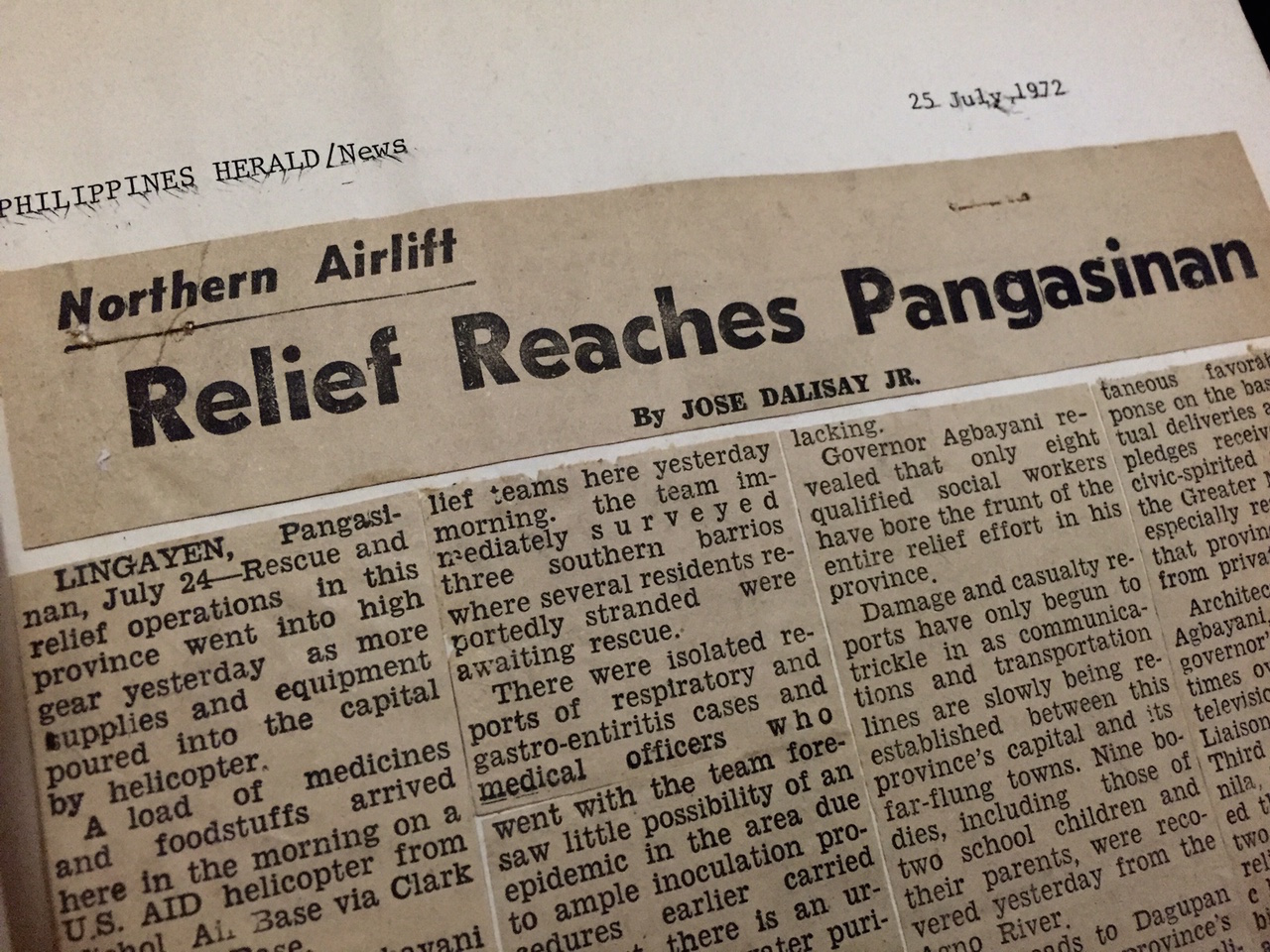
Coming off the beats as a general assignments reporter, I looked forward to and did get some assignments that no other teenager would have experienced. At the onset of the biblically catastrophic July-August floods of 1972, I was put on board an amphibious ship that sailed in the night from Manila to Lingayen Gulf, and I covered rescue operations in Pangasinan, riding rubber rafts and flying out in a US Army helicopter that dropped us off at Clark Air Base, then still busy with the Vietnam War. Also at about that time, I volunteered to go to Isabela to cover the reported landing of a shipload of arms by the CPP-NPA, convinced (wrongly—it turned out to be the MV Karagatan episode) that it was a military hoax that I could heroically unmask; sensibly, my bosses told me that I was too young—they didn’t say too foolish—to undertake the mission. Instead, I stayed in Manila, and interviewed Mrs. Marcos in Malacañang about her relief efforts in front of a mountain of Nutribuns.

Like I said last week, I soon resigned in solidarity with a union strike at the Herald, and was half-surprised when management accepted my resignation. I finagled my way to a spot at Taliba (in the Manila Times organization that it had been my dream to join one way or the other) as suburban correspondent, and it was in that capacity—albeit outside my assigned zone in Makati—that I filed, or at least called in, the last story of my brief reportorial career. It was the night of September 22, 1972, and I was on the UP campus, not as a journalist but as an off-hours activist hanging out with comrades and fraternity brothers to denounce the imminence of martial law.

I should’ve sensed something when I saw my brod Bobby Crisol, son of the Defense Undersecretary, suddenly being spirited away by his dad’s security men. Shortly after, we heard gunshots in the distance. I ran for the nearest phone and called the night desk: “I have a scoop!” I said breathlessly. “I can hear gunfire—UP is under attack!” (It later turned out that the Iglesia ni Cristo radio station was being taken over by the military.) What should have been the biggest story of my young life fizzled out with a laconic reply on the other end of the line. “So are we,” said the fellow I spoke to. “There are soldiers in the office. It’s martial law!”

Within four months, I would be in prison, still aged 18. Another year later, I would get married, on my 20th birthday. Life seemed terribly short, and I was in an awful hurry, hardly imagining I would last on to seniorhood.

Today, I tell my Creative Writing majors that they may think of themselves as God’s gift to literature, but until they’ve spent a week or two as a reporter, sniffing out a story, they should shut up and be happy they can write odes to the moonlight without an editor screaming at them for a tighter rewrite.

Penman No. 161: To Be a Journalist

Image-1

Penman for Monday, August 10, 2015

I WAS very sad to hear of the recent passing of an old colleague from my first foray into journalism—Nemesio Dacanay, who was then the City Editor of the Philippines Herald, one of the pre-martial law period’s smaller but pre-eminent newspapers. A relative of his texted me about his death and interment, but I was out of town and felt bad that I couldn’t even pay my respects in person, so I’ll do it here.

Five years ago, in this column, I had to issue an apology—and I was happy to do so—having inadvertently suggested in a previous piece that “Dac” had passed on to the hereafter. As it turned out, he was still very much alive, as his daughter Christine reminded me. This time, unfortunately, the news was real.

The story of my connection to Dac and of how I got into the newspapers is something I may have told before in bits and pieces, but here it is in full. The time was early 1972, and I had just turned 18. I was already a full-time activist, having dropped out of my classes in UP, a lanky, chain-smoking lad who was already a veteran of many a Plaza Miranda march and of the Diliman Commune.

In UP, I hung out with a group of older Journalism majors who were close to graduating and who would, very shortly after, begin to make a name for themselves as reporters—people like Wilson Bailon, Rolly Fernandez, Jun Engracia, Efren Cabrera, Rod Cabrera, and Val Abelgas, among others. I had great respect and admiration for these guys, but at the same time, it annoyed me to know that they were soon going to find and land jobs, while I—technically still a freshman, with but 21 completed units to my name (3 of them good for a “5.0” in Math, the consequence of absenteeism)—was going to be left behind.

I should explain that at 18, I had no greater ambition than to become a journalist. I’d written some stories, poems, and plays, but I had no plans of becoming a creative writer, and might even have thought journalism superior to poetry (and why not?). I had been editor in chief of the school paper at Philippine Science High (following in the gargantuan footsteps of Rey Vea, Mario Taguiwalo, and Rodel Rodis), and I found that I savored the romance of printers’ ink and hot lead (that’s “lead” with a short E for you young ones, the molten metal that magically turned into letters in reverse).

As soon as I stepped into UP, at 16, I did the three things I’d put on my agenda, after enrollment: join the Nationalist Corps (and later the Samahang Demokratiko ng Kabataan, or SDK), join the Alpha Sigma Fraternity (to which high school heroes like my Physics teacher Vic Manarang and firebrand Gary Olivar belonged), and join the staff of the Philippine Collegian.

It was in the nationalist movement and those long nights of proofreading at Liwayway Press that my desire to become a reporter flourished. Never mind poetry and fiction; I wanted to feel and to record the ground shaking beneath my feet from the steps of a thousand marchers, to trace the arc of tear gas canisters flying across the plaza, to bear witness to what we were all convinced was the forging of a bright new future, with all the sparks and all the smoke that came with the process. To be a reporter at that time was to be in the very womb of history, and I thought nothing was more thrilling and more important than to be there on the frontlines, notebook and ballpoint in hand and a barely stifled battle cry rising up my throat: “Pierce the enemy with your pens!” (That was the slogan silkscreened on my jacket.)

As you can see, as a teenage Maoist, I had no idea of and no patience for “objective” and “dispassionate” journalism. I hadn’t even taken one formal unit of Journalism in UP (I was an Industrial Engineering major, and still plowing through my GE subjects) and had embraced the notion that journalism was and had to be a partisan activity, convinced that Malacañang had bought 90% of the Philippine press, with the notable exception of progressives like Tony Zumel, Satur Ocampo, and Rolly Fadul, and young blood like Roz Galang and Millet Martinez. We were going to be the vanguard of what we called the Second Propaganda Movement.

But I didn’t want to be stuck on campus; it was a wide-open arena beyond Diliman, so when my friends began applying for jobs with the newspapers shortly before graduation in early 1972, I tagged along, hoping to land something, anything. (I’d already written and sold a teleplay to the TV drama anthology Balintataw in 1970, when I was 16, so I didn’t lack in self-esteem.) I remember walking up to the editor of the Manila Chronicle, Amando Doronila, and boldly announcing that I wanted to apply as a reporter. “How old are you?” the man asked in all reasonableness. “Eighteen,” I said. “Come back in a few years,” he suggested, not unkindly.

It was like that, one prospect after another, until my path led to the old Philippines Herald office in Intramuros, sometime in March or April. It was must have been around one in the afternoon, because the only person in the newsroom was Nemesio “Dac” Dacanay, whose name I didn’t even know at that point. He had a groovy look about him: dark shades, a colorful, open-necked shirt, and an impish grin. I told him what I was there for, and I can’t recall how long I begged to be given a chance, but finally, if only to get rid of the pesky walk-in, he said: “Where do you live?” I said, “Quezon City.” He said, “Okay. Go back to Quezon City, then come back in three days with a story. Understood?”

I stepped out of the Herald on a floating cloud—I was positive I would deliver as directed. Over the next three days, not knowing anything about real newswriting, I walked around the Quezon Memorial, waiting for some dreadful accident to happen that I could breathlessly report on. The world remained blissfully peaceful, and the only thing that came crashing down was my dream of becoming a journalist. On the third day, I was so tired and depressed that I took a jeepney to the Delta Theater, and decided to cool off in the moviehouse. I watched the screen. The movie was so awful I can’t even remember its title. When it was over, I went home, collected my thoughts, and pulled out my typewriter.

Then I took a bus to Intramuros, and handed Dac my story—a movie review. Damn—I could hear him mutter, and I could see him sizing me up through his shades—okay ka, kid. “I’ll pass this on to Nestor,” he said, referring to the venerable Nestor Mata, who handled the features page. “He’ll take care of you.”

And so I was hired at 18 as a general assignments reporter, the greenest of greenhorns in a roomful of veterans that included editor in chief Oscar Villadolid, news editor Joe Pavia, reporter Lito Catapusan (who took me under his wing), and a deskman who moonlighted as a songwriter named George Canseco. Over the next few months, I would make the rounds of the police, sports, and City Hall beats, cramming three more years of college into a semester. Thanks to a guy who humored me named Dac, I had achieved my ambition of becoming a journalist. (By July, in a flash of activist fervor, I would resign in solidarity with striking workers, and move over to Taliba as a correspondent right up to martial law, when we all lost our jobs and the press as we knew it vanished overnight. But that’s another story.)