Penman No. 474: Looking Back and Letting Go

Penman for Sunday, June 1, 2025
AS ANY friend who’s had the privilege of being invited to his Makati home quickly realizes, Ambeth Ocampo is more than the engaging public intellectual we all know, whose Looking Back series has made history come alive for young Filipinos. He’s also an inveterate collector of rare Filipiniana—books, ephemera, art, and historical objects—all of which come with the territory he works in. 

There have been many Filipinos of a similar bent—the legendary Alfonso Ongpin and the late Ramon Villegas come to mind, as well as the more contemporary Jimmy Laya, Melvin Lam, and Edward de los Santos, among others—but the way Ambeth has amassed his collection is noteworthy on its own, as it folds the personal almost imperceptibly into the professional. 

It comes pretty close to the classic prescription for murder—means, motive, and opportunity—all captured in his classic story of how he stumbled on and picked up Emilio Jacinto’s silver quill, a writing prize, from an antiques dealer who didn’t bother to learn what it was and let it go for its scrap value. (Having as much of Ambeth’s desire for antiquarian junk but with much less knowledge and certainly less means, I’ve often joked, between the two of us, that Ambeth’s the scholar and I’m the scavenger.)

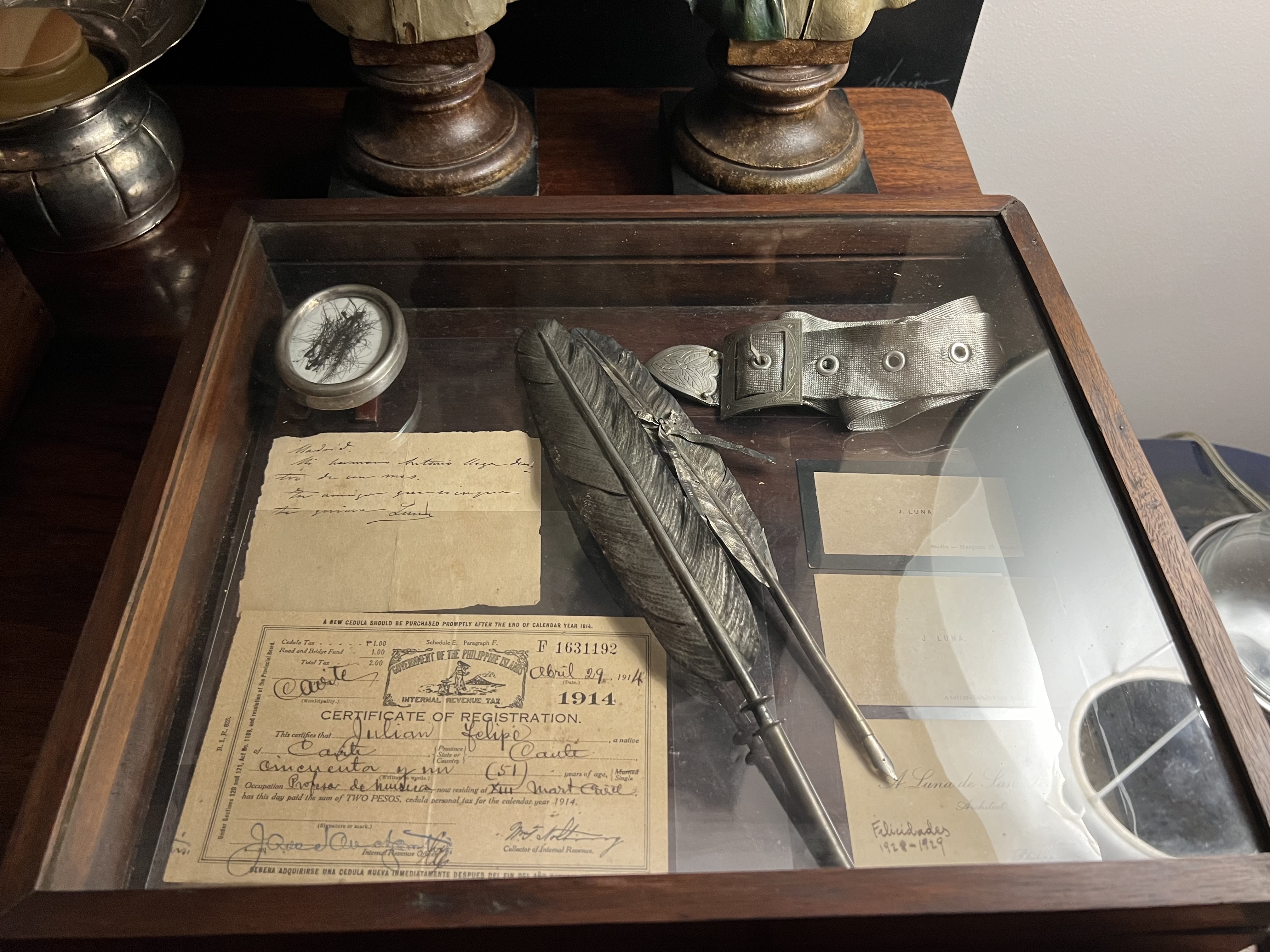
Jacinto’s quill, along with a trove of other historical treasures from Ambeth’s personal collection, will be up for auction on June 7 at Leon Gallery. They include Juan Luna’s silver belt, Felix Resurreccion Hidalgo’s walking stick, an official copy of the Malolos Constitution, Philippine maps from 1616 and 1647, and the Noceda and Sanlucar Vocabulario de la Lengua Tagala from 1860, among many others.

Knowing how precious these objects were, I had to ask Ambeth more about them, and this is what he said.

What made you think of selling these treasures now? Surely it can’t be easy letting go of them after being their caretaker all this time?

Over the years, I have come to the realization that collecting is not the hobby it used to be. As a boy I collected stamps and learned geography, history, and the culture of foreign countries in the process. I was fortunate that my father’s company had an international correspondence, so every week his secretary would send me a batch of envelopes to sort out.

I started collecting Filipiniana books in the 1980s, stocking up from the National Bookstore Quezon Boulevard branch bargain bin where I completed my Nick Joaquin essay collection because they cost one peso each. After school, I went to the Heritage Art Center in Cubao that I learned only years later was the site of the old Philippine Art Gallery. It was a ramshackle grouping of rooms upon added rooms made from old house parts that Mario Alcantara, the owner, bought from mambubulok. I had a favorite nook where I did my homework and when bored I would explore the rooms that I think gave me an eye for art and the ability to choose what I thought was good or not.

Looking back my collecting, and my life, has been the happy intersection of skill and opportunity. Napoleon once said “ability is nothing without opportunity.” I have always seen collecting as a responsibility. Collecting significant Filipiniana is not a hobby. It is not an investment. Collecting is a responsibility, the collector a steward who preserves the collection for the next generation. 

The objects I put at auction have enriched my life in many ways and I think they will enrich the life of their next steward. Some of the lots like the Malolos Republic one-peso banknote and the printed copy of the Malolos Constitution have been tucked away in a drawer. If I drop dead tomorrow these might be carelessly thrown away as trash. They should go where they are better appreciated. Collectors de-accessioning keeps the market alive and buzzing.

Let’s get this out of the way: it’s none of our business, but what will you do with the money?


Since I am not a dealer the material reward does not really factor in the equation. I have sold other things before at cost or even at a loss, just thinking that my gain was the enjoyment I got chasing after them and acquiring them. What will I do with the proceeds? When I started selling my rare Filipiniana I thought that instead of having shelves of books, maybe I should just sell and use the proceeds to buy one or two incunabula or samples of early Philippine printing from 1593-1640. Instead of caring for a whole library I will just care for half a dozen very important books.
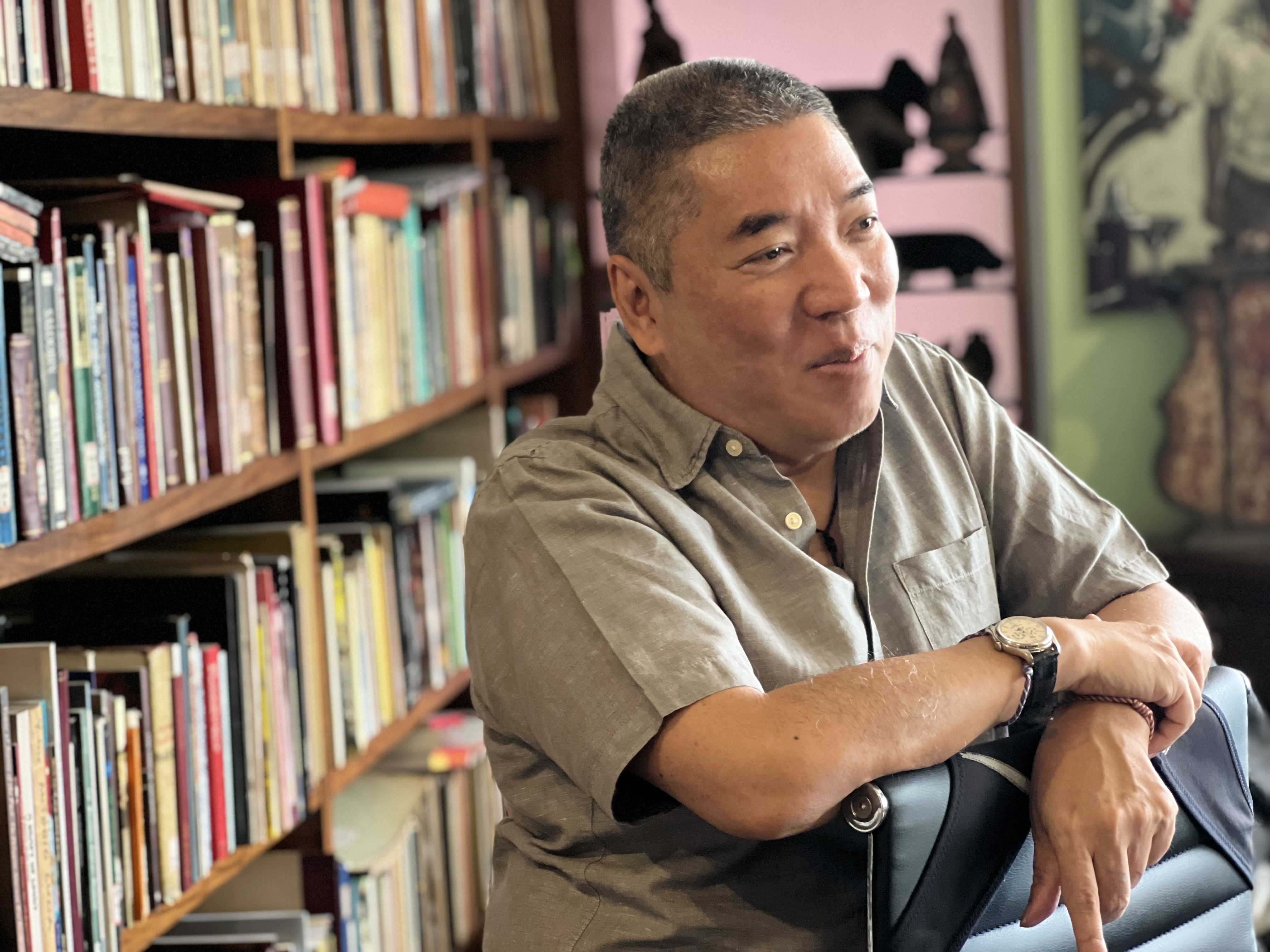
How did you start out as a collector of historical objects? How and where did you find them? Aside from Jacinto’s pen, what was your most serendipitous find?

Collecting historical objects came naturally from my work as a historian. I would find things in used bookstores and when supply was still plentiful in the Ermita antique shops. One of the serendipitous finds was the cedula or residence certificate of a certain Julian Felipe, a musician from Cavite. It was in a heap of old papers, initially priced at one hundred pesos. I haggled it down to fifty, paid, and ran away. 

Another time my favorite antique dealer brought a “European painting” of a Virgin and Child to my home. I looked at it and knew it was Philippine. When I opened the frame to inspect the painting, hidden under the frame was the signature of the Filipino master Mariano Asuncion (1802-1855). The silver belt of Juan Luna and the bank draft in his name were acquired from Mario Alcantara. It came with the famous trove of paintings inherited by Grace Luna de San Pedro that are now in the National Museum. While everyone was going wild over the paintings, I spent many afternoons browsing the boxes of memorabilia that included the bloodied uniform Antonio Luna wore when he was assassinated, the palettes and brushes of Juan Luna, the memorabilia, some architectural plans of Andres Luna de San Pedro, and much more. I offered to buy the palettes and brushes and the painter’s smock but Mario said these were destined for the National Museum. There was also the last letter Juan Luna wrote to his son from Hong Kong, written a day before his death, not only was this letter significant, Luna did a watercolor of Hong Kong Harbor on the first page of the double-sided letter. All I could afford was the silver belt that came with Luna’s black suit that Mario said was also destined for the National Museum. Unfortunately, the Heritage Art Center burned down and with it all these memorabilia.

Do you or can you separate the collector from the scholar? Did the collecting happen naturally as a consequence of the scholarship?

The collecting grew and was enriched by my research and scholarship. If I had a PhD in Math I probably would not have recognized these odds and ends now considered treasures. I have been divesting over the years. A large part of my Filipiniana collection was donated to the Center for Kapampangan Studies, Holy Angel, Pampanga. All I keep at home are the books I need for work for teaching, lecturing, and writing, but now that I am retired from Ateneo (but still employed on a post-retirement appointment) it is easier to let go. 

The full catalog of Leon Gallery’s Spectacular Mid-Year auction can be accessed on its website at https://leon-gallery.com

Qwertyman No. 48: Beauty and Horror

Qwertyman for July 3, 2023

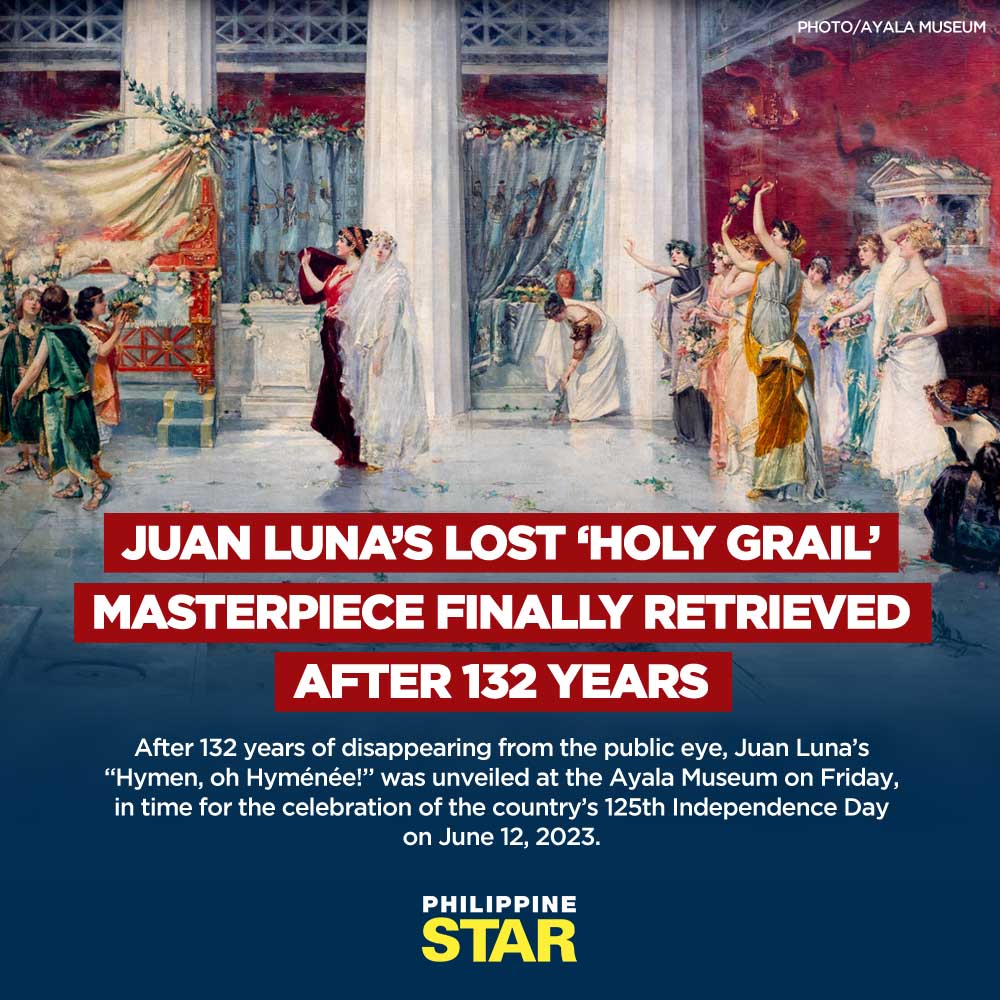
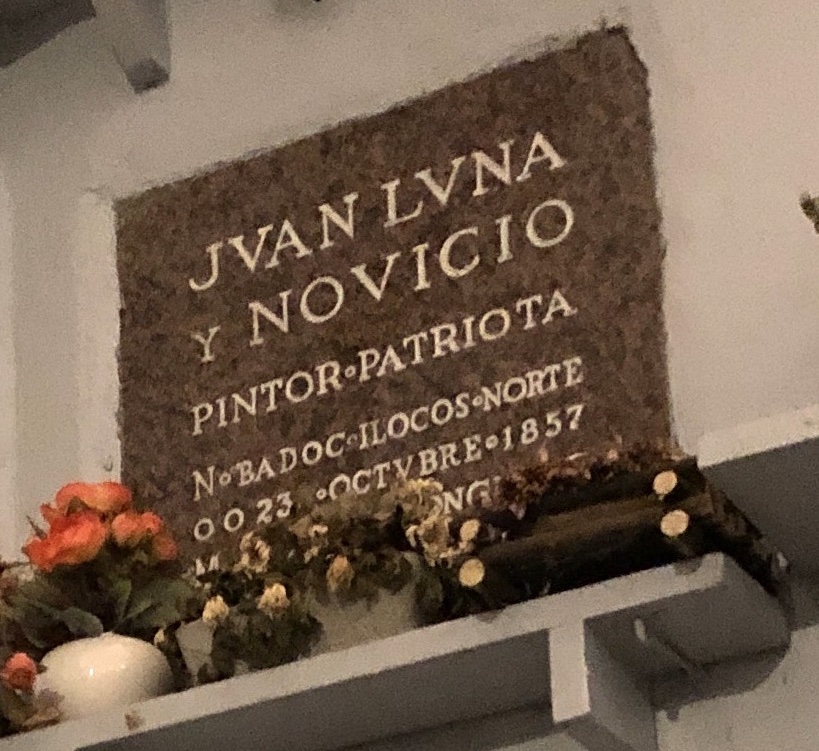
I WAS surprised, a bit amused, but also deeply bothered by the reactions of Filipino netizens to an event that hogged the headlines two weeks ago—the special exhibit of Juan Luna’s painting “Hymen, O Hyménée.” 

The painting, said to have been lost for over 130 years, was put on display in all its solitary glory at the Ayala Museum, evidently a prize catch and worthy of public attention. The attention came—not all of it positive. Quickly a thread developed online scoring the artist, the painting, the museum, and the curious who trooped to Makati to see the painting. Why, posters asked, was praise being heaped on a deranged man who murdered his wife and mother-in-law? Where was our outrage? Speaking of the painting, why, technically it wasn’t even that good. 

They were, of course, all fair points to raise, designed to provoke some serious re-evaluation of why we like the things (and the people) we do. While there was some quibbling about the aesthetic merits and demerits of the painting, most of the negative reaction was clearly aimed at Juan Luna’s homicidal and presumably misogynistic streak. Just to be clear, he did admit to killing the two women (he suspected his wife of having an affair with a Mr. Dussaq), but was later acquitted on grounds that merely prove how partial to men the old judicial system was.

This brings up the inevitable question—not about Luna’s guilt, which seems to have been settled in the court of public opinion, but about that of those professing to admire Luna’s talent as a painter: knowing what we know now about an artist, should his or her work be judged by his or her character? Can or should we put our blinders on when gazing at a painting or reading a book, and savor the work in denial of its creator’s evil history? Should we resist Google, adopt or feign ignorance, and leave moral judgments to others?

I know that some esteemed writers and artists, like the late F. Sionil Jose who preceded me in this space, were severe and unforgiving in their application of a moral frame to creative work. To Manong Frankie, if you supported the Marcos dictatorship and profited from it, your credentials as an artist were forever compromised. Today we would call this “cancel culture,” which has been appropriated by right-wingers to complain about being punished for being, well, right-wingers.

It seems like a logical proposition: if you don’t like someone for good reason, then reject his or her work, which could be tainted by all manner of subliminal malice. You can stand proud in your clarity of mind and emotion, in your spirited defense of the good and just.

But this also raises a very practical problem: entering a museum or a library, how am I to know which artists or authors led upright lives, and which ones flourished in depravity? If I enjoy a work, only to discover later that its creator attempted to rape a teenage girl (as the Nobel prizewinner William Golding did, and even wrote about it privately) or tortured animals and adored Hitler (like Salvador Dali did), am I supposed to regurgitate my admiration and pronounce the work worthless?

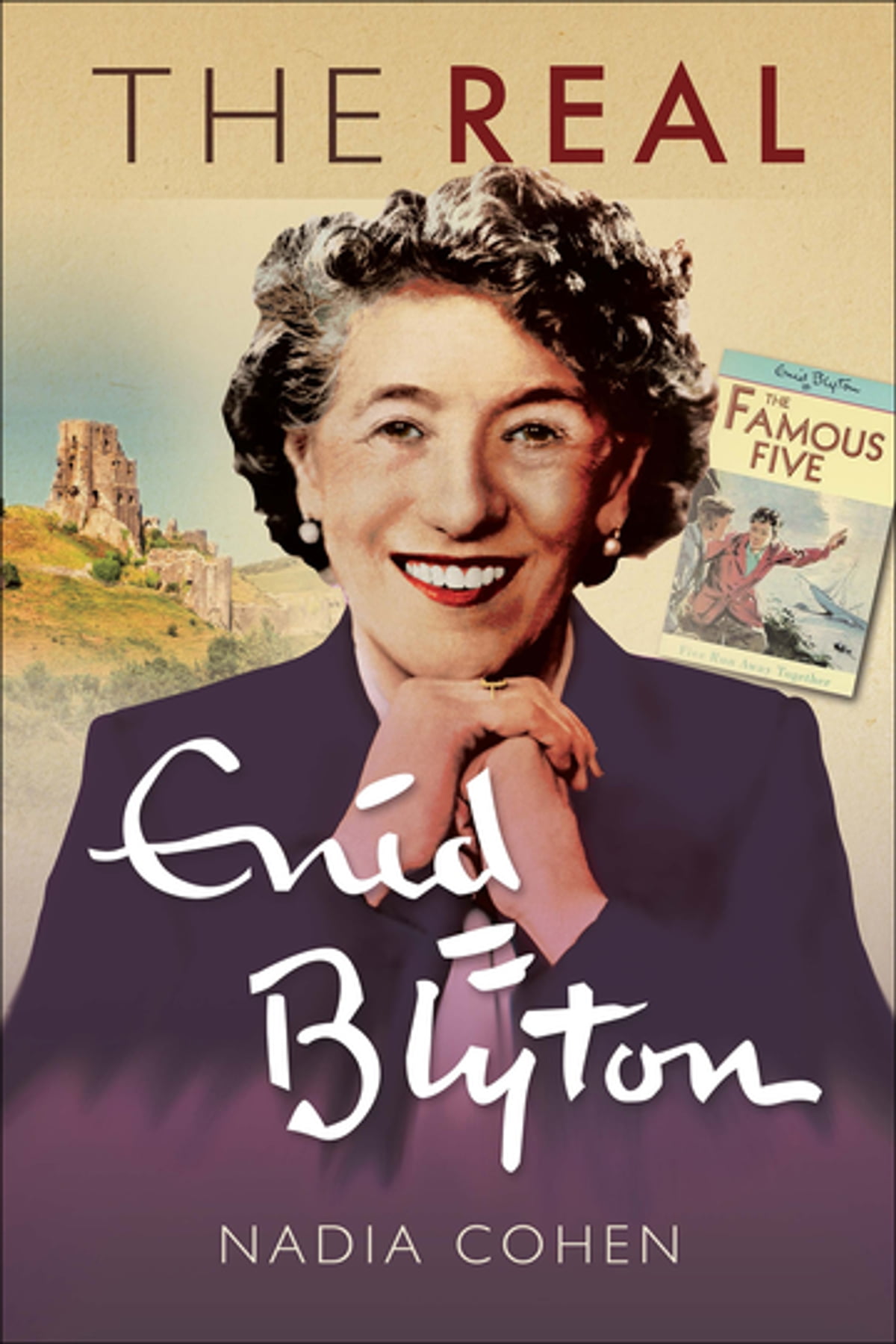
The list of artists and writers who were less than paragons of moral virtue is a long and (dis)honorable one. For this we go to Google, which has been asked the question so often that so-called “listicles” exist of the answers, which inevitably throw up the same names. Paul Gauguin abandoned his family and fled to Tahiti where he took on three child brides, infecting them all with syphilis. TS Eliot and Ezra Pound were Jew haters, as were, for that matter, Richard Wagner, Edgar Degas, and Roald Dahl. Picasso abused his women and drove them mad, calling them “machines for suffering.” Beloved writer of children’s stories Enid Blyton was a terrible mother, neglectful and vindictive, described by her own daughter as “without a trace of maternal instinct.” What am I to tell our daughter Demi, now 49, who grew up on Enid Blyton and who carefully rounded up all her Blyton books and tied them up in a ribbon during her last visit, for passing on to another child?

I recall when, years ago, a renowned actress (whom I need not name, as you can surely guess who she is) was denied the National Artist Award by Malacañang because of her reported use of drugs at some point in her troubled life. (I know, because the Palace official who recommended the disapproval told me the story.) Thankfully this was later rectified.

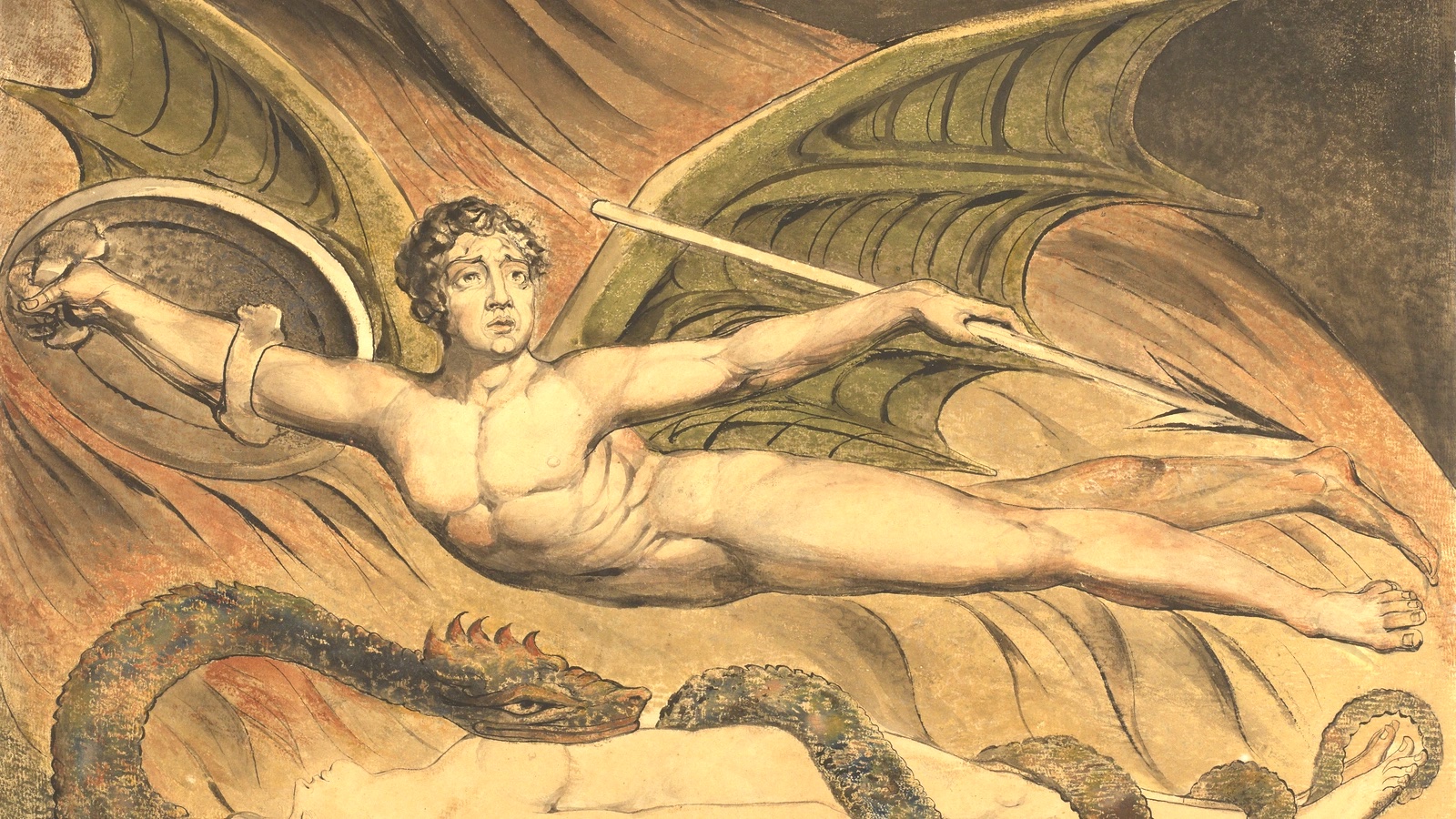
And as soon as I say that, you can see where I incline in this debate. I hate evil as much as any sane person would, but also recognize and accept that some of that is always latent within me and within others, and that it is my awareness of it—or my guilt when I give in to it—that grounds and deepens my art. I’m not saying evil is a prerequisite for artmaking, as surely saintly folk have produced great art (although I still have to find that listicle); it’s just there, like a shadow in the forest, the Lucifer without which the aura of our angels would dim. 

And what about the deplorable if not detestable excess of it in these aforementioned geniuses? Do we excuse or absolve their failings by accepting their art? I think not. What we are accepting is not their wrongdoing, but rather the fact of how one of art’s and indeed of life’s great mysteries is how often beauty and horror cohabit. Thus we can come to an informed appreciation of a work and its maker, wonder at how so much darkness could produce so much light, and begin to understand our complexity as humans, which artists give form and voice to.

Myself, I like to think of art as a personal act of redemption, or at least of restitution. It will never excuse one’s bad behavior, or repair the damage done. But it will show how capable we are of refined and abstract expression, despite our brutish selves.

The greater problem for me is that, today, we inhabit a moral minefield where art itself has been conscripted to disguise falsehood and deception. Artificial intelligence has neither heart nor conscience, but its manipulators can produce breathtakingly attractive lies. Much more than a long-interred Juan Luna, this worries me.

Penman No. 170: History Made Personal

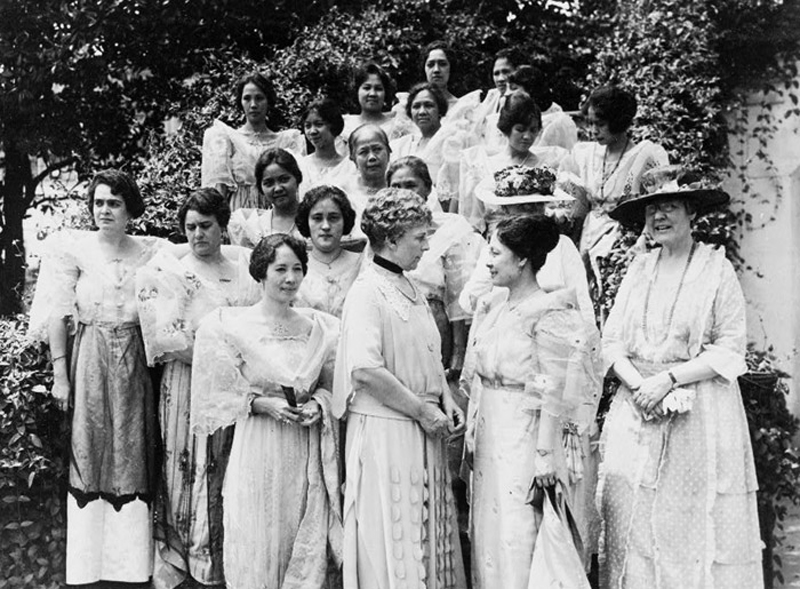
Sofia+De Veyra and+Florence Harding

Penman for Monday, October 12, 2015

THE RECENT upsurge of interest in our history occasioned by runaway success of the film “Heneral Luna” is certainly welcome. While the film and its propositions may have sparked a flurry of debates among netizens about what really happened more than a hundred years ago, the important thing—as I noted in one of those “Heneral Luna” threads online—is that we’re having this discussion at all, when not too long ago, very few people cared.

(One of the most salient comments I came across was posted by a viewer who mused that—for all our newfound admiration for the hothead general’s bravery and principled stand—had we lived in Gen. Luna’s time, or were those circumstances transposed to the present—most of us middle-class Pinoys would probably side with the general’s more pragmatic enemies, arguing business to be more important than anything else. That’s a sobering thought, especially these days when many people seem to think of “nationalism” as being too old-fashioned if not downright irrelevant in this age of globalization, conveniently forgetting that globalization benefits some nations and economies more than others.)

There have been many times when I’ve wished that I’d become a historian instead of a literary person, so I could have looked into our past more deeply and more seriously to make better sense of our present. Indeed, when I returned to the University of the Philippines as a freshman after a ten-year hiatus in 1981, I chose between declaring myself as an English or a History major (I had entered UP in 1970 as a prospective industrial engineer).

Were it not for the need to take the easier path to make up for lost time, I would have chosen History in a flash, as interested as I was in stories of “what happened.” In grade school and high school, I read more books dealing with history, biography, geography, and science than fiction; to this day, when people ask me what single book has influenced me the most, I don’t think twice about answering The Forest by William Pomeroy, a lyrical account of an American’s travails as a Huk guerrilla, which I read in high school and encouraged me to become an activist.

Mine was a generation of students who grew up on the enlightened revisionism of Teodoro Agoncillo, Hernando Abaya, and Renato Constantino. I use the word “revisionism” because the standard historical texts at that time were written by such men as Gregorio F. Zaide, a mimeographed and paperbound copy of whose book—my mother’s college textbook, for sure—was as fascinating to me as a boy as any of Edgar Rice Burroughs’ Martian chronicles. In grade school in the early ‘60s, I had yet to become aware of the important qualifications and nuances to be made to telling the story of our past, such as the fact that histories unavoidably took sides, and that it was all too easy to be seduced into taking the wrong one.

These days, I content myself with writing commissioned biographies and institutional histories—which, while they pose their own literary and scholarly challenges, do not by any means qualify me as a historian. I remain ever aware that the true study of history involves an appreciation of the grand sweep of things as much as the little details, and I have to admit that it’s the details I’m more often fascinated by, leaving it to larger minds to scope out the overarching logic or the grand design of the human narrative.

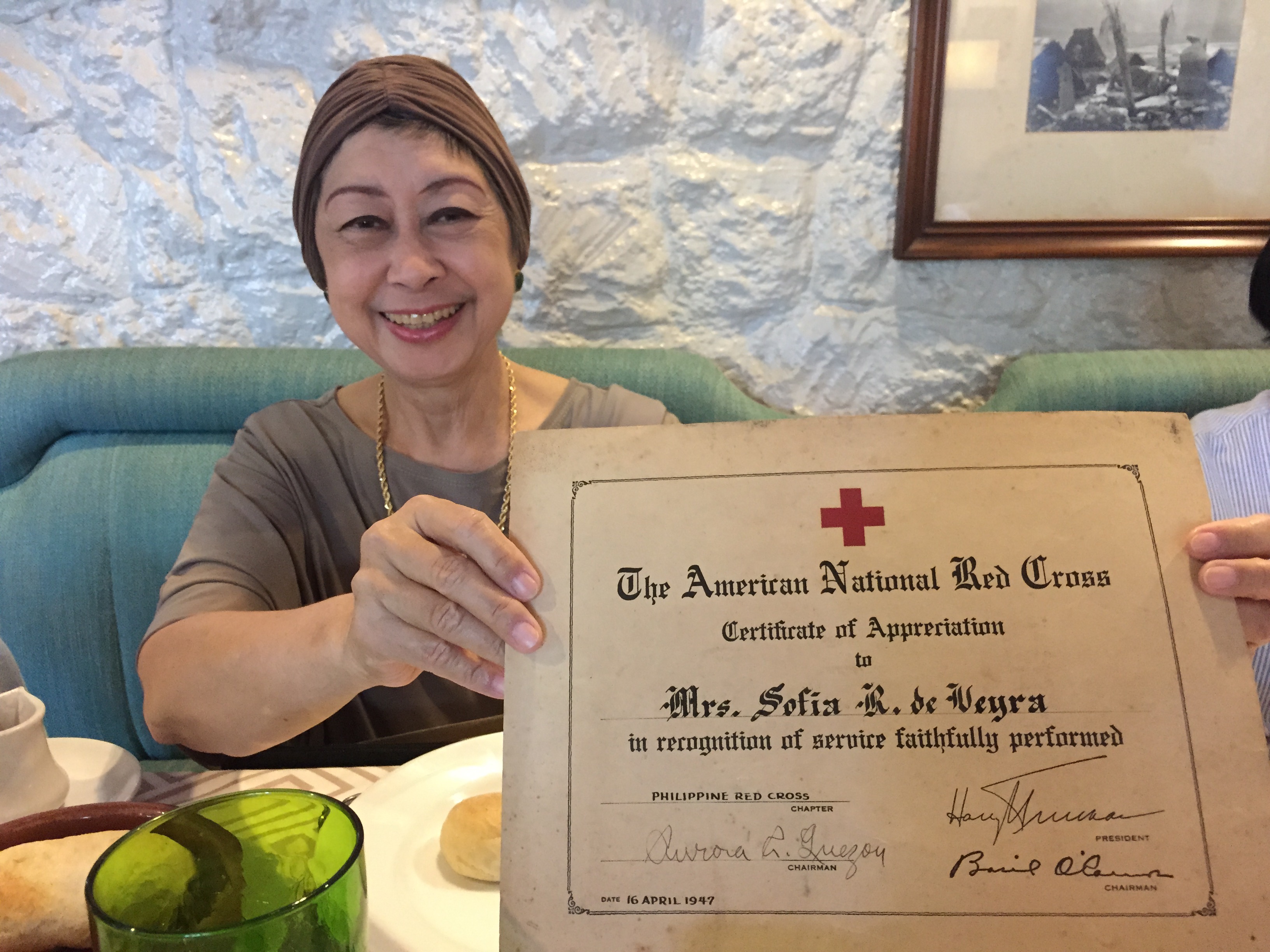
As a hopeless dabbler, hoarder, and kibitzer, I find myself irresistibly drawn to old objects and obscure information, and trade these gilded items with such fellow enthusiasts as my Washington-based friend Erwin Tiongson and his wife Titchie, who together run the Philippines on the Potomac website at popdc.wordpress.com. Erwin and Titchie were in Manila not too long ago for a vacation and a couple of lectures before the Philippine Studies Association and at the Ateneo, Erwin’s alma mater, on their most recent research into the colorful life in Washington of the remarkable Sofia de Veyra (you can read Titchie’s wonderful article on her here: http://www.positivelyfilipino.com/magazine/the-thoroughly-modern-sofia-de-veyra). My wife Beng and I had a chance to meet over lunch with the Tiongsons and with Sofia’s granddaughter Teresa “Binggay” Montilla and her aunt Rita Damian, and the look on Binggay’s face when the Tiongsons showed her pictures of her grandparents she had never seen before was priceless.

IMG_7997

Shortly afterwards, back in the US, Erwin wrote me to say that he had been able to track down an article in the May 20, 1921 issue of the Great Falls Tribune (published in Great Falls, Montana), about the protest launched by Fiipino Chinese businessmen, led by the banker Dr. Albino Z. Sycip, against a new bookkeeping law that apparently discriminated against Chinese merchants. Sycip had taken his case to the US courts, and was on his way to Washington to plead his case there. While he was in the States, on June 30, a son was born to his wife back home, a detail I recounted in a biography I wrote of the man who was that baby boy: “Albino decided to commemorate that visit by naming his new son ‘Washington.’ ‘Up to now Wash has semi-annual recurring bad dreams about what might have happened if the old man had been in Tallahassee or Vladivostok,’ the impish Alex [Wash’s brother] would write.” Erwin relayed the news item to Wash, who gratefully wrote Erwin back to say that he had never seen that article before (and another one reporting on his father’s victory in court).

More recently, Erwin and I have been exchanging clippings we’ve dig up on another outstanding Filipino, a Jesuit icon, the late Fr. Teddy Arvisu, and I’ll write up those findings one of these days (“His father wanted him to marry one of the Quezon girls,” Erwin tells me). I’d found an eloquent and impassioned speech against the rise of fascism by the young Teddy, published in a November 1940 issue of the Philippine Collegian; Teddy would become a soldier and join the Death March before achieving his dream of priesthood. At the moment, Erwin’s hot on the trail of Peyton March, the American officer who went after Gregorio del Pilar at Tirad Pass, and who lived in his last years in Washington. You better hurry, I told Erwin, as they’ll be making a “Goyong” movie soon.

Nothing of the kind of trivia that Erwin or I come across will change the big story of our past, but as avid amateurs, I’m sure we’re happy enough to help in making history more personal.

[Top image from the US Library of Congress]