Penman No. 474: Looking Back and Letting Go

Penman for Sunday, June 1, 2025
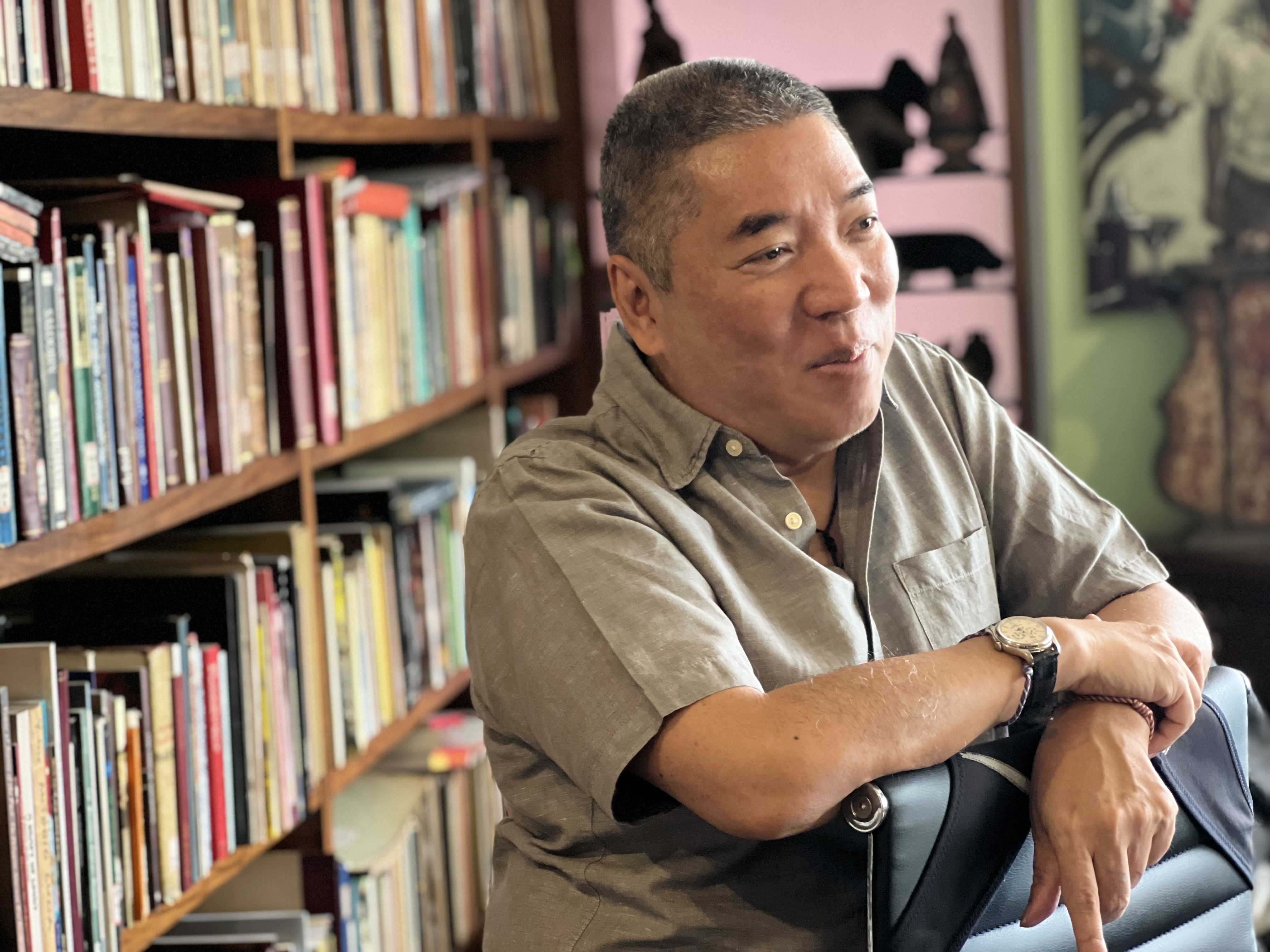
AS ANY friend who’s had the privilege of being invited to his Makati home quickly realizes, Ambeth Ocampo is more than the engaging public intellectual we all know, whose Looking Back series has made history come alive for young Filipinos. He’s also an inveterate collector of rare Filipiniana—books, ephemera, art, and historical objects—all of which come with the territory he works in. 

There have been many Filipinos of a similar bent—the legendary Alfonso Ongpin and the late Ramon Villegas come to mind, as well as the more contemporary Jimmy Laya, Melvin Lam, and Edward de los Santos, among others—but the way Ambeth has amassed his collection is noteworthy on its own, as it folds the personal almost imperceptibly into the professional. 

It comes pretty close to the classic prescription for murder—means, motive, and opportunity—all captured in his classic story of how he stumbled on and picked up Emilio Jacinto’s silver quill, a writing prize, from an antiques dealer who didn’t bother to learn what it was and let it go for its scrap value. (Having as much of Ambeth’s desire for antiquarian junk but with much less knowledge and certainly less means, I’ve often joked, between the two of us, that Ambeth’s the scholar and I’m the scavenger.)

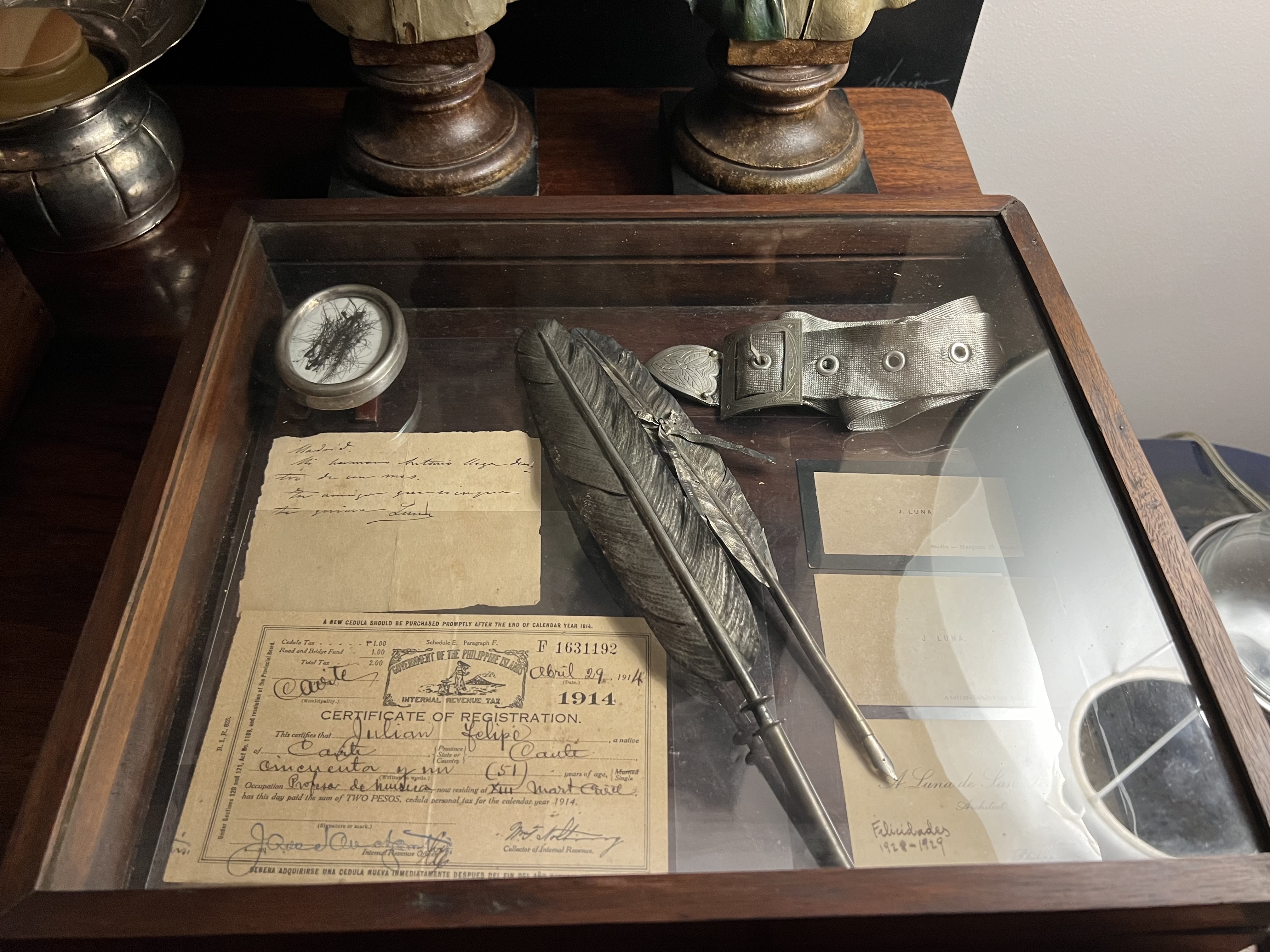
Jacinto’s quill, along with a trove of other historical treasures from Ambeth’s personal collection, will be up for auction on June 7 at Leon Gallery. They include Juan Luna’s silver belt, Felix Resurreccion Hidalgo’s walking stick, an official copy of the Malolos Constitution, Philippine maps from 1616 and 1647, and the Noceda and Sanlucar Vocabulario de la Lengua Tagala from 1860, among many others.

Knowing how precious these objects were, I had to ask Ambeth more about them, and this is what he said.

What made you think of selling these treasures now? Surely it can’t be easy letting go of them after being their caretaker all this time?

Over the years, I have come to the realization that collecting is not the hobby it used to be. As a boy I collected stamps and learned geography, history, and the culture of foreign countries in the process. I was fortunate that my father’s company had an international correspondence, so every week his secretary would send me a batch of envelopes to sort out.

I started collecting Filipiniana books in the 1980s, stocking up from the National Bookstore Quezon Boulevard branch bargain bin where I completed my Nick Joaquin essay collection because they cost one peso each. After school, I went to the Heritage Art Center in Cubao that I learned only years later was the site of the old Philippine Art Gallery. It was a ramshackle grouping of rooms upon added rooms made from old house parts that Mario Alcantara, the owner, bought from mambubulok. I had a favorite nook where I did my homework and when bored I would explore the rooms that I think gave me an eye for art and the ability to choose what I thought was good or not.

Looking back my collecting, and my life, has been the happy intersection of skill and opportunity. Napoleon once said “ability is nothing without opportunity.” I have always seen collecting as a responsibility. Collecting significant Filipiniana is not a hobby. It is not an investment. Collecting is a responsibility, the collector a steward who preserves the collection for the next generation. 

The objects I put at auction have enriched my life in many ways and I think they will enrich the life of their next steward. Some of the lots like the Malolos Republic one-peso banknote and the printed copy of the Malolos Constitution have been tucked away in a drawer. If I drop dead tomorrow these might be carelessly thrown away as trash. They should go where they are better appreciated. Collectors de-accessioning keeps the market alive and buzzing.

Let’s get this out of the way: it’s none of our business, but what will you do with the money?


Since I am not a dealer the material reward does not really factor in the equation. I have sold other things before at cost or even at a loss, just thinking that my gain was the enjoyment I got chasing after them and acquiring them. What will I do with the proceeds? When I started selling my rare Filipiniana I thought that instead of having shelves of books, maybe I should just sell and use the proceeds to buy one or two incunabula or samples of early Philippine printing from 1593-1640. Instead of caring for a whole library I will just care for half a dozen very important books.
How did you start out as a collector of historical objects? How and where did you find them? Aside from Jacinto’s pen, what was your most serendipitous find?

Collecting historical objects came naturally from my work as a historian. I would find things in used bookstores and when supply was still plentiful in the Ermita antique shops. One of the serendipitous finds was the cedula or residence certificate of a certain Julian Felipe, a musician from Cavite. It was in a heap of old papers, initially priced at one hundred pesos. I haggled it down to fifty, paid, and ran away. 

Another time my favorite antique dealer brought a “European painting” of a Virgin and Child to my home. I looked at it and knew it was Philippine. When I opened the frame to inspect the painting, hidden under the frame was the signature of the Filipino master Mariano Asuncion (1802-1855). The silver belt of Juan Luna and the bank draft in his name were acquired from Mario Alcantara. It came with the famous trove of paintings inherited by Grace Luna de San Pedro that are now in the National Museum. While everyone was going wild over the paintings, I spent many afternoons browsing the boxes of memorabilia that included the bloodied uniform Antonio Luna wore when he was assassinated, the palettes and brushes of Juan Luna, the memorabilia, some architectural plans of Andres Luna de San Pedro, and much more. I offered to buy the palettes and brushes and the painter’s smock but Mario said these were destined for the National Museum. There was also the last letter Juan Luna wrote to his son from Hong Kong, written a day before his death, not only was this letter significant, Luna did a watercolor of Hong Kong Harbor on the first page of the double-sided letter. All I could afford was the silver belt that came with Luna’s black suit that Mario said was also destined for the National Museum. Unfortunately, the Heritage Art Center burned down and with it all these memorabilia.

Do you or can you separate the collector from the scholar? Did the collecting happen naturally as a consequence of the scholarship?

The collecting grew and was enriched by my research and scholarship. If I had a PhD in Math I probably would not have recognized these odds and ends now considered treasures. I have been divesting over the years. A large part of my Filipiniana collection was donated to the Center for Kapampangan Studies, Holy Angel, Pampanga. All I keep at home are the books I need for work for teaching, lecturing, and writing, but now that I am retired from Ateneo (but still employed on a post-retirement appointment) it is easier to let go. 

The full catalog of Leon Gallery’s Spectacular Mid-Year auction can be accessed on its website at https://leon-gallery.com

Penman No. 471: A Promise to Keep

Penman for Sunday, February 9, 2025

Now and then we come across stories of foreigners who fall under the spell of the Philippines so completely that wherever else they go, the Philippines and its panoply of wonders—its mangoes, its waters, its sunsets, and above all its smiling people—stay with them, urging them to return, in spirit if not in person.

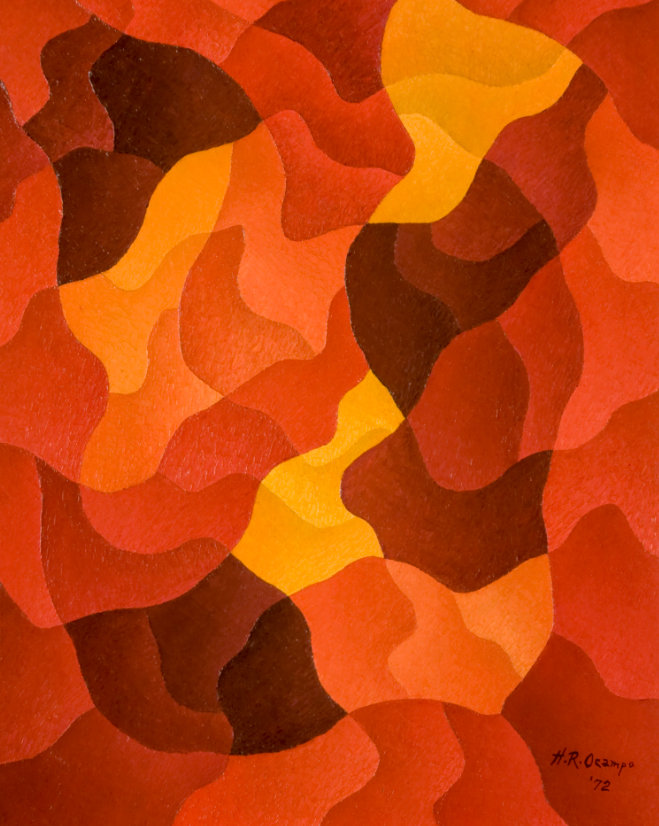
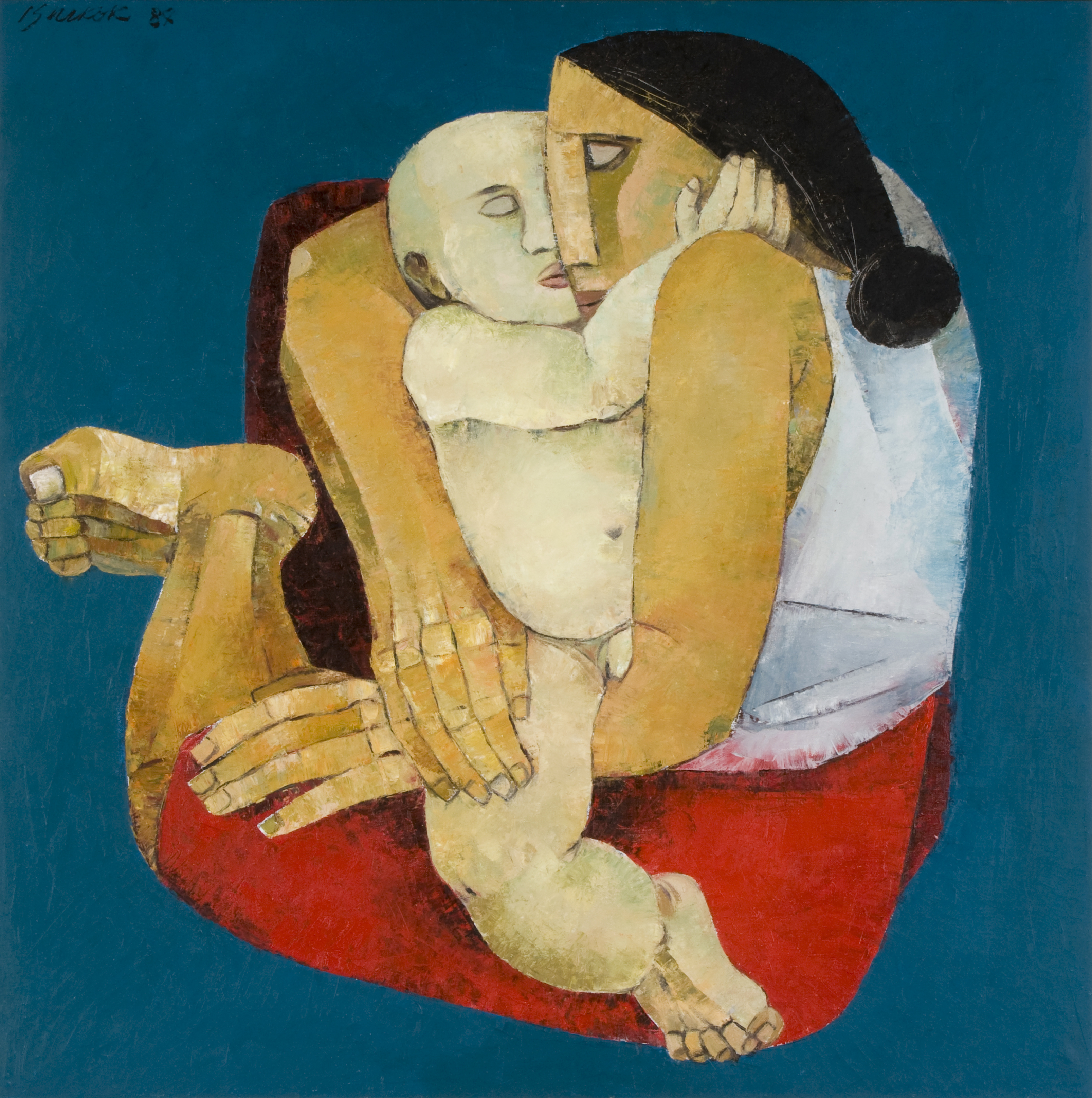
One such visitor was my good friend Julie Hill, who with her late husband Arthur first came to Manila in 1968 on a mission to help improve Philippine education, among other concerns. Almost six decades later, after having traveled the world and settled in America, Julie’s thoughts and affections remain bonded to this country and to its future. In the twilight of her life, she has decided to gift poor but bright young Filipinos with a life-changing opportunity to study at the University of the Philippines, from the forthcoming sale at auction of two paintings by National Artists HR Ocampo and Ang Kiukok.

Born in Alexandria, Egypt to Greek parents, Julie Hill went on to a fulfilling life in the United States and around the world with Arthur, who represented the Ford Foundation in the Philippines. Forced to leave Egypt when Nasser took over, Julie found a scholarship for her master’s degree in chemistry at the University of Minnesota. There she met Arthur, an Australian taking his PhD in Education and Mathematical Statistics. 

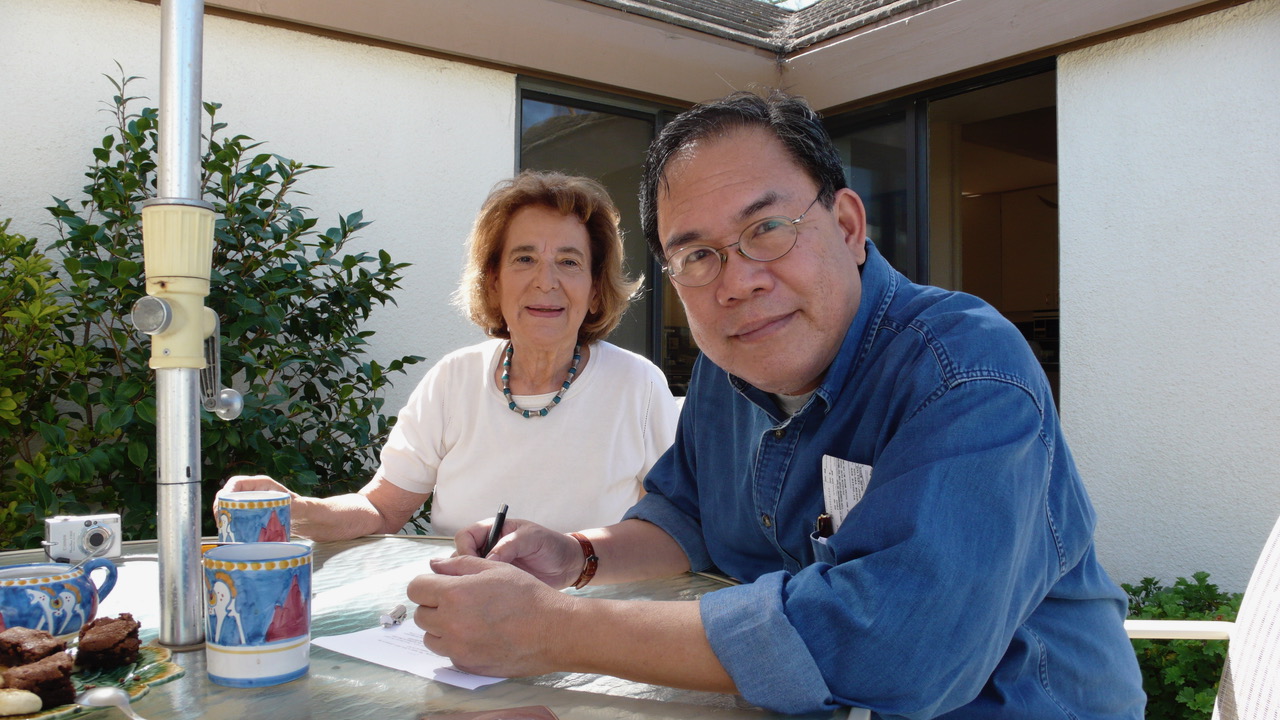
The two fell in love, married, and embarked on a lifelong adventure around the world—to Western Samoa, Thailand, Indonesia, and Afghanistan, where Arthur’s expertise in education and agricultural development was much sought after. Arthur passed away in 2002, but Julie went on to her own career as an international marketing executive for Lucent and later AT&T. Since retiring at their home in Rancho Sta. Fe, California, she has written and published five books of travel and memoirs—all of which I edited after being introduced to her by our mutual friend Jimmy Laya, turning our business connection into a long and dear friendship.

From the first of those books, A Promise to Keep (2003), come many vivid impressions of a country and society transitioning to modernity, troubled but brimming with energy and promise. Arthur got busy working with UP and the International Rice Research Institute, among others, and the Hills became good friends with the rising technocrats of the time—Cesar Virata, Gerry Sicat, and Jimmy Laya. It was Laya—who remains close to Julie—who introduced her to the local art community.

“The art scene was vibrant,” Julie would write. “Manila, a centuries-old entrepot, was rich in art and culture, and we were privileged to visit many private art collections….

“Art galleries flourished. A self-exiled painter stormed into town and set new price ceilings. The audience increased. So did the column inches devoted to art in the newspapers and magazines….

“The Luz Gallery in Makati was run by Arturo Luz, a leading painter, known for his high standards of professionalism. His gallery gained the trust of the public and the artists. The Solidaridad gallery and bookshop was located in Ermita, run by novelist Frankie Sionil Jose. Solidaridad was the middle ground between the established artists exhibiting at Luz and smaller galleries where new talent was championed. You could find superb examples of prints, drawings, miniatures, relief metal sculptures, collage, photographs, and paintings all over Manila.

“We were interested in meeting the artists and visiting their studios, but were reluctant to pay the gallery prices. If we liked the work of a particular artist, why not buy directly from him or her? This was how we searched for and found the home of Hernando Ocampo.”

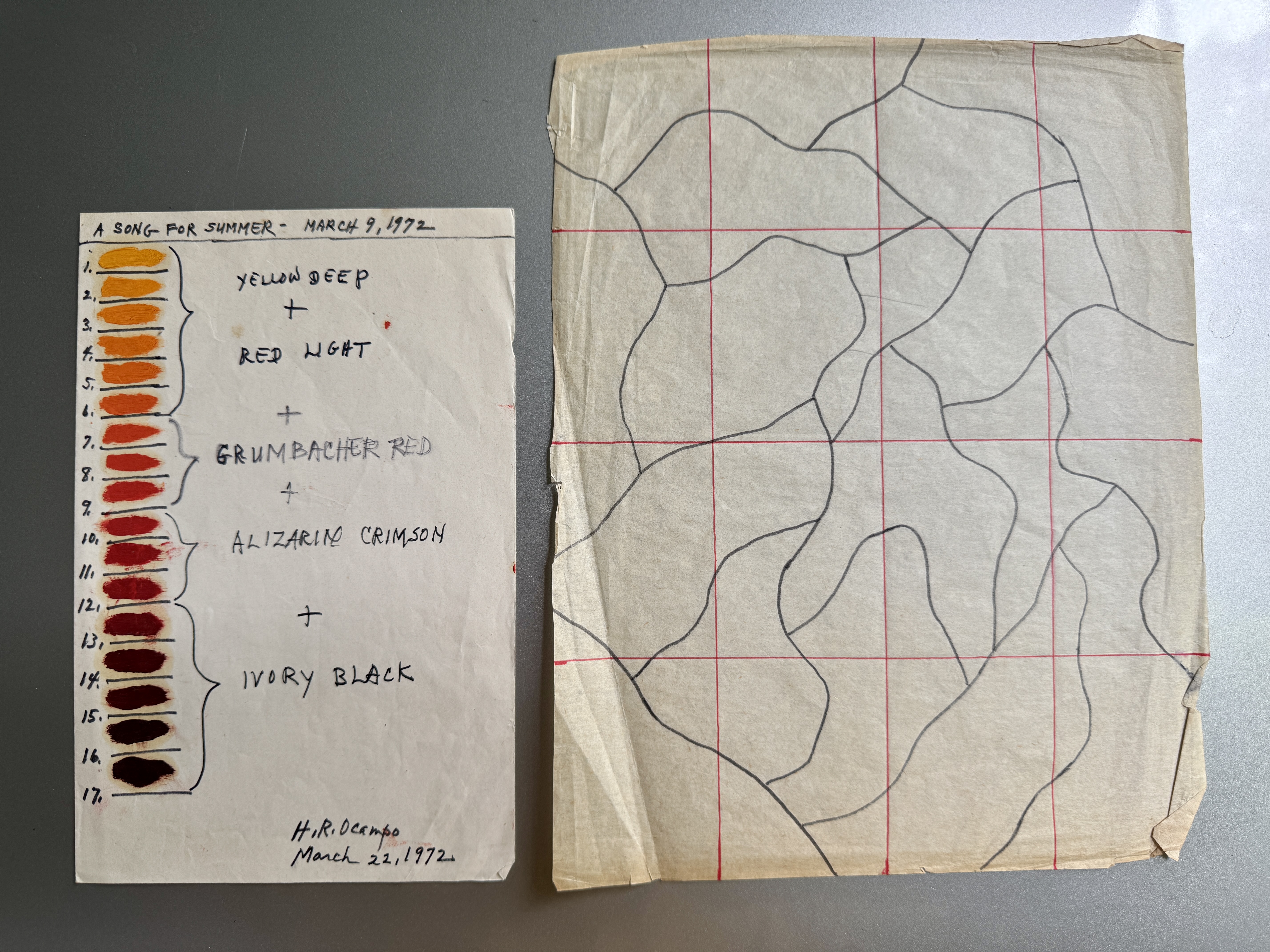
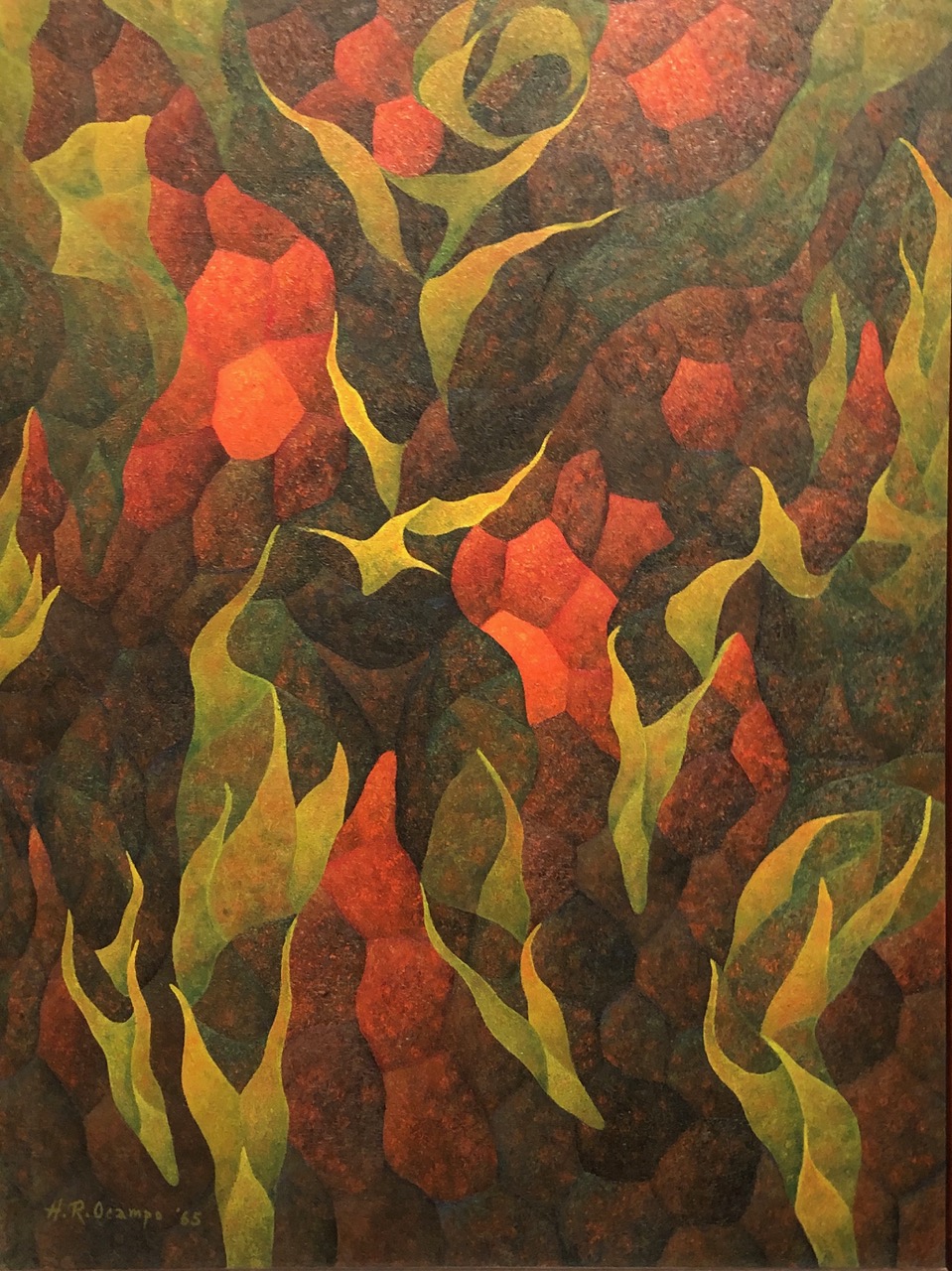
“Hernando Ocampo was a pure abstract expressionist with a daring originality in his paintings. His work was unmistakably Filipino, ascribing this national character to his unique, tropical colors. A typical Ocampo painting is not unlike a honeycomb, a complex weave of color and tone with each individual cell suggesting a large, more real life form. His work is tropical and warm and suggestive of symmetry. The colors and shapes seem to dance before the eyes. His home in Maypajo was a mecca for friends, admirers, and collectors. He had an open house on Sundays. Good food and hard and soft drinks were ready for guests. Visiting Ocampo, we felt welcomed not only by the artist but also by his family. We commissioned a painting. Sketches were drawn; we followed the progress of our painting with our weekly Sunday visits, and sampled the wonderful pancit, that ubiquitous Filipino noodle dish, that was offered. We photographed the progress of his work. He completed the ‘Song of Summer’, a mastery of color in 17 different shades of red. It would hang proudly in our home in California, and continue to provide intense, pleasurable excitement, another reminder of our times in the Philippines.” (Note: Ocampo’s sketch and color guide for the painting will go with the artwork at auction.)

The Hills left Manila for Indonesia shortly after martial law, but on a return visit in the early 1980s, their old friends at the Ford Foundation presented them with another painting by another Filipino master, Ang Kiukok.Julie recalls seeing several works by accomplished Filipino painters in the foundation office, purchased back when they were far more affordable, and this may have been one of them. Like the Ocampo, it traveled with the Hills around the world all the way to Rancho Sta. Fe, where I have been visiting Julie over the years (our daughter Demi conveniently lives nearby in San Diego).

It was during our most recent visit there that Julie brought up the idea of donating her two paintings for the benefit of poor UP students. A lifelong but quiet supporter of students as far away as Mindanao and a staunch believer in the transformative power of education, Julie also honored me by anonymously (but no more) endowing the Jose Y. Dalisay Jr. Professorial Chair in Creative Writing at UP, over my embarrassed pleas to put it in her name.

This time, she wants the money to go to UP’s poorest—specifically, those exceptionally bright and mainly provincial students who, against all odds, pass the UPCAT but fail to enroll, lacking the means to afford the cost of living on a UP campus. We’ll need to work out the mechanics, but this will go much farther than professorial chairs in changing Filipino lives.

“I had a privileged education in Alexandria and was fortunate to receive a scholarship for my graduate education in America,” Julie says. “During our years in Manila, Arthur and I developed a deep affection for the people of the Philippines, and I am hoping that this donation will contribute to creating a generation of talented and hopeful Filipinos who will serve their country well.”

The Ocampo and Ang Kiukok paintings will be sold at auction by Leon Gallery on February 22. I pray that generous buyers will help Julie keep her promise to the Filipino people.

Penman No. 419: Pages from the Past

Penman for Monday, July 19, 2021

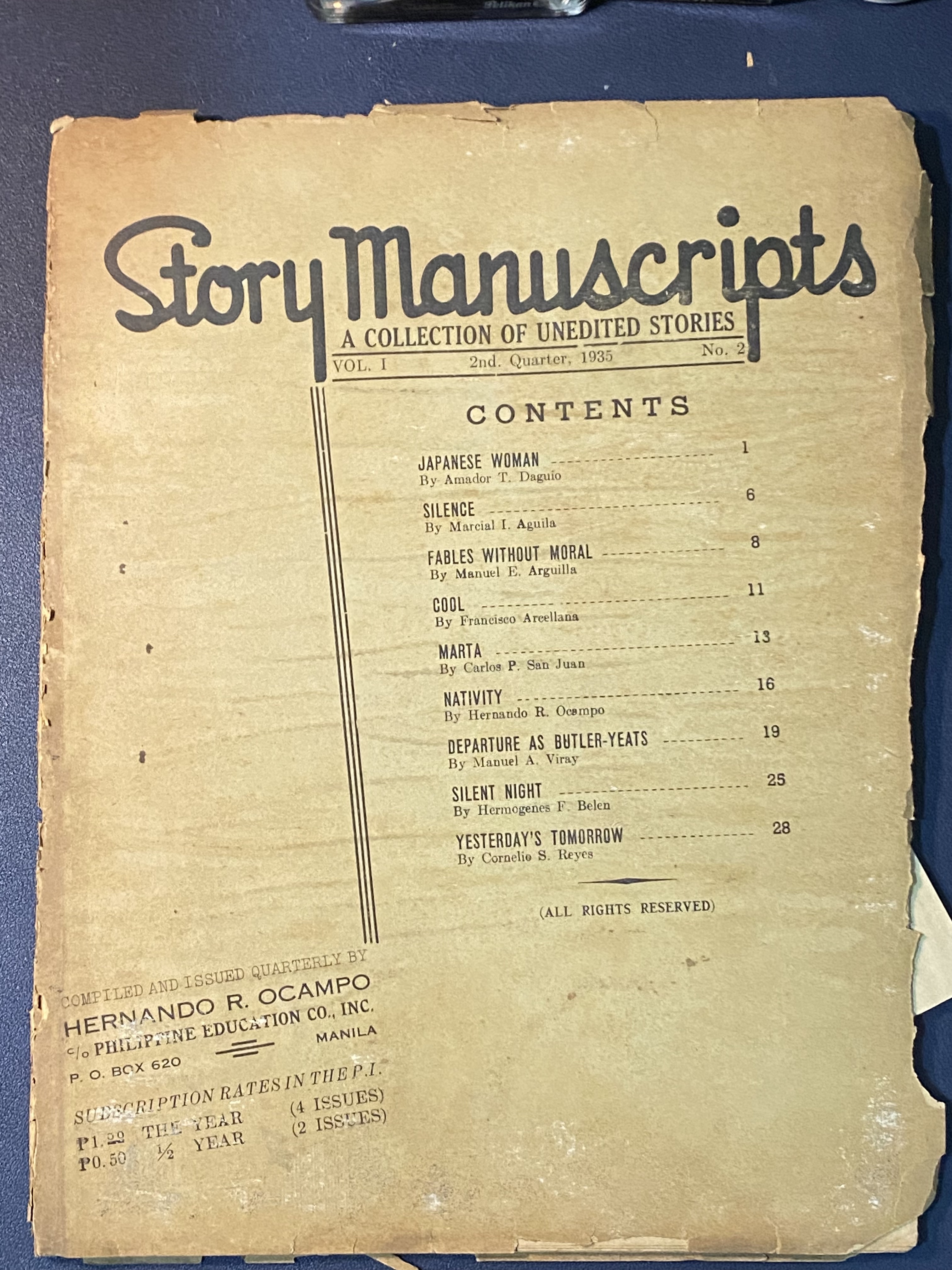
LAST MONTH, two precious documents came my way. The first was a magazine with a unique idea behind it. It was a copy of Story Manuscripts, “a collection of unedited stories,” Vol. 1, No. 2, from February 1935. No more than mimeographed copies of the authors’ typewritten manuscripts between two hard covers, this issue brought together stories from Amador Daguio, Manuel Arguilla, Francisco Arcellana, Manuel Viray, and H. R. Ocampo, among others. 

Ocampo’s presence was especially interesting. I knew that National Artist Hernando Ruiz Ocampo (1911-1978) was a short story writer before he turned to painting, but he was this magazine’s publisher as well. What was exciting for me (as a writer and literary editor, especially of Arguilla) is that I’d never come across these stories before under these titles, so they’re very likely undiscovered stories or early drafts of later ones, being “unedited,” as the Story Manuscripts tagline claims. 

Arguilla’s three “Fables Without Moral”—I have to check if they appeared in the book of fables that his wife Lyd published after his death and credited him for as co-author—are a surprise. They all have to do with, uhm, procreation, rendered in a mock-mythic tone. I would have to revise my introduction to the Arguilla anthology I edited three years ago to account for these risqué diversions. Here’s a sample:

“But soon he awoke for an earthquake shook his newly-found home and a storm tossed the forest of hair and a groaning and moaning filled the air. Then a downpour such as he had never before known drenched him, buried him in its thick flood.” (Hint: “he” is a vagabond ant.)

The Arcellana story, “Cool,” is quintessentially Franz—the young and ardent admirer (the author himself was just 18 then) watching his beloved from a distance, chanting over and over again, “I see her but I do not want to see her looking at me.”

H. R. Ocampo’s “Nativity” is, unsurprisingly, visual: “The big round eye floated gently upward and upward. Then it ceased floating upward. It ceased floating and winging upward and was suspended in space. Then it was dark. Darkness all around. Darkness for a brief one millionth second.

“After the brief one millionth second the big round eye came back seeing everything and nothing in a whirling sphere of soft jelly-like mass of white and black and red and green and orange and blue and violet.”

There’s an interesting biographical footnote to the Ocampo story: “Hernando R. Ocampo was born on April 28, 1911 in Sta. Cruz, Manila. Began writing two years ago on a dare and thought that writing was ‘just like that’ when his first effort was immediately accepted by Mr. A.V.H. Hartendorp of the PHILIPPINE MAGAZINE, but a series of rejection slips from the same and other local editors later toned down his ultra-optimistic viewpoint—so much so that he actually considered giving up writing ‘for good.’ Fortunately he met Manuel E. Arguilla who through patient coaching gave him courage to try anew.”

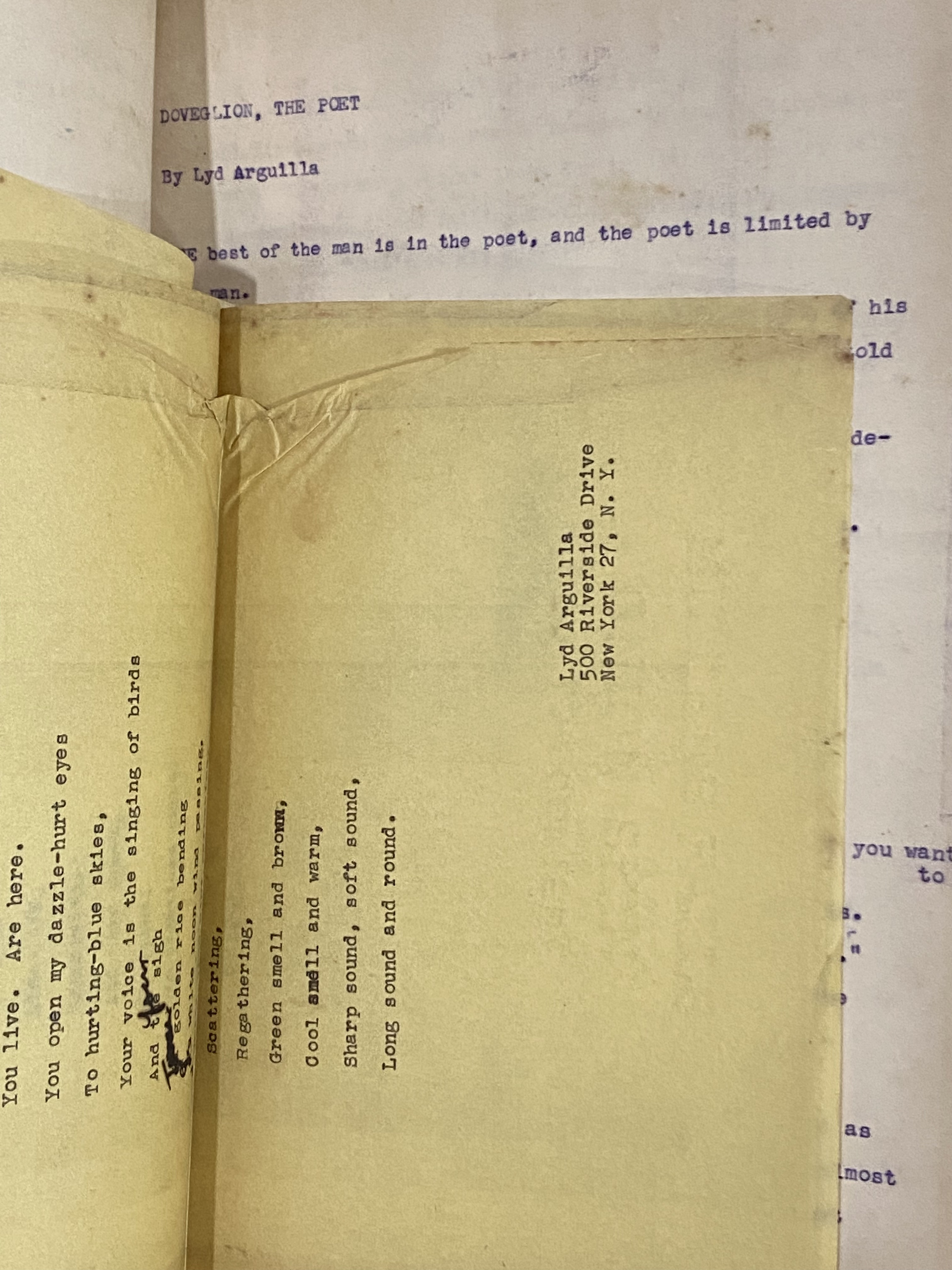
The other document I felt extremely lucky to acquire was a plain black folder, rather worn, with about 60 to 70 pages in it of what was obviously a carbon paper copy. It was also clear, however, that the author of these pages had used this copy to make handwritten revisions on. 

It was a collection of essays written by Lyd Arguilla—and I’m not sure if they were ever published—during a sojourn to the United States in the early 1950s, when she received a grant for further studies in New York. This was just a few years after the war; in 1944, she had lost her husband Manuel, who was executed by the Japanese for his guerrilla activities. Lyd had been active in the resistance herself, and was away when Manuel was arrested. We can only imagine the pain she went through on discovering his loss. By the time she writes about the experience, she has composed herself, but she leaves it to Manuel’s fellow prisoner, a Major Moran, to relate what happened:

“On a tip from Pete Mabanta, Manuel E. Arguilla had already escaped with us out of the city. Friends and fellow members of our guerrilla unit had helped: the Lansang brothers, Ramon Estela, S.P. and Mary Lopez, Koko and Lina Trinidad. But Manuel sneaked back into the city to destroy or put in a safer place some records. He was able to protect the lives of his associates, but did not escape with his own.

“‘Arguilla was accused of being a major in Marking’s guerrillas, of heading an espionage and propaganda unit against the Japanese. Liling (Rafael R.) Roces was charged with publishing Free Philippines and various other acts against the Japanese military.’

“‘Arguilla had enough material, according to him, for two books. All he asked was to be able to live through to write them.

“‘It was on August 29th, early in the morning, about seven o’clock, maybe earlier, that the prisoners in Bilibid were given old clothes to put on (we all wore our underwear), put in handcuffs, and blindfolded. The blindfold was either green or white. The 28 men wore white bands. I thought, being most of them influential men that they would be given better treatment than those of us who were given green bands. I was wrong of course. For I and others were taken to Muntinlupa where we were finally liberated, and the 28, as we learned later, were beheaded at the Chinese cemetery.’

I could imagine Lyd typing those words on a chilly morning in New York and running that awful moment through her imagination. Elsewhere in the folder, she tucked away a love poem she had written for Manuel. Holding those pages, I felt myself in the presence of something close to sacred.

Penman No. 363: A Singapore Swing

IMG_0941.jpeg

Penman for Monday, July 22, 2019

I’VE BEEN visiting Singapore nearly every year for one reason or other, usually for a conference or at least passing through Changi on my way elsewhere, but this month Beng and I decided to fly there just to have a little fun.

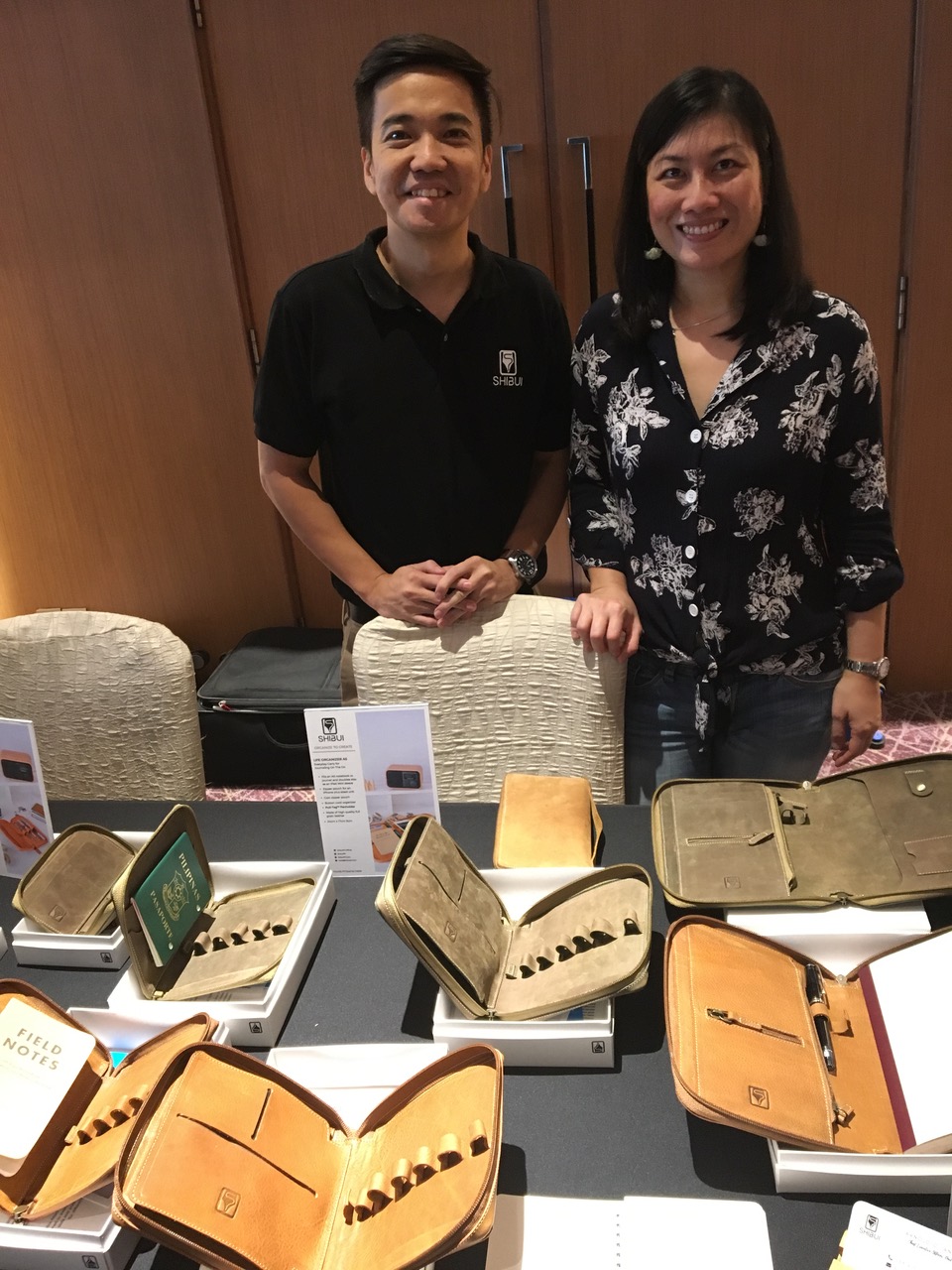
I did have an official excuse, sort of, for this particular swing—the 3rdSingapore Pen Show held at the Marina Mandarin on July 13, which brought together the country’s and region’s premier sellers of pens and related products. I thought I would drop by for a look-see as the “old man” of Philippine fountain pen collecting, and happily I was accompanied by a small but very knowledgeable Pinoy contingent that included adwoman and artist Leigh Reyes (who also happens to be the new president of our Fountain Pen Network-Philippines), medical executive Joseph Abueg, and avid collector Micah Robles, among others. We were all proud to see two major Filipino companies represented at the Singapore show and generating brisk sales and inquiries: Jillian Joyce Tan’s Everything Calligraphy, which was showing off its new line of Philippine-made Vinta inks, and Arnold Ang’s Shibui leather pen cases, which can easily compete in quality and design with the world’s best.

IMG_0335.jpeg

I’ve been to many other pen shows around the world, chiefly in America where they happen year-round, and while Singapore’s may be relatively smaller because newer, it also showcased Asia’s strengths as the producer of some of the world’s finest pens—the high-end Japanese Nakayas, for example, which are rarely seen in the West. Eurobox, which has a formidable collection of vintage pens, came in from Tokyo; and André Mora of the renowned Mora Stylos flew in all the way from Paris with a bevy of their coveted Oldwins. Pen shows are as much about people as they are about pens, and I was delighted to see some old friends like Lai Kim Hoong of Malaysia’s PenGallery, as well as make some new ones like Tan Fong Kum of Singapore’s Aesthetic Bay and Ng Lip Sing of Singapore’s Straits Pens.

So did I buy anything? I normally step out of pen shows with a wild man’s stare, clutching four or five precious finds in my fists, but the great thing about having too many pens is that you know when to stop and to just enjoy the scenery, which is what I did. I came to Singapore to talk pens with kindred spirits, and brought a selection of 12 of my most interesting vintage and modern pens, and had lively conversations about a few of them. Unlike our Manila Pen Show—the next one of which will take place November 16-17 this year—which is far busier and which features more side events like lectures and demos, Singapore’s was still more of a market than a community, and I would’ve liked a longer chat over coffee with our local counterparts, but maybe next time.

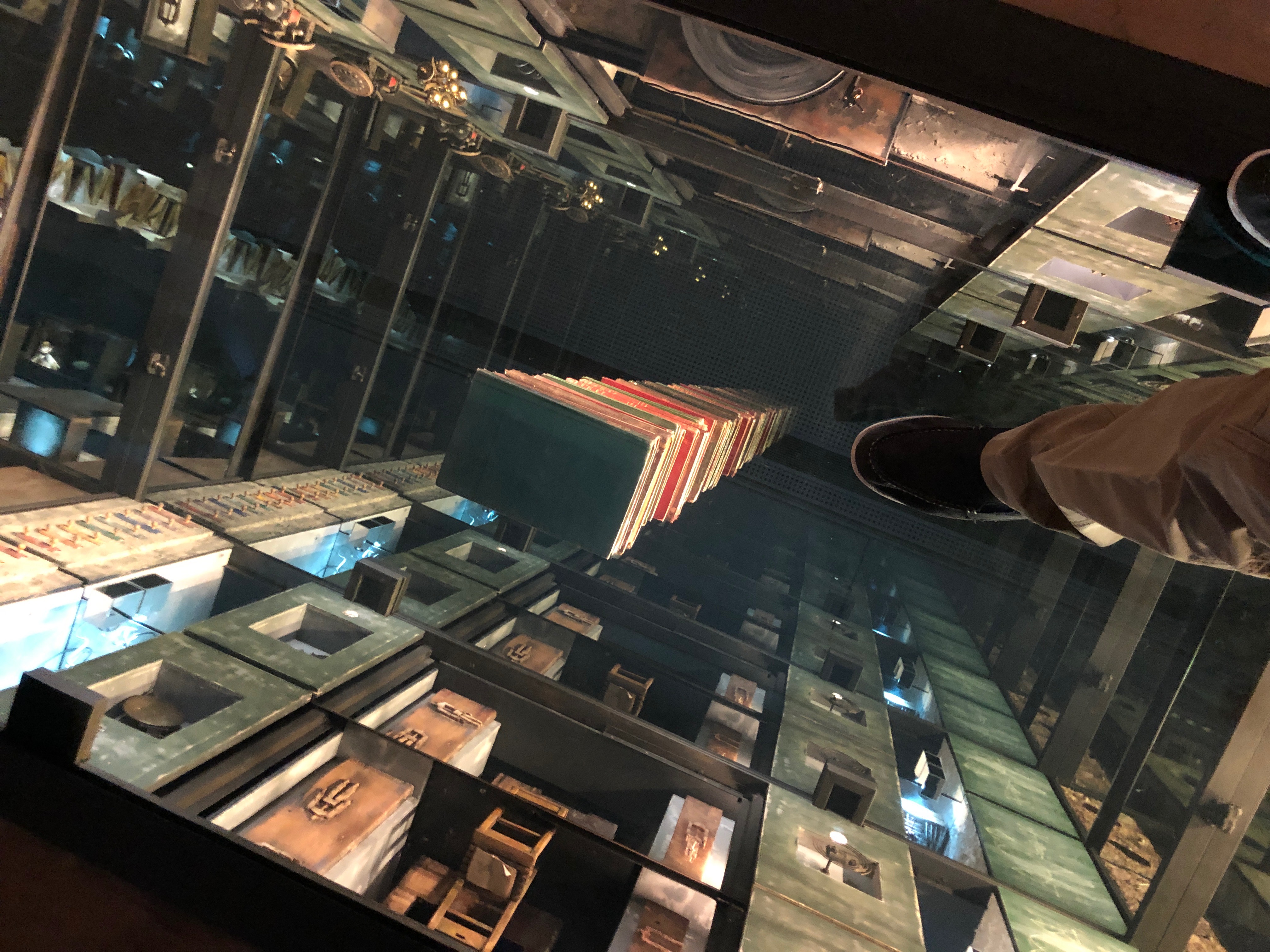
Our other objective for this Singapore trip was to visit the National Gallery, which somehow doesn’t figure on most tourist itineraries like the Marina Bay Sands or the Gardens by the Bay. Built where the old City Hall and Supreme Court stood, the National Gallery is both an imposing but also welcoming structure, with guides and docents ready to walk you through the exhibits. Aside from Singaporean art, of course, the gallery’s strength lies in its collection of Southeast Asian art, which is breathtaking in its range of styles as well as in its commonality of themes—nation, nature, people. Filipino talent is well represented throughout the exhibit—from the ground floor, where Mark Justiniani’s mind-blowing (and, for the vertiginous like me, unnerving) “Stardust” bridge obliges the visitor to take a literal walk through bottomless space, to the succession of galleries on Levels 3-5 where “Between Declarations and Dreams: Art of Southeast Asia since the 19th Century” is on show.

IMG_0924 2.jpeg

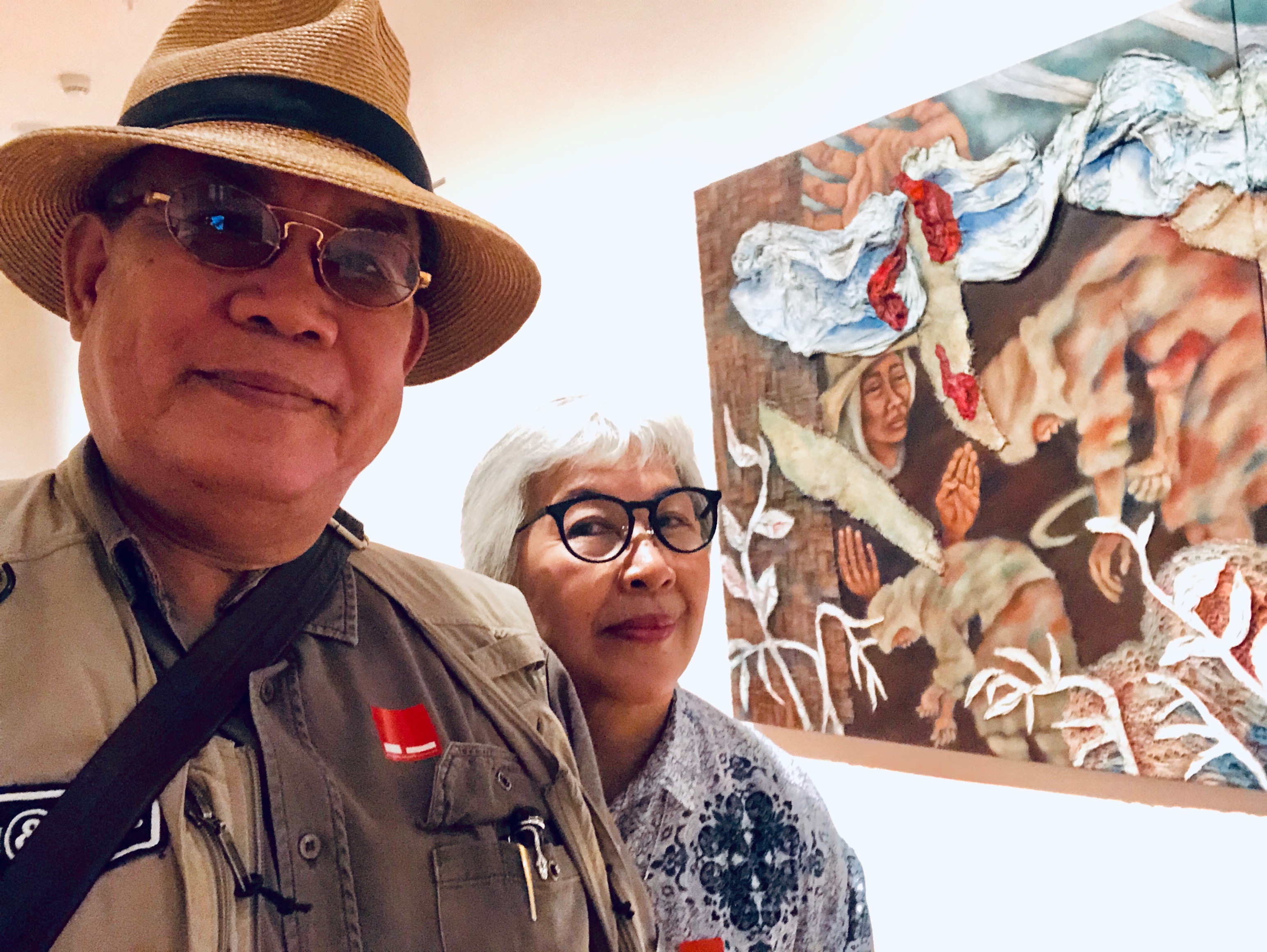
A trio of less-known 1940s Amorsolos is flanked by the orchestrated chaos of a Purugganan; an early and dark Edades exudes primal energy; elsewhere are exemplary pieces by Galo Ocampo, Arturo Luz, Anita Magsaysay-Ho, Napoleon Abueva, Bobby Chabet, Ray Albano, Santy Bose, and Imelda Cajipe. But the piece de resistanceof Filipino modernist representation is H. R. Ocampo’s Dancing Mutants, encountering which made our whole Singapore trip worth it. And the curators themselves must have been aware of the specialness of this stunning work from 1965, according it its very own corner in the gallery, almost altar-like. I’ve seen many Ocampos (with Beng restoring quite a few of them), but this one made me want to fall on my knees in praise of its creator.

IMG_0957.jpeg

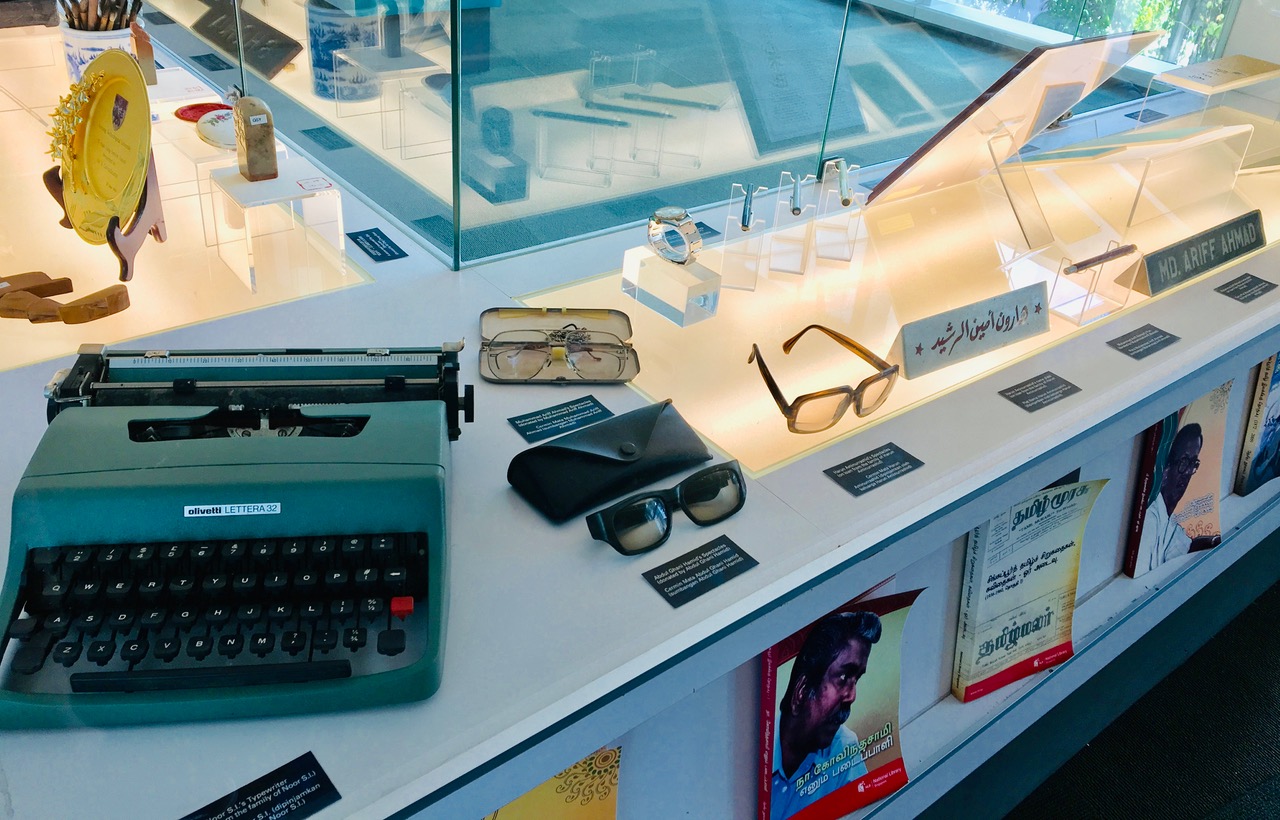
And purely by serendipity, when we stepped out of a mobile-phone shop on North Bridge Road, I noticed that the building across the street was none other than the National Library, which I’d visited as a journalist on a previous assignment. Let’s go in, I told Beng, I want to show you something. So we did, and there on the 11thfloor was a permanent exhibit on “Singapore’s Literary Pioneers”—featuring not only the books of the country’s best writers, but also their pens, typewriters, and even their eyeglasses. This, I told Beng wishfully, is how writers should be revered. Always better than a pen show is seeing what comes out of those pens, at their very finest.

IMG_0344.jpeg