Qwertyman No. 172: They Chose to Act

Qwertyman for Monday, November 17, 2025
AS A professional writer and editor, I take on many jobs that the other side of me—the fictionist, journalist, and teacher—usually wouldn’t get to do. I write biographies, speeches, and feature stories, among others, and while I do them to the best of my ability and to my clients’ satisfaction, they don’t always coincide with my personal interests, nor necessarily inspire me to think or act a certain way.

These past two years, however, I’ve been proud and privileged to perform a very special assignment that I’ve come to look forward to, because it renews my faith in people and my hopes for a better future—phrases that would otherwise just roll off the tongue like so many other tired and meaningless clichés. At 71, I’d like to believe that I’ve pretty much seen it all and can afford to be cynical, as even Gen Z’ers can affect—a bit prematurely, I think, but understandably so in this sad and sordid world of ours.

So it often comes as a surprise to be reminded that some good people persist at doing good if not great deeds, and that’s what this unique responsibility I’ve taken on is all about—writing the citations for the year’s Ramon Magsaysay Awards laureates, a task I inherited from RMAF stalwart Jim Rush and National Artist Resil Mojares. (Before I go any further I should clarify that I have nothing to do with the selection process, I am covered by an NDA—not even my wife gets to know the winners ahead of everyone else—and I cannot and do not cozy up to the likes of Hayao Miyazaki for selfies and signatures.)

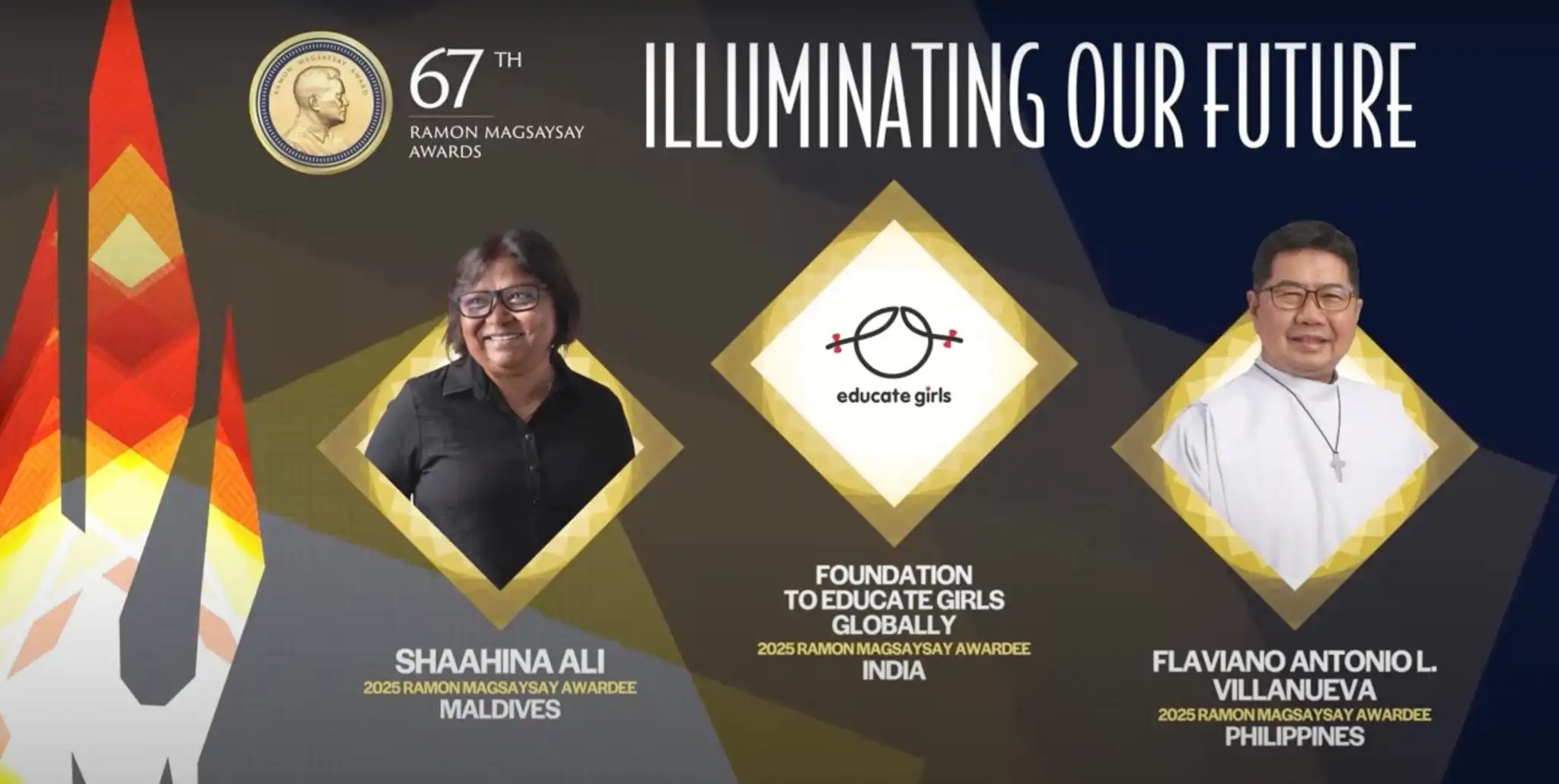
This year only three laureates were chosen, but again the range and the depth of their accomplishments tell us that ordinary people can achieve extraordinary successes—not just for themselves but for society at large—with vision, faith, and perseverance, or what the Ramon Magsaysay Awards Foundation calls “greatness of spirit,” the common element among its 356 winners from 23 countries since 1957.

They included Shaheena Ali from the Maldives, an island-country that often appears in tourist brochures and websites as a tropical island paradise, surrounded by aquamarine waters ideal for snorkeling and fishing. Behind this idyllic façade, however, lies a murkier and unpleasant truth. Plastic pollution has befouled the island chain’s crystalline waters, threatening the marine ecosystem, the economy, and the health of its residents. Waste is either burned or tossed into the ocean, producing harmful smoke and microplastics. As a diver, photojournalist, and diving instructor herself, Ali often came literally face to face with the tides of trash clouding up the once-pristine waters of her beloved islands.
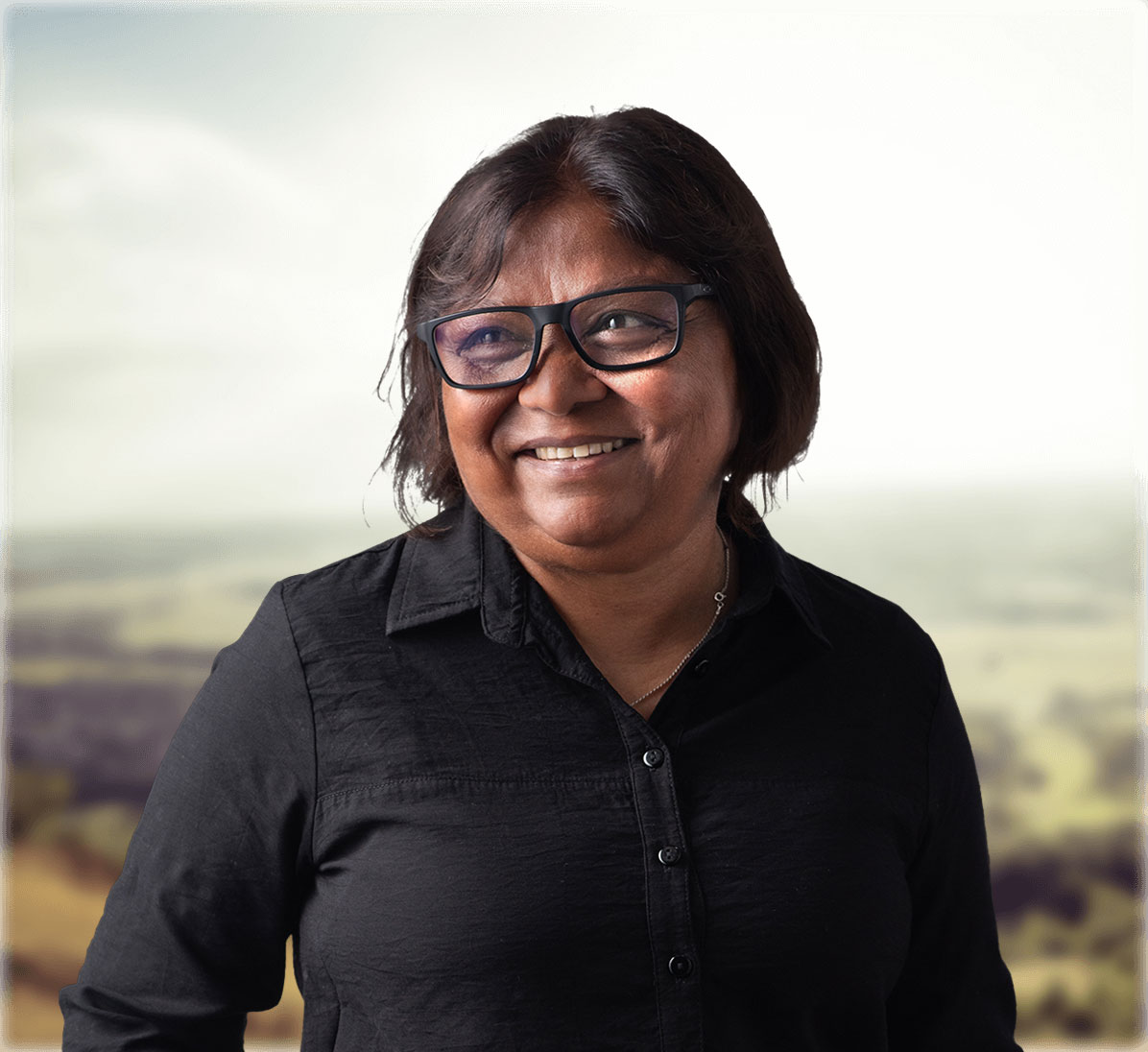
In 2015, deciding to fight back, Ali linked up with an NGO, Parley for the Oceans, to frame a comprehensive program to save the country’s waters from pollution and to turn plastic waste into a useful source of livelihood for the people. Today, as executive director of Parley Maldives, she oversees the implementation of their signature strategy: Avoid, Intercept, and Redesign (AIR) plastics for a better environment. With Ali, Parley has introduced plastic interception and collection sites in island communities and over seventy schools, leading over 700 collaborative cleanups along affected coastlines. Ali has also worked with the government to address climate change. “I go there to clean up with hope,” she says, “hope that my grandchildren will see whales in the ocean in their lifetime as I did growing up.”

For its part, India has become both an economic and political powerhouse, with many visible signs of its rising affluence. Despite the overall surge in growth, however, many rural and tribal girls have had no access to an adequate education. Because of this disparity, illiterate girls are forced to marry early, have children, and work—while culturally privileged males go to school. 
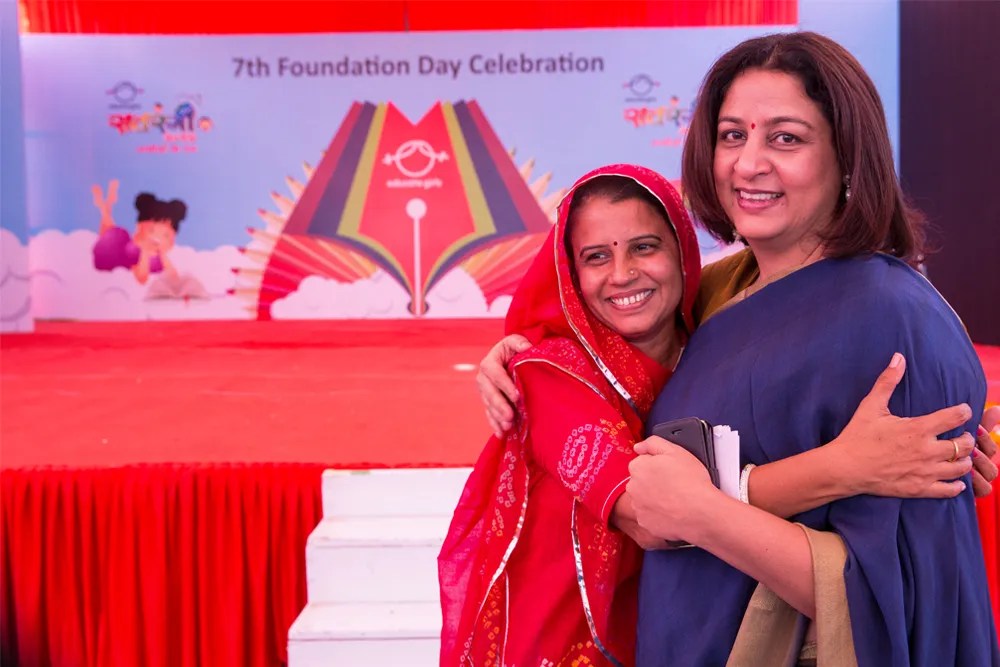
In 2005, a young graduate of the London School of Economics decided to return home to India to take on this challenge. Safeena Husain established the Foundation to Educate Girls Globally (FEGG) or “Educate Girls.” Starting out in Rajasthan, Educate Girls identified the neediest communities, brought unschooled or out-of-school girls into the classroom, and worked to keep them there until they were able to acquire credentials for higher education and gainful employment. 

The results were dramatic. What began with fifty pilot village schools reached over 30,000 villages across India’s most underserved regions, involving over two million girls, with a retention rate of over 90%. Educate Girls also launched Pragati, an open-schooling program that allows young women aged 15-29 to complete their education and avail themselves of lifelong opportunities. Its initial cohort of 300 learners has grown to over 31,500. “Girls’ education is the closest thing we have to a silver bullet to solve some of the world’s most difficult problems,” says Husain. “It is one of the best investments a country can make, impacting nine of the seventeen Sustainable Development Goals, including health, nutrition, and employment. By scaling our programs, deepening government partnerships, and embedding community-led solutions, we strive to create a brighter, more equitable future—one girl at a time.” 

The third awardee was no stranger to those of us long aware of his special ministry. Flaviano Antonio L. Villanueva or simply “Father Flavie” belongs to that breed of socially committed clergy for whom godliness is to be found not in the halls of influence and wealth but in the streets, among the poorest and the most forgotten. 

In 2015, he founded the Arnold Janssen Kalinga Center in Manila to provide “dignified care and service” to thousands of poor and marginalized Filipinos. Kalinga works to recreate the poor’s self-image, reclaim their self-respect, and restore their self-worth. Villanueva also led the effort to locate the bodies of victims of the government’s “war on drugs” where thousands of Filipinos were summarily executed. Often, their impoverished families could not secure permanent graves for them. Villanueva found the funds to exhume, cremate, inurn, and relocate the bodies to a proper resting place. This Paghilom program brought comfort to widows and orphans and allowed them to continue leading productive lives. “Justice can take many forms—among them, the recovery of one’s self-confidence, and forgiving oneself,” he says. Following the late Pope Francis’ example, he initiated showers for the homeless as both a literal and symbolic act of cleansing, to prepare them for a fresh start in life.

I always end up doing more than writing up these people’s stories—I learn from them, and am reminded that instead of just mouthing slogans and railing at the universe—at all the evil, the injustice, and the ugliness we have to live with—we can choose to act and to fight back, like these avatars of social action did. 

Qwertyman No. 152: A Probinsyana from Paoay

Qwertyman for Monday, June 30, 2025

IT WON’T officially be out for another couple of weeks, but I’m happy to announce the publication of my latest book, the biography of one of the Philippine judiciary’s most fearless and remarkable women, former Supreme Court Justice and Ombudsman Conchita Carpio Morales. Begun during the pandemic, Neither Fear Nor Favor: The Life and Legacy of Conchita Carpio Morales (Milflores, 2025) traces the journey of a probinsyanafrom Paoay, Ilocos Norte to the country’s highest court, followed by an even more distinguished period of service as “the people’s agent” at the Office of the Ombudsman.

I’ve written a number of biographies of outstanding Filipinos before—among them the accounting titan Washington SyCip, former UP and Senate President Edgardo Angara, and the renowned economist Leonides Virata, as well as the revolutionary Lava brothers—but this was different in many ways. 

Foremostly, it was because my subject was a woman working her way up a heavily male-dominated system, constantly challenged to adhere to her fundamental values and principles in an environment of corruption, intimidation, and political accommodation.  For the men—given that they had the talent and the grit, and possibly the right connections—success was practically a given; for such women as Conchita, proving oneself worthy was often doubly difficult.

Since the Supreme Court of the Philippines was established in 1901, almost 200 justices have been appointed to that exalted bench; only 18 have been women as of 2023, and it wasn’t until 1973 that the first female justice, Cecilia Muñoz Palma, took office. After Morales was appointed to the SC by President Gloria Macapagal Arroyo in 2002, among the first cases to fall on her lap was the impeachment of no less than Chief Justice Hilario Davide, brought on by pro-Estrada congressmen who believed Davide had misused the Judiciary Development Fund. A fellow Justice approached the novice to ask her pointblank, “Chit, do you think you can handle this?” Inhibiting herself from the case would have been the prudent option, but she took it on, and wrote the decision disposing of the complaint.

She would soon be known for her fierce independence. Despite death threats—a grenade was once left outside her Muntinlupa home, along with a threatening message—she worshiped no sacred cows, spared no one from judicial scrutiny when the situation demanded. This was even much clearer when she retired from the Supreme Court and was appointed Ombudsman, in charge of investigating and prosecuting high-profile cases of graft and corruption in government. Among the cases that crossed her desk were those against PGMA, President Noynoy Aquino, former Senate President Juan Ponce Enrile, and former Vice President Jejomar Binay.

While most of a Justice’s or Ombudsman’s work is done quietly, away from public view, occasionally they come into the limelight even against their wishes because of our fraught political environment where issues often end up in court. One such case was the 2011 impeachment of Chief Justice Renato Corona, a highly significant and contentious case that centered on serious allegations of corruption and betrayal of public trust. 

Then the Ombudsman, Morales engaged a former Supreme Court colleague, Serafin Cuevas, in what came to be known as the “battle of retired justices. “I had been summoned as a hostile witness by the defense,” Conchita recalls. “I sensed that the defense wanted to embarrass and humiliate me even. They thought that my alleged opinion that Corona had millions of dollars in undeclared deposits had been based on the three complaints filed before the Office of the Ombudsman. But it was the Anti-Money Laundering Council that had furnished me with the CJ’s record of bank transactions. I had requested their assistance as reported by the media even before I was summoned to testify. The three complaints filed at the OMB never mentioned any dollar deposits. If the defense counsels had been insightful enough, they should have figured that out.” Corona was eventually impeached on a vote of 20-3.

Her confrontations with former President Rodrigo Duterte—a distant relative, through the marriage of her nephew Manases Carpio to presidential daughter Sara—were also the stuff of theater. At the 2016 wedding of Manases’ brother Waldo, the President and the Ombudsman walked down the aisle together arm in arm—he in a cream barong and she in a bottle-green gown—and appeared friendly, making small talk. The cordiality would not last long.

One year later, in October 2017, President Duterte challenged Conchita to resign as Ombudsman, claiming that she had exercised “selective justice” in asking her deputy, Arthur Carandang, to investigate his unexplained wealth. Duterte suspended Carandang, and threatened to impeach Conchita. “Resign now,” he told Morales, “at kung hindi, huhubaran kita!” The last line—which literally translates into “or else I’ll strip you naked”—was egregiously coarse, but came as no surprise to audiences familiar by this time with Duterte’s tough-guy and often misogynistic language.

Morales promptly hit back, vowing not to be intimidated. “If the President has nothing to hide, he has nothing to fear,” she coolly told a press conference.

What most people never saw was Conchita’s lighter side. The first time she went to Broadway in 1981, she watched Evita with her sister Vicky. Before watching, they had dinner at Gallagher’s, where the size of the steaks made Conchita’s eyes pop. She couldn’t finish her portion and, ever the Ilocana, wanted to have it wrapped to take home. Her sister told her not to do that, so Conchita went to the ladies’ room, got some tissue paper, and wrapped the steak. The following day, they went to Washington, where they went to dinner and had shrimp cocktail. Conchita then took out the previous day’s steak to the shock of Vicky, who said, “Don’t bring that out. Don’t embarrass me!” The steak ended up in the wastebasket. 

Lawyer Ephyro Amatong and others who trained with her were privy to Conchita’s moods and modes. “When she was in her ‘Justice’ mode, she was very strict, very sharp, very hard to read, with an incredible poker face. I knew lawyers like the co-head of litigation at a big firm who thought that she was scary,” Eph says. “But while she could be reserved, she could also be very charming and accommodating. She had a great sense of humor. I remember when she had to attend an en banc meeting or when she had a ponencia for deliberation, just before she went out the door, she might be laughing or making jokes about the grilling she might get, or mention what she was wearing and how fashionable she was. But once the door opened and once she stepped out, her ‘Justice’ face came on, ready for battle.”

You can read more about this feisty Filipina, the Ramon Magsaysay awardee for public service in 2016, in the book. Neither Fear Nor Favor: The Life and Legacy of Conchita Carpio Morales will be available on Shopee and Lazada or from milflorespublishing.com very soon.

Qwertyman No. 120: Greatness of Spirit

Qwertyman for Monday, November 18, 2024

AFTER A week marked by sordid political revelations, reversals, and antics that make us despair over the future of democracy in this country and elsewhere in the world, it was refreshing and inspiring to be reminded last Saturday that goodness, reason, and justice still prevail somewhere, even against monumental odds.

Saturday was when the 2024 Ramon Magsaysay Awards were handed out to five Asian champions who made landmark contributions to their societies and the world at large  by manifesting “greatness of spirit,” the lofty benchmark established by the foundation granting the prestigious awards, often referred to as Asia’s Nobel Prize.

I was privileged to attend the award ceremonies at the Metropolitan Theater, and thereby to meet this year’s laureates. There were no Filipinos among them this time around (last year, they had peace negotiator Miriam Coronel-Ferrer), but the causes and concerns that each laureate represented would have resonated well with Filipinos on many levels.

The Thai Rural Doctors Movement (RDM), for example, addressed a problem that has plagued many developing countries around the world: the chronic lack of doctors to provide adequate medical care in the countryside. In the 1970s, idealistic young doctors joined the popular pro-democracy movement in Thailand, but a government crackdown forced them to seek refuge in the rural areas. The doctors formed close bonds with their host communities and attended to their needs. When these doctors later gained national influence, they maintained their focus on the rural poor, to the point that Thailand now has one of the best Universal Health Coverage systems in the world.

In Vietnam, Dr. Nguyen Thi Ngoc Phuong confronted a lethal legacy of the war that had nearly destroyed her country half a century earlier. Despite the passage of so much time, many Vietnamese, including newborn babies, continued to suffer from one of the war’s cruelest after-effects: the damage caused by TCDD or “Agent Orange,” one of the most toxic chemicals known, used freely by the American military to flush out their enemy. Dr. Phuong took it upon herself to discover the truth about Agent Orange, seek justice for its victims, and help the afflicted.

Indonesia’s Farwiza Farhan took on a most formidable challenge despite her relative youth: the environmental damage wrought on the Leuser Ecosystem in her home province of Aceh on the island of Sumatra. Working with fellow activists and especially local women, she founded the Forest Nature and Environment of Aceh Foundation or Yayasan Hutan Alam dan Lingkungan Aceh (HAkA), which has succeeded, among others, in gaining a court verdict that led to USD26 million in fines against a palm oil company that burned forests, and stopped a hydroelectric dam that would have threatened the elephant’s habitat. Most importantly, her organization has trained local communities to protect their environment through sustainable forest management.

Mountainous Bhutan is a country often idealized as an idyllic Shangri-la and prime tourist destination, but it is in fact a low-income country plagued by unemployment, inadequate social services, and threatened traditions and values. Taking these problems by the horns, a young Oxford-trained monk has combined his religious devotion and historical scholarship with modern management to help bring Bhutan into the 21st century. Karma Phuntsho established the Loden Foundation to promote education, practice social entrepreneurship, and document the country’s cultural heritage. Phuntsho himself has written a definitive history of Bhutan, whose next stages he and the Loden Foundation will help define.

And finally, Japan’s Miyazaki Hayao has created some of the world’s most memorable animated films through Studio Ghibli, established in 1985 and today a byword in digital animation. While animated films in the West have fed off a broad audience employing superheroes with lucrative market appeal, Miyazaki and Studio Ghibli have focused on an audience most difficult to please—children. Nevertheless, Ghibli classics such as My Neighbor Totoro have also called out to an adult fan base charmed by Miyazaki’s craft. This director has taken animation beyond entertainment and even education to enlightenment, always in an engaging manner.

That such good people exist and persist in their passions offers a bracing antidote to the creeping pessimism in which we seem to be wallowing today, an easy and perhaps fatalistic surrender to inaction, tyranny, and hopelessness. We Filipinos are no strangers to distress and despair, with millions remaining in abject poverty, left behind by any growth in our economy. Adequate healthcare remains beyond the reach of most of us, with even middle-class families left devastated by just one catastrophic illness. But neither do we lack for champions and heroes seeking to alleviate these hardships.

Instructively, for the Ramon Magsaysay laureates, their life’s mission often began with dark epiphanies. For Dr. Phuong—who would go on to head Vietnam’s largest obstetric hospital—it was her encounter as a young doctor with babies severely deformed by Agent Orange and their mothers’ anguished and then-unanswerable questions. For Farwiza Farhan, it was returning to Indonesia from her studies abroad, only to discover that the island home whose forests she had embraced as a child was now being ravaged by commercial exploitation. For rural doctors in Thailand, it was seeing poor farmers sell their daughters just so they could pay for the medical care they needed. But rather than be paralyzed by the enormity of the challenge, they decided to do something about it, rolled up their sleeves, and have yet to roll them down.

Something that stands out to me is that these Magsaysay awardees were hardly fire-breathing revolutionaries who sought sweeping changes in one convulsive action, but reformers who pursued their objectives over decades with as much patience as passion—and, of course, vision, anchored on a unquenchable faith in the attainability of a better world, starting with one’s own space and sphere. And beyond individual actions, they set up networks of influence to spread the message and the work, and ensure that whatever they began would survive them. It was never about them, and that’s greatness of spirit.

Qwertyman No. 68: What We Aspire For

Qwertyman for Monday, November 20, 2023

IT WAS a humbling but also uplifting experience to attend the 65th Ramon Magsaysay Awards ceremonies last November 11 at the Metropolitan Theater, in which four new awardees—including Filipino peace negotiator Miriam Coronel-Ferrer—were honored for their contributions to humanity. Long considered Asia’s version of the Nobel Prize and certainly its most prestigious honor, the RMA has now gone to over 300 recipients from all over the world in the fields of government service, public service, community leadership, journalism, literature, and creative communication arts, peace and international understanding, and emergent leadership.

This year’s four laureates represent a wide range of endeavors.

Miriam Coronel-Ferrer (Philippines) exemplified and championed the role of women in peacemaking, leading the negotiations with the Moro Islamic Liberation Front that led to a Comprehensive Agreement on the Bangsamoro. She has since lent her skills and wisdom to peacemaking efforts in East Timor, Cambodia, Afghanistan, Kosovo, and Iraq, among other conflict zones.

Eugenio Lemos (Timor-Leste) mobilized young Timorese to adopt permaculture, a holistic system to create and manage sustainable agrosystems. His approach and methods have been adopted by Timor-Leste’s schools and local governments. Going beyond food security, Lemos emphasizes the need for “food sovereignty,” a country’s ability to produce its own food, with a focus on local, natural, and nutritious food. 

Ravi Kannan (India) set up the Cachar Cancer Hospital and Research Center in one of India’s most remote and poorest regions to bring cancer care to those who could least afford it. Dr. Kannan resolved not just to create a state-of-the-art facility, but also to make it accessible to the poor by offering free treatment, room and board, temporary employment for caregivers, and a homecare program for patients. 

Korvi Rakshand (Bangladesh) began by helping poor Bangladeshi children learn English so they could find gainful employment. His JAAGO Foundation has since expanded to provide free English-language primary and secondary education to 30,000 students in both traditional and online schools, as well as embracing other causes such as women empowerment, children’s rights, and climate change.

One thing stood out in all of these awardees—and, indeed, in those who preceded them as RM laureates. It wasn’t about them. Their backgrounds, their education, their previous honors and awards were hardly even mentioned—and when they were, it was only to suggest that Dr. Kannan could have chosen to pursue a lucrative career as an oncologist in Chennai, and Rakshand could have parlayed his law degree from the University of London into success as a barrister. 

It was all about what they did for others, the public service they performed with quiet dedication, selflessness, and humility. Rakshand would relate that when he got a phone call from RMAF President Susan Afan, his first thought was that he was being called to vet another candidate, not expecting to be told that he was the awardee.

All this made me think more deeply about how the rest of us aspire for honors, by which we almost exclusively mean personal and individual recognition. Indeed, from the grades up, we’re trained to venerate valedictorians, summa cum laudes, board topnotchers, top salesmen, beauty queens, boxing champions, singing sensations, and best actors and actresses. To be one of them is to have achieved meaning in one’s life. Our living rooms and offices have long been excuses for trophy displays, but now social media has done them better by offering a free and wide platform for self-promotion, so that not a day goes by without someone announcing some new achievement.

And why not? I suppose it’s a natural human desire to rise above the herd and be known for something, be it physical beauty, vocal prowess, athletic skill, or mathematical genius. In a world where we’ve become increasingly commodified and homogenized, self-assertion (in many cases—think Instagram—to the point of narcissism) seems mandatory, if only to say “I’m here. I’m good—no, make that, I’m great!”

So we look around at what others are doing and try to do them one better. The Internet has magnified expectations to such unrealistic extents that young people have committed suicide for reasons that people from a hardier generation would have found laughable were they not so tragic. In our quest for recognition—any recognition—we’ve fallen prey to a slew of awards, pageants, and prizes of doubtful value, even paying to play Cinderella for a day and half the night. The awards themselves have become commodified and homogenized.

To be honest, I myself have built up my own little stack of writing prizes, some of them worth more than others. But again, what is “worth” beyond oneself? Like a punch-drunk boxer with a rack of belts, all they show is that I’ve lived a life as a literary combatant, when a writer’s true prize should be the readership of his or her people, perhaps the world. In a society that gives little value to books, or is too poor to buy books, that’s an Olympian challenge. 

The Ramon Magsaysay Awards and what they stand for remind us that while service to others is often thankless and sometimes even dangerous, it’s just as legitimate an aspiration as any other, and one we don’t emphasize enough in our personality-focused culture. Our historians and sociologists will have reasons for why we seem to value kani-kaniya over the tayo, or why the African concept of ubuntu, of finding one’s meaning in community, sounds foreign to many of us. I can only guess that the ruthless demands of surviving and succeeding in a cash-driven society have encouraged us to compete rather than cooperate.

The RM Awards are, of course, also a kind of competition, but one without losers, as everyone nominated has already won in his or her own sphere, has already done good by others. The chosen laureates merely stand for their co-workers, for the ideas and values they represent, and above all for an insistently optimistic and assertive humanity in a world splintered by violence, greed, and intolerance. 

Greatness can be aspired for—I suspect the truly great don’t even think about it—but it cannot be applied for, much less paid for.