
Qwertyman No. 206: The Unfinished Building

Qwertyman for Monday, July 13, 2026

AS I noted in a Facebook post last week, attending a graduation at the University of the Philippines, as I did last July 5th, always brings a tear to my eye, especially when everyone sings “UP Naming Mahal” at the closing. No matter all the heartaches, disappointments, and challenges we may have gone through in UP as a student, teacher, administrator, and alumnus, and no matter all our disagreements over failed policies, missed opportunities, and misdirected priorities—as an institution, this university of the people remains immutably noble in purpose, an ideal constantly being realized. 

More than 5,000 students graduated from Diliman last week, as well as many more thousands in UP’s eight other constituent universities across the country. Thousands came away with honors—raising the question of whether our students have really gotten that much better, or if our standards seem to be getting laxer; the debate goes on, although no one’s taking anything away from the laureates. This was, after all—as UP President Angelo Jimenez noted—the last pandemic batch to graduate, who entered UP in extremely difficult circumstances, tied down to Zoom, without the benefit of campus life for a significant period.

I sat at the grandstand in Quezon Hall as a professor emeritus among the university’s officials and guests, recalling how I had stood on the other side of that amphitheater more than four decades ago, wondering what the future would be like (short answer: 35 more years in UP). I would become a professor, an administrator, and a retiree, as deeply engaged in university affairs as I had been as an activist toting a molotov cocktail (which I never threw) at the Diliman Commune in 1971. 

That morning’s guest speaker was former Ombudsman and Justice Conchita Carpio Morales, whose biography I had written, so I was glad to run into her at the processional, and I urged her to give everyone a piece of her famous mind. “I’ll be gentle today,” she told me, smiling. Taking off on this year’s commencement theme of “Gumagalang” or “respectfully,” she spoke on the need for respect of the law at a time of great confusion over who and what to follow. 

“In a world increasingly divided by arrogance, intolerance, and indifference, the call to gumalang (respect) is not merely timely, but urgent,” she said. “As a magistrate, it pains me to see lawmakers alleged to be lawbreakers. Rules bent, redefined, or misinterpreted to suit individual or group interests. There is little paggalang for those who have limited or no voice at all. The powerless have become dispensable…. The rule of law is the bedrock of democracy. Sadly, in many parts of the world today, the rule of law is being disregarded…. Unfortunately, what we increasingly see today in many places is the rule of man, where the exercise of power depends less on the law and more on the whims, preferences, or interests of those who hold office.” At the same time, she emphasized that “respect” could not be used as an excuse for authoritarianism, or for stifling contrary voices. (And before you ask, no, I didn’t write or draft those words for her. Nobody writes CCM’s speeches but herself, and if you did, she’d very likely pepper your draft with corrections, as generations of her law clerks well know.)

That was particularly apt in UP, where the commencement ceremonies ended with the customary (by now) lightning rally, and while some slogans sounded rather tired, this year’s emphasis on fighting corruption gave it a particular urgency. UP Diliman’s graduation was taking place on the eve of the opening of the impeachment trial of Vice President Sara Duterte at the Senate, titanic confrontation on both sides of which prominent UP alumni were ranged. 

The irony of the moment could hardly be overstated. Historically, UP has been known to be a bastion of dissent, a haven of nonconformists and rebels of all stripes and colors. I often cite the examples of then UP President Rafael Palma’s daughter Fe, who took part in the first documented student protest action in 1933, a boycott prompted by a tuition fee increase, and of President Manuel L. Quezon being lambasted for extravagance by a young hothead named Ferdinand Marcos. 

Since the 1960s and 1970s , UP has acquired—inaccurately, I think—a reputation for being a breeding ground of communists, a convenient target for such Red-taggers as the NTF-ELCAC and a good excuse for its billions in funds. (Which reminds me: they should set up an NTF-ELCAC to seek and weed out the corrupt.) People forget that for every Joma Sison we produced a Juan Ponce Enrile; for every Benito Tiamzon a Fabian Ver; for every Lean Alejandro an Alan Peter Cayetano; for every Lorie Barros a Pia Cayetano. 

As I emphasize whenever I can, even at the height of student activism, the radical Left was always in the minority in UP as it probably was elsewhere; we were just noisier, better organized, more determined, and literally ready to die for our cause. 

What the usual UP narrative also often ignores is the fact that many of us from the Left who survived the First Quarter Storm and martial law moved toward the liberal middle—indeed, some even to the far Right, becoming its ideologues, executors, and apologists. 

Surveying this year’s crop of bright and starry-eyed graduates, hundreds of them finishing with high honors, I wondered how many of them would, in the next twenty or thirty years, materially contribute to our people’s well-being, and also how many to its deterioration. I don’t think anyone goes to graduation with malice aforethought, but life has a strange way of shaping and testing character in a way that classrooms simply can’t. As we learned in martial-law prison, sometimes it’s the most seemingly inflexible who prove the most brittle and break.

At the ceremonies, pointed comments were made by some deans presenting their graduates about all the unfinished buildings on campus—the new Faculty Center has been a decade in the making, with the refurbishment of Abelardo Hall and the UP Main Library trailing closely behind. These delays can largely be traced to mismanagement under the old DPWH, a couple of projects possibly even tied to the Discayas. 

But it struck me that the truly unfinished building to contemplate is the university itself, in constant reconstruction under pressure from AI, global rankings, and the needs of the people it remains accountable to. Just having marked its 118th anniversary, it could yet be the Sagrada Familia of our national aspirations.
Qwertyman No. 152: A Probinsyana from Paoay

Qwertyman for Monday, June 30, 2025

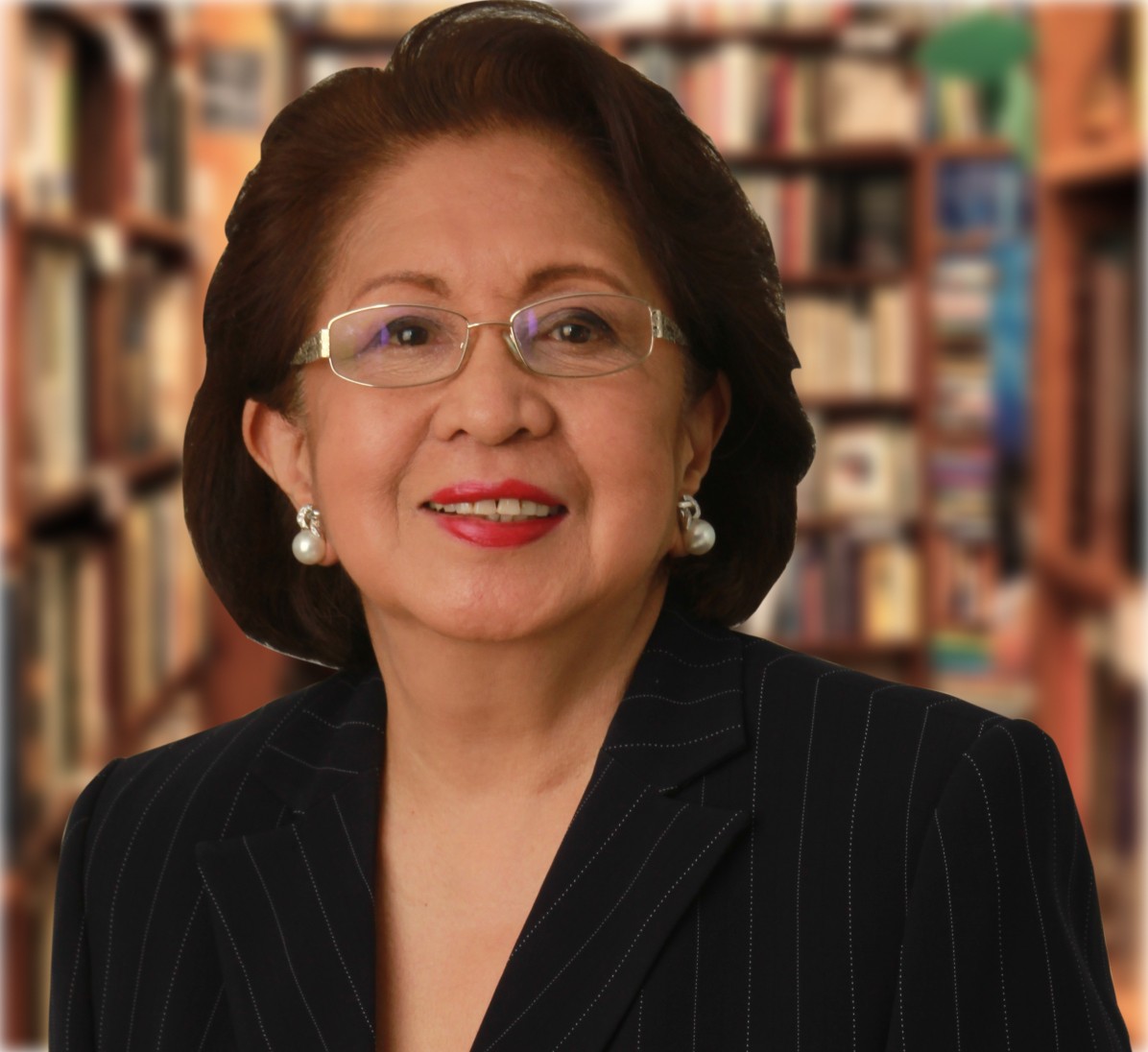
IT WON’T officially be out for another couple of weeks, but I’m happy to announce the publication of my latest book, the biography of one of the Philippine judiciary’s most fearless and remarkable women, former Supreme Court Justice and Ombudsman Conchita Carpio Morales. Begun during the pandemic, Neither Fear Nor Favor: The Life and Legacy of Conchita Carpio Morales (Milflores, 2025) traces the journey of a probinsyanafrom Paoay, Ilocos Norte to the country’s highest court, followed by an even more distinguished period of service as “the people’s agent” at the Office of the Ombudsman.

I’ve written a number of biographies of outstanding Filipinos before—among them the accounting titan Washington SyCip, former UP and Senate President Edgardo Angara, and the renowned economist Leonides Virata, as well as the revolutionary Lava brothers—but this was different in many ways. 

Foremostly, it was because my subject was a woman working her way up a heavily male-dominated system, constantly challenged to adhere to her fundamental values and principles in an environment of corruption, intimidation, and political accommodation.  For the men—given that they had the talent and the grit, and possibly the right connections—success was practically a given; for such women as Conchita, proving oneself worthy was often doubly difficult.

Since the Supreme Court of the Philippines was established in 1901, almost 200 justices have been appointed to that exalted bench; only 18 have been women as of 2023, and it wasn’t until 1973 that the first female justice, Cecilia Muñoz Palma, took office. After Morales was appointed to the SC by President Gloria Macapagal Arroyo in 2002, among the first cases to fall on her lap was the impeachment of no less than Chief Justice Hilario Davide, brought on by pro-Estrada congressmen who believed Davide had misused the Judiciary Development Fund. A fellow Justice approached the novice to ask her pointblank, “Chit, do you think you can handle this?” Inhibiting herself from the case would have been the prudent option, but she took it on, and wrote the decision disposing of the complaint.

She would soon be known for her fierce independence. Despite death threats—a grenade was once left outside her Muntinlupa home, along with a threatening message—she worshiped no sacred cows, spared no one from judicial scrutiny when the situation demanded. This was even much clearer when she retired from the Supreme Court and was appointed Ombudsman, in charge of investigating and prosecuting high-profile cases of graft and corruption in government. Among the cases that crossed her desk were those against PGMA, President Noynoy Aquino, former Senate President Juan Ponce Enrile, and former Vice President Jejomar Binay.

While most of a Justice’s or Ombudsman’s work is done quietly, away from public view, occasionally they come into the limelight even against their wishes because of our fraught political environment where issues often end up in court. One such case was the 2011 impeachment of Chief Justice Renato Corona, a highly significant and contentious case that centered on serious allegations of corruption and betrayal of public trust. 

Then the Ombudsman, Morales engaged a former Supreme Court colleague, Serafin Cuevas, in what came to be known as the “battle of retired justices. “I had been summoned as a hostile witness by the defense,” Conchita recalls. “I sensed that the defense wanted to embarrass and humiliate me even. They thought that my alleged opinion that Corona had millions of dollars in undeclared deposits had been based on the three complaints filed before the Office of the Ombudsman. But it was the Anti-Money Laundering Council that had furnished me with the CJ’s record of bank transactions. I had requested their assistance as reported by the media even before I was summoned to testify. The three complaints filed at the OMB never mentioned any dollar deposits. If the defense counsels had been insightful enough, they should have figured that out.” Corona was eventually impeached on a vote of 20-3.

Her confrontations with former President Rodrigo Duterte—a distant relative, through the marriage of her nephew Manases Carpio to presidential daughter Sara—were also the stuff of theater. At the 2016 wedding of Manases’ brother Waldo, the President and the Ombudsman walked down the aisle together arm in arm—he in a cream barong and she in a bottle-green gown—and appeared friendly, making small talk. The cordiality would not last long.

One year later, in October 2017, President Duterte challenged Conchita to resign as Ombudsman, claiming that she had exercised “selective justice” in asking her deputy, Arthur Carandang, to investigate his unexplained wealth. Duterte suspended Carandang, and threatened to impeach Conchita. “Resign now,” he told Morales, “at kung hindi, huhubaran kita!” The last line—which literally translates into “or else I’ll strip you naked”—was egregiously coarse, but came as no surprise to audiences familiar by this time with Duterte’s tough-guy and often misogynistic language.

Morales promptly hit back, vowing not to be intimidated. “If the President has nothing to hide, he has nothing to fear,” she coolly told a press conference.

What most people never saw was Conchita’s lighter side. The first time she went to Broadway in 1981, she watched Evita with her sister Vicky. Before watching, they had dinner at Gallagher’s, where the size of the steaks made Conchita’s eyes pop. She couldn’t finish her portion and, ever the Ilocana, wanted to have it wrapped to take home. Her sister told her not to do that, so Conchita went to the ladies’ room, got some tissue paper, and wrapped the steak. The following day, they went to Washington, where they went to dinner and had shrimp cocktail. Conchita then took out the previous day’s steak to the shock of Vicky, who said, “Don’t bring that out. Don’t embarrass me!” The steak ended up in the wastebasket. 

Lawyer Ephyro Amatong and others who trained with her were privy to Conchita’s moods and modes. “When she was in her ‘Justice’ mode, she was very strict, very sharp, very hard to read, with an incredible poker face. I knew lawyers like the co-head of litigation at a big firm who thought that she was scary,” Eph says. “But while she could be reserved, she could also be very charming and accommodating. She had a great sense of humor. I remember when she had to attend an en banc meeting or when she had a ponencia for deliberation, just before she went out the door, she might be laughing or making jokes about the grilling she might get, or mention what she was wearing and how fashionable she was. But once the door opened and once she stepped out, her ‘Justice’ face came on, ready for battle.”

You can read more about this feisty Filipina, the Ramon Magsaysay awardee for public service in 2016, in the book. Neither Fear Nor Favor: The Life and Legacy of Conchita Carpio Morales will be available on Shopee and Lazada or from milflorespublishing.com very soon.