Qwertyman No. 194: Holier Than the Pope

Qwertyman for Monday, April 20, 2026

LIKE MANY people in the world today, I don’t consider myself particularly religious, in the sense of Mass-going, living by the Bible, and toeing Church doctrine. My wife and I do believe in a Supreme Being to whom we are all ultimately responsible, and pray every day and night to God for thanks and guidance in our daily life, but mistrust organized religion while continuing to admire and support such brave and progressive clerics like Fr. Flavie Villanueva in their pastoral work.

I grew up in the Catholic tradition, but l soon began to question and to argue with the Church’s positions on such flashpoints as the role of women, sexuality and reproductive rights, and its ties to authoritarian regimes, not to mention its untaxed wealth and the horrifying cases of sexual abuse.

I’m sure my estrangement is hardly an isolated case, but this isn’t about me as much as it is about the moral authority that, despite all our misgivings, the Catholic Church—and yes, other religions as well—can exert on our deeply troubled world, and how it can provide a welcome and more embracing alternative to the exclusionary politics of neofascist despots like Donald Trump.

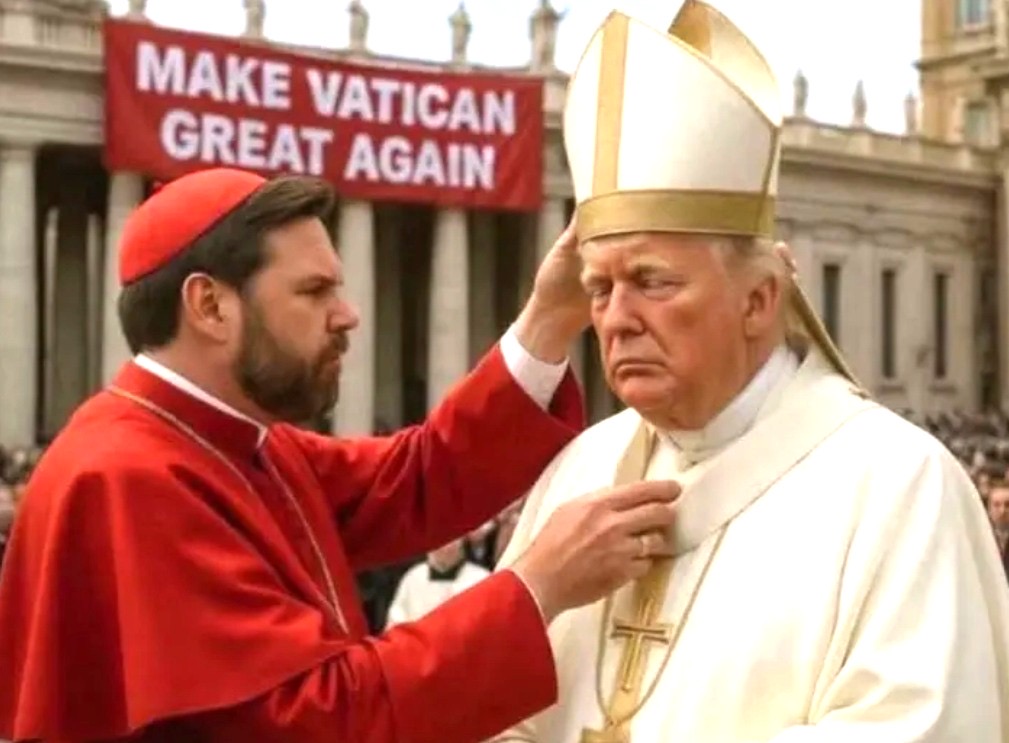
The world woke up last week to a series of posts from the American president threatening to destroy Iran’s 6,000-year-old civilization for good, warning Pope Leo XIV to stay out of politics, and posing in an AI-generated picture as Jesus Christ himself. The posts were so atrocious and deranged that even Trump’s faithful MAGA followers were revolted by them, and said so. His erstwhile media ally and drumbeater Tucker Carlson called him the “Antichrist.” Others expressed disbelief, confusion, and dismay over the posts, finally realizing what the rest of us already knew: the man is mad, megalomaniac, and cares for no one and nothing but himself. 

This is a man who, after decimating Iran’s leadership (which quickly bounced back) and killing 170 schoolchildren, declares the war “won,” says that gas prices are “not very high,” and—in the middle of the global economic shock he’s initiated—insists that the tacky ballroom he’s demolished a whole historic wing of the White House for is needed for “national security reasons,” aside from contemplating a monstrous “Arc de Trump” in the nation’s capital. Trump’s growing lunacy is obvious. He has become such a caricature of himself that he will be hard put to outdo his latest acts to keep hogging the headlines, which seems to be his chief preoccupation. 

But what fascinates and appalls me even more is the servile indifference to the truth with which his closest allies continue to defend him, torturing logic and common sense to make Trump seem like some kind of genius who understands something the rest of us don’t, praising the Emperor profusely for his new clothes. His Treasury Secretary Scott Bessent, for example, acknowledges that while gas and other prices are going through the roof, American consumers “feel good in their heart of hearts.” (Like many in Trump’s orbit, Bessent is a centimillionaire who doesn’t have to line up at the gas station or buy groceries at Walmart.)

More egregious was the defense of the boss by Vice President JD Vance, who cautioned Pope Leo against speaking out on Iran, saying that “I think it’s very, very important for the Pope to be careful when he talks about matters of theology. If you’re going to opine on matters of theology, you’ve got to be careful. You’ve got to make sure it’s anchored in the truth and that’s one of the things that I try to do and it’s certainly something I would expect from the clergy.” For someone who only recently converted to Roman Catholicism, Vance sounds precociously learned to lecture the Pope on the theology of just war—a tenet first advanced by St. Augustine and later developed by St. Thomas Aquinas. (Pope Leo just happens to have headed the Augustinian order before becoming Pope, and wrote his doctoral dissertation on the Augustinian concept of authority.) Trump’s posing as Jesus, Vance said, was “a joke.”

Trump, of course, is hardly alone in his dislike of the Pope and papal power. Monarchs and politicians have argued with the Vatican for centuries, from Henry VIII to Josef Stalin. (To be fair, many popes—especially during what was called the “pornocracy” early on—were notoriously lustful and corrupt.) All this reminds us of another president—Rodrigo Duterte—who called Pope Francis a “son of a whore” for causing a traffic problem during his visit to Manila in 2015. And why stop at the Pope? In June 2018, in a speech, Duterte called God a “stupid SOB.” Later that year, annoyed by the church’s opposition to his drug war, Duterte told a group of local leaders that their bishops were “useless fools… kill them!” His spokesmen Sal Panelo and Harry Roque tripped over themselves to emphasize that the President was speaking in “hyperbole”—a distinction that was lost to the cops who to0k his orders to kill thousands of drug suspects literally.

And again the real danger here is not just the catastrophic damage these despots bring to our societies and economies but to our mind and hearts, in the continuing acceptance and propagation of falsehood by the self-deluded, in the replacement of our hope and courage with fear, cynicism, and resignation.

But thanks to Donald Trump’s excesses such as his assault on Pope Leo, our sense of outrage seems to have been revived. Leo has categorically said that he is “not afraid of the Trump administration” and has deplored the world’s being “ravaged by a handful of tyrants.” Bravo!

There have been many recent reports of the resurgence of the Catholic Church in America and around the world, especially among the young—the result of a growing need for a moral center of authority where other centers like government have failed, the liberal reforms of Pope Francis, and the quiet but capable and inspiring stewardship of Pope Leo. I may not be a steadfast Catholic, but if Leo continues on the path of righteousness and resistance to tyranny, he can count me in his crusade for peace and justice. Donald Trump may yet turn out to be the best recruiter for the Catholic Church.

Qwertyman No. 193: Evil Incarnate

Qwertyman for Monday, April 13, 2026

BACK IN the early days of martial law, when I went underground, among the books I read in our safehouse in Makati was William Shirer’s monumental The Rise and Fall of the Third Reich, a comprehensive account of Adolf Hitler’s and the Nazis’ rise to power. While academics have critiqued its journalistic treatment as not being scholarly enough, the 1960 work remains an important contribution to modern political history, if only as an eyewitness account, with Shirer having been stationed in Germany from 1934 to 1940. I was particularly intrigued by his thesis—since much debated—that the German people, from ordinary farmers and workers to the most powerful industrialists, enabled Germany’s descent into totalitarianism, stemming from their Lutheran deference to secular authority. 

That book and its implications for us, then just beginning to confront and comprehend dictatorship, instilled in me, as a playwright and fictionist, a fascination with complicity and collaboration. I also dug deeper into the history and culture of the Third Reich, particularly its propaganda. Even today, YouTube is rich with visual documentation of that dark period, from the burning of the Reichstag to the Nuremberg parades and, in that same city, the trials that laid bare a regime’s methodically murderous mind.

Its parallels to our time cannot be overemphasized. In the 1930s, the so-called “Hitler Myth” was sold by Nazi-leaning newspapers to promote Hitler as the restorer of German pride from the shame of Versailles and the economic ruin that followed the First World War. Germany could be great again. But Hitler also needed scapegoats to  blame for the country’s woes, and so he singled out the Jews and the Communists for that purpose. 

Like today’s American ICE, the Gestapo and the SS conducted raids to round up these enemies of the State, and Hitler launched wars to expand German territory and to proclaim the superiority of German arms. (When his troops invaded Poland on September 1, 1939, he proudly announced that “The German Wehrmacht is the strongest in the world!”) To celebrate his early victories and mythologize his legacy, Hitler planned to transform Berlin into Welthauptstadt Germania (World Capital Germany), invoking ancient Rome and Egypt to include a People’s Hall with a dome 16 times larger than St. Peter’s, a 100-meter Triumphal Arch, and a 120-meter-wide Avenue of Splendor for military marches. Donald Trump’s shameless renaming of the Kennedy Center and of a city airport in his own honor, his conversion of the historic East Wing into a ballroom, and his cheesy gilding of the White House furniture seem modest by comparison, but they betray the same Napoleonic grasp for imperial grandeur, though with much shorter reach. 

By the time the last prisoner walked out of the Nazis’ concentration camp, the Second World War had claimed 40 to 50 million lives in Europe alone, causing untold misery and devastation to the many more who survived.

In all these, Hitler was supported by what we would call today the “billionaire elite”—familiar names that included Krupp, Thyssen, Bosch, and even a carmaker named Porsche. (A book should be written about carmakers—hello, Elon—and their politics. Henry Ford was rabidly anti-Semitic, even compiling his articles into a book titled The International Jew, and was admired for it by no less than Hitler, citing him in Mein Kampf as the example of a great anti-Jewish industrialist and awarding him in 1938 with the Grand Cross of the German Eagle.) Historian Alan Bullock would later excoriate the German right wing (hello, Republican Party) for forsaking “a true conservatism” and making Hitler their partner in a coalition government. 

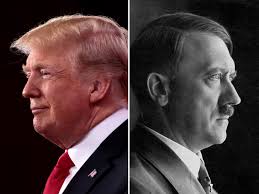
If there was ever any doubt that Donald Trump is the closest reincarnation we have today of Adolf Hitler (and, to his erstwhile ally Tucker Carlson, the Antichrist), that should have been cast aside by Trump’s recent threat that “A whole civilization will die tonight” unless Iran yielded, alongside his earlier statements that Iran deserved to be bombed “back to the Stone Ages where they belong” and that ordinary Iranians would be happy to be bombed to secure their freedom. 

The horror of an American president making these outrageous pronouncements in utter ignorance of everything we value in (yes, let’s use his word) civilization—law, justice, culture, and common decency—is trumped (yes, let’s use that word) only by the continuing acceptance and magnification of his thoughts by a base on whose shoulders he rode to power. While some on the right finally denounced him as a “genocidal lunatic,” many others did not. Asked about the “civilization” quote, a Republican politician shrugged it off as “Trump just being Trump.” “Go into war to win,” said a MAGA supporter on Reddit. “Not drag it out like Vietnam. Y’all may not like the phrasing, but I like that he’s going into this with an ‘in to win at all costs’ perspective.”

The trouble is, the Iranian people whose freedoms Trump claims he champions (while decimating the same freedoms at home) are paying with their lives in bombings that don’t distinguish between Revolutionary Guards and dissidents. And we—7,000 kilometers away from Iran—are paying for those costs, much like the rest of the world that had nothing to do with Trump’s idiocy in launching a war he doesn’t know how to end. The rich will weather this storm like they always do, but mothers feeding their children with scraps of fish and jeepney drivers weeping at the end of a 14-hour workday are paying for a distant despot’s insatiable vanity. 

When I think on these, and look at our world today, I marvel, aghast, at how easily people continue to succumb to a form of mass hypnosis, of enthrallment to a strongman figure like Donald Trump or Rodrigo Duterte, of deluding themselves into believing that their hero’s extremism would save the planet from some imagined social menace (i.e., people unlike themselves, a.k.a. aliens) at all costs. 

What made Hitler and his horrific crimes possible? The assent and consent of his people, the initial indifference of the international community to his misdeeds, and the despot’s ability to weave lies stronger than the truth. Adolf Hitler and Donald Trump may be evil incarnate—but their enablers should be equally accountable to God and humanity.

Qwertyman No. 192: Apple@50 in a World@War

Qwertyman for Monday, April 6, 2026

A REEL circulated recently online explaining the origins of the ubiquitous Internet symbol @ for “at,” tracing it back to medieval monks seeking a shortcut and to merchants using it to mean “at the rate of,” and then finally to a coding convention adopting it to link a computer user’s name to his or her domain or location.

I found it fascinating because I’m something of a geek, a failed scientist who had to switch from Engineering to English because I couldn’t hack the math, who ended up channeling his digital side (as opposed to the analog, which collects vintage fountain pens and antiquarian books) into a decades-long devotion to Apple computers and to nearly everything Apple produced. I even chaired the Philippine Macintosh Users Group (PhilMUG) back in the mid-1990s when the handful of us felt like early Christians in a pagan universe. We had monthly get-togethers in small restaurants to unbox the latest SCSI peripherals and discuss the newest features of System 8.0. I prided myself in the fact that I could strip and reassemble a PowerBook Duo practically blindfolded. 

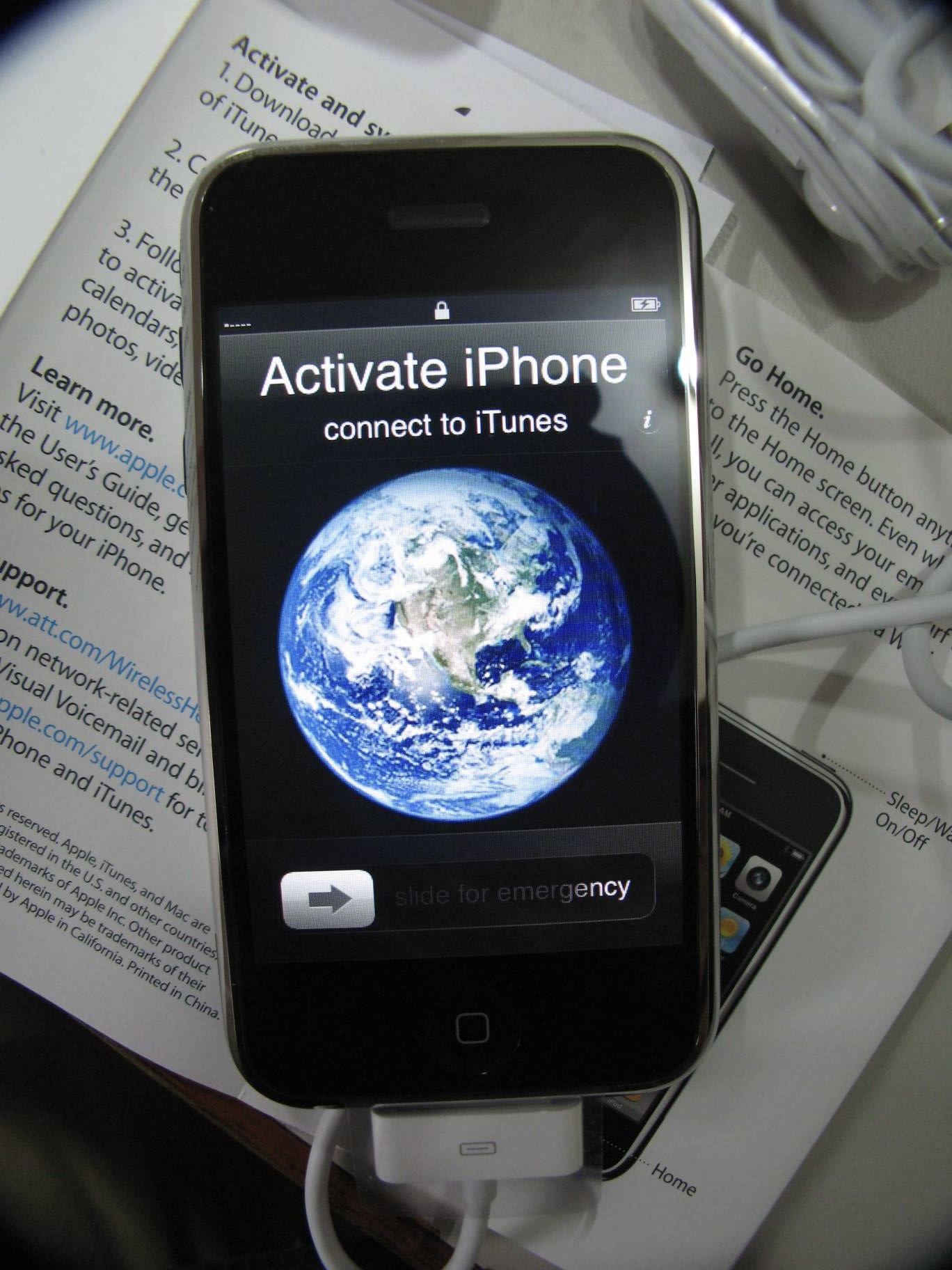
I mention this because Apple has just marked its 50th anniversary, having been founded in 1976 by Steve Jobs, Steve Wozniak, and Ronald Wayne with a machine cobbled together in a garage. After slogging through its first decades as a distant competitor to the more popular Windows PC, Apple finally achieved global domination after coming out with such game-changers as the colorful iMac, the iPod that made you smile the minute you put your earphones on, the ultraportable iPad, and of course the indispensable iPhone. 

As industry observers noted early on, the genius of Steve Jobs and Apple wasn’t just in its products, but in creating the need for them; you didn’t know how irresistible the iPhone was until you held one. Apple and its passion for personal computing—not just the hardware but an entire lifestyle ecology that integrated communication and writing with music and photography—arguably changed the world, or at least hastened its evolution.

But enough of the proselytization. I’m not writing this piece to sell you another Mac, which God knows Apple doesn’t need another endorser for. Instead, that half-century of Apple that just went by gave me pause to wonder where all that early joy of tech has gone, and indeed where technology has led us and will yet take us. 

Like many early adopters, as we were called then, I recall the inimitable thrill of trying out a new machine, an operating system, or a program—something to make life and work easier and faster than before, another bold step into the future, a declaration of faith in the power of technology to transform life and indeed the world itself. New technology arrived with the presumption of goodness and optimism—that it would bring relief to global poverty and hunger, find a cure for cancer and other human ailments, improve education, and generate jobs for billions; it would draw more people into the circle of development, empower the oppressed, and induce social equity. With the advent of the Internet, more doors and barriers came crashing down. We could express ourselves publicly, bypass the traditional gatekeepers of information, challenge authority, build communities of common interest, expose falsehood and spread the truth, and create a truly transparent, interconnected, and progressive global society.

The kind of tools that Apple and its competitors produced were supposed to assist that project. They did—and again they did not. Instead of tearing down walls between people, the Internet raised new ones, behind the anonymity of which we could tear each other down. Computers and smartphones now facilitate disinformation, human trafficking, money laundering, and all manner of scamming.

Worst of all, technology has made it easier to wage war and kill people (like it always has). From Desert Storm back in the early 1990s to the present Iran War, military assaults and even mass slaughter have assumed the sanitizing cloak of an e-sport, a posture Trump and his war gamers have actively adopted, reducing casualties to memes. Indeed the US-Israeli attack on Iran has now been called “the first AI war,” as an article by Michael Brown on Forbes.com substantiates:

“When I became the Director of the Defense Innovation Unit at the Pentagon in 2018, Project Maven was already underway. Long before LLMs, DIU was supporting Project Maven with several vendors to improve computer vision, an AI capability to distinguish among objects in satellite imagery to save analysts studying pixels…. That legacy led to Palantir’s Maven Smart System, today’s cornerstone of the U.S. military’s AI-powered operation. Maven fuses satellite imagery, drone video feeds, radar data, and signals intelligence into a single interface, allowing operators to classify targets, recommend weapons, and generate strike packages in near real time. The results have been staggering: more than 1,000 targets were struck in the first 24 hours of the campaign, a tempo that would have been unthinkable with purely human targeting processes. That tempo has been maintained with only 10% of the human analysts that would have previously been required to strike 1,000 targets daily.

“Yet the system’s limitations are equally revealing. Maven’s overall accuracy hovers around 60 percent, compared to 84 percent for human analysts. Palantir’s CTO nonetheless declared it ‘the first large-scale combat operation driven by AI,’ a characterization that raises questions about the ethics of AI-driven targeting and the adequacy of civilian protection safeguards.”

Of course it would be unfair to lay responsibility for this on the doorstep of Apple or other tech giants today—barring those who, unlike Anthropic, have actively lent their resources to Trump’s war machine. The companies known to have supported Israel’s military capabilities include Palantir, Microsoft, Google, IBM, and G42 (and yes, that’s according to AI). While the biblical prophets called for swords to be beaten into plowshares, somebody found a way to turn high tech’s plowshares into guns and missiles. 

And then again, as the gun rights advocates always say, “Guns don’t kill—people do.” With some people being so stupid and devoid of conscience, why should we even wonder if and when AI will work better than the human brain? That already happened, more than fifty years ago.

Email me at jdalisay@mac.com and visit my blog at http://www.penmanila.ph.
Penman No. 484: The Romance of Retro

Penman for Sunday, April 5, 2026

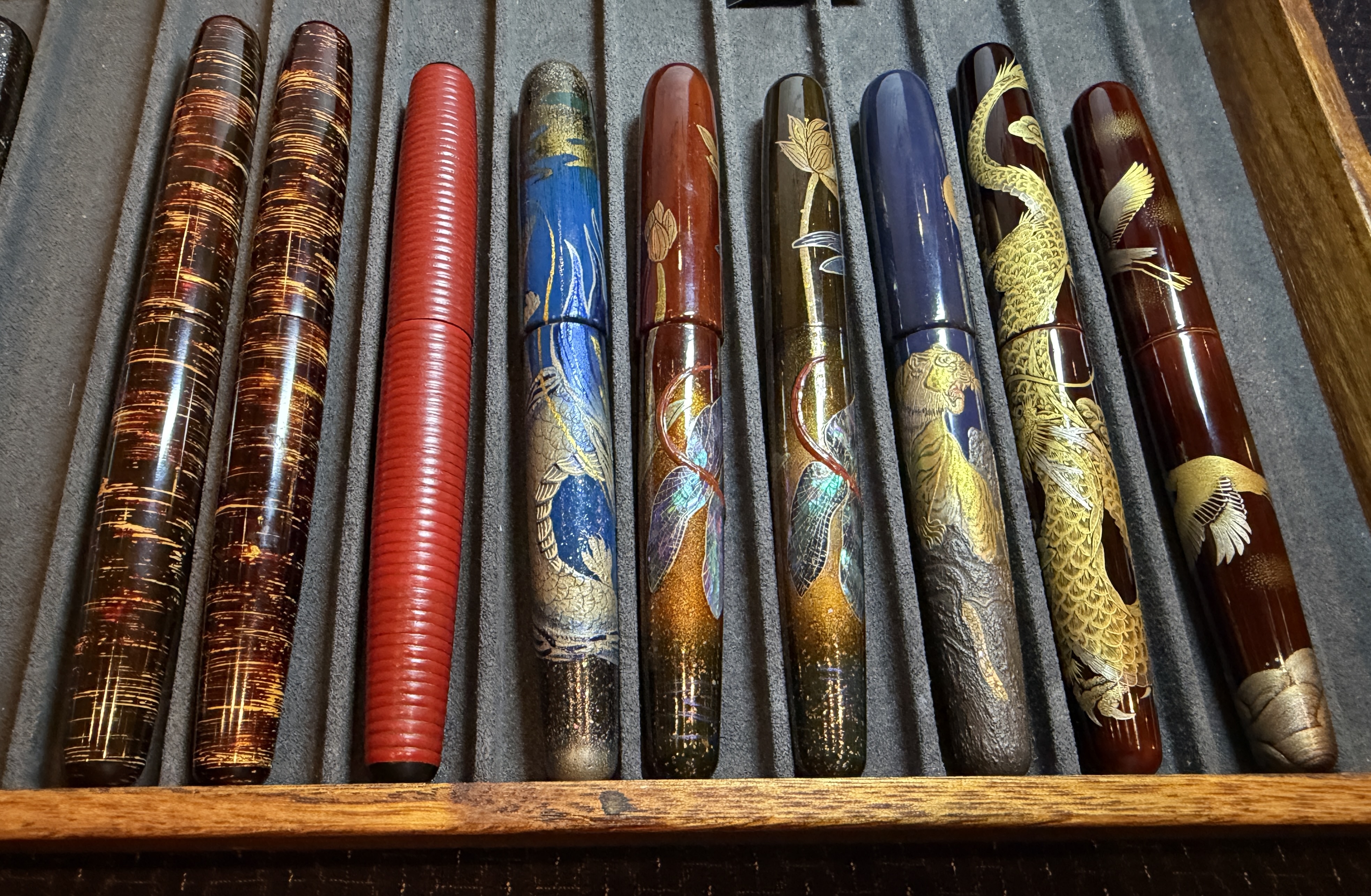
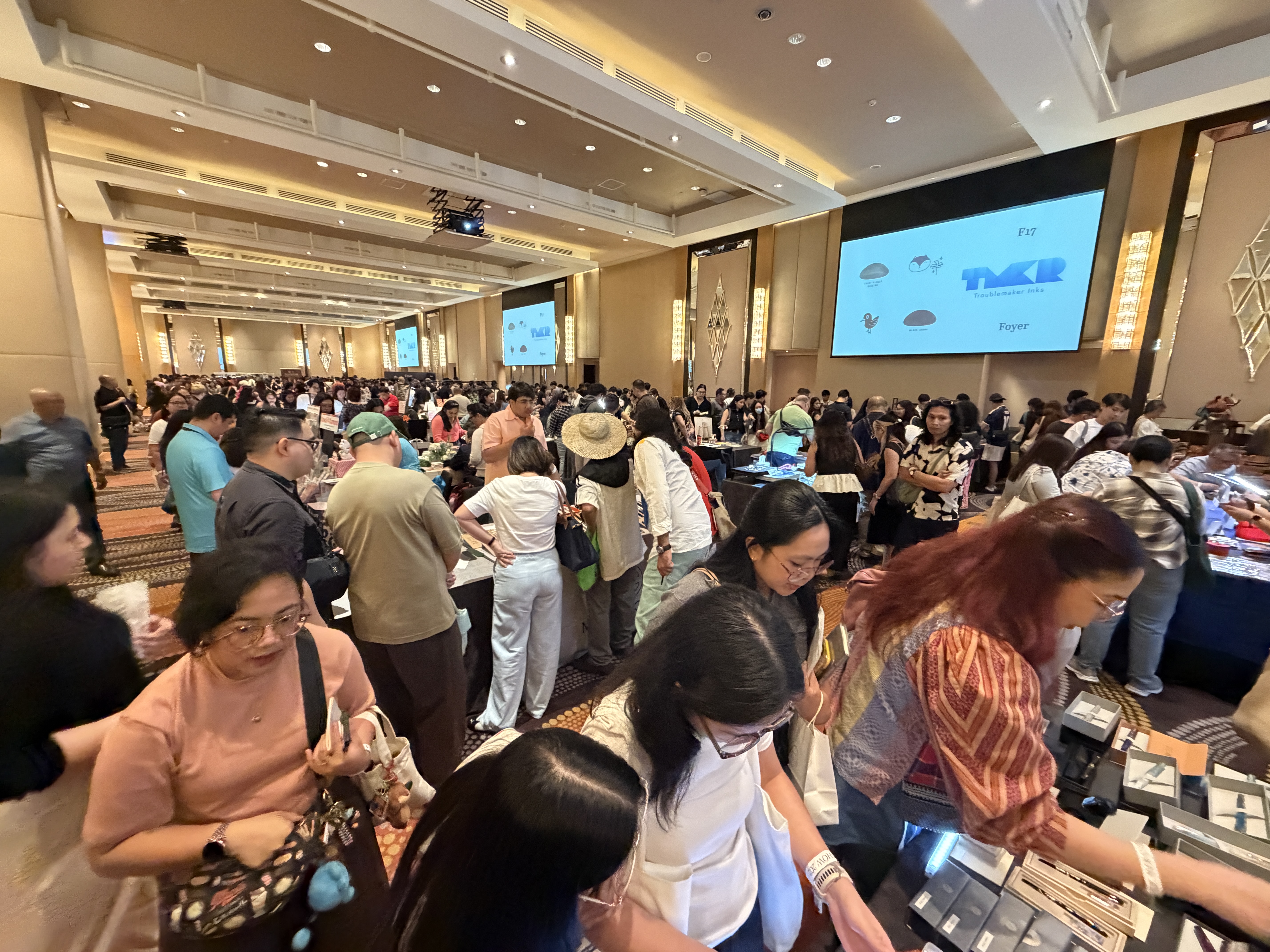
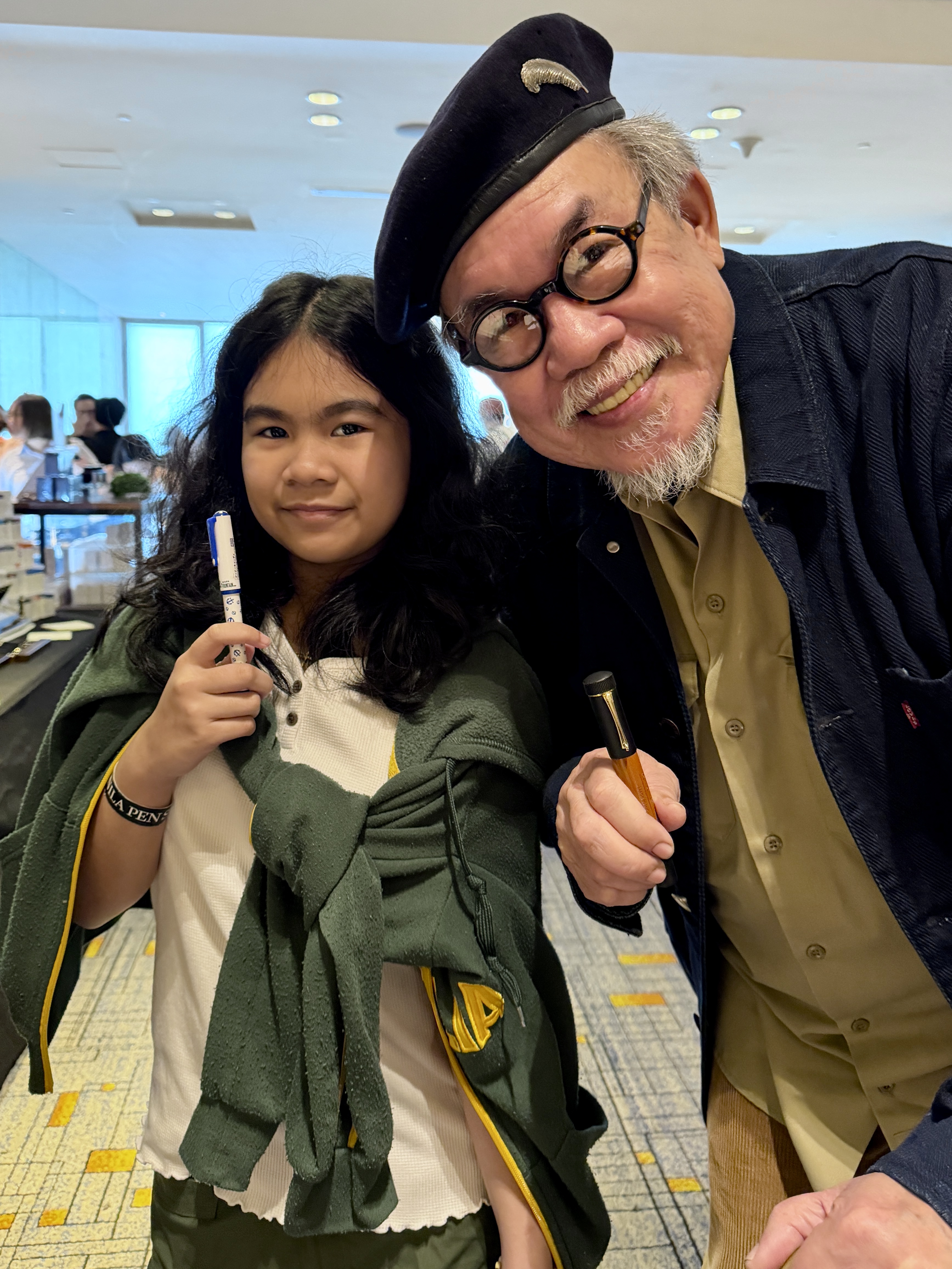
LATE LAST month, over two frenetic days at the Fairmont Hotel in Makati, more than 3,000 attendees crowded into a ballroom and the corridor outside for the sixth iteration of the Manila Pen Show since 2018. Not only did dozens of dealers and vendors coming from as far away as Russia and Turkey offer trays and tables full of pens, inks, and other writing paraphernalia. Seminar rooms were packed full of people learning how to adjust nibs, use fountain pens for painting, and master calligraphic strokes. What was most obvious and rather surprising was that the vast majority of attendees weren’t old fogeys like me who grew up with fountain pens, but young professionals and students eager to get their first Sailor, Pilot, or Pelikan—or even a five-figure Montblanc or Nakaya. 

The MPS is run by the Fountain Pen Network-Philippines, a group of enthusiasts that began with 20 people in our front yard in 2008. Now FPN-P counts 16,000 members online, from the Philippines and parts beyond—and if you think most of those people are idle lurkers, wrong: more than 9,000 of them participate actively on FPN-P’s Facebook page. And again, here’s the killer factoid: the group’s median age is somewhere between the late 20s and early 30s, clearly marking a demographic shift in the hobby from my fellow dinosaurs to the young bucks.

And it isn’t just pens. Everywhere around the world, young people are picking up and using typewriters, mechanical watches, film cameras, vinyl records, and pretty much anything older than they or even their parents are. They’re even wearing (after actively hunting down and paying big money for) torn jeans and ratty flannel shirts from the 1950s.

The romance of retro is definitely in the air. Whether it’s old tech or vintage clothing, the urge to try something old is palpably present, and “palpable” may be apt, because much of this fascination, according to the experts, has to do with the sense of touch. 

Beth McGroarty, the research director at the Global Wellness Institute, argues that “studies show that people are hardwired for things like touch from infancy,” and frames the analog revival as “a rebellion against that shapeless, disembodied, throwaway digital world of screens, and a hunger for physical objects and tools that are touchable.” 

That’s certainly true for fountain pens, which are as tactile as tools can get, and with which users establish intimate relationships. The act of writing with a pen represents the completion, commitment, and communication of an idea, a thought that starts from the writer’s brain, and gets processed by the writer’s emotions as it travels to his or her fingertips. The pen’s nib and ink commit the thought to paper and give it permanency, but also mediates it—you can often tell what the writer’s mood is by the shape and the sharpness and the fluidity of the written word. For young people growing up with keyboards, cursors, and block letters on an indifferent screen, nothing could be more different, because more personal, more “Me!”

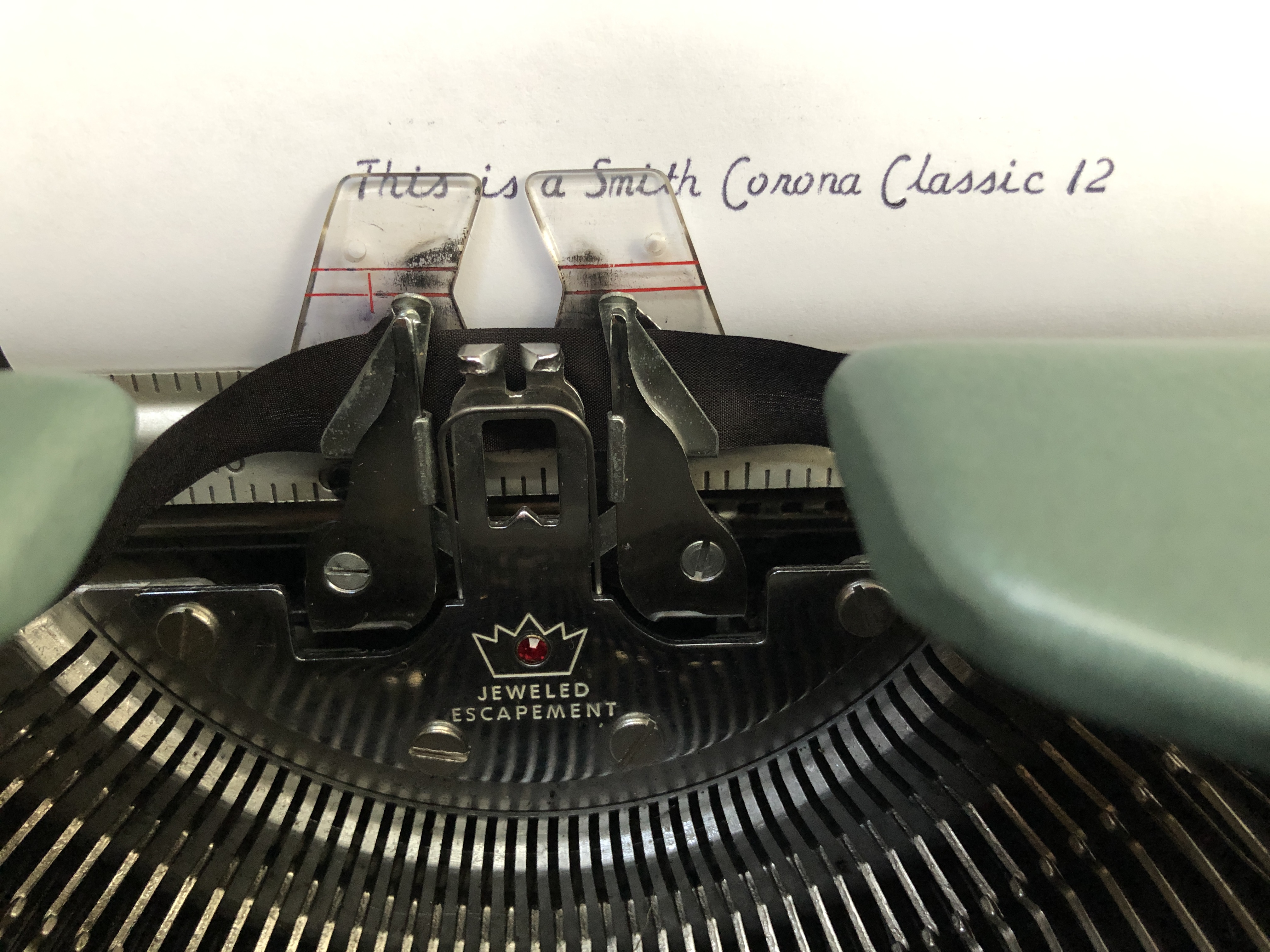
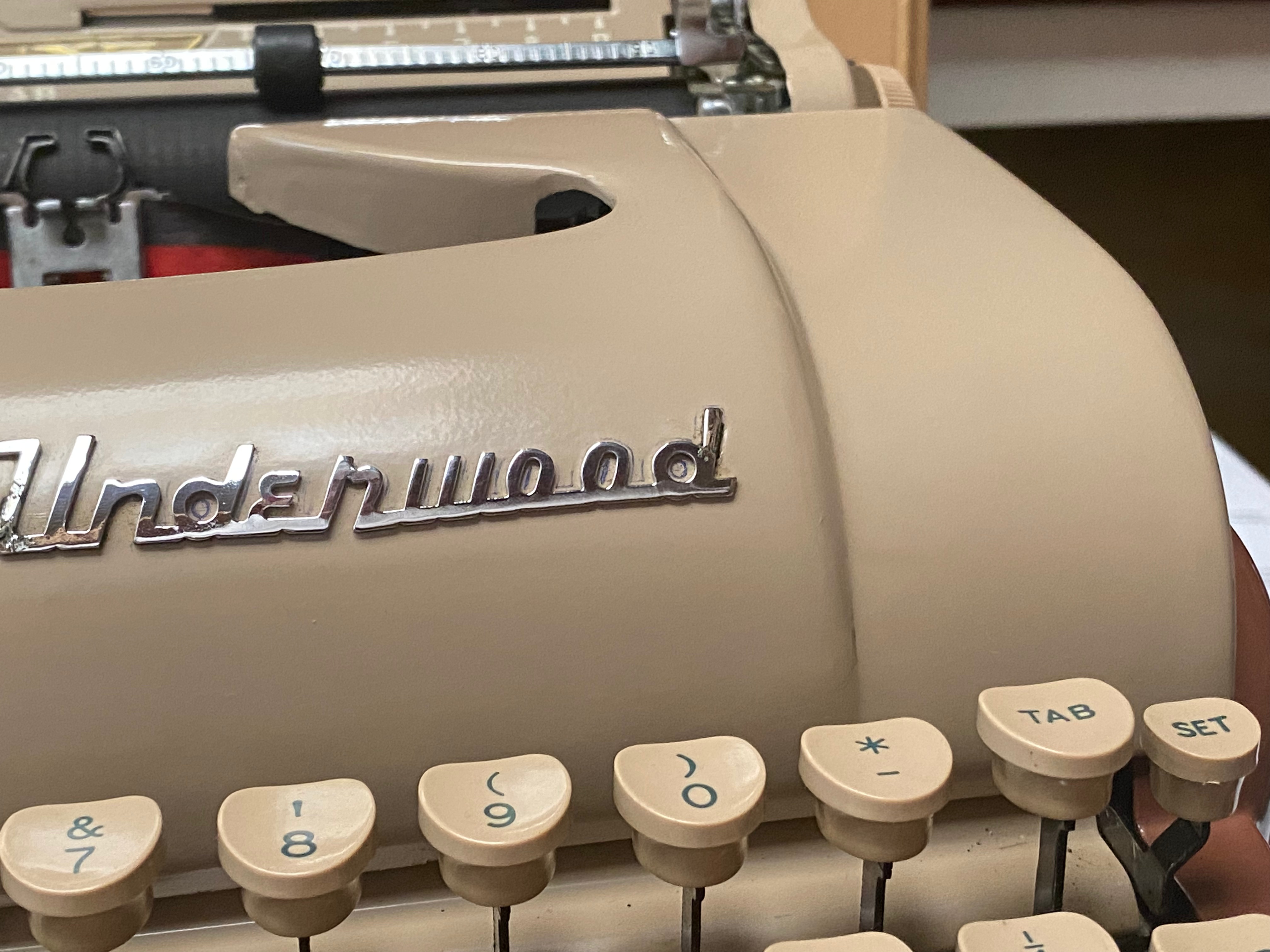
That’s true even for typewriters, which—thanks largely to Manila-based repairman Gerald Cha and the Filipino Typewriter Collectors group on Facebook (yes, I’m also one of the organizers)—have attracted many young enthusiasts. They seem to be little more than clunky pre-computers at first glance—metal machines using greasy ink ribbons without “delete” buttons and no connection to the Internet—but it’s precisely this isolation that’s become its main draw for young users.

According to Walid and Joujou of Mr & Mrs Vintage Typewriters in the UK, who have restored thousands of machines over the past decade, the soaring interest has been driven by what they call “a craving for authenticity and quiet.” Now “quiet” isn’t a word you normally associate with the clackety-clack of an Underwood or a Remington. But take typing as a rejection of digital noise, which is what the many thousands of typewriter collectors around the world profess to like about their Olympias and Olivettis—complete disconnection from the outside world, replaced by total focus on what you’re typing, which you can’t simply erase without making a mess. Handwriting and typing demand deliberation.

So does, for that matter, film photography, to which young people are returning in droves, as if film were some holy membrane to be treated with respect if not awe (an attitude encouraged by the eye-watering price of film plus processing). I have a good friend who, like many millennials, turned away from megapixels and pocketable phone cameras to embrace expired Tri-X and clunky RB67s. I’d kid him about spending a fortune on his new passion and for thinking every shot through before pressing the shutter button—the mark of the classic photographer, a la Henri Cartier Bresson in wait of the “decisive moment”—only to send the roll through for digital conversion. But I can understand his commitment, because it’s about more than photography; it’s a decision to take fuller control over sensors and algorithms, to almost literally stamp one’s vision over the image, in defiance of AI, putting natural beauty over artificial prettiness.

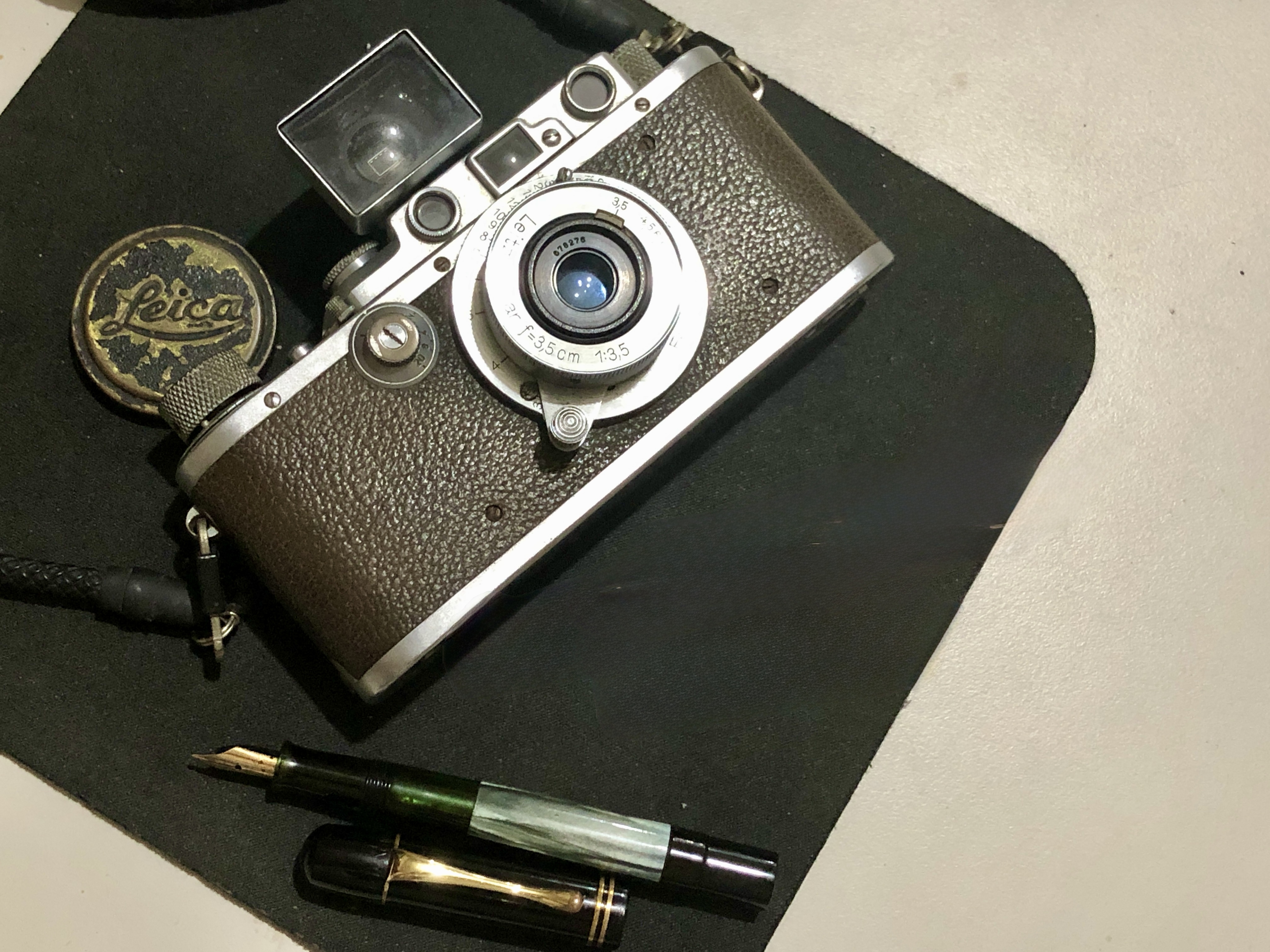
And then there’s the element of what researchers call “meta-nostalgia,” a longing to capture and reinterpret the past on one’s own terms. In a world hurtling forward into the void, the imagined past offers clarity and security, if only because it already happened. Writing with a pen—especially a vintage one that your Lolo or Lola might have exchange love letters with—returns us to a fantasy of innocence (forgetting, of course, that someone like Josef Stalin signed death warrants with a tiny Pelikan 100–the pen beneath the Leica in the pic above). 

But returning to pens, it was clear from the MPS that this wasn’t a jump back to the ‘40s or ‘50s, except for the few of us who specialize in that period. The “kids,” as Beng and I like to call them, were buying pens to play with, employing a raft of designer inks that not only sheened but shimmered, most definitely no longer your Lolo’s reliable blue-black Quink. They also brought and bought journals, cases, stamps, washi tapes, and such accessories as make not just a hobby but indeed an industry. 

Retro is back with a vengeance, and as we oldies—the so-called “OGs”—sat back and marveled at what the young ones were willing to spend on what we used to think of as no more than writing tools, one of them came up to us with a flashy pen and said, “In fifty years, this will be vintage!” Indeed. Sooner or later, we’ll all belong to the past, and as today’s Gen Z’ers are beginning to realize, it can be far more fun and comforting than the uncertain future.

Email me at jose@dalisay.ph and visit my blog at http://www.penmanila.ph.