
Qwertyman for Monday, April 27, 2026
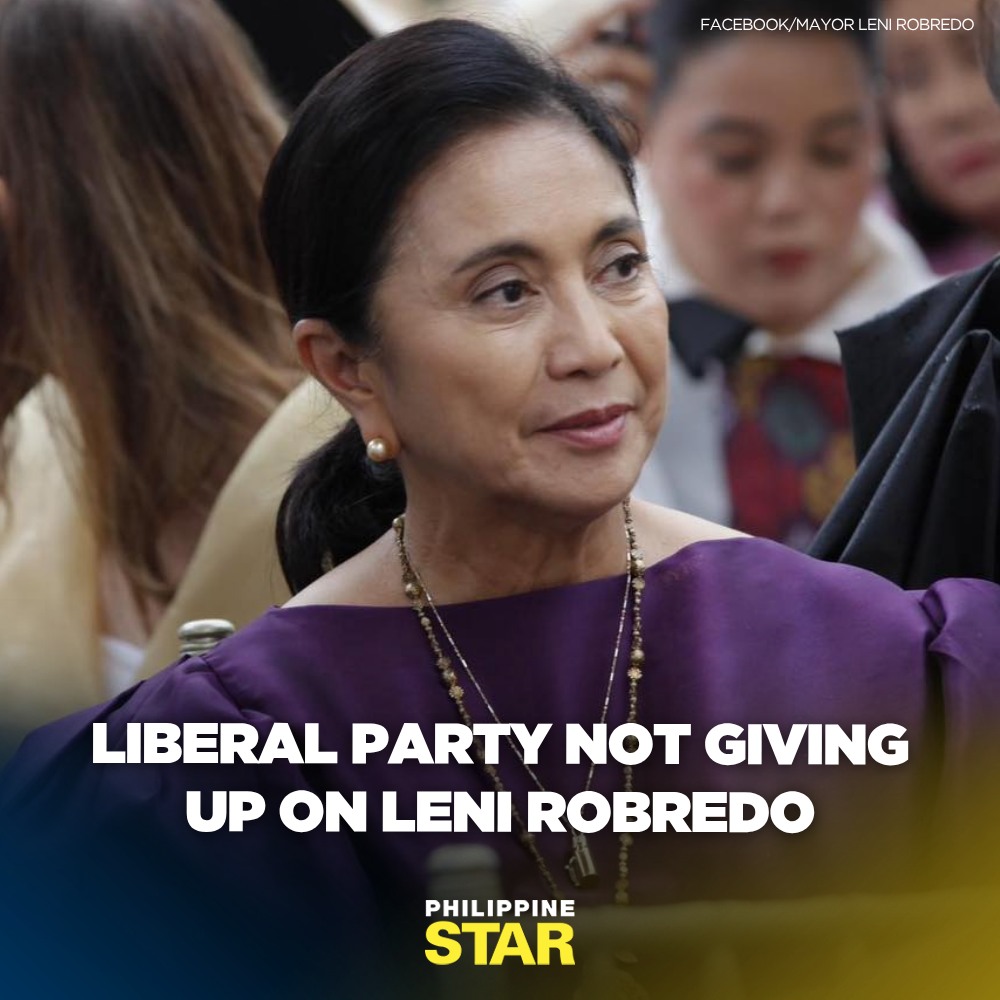
THE MOST important news for us Filipinos last week was the news that wasn’t: former Vice President and now Naga City Mayor Leni Robredo’s announcement that she was not going to run for president in 2028, and that she would be happy to seek another term in Naga’s city hall.
She went on to provide a list of alternative contenders for the presidency—younger and also progressive political leaders whose principles and vision aligned with hers. The names included the usual suspects—chiefly Senators Risa Hontiveros, Kiko Pangilinan, and Bam Aquino, as well as, down the road, Mayors Joy Belmonte and Vico Sotto (when he comes of constitutional age). They’re all worthy and credible candidates, of course, all of whom I hold in high esteem; their only problem is, well, they’re not named Leni Robredo.
Leni’s announcement was predictably met with profound dismay by her supporters, none louder than her former running mate Kiko Pangilinan, who said that “I believe Leni is in the best position to build the broadest and strongest unity.” Both Kiko and Liberal Party stalwart Leila de Lima voiced the hope that Leni would change her mind between now and 2028.
It’s a hope and a prayer that I—among many millions of others—certainly share. While I’d met her only a couple of times during the 2022 campaign, I came away much impressed by her leadership qualities and her sincerity. I was deeply disappointed when she lost the election, feeling that, once again, our people had voted against their own best interests, manipulated by falsehood, fear, and desperation.
Leni’s midterm decision to run for mayor instead of senator also seemed a letdown for many. But now it clearly was, in hindsight, a brilliant one, insulating her from the toxicity of national politics while building up her credibility at and with the grassroots. National figures—including no less than her chief adversary, President Bongbong Marcos—have made pilgrimages to Naga to seek her out. She has lost nothing in terms of visibility and appeal.
This is why—watching this drama play out in what could be the third of five acts—I remain convinced that despite her pronouncements, Leni Robredo cannot and should not shut the door for good on another presidential campaign, because as Kiko Pangilinan himself emphasizes, literally no one is in a better position to unify and to lead the country out of the moral and economic morass we find ourselves in today. Her abilities are established, her reputation unsullied. Our nation and people need her more than she needs the presidency, which is probably the most persuasive argument that can be raised in favor of her candidacy that even she cannot deny.
The corrupt acts for which her successor and likely opponent, VP Sara Duterte, now faces impeachment are the best subsidiary reasons for her running. There can be no sharper contrast in terms of personal morality and executive capability than the performance of these two vice presidents, one just after the other, under similar circumstances, including virtual isolation within an antagonistic bureaucracy.
Certainly any one of those named by Leni as capable alternatives will be better at managing the country than Sara, and will deserve our support. But this unfolding scenario calls for a head-to-head confrontation and comparison between the two leading protagonists—not just for the theatrics of it, but so that the paying audience—our people—can see and appreciate the difference with stark clarity: two women, two former VPs, two lawyers, two local executives, to which we can add two moral and ethical frameworks, two leadership and management styles, two visions of what makes for a just and progressive society. Can you just imagine the presidential debates? What could be more educational for the Filipino?
The cynics among us could opine that Leni just might be playing it coy, waiting for an inexorable tsunami of support to build up and raise her beyond all protestations. Hele hele bago quiere, as we often put it, or in a word, pakipot.
In the history of performative and traditional politics, that would of course be entirely possible. There is, in fact, something we can learn from the ancient Romans in this respect. There was a Roman political practice of recusatio—of an expressed reluctance to assume high office, which made its professor seem worthier in the public eye than one with the self-explanatory ambitio, an obvious lust for power. Recusatio could have been a show of genuine modesty (George Washington and Pope Francis famously did not expect or want to lead, but accepted the high responsibilities thrust upon them) or political theater (Julius Caesar had Mark Antony offer him the crown three times, refusing it to rising applause).
The difference is that Leni Robredo is no traditional politician—or is very good at acting at not being one. She speaks sincerely—which, in this case of her rejection of national office, we wish for once that she would not. In her statement, Leni also warned against the Filipino’s tendency to find and repose their faith in a “savior” to cure the nation’s ills—a clear and instructive reference to our experience with strongman rule. We can understand that, and it’s a reminder worth keeping in mind. Leni’s election alone will not guarantee a better Filipino future.
But there again is why Leni should run, despite herself. Beyond her abounding individual qualifications and experience, beyond her as a person, Leni Robredo has become the embodiment of what we want to see in government: ability, yes, but also integrity, accountability, selflessness, and devotion to public duty and the national interest. We will be voting not just for her but for the best versions of ourselves that we can yet become. She and younger examples like Vico make us believe that goodness and hope can yet win over evil and despair—and translate them into tangible and sustainable progress, beyond airy abstractions.
I believe myself that the Leni wave will happen—but not too soon; it should grow and crest at the right time, closer to 2028, perhaps both by design and desperation. The longer that the Sara saga plays out, amid our mounting economic woes and the apparent ineffectuality of the Marcos administration in dealing with the corruption issues it released from the Pandora’s box it opened, the stronger the need for Leni will become.
The classic Roman model of the reluctant leader was Cincinnatus (519–430 BC), said to be a gentleman farmer whom the Senate called upon to leave his plow and to save the Roman army from a tribal assault—which he did, before returning to his farm after serving for fifteen days as dictator. Leni Robredo might well consider giving us those two weeks (all right, those six years); her farm in Naga will always be there.
Email me at jose@dalisay.ph and visit my blog at http://www.penmanila.ph.

