Qwertyman No. 211: Saving the Newborn

Qwertyman for Monday, August 17, 2026

GIVEN ALL the political, economic, and even meteorological turmoil we’ve recently been going through, I thought I’d write about something undeniably and visibly positive this week, if only to remind us that good things are possible if the “whole of government”—including even our fractious Senate—puts its mind to it. 

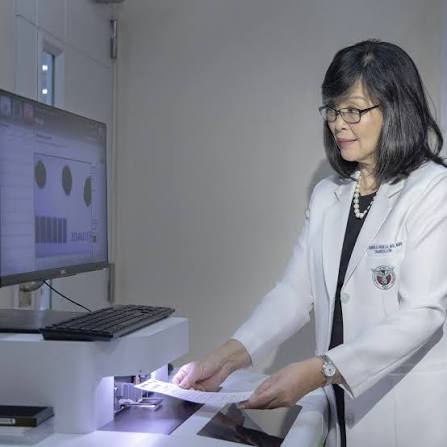
Full disclosure: I’ve been editing a book on, of all things, the Philippine Newborn Screening (NBS) program, and I’ve been so impressed by what I’ve come across that I requested and secured permission from its author, Dr. Carmencita D. Padilla, to share some highlights of that program. Dr. Menchit, as we call her, is no ordinary physician; a clinical geneticist and pediatrician, former chancellor of UP Manila and a key figure behind its National Institutes of Health, she was named National Scientist in 2023 for her contributions to medicine.

Back in 1990, Menchit had just returned from a fellowship in Sydney, brimming with enthusiasm about NBS, which had already been adopted and routinely practiced in Australia. 

What NBS addresses is this: babies can be born with any of almost 30 conditions inimical to their health, including congenital hypothyroidism (mental retardation and growth delay, with IQ loss possible as early as the second week of life), congenital adrenal hyperplasia (salt-wasting crisis, shock, death by the end of the first week), PKU, and galactosemia. 

A newborn with any of these conditions looks perfectly well: doctors and mothers will see no rash, no fever, no warning. Looking healthy, the baby will go home, with the disorder hidden for months, or even years, until the symptoms appear—by which time, it could be too late to reverse the damage. Ironically, if the problems are spotted early, there are treatments available, often as simple and as cheap as a modified milk formula for phenylketonuria (PKU), which causes irreversible intellectual disability if left alone.

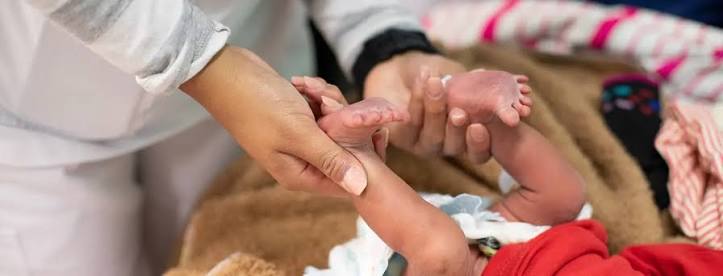
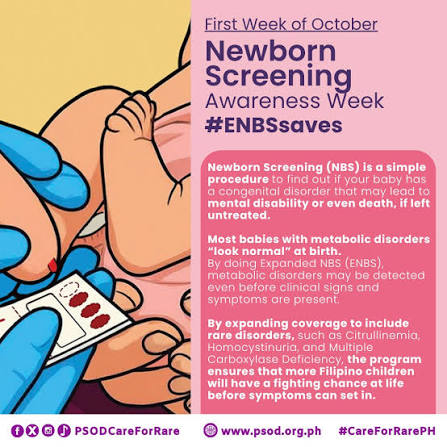
So early screening of all newborns is key. The process itself is fairly straightforward: “puncturing the heel of a newborn, absorbing a few drops of blood onto a special filter paper card, and transporting the specimen to a specialized laboratory for testing.” These cards could be easily mailed to a central laboratory. In the early 1960s, an American microbiologist named Dr. Robert Guthrie—whose own son and niece suffered from developmental problems—created a test to scan blood samples for indicators of anomalies and proposed this solution. But the medical and scientific communities shunned him, until sufficient publicity forced them to see he was right.

It would take more than 30 years for NBS to reach the Philippines, largely through the efforts of Dr. Carmelita Fagela-Domingo, who had seen NBS working in the West and tried her best to persuade the Philippine health bureaucracy to adopt it, and Dr. Padilla, who finally succeeded where Dr. Domingo had initially failed.

What worked for Menchit Padilla was the support of people like Dr. Domingo herself and UP College of Medicine Dean Alfredo Ramirez, and subsequently other allies in both executive and legislative branches beyond academia. Together, the two women pushed for a comprehensive pilot study that could form the basis for official government policy. Padilla also met Dr. Guthrie, who encouraged her to persevere in the effort.

Twenty-four Philippine hospitals took part in the study as members of the NBS Study Group. Private donors contributed computers, video cameras, fax machines, and pagers. A Finnish company donated a refurbished NBS machine. By 1997 the program was well underway. What was needed now was for the DOH to take over for the program’s full implementation nationwide. By 2000, there were still less than 200 hospitals out of 3,000 birthing hospitals participating in the program.

What was needed was an enabling law. This is the part of the story that I find most instructive, given our current Senate, and which I urged Dr. Menchit to include in her book (which she did, despite her initial misgivings). 

Because they couldn’t afford a lobby group, Menchit took it upon herself to draft the bill—after enrolling for a Master of Arts in Health Policy Studies degree at UP Manila. (I wonder how many of our lawmakers would go that far to get things done right—but then of course they have millions to spend on staff.)

Versions of the bill were filed at the House and Senate early in 2003, but by mid-year, hearings had yet to begin. To get the bill certified as urgent, its proponents had to get the support of Sen. Juan Flavier, who warned them that it would likely take ten years to get the bill passed. Desperate, Padilla turned to Sen. Loren Legarda, who was still hosting a talk show; between breaks, Menchit filled her in and persuaded Loren to start hearings on the bill and to file her own version, which she did on August 1. I’ll leave the rest to Dr. Padilla’s recollection:

“With barely three days until the end of the 12th Congress, we were advised to lodge an appeal for an ‘urgent bill’ with the House Presidential Legislative Liaison Officer, Undersecretary Bernardino Sayo. 

“It was a Wednesday, 5 pm. We went to his office at the House of Representatives. After listening to our desperate appeal, which was supported with albums full of pictures of saved and not-saved babies, Undersecretary Sayo agreed to arrange for a certification of an ‘urgent bill’ to be signed by President Gloria Macapagal-Arroyo the following day Thursday at 10 am. We were advised to return to the House of Representatives the following day for the second reading at 4 pm, the last day of the session at the House. With the bill now certified as urgent, our schedule for a second reading was bumped up. House Majority Floor Leader Neptali Gonzales, fortunately for us, helped the bill pass the second reading in the midst of calls for adjournment from the floor. 

“Garnering a unanimous affirmative vote, the bill moved to the required final third reading the following day, Friday, the last day of the 12th Congress. I received a phone call at 6:30pm from the Chief of Staff of Senator Flavier, Mon Navarra. He said ‘The NBS bill was passed into law! We were able to do it in 10 months—not 10 years!’ And since the House had adopted the Senate version in its earlier deliberations, there was no need for a bicameral session. We just had to wait for the signature of President Gloria Macapagal-Arroyo, which happened on April 7, 2004.”

The NBS bill, RA 9288, had itself become something of a miracle baby, giving hope to millions of newborns and the yet-unborn. Today well over 90 percent of Filipino newborns are covered by NBS, with a 100% rate targeted by 2028. Would that our government were so singularly and charitably minded in our other national priorities, especially for those already long born! 

(Top image from miraclefeet.org)

Qwertyman No. 210: A Grand Experiment with AI

Qwertyman for Monday, August 10, 2026

TOMORROW, TUESDAY morning, will be the first day of the class I’m teaching this semester at the University of the Philippines in Diliman. I retired seven years ago, but as professor emeritus have availed myself of the option to keep teaching at least one course. I don’t have to, and sometime soon I might stop and take a proper rest, but I think it’s good for both my young students and myself to keep up what amounts to an intergenerational dialogue. 

Even in UP, too many courses are being taught by instructors just a few years older than the class. That’s good for communication and relatability of thought and treatment, and sure, the alternative of being lectured by your grandfather isn’t exactly thrilling. But I feel that now, more than ever, we need to bridge what the 1960s called the “generation gap” to make mutual sense of the world we’re living in, which is probably just as perplexing for me as for them. 

I usually teach at the graduate level, but for the first time in years (if not the last), I’ll be handling an undergraduate class, at my department’s request. It’s a course for seniors called Creative Writing 198: Special Topics (Professional Writing), which I myself designed and first taught over twenty years ago. It’s aimed at providing English, literature, and CW majors with the practical writing skills they hardly learn in school. They may know their Shakespeare and Salinger, their Defoe and Derrida, their Virginia Woolf and Virginia Moreno—but they can’t write an application letter, a news report, a feature story, a brochure, a speech, an AV script, or do a proper interview. 

In other words, they can’t write for a living, which is what the big, bad “real world” beyond graduation expects them to do. They get all starry-eyed about writing that great sci-fi or romance novel that will bring them international fame—and yes, who’s to say it won’t ever happen—but they’ll quickly realize that you need a day job to pay for all the instant noodles and pizza (not to mention the studio, the wi-fi, and the commutes) that dreams are made on. So—drawing on all my years as a self-styled “Swiss Army Knife” of writing—I designed CW 198, from which at least two generations of students have now emerged. I’m happy that many still write me back to say that it was one of the most useful courses they ever took. (To those who can’t study with me, you can take a look at my book, Windows on Writing, published by Vibal Press.)

I’m writing this not to advertise the course, which should be fully subscribed by now, but to share the anxieties and apprehensions that many teachers—from full professors down to the greenest instructor—are facing: how to teach writing in the age of AI. The last time I taught CW 198, AI was still something of a joke; I’d ask it to write something in the style of Nick Joaquin and it would throw up laughably pseudo-romantic garbage. 

I do recall, however, saying even then that AI was bound to catch up in time. That time has come, and we’re no longer laughing. The uncanny and frankly scary speed and precision with which AI has learned to mimic human writing—yes, your writing, if you feed it with enough examples—tell us that human thinking can’t be too difficult to approximate if not exceed. (Here, bring in your favorite senator, and you’ll see how low the bar is set. And it’s hard to accuse AI of being “soulless” when so many people and their productions are exactly that.) 

Not surprisingly, AI in education has been met with fear and suspicion, if not outright hostility. There have been reports of professors retiring early to escape the aggravation of having to chase after AI-assisted cheaters, and of having to sort out the natural from the artificial. All over the world, and all over academia, there have been movements against AI, or at least against its abuse and misuse—an aversion extended to all digital media. 

Sweden leads the world in moving back from digital screens to paper in its basic education; phone bans in school are now in effect in Denmark, Finland, France, and Italy, among others, as part of this “analog revival” to improve reading skills. Following such models as the University of Chicago Law School, the UP College of Law will now forbid law freshmen from bringing and using their digital devices in class, to encourage critical thinking.

I agree with these moves, especially at the foundational levels of education. At the same time, let me state what I think clearly: we reject or ignore AI at our own peril. It’s not going away, it will keep getting smarter, and our young people will be using it ten years from now with neither guilt nor shame, making precise prompts with natural fluency. I’m not saying that all the ethical questions will have been swept aside by then, but the major technical challenges (yes, with ethical dimensions) like AI’s enormous water and power requirements should have been resolved, likely with AI’s own help. 

That said, what am I going to do with my CW 198 class? I’ve decided that instead of banning it outright (which I suspect will be futile in any case) we’ll use AI—to see what it does and what we can do differently or better. I’ll have them do in-class writing to establish benchmarks, and then we’ll ask AI to come up with its own version. What AI says won’t be the standard by which papers will be scored, although it might be superior in some mechanical ways like grammar and spelling. We’ll see how AI shapes its arguments, against how we might approach the topic and present examples. We’ll put a premium on original thinking, on expressing individuality, focusing not so much on “getting it right” as on “making it mine.” 

I frankly don’t know how this will all work out, but at 72, I’ll be taking a privileged peek over the horizon, embarking on a grand experiment in the spirit of that poem recently recalled by “The Odyssey”: to strive, to seek, to find, and not to yield.

(image from noveltymediaworld.com)

Qwertyman No. 209: The Pinoy Odyssey

Qwertyman for Monday, August 3, 2026

LONG BEFORE “The Odyssey” became a must-see movie thanks to the tempest of reviews surrounding Christopher Nolan’s highly publicized iMax version (and to get this out of the way, yes, I’ve seen it), it was a must-read book for us as literature majors, alongside its companion epic, the Iliad. I don’t recall whose translation it was we used, very likely Lattimore’s, but like most students, we were reading it for the story, and as these narratives are meant to do, that story stuck in the mind. That’s the function of myth, what I call the eternal past, a kind of memory that feels we’ve all shared in one way or another, even if we were never there, separated by millennia and thousands of miles.

I appreciated the tragic grandeur of the Iliad, which I would bring up in class when I needed to talk about how great heroes fall and about how the epic seems to glorify war and warriors but actually shows how war dehumanizes us. There are many compelling scenes and situations in the Iliad, but I’ve always found the Odyssey more fascinating because, as the Beatles might have put it, it’s a magical mystery tour that takes its hero to every distant shore except, finally, his home, and even when he gets there, it’s no longer what it used to be; home may be a fixed place in the map of the heart but it’s never static, never just as it was.

I’ve often used the character of Odysseus to describe the modern Filipino, especially in my lectures to foreign audiences (just as I would tell Americans that “We were your first Vietnam” to make sure they would sit up and listen). If the Filipino diaspora, in which a tenth of our population has embarked for the farthest corners of the world, isn’t an odyssey of truly epic proportions, then I don’t know what is. 

It isn’t the departure that matters as much as the homing instinct—the desire to come home, however long or how far away one has been gone, for whatever reason. I’ve yet to meet a Filipino abroad who didn’t want to come home, at least for a visit. When they can’t, Filipinos do their best to recreate home or some semblance of it wherever they are. One of my most touching discoveries was a bar named “Kabayan” in a remote corner of New Zealand, which was open even in the mornings for Pinoy sailors who happened to drift along.

In that sense, Jose Rizal was an early Pinoy Odysseus, traveling the world a century before his countrymen did so in droves, neither for war nor economic opportunity but for knowledge, a journey brightened by dalliances with this Circe and that Calypso. As did the original, Rizal came home to find the place badly out of joint, in dire need of reform (although “reform” seems a kind description of what Odysseus did to his wife’s suitors). The big difference, of course, is that in Homer, Odysseus emerges scarred but triumphant, reunited with his family, the beneficiary of a peace enforced by the gods; Rizal’s happy interlude in Dapitan, on the other hand, ends with a son who dies soon after birth, his abortive entry into a foreign war, and his arrest and execution in a domestic conflict.

Rizal’s novels left us with the figures of Crisostomo Ibarra and Simoun—both returnees from overseas, the former initially brimming with idealism, the latter consumed by retribution. That they are the same man speaks to the extremes in which we find ourselves pulled today by our politics, misty-eyed with patriotic fervor over Alex Eala and the West Philippine Sea, and yet deeply divided and darkly cynical when brought down to our immediate realities. 

A visiting professor and former colleague at UP’s English department, Dr. Gerald Burns, found that from Rizal onward, we Filipinos have produced a tradition of what Burns calls the “repatriate theme” in Philippine fiction, involving a hero-figure who goes for an extended stay abroad, perhaps for study or work or both, and then comes home with a “boon,” some social good picked up from that sojourn, to be shared with one’s people. The balikbayan is full of progressive ideas—could be from that newly minted PhD, or that stint in Silicon Valley, or that research laboratory in Germany—and thinks that he or she can illumine a benighted motherland with knowledge, only to realize that new ideas and their bearers are unwelcome, and that the path to progress and liberation is dark, narrow, and treacherous. There are no gods who will make things easy, punish evil, or rectify wrongdoing. The Pinoy Odysseus comes home to find Penelope defiled or worse, having abandoned him; his house is teeming with reptilian politicians feasting on what remains of his wealth. 

The Nolan movie divided audiences and critics with its liberal interpretation of whatever it was that Homer wrote (to sum up my own reaction, I found it entertaining but not particularly enlightening, as I—perhaps from my burdensome position as a writer and reader—kept expecting the script to rise to the occasion). Its best service to us as Filipinos may not be to revive our interest in Western classical mythology—although there’s value in regrounding the present century’s infatuation with Star Wars, Tolkien, and Game of Thrones—but to make us think about our sense of home, and why we keep coming back to a place we sometimes feel should be forsaken. Is our Ithaca worth the long journey across monster-infested lands and hostile oceans? Who and what is it that awaits us at our door?

(Rizal image from RizalsofAbra on IG)

Penman No. 488: Artists in Residence

Penman for Sunday, August 2, 2026

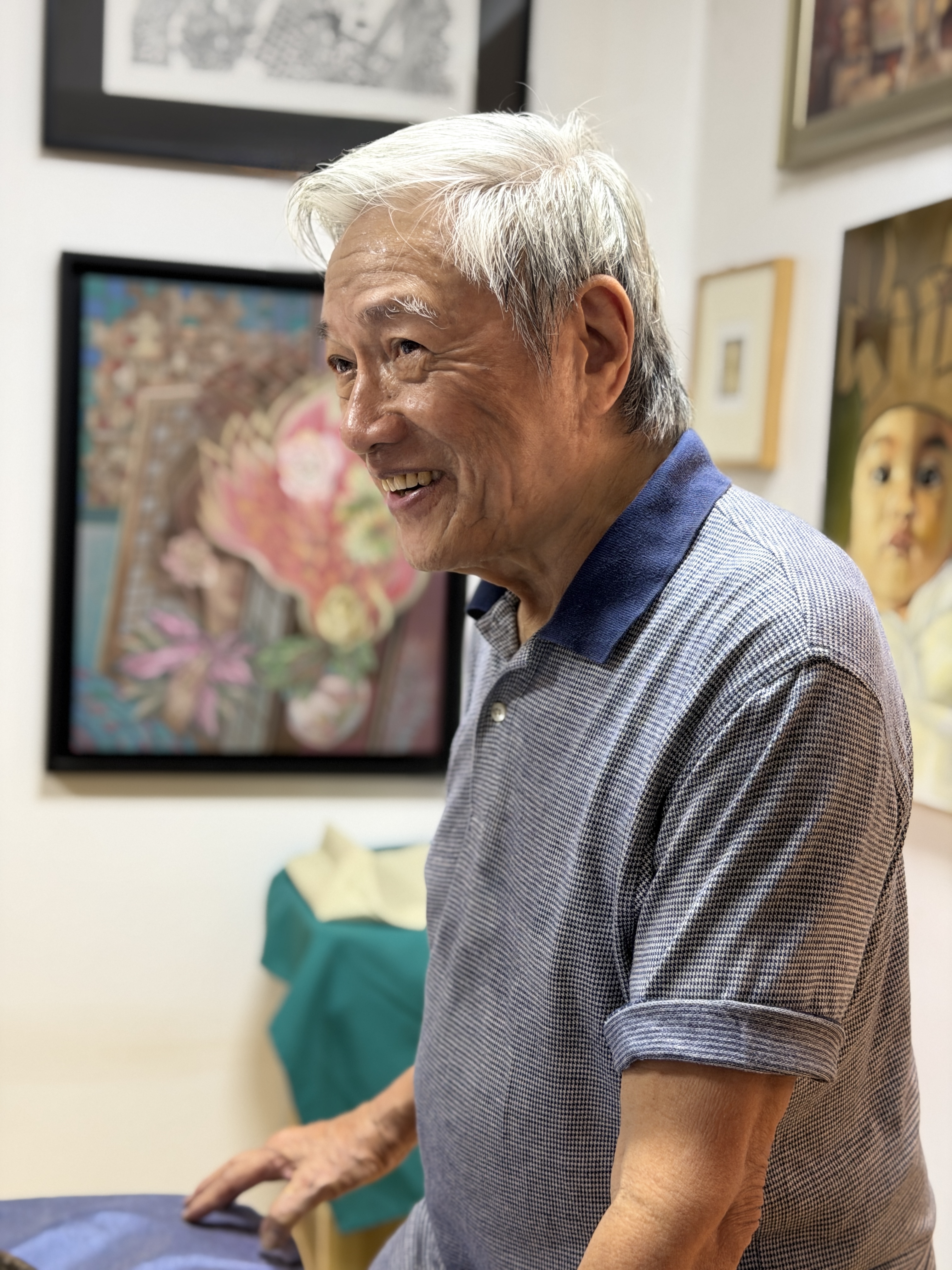
IT ISN’T every day that I get to spend time with two outstanding artists, and while I’ve become something of a recluse myself, exhausted by literary polemics and limiting my social life to very close friends, I couldn’t say no when my wife Beng asked me if I cared to join her on a day trip to Los Baños to visit the sculptor and painter Junyee. Junyee was a good friend of Beng’s from the UP College of Fine Arts, and while he lives in Los Baños with his wife Tess, Junyee has done many art installations around Diliman and often comes by our house on campus to drop off some buko pie. I’d enjoyed chatting with Junyee whenever our paths crossed, taking in his stories about his arduous struggle to become an artist, including a time when he had to work as a make-up artist for the dead in a funeral parlor in Cebu. But more on that later.

I was doubly pleased to learn that we would be accompanied to Los Baños by another artist-friend, Fil de la Cruz, whom I had known for over fifty years, and by his son Janos, also a talented and highly regarded young artist. Fil stands among our most brilliant, versatile, and accomplished printmakers; both he and Junyee have been nominated for the National Artist Award.

We had long been planning to visit Junyee in LB, where he and his wife Tess, who taught in UPLB, have lived for decades. When Tess retired a few years ago and they had to give up their home on campus, they found and bought a private lot just beyond the university property line, and built a new house there. Since anything that Junyee built was bound to be interesting, we wanted to see it, but the house was honestly just an excuse; we were going there for the artist himself. Now 84, Junyee recently hasn’t been in the best of health.

Though younger at 75, Fil has been facing serious challenges of his own. They had a lot to talk about, for sure—but we resolved to undertake this trip in high spirits, to celebrate art and life in joyful company. 

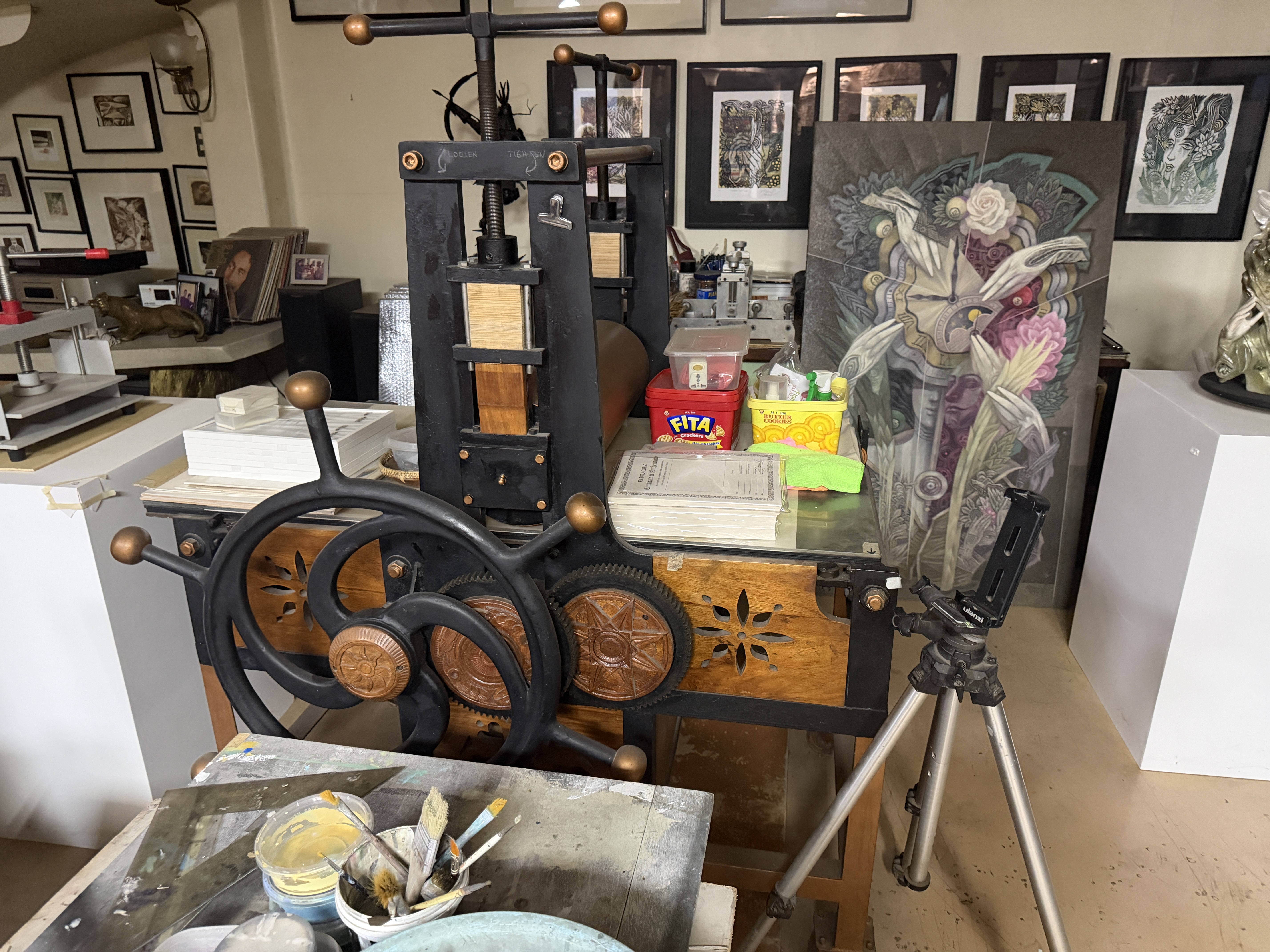
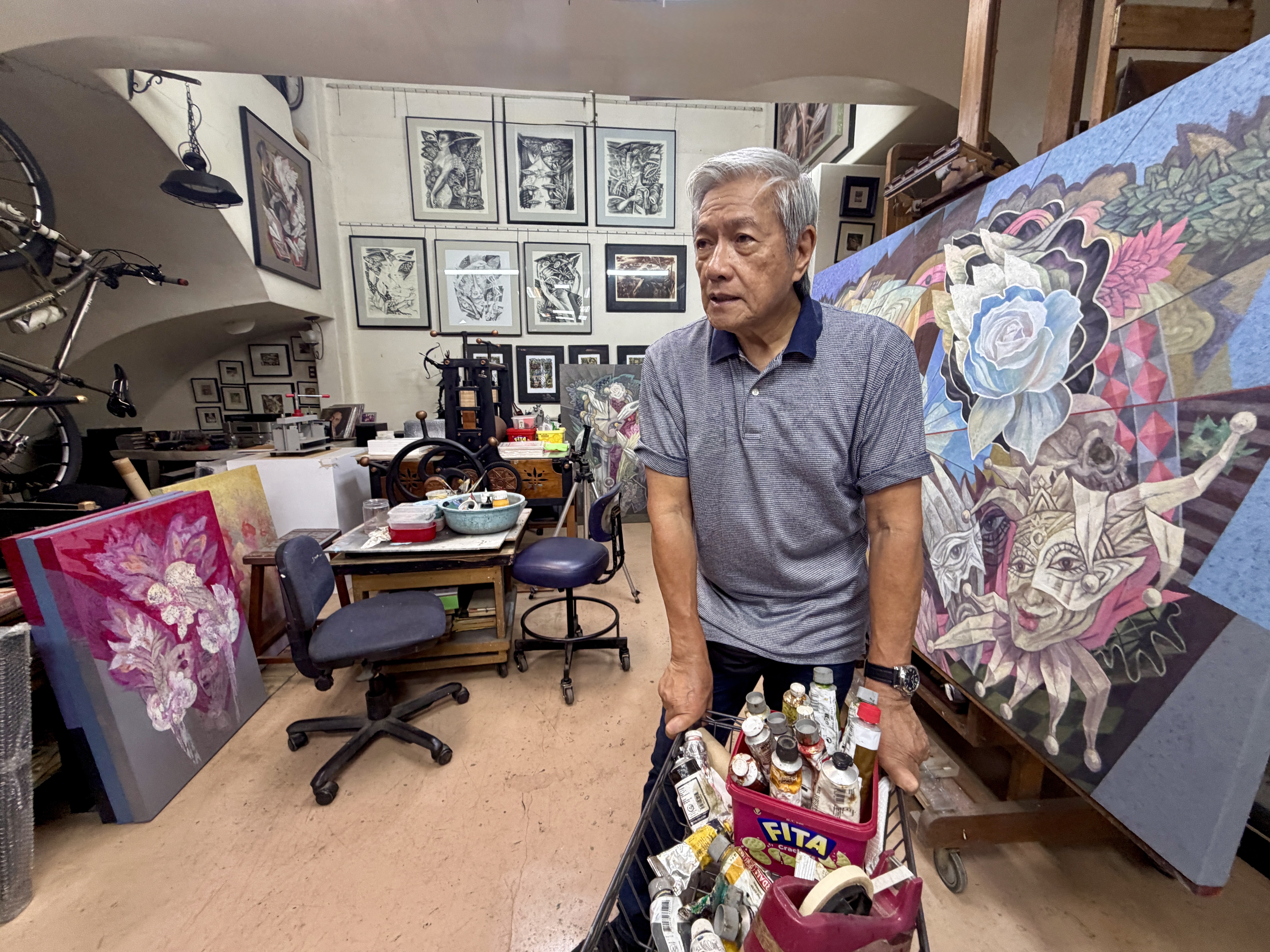
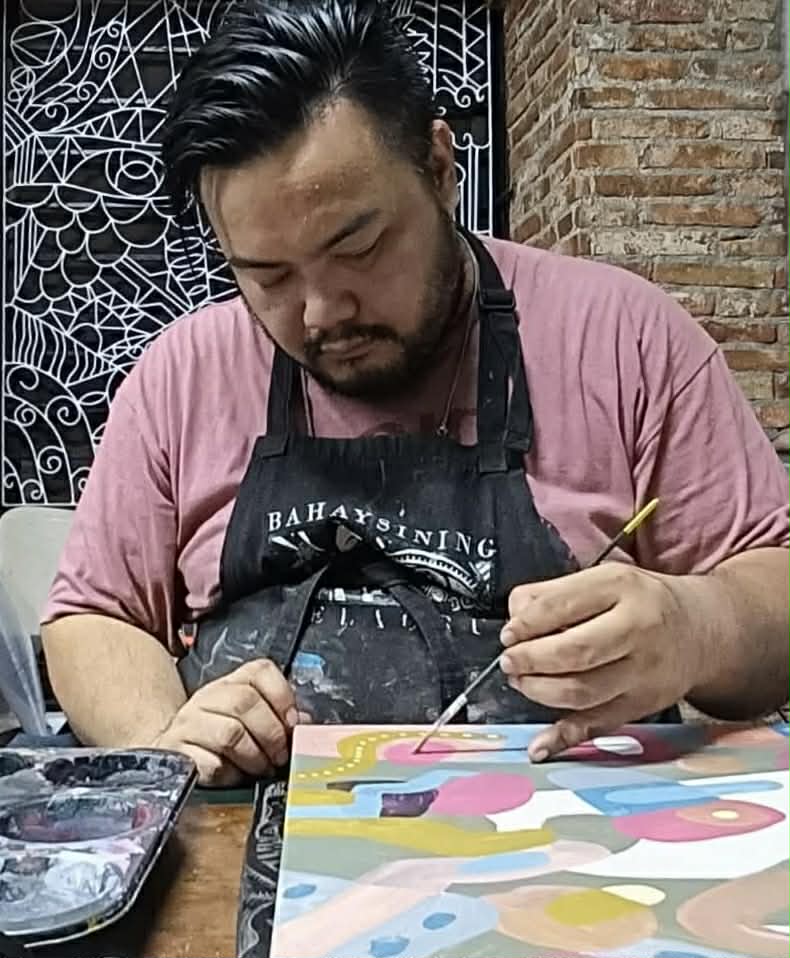
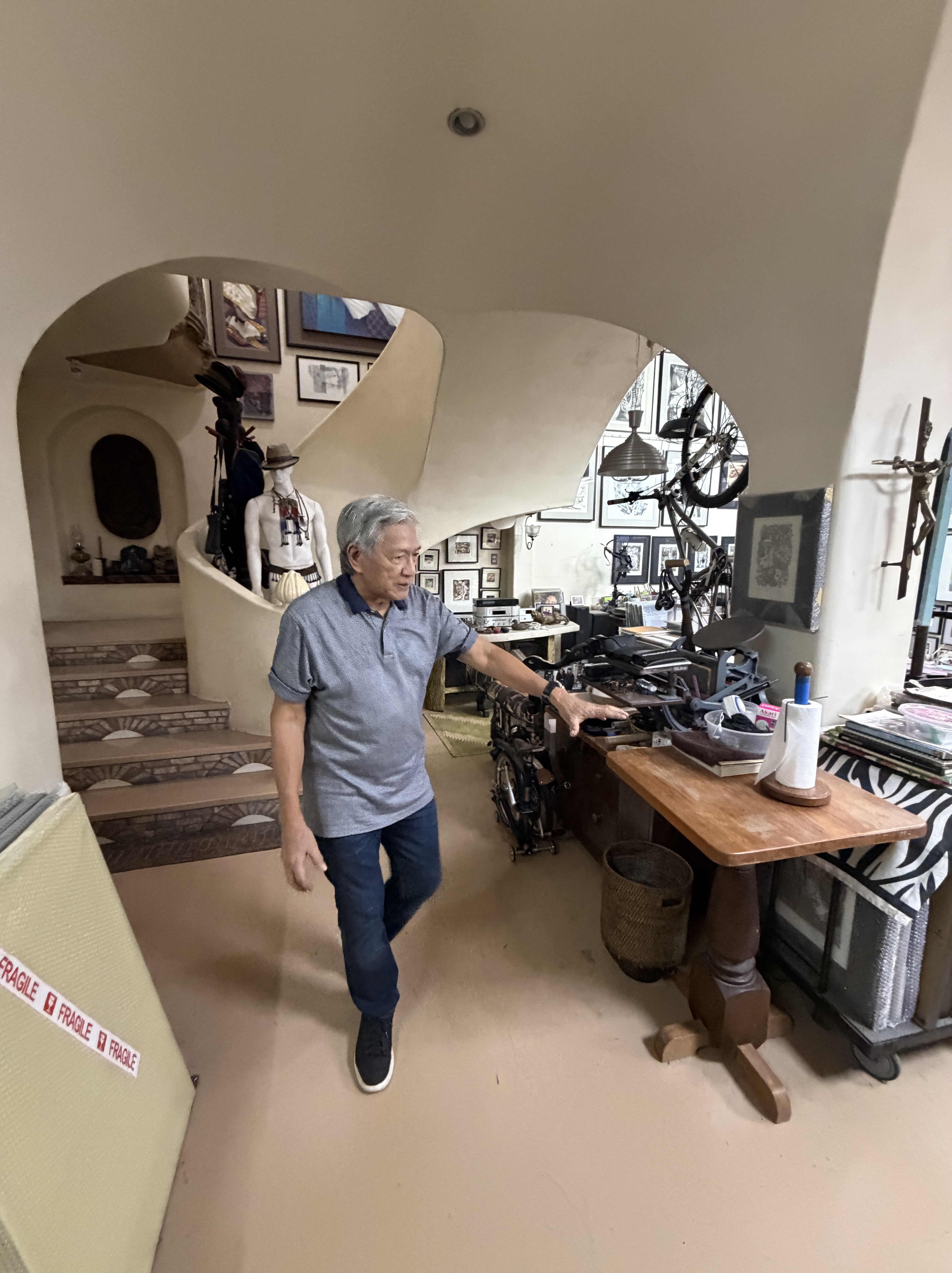
First we picked up Fil at his home in Muntinlupa. Aptly named Bahaysining, the three-story brick house is part (if not largely) studio, part gallery, and part living space, but immediately the visitor knows it’s a house made by artists for artists in both form and function. “This was much smaller early on,” Fil says of the place, ”and then I just kept adding to it as my practice and capabilities grew.” He shares the space with his son Janos, who keeps a studio of his own on the premises and helps his dad with both work and the daily business of living. 

The rooms teem with paintings, prints, drawings, sculptures, and most visibly, printmaking presses in various sizes that Fil himself designed and had made over the years. Much of his equipment rolls on wheels, the better to move them around when the studio has to meet a commission, and Fil and Janos have to labor long days and nights to get the job done. Fil is amazed that clients remember him and his work from way back and return to order new pieces. 

Fil also paints and sculpts as does Janos, but it’s in printmaking—the art of producing numbered copies of a design pressed on paper in limited editions—that you know his heart truly lies. I met Fil in the early 1970s in one of my past lives as a printmaker. He had graduated from his studies at UST, and I had just come out of martial law prison—where, to pass the time, I had taken up drawing with my fellow detainee Orly Castillo, who then took me under his wing at the Philippine Association of Printmakers in Ermita. The PAP was a hotbed of production for young artists then, and I was lucky to run into the likes of Bencab and Tiny Nuyda (not to mention a pretty girl named June “Beng” Poticar, who became my wife)—and yes, Fil de la Cruz, who even then was already establishing himself as a master of one of printmaking’s most difficult techniques, mezzotint, which produces an almost velvety texture. 

Perhaps because prints are relatively cheaper and come out in multiples, they’ve never quite gotten the respect they deserve, especially here in the Philippines, where the art market is enthralled by multimillion-peso paintings by the masters and by the exclusivity they exude. (Around 1974, when we were all working and hanging out at the PAP studio on Jorge Bocobo, it was a big day when a dealer came by to purchase our prints in bulk for as low as P15 per print, so she could stick them into frames she sold as décor to American servicemen in the bases.)

Fil’s come a long way from those days, and Bahaysining is a testament to his professional success, which has traveled a long arc from his youth in Bulacan and his student days at UST to further studies in New York and Paris, to over thirty solo exhibitions that have brought his prints to France, America, the former Czechoslovakia, Germany, China, Hong Kong, Korea, Spain, Belgium, and throughout the Philippines.

As it was a sunny weekday, the drive to Los Baños didn’t take long through the Jamboree route. Junyee had offered to take all of us out to lunch, but of course we first had to see and tour his and Tess’ three-year-old home. 

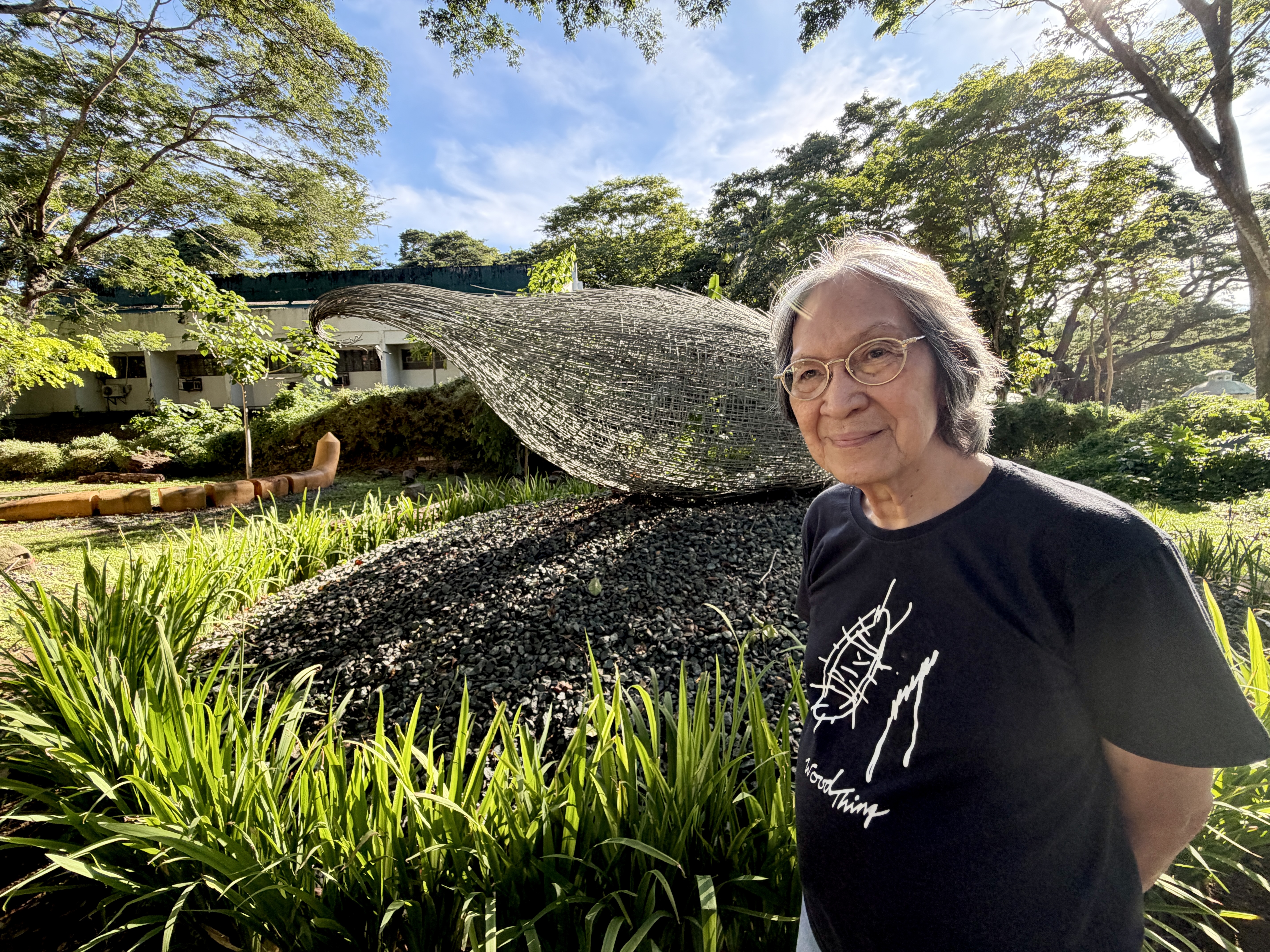
To know Junyee—“Luis Enano Yee Jr.” on his birth certificate—is to understand how inseparable art and life can be in the person who, from his youth onward, has seen art not only as descriptive or decorative but liberative, rooted yet transcendent, impermanent yet memorable. Widely acknowledged to be the father of installation art in the Philippines, Junyee has always been testing and pushing the boundaries of art, unbothered by commercial trends. Whether he works with discarded wood, woven metal, or wisps of sooty smoke, Junyee seems compelled to give physical shape to our thoughts and emotions, often using outdoor space as his canvas.

Born in the South and discouraged by his father from pursuing his artistic inclinations, Junyee fled to Manila and UP, where he apprenticed with Napoleon Abueva and found support from Jose Joya—masters whom he would soon surpass in competitions. Caught in the insurgent politics of the sixties, Junyee crafted work like his “Balag” trellis on which protesters could hang their slogans, but unlike many other artists of his time, he never let ideology dictate his insight and technique. He would later devote most of his art to environmental themes.

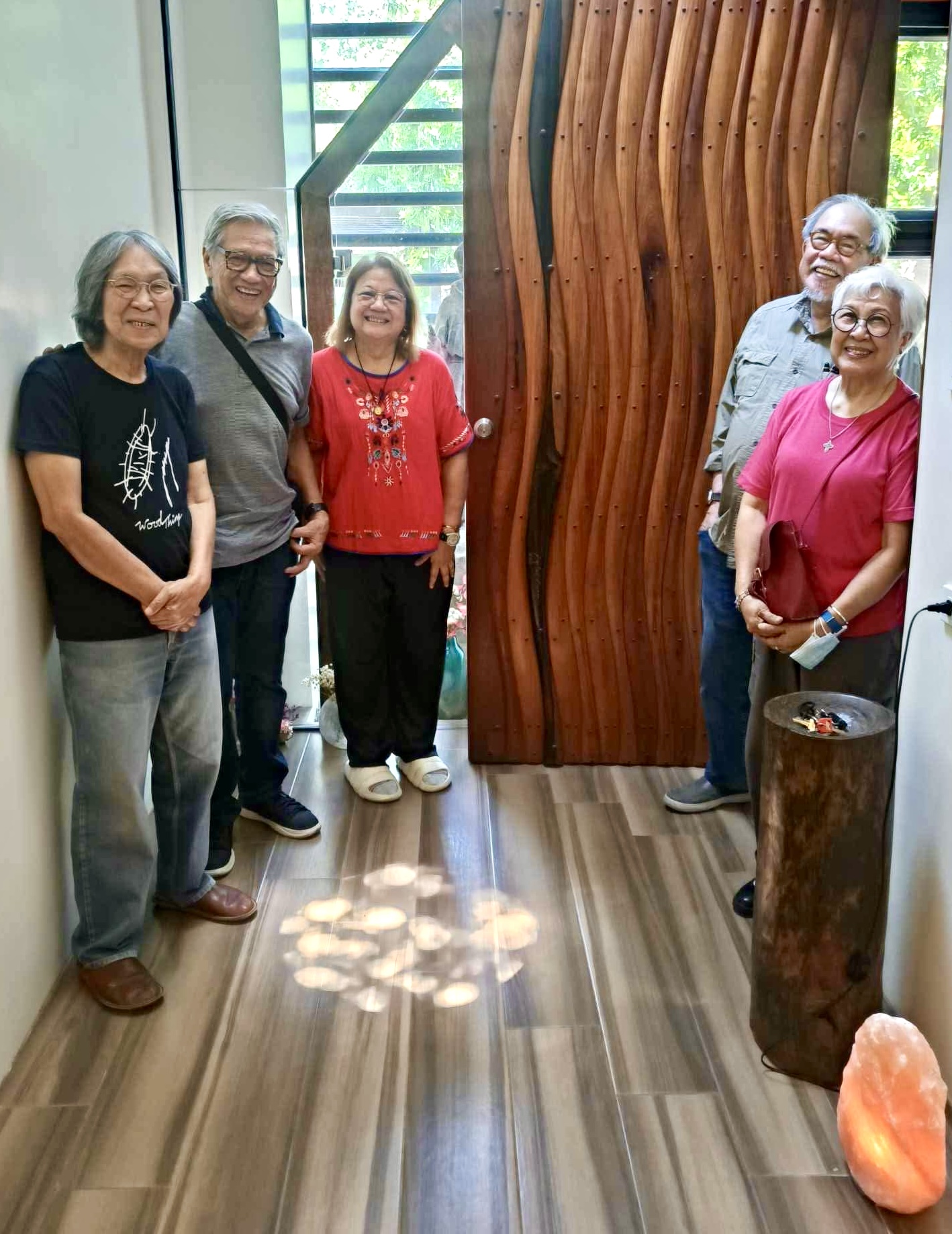
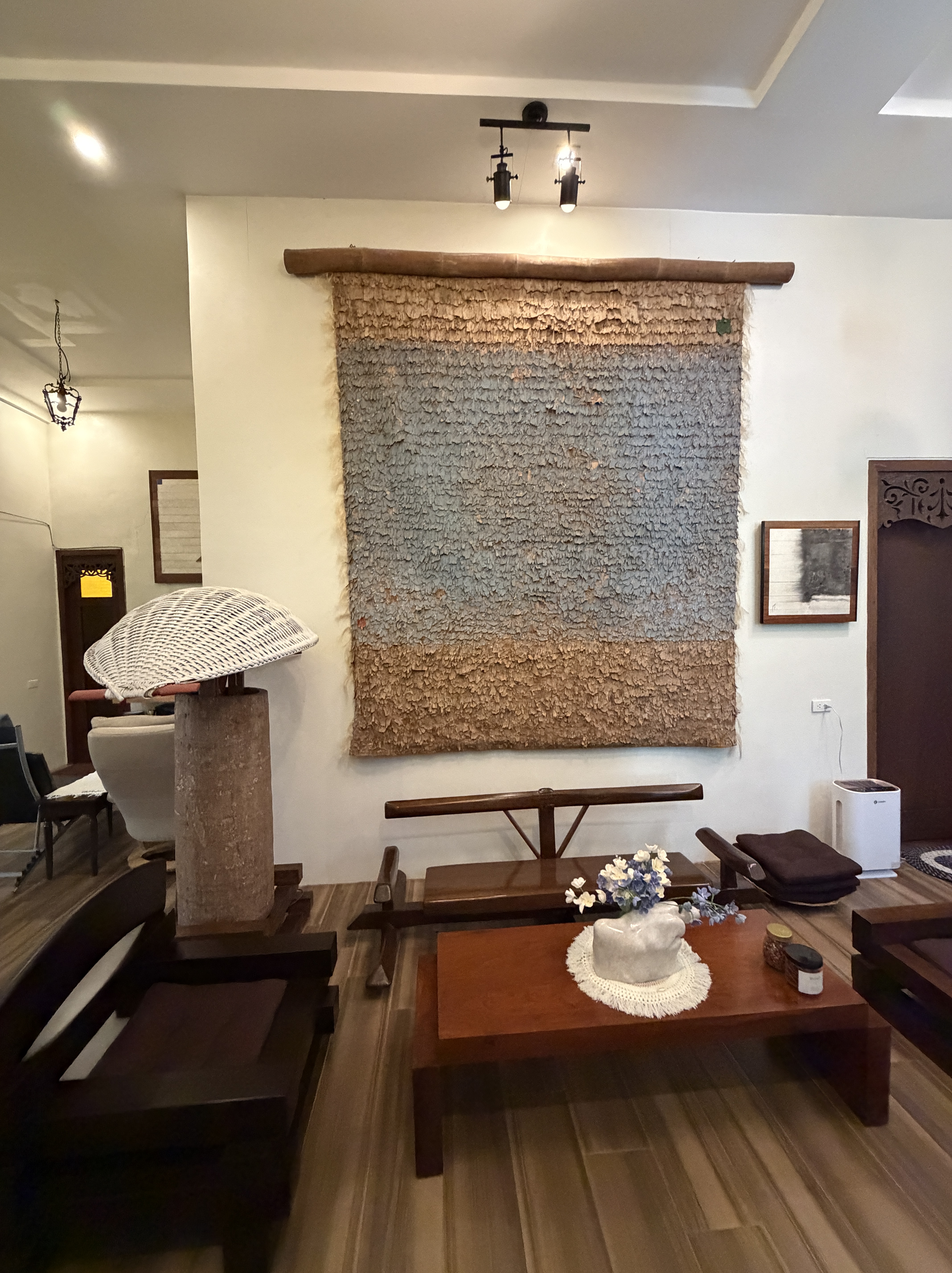
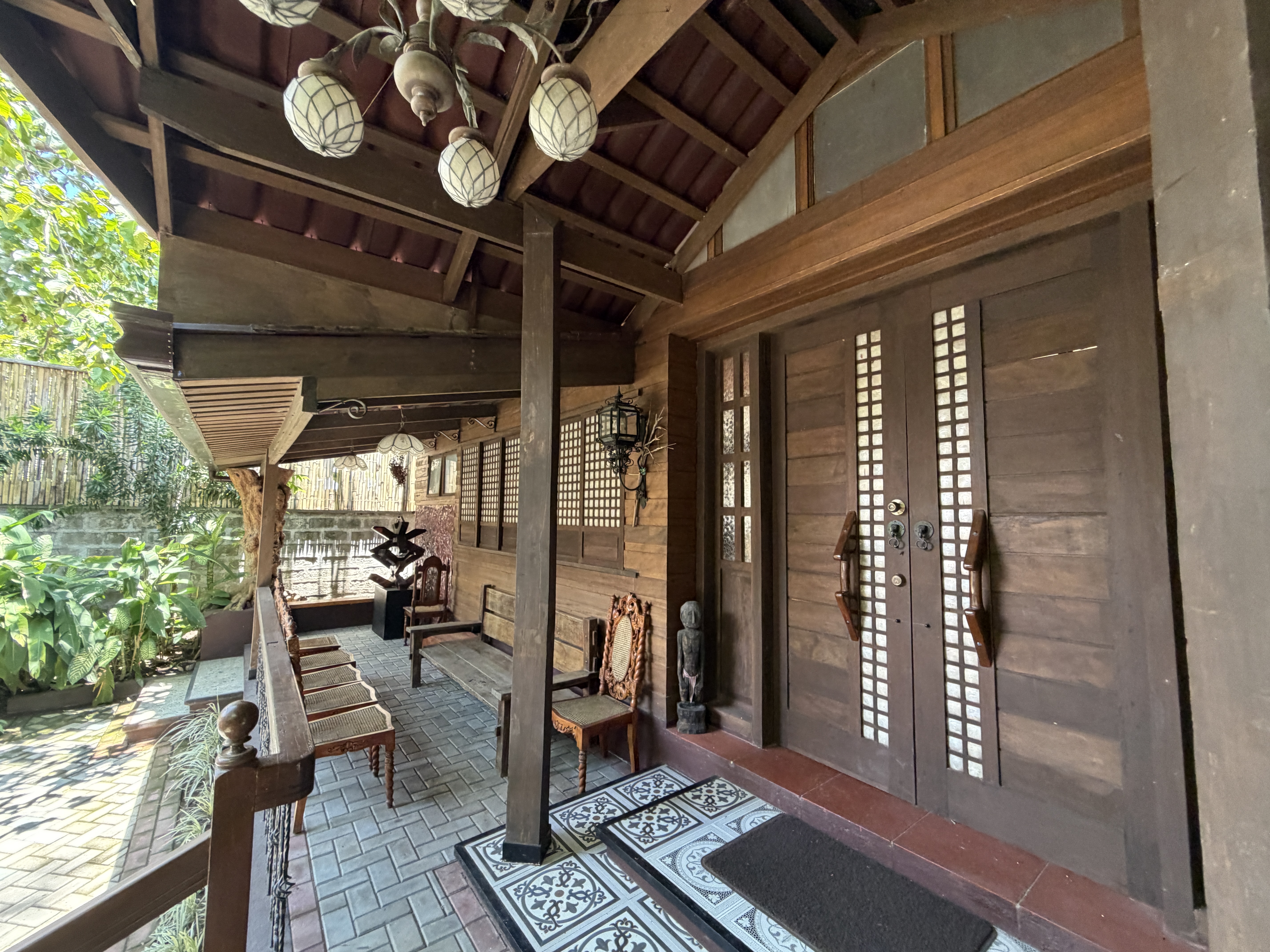
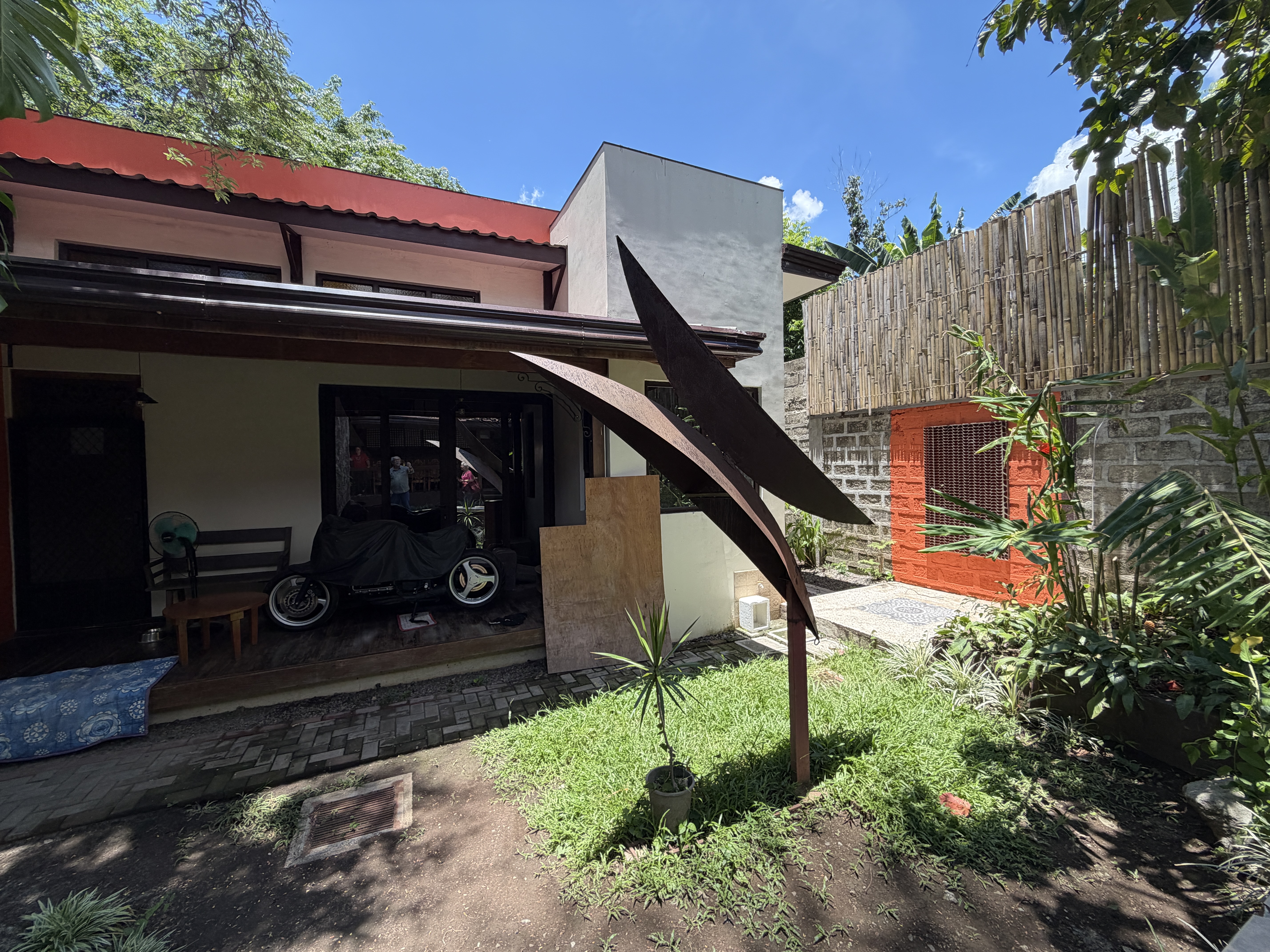
This was most evident in his new home, a modestly modern structure from the outside, nothing showy, but warm inside with wood, stone, and other natural elements, from the balayong door to the leaflike tapestry to the upturned hammock serving as a lampshade. 

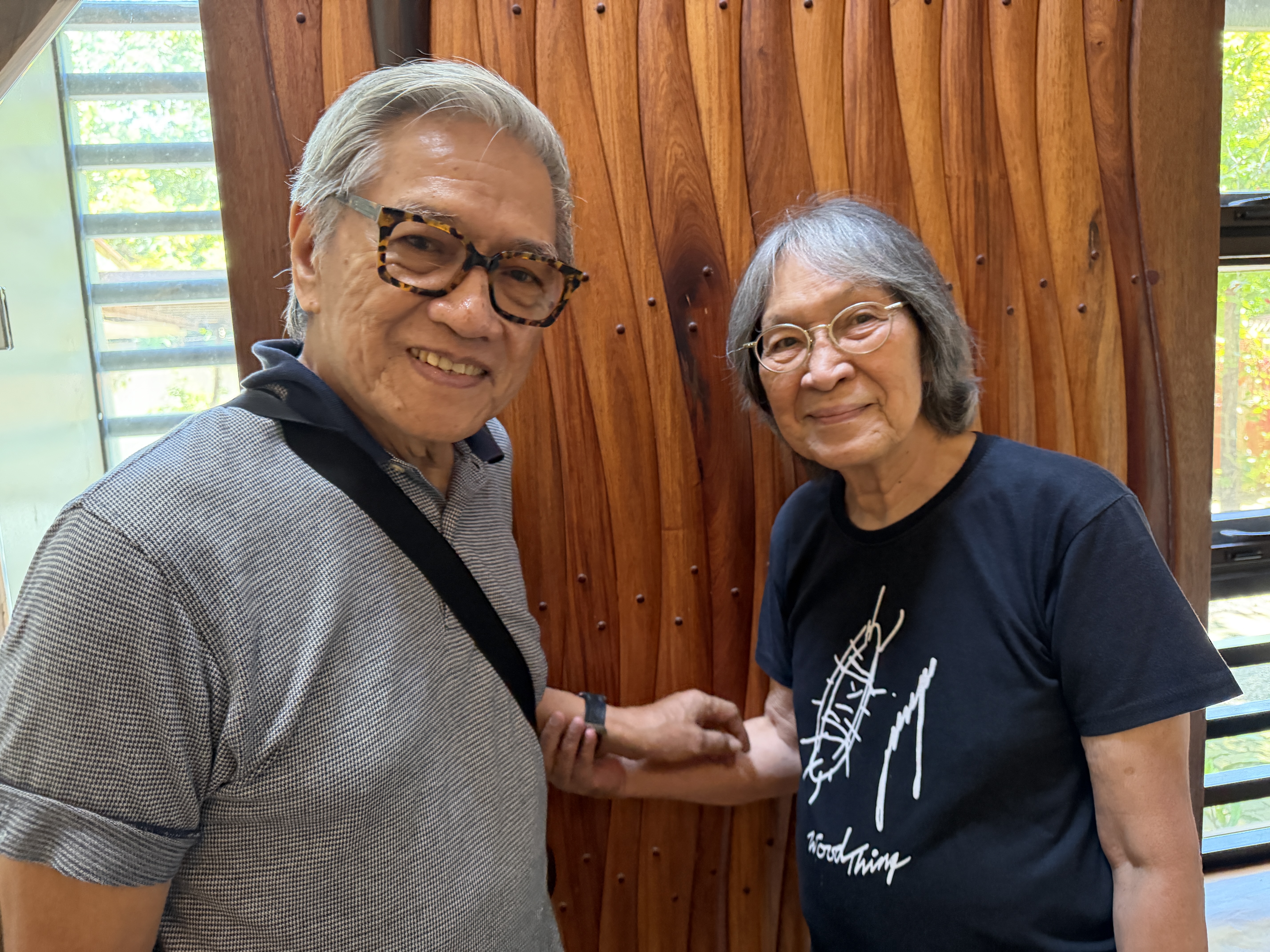
Welcoming our party, Junyee points to a blank wall and remarks with a chuckle that something big used to hang there but had to be let go of, presumably for his crushing medications. It’s one of the few times he’ll advert to his maladies, of which he—and Fil for that matter—don’t make a big thing. When Junyee learns that Fil is similarly afflicted, the men knowingly embrace and call each other “classmate.” They smile, they laugh, they speak excitedly of the work that occupies their waking hours. There’s no time to be glum. Fil and Janos keep racks of sporty bicycles at home, hanging from the ceiling; Junyee shows off a gleaming high-performance BMW motorbike which he received from a patron, adding with a chuckle that “I don’t even know how to ride one!”

Over lunch at a favorite restaurant nearby, we have an animated discussion of AI and its likely effects on art and literature. I expect them to resist, but Junyee in particular is surprisingly open to the possibilities of hybridizing art and technology, as I am. “I’ve always been a fan of science,” he says, “and when I write my memoirs, which I’ll be doing soon, I’ll make sure to include a section on how science has influenced my life and work.” But even more useful and valuable than science for both men right now is faith, and Fil and Junyee speak unabashedly of how their faith strengthens them through their trials. As an installation artist, Junyee has never worried about transience and impermanence. “Everything in this world will pass anyway,” he says.

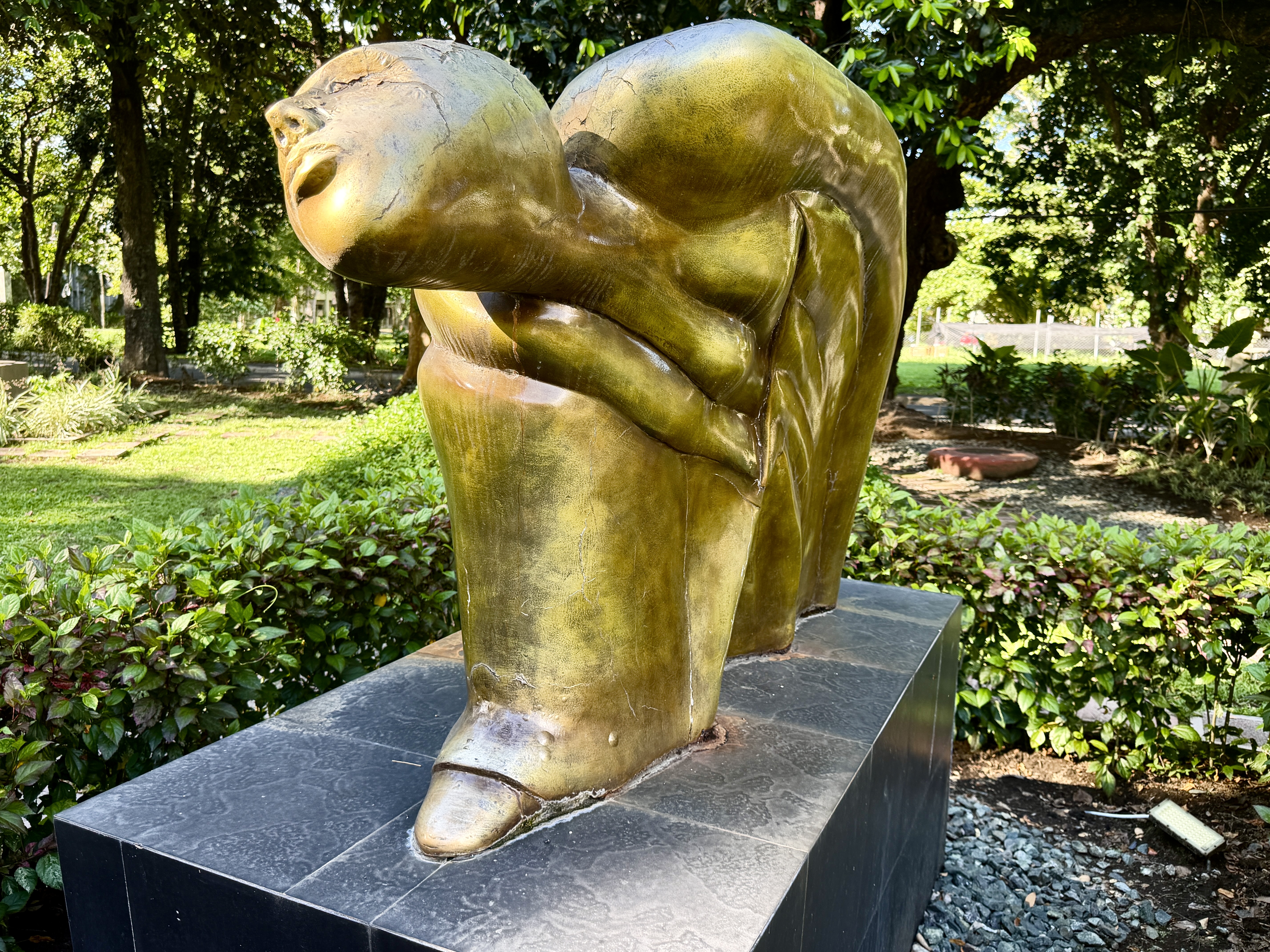
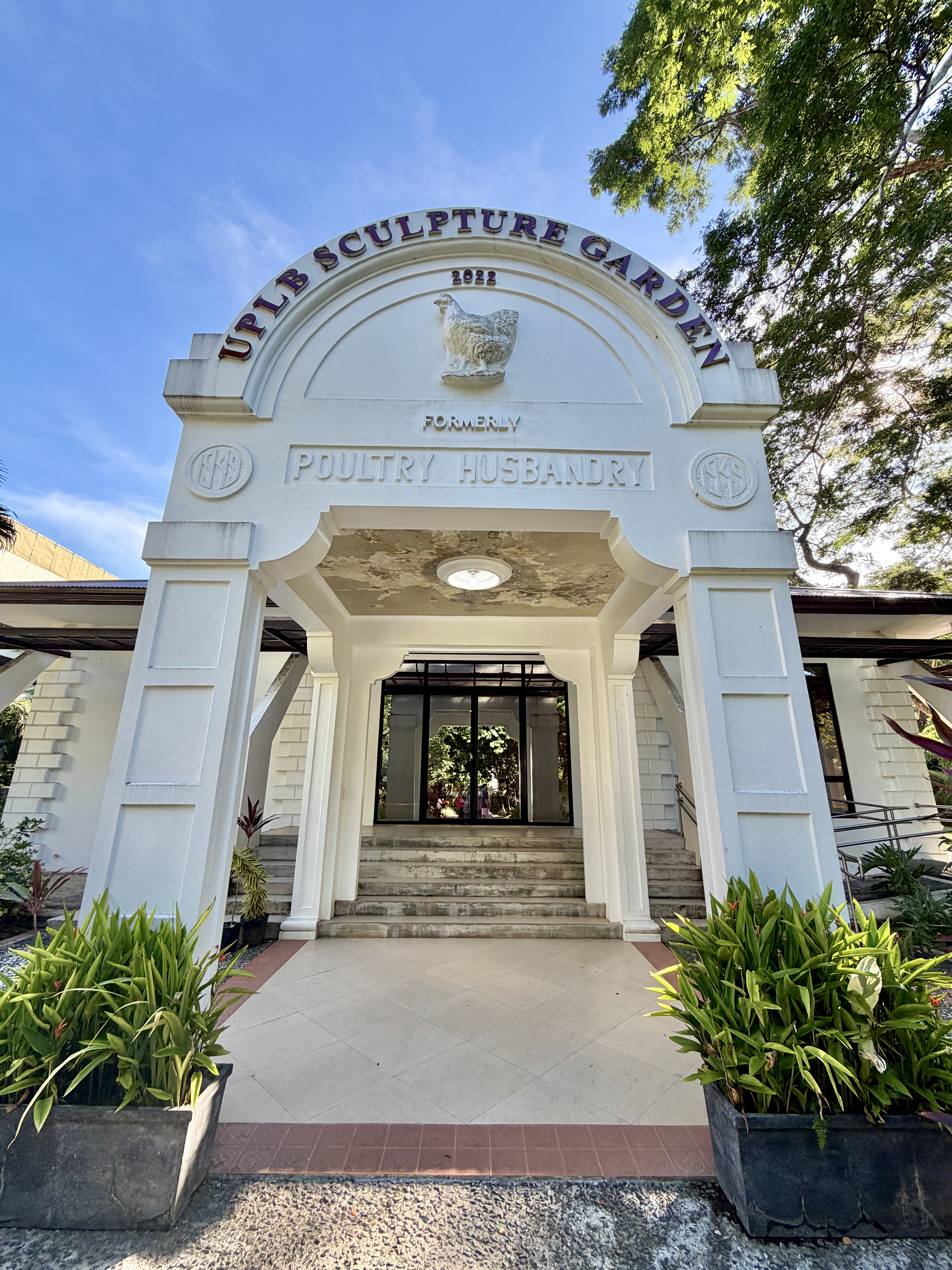
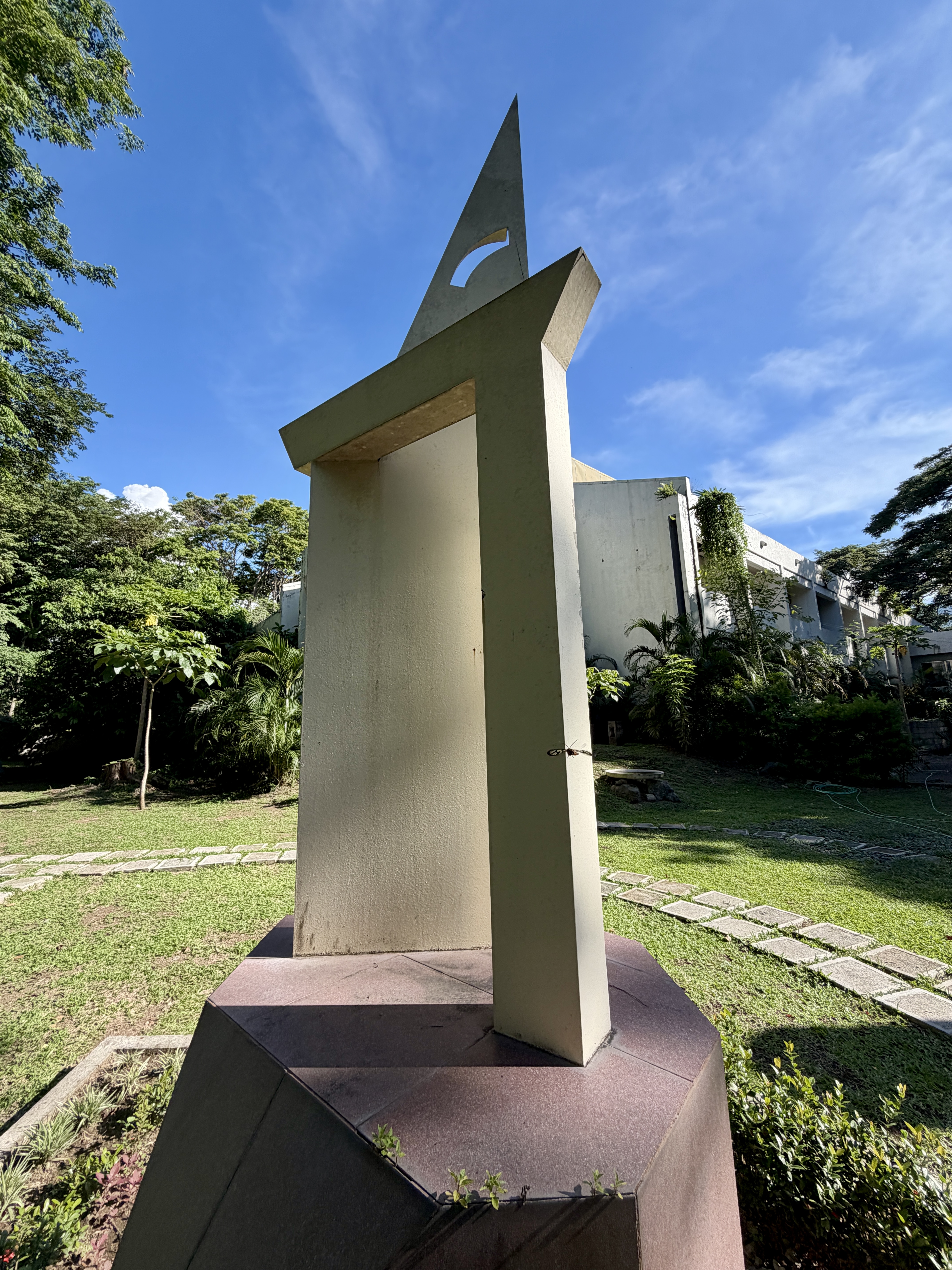
We pay a visit to the Sculpture Garden that UP Los Baños has put up on campus to showcase some of Junyee’s most important pieces. It is an outdoor gallery of some of his finest pieces, displaying the full range of his concerns, techniques, and capabilities. It’s hugely impressive, but Junyee makes it clear that he isn’t done yet. Across his home, he is constructing an art museum that he hopes will help spark a cultural renaissance in Los Baños, better known for agriculture and forestry, which Junyee’s art has also tapped into. His labors have not gone unnoticed; on top of his numerous local and international awards, Junyee will soon be receiving the highest recognition his alma mater can confer, among the worthiest of its recipients.

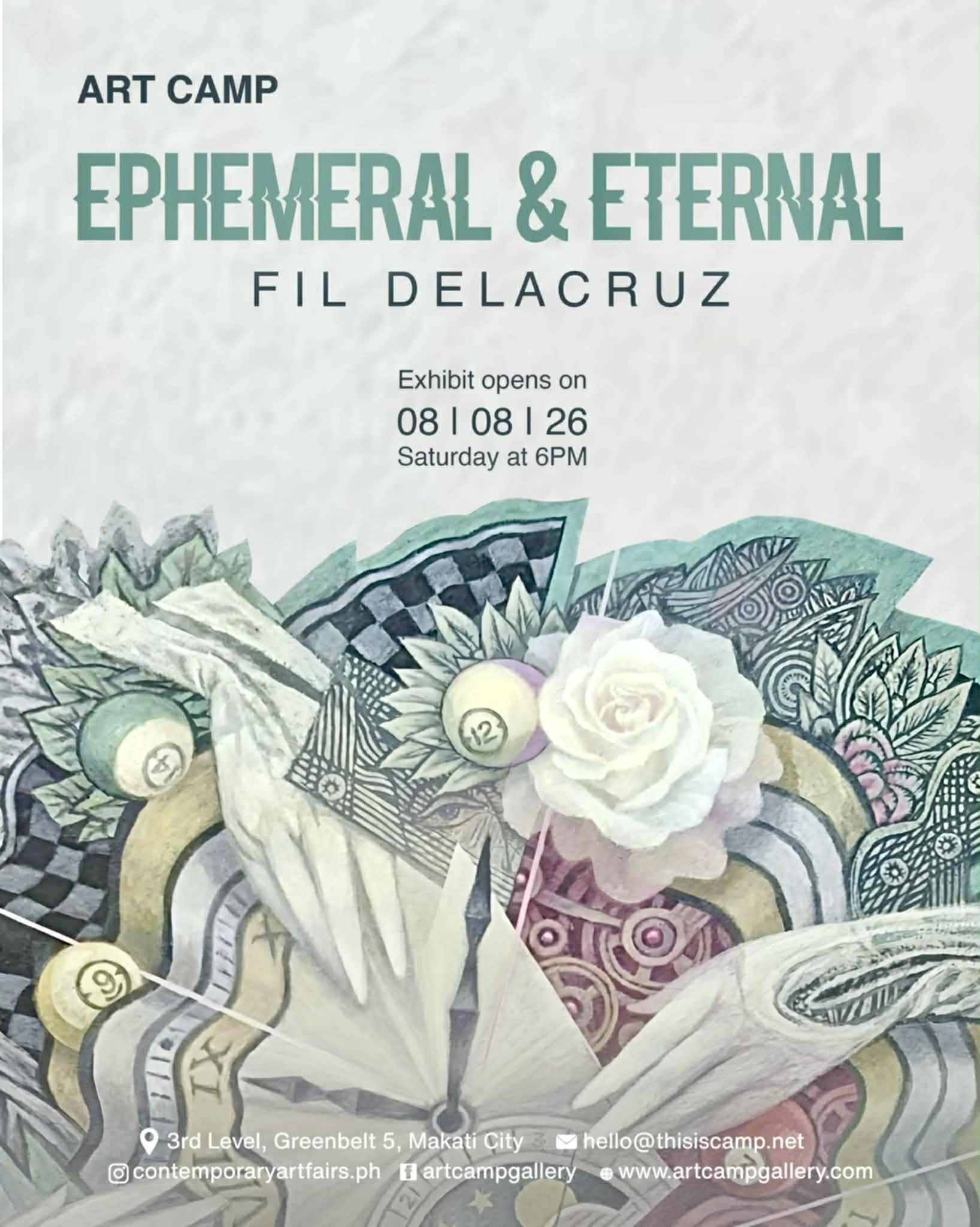
Neither is Fil de la Cruz resting on his laurels. He’ll be showing his newest paintings in an exhibit titled “Ephemeral & Eternal” opening next Saturday, August 8, running until the 22nd at Art Camp in Greenbelt 5, Makati. “The central thesis of the exhibition revolves around the duality of existence—the fleeting ‘ephemeral’ moments of lived experience versus the ‘eternal’ span of divinity,” according to the exhibit notes. “De la Cruz does not present time as a linear progression but as a divine force, encompassing all. In this series, he treats the passage of time not with anxiety, but with a refined serenity and deep reverence, seeking to capture the precise point where the transitory nature of life intersects with the infinite.” 

It’s as good a description as any of that trip to Los Baños and of our visit to these artist-friends’ homes, at this point between our shared past and the eternity that beckons to all of us.