Penman No. 213: The Age of Flex

Qwertyman for Monday, August 31, 2026

“FLEX” IS a word I began hearing a few years ago from millennial and Gen Z speakers, and it quickly became clear to me that it had acquired a new meaning beyond the way we oldies had always understood it, i.e., in the sense of flexing your muscles so they stand out. Not all that different, really, but more deliberate and more intense: to flaunt, to show off, to rub your goodies in someone’s face. (As it turns out, upon further study. “flexing” this way was already part of gangster rap at least thirty years ago, and as many counterculture words do, slid into the mainstream.)

Whatever, we Filipinos seem to have embraced flexing with a passion, equating it with Pinoy pride in all its exuberant if not extravagant manifestations, from Eala-mania and the next Miss Universe to Michelin-worthy adobo and the Filipino gene in this and that Hollywood star.

That’s all well and good, as Lord knows we need something to cheer and crow about, with all the political and economic depressants we’ve been imbibing. 

Every time I hear the Hon. Robinhood Padilla saying something—anything—I become more convinced that AI will prevail and rule the world, and we may even welcome it, if Robin’s brain—and those of the millions who put him where he is—were to be the standard for human intelligence, as some visiting Martian might surmise. (But wait: isn’t “artificial intelligence” in fact what the good senator possesses in spades?)

I’m sure Sen. Padilla feels he’s flexing something—his wit, his confidence, his irresistible appeal?—when he strides up to that podium sporting that “I know you think I’m dumb, but I’m going to outsmart you” grin. If his charm seems to be lost on doubters like us, that means nothing, because he’s not performing for us but for his faithful, whose adulation for their hero is merely amplified by every brickbat thrown his way. He may, for all we know, even be a lot smarter than we think, may be quietly reading up on algorithms and Habermas over coffee in some Jollibee before sneaking into the Senate to put on his bumpkin act. He’s flexing his acting, his ability to enthrall his audience with his pilosopo character, who pretends to look and sound stupid while nursing some deep-seated truth that every Juan and Juana grasps except all those JDs and professors of Law.

This past month brought some other, far less subtle examples of Pinoy flex. 

At his confirmation hearing, Air Force reservist Brig. Gen. Mikee Romero’s “fruit salad” made an active general’s shirtfront look like plain buko pandan, setting off a storm of outrage and wonderment over how a sitting politician could amass such miraculous medals in much shorter time than it took a serving soldier to dodge a bullet and leap into a foxhole. “I never asked for them,” he declared in self-defense while abruptly announcing his retirement, for which candor I daresay he deserves another Congressional Medal of Candor, at least for confirming how the system works: I get you your choppers, you give me a chestful of chopped oranges and pineapples.

But who needs wearable baubles when you can actually drive one? Businessman AJ Violago must have thought the world was his oyster (or Boxster—or Spyder) when he got the keys from his friend the actor Derek Ramsay to go zoom-zoom in a pricey Porsche and, while he was at it, tack on custom license plates with his initials to show who was Spyder-Man. Unfortunately the caper backfired, revealing not only AJV’s folly but someone’s forgetfulness as well in the amount of PXX million in unpaid customs duties. The 918 has been impounded and will be auctioned off to recover that money, so Derek and his friend can at least take comfort in having indirectly contributed to mitigating the Philippines’ P7.2-trillion budget for 2027. 

And since we Pinoys love prizes and recognition so much, let’s give the 2026 GMA “I Am Sorry” Award (in honor of the former President, for exemplary albeit dubious acts of contrition) to Dimasalang National High School Principal Randy Emmanuel Bulanon, who gleefully attacked Atty. Jesus Falcis, Rep. Percy Cendaña, and Rep. Chel Diokno for everything from their sexuality to their buck teeth. After the inevitable backlash—including the threat of legal and administrative charges and possible dismissal from the service—Bulanon took down the posts and released a lengthy apology, wishing that he had “exercised greater prudence, restraint, and discernment… especially considering my responsibilities as a school principal.” 

I want to show these messages—Bulanon’s original posts, and the letter of apology—to my students in Professional Writing, to ask them which they thought were more personal and sincere and therefore believable, and which may have been AI-generated. It may not matter in the legal sphere where this now all seems headed, but it’s interesting to see where the truth recedes and what takes over when survival’s at stake. (When I look at the “letter of support” circulating on Bulanon’s behalf trumpeting his achievements as an educator, all my AI flags go up, from language to structure.)

Runner-up honors go to Danao City teacher Zenith Enriquez who threatened to shoot presidential spokesperson Claire Castro in the mouth. When netizens recoiled—and Castro threatened to sue—Enriquez said sorry and pleaded for the bashing to stop, because her children were now bearing the brunt of the backlash. Now, I don’t care if you’re DDS, pro-BBM, or as pink as a baby’s butt; but maybe next time, you should keep your lips zipped and look at your kids first before you make that stupid post, because the comeback could be far worse than more words thrown your way.

Confucius could have flexed about all the government positions he held and the rulers into whose ears he whispered. Instead he wrote sobering lines like “The superior man is modest in his speech, but exceeds in his actions.” And that’s why we remember him more than all those emperors in their fancy tombs.
Qwertyman No. 211: Saving the Newborn

Qwertyman for Monday, August 17, 2026

GIVEN ALL the political, economic, and even meteorological turmoil we’ve recently been going through, I thought I’d write about something undeniably and visibly positive this week, if only to remind us that good things are possible if the “whole of government”—including even our fractious Senate—puts its mind to it. 

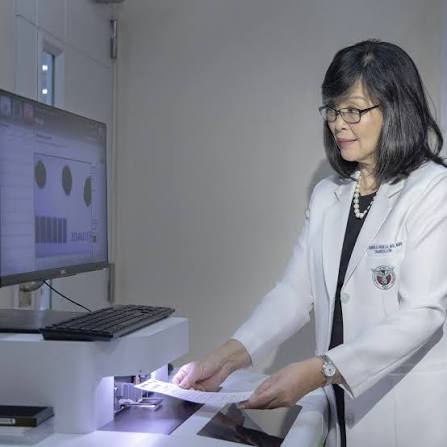
Full disclosure: I’ve been editing a book on, of all things, the Philippine Newborn Screening (NBS) program, and I’ve been so impressed by what I’ve come across that I requested and secured permission from its author, Dr. Carmencita D. Padilla, to share some highlights of that program. Dr. Menchit, as we call her, is no ordinary physician; a clinical geneticist and pediatrician, former chancellor of UP Manila and a key figure behind its National Institutes of Health, she was named National Scientist in 2023 for her contributions to medicine.

Back in 1990, Menchit had just returned from a fellowship in Sydney, brimming with enthusiasm about NBS, which had already been adopted and routinely practiced in Australia. 

What NBS addresses is this: babies can be born with any of almost 30 conditions inimical to their health, including congenital hypothyroidism (mental retardation and growth delay, with IQ loss possible as early as the second week of life), congenital adrenal hyperplasia (salt-wasting crisis, shock, death by the end of the first week), PKU, and galactosemia. 

A newborn with any of these conditions looks perfectly well: doctors and mothers will see no rash, no fever, no warning. Looking healthy, the baby will go home, with the disorder hidden for months, or even years, until the symptoms appear—by which time, it could be too late to reverse the damage. Ironically, if the problems are spotted early, there are treatments available, often as simple and as cheap as a modified milk formula for phenylketonuria (PKU), which causes irreversible intellectual disability if left alone.

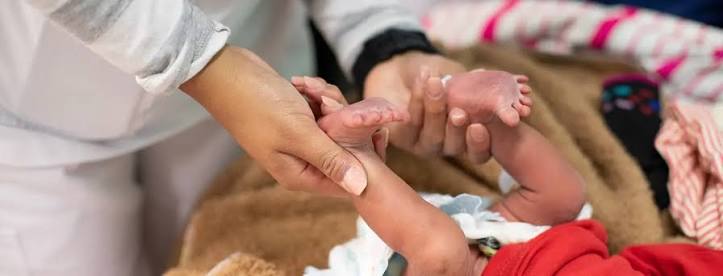
So early screening of all newborns is key. The process itself is fairly straightforward: “puncturing the heel of a newborn, absorbing a few drops of blood onto a special filter paper card, and transporting the specimen to a specialized laboratory for testing.” These cards could be easily mailed to a central laboratory. In the early 1960s, an American microbiologist named Dr. Robert Guthrie—whose own son and niece suffered from developmental problems—created a test to scan blood samples for indicators of anomalies and proposed this solution. But the medical and scientific communities shunned him, until sufficient publicity forced them to see he was right.

It would take more than 30 years for NBS to reach the Philippines, largely through the efforts of Dr. Carmelita Fagela-Domingo, who had seen NBS working in the West and tried her best to persuade the Philippine health bureaucracy to adopt it, and Dr. Padilla, who finally succeeded where Dr. Domingo had initially failed.

What worked for Menchit Padilla was the support of people like Dr. Domingo herself and UP College of Medicine Dean Alfredo Ramirez, and subsequently other allies in both executive and legislative branches beyond academia. Together, the two women pushed for a comprehensive pilot study that could form the basis for official government policy. Padilla also met Dr. Guthrie, who encouraged her to persevere in the effort.

Twenty-four Philippine hospitals took part in the study as members of the NBS Study Group. Private donors contributed computers, video cameras, fax machines, and pagers. A Finnish company donated a refurbished NBS machine. By 1997 the program was well underway. What was needed now was for the DOH to take over for the program’s full implementation nationwide. By 2000, there were still less than 200 hospitals out of 3,000 birthing hospitals participating in the program.

What was needed was an enabling law. This is the part of the story that I find most instructive, given our current Senate, and which I urged Dr. Menchit to include in her book (which she did, despite her initial misgivings). 

Because they couldn’t afford a lobby group, Menchit took it upon herself to draft the bill—after enrolling for a Master of Arts in Health Policy Studies degree at UP Manila. (I wonder how many of our lawmakers would go that far to get things done right—but then of course they have millions to spend on staff.)

Versions of the bill were filed at the House and Senate early in 2003, but by mid-year, hearings had yet to begin. To get the bill certified as urgent, its proponents had to get the support of Sen. Juan Flavier, who warned them that it would likely take ten years to get the bill passed. Desperate, Padilla turned to Sen. Loren Legarda, who was still hosting a talk show; between breaks, Menchit filled her in and persuaded Loren to start hearings on the bill and to file her own version, which she did on August 1. I’ll leave the rest to Dr. Padilla’s recollection:

“With barely three days until the end of the 12th Congress, we were advised to lodge an appeal for an ‘urgent bill’ with the House Presidential Legislative Liaison Officer, Undersecretary Bernardino Sayo. 

“It was a Wednesday, 5 pm. We went to his office at the House of Representatives. After listening to our desperate appeal, which was supported with albums full of pictures of saved and not-saved babies, Undersecretary Sayo agreed to arrange for a certification of an ‘urgent bill’ to be signed by President Gloria Macapagal-Arroyo the following day Thursday at 10 am. We were advised to return to the House of Representatives the following day for the second reading at 4 pm, the last day of the session at the House. With the bill now certified as urgent, our schedule for a second reading was bumped up. House Majority Floor Leader Neptali Gonzales, fortunately for us, helped the bill pass the second reading in the midst of calls for adjournment from the floor. 

“Garnering a unanimous affirmative vote, the bill moved to the required final third reading the following day, Friday, the last day of the 12th Congress. I received a phone call at 6:30pm from the Chief of Staff of Senator Flavier, Mon Navarra. He said ‘The NBS bill was passed into law! We were able to do it in 10 months—not 10 years!’ And since the House had adopted the Senate version in its earlier deliberations, there was no need for a bicameral session. We just had to wait for the signature of President Gloria Macapagal-Arroyo, which happened on April 7, 2004.”

The NBS bill, RA 9288, had itself become something of a miracle baby, giving hope to millions of newborns and the yet-unborn. Today well over 90 percent of Filipino newborns are covered by NBS, with a 100% rate targeted by 2028. Would that our government were so singularly and charitably minded in our other national priorities, especially for those already long born! 

(Top image from miraclefeet.org)