Penman No: 490: Unpopular Opinion: Bring AI On

Penman for Sunday, October 18, 2026
THE LITERARY world has recently been rocked by scandals involving the alleged use of AI in prizewinning entries to prestigious writing competitions.

Last year, the Commonwealth Literary Prize went to the Trinidadian writer Jamir Nazir’s story titled “The Serpent in the Grove,” which had been published in the highly regarded literary magazine Granta. A sophisticated AI-checking software program called Pangram flagged it as 100% AI-generated. The author denied it was, and the Commonwealth Prize people reviewed his drafts and stood by him, but Granta took to the matter to heart and severed its ties with the prize, while retaining the story on its website for the reading public to make up its own mind. Nazir has gone on to start work on a novel, but his reputation has been deeply if not irreparably damaged by a charge that, for legal and perhaps even aesthetic purposes, remains unproven.

Last month, France’s Prix Goncourt—that country’s most renowned literary competition that awards a symbolic 10 euros to the year’s best piece of prose—dropped the debut novel of the Canadian-Haitian Thelyson Orelien titled C’etait ça ou mourir (It Was Either That or Die) from its shortlist following accusations of AI use and plagiarism. The novel had already sold tens of thousands of copies, and had won another prestigious literary prize. Orelien disputed the charges, but the judgment had been made.

And just last week, the Atlantic broke a story accusing the winner of the Caine Prize for African Writing, Zimbabwe’s Simbarashe Steyn Kundizeza, of using AI to produce his story “The Blue Fighter.” Again using Pangram, the Atlantic’s Vauhini Vara noted that the text was laden with typical large language model (LLM) prose markers, pointing to repetitive “not X, but Y” grammatical structures and the story’s frequent metaphors (something markedly present as well in Nazir’s piece). The Caine Prize Foundation said it would look into the charges but insisted on employing human judgment to establish the truth. Its chair, Ellah Wakatama, was quoted as saying that that AI detectors were not conclusive, and that “If there is such an accusation, I want proof that does not come from a machine.”

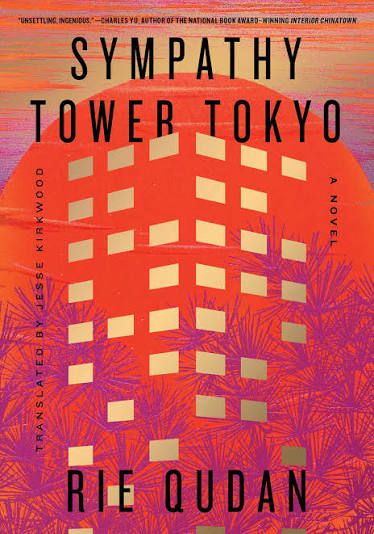
I have no doubt we haven’t seen the last of these controversies—nor were they even the first. In 2024, Akutagawa Prize winner Rie Qudan had no problem admitting that she had used ChatGPT—just a little, about 5 percent of the text—in writing her novel Sympathy Tower Tokyo, because the novel after all features a chatbot. You’d think that would have quelled any controversy, but it didn’t. Mindless critics called the entire novel “AI-written,” and debates broke out over the use of AI in fiction.

It hasn’t been just the text coming into question. In this year’s Ockham New Zealand Book Awards, two books—Obligate Carnivore by Stephanie Johnson and Angel Train by Elizabeth Smither—were disqualified because their publishers were found to have used AI-generated cover designs.


Clearly, the global world of writing and publishing are up in arms, if not in a panic, over the growing intrusion of AI into a sphere we thought reserved for human creativity and imagination.  While beneficial AI use has been well tracked and established in such fields as medicine, the law, and fintech, writers and artists feel much more vulnerable if not resistant to it because of the direct threat it seems to pose to artistic integrity itself and to the livelihood of creatives.

The backlash has been quick and severe. Locally, the F. Sionil Jose Young Writers Award, administered by Philippine PEN, stipulates that built-in or external AI tools may not be used at any stage of the creative process, including using AI for ideation, outlining, drafting, writing, or editing. I’m expecting other major competitions and workshops, such as the Palancas and the UP and Silliman workshops, to employ similar restrictions, if they haven’t already.

Which brings me to how I feel about the whole brouhaha, a position I’ve been forced to define because of my professed openness to the use of AI in my Professional Writing class in UP and even to the possible employment of AI in fiction, in ways and under protocols we have yet to establish.

A friend recently messaged me privately to ask about guidelines for literary judges when addressing entries with suspected AI involvement. My short answer to him was that “Am not prepared to go public with this”—I guess I am now—“but here’s my unpopular opinion: I think anti-AI vetting is ultimately unworkable. Have to be convinced that AI checking is infallible. So either very strict and accurate checking for all entries, or let it be a free-for-all, with no more than a personal declaration of non-AI use if AI is to be shut out entirely.”

Before my literary friends and detractors pounce on me for this apostasy, let me lay a few things down:

1. I still believe that the best of AI cannot and will not replace the best of human imagination and insight and its literary and artistic expression. I simply cannot see AI achieving the quietly explosive turns of mind and phrase of an Anne Carson. But this will be so relatively rarefied as to offer cold comfort in light of other possible outcomes below.

2. Anything below the best is much less certain and highly negotiable. Let’s be honest: AI as it stands can easily out-write most people in most situations, for all their human sincerity and authenticity. The bar over which AI has to jump is very low, and lowered even further by poor education. The threat posed by AI here isn’t that students will use it to do their work and pass their subjects, but rather that students will pass without learning.

3. I’m not calling for unregulated, unidentified AI use. Ground rules should be laid down—but they should be fair, forward-looking, and enforceable.

As I’ve recently been predicting, I foresee a literary future where publishing will eventually be three-tiered, with 100% AI-produced work at the base, catering to the most popular tastes and trends; mid-range, an explicitly hybrid human-AI segment that offers interesting and exciting prospects for experimentation; and at a premium, 100% human-generated work, the best of which will exhibit human inventiveness and empathy, yes, but also courage, resistance, and risk-taking.

That said, the insidious entry of AI into literary competitions bothers me only because it’s undeclared. I would frankly be open to a competition—or even a category of one such competition—where AI can be employed and accepted with neither shame nor subterfuge, if only to explore the imaginative horizons of human-AI interaction. Retain the 100%-human category, sure and of course, but open a door that will be pushed open anyway by another generation if not us, like it or not. Bring AI on; let’s wrestle with it, curse it, bend it, bed it, tango with it, argue with it, embrace it—but we ignore or deny it at our own risk.

Do I use AI in my own work? In my creative nonfiction, including this very piece, yes, for research and organization, for transcription, and for mechanical tasks; I review all outputs for slop, misattributions, and misreadings. In my fiction, yes, for research (as in the historical novel I’m working on) and nothing more—at least not yet. If and when I do find an interesting use or need for it, I’ll say so and take full responsibility for it, although I still don’t see it happening.

But to return to the matter of literary judging (which I have stopped doing for many years now and have forsaken for good), there’s something ironically odd if not hypocritical about using an AI tool like Pangram to police and catch AI use in a piece of text. (I’ve used Pangram on a trial basis, and it is terrifyingly good.)

At the very least, if you have to, let the pre-screening of entries be done by a technical committee—not by the jurors themselves, who should bring only their discernment and connoisseurship to the judging table. Should a work truly prove outstanding despite certain AI misgivings, give it the benefit of the doubt; a great story remains a great story no matter whom or what it was written by. (I have read both “The Serpent in the Grove” and “The Blue Fighter” and found them powerful and moving.)

We don’t know how many masterpieces of the past were birthed and nursed by angels, demons, and other artificial handmaidens. Why not AI?

Email me at jose@dalisay.ph and visit my blog at http://www.penmanila.ph.
Qwertyman No. 220: Living with Evil

Qwertyman for Monday, October 19, 2026

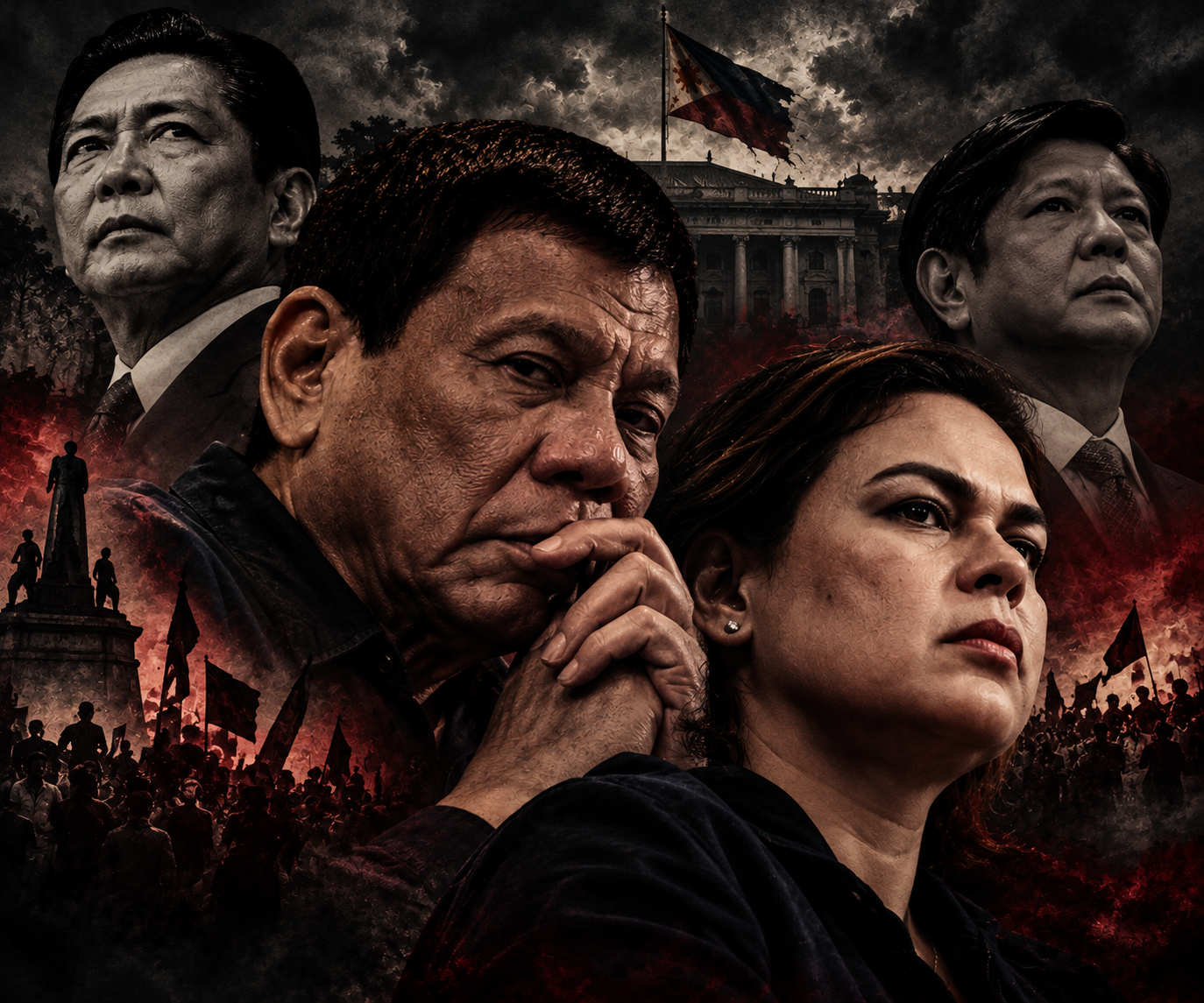
A YOUNGER friend messaged me last week to ask for some advice. Would it be wrong, he said, if he left the country in the event that the Dutertes returned to power? He was neither a political figure nor a tycoon, but just an ordinary middle-class citizen engaged in his own small business.

What revolted him was the thought of sharing space with millions of fellow Filipinos who, regardless of the Senate impeachment trials, still want a Duterte in the Palace.

In another era, until a few years ago, I would have told him, “Don’t. Stay here. Persevere. Endure. Fight on.” Instead, I found myself texting him back, “If that’s an option, why not? Might be time to give yourself a break.”

There’ll be many who’ll be unhappy with that reply, but can you really blame someone who believes that a Duterte restoration will be nothing short of a zombie apocalypse, and who’ll want to escape?

Me? I’ll probably take my own advice, stay put, and find a way to survive. (We do have an option—a daughter living in the States who’ll only be too happy to have us over, but who’s the crazy foreigner who wants to live in Trump’s America?)

I’m no Pollyanna, and maybe it’s just the Boomer stubbornness in me, but I haven’t given up on this country yet, despite all the aggravations we have to live with. Living with evil is what it is—the traffic, the pollution, the floods, the poverty, the injustice, they didn’t just happen; they’re part of the architecture of a State fashioned by morally corrupt and greedy people who couldn’t care less about others.

That’s pretty dismal, I know, and even more reason for my friend to flee. Still, there’s an upside to all this: if only because of the floods and traffic et al, our people seem to be waking up to the existential need to fight corruption, practice good governance, and educate our young so they’ll know and do better than we ever did.

Even the DDS comeback that terrifies my friend might not happen, or come apart with time.

I’ve long argued—and I could be whistling in the wind—that the DDS faithful are not a monolithic bloc. Yes, most of them come from Mindanao and the Visayas, but most are also poor, a more universal and distributed trait. (Don’t count the social media trolls and the hired help.) I suspect—or at least I hope—that many might yet be persuaded to reconsider their loyalties, likely less by any Kakampink logic than by their own harsh realization that they have been betrayed and even stolen from by their patrons.

Sadly, whoever wins in 2028, I think it will take at least two more generations for those learnings to take root. Our present principals have to vanish from the scene to refresh our political stock and spirit, which is why educating our youth today—in school or through the Senate hearings—is crucially important.

If the Dutertes prevail, it will be terrible, but the sky will not fall. We will find ways to keep our heads above the floodwaters; most of us will persevere, and some if not many will fight on.

My own best antidote to despair over our political fortunes is to remind myself that we survived martial law. Having said that, I should add that survival often involves some degree of acceptance, creative adaptation, compromise, and even complicity.

Again I recall Nick Joaquin’s observation that a few weeks after the Japanese marched into Manila, things uncannily returned to normal—not that we embraced the invaders, but had found reasons and ways to persist.

I know that the once much-vaunted word “resilience” has become almost pernicious in our appreciation of it today, but it’s no less true for all the beatings it’s taken.

In a poem about the Second World War, W. H. Auden describes this urge to maintain or feign normalcy amid chaos:

Faces along the bar
Cling to their average day:
The lights must never go out,
The music must always play,
All the conventions conspire
To make this fort assume
The furniture of home.


The true danger lies in forgetting the big picture as we fuss over the details of daily routine and struggle. Alexander Solzhenitsyn has this marvelous episode from his novella “One Day in the Life of Ivan Denisovich” where his protagonist—a stonemason banished to the Soviet Gulag—is assigned to build a brick wall, a task he performs with great pride and precision, momentarily oblivious to the fact that he is reinforcing his own prison.

Last week’s tributes for and tirades against the late Cesar Virata again brought to fore the issue of complicity in an oppressive regime. He wasn’t alone. There was—and there remains—a small but vigorous resistance to dictatorship, but at least until EDSA, many of us learned to make our bed with Marcos and to lie in it.

Living with evil is a given part of the human condition, and it’s what we do in relation to it that ultimately defines us. There are those who would try to have as little to do with it as possible, and who would demand the same moral consistency of others, but it’s hard to avoid. It’s not some dark entity out there, or even a stranger across the hallway or in the seat next to you; it’s in you, that part of you that thinks killing drug suspects was a good idea.

What may ultimately bring us all together and move this country forward as a whole is the realization and acceptance of the fact that very few of us will come to the table with pure consciences and clean hands. Living with evil leaves stains, but even the stained come with valuable experience and insight.

Sometimes it’s not the obvious enemy, the ones most different from us, who bring the most pain and aggravation, but those closer to us, the ones we agree with on nearly everything—but who disdain and even demonize us for that ten percent we disagree on. Black or white suddenly counts less than shades of red or pink.

As Bertolt Brecht put it in his poem “To Those Born Later”:


Hatred, even of meanness
Contorts the features.
Anger, even against injustice
Makes the voice hoarse. Oh, we
Who wanted to prepare the ground for friendliness
Could not ourselves be friendly.

Evil is more singleminded and less quarrelsome than the good. It is not so easily distracted; it does not forget. It will expand at all costs, seize every advantage, tolerate and even accept tactical differences, take and exploit whatever’s available.

If we can be as adept as evil and pitch as wide a tent, then the good in and among us might yet prevail.

Qwertyman No. 219: Notes on Cesar Virata (1930-2026)

Qwertyman for Monday, October 12, 2026

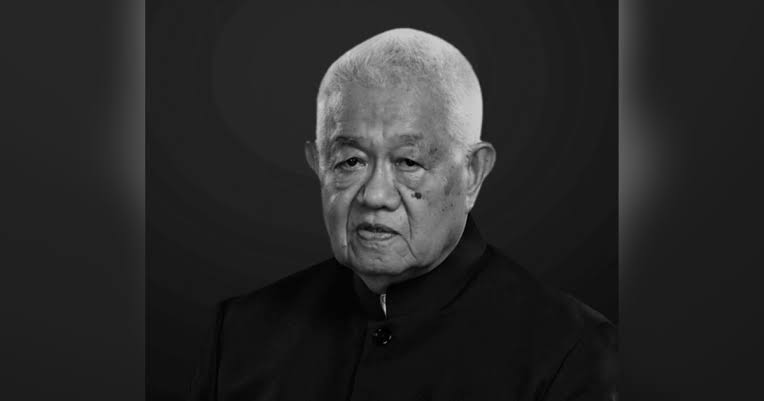
FOR A personality so closely associated with the Marcos regime, it was inevitable that the obituaries following the passing last week of former Prime Minister Cesar Virata would reflect a broad range of opinion. 

The gentlest take on the man was that he was an honest, modest, and hardworking academic who found himself with an opportunity to help direct national economic policy, and who did his best, within a profligate bureaucracy, to mitigate economic catastrophe and sustain international support for the Philippines.

At the harshest extreme is his depiction as a complicit enabler of Marcosian martial law, a window-dresser for the regime, and ultimately an ineffectual technocrat—like others of his training and generation—who refused or failed to acknowledge the crimes of the regime he had been serving faithfully.

Those assessments came freely in social media last week, from friends I respect on either side. The variance told me as much about how we choose to remember history as how we choose what to forget, or at least to mediate after half a century, which probably tells more about us than about the other person.

I had several opportunities to meet with and to interview PM Virata, as he most likely would have wanted to be remembered, in the course of completing books to which he had something to contribute from his vast experience. We discussed mainly his life as an academic and as one of SGV’s early pillars, as well as being a member of Cavite’s prominent Aguinaldo and Virata clans. Inevitably—usually after the formal interviews, when he took me out to lunch for a more relaxed chat—he opened up about his life as a Marcos technocrat. He allowed me to take notes, from which I now share some interesting episodes and insights—edited for clarity—that might help complete whatever picture of the man we had in mind.

On martial law: “We didn’t know about the preparations for martial law. The President kept it to himself…. I was in the US when martial law was declared. I was attending a World Bank meeting. I went to my hotel room in DC, where we often stayed, although the actual meeting was at the Hilton. I got a call from one of the more senior Department of State reporters who had covered the negotiations on the Laurel-Langley Agreement. He said, ‘Don’t you know, Mr. Secretary, that martial law has been declared?’ I said no. That was around 4 pm because I had a 5 pm tennis game with Ambassador Suarez, who must also have been surprised, because he didn’t know, either. I thought of calling Joy, but she would have been asleep then, so we played our game and I waited until around 6 am to call her. When I did, the operator said, ‘All calls are suspended to the Philippines.’ Later, Alex Melchor and I were told to go to San Francisco and LA on our way home to tell the Filipinos and the consulate there about martial law. I still didn’t know what we were supposed to say. Eventually, when that same American reporter asked me for my reaction to martial law, what I said was, ‘Well, the Philippines just joined the rest of Asia,’ because everyone else around us had declared martial law—South Korea, Indonesia, Malaysia, etc.”

On the Aquino assassination: “August 21st, Ninoy was killed. I was at home in Philam that day. Joy was having a show in Makati, so I had lunch with my sister in Kalayaan. I went home and I fell asleep. I was woken up by my military aide, saying that Sen. Aquino had been killed and that the President would be making an announcement soon. We had a TV and a radio in my room and turned both of them on, but the President didn’t appear, just his photo. It turned out that he was about to have an operation. We were called to Malacañang, but when we got there, the guards told us not to approach the President, because he was all bundled up. He was really struggling and had to be helped to the elevator. We learned that he was going to have a kidney transplant! He did instruct us to pay our respects when Ninoy’s body arrived. We went to the house on Times Street but we weren’t allowed in, so I wrote a letter to Butz Aquino, who was the only one I knew then.”

On the Constitution: “I just learned recently that a Cabinet meeting was called right after martial law that I was not present at. The issue presented by the President to the Cabinet was that he had received a summons from the Supreme Court because there were petitions asking for martial law to be declared unconstitutional. There was a group that included the military and I think even Sec. Abad Santos who were in favor of declaring a revolutionary government. But the President did not accept this. He said, ‘How can you assert civilian authority over the military without a Constitution?’ He really believed in Atty. Estelito Mendoza, so he asked Mendoza to respond to the Supreme Court summons, and Mendoza said he’d try to argue that this was a political issue and not within the Court’s jurisdiction.”

On becoming Prime Minister: “The President kept me concurrently as Finance Minister, but my weakness really was that I wasn’t a politician, so I wanted Jose Roño, the Minister for Interior and Local Government, to be my deputy because he knew the local governments and politicians. At that time, Foreign Minister Romulo wanted to be the deputy PM. CPR said, ‘Look at Singapore, Rajaratnam serves as both deputy PM and foreign minister.’ I said, ‘Look, I’m not a politician and you’re away most of the time, so how will I operate? If there was more than one deputy prime minister, I’d probably nominate you, but there’s only one vacancy!’”

There was a lot more I learned from PM Virata, both about and outside of martial law, but there are some stories you realize are being told to you in confidence that are best kept that way. It’s a sad thing that the general tendency these days—especially in social media—is to reduce people to their politically posterized worst, discarding the innate complexity in every person. Maybe I’m too naïve and tolerant, but the fictionist in me looks for those complexities and ambiguities rather than bottomlines better left to accountants and scholars. 

One detail I do remember about Cesar Virata was that he was already dean of the UP School of Business Administration (which now bears his name) when his father Enrique, a professor of mathematics, was named Acting President of UP. Cesar resigned and joined SGV rather than put both of them in an awkward situation. I know his detractors might say that he could and should have exercised the same delicacy in his later positions in government, but that’s a longer argument for another time.

Qwertyman No. 218: A Dead Man’s Voice

Qwertyman for Monday, October 5, 2026

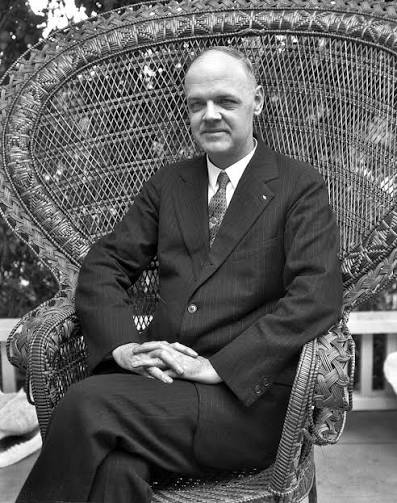
TODAY I’M going to turn over this column to the voice of a long-dead man, and all because—when last week I picked up a book he had published in 1957—I thought he might as well have been writing in the present, so uncannily familiar were the vignettes he recounted from this country’s political life seven decades and more ago.

The man was George A. Malcolm (1881-1961), the first full-time dean of the University of the Philippines College of Law whose building now bears his name, and later an Associate Justice of the prewar Philippine Supreme Court. The book he authored was American Colonial Careerist (Boston: The Chrisopher Publishing House, 1957), a collection of his memoirs and impressions as a civil servant under the American colonial regime over most of that period.

I was drawn to the Malcolm book because I collect antiquarian Filipiniana, for one, and of course because of the UP connection, but also because Malcolm graduated from the University of Michigan (where I and many other Filipino scholars took their graduate degrees) and had long been intrigued by Ann Arbor’s contributions (positive and surely some negative ones as well) to Philippine education and government. Michigan also produced Dean Worcester, who would defend America’s paternalistic rule, and lawyer Clyde De Witt, who would practice in the Philippines and later set up an endowment for Filipino student-lawyers in Michigan that would support such legal luminaries as Edgardo Angara, Miriam Defensor Santiago, and Raphael Lotilla.

Because of his positions, Malcolm came to know and befriend nearly all the major Filipino and American politicians and leaders of the prewar period, and his book gives intimate and sometimes saucy sketches of them. Manuel L. Quezon, not surprisingly, dominates his memoirs. “The Filipino is a natural and consummate politician,” he writes. “The great Jefe of them all for three decades was Manuel L. Quezon. He was the spectacular figure who gave color to the scene. A close second to Quezon in astuteness, but lacking his dynamic personality, was Sergio Osmeña.” But he also adds that “Quezon dearly loved the trappings of office. He relished the glittering appellation, ‘Your Excellency.’… An added Quezonian touch was a red shoulder-sash and three foreign decorations—a medal attached to his left lapel and two blazing badges pinned on the right side of his coat above the hip.”

Further, Malcolm notes, “Quezon gave an early demonstration of a desire to see the world at the expense of the taxpayers. In the role of official delegate of the Philippines to the International Congress of Navigation, held in czarist Russia in 1908, the young Assemblyman arrived in St. Petersburg (Leningrad) after the Congress had already adjourned. The P34,000 set aside for this trip was trivial compared to the fabulous expense accounts entailed in paying for other pilgrimages all over the globe with a large entourage. Curiously, the Filipino people were rather proud of the impression their effulgent leader was making in foreign lands and rarely complained of his prodigality.” (One who did complain was a young UP student named Ferdinand Marcos, who railed against MLQ’s “extravagance.”)

But Quezon was hardly alone. Malcolm goes on to say that “Quirino filled the expensive shoes of Quezon, and even added frills of his own concoction. A P5,000 bed to case the President’s slumbers became the prize reference in political campaigns. An investigation conducted by an inquisitive Senate purported to reveal that Quirino had spent about a million pesos on four trips abroad. Journalist Teodoro M. Locsin cynically observed: ‘This is living.’”

Indeed, presidential or not, the corruption we seem so upset about these days was already widespread. Malcolm observes that “Certain phases of the electoral process in the Philippines merit special attention. Aspirants for office have flagrantly and repeatedly flaunted the provision of the Electoral Code which specifies that no candidate shall spend for his campaign more than the total amount of the candidate. Yet, it is common information that a candidate for a seat in Congress, whose annual salary is P7,200, has been required to deposit P25,000 with party chieftains and has had to part with many more pesos in addition to have a fighting chance. In the 1953 presidential election, such sums as P2,000,000 were openly mentioned as needed by each of the three contending parties to finance their campaigns.

“Where did this money come from? The money came from candidates who bankrupted their patrimony and from the ‘big shots,’ in particular the sugar tycoons. Moreover, millions of pesos of the people’s money was drained out of the public treasury, generally for local ‘public works,’ to influence the people’s will…. Many phrases descriptive of Philippine politics have been scattered about. Merely as examples, I quote the words of an American publisher and a Filipino educator. Wrote Roy W. Howard, Philippine politics is ‘a great national pastime,’ with politicians “ten centavos a dozen.” Declared Mariano V. de los Santos, President of the University of Manila: ‘There is no activity in which we can engage where partisan politics does not seep in. Business, industry, agriculture, all are permeated by bad politics. Under such a climate, naturally politicians of all sorts thrive. But they thrive at the expense of the general welfare.’”

And where did many of these politicians come from? We go back to the UP College of Law and its poorer cousins which seem to have mushroomed all over the place:

“One potent reason why politics has come to play such a large part in the life of the people is the preference on the part of the youth for academic education. The result is a bumper crop of lawyers with no place to go except into the government service or into politics. It would inure to good government to have legally-trained and disciplined men and women in public life, if such exaggerated importance was not attached to the title of abogado in the Philippines.

“The College of Law, University of the Philippines, was organized to supply quality, not quantity, leaders. All to no avail. Law schools mushroomed all over the Islands. The Bar examinations became great sporting events, with candidates ready to mortgage their patrimony and sell their souls if only they could get passing grades. Yet when the six long years of study were passed and the Bar examination was hurdled, no clients awaited the embryo lawyers. Droves of half-baked parasites were superimposed on an already top-heavy governmental structure and a lean economy.”

Perhaps we need to bring the spirit of Justice Malcolm back in a séance as amicus curiae in the Senate impeachment trial.