Qwertyman for Monday, October 12, 2026
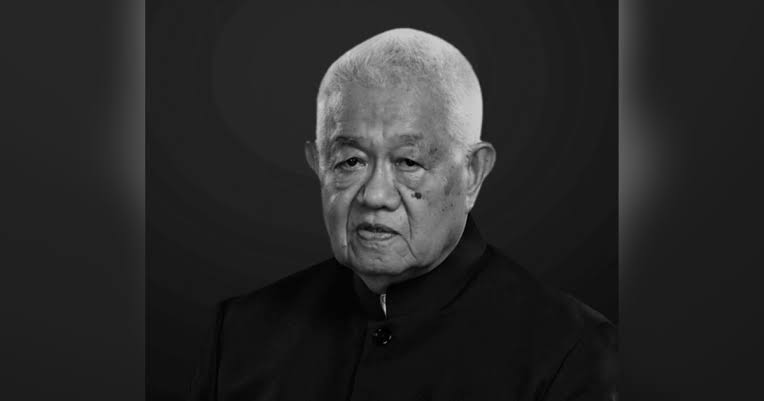
FOR A personality so closely associated with the Marcos regime, it was inevitable that the obituaries following the passing last week of former Prime Minister Cesar Virata would reflect a broad range of opinion.
The gentlest take on the man was that he was an honest, modest, and hardworking academic who found himself with an opportunity to help direct national economic policy, and who did his best, within a profligate bureaucracy, to mitigate economic catastrophe and sustain international support for the Philippines.
At the harshest extreme is his depiction as a complicit enabler of Marcosian martial law, a window-dresser for the regime, and ultimately an ineffectual technocrat—like others of his training and generation—who refused or failed to acknowledge the crimes of the regime he had been serving faithfully.
Those assessments came freely in social media last week, from friends I respect on either side. The variance told me as much about how we choose to remember history as how we choose what to forget, or at least to mediate after half a century, which probably tells more about us than about the other person.
I had several opportunities to meet with and to interview PM Virata, as he most likely would have wanted to be remembered, in the course of completing books to which he had something to contribute from his vast experience. We discussed mainly his life as an academic and as one of SGV’s early pillars, as well as being a member of Cavite’s prominent Aguinaldo and Virata clans. Inevitably—usually after the formal interviews, when he took me out to lunch for a more relaxed chat—he opened up about his life as a Marcos technocrat. He allowed me to take notes, from which I now share some interesting episodes and insights—edited for clarity—that might help complete whatever picture of the man we had in mind.
On martial law: “We didn’t know about the preparations for martial law. The President kept it to himself…. I was in the US when martial law was declared. I was attending a World Bank meeting. I went to my hotel room in DC, where we often stayed, although the actual meeting was at the Hilton. I got a call from one of the more senior Department of State reporters who had covered the negotiations on the Laurel-Langley Agreement. He said, ‘Don’t you know, Mr. Secretary, that martial law has been declared?’ I said no. That was around 4 pm because I had a 5 pm tennis game with Ambassador Suarez, who must also have been surprised, because he didn’t know, either. I thought of calling Joy, but she would have been asleep then, so we played our game and I waited until around 6 am to call her. When I did, the operator said, ‘All calls are suspended to the Philippines.’ Later, Alex Melchor and I were told to go to San Francisco and LA on our way home to tell the Filipinos and the consulate there about martial law. I still didn’t know what we were supposed to say. Eventually, when that same American reporter asked me for my reaction to martial law, what I said was, ‘Well, the Philippines just joined the rest of Asia,’ because everyone else around us had declared martial law—South Korea, Indonesia, Malaysia, etc.”
On the Aquino assassination: “August 21st, Ninoy was killed. I was at home in Philam that day. Joy was having a show in Makati, so I had lunch with my sister in Kalayaan. I went home and I fell asleep. I was woken up by my military aide, saying that Sen. Aquino had been killed and that the President would be making an announcement soon. We had a TV and a radio in my room and turned both of them on, but the President didn’t appear, just his photo. It turned out that he was about to have an operation. We were called to Malacañang, but when we got there, the guards told us not to approach the President, because he was all bundled up. He was really struggling and had to be helped to the elevator. We learned that he was going to have a kidney transplant! He did instruct us to pay our respects when Ninoy’s body arrived. We went to the house on Times Street but we weren’t allowed in, so I wrote a letter to Butz Aquino, who was the only one I knew then.”
On the Constitution: “I just learned recently that a Cabinet meeting was called right after martial law that I was not present at. The issue presented by the President to the Cabinet was that he had received a summons from the Supreme Court because there were petitions asking for martial law to be declared unconstitutional. There was a group that included the military and I think even Sec. Abad Santos who were in favor of declaring a revolutionary government. But the President did not accept this. He said, ‘How can you assert civilian authority over the military without a Constitution?’ He really believed in Atty. Estelito Mendoza, so he asked Mendoza to respond to the Supreme Court summons, and Mendoza said he’d try to argue that this was a political issue and not within the Court’s jurisdiction.”
On becoming Prime Minister: “The President kept me concurrently as Finance Minister, but my weakness really was that I wasn’t a politician, so I wanted Jose Roño, the Minister for Interior and Local Government, to be my deputy because he knew the local governments and politicians. At that time, Foreign Minister Romulo wanted to be the deputy PM. CPR said, ‘Look at Singapore, Rajaratnam serves as both deputy PM and foreign minister.’ I said, ‘Look, I’m not a politician and you’re away most of the time, so how will I operate? If there was more than one deputy prime minister, I’d probably nominate you, but there’s only one vacancy!’”
There was a lot more I learned from PM Virata, both about and outside of martial law, but there are some stories you realize are being told to you in confidence that are best kept that way. It’s a sad thing that the general tendency these days—especially in social media—is to reduce people to their politically posterized worst, discarding the innate complexity in every person. Maybe I’m too naïve and tolerant, but the fictionist in me looks for those complexities and ambiguities rather than bottomlines better left to accountants and scholars.
One detail I do remember about Cesar Virata was that he was already dean of the UP School of Business Administration (which now bears his name) when his father Enrique, a professor of mathematics, was named Acting President of UP. Cesar resigned and joined SGV rather than put both of them in an awkward situation. I know his detractors might say that he could and should have exercised the same delicacy in his later positions in government, but that’s a longer argument for another time.