Qwertyman No. 217: The Edjop Effect

Qwertyman for Monday, September 28, 2026
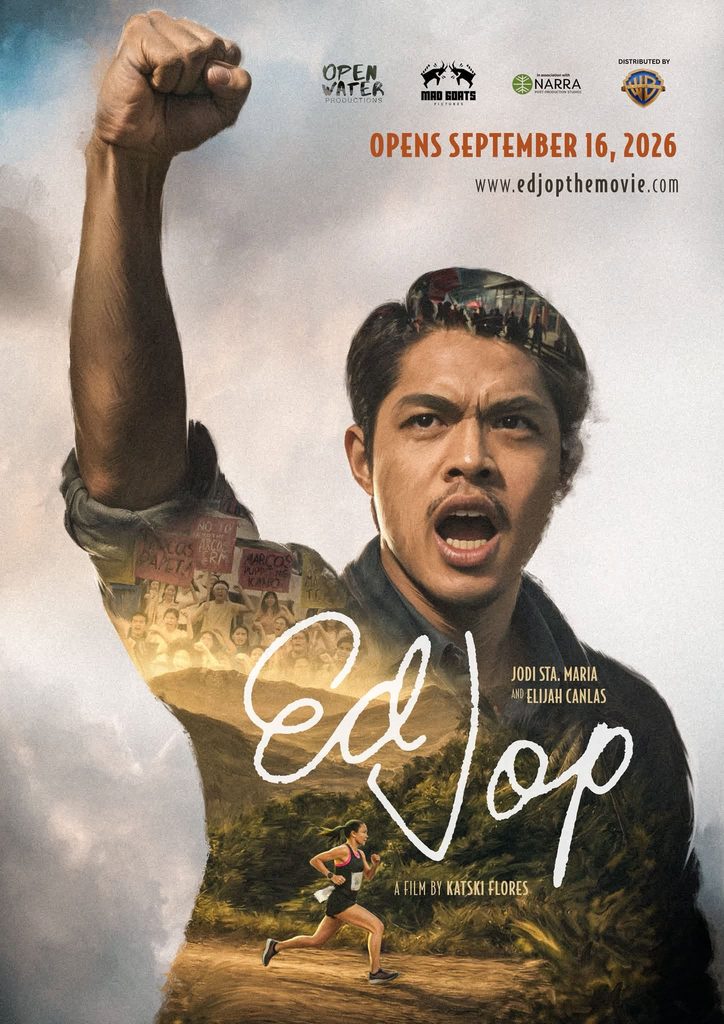
I’LL GET right to the point: my wife Beng and I, along with a younger couple, caught one of the last few screenings of the movie “Edjop”—and we all emerged so moved, albeit in different ways, that we had to spend another hour-plus over coffee just to process what we saw. 

It wasn’t even a matter of “liking” or “not liking” the movie or director Katski Flores’ and scriptwriter Jade Castro’s treatment of the life of the martyred activist Edgar “Edjop” Jopson. Grappling with the broader contours of the story, we were in no mood to quibble over details gotten wrong (and yes, there were a few) or political lines blurred, as many subsequent reviews and critiques seem to have focused on, for their own good reasons.

For Beng and me, the impact was personal, having been activists ourselves who came of age during that tumultuous First Quarter Storm that Edjop—perhaps inadvertently—helped launch. We saw “Edjop” for what it likely set out to be—the story of a young middle-class idealist’s radicalization in an environment of gross injustice, poverty, and oppression. What made it particularly poignant—and this for me represented the film’s true strength, although others may have seen it as a needless diversion—was its framing as a father-daughter story, of a younger generation’s belated understanding and acceptance of their elders’ actions and even excesses. I found it well acted, especially the major roles.

Full disclosure: director Katski had interviewed me, among many others, even while the film project was just getting started, to get my views on Edjop. (She had, of course, other excellent sources, including Bing Pimentel’s books on the man and the period and Joe Cuaresma’s documentary.) I told Katski that I could contribute very little beyond impressions gained from one brief encounter with Edjop.

That encounter happened a few days before January 26, 1970—the date of Ferdinand Marcos’ State of the Nation Address at the old Senate building (now the National Museum), for which the National Union of Students of the Philippines (NUSP), which Edjop headed, was planning a massive protest rally. An organizational meeting for that rally was held somewhere in Quezon City, and for reasons I can no longer remember except possibly that I was already an activist at the Philippine Science High School, I was there, more of a kibitzer than anything.

I had just turned 16 a few days earlier. We had rallied in high school for local demands such as a new and larger building, but January 26 was going to be our first big exposure to national issues, and we took the lead from the NUSP, the so-called “moderates,” being then deeply mistrustful of the radical Left under the Kabataang Makabayan and Samahang Demokratiko ng Kabataan (KM-SDK). I recall that meeting of senior NUSP leaders and their allies, and Edjop in a white shirt or barong. What struck me was his earnestness, his passionate belief in his cause, conveyed in an even voice and manner. 

We joined the January 26 rally, assembling on the grounds of the University of Sto. Tomas, bearing “J26M” armbands. We marched to the Senate where Marcos was speaking. I was too far from the entrance to follow everything, but I could see that the KM-SDK were also there in front, and I would later learn (though this account might yet be corrected) that Edjop had decided to terminate the rally early because things were turning ugly, but then SDK firebrand Gary Olivar, a formidable speaker, grabbed the microphone to agitate the crowd. Marcos emerged, a black cardboard coffin was thrown his way from somewhere, the security forces moved, and a melee ensued. We ran for our lives. The FQS had formally begun. 

We moderates were almost as indignant about the way the Left had hijacked the event as by the State’s brutal response; I stayed out of the January 30-31 protest rally that proved even more violent, but watched on the news as students were teargassed and truncheoned along Mendiola and Malacañang. I dreaded what lay ahead; I was due to graduate from high school that year. It should have been a time of hope, but I knew only that something was terribly wrong, that the future was going to be harsh, and that I was as confused as anyone about what to do and whom to follow.

As it turned out, history carried a very wry sense of irony—even humor, were the setting not so tragic.

Within that year, I entered UP and almost immediately joined the Nationalist Corps, the Philippine Collegian, and the Alpha Sigma fraternity. The Nationalist Corps became my entry point to the SDK, and now I saw the “clerico-fascist” moderates to be sorely misguided and wanting in revolutionary fervor. In Alpha Sigma, one of my fraternity brothers was none other than the Gary Olivar we blamed for the J26M fiasco; in the Collegian, our editor was another frat brod, Tony Tagamolila. 

As the decade moved on, I would be arrested and imprisoned, and upon my release, I would take on a writing job I needed—with the government. Tony Tagamolila would die in an encounter with the military in Panay. Gary Olivar would move to the US and study at Harvard (and much, much later would become PGMA’s spokesman).

Little did I know that Edjop himself had become radicalized and was performing far more dangerous tasks in Mindanao than most of us ever did even in Manila. His death fell like a rebuke to those who had doubted him. Meanwhile, I had resigned from my NEDA job to go back to UP to study and to teach, and by the time the Ninoy assassination and EDSA happened, I had become convinced—as I still am—that the middle road remains the most viable if not the only one forward. It seems that I’ve returned to Edjop’s NUSP. 

I don’t know what Edjop himself would think of our situation now, of another Marcos in Malacañang trying to face down a possibly even more vicious alternative, of a CPP fractured by internecine warfare, of a people too easily swayed by rumor and shadow. If the effect of Edjop—the movie and the man—is to make us think of where we ourselves stand today, then the effort of making this film will well have been worth it.


Qwertyman No. 216: The Law on Trial

Qwertyman for Monday, September 21, 2026

LIKE MANY young Filipinos of my postwar generation, I once dreamt of becoming a lawyer. Alongside medicine, it looked to be the most challenging and the most rewarding if not the noblest profession one could get into. Medicine was also a public service, yes, but one basically remained a doctor forever, while a lawyer could go on to business, politics, or the Supreme Court. It occurred to my teenage mind that the only thing a good lawyer needed was a sharp brain—and the gift of gab, which I thought I had, at least the second if not the first.

Indeed my father Jose Sr., reputed to be the smartest boy in our island province, also wanted to be a lawyer, but was too poor to become one. So having the wits and the words but not the degree, he ended up writing speeches and drafting documents for politicians and bosses who were lawyers. 

Much later, it took my younger sister and brother to achieve his dream. Myself, I entered college on the red carpet of the First Quarter Storm, and with the way the country was going, I had decided even in high school that there was no future for the law in a lawless place, and chose Engineering (and, when I failed my Math, eventually English). The imposition of martial law and my subsequent incarceration hardened that perception: the law was for the powerful, but certainly not for me.

EDSA and the restoration of our civil liberties did much to change that. I followed and listened to such luminaries as Cecilia Muñoz-Palma, Jovito Salonga, Joker Arroyo, Rene Saguisag, Fr. Joaquin Bernas, Jose W. Diokno, Lorenzo Tañada, Haydee Yorac, and others of their caliber and character, and I was convinced and relieved that the lamp of truth, reason, and justice would finally shine brightly over our benighted nation.

And then the 2000s came in, and with them the long backslide into the morass of corruption and authoritarianism—much of it enabled and justified by a new generation of lawyers with far fewer scruples than their predecessors. Amidst this transactionalism, my old pessimism has returned, moderated only by my knowledge that many good and honest lawyers remain to carry on the fight.

The Senate’s current impeachment hearings in the case of Vice President Sara Duterte led me to wonder how they might affect young students contemplating a future in the legal profession, and how the general public perceives lawyers and the law itself today, given what they’ve seen.

I posed these questions to some lawyer-friends who have also followed the trial keenly. First, what impression of lawyers has the trial so far left on the general public?

“Negative overall,” says Lawyer A. “Because of the way the Senate is conducting the impeachment trial, the public was collectively exposed to adversarial litigation. So DDS partisans would praise the defense lawyers and bash opposing counsel, and vice versa, not necessarily with any real appreciation of the legal points made. The people are provided with new information but we doubt if these were properly processed. More than anything else, we sense this exposure to adversarial lawyering has further fed political polarization.”

“Overall negative,” concurs Lawyer B. “We cannot blame those who came away thinking even more negatively of lawyers.” But, she explains further, “It is easy, from the outside, to assume that a lawyer believes every word he says. That his argument is his opinion, that his client’s cause is his own. More often it is not. Lawyers are frequently called to carry out a client’s instructions, to give shape to a vision that is not his and to set aside, quietly, what he might feel or think about the matter. It is not necessarily being a mercenary, it is the job. Of course, none of that spares you from the consequences of taking up the cause of the genuinely indefensible. You must be prepared for the scorn of your fellow lawyers as well as of the public. The profession does insist that everyone deserves a defense but it does not promise you will be admired for providing it.”

But there were bright spots as well. Lawyer B continues that “The most brilliant moments of the trial that made me proud to be a lawyer are actually the Chill Chel moments. With decades in courtroom experience behind him and brilliance of thought and communication, he showed the nation what a real grasp of the law can do, and how cutting and effective a sharp lawyer whose skills have been honed can be, all without the table-pounding and the theatrics and the condescension.”

For Lawyer A, “The oral arguments of Diokno and Poa and the presentations of the amici curiae, precisely because they were non-adversarial, provided the quietude so needed for important ideas to be clearly presented. Kapunan also provided valuable lessons for younger lawyers on the delicate balancing act a litigator often has to strike between pure trial advocacy and theatrics.”

The theatrics are of particular importance, given that, for over a month now, a Filipino audience of over 100 million viewers—about 70 million of them registered voters—has been privy to an almost-daily dose of courtroom drama. And like theater-goers, what most of the rest of us see and look out for is the performance. All the Senate’s a stage, and everyone stepping on to it is deemed an actor in a role playing someone not quite himself or herself in real life but something larger, more sincere, more logical, more certain of the ineluctable truth. The prosecution knows that, the defense knows that. 

So in a public arena such as an impeachment trial, where ultimate guilt or innocence might come down to perception rather than fact, would good lawyering require more than a solid grasp of the law, but a performative aspect as well, ie, the awareness that one is addressing not just the court but a viewership of millions? 

“Yes,” says Lawyer A, “but with an important caveat. The ‘performative’ aspect should not be drama for drama’s sake, but as a tool toward good communication and education.” Adds Lawyer C: “What makes impeachment cases unique is the fact that it is driven and decided by elected politicians rather than career judges. The performative aspect then of lawyering becomes extremely important. The Congressmen on three-year terms and Senators on six-year tenures need the votes. They have to get up, dress up, and show up, so that their constituencies will continue supporting them.”

All this leads me to think that it’s not really just VP Sara and not even the Senate itself on trial, but the law and the legal profession itself. As they say in show business, abangan.

Penman No. 489: Grateful and Graceful

Penman for Sunday, September 20, 2026

IT ISN’T every day that a certified celebrity comes up to shake your hand and to introduce herself to you as your fan—especially when it’s really the other way around. Here’s someone you’ve admired from a distance all your life, maybe even had a schoolboy crush on, and now here she is, taking your hands in hers like an old friend.

This happened last week at the Manila International Book Fair at SMX, where I was signing books for Anvil Publishing among others, and the surprise visitor to my table was none other than Boots Anson-Roa (now Rodrigo)—the actress, radio-TV host, humanitarian, and public servant—who, as it turned out, was also an Anvil author and who was also signing her newly minted biography titled Grateful, co-authored by Jennie Leuterio Ilustre.

Intrigued, I secured a copy of the book, and soon found myself drawn into the engaging story of a life well-lived, despite the inevitable dips and turns that come with surviving so many tumultuous decades. I recalled my own unpublished biography of another great Filipino actress, the late Rosa Rosal, whose vampish roles tended to be the complete opposite of Boots’ motherly persona, and whose real-life drama outclassed anything she portrayed onscreen—two very different images, and yet two women bonded by the same deeply held traditional values and by their devotion to family and public service.

Maria Elisa Cristobal Anson was born on January 30, 1945 ,just days before the Battle of Manila began, to Oscar Anson (later the actor Oscar Moreno, the “Robert Taylor of the Philippines) and Belen Cristobal, a pharmacy board topnotcher and chemistry teacher, who met and fell in love amidst the turmoil. Belen became pregnant, and the book reveals that it was only at age 53 that Boots discovered that the couple had considered terminating the pregnancy because of the harshness of the times; instead they decided to marry, making Boots possible. (The “Boots” comes from “Bebot” then “Bot.”) 

The young Boots tagged along with her father to his shoots, so pretty that Sampaguita boss “Doc” Perez predicted she would become a star, but she was more interested in watching movies than being in them. She did join theater at the University of the Philippines where she studied English, speech, and drama and served as a corps sponsor, but it was a hosting gig at TV 5’s popular Dance-O-Rama—a slot she twice refused—that finally landed her onscreen.

That choice proved life-changing in another, even more significant way, because this is where the “Roa” in her name comes in, care of Pete Roa, her Dance-O-Rama co-host and reputed ladies’ man, who courted her with flowers plucked from the show’s bouquets and asked her out to post-show dinners “to critique her performance.” The tactics worked. Boots fell for Pete, the two decided to get married, the parents on both sides naturally threw a fit, leaving elopement the only way out. The two snuck out of their show after a commercial break, and managed to get then QC Mayor Norberto Amoranto to marry them on June 5, 1964, followed by a hasty church wedding that same afternoon.

So began a highly visible and celebrated marriage of 43 years that produced four children—Leah, Joey, Chiqui, and Ben. The “Roa” would stick to “Boots Anson” so permanently that even after her second wedding to King Rodrigo in 2014, King would urge her to keep it, to honor that bond. 

The Boots Anson-Roa we know comes mostly from her movies—over a hundred of them—and her TV hostings. Her first movie came in 1968, when she was already a wife and mother of two, then highly unusual—indeed unheard of—for a leading lady. It was her role as the governess Carla in Lino Brocka’s landmark 1970 tearjerker Wanted: Perfect Mother that remains embedded in my memory, as in many others’—caring, loving, but also proper and self-sacrificing, an image that probably prompted her daughter Chiqui to call Boots “the quintessential Mama Mary.” Boots received a FAMAS Best Actress nomination for that performance, and she would go on to major roles in such movies as Tatay Na si Erap (named Best Actress along with Vilma Santos), May Minamahal, Mano Po, Blue Moon, Caregiver, and One True Love.

But from her elopement story onwards, Boots would be the first to upend her “Goody Two-Shoes” projection. “I’m not a saint,” she insists—just level-headed, fair, and thoroughly professional, the kind of performer who always shows up on time, delivers, then goes home to family. The book also chronicles her many other roles and jobs, which we know or remember little of: her work with the US Embassy in Washington in the 1980s, with the Population Commission in the 1970s, with the UP-PGH Medical Foundation, with the Philippine Red Cross, and up to now with Mowelfund. She also taught Communication Arts subjects in UP, Ateneo, and La Salle, wrote newspaper columns, and handled radio programs. Always more than a sweet face, she brought substance to the job.

Pete’s passing in 2007 is a poignant highlight. Hit by a stroke in 1997, Pete soldiered on for another decade (I recall being a few beds away from him for physical therapy in the early 2000s at Capitol Med). He later acquired incurable cancer, and facing the inevitable, the family prayed for a peaceful passing, which happened on August 9, 2007, with Boots at his side. Pete had requested a concert instead of a solemn wake, so the industry gathered to pay him tribute. “It was late into the night,” Boots recalls. “All sympathizers and revelers had left what was originally meant to be a quiet chapel. The music was silenced; the animated conversations were stilled; and the laughter was muted. In a rare moment alone with Pete, I did a ‘curtain call’ for his performers. Now allowing that tear to drop, I bid Pete good night until the next morning for his burial. I gleaned a peaceful countenance. I was confident we made him happy. I was glad that, in his repose, he applauded his friends’ command performances. But, tongue-in-cheek, I begged him to spare me his own standing ovation.”

But the book ends with the happy note on which it begins, with Boots’ second marriage to lawyer Francisco “King” Rodrigo Jr., an old family friend and also a widower. For both, it was love the second time around. 

Indeed Boots Anson-Roa has much to be grateful for, as her book title suggests. But “graceful,” which she would never immodestly use for herself, seems just as apt for this woman who has led such a long and distinguished life with dignity, verve, and faith. Pleased and honored to shake your hand, and to wish you and King well for the rest of our earthly time!

Email me at jose@dalisay.ph and visit my blog at http://www.penmanila.ph.

Qwertyman No. 215: Crimes and Punishments

Qwertyman for Monday, September 14, 2026

BACK IN the early ‘90s, I wrote an essay titled “Killing Time in Little Earth,“ in which I noted that “In the Philippines, we have crimes and punishments aplenty, but they have very little to do with each other.” I don’t think much has changed in thirty years, as recent events amply demonstrate.

For example, what it is about impending imprisonment that makes corrupt but otherwise bouncy politicians and officials suddenly acquire some debilitating disease that obligates their solitary confinement not in prison but in some swanky hospital suite?

Our prisons are bursting with inmates afflicted by tuberculosis, gastroenteritis, hepatitis, HIV, and host of other crippling ailments. But none of these inmates get the executive suite, and not everyone gets the treatment they need, if only because our jails are almost 300% congested, according to the BJMP’s own figures. Even if prison hospitals exist, they simply can’t keep up with the cases coming in; they’re swamped, and whoever they can’t serve go back into their overcrowded cells, carrying all kinds of communicable diseases. 

We’ve seen this happen so often here that it might as well be part of the official script: “Public officials above Salary Grade 30 charged with plunder will be subjected to a mandatory initial period of hospital confinement for a minimum of three months and to last no longer than the prescribed punitive period for their offense, during which extensive medical procedures will be undertaken to ensure the patient’s good health and fitness for prospective incarceration. Quality and substantial nutrition shall be provided, along with adequate recreational facilities for the patient’s physical and mental well-being. All this shall be at the state’s expense.”

These country-club habitues and their blue-chip physicians have been known to spin tall tales about how they suddenly acquired hypertensive atherosclerotic cardiovascular disease, osteoarthritis, respiratory ailments, and degenerative disc disease, to name the most popular diagnoses.

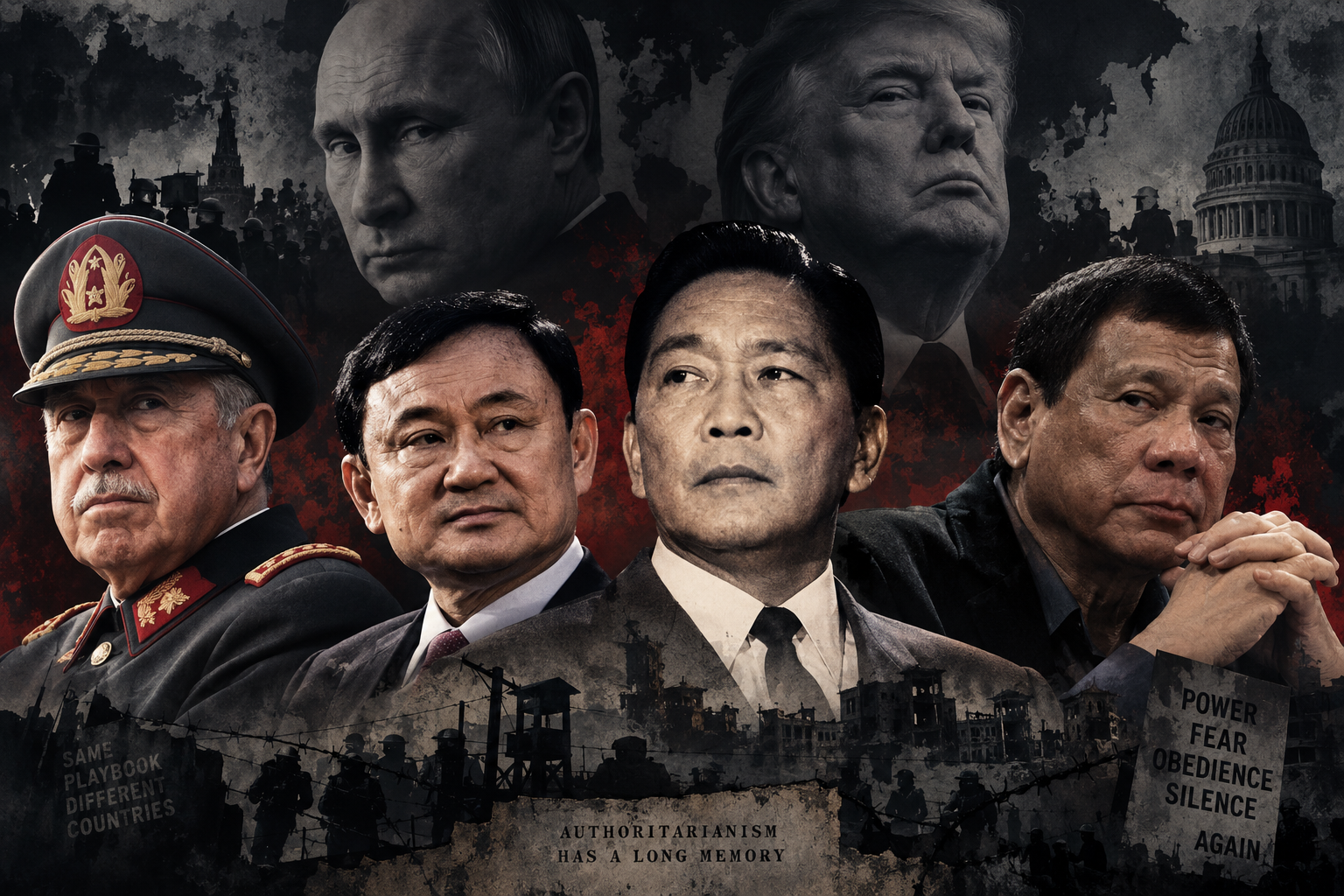
But to be fair, this epidemic of hospitalitis has been a global phenomenon. The Chilean dictator Augusto Pinochet, arrested in Britain, escaped repatriation and certain imprisonment for six years by reportedly feigning mental incapacity. He was later returned to Chile and charged with many crimes, but ultimately escaped judgment by dying before he could be convicted. Former Thai Prime Minister Thaksin Shinawatra, convicted of corruption, spent half of his one-year sentence in a Bangkok hospital before being kicked out by their Supreme Court for malingering. He would get in and out of jail more times since then. So politicians and despots find clever ways of replacing steel bars with green curtains, and justice often has to wait in the hallway while they take their time to recover.

Speaking of tall tales…. All this reminds me when, as an aspiring academic seeking relief from Manila’s infernal heat and university politics, I once found myself in a northern hillside village populated mostly by decrepit seniors. A young man there was causing mayhem with all kinds of vile rumors and fiendish schemes, gleefully hurting his elders without compunction for the sheer delight of watching them suffer, as if he hated what he was fated to become. How could someone so juvenile be so evil? 

A community council was called, to which I was invited as an honored guest. I would have been happy to observe the proceedings from a corner, but they sat me in a tall chair beside the village chief and handed me a bamboo cup filled with potent bugnay wine.

It was suggested, only half in jest, that this pest be disposed of as efficiently as possible, such as by driving a stake between his shoulder blades when he was squatting by the river to pollute the flow downstream. 

A heavily tattooed councilwoman less inclined to brute violence proposed instead that they approach the village shaman to lay a curse on the fellow, so that he would retch uncontrollably every time he did so much as utter a mean word, and grow pus-filled blisters between his legs whenever he mentioned the name of a specific villager who seemed to be the prime object of his mischief.

But then the chief turned to me, as the visiting writer and professor from the city, to ask me for my erudite opinion. Surprised but pleased to be consulted, and emboldened by the bugnay, I got up from my chair, thought hard, put on my sagest and most benign countenance, and drew on my command of fiction to offer counsel:

“O most noble chief, tell him this—you are cursed by the power of Fata Morgana! Fa-Tah Mor-gan-ah! Then turn your back on him—like this!—and leave him be to wonder what the curse entails. I trust life’s natural trajectory to bring him down to a deep dark valley where he will feel as much pain and misery as he is causing now. It happens to everyone. But for most of you here, having lived this long, that moment is surely behind you. For him, the worst yet to come, and he will not even know from where it will descend or arise. He will live the rest of his life in constant dread and anticipation of heaven’s inevitable retribution in some frightful form.”

I had to leave right after that to catch a bus to get to a beach resort in La Union before the sun set, pleased that I had contributed some paltry but precious wisdom to the community. The curse I conjured charmed me; I admired the uncertainty of the specifics against the certitude of the outcome.

But I later learned, in a long text message from the comely barangay nurse whom I had befriended in my first hour there, that the council had pondered my advice for about two minutes, and then, when my bus turned the corner toward the national highway, had deputized someone to whack the fellow over the head with a shovel hard enough to make him a slobbering fool forever. 

He injured no one after that, and the villager he had most maligned was kind enough to daily feed him leftovers from the pig trough with a hard wooden spoon, followed by a cool gulp of soapy dishwater, so he must have lived a reasonably long life. I never knew if he reached that low valley I predicted, but I think the plains were punishment enough.

Qwertyman No. 214: Achieved, But Not Aspired For

Qwertyman for Monday, September 7, 2026

WITH THE announcement last week of its three new laureates for 2026, the Ramon Magsaysay Awards Foundation (RMAF) once again drew attention to that transcendent quality so sorely lacking in our public life today: “greatness of spirit,” the standard by which RM awardees are measured—a greatness achieved, but not aspired for.

This year’s awardees exemplify that spirit abundantly.

Twice imprisoned by Burma’s military junta for his work in the resistance, Bo Kyi fled to Thailand after his second release in 1998. But rather than simply fend for himself or seek a new life away from politics, Bo Kyi met with his fellow refugees and organized the the Assistance Association for Political Prisoners (AAPP), on the founding principle that “As long as political prisoners exist inside Burma, Burma will not be free.”  

The AAPP documents these prisoners—it’s estimated that since 2021 when the military regained power in a coup after a brief civilian interlude, the junta has arrested over 30,000 people, releasing only half of them. As many as 100,000 may have been killed.

It is against these atrocities that Bo Kyi and the AAPP are crying out and mobilizing, providing support to the prisoners and their families, and raising the situation in Myanmar to global attention, knowing that the Burmese people are hardly alone in their plight. Honoring him, the RMAF board of trustees said that “His enduring commitment reflects extraordinary moral courage, personal sacrifice, and an unwavering belief that democracy and human dignity are always worth defending—and that even in the face of oppression, the truth must be told, justice must be pursued, and the freedom to believe must be upheld and defended at all costs.”

The second awardee could not have been more different from Bo Kyi in her circumstances. Born to a family of privilege in Bangladesh, Runa Khan (not to be confused with the movie star of the same name) could have remained in what she calls a “glass bubble”—but instead she chose to immerse herself in the lives of Bangladesh’s poorest and most vulnerable communities, the dwellers of the char.

In Bangladesh, chars are essentially temporary islands or sandbars formed by deposits at the delta of the country’s three great rivers—the Ganges, the Brahmaputra, and the Meghna. While these rivers give the country life, they also, along with the sea, bring terrible floods and disasters. Thus, literally and figuratively, the char people live on shifting sand, ever subject to the vagaries of the weather and climate change, and largely neglected by everyone else.

Runa stepped in to help meet their needs—first, with a hospital ship in 2002. But realizing the challenge was far too great to be met alone, she organized an NGO named Friendship Bangladesh to bring social services, education, and employment to the char, and thereby also dignity and hope to its people. The RMAF trustees noted that “In her hands, privilege became not an entitlement, but a responsibility; not a family legacy to protect, but a gift to be shared.”

The third honoree comes from a small Southeast Asian country now associated with wealth and influence, but when Tommy Koh was born in 1937, it was far from that, a colonial backwater with no mind or destiny of its own. Over his lifetime, Tommy would see all of that change—and be part of the change himself, articulating Singapore’s voice and vision at the United Nations as its youngest ambassador at 29.

That exposure would lead to larger and more significant contributions for Koh in international affairs—most especially in what we now know as the Law of the Sea, which he helped to nurse within the UN from a negotiating committee he chaired in 1978 to its adoption as a UN convention in 1982. This law is what maritime countries such as the Philippines are now holding on to in their definition and defense of their territorial waters, especially against the encroachments of larger and more powerful nations.

But beyond diplomacy, Tommy Koh has made sure that a new generation of Singaporeans could take over from where he and his peers have left off, through legal education and through his many advocacies, which include the rights of the disabled and even animal welfare. The Magsaysay trustees observed that “Through his steadfast faith in dialogue, the rule of law, and international cooperation, he has helped make peaceful coexistence possible in a world of unequal power.”

There are good reasons why the Ramon Magsaysay Awards—unlike even the Nobel Prize to which it is often compared—studiously avoid serving politicians when it considers possible laureates. Foremost, I would surmise, is that politicians are elected and paid to serve, so that whatever great social good they do was exactly what they promised and signed up for, and doesn’t need to be rewarded. 

It’s a sign of the times that as soon as I say this, some worthy Filipino politicians leap to mind, basically because they are exceptionally honest, hardworking, intelligent, and selfless—qualities which, come to think of it, should be par for the course, but now so rare that we feel blessed to find even just a few still standing upright in a pit full of reptiles and roaches. So shamelessly hungry for recognition are these lower creatures that they plaster their names and faces on billboards for projects they probably stole from, and yet so dense and dislocated that they would wear designer outfits to flood-relief sorties. 

Measure that against the Magsaysay awardees—and yes, Ramon Magsaysay himself—and understand why we Filipinos continue to be hounded by injustice, poverty, and despair (not to mention flash floods). If there’s a Pinoy out there with the greatness of spirit to keep our poorest safe, dry, and amply fed in this season of storms, he or she would be my next nominee for the Magsaysay, with possible sainthood to follow.

(Photo from news9live.com)