Qwertyman for Monday, September 21, 2026
LIKE MANY young Filipinos of my postwar generation, I once dreamt of becoming a lawyer. Alongside medicine, it looked to be the most challenging and the most rewarding if not the noblest profession one could get into. Medicine was also a public service, yes, but one basically remained a doctor forever, while a lawyer could go on to business, politics, or the Supreme Court. It occurred to my teenage mind that the only thing a good lawyer needed was a sharp brain—and the gift of gab, which I thought I had, at least the second if not the first.
Indeed my father Jose Sr., reputed to be the smartest boy in our island province, also wanted to be a lawyer, but was too poor to become one. So having the wits and the words but not the degree, he ended up writing speeches and drafting documents for politicians and bosses who were lawyers.
Much later, it took my younger sister and brother to achieve his dream. Myself, I entered college on the red carpet of the First Quarter Storm, and with the way the country was going, I had decided even in high school that there was no future for the law in a lawless place, and chose Engineering (and, when I failed my Math, eventually English). The imposition of martial law and my subsequent incarceration hardened that perception: the law was for the powerful, but certainly not for me.
EDSA and the restoration of our civil liberties did much to change that. I followed and listened to such luminaries as Cecilia Muñoz-Palma, Jovito Salonga, Joker Arroyo, Rene Saguisag, Fr. Joaquin Bernas, Jose W. Diokno, Lorenzo Tañada, Haydee Yorac, and others of their caliber and character, and I was convinced and relieved that the lamp of truth, reason, and justice would finally shine brightly over our benighted nation.
And then the 2000s came in, and with them the long backslide into the morass of corruption and authoritarianism—much of it enabled and justified by a new generation of lawyers with far fewer scruples than their predecessors. Amidst this transactionalism, my old pessimism has returned, moderated only by my knowledge that many good and honest lawyers remain to carry on the fight.
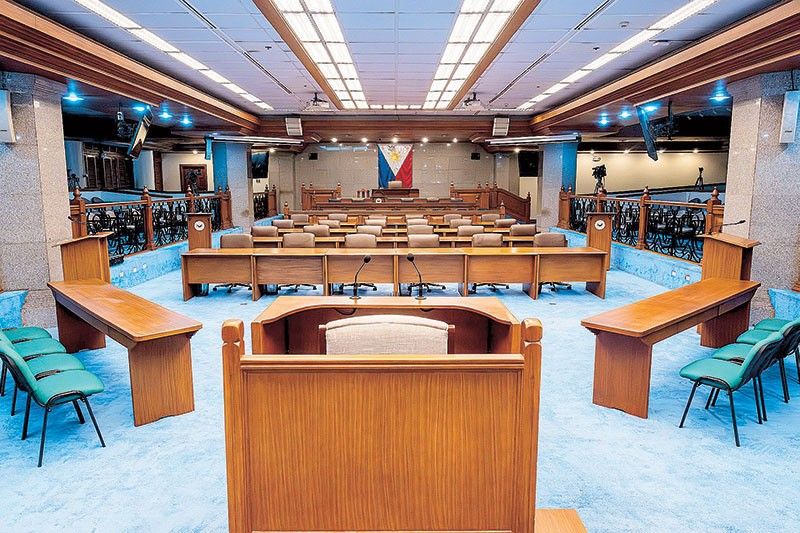
The Senate’s current impeachment hearings in the case of Vice President Sara Duterte led me to wonder how they might affect young students contemplating a future in the legal profession, and how the general public perceives lawyers and the law itself today, given what they’ve seen.
I posed these questions to some lawyer-friends who have also followed the trial keenly. First, what impression of lawyers has the trial so far left on the general public?
“Negative overall,” says Lawyer A. “Because of the way the Senate is conducting the impeachment trial, the public was collectively exposed to adversarial litigation. So DDS partisans would praise the defense lawyers and bash opposing counsel, and vice versa, not necessarily with any real appreciation of the legal points made. The people are provided with new information but we doubt if these were properly processed. More than anything else, we sense this exposure to adversarial lawyering has further fed political polarization.”
“Overall negative,” concurs Lawyer B. “We cannot blame those who came away thinking even more negatively of lawyers.” But, she explains further, “It is easy, from the outside, to assume that a lawyer believes every word he says. That his argument is his opinion, that his client’s cause is his own. More often it is not. Lawyers are frequently called to carry out a client’s instructions, to give shape to a vision that is not his and to set aside, quietly, what he might feel or think about the matter. It is not necessarily being a mercenary, it is the job. Of course, none of that spares you from the consequences of taking up the cause of the genuinely indefensible. You must be prepared for the scorn of your fellow lawyers as well as of the public. The profession does insist that everyone deserves a defense but it does not promise you will be admired for providing it.”
But there were bright spots as well. Lawyer B continues that “The most brilliant moments of the trial that made me proud to be a lawyer are actually the Chill Chel moments. With decades in courtroom experience behind him and brilliance of thought and communication, he showed the nation what a real grasp of the law can do, and how cutting and effective a sharp lawyer whose skills have been honed can be, all without the table-pounding and the theatrics and the condescension.”
For Lawyer A, “The oral arguments of Diokno and Poa and the presentations of the amici curiae, precisely because they were non-adversarial, provided the quietude so needed for important ideas to be clearly presented. Kapunan also provided valuable lessons for younger lawyers on the delicate balancing act a litigator often has to strike between pure trial advocacy and theatrics.”
The theatrics are of particular importance, given that, for over a month now, a Filipino audience of over 100 million viewers—about 70 million of them registered voters—has been privy to an almost-daily dose of courtroom drama. And like theater-goers, what most of the rest of us see and look out for is the performance. All the Senate’s a stage, and everyone stepping on to it is deemed an actor in a role playing someone not quite himself or herself in real life but something larger, more sincere, more logical, more certain of the ineluctable truth. The prosecution knows that, the defense knows that.
So in a public arena such as an impeachment trial, where ultimate guilt or innocence might come down to perception rather than fact, would good lawyering require more than a solid grasp of the law, but a performative aspect as well, ie, the awareness that one is addressing not just the court but a viewership of millions?
“Yes,” says Lawyer A, “but with an important caveat. The ‘performative’ aspect should not be drama for drama’s sake, but as a tool toward good communication and education.” Adds Lawyer C: “What makes impeachment cases unique is the fact that it is driven and decided by elected politicians rather than career judges. The performative aspect then of lawyering becomes extremely important. The Congressmen on three-year terms and Senators on six-year tenures need the votes. They have to get up, dress up, and show up, so that their constituencies will continue supporting them.”
All this leads me to think that it’s not really just VP Sara and not even the Senate itself on trial, but the law and the legal profession itself. As they say in show business, abangan.