Penman for Sunday, October 18, 2026
THE LITERARY world has recently been rocked by scandals involving the alleged use of AI in prizewinning entries to prestigious writing competitions.
Last year, the Commonwealth Literary Prize went to the Trinidadian writer Jamir Nazir’s story titled “The Serpent in the Grove,” which had been published in the highly regarded literary magazine Granta. A sophisticated AI-checking software program called Pangram flagged it as 100% AI-generated. The author denied it was, and the Commonwealth Prize people reviewed his drafts and stood by him, but Granta took to the matter to heart and severed its ties with the prize, while retaining the story on its website for the reading public to make up its own mind. Nazir has gone on to start work on a novel, but his reputation has been deeply if not irreparably damaged by a charge that, for legal and perhaps even aesthetic purposes, remains unproven.
Last month, France’s Prix Goncourt—that country’s most renowned literary competition that awards a symbolic 10 euros to the year’s best piece of prose—dropped the debut novel of the Canadian-Haitian Thelyson Orelien titled C’etait ça ou mourir (It Was Either That or Die) from its shortlist following accusations of AI use and plagiarism. The novel had already sold tens of thousands of copies, and had won another prestigious literary prize. Orelien disputed the charges, but the judgment had been made.
And just last week, the Atlantic broke a story accusing the winner of the Caine Prize for African Writing, Zimbabwe’s Simbarashe Steyn Kundizeza, of using AI to produce his story “The Blue Fighter.” Again using Pangram, the Atlantic’s Vauhini Vara noted that the text was laden with typical large language model (LLM) prose markers, pointing to repetitive “not X, but Y” grammatical structures and the story’s frequent metaphors (something markedly present as well in Nazir’s piece). The Caine Prize Foundation said it would look into the charges but insisted on employing human judgment to establish the truth. Its chair, Ellah Wakatama, was quoted as saying that that AI detectors were not conclusive, and that “If there is such an accusation, I want proof that does not come from a machine.”
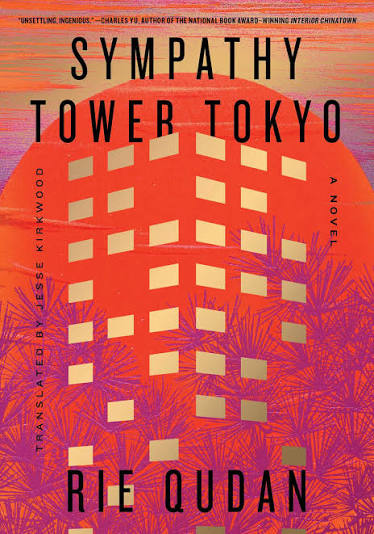
I have no doubt we haven’t seen the last of these controversies—nor were they even the first. In 2024, Akutagawa Prize winner Rie Qudan had no problem admitting that she had used ChatGPT—just a little, about 5 percent of the text—in writing her novel Sympathy Tower Tokyo, because the novel after all features a chatbot. You’d think that would have quelled any controversy, but it didn’t. Mindless critics called the entire novel “AI-written,” and debates broke out over the use of AI in fiction.
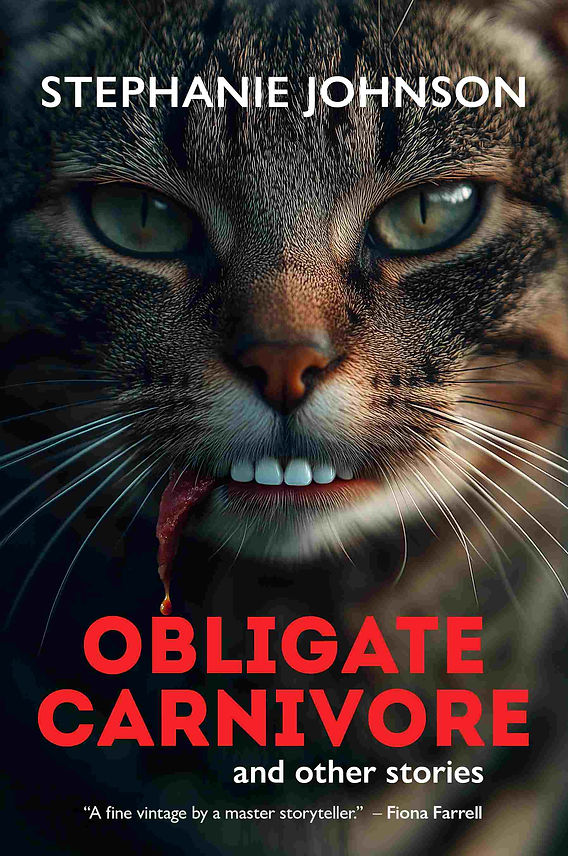
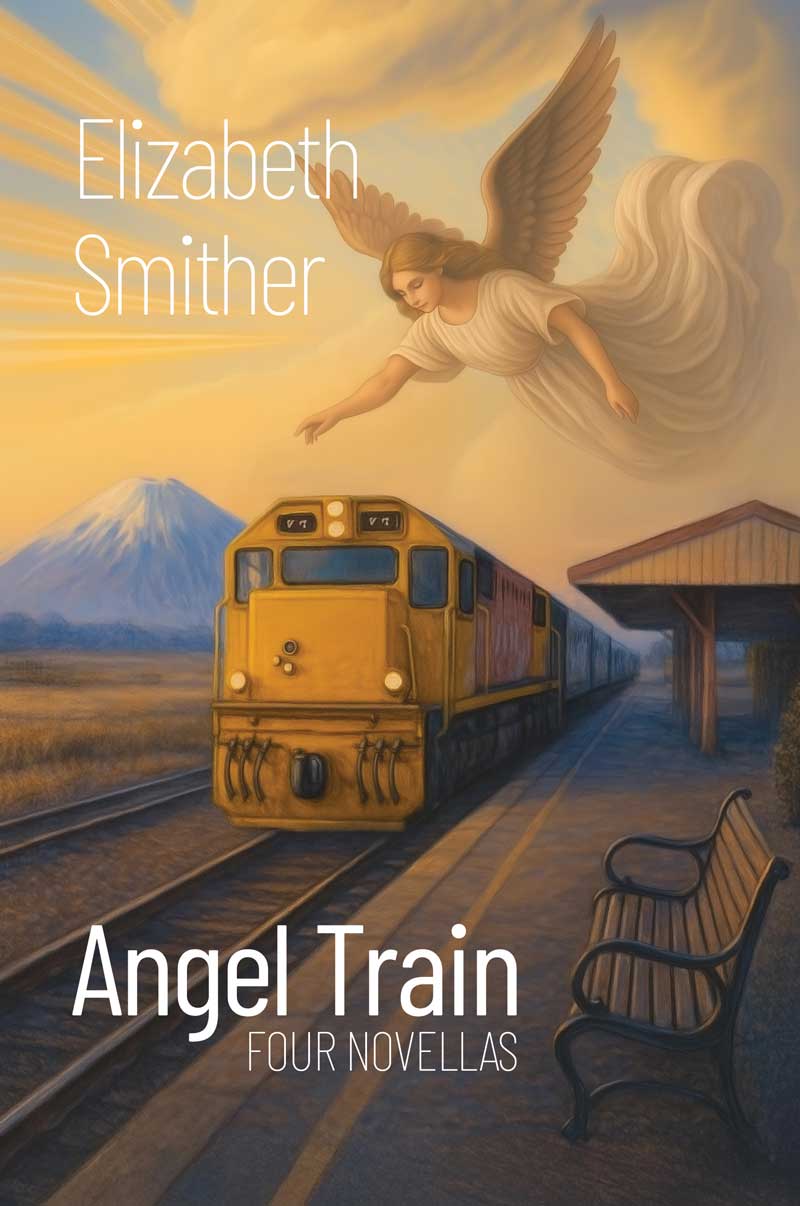
It hasn’t been just the text coming into question. In this year’s Ockham New Zealand Book Awards, two books—Obligate Carnivore by Stephanie Johnson and Angel Train by Elizabeth Smither—were disqualified because their publishers were found to have used AI-generated cover designs.
Clearly, the global world of writing and publishing are up in arms, if not in a panic, over the growing intrusion of AI into a sphere we thought reserved for human creativity and imagination. While beneficial AI use has been well tracked and established in such fields as medicine, the law, and fintech, writers and artists feel much more vulnerable if not resistant to it because of the direct threat it seems to pose to artistic integrity itself and to the livelihood of creatives.
The backlash has been quick and severe. Locally, the F. Sionil Jose Young Writers Award, administered by Philippine PEN, stipulates that built-in or external AI tools may not be used at any stage of the creative process, including using AI for ideation, outlining, drafting, writing, or editing. I’m expecting other major competitions and workshops, such as the Palancas and the UP and Silliman workshops, to employ similar restrictions, if they haven’t already.
Which brings me to how I feel about the whole brouhaha, a position I’ve been forced to define because of my professed openness to the use of AI in my Professional Writing class in UP and even to the possible employment of AI in fiction, in ways and under protocols we have yet to establish.
A friend recently messaged me privately to ask about guidelines for literary judges when addressing entries with suspected AI involvement. My short answer to him was that “Am not prepared to go public with this”—I guess I am now—“but here’s my unpopular opinion: I think anti-AI vetting is ultimately unworkable. Have to be convinced that AI checking is infallible. So either very strict and accurate checking for all entries, or let it be a free-for-all, with no more than a personal declaration of non-AI use if AI is to be shut out entirely.”
Before my literary friends and detractors pounce on me for this apostasy, let me lay a few things down:
1. I still believe that the best of AI cannot and will not replace the best of human imagination and insight and its literary and artistic expression. I simply cannot see AI achieving the quietly explosive turns of mind and phrase of an Anne Carson. But this will be so relatively rarefied as to offer cold comfort in light of other possible outcomes below.
2. Anything below the best is much less certain and highly negotiable. Let’s be honest: AI as it stands can easily out-write most people in most situations, for all their human sincerity and authenticity. The bar over which AI has to jump is very low, and lowered even further by poor education. The threat posed by AI here isn’t that students will use it to do their work and pass their subjects, but rather that students will pass without learning.
3. I’m not calling for unregulated, unidentified AI use. Ground rules should be laid down—but they should be fair, forward-looking, and enforceable.
As I’ve recently been predicting, I foresee a literary future where publishing will eventually be three-tiered, with 100% AI-produced work at the base, catering to the most popular tastes and trends; mid-range, an explicitly hybrid human-AI segment that offers interesting and exciting prospects for experimentation; and at a premium, 100% human-generated work, the best of which will exhibit human inventiveness and empathy, yes, but also courage, resistance, and risk-taking.
That said, the insidious entry of AI into literary competitions bothers me only because it’s undeclared. I would frankly be open to a competition—or even a category of one such competition—where AI can be employed and accepted with neither shame nor subterfuge, if only to explore the imaginative horizons of human-AI interaction. Retain the 100%-human category, sure and of course, but open a door that will be pushed open anyway by another generation if not us, like it or not. Bring AI on; let’s wrestle with it, curse it, bend it, bed it, tango with it, argue with it, embrace it—but we ignore or deny it at our own risk.
Do I use AI in my own work? In my creative nonfiction, including this very piece, yes, for research and organization, for transcription, and for mechanical tasks; I review all outputs for slop, misattributions, and misreadings. In my fiction, yes, for research (as in the historical novel I’m working on) and nothing more—at least not yet. If and when I do find an interesting use or need for it, I’ll say so and take full responsibility for it, although I still don’t see it happening.
But to return to the matter of literary judging (which I have stopped doing for many years now and have forsaken for good), there’s something ironically odd if not hypocritical about using an AI tool like Pangram to police and catch AI use in a piece of text. (I’ve used Pangram on a trial basis, and it is terrifyingly good.)
At the very least, if you have to, let the pre-screening of entries be done by a technical committee—not by the jurors themselves, who should bring only their discernment and connoisseurship to the judging table. Should a work truly prove outstanding despite certain AI misgivings, give it the benefit of the doubt; a great story remains a great story no matter whom or what it was written by. (I have read both “The Serpent in the Grove” and “The Blue Fighter” and found them powerful and moving.)
We don’t know how many masterpieces of the past were birthed and nursed by angels, demons, and other artificial handmaidens. Why not AI?
Email me at jose@dalisay.ph and visit my blog at http://www.penmanila.ph.