Qwertyman No. 211: Saving the Newborn

Qwertyman for Monday, August 17, 2026
GIVEN ALL the political, economic, and even meteorological turmoil we’ve recently been going through, I thought I’d write about something undeniably and visibly positive this week, if only to remind us that good things are possible if the “whole of government”—including even our fractious Senate—puts its mind to it. 

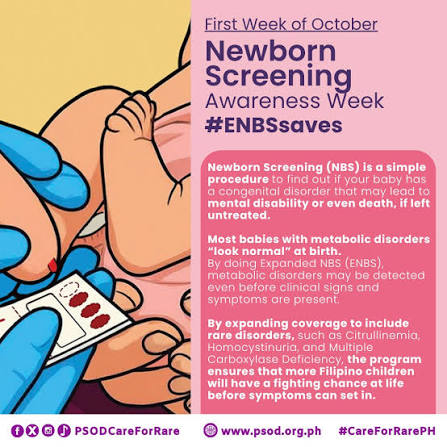
Full disclosure: I’ve been editing a book on, of all things, the Philippine Newborn Screening (NBS) program, and I’ve been so impressed by what I’ve come across that I requested and secured permission from its author, Dr. Carmencita D. Padilla, to share some highlights of that program. Dr. Menchit, as we call her, is no ordinary physician; a clinical geneticist and pediatrician, former chancellor of UP Manila and a key figure behind its National Institutes of Health, she was named National Scientist in 2023 for her contributions to medicine.

Back in 1990, Menchit had just returned from a fellowship in Sydney, brimming with enthusiasm about NBS, which had already been adopted and routinely practiced in Australia. 

What NBS addresses is this: babies can be born with any of almost 30 conditions inimical to their health, including congenital hypothyroidism (mental retardation and growth delay, with IQ loss possible as early as the second week of life), congenital adrenal hyperplasia (salt-wasting crisis, shock, death by the end of the first week), PKU, and galactosemia. 

A newborn with any of these conditions looks perfectly well: doctors and mothers will see no rash, no fever, no warning. Looking healthy, the baby will go home, with the disorder hidden for months, or even years, until the symptoms appear—by which time, it could be too late to reverse the damage. Ironically, if the problems are spotted early, there are treatments available, often as simple and as cheap as a modified milk formula for phenylketonuria (PKU), which causes irreversible intellectual disability if left alone.

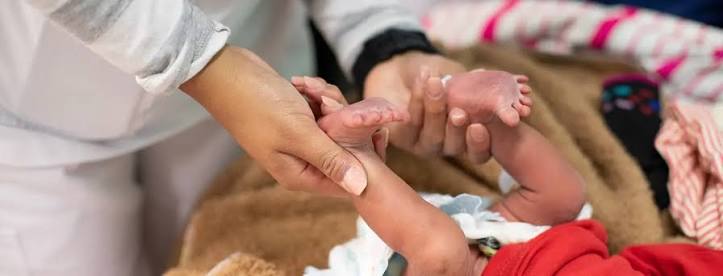
So early screening of all newborns is key. The process itself is fairly straightforward: “puncturing the heel of a newborn, absorbing a few drops of blood onto a special filter paper card, and transporting the specimen to a specialized laboratory for testing.” These cards could be easily mailed to a central laboratory. In the early 1960s, an American microbiologist named Dr. Robert Guthrie—whose own son and niece suffered from developmental problems—created a test to scan blood samples for indicators of anomalies and proposed this solution. But the medical and scientific communities shunned him, until sufficient publicity forced them to see he was right.

It would take more than 30 years for NBS to reach the Philippines, largely through the efforts of Dr. Carmelita Fagela-Domingo, who had seen NBS working in the West and tried her best to persuade the Philippine health bureaucracy to adopt it, and Dr. Padilla, who finally succeeded where Dr. Domingo had initially failed.

What worked for Menchit Padilla was the support of people like Dr. Domingo herself and UP College of Medicine Dean Alfredo Ramirez, and subsequently other allies in both executive and legislative branches beyond academia. Together, the two women pushed for a comprehensive pilot study that could form the basis for official government policy. Padilla also met Dr. Guthrie, who encouraged her to persevere in the effort.

Twenty-four Philippine hospitals took part in the study as members of the NBS Study Group. Private donors contributed computers, video cameras, fax machines, and pagers. A Finnish company donated a refurbished NBS machine. By 1997 the program was well underway. What was needed now was for the DOH to take over for the program’s full implementation nationwide. By 2000, there were still less than 200 hospitals out of 3,000 birthing hospitals participating in the program.
What was needed was an enabling law. This is the part of the story that I find most instructive, given our current Senate, and which I urged Dr. Menchit to include in her book (which she did, despite her initial misgivings). 

Because they couldn’t afford a lobby group, Menchit took it upon herself to draft the bill—after enrolling for a Master of Arts in Health Policy Studies degree at UP Manila. (I wonder how many of our lawmakers would go that far to get things done right—but then of course they have millions to spend on staff.)

Versions of the bill were filed at the House and Senate early in 2003, but by mid-year, hearings had yet to begin. To get the bill certified as urgent, its proponents had to get the support of Sen. Juan Flavier, who warned them that it would likely take ten years to get the bill passed. Desperate, Padilla turned to Sen. Loren Legarda, who was still hosting a talk show; between breaks, Menchit filled her in and persuaded Loren to start hearings on the bill and to file her own version, which she did on August 1. I’ll leave the rest to Dr. Padilla’s recollection:

“With barely three days until the end of the 12th Congress, we were advised to lodge an appeal for an ‘urgent bill’ with the House Presidential Legislative Liaison Officer, Undersecretary Bernardino Sayo. 

“It was a Wednesday, 5 pm. We went to his office at the House of Representatives. After listening to our desperate appeal, which was supported with albums full of pictures of saved and not-saved babies, Undersecretary Sayo agreed to arrange for a certification of an ‘urgent bill’ to be signed by President Gloria Macapagal-Arroyo the following day Thursday at 10 am. We were advised to return to the House of Representatives the following day for the second reading at 4 pm, the last day of the session at the House. With the bill now certified as urgent, our schedule for a second reading was bumped up. House Majority Floor Leader Neptali Gonzales, fortunately for us, helped the bill pass the second reading in the midst of calls for adjournment from the floor. 

“Garnering a unanimous affirmative vote, the bill moved to the required final third reading the following day, Friday, the last day of the 12th Congress. I received a phone call at 6:30pm from the Chief of Staff of Senator Flavier, Mon Navarra. He said ‘The NBS bill was passed into law! We were able to do it in 10 months—not 10 years!’ And since the House had adopted the Senate version in its earlier deliberations, there was no need for a bicameral session. We just had to wait for the signature of President Gloria Macapagal-Arroyo, which happened on April 7, 2004.”

The NBS bill, RA 9288, had itself become something of a miracle baby, giving hope to millions of newborns and the yet-unborn. Today well over 90 percent of Filipino newborns are covered by NBS, with a 100% rate targeted by 2028. Would that our government were so singularly and charitably minded in our other national priorities, especially for those already long born! 

(Top image from miraclefeet.org)
Penman No. 350: An Avatar of Good Writing and Reading


All-My-Lonely-Islands-new-cover-e1536389355642-325x519.jpg

Penman for Monday, April 22, 2019


EVERY BOOK author needs a publisher, and in this country, depending on what you write, there aren’t too many of them. There will always be a market and a publisher for law, medical, and engineering books (and let’s add cookbooks and inspirational books), but for those of us who write fiction, history, and things that won’t make you any real money, the options are few and far between.

If you’re connected with a university, an academic publisher such as the University of the Philippines Press, the Ateneo de Manila University Press, and the UST Press could be your ticket—if you pass the rigorous standards of academic publishing, which explains the prestige of getting published under a university imprint. Of course, self-publishing (what used to be derided as “vanity” publishing) has gained growing acceptance around the world, given the possibilities opened up by new desktop technologies. That still leaves authors with the problem of distribution, which neither universities and much less individuals are too adept at.

Thankfully, another option—indeed at the top of the list for most Filipino authors—is Anvil Publishing, established in 1990 as a subsidiary of the giant National Book Store chain founded in 1942 by the Ramoses. The NBS network of over 230 branches all over the country gives Anvil a formidable edge over any competition, but publishing isn’t just about distribution; as importantly, it’s about product, and bringing that product to market.

That’s the job of Anvil’s General Manager Andrea Pasion-Flores, who joined the company two years ago, coming from an ideal background as an English major and a talented writer in her own right, becoming a lawyer and then Executive Director of the National Book Development Board, followed by a stint as the only Filipino literary agent with the Singapore-based Jacaranda Agency.

She took over from the very capable Karina Bolasco, who moved over to head the Ateneo press. For most of its nearly three decades, Karina had shepherded Anvil to its predominant position in the industry, and gave many authors like me the break they needed to reach a national audience. In 1992, Anvil took on my first novel, Killing Time in a Warm Place, the first of many projects I would do with them. Today, 27 years later under Andrea, Anvil is working with me again to produce my Collected Stories, the culmination of about 45 years of my work in short fiction, after I recently edited a new edition of Manuel Arguilla’s short stories for them. It’s a milestone I’m eagerly anticipating, which should be out before the year ends.

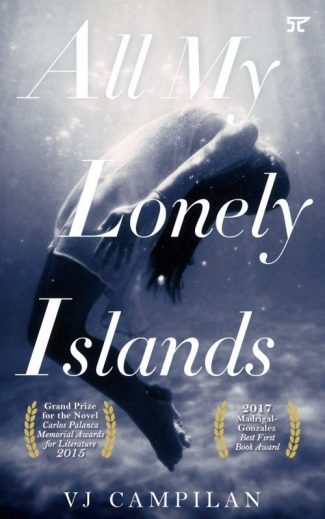
And it’s not even old folks like me, Krip Yuson, Ambeth Ocampo, and Lualhati Bautista that Anvil’s helping out the most these days, but exciting young authors like VJ Campilan, whose novel All My Lonely Islands has won a slew of awards. Anvil has also just teamed up with Wattpad to create Bliss Books for young Filipino readers, drawing on the popular YA online platform.

Last February, Anvil celebrated its 29thanniversary, and Andrea came out with a list of interesting company factoids, some of which I asked her permission to share with you:

  1. The first title published by Anvil was Atlas Adarna in May 1990, a collection of regional maps.
  2. Its first cookbook was The Best of Maya Cookfest, volumes 1-3, published in July 1990.
  3. Aside from the Atlas Adarna, Anvil’s first trade book was an anthology of Carlos Palanca award-winning stories, published in September 1990. Ambeth Ocampo’s Looking Back and Rizal Without the Overcoat were published in November 1990, and continue to be highly popular.
  4. Margarita Holmes’ Life, Love, and Lust was the first collection of essays published by Anvil. It came out in September of 1990 and sold for P125.
  5. Between 1990 and 1991, Anvil published 160 titles: pocket books, coloring books and the series Our World of Reading and Our World of Language, Our World of Science. It’s estimated to have since published more than 2,000 titles.
  6. In 2017, Anvil revived Anvil Classics, which for a long time only counted Nick Joaquin’s novel Cave and Shadows, but now has all his stories and his other novel The Woman Who Had Two Navels,and his collection of plays Tropical Baroque: Four Manileño Theatricals;  Lualhati Bautista’s most eminent novels (Dekada ’70, Desaparasidos, Bata Bata Paano Ka Ginawa, and ‘Gapo), Carlos Bulosan’s America Is in the Heart, and Manuel Arguilla’s collected stories. (My Collected Stories will fall under this imprint.)  

“In 29 years,” Andrea says, “Anvil has grown to be one of the leading publishers in the country, serving a diverse audience that is represented by the diversity of authors on its roster. And though the business of publishing books has become a little bit more complicated than 29 years ago, my two short years in the company have shown me that the commitment to books of the Ramos family, represented by Xandra Ramos-Padilla, is strong and unwavering. And for our growing team of 43, running up to 2020, we have a few things planned on all fronts.”

Congrats, Andrea, and may Anvil—among our other notable publishers—continue to promote good writing and reading for and by Filipinos.

Penman No. 165: Going for the Bestseller

IMG_8046

Penman for Monday, September 7, 2015

AUGUST AND SEPTEMBER are usually busy months in the cultural calendar, and this year’s been no exception. UMPIL—the Writers Union of the Philippines—held its annual conference toward the end of August, with the economist and columnist Solita “Winnie” Monsod delivering the customary Adrian Cristobal Lecture. On September 1st—perhaps the most important date on many a young Filipino writer’s calendar—the 65th Carlos Palanca Memorial Awards for Literature were given out, with poetry titan Gemino “Jimmy” Abad arguing eloquently for the power of literary language to create its own reality.

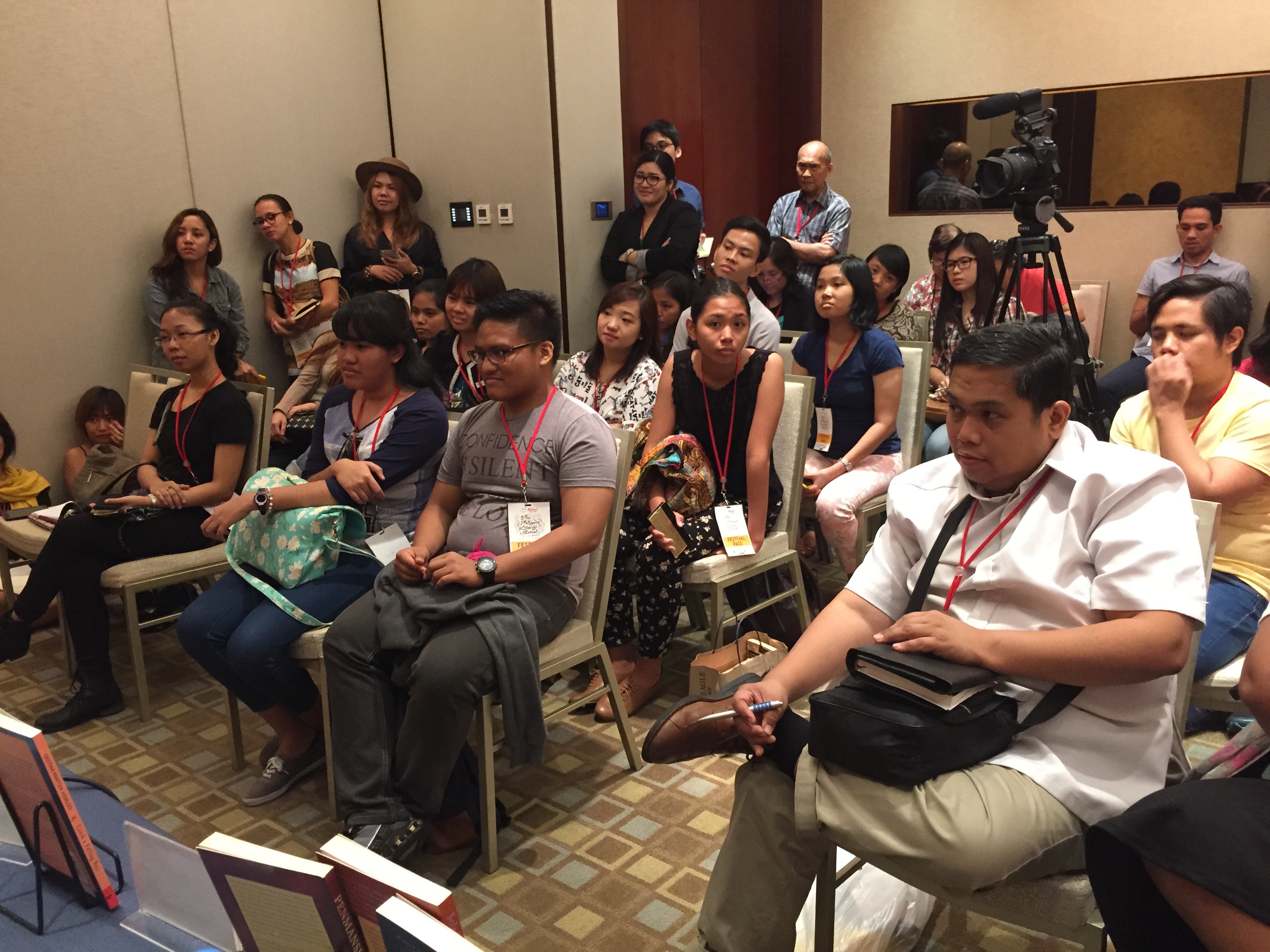
In that same week, National Book Store, among other sponsors, put on the Philippine Literary Festival at the Raffles Hotel in Makati, headlined by visiting authors Matthew Quick and Meg Wolitzer. I went on a panel at that festival with my friends Krip Yuson and Jing Hidalgo, with Marivi Soliven as moderator, to talk about writing the novel. I was surprised to walk into a packed room at the Raffles, despite the fact that Meg Wolitzer was holding forth in another session at the same time.

Now, I’ll admit that I’d never read Meg before, although I’d read about her recent novel Belzhar. She was advertised as a bestselling author, as was Matthew Quick, who wrote The Silver Linings Playbook.

I overheard a mild complaint in the hallway to the effect that the NBDB should have invited the powerhouse cast of Pulitzer prizewinners that Manila festivalgoers have been used to seeing (I remember hosting a chat with the wonderfully encouraging Junot Diaz a few years ago). I didn’t have the time to stop and respond to that comment, but I would’ve said, ”Hey, no problem! There’s a lot we can learn about producing bestsellers! And bestsellers can and should be well-written, too!”

Indeed, in our panel on the novel, one of the recurrent themes that came up was that we Filipinos don’t write enough novels (“We’re world-class sprinters,” I noted, “but not marathoners”), at a time when the only thing international publishers are looking for are novels, which can lead to fat Hollywood contracts and all kinds of other spin-offs.

Toward the end of that discussion, in the Q&A, a young lady in the audience asked about what we (presumably the literary Establishment, going by our senior-citizen cards) thought of newer and less traditional routes to literary fame like Wattpad. Thankfully, I’d heard of Wattpad, and had even actually registered on the site a few months earlier out of curiosity, so I could peek into what was going on there. I knew that Wattpad was generating stories that were already being adapted into commercial movies, so it was more than another digital pastime. (For my fellow 60-somethings, Wattpad’s a website where people—usually very young people—upload stories of all kinds, typically love stories, vampire stories, science fiction, and fantasy.)

I told the questioner that while it was likely that much of the material on Wattpad wouldn’t come up to conventional literary standards, I didn’t see that as a problem. What was important was that—at some level and with little or no intervention from their elders—young people were writing and reading, and that can’t ever be a bad thing. Tastes mature and change, and even within those young-adult genres, truly good work is bound to emerge and be recognized and rewarded. And even mainstream literature itself would ultimately benefit from the spillover; as Shakespeare put it, “When the tide comes in, all the ships in the harbor rise.”

But beyond supporting what younger writers were doing, I brought up another pet theme of mine, which is that we older writers write way too serious (if not sometimes inaccessible) stuff, and have thereby separated ourselves from our potential readers. Creative writing has become way too academicized—produced in, for, and by formal writing programs, with little regard for what ordinary readers are really concerned about in their daily lives. In other words, while we seek to develop our readership, or work on the demand side, we should also work on the supply side by writing material of more popular appeal, with little or no reduction in quality.

This train of conversation ran on a couple of nights later at the Palancas, where I had a chance to chat at the sidelines with Graphic fiction editor Alma Anonas-Carpio and essayist Ferdie Pisigan-Jarin. (I don’t smoke—and I would urge everyone not to—but I happen to find people who smoke usually more interesting to chat with than those who don’t, so I usually join the smokers out on the patio of the Rigodon Ballroom at these Palanca dinners, especially when the program—with my apologies to the gracious hosts and the contest winners—goes on for too long.)

I told Ferdie that I suspected that, outside of school, young readers these days didn’t really care much about author’s reputations, or about what critics or other old people say about a work. Ferdie agreed. “We undertook a survey,” he said, “and we found out that what makes young readers decide to buy a book is what they can get of the story from the back cover. They can’t even leaf through the pages, because most books these days are shrink-wrapped.”

From Alma came the astounding news that one young Filipino writer, Marian Tee, was making a regular six-figure income from the Amazon sales of her e-book novels. Though based here, Marian writes dreamy romantic comedies set in places like Greece, with titles like The Werewolf Prince and How Not to Be Seduced by Billionaires, and with covers displaying a surfeit of naked male muscle. The female protagonist may be blond, swears Alma, but she’s really Sarah Geronimo in disguise.

I’m not saying that we should all write like Marian, because we probably couldn’t even if we wanted to. But it’s good to know that there’s someone among us who knows the market and can play the global game, because there’s a lot we can learn from her—in adaptability, in audacity, in humility, and in plain hard work.

I don’t think that literature as a fine art will ever be threatened (any more than it already is); there will always be authors who won’t mind being read by a precious few, and thankfully so, because these are the writers who will keep pushing the envelope of language and exploring uncommon sensibilities. For most other writers, or most other times, it’s worth keeping in mind that “bestseller” isn’t necessarily a bad word.