Penman No. 484: The Romance of Retro

Penman for Sunday, April 5, 2026
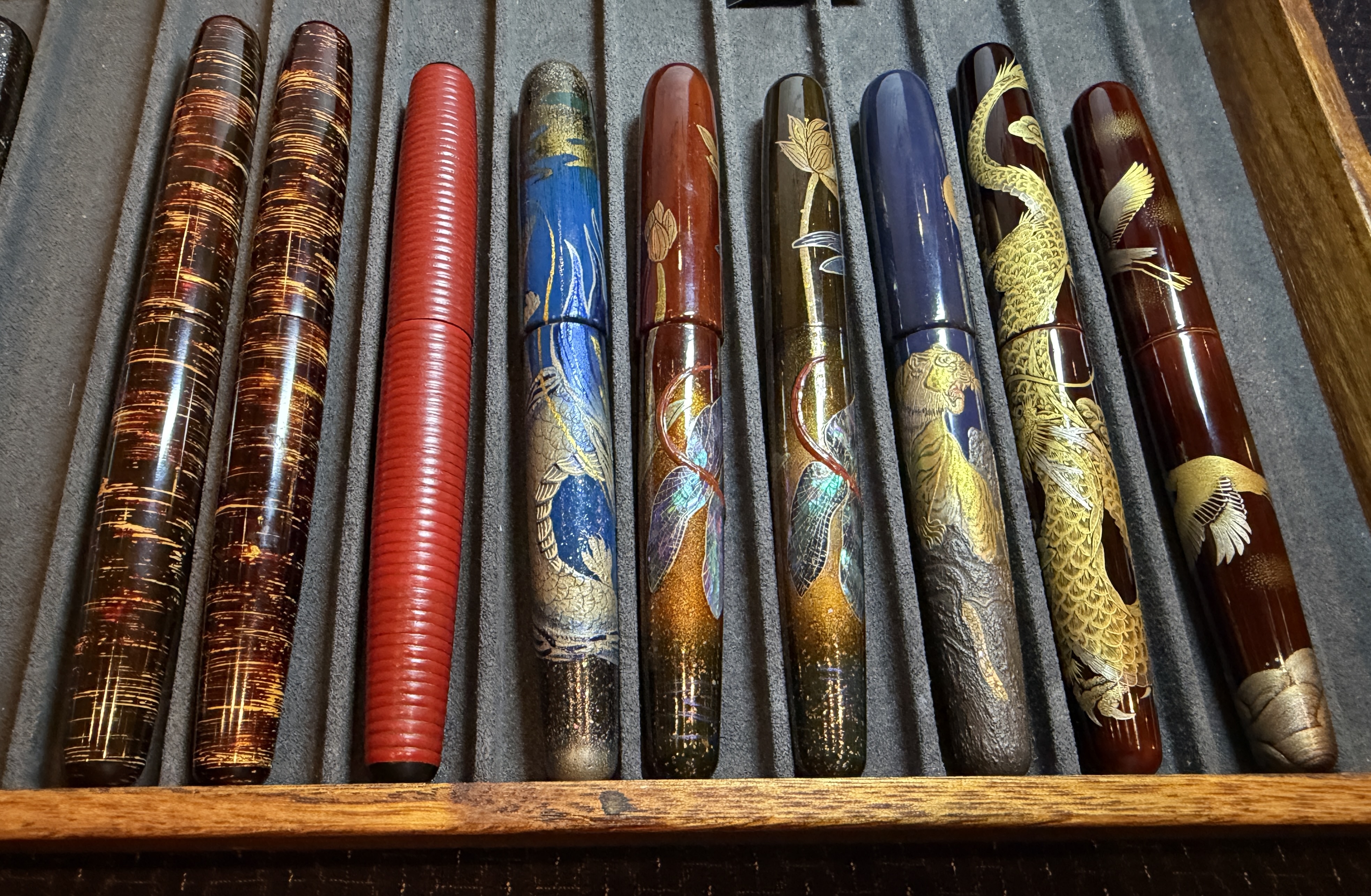
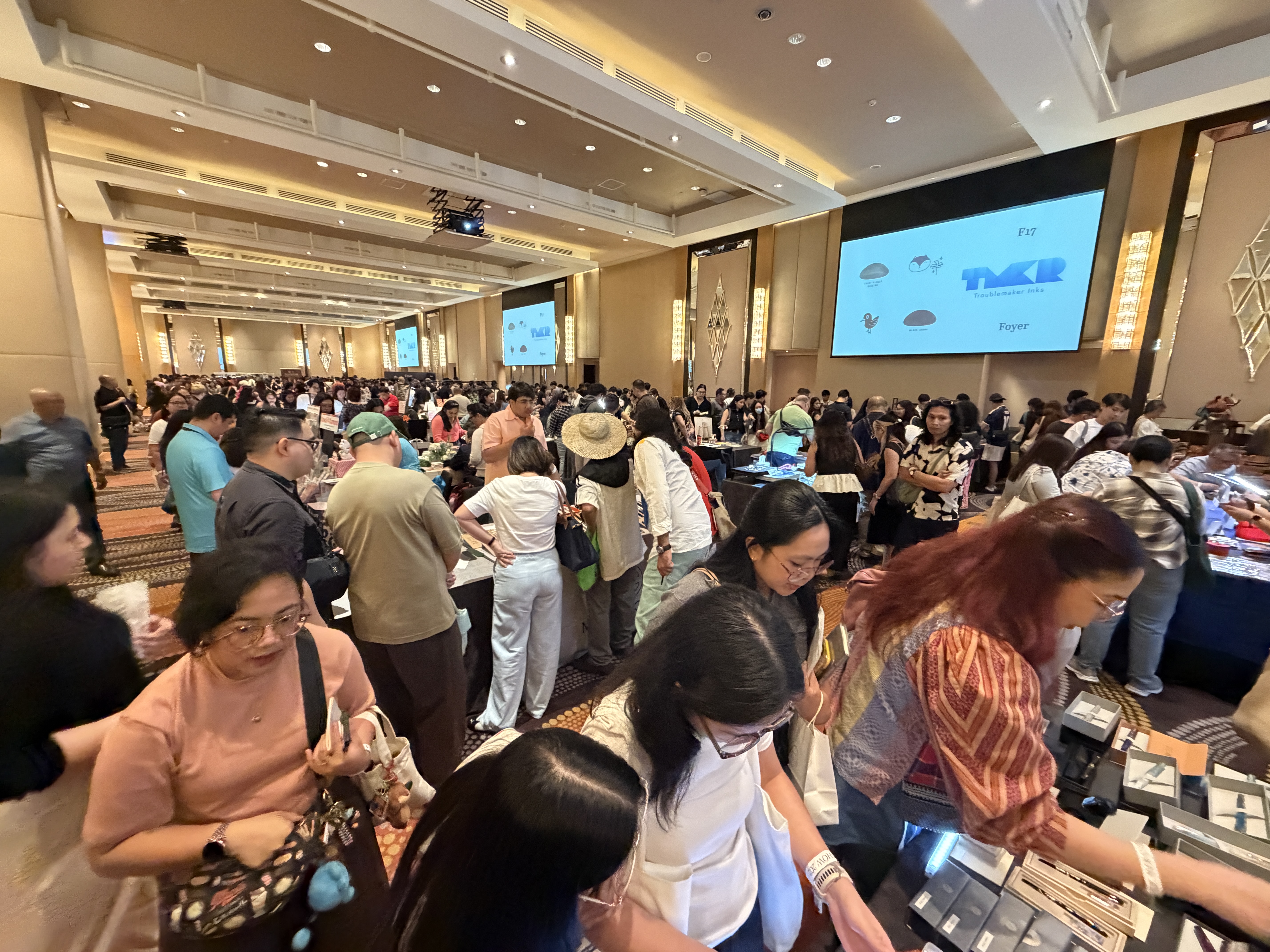
LATE LAST month, over two frenetic days at the Fairmont Hotel in Makati, more than 3,000 attendees crowded into a ballroom and the corridor outside for the sixth iteration of the Manila Pen Show since 2018. Not only did dozens of dealers and vendors coming from as far away as Russia and Turkey offer trays and tables full of pens, inks, and other writing paraphernalia. Seminar rooms were packed full of people learning how to adjust nibs, use fountain pens for painting, and master calligraphic strokes. What was most obvious and rather surprising was that the vast majority of attendees weren’t old fogeys like me who grew up with fountain pens, but young professionals and students eager to get their first Sailor, Pilot, or Pelikan—or even a five-figure Montblanc or Nakaya. 

The MPS is run by the Fountain Pen Network-Philippines, a group of enthusiasts that began with 20 people in our front yard in 2008. Now FPN-P counts 16,000 members online, from the Philippines and parts beyond—and if you think most of those people are idle lurkers, wrong: more than 9,000 of them participate actively on FPN-P’s Facebook page. And again, here’s the killer factoid: the group’s median age is somewhere between the late 20s and early 30s, clearly marking a demographic shift in the hobby from my fellow dinosaurs to the young bucks.
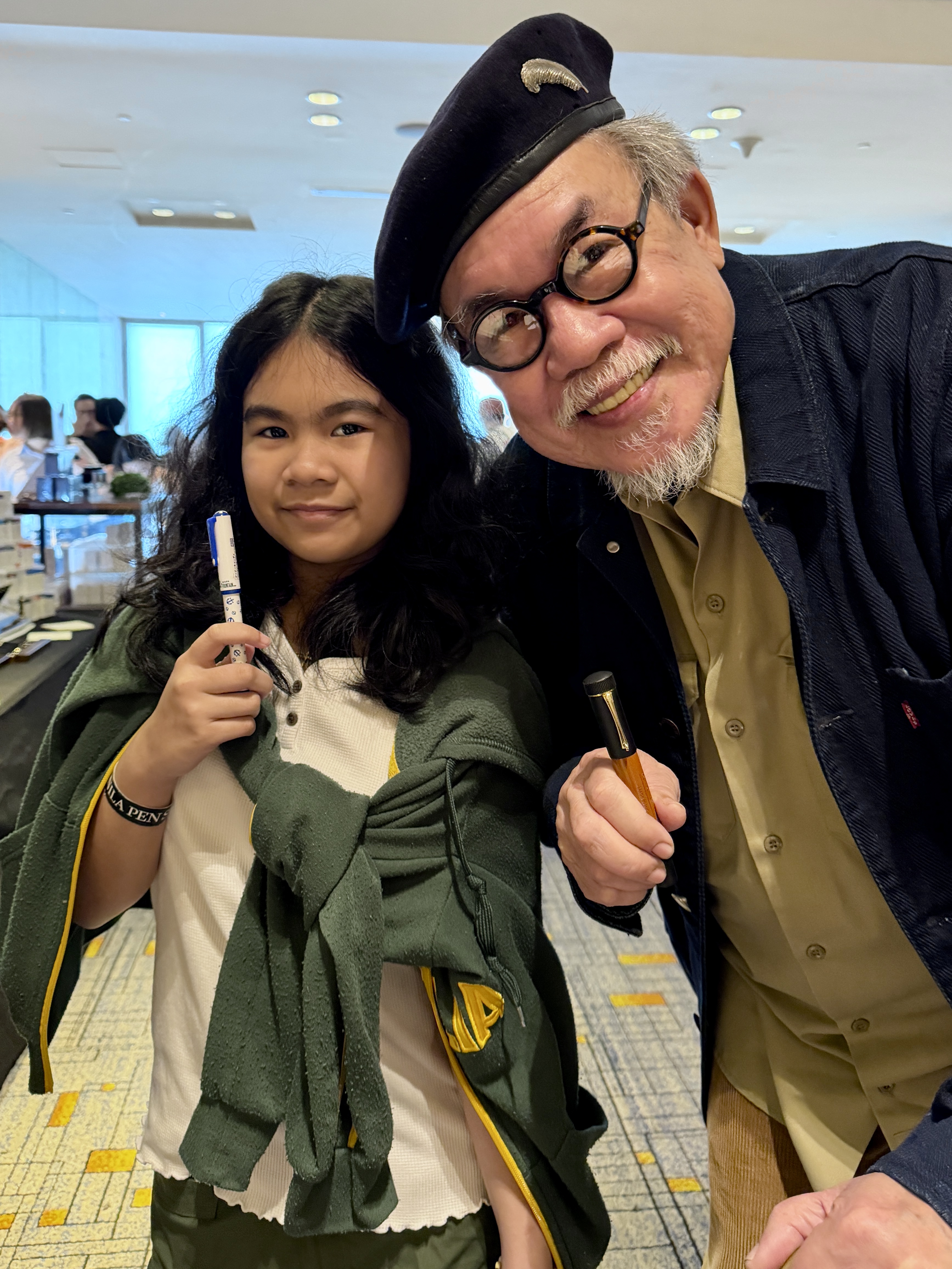
And it isn’t just pens. Everywhere around the world, young people are picking up and using typewriters, mechanical watches, film cameras, vinyl records, and pretty much anything older than they or even their parents are. They’re even wearing (after actively hunting down and paying big money for) torn jeans and ratty flannel shirts from the 1950s.

The romance of retro is definitely in the air. Whether it’s old tech or vintage clothing, the urge to try something old is palpably present, and “palpable” may be apt, because much of this fascination, according to the experts, has to do with the sense of touch. 

Beth McGroarty, the research director at the Global Wellness Institute, argues that “studies show that people are hardwired for things like touch from infancy,” and frames the analog revival as “a rebellion against that shapeless, disembodied, throwaway digital world of screens, and a hunger for physical objects and tools that are touchable.” 

That’s certainly true for fountain pens, which are as tactile as tools can get, and with which users establish intimate relationships. The act of writing with a pen represents the completion, commitment, and communication of an idea, a thought that starts from the writer’s brain, and gets processed by the writer’s emotions as it travels to his or her fingertips. The pen’s nib and ink commit the thought to paper and give it permanency, but also mediates it—you can often tell what the writer’s mood is by the shape and the sharpness and the fluidity of the written word. For young people growing up with keyboards, cursors, and block letters on an indifferent screen, nothing could be more different, because more personal, more “Me!”

That’s true even for typewriters, which—thanks largely to Manila-based repairman Gerald Cha and the Filipino Typewriter Collectors group on Facebook (yes, I’m also one of the organizers)—have attracted many young enthusiasts. They seem to be little more than clunky pre-computers at first glance—metal machines using greasy ink ribbons without “delete” buttons and no connection to the Internet—but it’s precisely this isolation that’s become its main draw for young users.
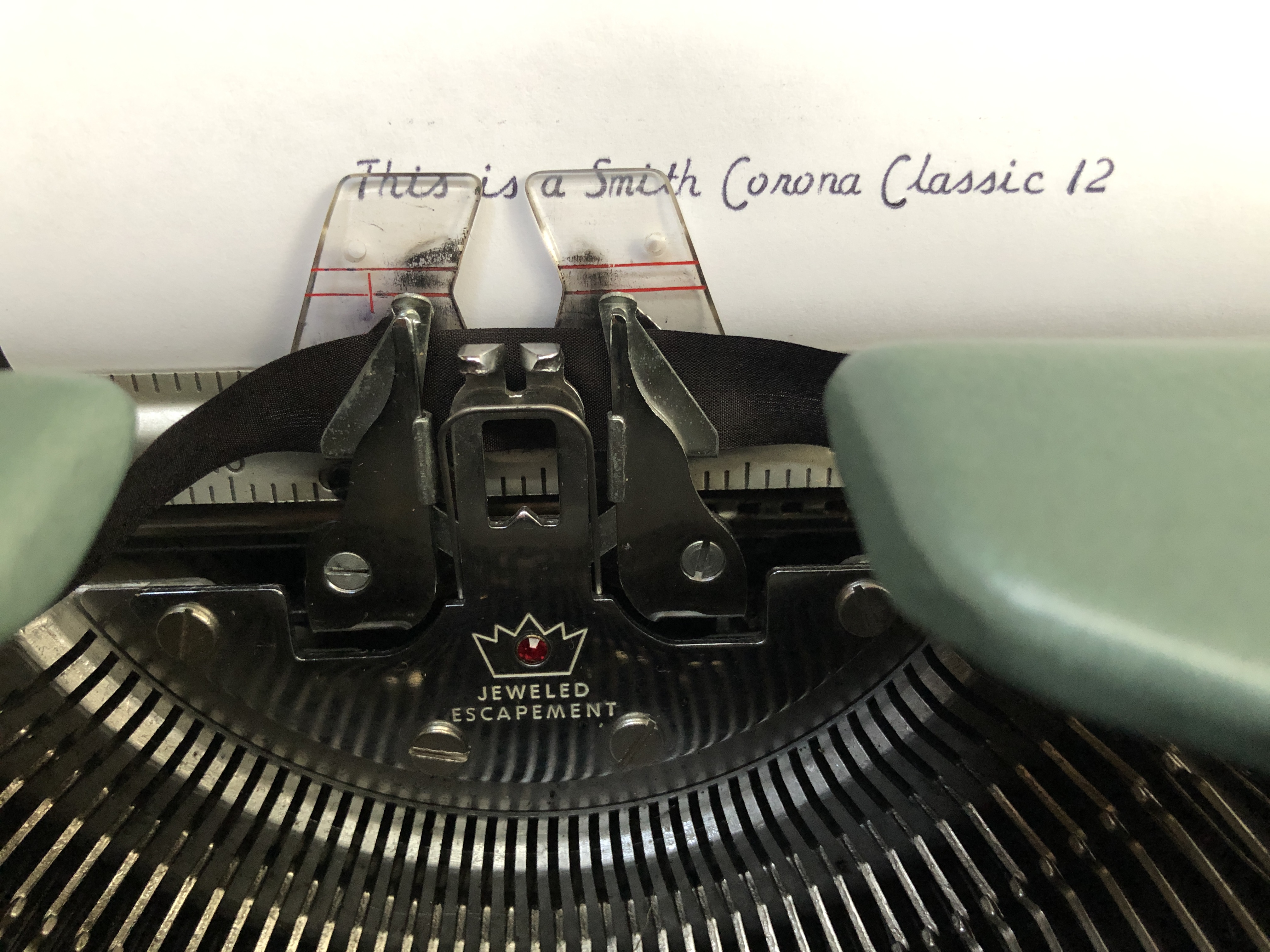
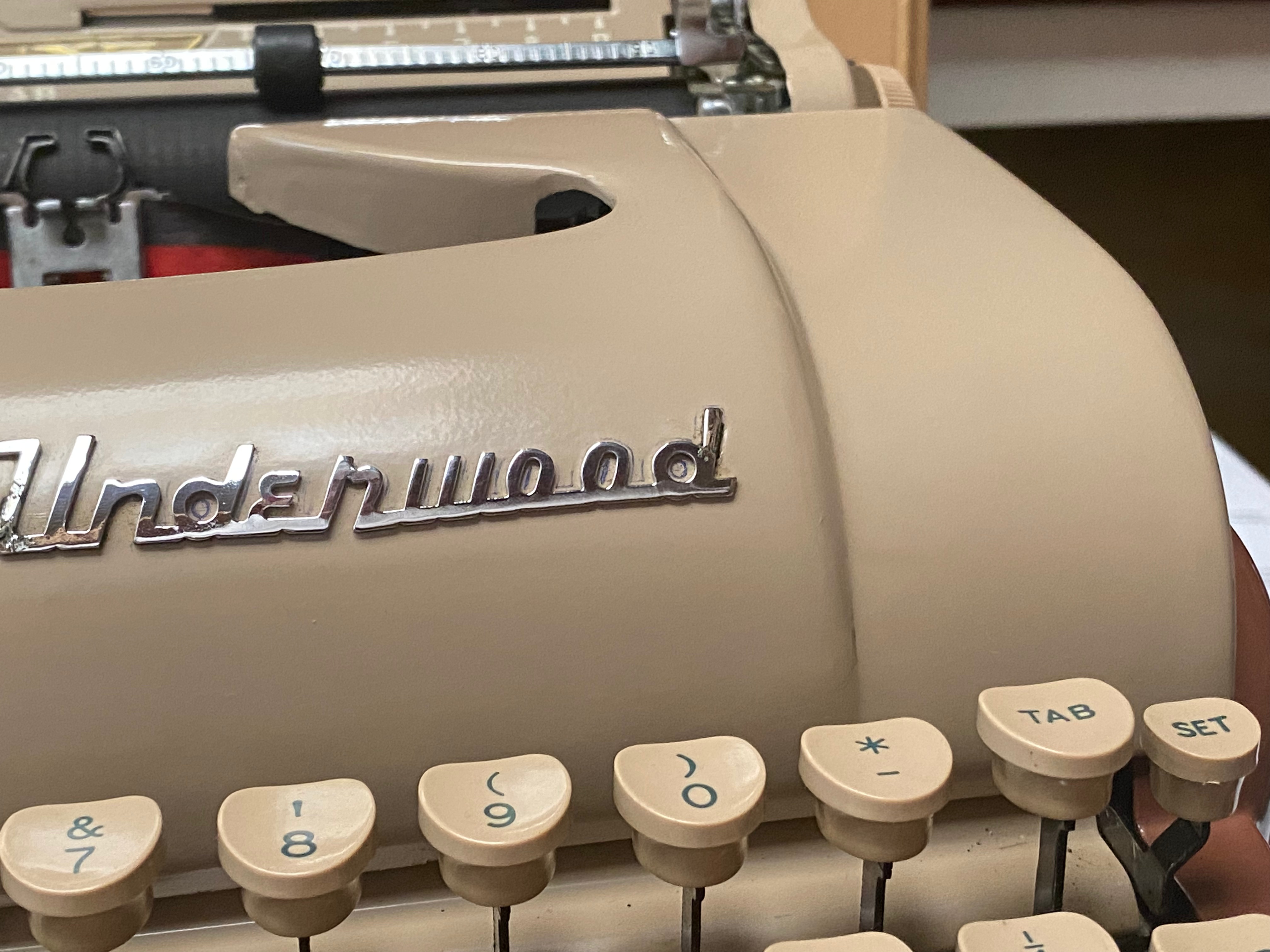
According to Walid and Joujou of Mr & Mrs Vintage Typewriters in the UK, who have restored thousands of machines over the past decade, the soaring interest has been driven by what they call “a craving for authenticity and quiet.” Now “quiet” isn’t a word you normally associate with the clackety-clack of an Underwood or a Remington. But take typing as a rejection of digital noise, which is what the many thousands of typewriter collectors around the world profess to like about their Olympias and Olivettis—complete disconnection from the outside world, replaced by total focus on what you’re typing, which you can’t simply erase without making a mess. Handwriting and typing demand deliberation.

So does, for that matter, film photography, to which young people are returning in droves, as if film were some holy membrane to be treated with respect if not awe (an attitude encouraged by the eye-watering price of film plus processing). I have a good friend who, like many millennials, turned away from megapixels and pocketable phone cameras to embrace expired Tri-X and clunky RB67s. I’d kid him about spending a fortune on his new passion and for thinking every shot through before pressing the shutter button—the mark of the classic photographer, a la Henri Cartier Bresson in wait of the “decisive moment”—only to send the roll through for digital conversion. But I can understand his commitment, because it’s about more than photography; it’s a decision to take fuller control over sensors and algorithms, to almost literally stamp one’s vision over the image, in defiance of AI, putting natural beauty over artificial prettiness.
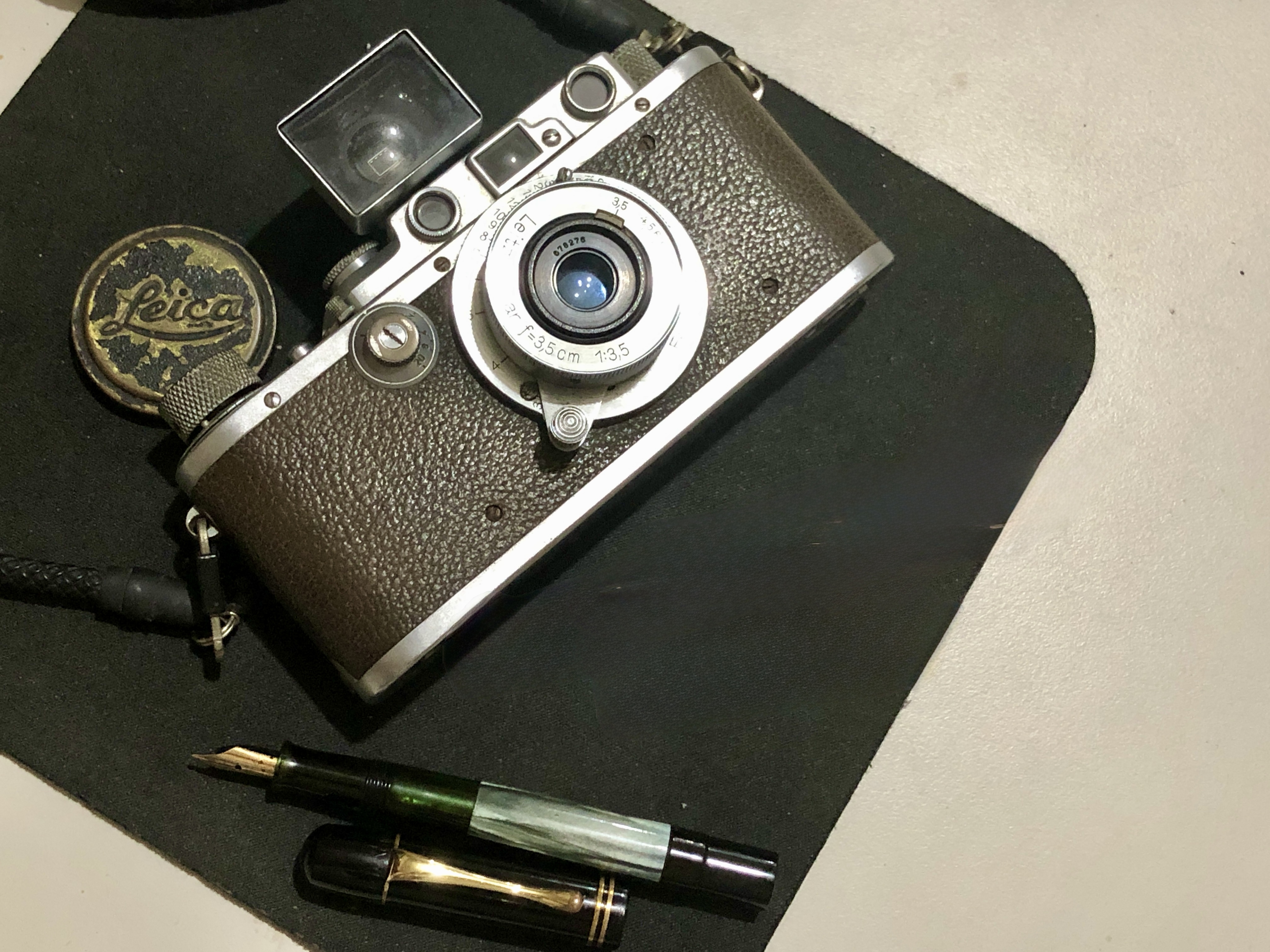
And then there’s the element of what researchers call “meta-nostalgia,” a longing to capture and reinterpret the past on one’s own terms. In a world hurtling forward into the void, the imagined past offers clarity and security, if only because it already happened. Writing with a pen—especially a vintage one that your Lolo or Lola might have exchange love letters with—returns us to a fantasy of innocence (forgetting, of course, that someone like Josef Stalin signed death warrants with a tiny Pelikan 100–the pen beneath the Leica in the pic above). 

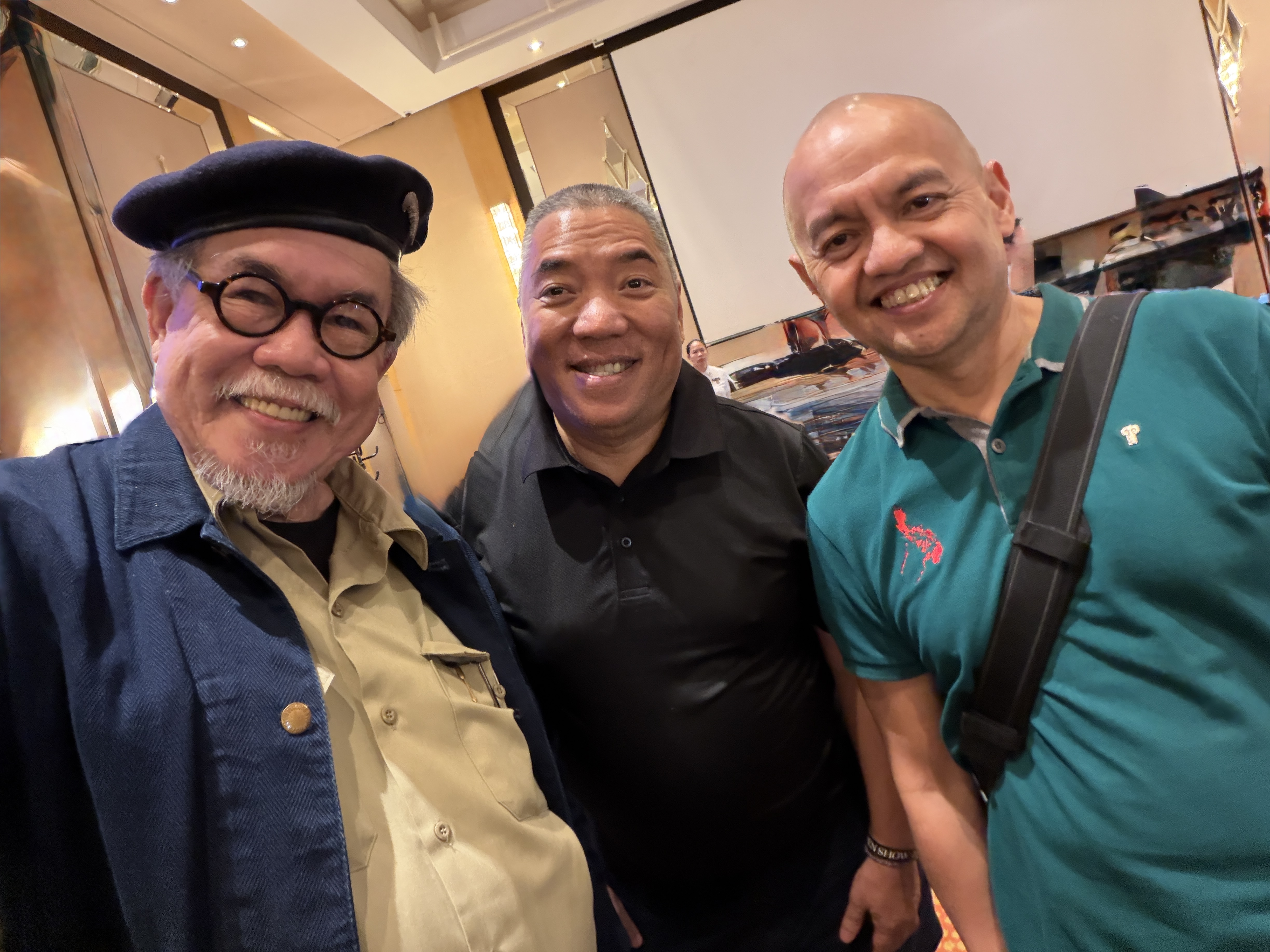
But returning to pens, it was clear from the MPS that this wasn’t a jump back to the ‘40s or ‘50s, except for the few of us who specialize in that period. The “kids,” as Beng and I like to call them, were buying pens to play with, employing a raft of designer inks that not only sheened but shimmered, most definitely no longer your Lolo’s reliable blue-black Quink. They also brought and bought journals, cases, stamps, washi tapes, and such accessories as make not just a hobby but indeed an industry. 
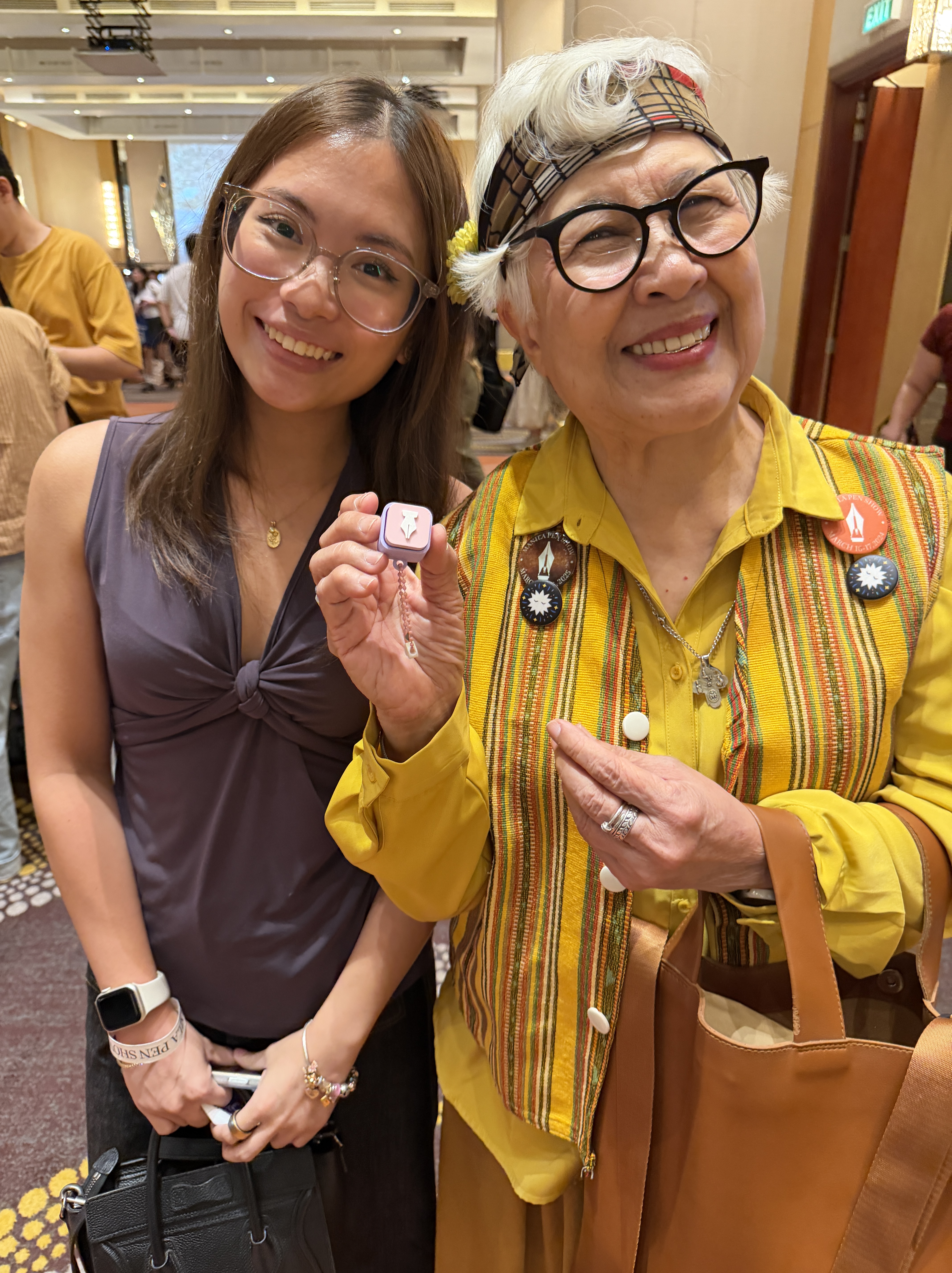
Retro is back with a vengeance, and as we oldies—the so-called “OGs”—sat back and marveled at what the young ones were willing to spend on what we used to think of as no more than writing tools, one of them came up to us with a flashy pen and said, “In fifty years, this will be vintage!” Indeed. Sooner or later, we’ll all belong to the past, and as today’s Gen Z’ers are beginning to realize, it can be far more fun and comforting than the uncertain future.

Email me at jose@dalisay.ph and visit my blog at http://www.penmanila.ph.
Penman No. 458: An Artist in Leather

Penman for Sunday, January 7, 2024

FEW WILL remember this, but one of the very first things I wrote about when I began this column for the STAR back in mid-2000 was my passion for leather. By that I mean good, well-crafted leather briefcases, bags, watch straps, and such accessories beloved of both men and women seeking a timeless alternative to today’s synthetics. There’s still nothing like leather to suggest authenticity, tradition, pedigree, and care—care because it requires skillful crafting as well as devoted maintenance by its user.

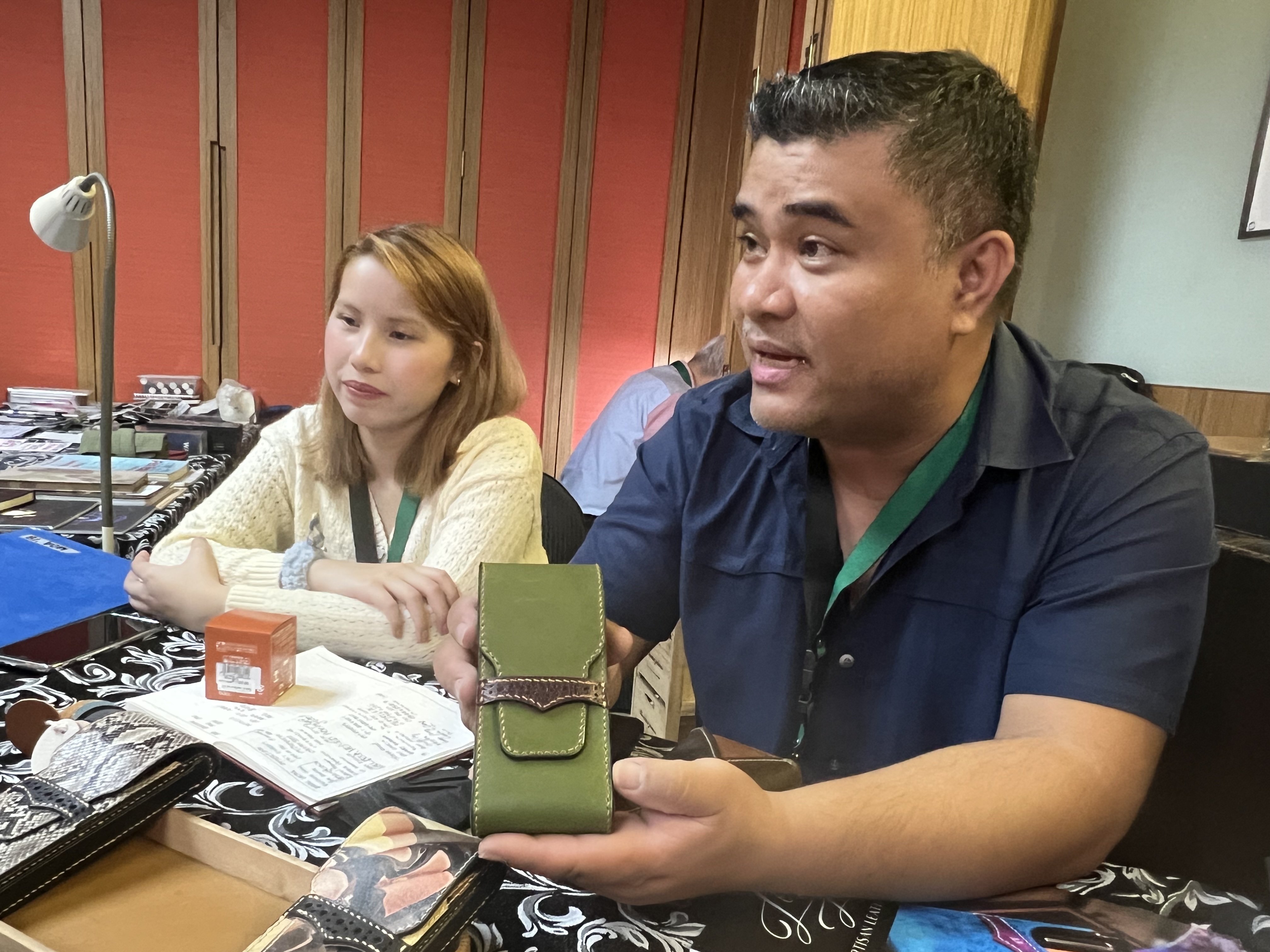
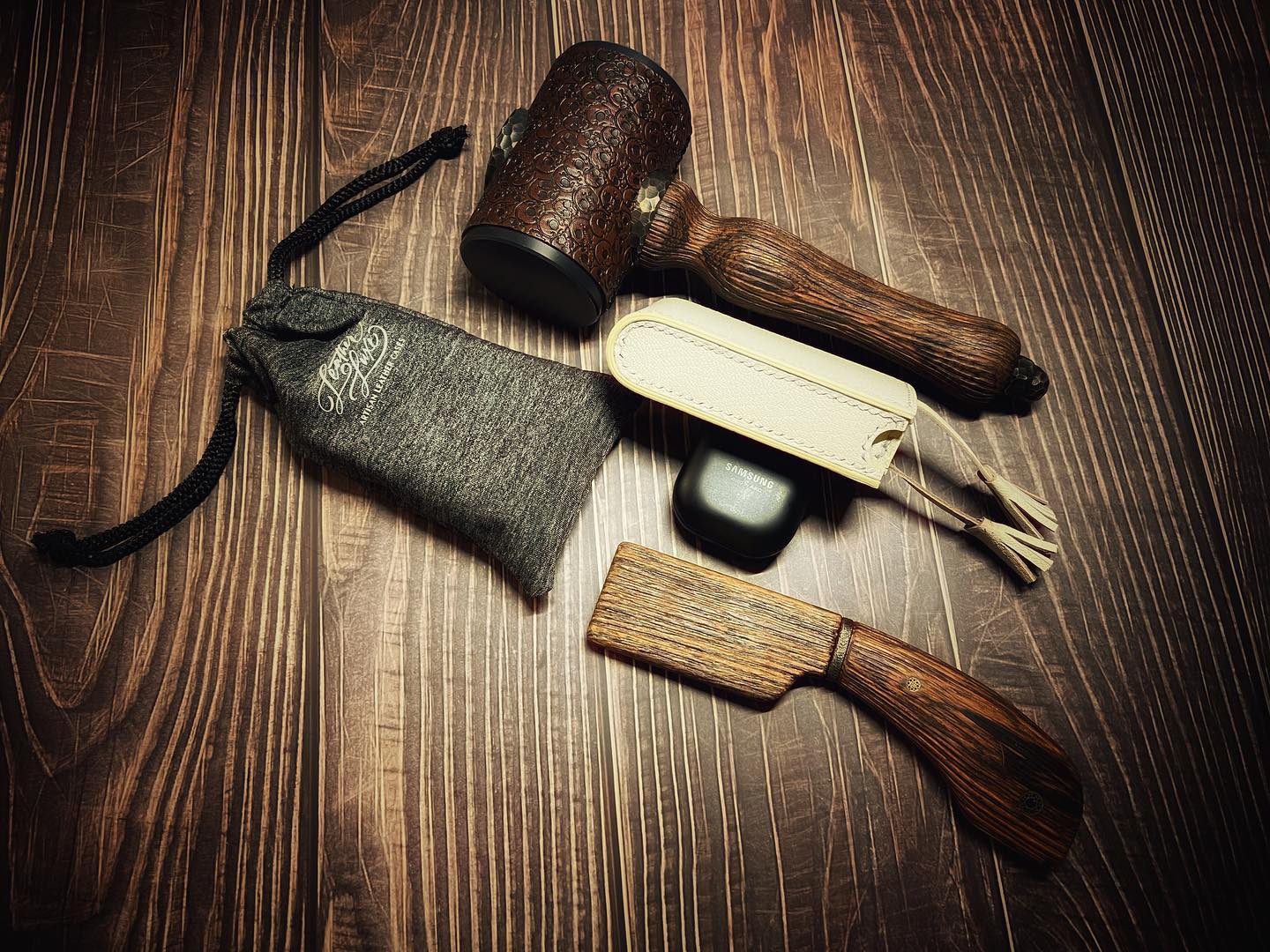
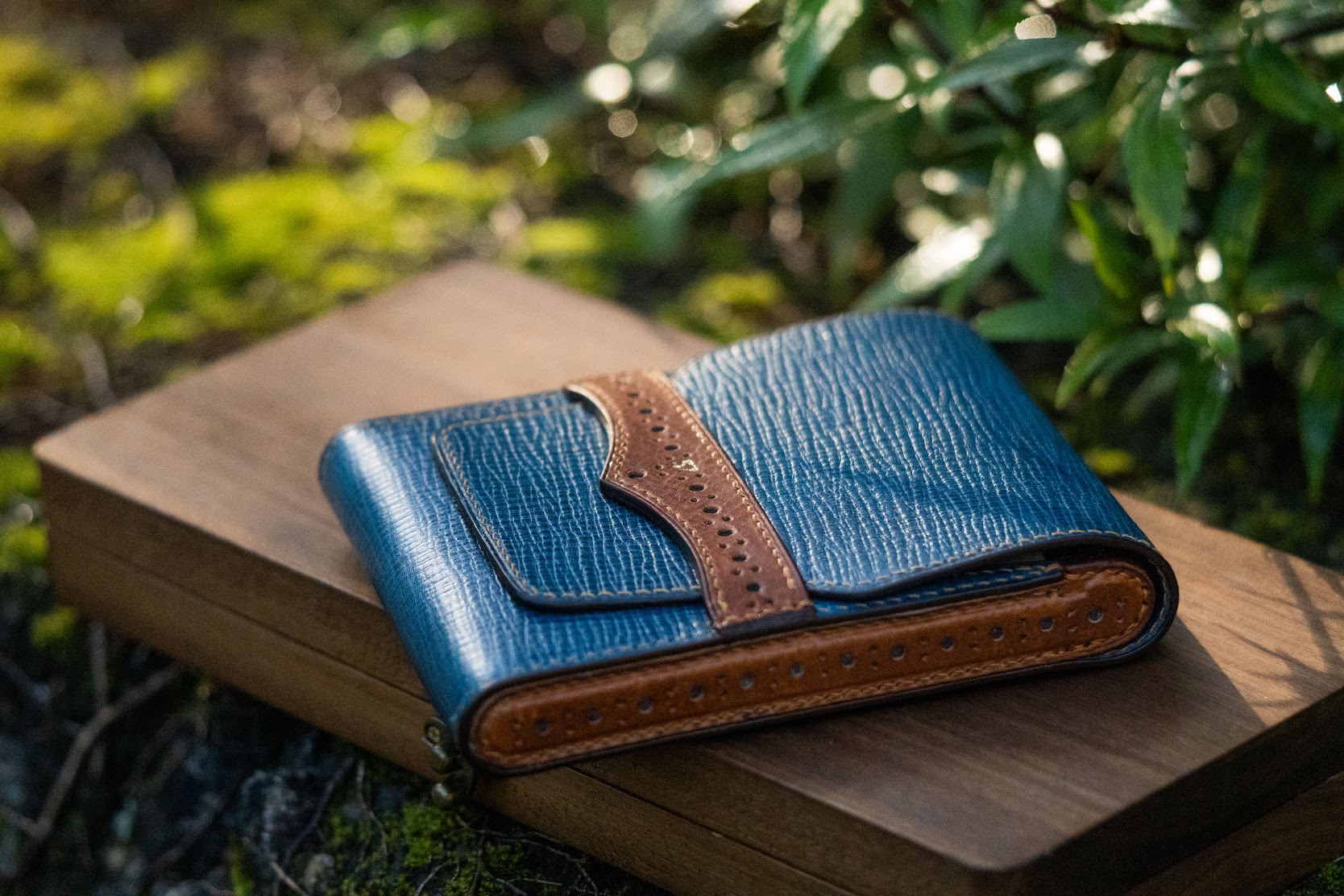
All these came to mind when I first met Raymund Nino Bumatay, who goes by the trade name “Amon Ginoo,” at the Manila Pen Show last March, where he introduced his Leather Luxe line of luxury pen cases. At my age, and having seen quite a bit of what’s out there, I’m a difficult man to please, but Amon’s work ticked all the boxes (except perhaps one—affordability, which we’ll get to later), particularly the quality and craftsmanship that connoisseurs demand. He catered to a highly specialized clientele, so I wanted to know how he could merge art and business and succeed on both counts. 

Amon was engaged in graphic design and marketing when the pandemic hit, hitting his profession badly. Over the long lockdowns, he began thinking of ways to both express himself creatively and make some money. That was when the idea of making leather cases for fountain pens came to him, spurred on by instructional YouTube videos. Why pens?

“I have been a fountain pen enthusiast since 2015,” Amon told me. “I started out with a simple and reliable Lamy Safari that’s still with me, and while journaling and writing were a common pastime during the lockdowns of 2020, I yearned to make something by hand that would house my humble fountain pen collection. This was why the very first and noteworthy leathercraft that I successfully completed was a fountain pen case.”

Amon, it must be said, is but one of a new generation of fountain pen collectors and users, among whom Filipinos now rank among the world’s largest and most enthusiastic communities. The Fountain Pen Network-Philippines (FPN-P), which I helped found in 2008, began with 20 members but now counts more than 13,000 in its Facebook group, most of them successful young professionals between 30 and 45, along with more senior CEOs, Cabinet undersecretaries, topnotch lawyers and doctors, and aging professors like me. 

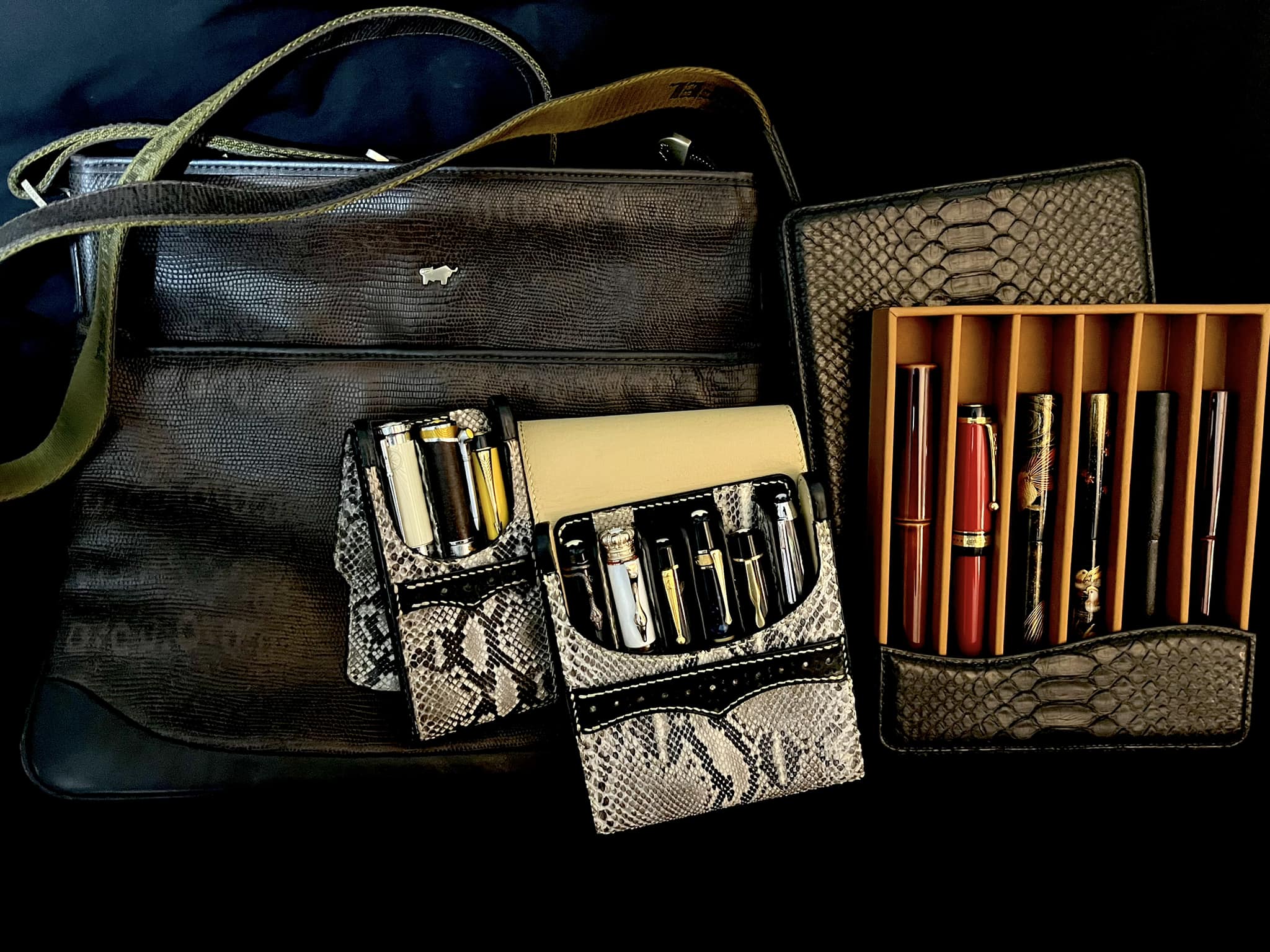
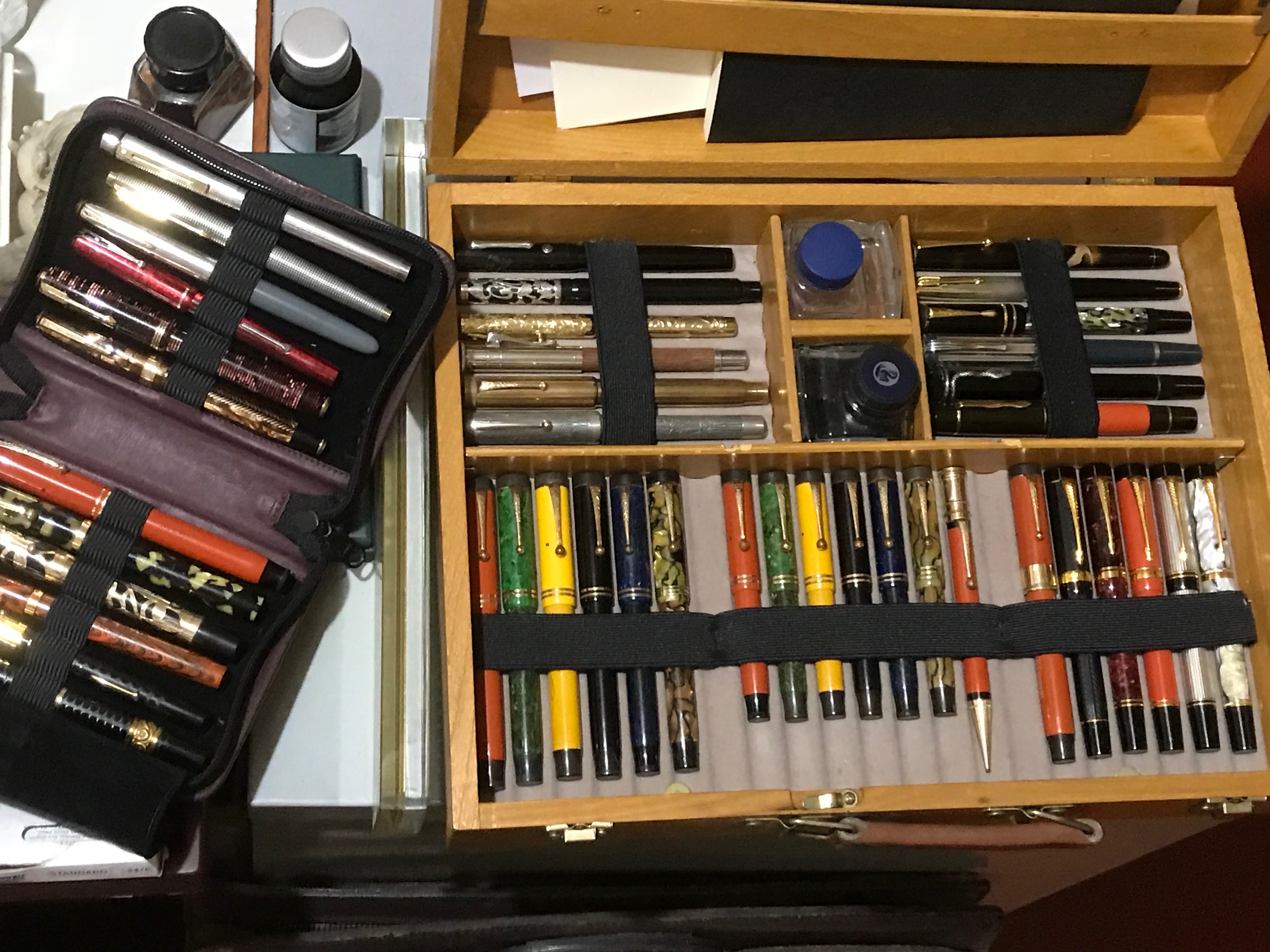
This was Amon’s ready-made market. Most people will do with just one pen that they’ll typically clip into their breast pocket or toss into a bag, but for fanatical collectors who amass hundreds of pens and carry a dozen of them around to pen meets, good cases are de rigueur. For everyday use, a three-pen leather case is normal. 

Amon wouldn’t be alone in supplying this market. Aside from imports, some other local artisans have been making quality pen cases. But Amon’s are on a whole other level, employing the choicest leather and featuring exquisite and even bespoke designs, which account for their premium pricing. His cases are, to put it plainly, truly world-class.

First, of course, he had to learn his craft. “After making a couple of leather fountain pen cases with one of my daughters, my wife asked what I was planning to do with all those prototypes. I explained that those were just practice pieces that I wanted to perfect and play around with. She insisted that I sell them so I could make this venture sustainable. My wife urged me to start branding these handmade pieces, saying they would serve as great homes for the pen collections of other enthusiasts. It took me a year and a half to muster the courage to finally put a brand to the craft I started and to begin offering my goods to FPN-P members. Thus was LeatherLuxePh born.” 

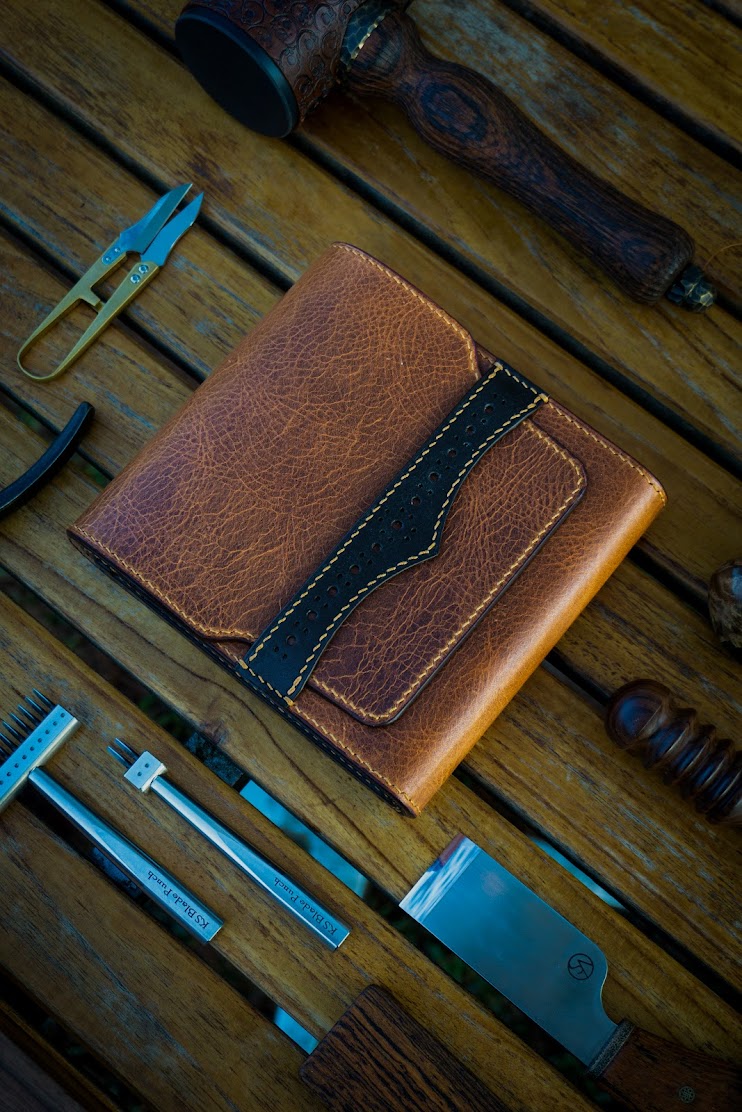
He was soon spending long hours trying out new methods and designs, aside from amassing leathercrafting tools from around the region and from Europe. And then there was the key aspect of the leather itself. “When I was just starting, I got my leather from Marikina, but when things began to get serious, I had to resort to Italian and French leather, sourced from distributors in Singapore, South Korea, and Hong Kong. I’ve also sourced leather from Brazil and Indonesia.” Aside from top-grade hides, he also uses exotic leathers such as snakeskin, ostrich, and stingray. “Each pen case is meticulously handcrafted, handstitched, and assembled by hand. The hand stitching alone needs a calm and steady hand, but I find it relaxing. We have spared no expense in choosing the best leathers, tools and supplies available and continually reach out to our clients to be able to share in their experience and further improve on what we have started.”

Amon found a receptive audience among FPN-P’s advanced collectors, whose five- or even six-figure Montblancs and Nakayas couldn’t just be carried around in pedestrian plastic or cardboard boxes. Among Amon’s repeat clients is CEO Jun Castro, who says that “I need a pen case for my big pens. Normal size pen cases would not fit them or be too tight to easily take them out.” Amon, who is based in Baguio, would even come down to work with clients to make sure he meets their very specific needs.

Of course, I had to ask Amon if he planned to expand LeatherLuxePh’s line beyond fountain pen cases, given the narrow niche it occupies. Yes, he says—but not too far from his base that he would compromise quality. “I’ve noticed that most Pinoy leathercrafters flock to bags, wallets, belts, and the like. New entrants usually resort to pricing that tends to undermine the artisan side of the craft. We decided to focus on pen cases precisely because very few of us do it. But we’ll venture into related items such as leather covers for journals and even a traveler’s kit for fountain pen enthusiasts. We’ll also tap the international fountain pen market this 2024 as a proud Pinoy brand.”

The upcoming 2024 Manila Pen Show on March 16-17 should be the perfect venue for LeatherLuxePh’s new products and designs. Can’t wait to see what this artist in leather comes up with next! (Meanwhile, check out LeatherLuxePh on FB and IG.)

Penman No. 374: A Pen-Filled Weekend

35808325815_67799625b6_o.jpg

Penman for Monday, November 11, 2019


IT’S BEEN a while since I’ve written anything about the original inspiration behind this column and its title—my longtime passion for collecting and using fountain pens—so please indulge me as I return to it this week with a big announcement: the holding of the second Manila Pen Show this weekend, November 16-17, at the Holiday Inn and Suites Makati.

But before we go to the show, let me make my standard pitch for fountain pens, for readers new to them. To younger generations weaned on ballpoints, rollerballs, gel pens, and other disposable writing instruments, fountain pens may be strange anachronisms—colorful (and often expensive) metal or plastic tubes filled with ink that could make an awful mess on your paper (or worse, on your shirt or dress). Why even bother with them when there are far more convenient and cheaper writing tools around (and why even bother with physical writing in this age of digital ink)?

It’s because—given the times we live in, when computer fonts and emoticons can make us write and sound alike—many people have begun to feel the need to express their individuality, to step out of the crowd and say “This is me!” in a very visible way. And nothing achieves that better than handwriting, which is best undertaken with a fountain pen.

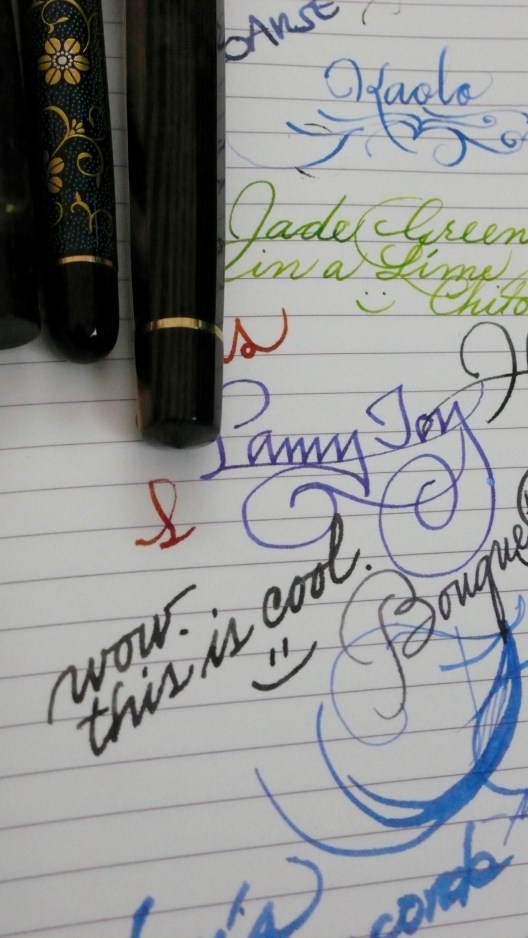
Of course you could also write with a pencil or a Bic ballpoint and say the same thing as you would with, say, a Parker 75 or a Sheaffer Balance fountain pen. But pencils and ballpens have hard, stiff points which, like rollerballs, leave even and uniform lines. Fountain pens can have softer “nibs” (the business end, either steel or gold, where ink touches paper) which allow for line variation—i.e., very thin or “fine” to very thick or “broad” lines—depending on the pressure you apply. Some so-called “flexible” nibs can even go from Extreme Fine (EF or XF) to Double Broad (BB). All of which means a lot of writing fun—and sometimes you don’t even have to write anything that means anything, as the doodling alone can bring hours of therapeutic pleasure.

2638972860_d5312f71b9_o.jpg

Not surprisingly, according to The Telegraph of London in an article from March 2018, “The fountain pen is enjoying a fresh renaissance with sales of the classic writing instrument rising, a trend which experts are crediting to youngsters wanting to find an ‘antidote’ to their increasingly digital lives.” The Washington Post agreed last December, in a column titled “The handwriting is on the wall: fountain pens are back!” Indeed, all over the world, fountain pen sales are soaring, with younger people rediscovering—sometimes as “fashion statements”—what their grandparents carried daily in their pockets or purses as work tools.

One important shift from the past to the present has been the disappearance or sidelining of the major vintage brands such as Parker, Sheaffer, Waterman, and Wahl-Eversharp in favor of upstarts such as TWSBI, Franklin-Cristof, and Moonman. While some of the old brands have resurrected themselves, and other standouts such as Montblanc, Pelikan, and Pilot have never gone away, it’s the availability online of colorful, inexpensive, and surprisingly well-built pens from such places as China and India that has moved the market for pens from middle-aged executives to college students and young professionals.

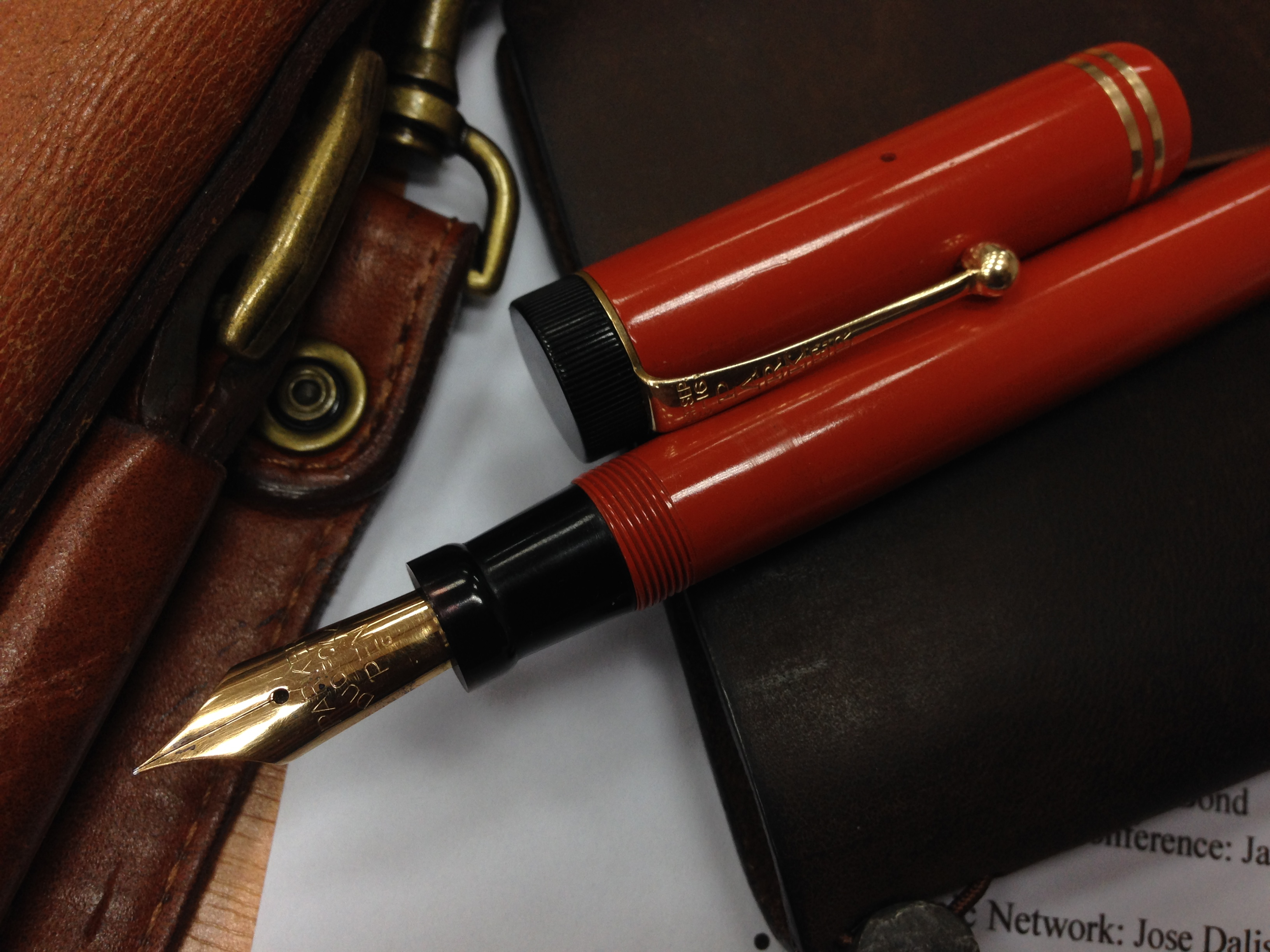
Many such youngsters comprise the 8,700-strong membership of Fountain Pen Network-Philippines (https://www.facebook.com/groups/159754404054904/), an organization of FP collectors and enthusiasts which I helped found in my backyard with 19 other pioneers eleven years ago. Like the pens themselves, some of us old fogeys are still around, nursing our collections of pre-war Parker Vacumatics (my specialty) and Waterman 52s, but we’ve happily been overtaken by a younger set obsessed with not just the pens but with inks and papers.

Now, about the Manila Pen Show: for veterans and newbies, and even with the proliferation of pen products on the Web, there’s nothing like going to a pen show to enjoy the whole carnival. The best way to choose and buy a pen is still to hold and feel it and see how it writes. I’ve been to pen shows in Chicago, Baltimore, Ohio, Singapore, and Detroit, among others, and you can imagine how exhilarating (and financially debilitating) those sorties can be, with thousands of glittery pens to choose from within so many square feet.

We held the first MPS last year at SM Aura to mark FPN-P’s tenth anniversary, and it was so successful that we decided to hold another one this weekend, this time for two days, from 9 am to 6 pm. Raffle tickets will be issued in exchange for donations to charity, in lieu of an entrance fee. According to our spokesperson and calligrapher extraordinaire Lorraine Marie Nepomuceno, “Modern and vintage pens will be available, as well as fountain pen inks, paper products, and accessories. Participating international retailers include Aesthetic Bay (Singapore), Atelier Musubi (Singapore), Newton Pens (USA), Pengallery (Malaysia), Pierre Cardin (Hong Kong), Regalia Writing Labs (USA) and Straits Pen (Singapore). Local retailers and brands represented at the pen show include Calibre and Friends, Cross Pens, Everything Calligraphy, Faber-Castell, Gav ‘n Sav, Guia’s Vintage Pens, Inks by Vinta, Kasama Pens, Lamy, National Bookstore/Noteworthy, Pengrafik, Peter Bangayan, Scribe, Shibui, and Troublemaker Inks. Enthusiasts with minor repair needs or who require nib regrinds can visit the booths of nibmeisters John Lim or JP’s Pen Spa. Workshops, as well as talks by special guests, have been organized for both days of the show.”

One of those special guests will be, ahem, me, to give a talk on collecting vintage pens on the afternoon of the 17th. See you at the Holiday Inn!

10155727165_7828cbd961_o.jpg