
Qwertyman for Monday, March 23, 2026
PARDON ME for this rambling piece this week, which I’m writing in a stupor, blindsided by the sudden, heartbreaking loss of a friend. I’m guessing I’m not alone in this state of disorientation, of looking for a center or an anchor to stabilize at least our view of the horizon. Every day we come across so many deaths on Facebook, amid hundreds of faceless thousands more around the world—much too many to mourn, even counting just your friends.
It’s been a tough time for many, with a war halfway across the planet casting a dark red shadow on us and our pedestrian lives, far out of sight and out of mind of Washington, Jerusalem, and Tehran, but ever vulnerable to the subterranean tremors of politics and economics snaking around the globe.
A viral post tried to make the best of that by reminding us that at least we’re not dodging missiles. That’s true, but it doesn’t remove the cloud of fear and uncertainty we’re living under—not to mention the pain of brutal price increases, which is what Donald Trump’s war comes down to for 98 percent of the world.
I’ve heard many friends and even strangers saying that despite all the aggravations we face today as Filipinos—the corruption, the inefficiency, the pollution, the noise both physical and political—they’re relieved to be where they are, instead of being somewhere out there under constant threat of death falling out of the sky. I’ll admit to feeling the same way, and that I even feel safer to be here today than in America, which I have no intention of revisiting until after the Trumpian nightmare is over.
No, this isn’t another piece about “resiliency,” although there’s certainly that, at least as a way of putting a good face on a bad experience. Rather I’m thinking about how we survive at all, beyond meeting economic needs, about prevailing meaningfully as humans with purpose and dignity and even hope in this horribly oppressive and degrading environment.
The fact is, people learn to adjust soon enough to adversity and privation, excepting such extremes as Stalingrad and Gaza, where sheer survival may have been heroic enough.
Nick Joaquin recalls in Manila, My Manila how quickly the city’s inhabitants fell back on their old routines after the first bombs exploded and the Japanese marched in. The shows reopened, the restaurants thrived, pedestrians bowed to the sentries, and life continued. Certainly there was terror and suffering aplenty, but until famine hit them, followed yet later by the horrors of the Japanese withdrawal, many Manileños apparently coped with the war.
Even closer to the present, we seniors well know what it was like in the early years of martial law, when, as if domestic turmoil weren’t enough, we were hit by a global oil crisis triggered by another Mideast war. The buzzwords then were “austerity,” “alcogas” and “Asiong Aksaya.” We mixed corn with our rice. We complained, we resisted, we struggled, we suffered—but we survived.
I have to remember these when I think of how confused and depressing the present can be, and how pointless it may seem to persevere, especially when we turn on the news or go online. We seem surrounded by hostility and indifference, by death and sorrow—and yet, just as insistently, goodness, creativity, and courage abide, our handmaidens and henchmen, the torchbearers of our humanity.
Last week, on one particularly busy day, my wife Beng and I attended two consecutive book launches.
The first, in Makati, was by our friend Erlinda Panlilio, who had been my student in a graduate writing class more than twenty years ago. Linda was among several women enrolled in Creative Nonfiction—all of them already accomplished in their respective fields—who thought that the time had come to gather and preserve the wealth of their memories in a book. I was less their teacher than their enabler, and many if not most of them subsequently published outstanding memoirs that looked back on lives well lived—not just in privilege as you might expect but in struggle, whether in business, love, conflict, or self-fulfillment.
Aside from many other compilations she’s edited, this was Linda’s third book (and she claims her last as she is now in her eighties, although no one believes her). The book, Saying Goodbye to the House, comes across as a valedictory, a summing-up of a long and fruitful life. At the launch, I said that it was important for senior voices like Linda’s to be heard in today’s frenetic, youth-oriented culture, which barely leaves time to pause, reflect, and rejoice as Linda does.
And then we moved back to Quezon City, where the young Cedric Tan was launching his second novel for young adults, a fantasy titled The Hotel Titania, in which a girl steps into a hotel that turns out to be full of magical beings. You could not imagine a sharper contrast with Linda Panlilio’s domestically grounded universe (which, being Filipino, has its touches of wonder as well). Cedric not only wrote a fantasy; by giving up his job to go full-time into writing, he’s living it, exploring territory at once exciting and fraught with danger.
Stepping into the car homebound after a day full of books and stories, Beng and I felt exhilarated, our confidence in the tenacity and the infinite variety of the human imagination restored. Against dismal reality, our memory and our curiosity would save us.
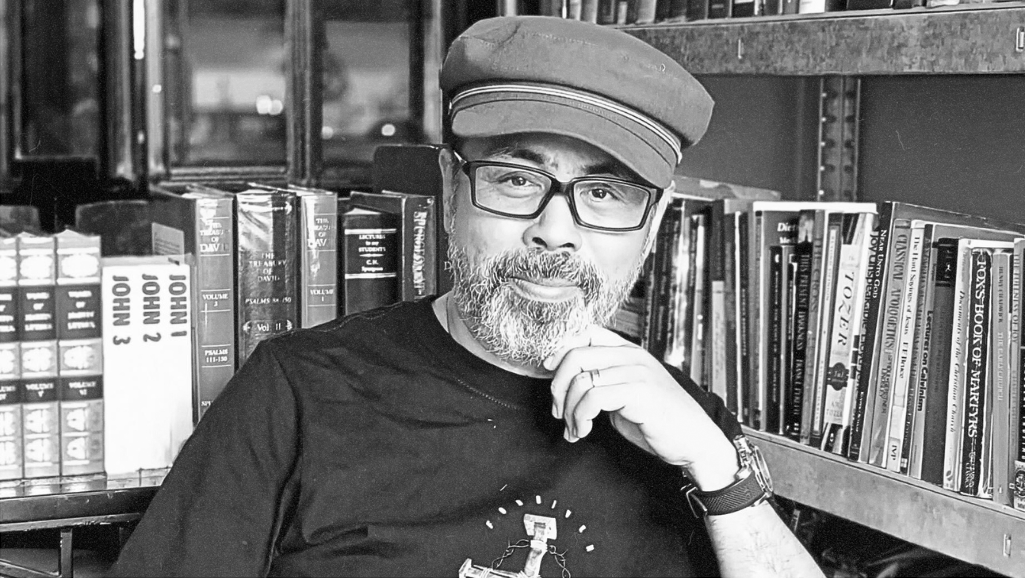
And then, as I was scrolling on my phone, came the stunning and crushing news that our friend, the veteran journalist and essayist Joel Pablo Salud, had succumbed to a heart attack. A recently professed Christian, Joel had fought hard for truth and justice, and he died a man of faith who knew where he was bound. Even among hard-bitten writers used to seeing the worst of things, the passing of someone so passionate about his craft, his convictions, and his family produced profound grief and consternation. Again we had to ask: why does God take the dearest of his creatures? Why does he bring so much suffering to the world?
And I think Joel knew the answer: so we could assert our humanity while we could, and among the best ways to do that is to employ our talents against surrender and despair. Every book we write does that. We seek survival not just to eat and breathe—but to love, to sing, to endure, to yet become.
 Pinoy Penman 3.0