Penman No. 459: Spartan but Splendorous

Penman for Sunday, February 11, 2024

WE OFTEN think of ecotourism in terms of swimming with whale sharks or encountering rare species of flora and fauna in some faraway forest. But not too far from Metro Manila lies a natural haven that will satisfy adventurers and conservationists alike—and the ecotourists who are both.

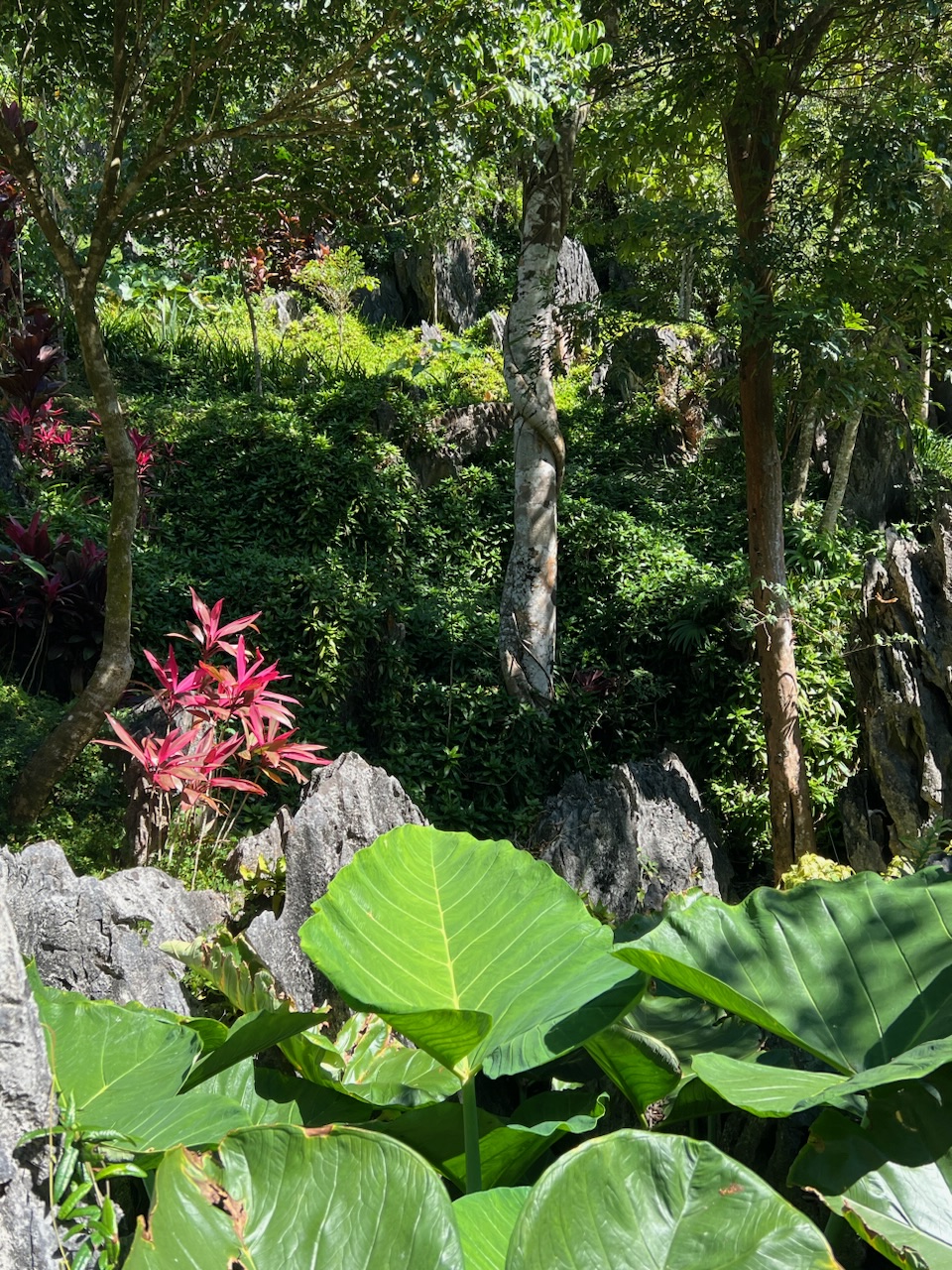
That haven is the Masungi Georeserve, a 3,000-hectare tract of largely reforested land marked by sharp karst or limestone shards jutting out into the sky amid bamboo groves, exotic orchids, and Benguet pine.

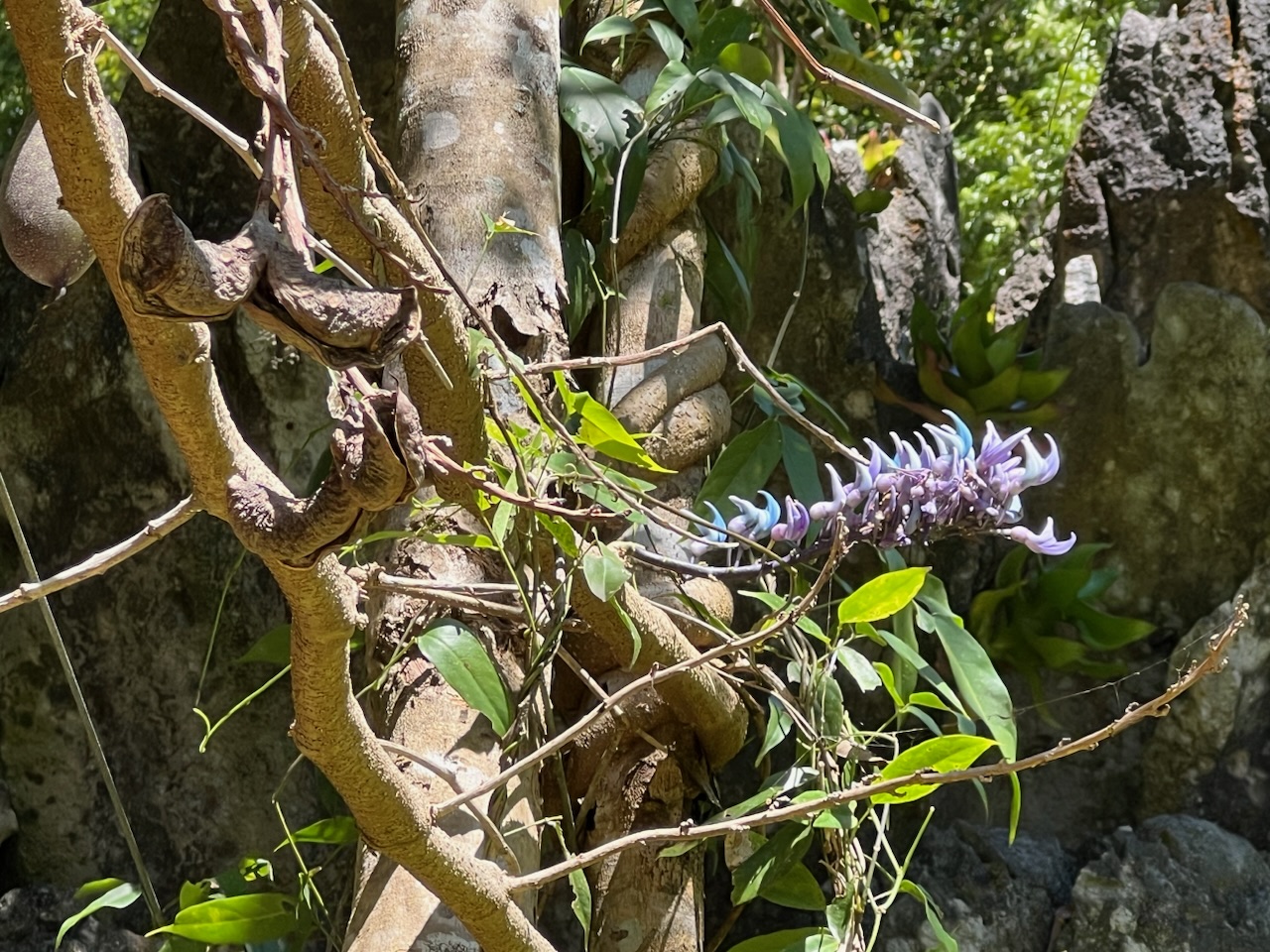
The unlikely remainder of an aborted housing project for DENR employees, Masungi now serves as home to hundreds of species, many of them rare and some even unique, such as the purple jade vine and the Masungi microsnail.

These sightings alone would be well worth the trip—a pleasant 30-kilometer drive from Quezon City through Masinag and Antipolo on the Marikina-Infanta or Marilaque Highway, on some of the country’s best and widest roads. (On the weekday morning we went there, it took us just a little over an hour from UP Diliman.) 

Masungi straddles the Sierra Madre boundary between Baras and Tanay, Rizal, much of which is occupied by the Upper Marikina Watershed, across the Kaliwa Watershed on the northern side. Its name comes from the Tagalog sungi, meaning sharp, a reference to the profusion of limestone outcrops looking like sharp teeth across the mountainous landscape.

The georeserve—now being managed by the Masungi Georeserve Foundation—wasn’t set up as any kind of pleasure park. Indeed “pleasure”—except the visual kind—was the last thing this septuagenarian thought of when he went up the steep trails to a vantage point that afforded a spectacular view of Laguna de Bay and the surrounding metropolis far below. Younger and fitter visitors, however, will surely find the challenge pleasurable and even exhilarating.

When the housing project with the DENR failed to materialize—the DENR couldn’t evict the squatters already there and the land, in truth, was simply too steep and inhospitable to permanent human habitation—engineer Ben Dumaliang and his Blue Star company (the housing project contractor) took it upon themselves to rehabilitate what land they could and regrow the forest that would have been lost forever. In 2015, Ben’s daughters established the Masungi Georeserve Foundation to oversee the place, and in 2017, the MGF entered into a contract with the DENR under then Sec. Gina Lopez for the georeserve’s replanting and conservation.

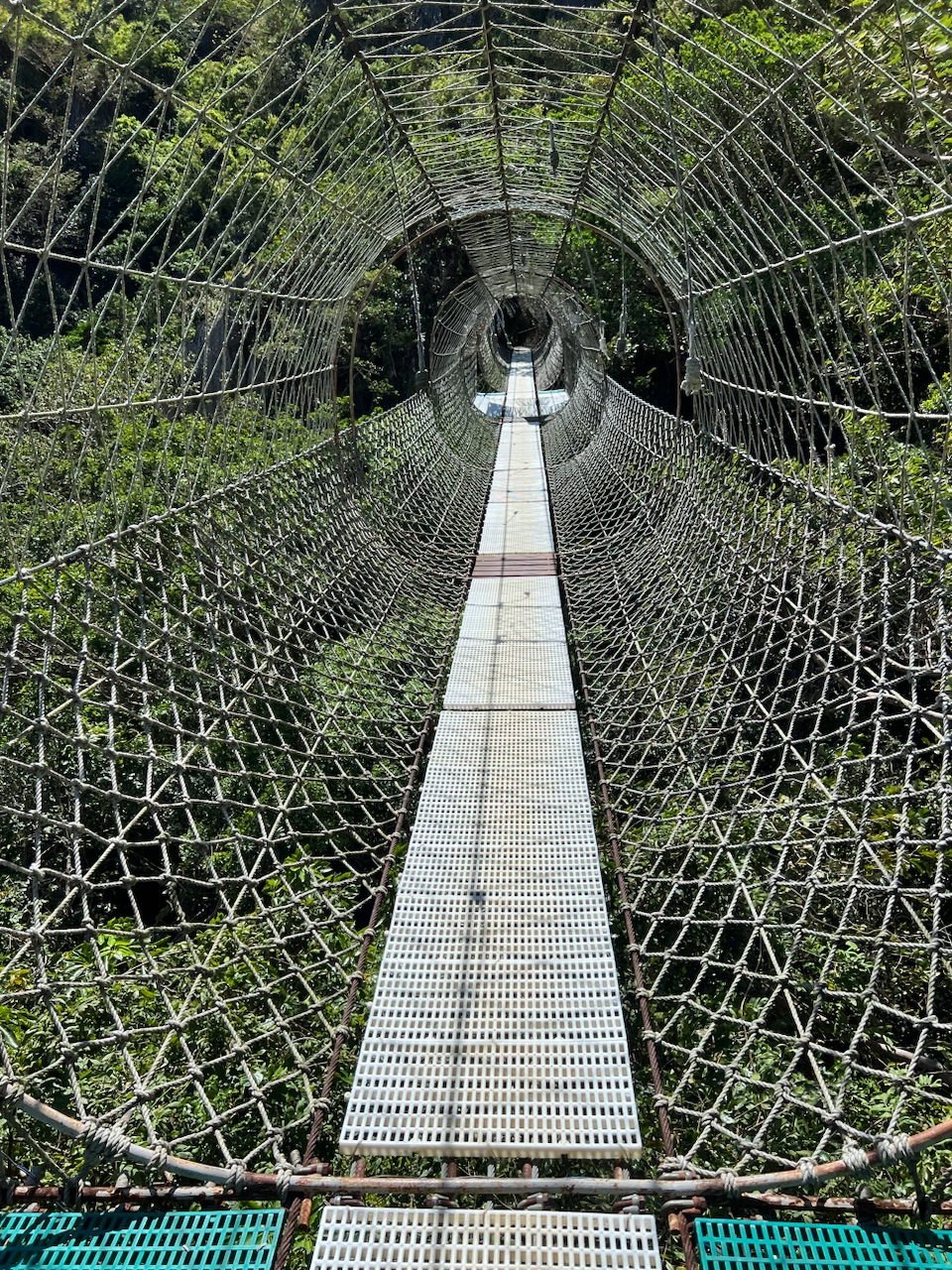
Masungi now features a Discovery Trail for hikers aged 13 and up that takes about three to four hours to complete, although it can be shortened depending on the hikers’ preference. The challenging trails feature hanging bridges, a giant spiderweb, rope walls, caves, and other points of interest (or maybe not, for acrophobes like me). Protective headgear is provided.

Typical reviews on Tripadvisor include comments like this one, from a Singaporean visitor: “Perfect day at Masungi Georeserve. The hike was well-organized and well-paced with sufficient rest stops. Our guide was knowledgeable and friendly, allowing us to take our time and helping to take our photos. You do need a certain level of fitness and daring to tackle the ropes, steps, and hanging bridges, but you will be rewarded with stunning views of the limestone karst formations. There are alternative paths to take for those who have a fear of heights but these detours may take longer. Best not to rush and go with people who won’t judge you if you feel like dropping out! Well done to the Foundation and for educating the public on biodiversity and sustainable tourism. Book ahead and pray for great weather.”

This one came from a repeat visitor, Ronald R: “Had the privilege of visiting Masungi Georeserve for the ninth time (six times on the Legacy Trail, thrice at side trails and once on the Discovery Trail) and every visit was a memorable learning and life-changing experience. All dedicated forest rangers are well versed in the changing landscape and diversity of flora and fauna. The experience differs depending on the weather. I prefer windy, cloudy weather when going up there. The Sierra Madre is more dramatic with rain clouds. Beyond the transformations, the team behind Masungi Georeserve is focused on restoring the lost and abused part of the Upper Marikina Watershed Area. Masungi Georeserve is a platform to make anyone fall in love with nature in a much deeper level. The Masungi Georeserve experience should be in every nature lover’s bucket list.”

Experienced rangers—most of them recruited from the local community, including indigenous Dumagats—serve as guides for these treks. To support the place’s upkeep—it gets no funding from the government—the georeserve charges guests P1,500 each on weekdays and P1,800 on weekends, covering the tour and simple but satisfying snacks (including a refreshingly minty tea made from the kayumanis, a native plant; a set lunch buffet is also available at the hilltop Silayan restaurant). The number of daily visitors is strictly controlled to minimize wear and tear to the area, and groups are kept manageably small. (For more helpful and detailed instructions, as well as photos of the various features along the trail, visit willflyforfood.com and look for “The Masungi Georeserve Survival Guide.”)

It’s a spartan but bracing experience, minus the spa, the massage, the gourmet menu, the uniformed attendants, and all the other amenities we associate with more genteel and patrician hideaways. This is nature in your face—but what a splendorous sight it is to behold, a painterly tableau of rock, tree, bird, and flower set against a radiant blue sky, 640 meters up and far removed from the smog and sludge of the metropolis. 

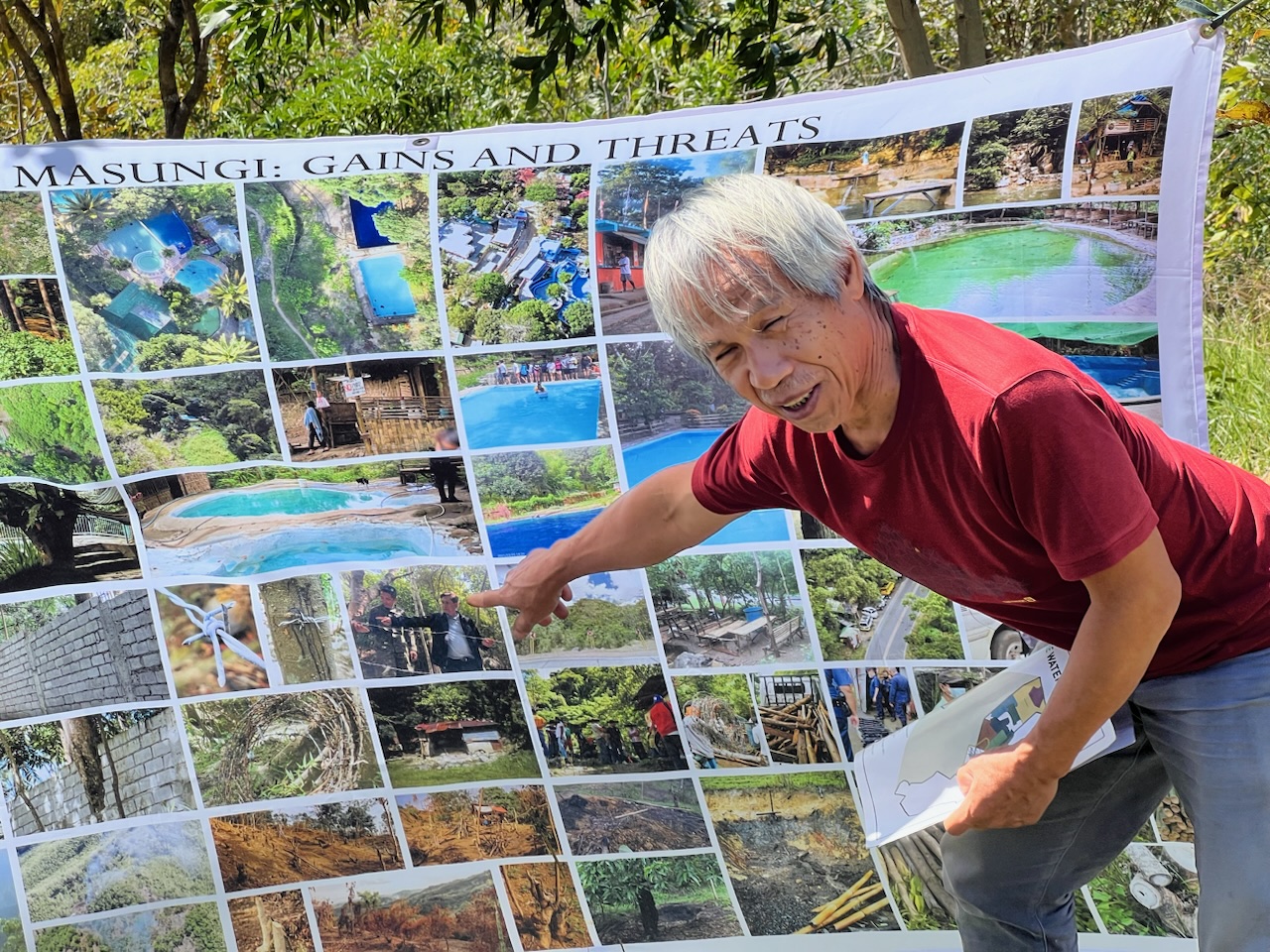
It’s sad and alarming that Masungi continues to be threatened by powerful landgrabbing syndicates as well as by the indifference if not hostility of the government people who should be supporting it, but that’s another story (check out my Qwertyman column last January 29, “Fighting Windmills at Masungi”). In the meanwhile, avail yourself of this chance to encounter nature like you never have before, and enjoy Masungi while it lasts.

Qwertyman No. 76: What I Have Learned

Qwertyman for Monday, January 15, 2024

PARDON ME if I wax a bit personal today, as I turn 70, much to my great surprise, coming from a generation that didn’t expect to live past 25. I’ve often noted that in your 20s, you seek purpose and direction; in your 30s, stability in terms of love, family, and work; in your 40s, professional success and serious money; in your 50s, acclaim and reputation; and in your 60s, good health and comfort. Now, on the threshold of my 70s, I find myself accepting and preparing for the inevitable, the average life expectancy of the Filipino male now hovering at 72.

More significantly, my wife Beng and I are also celebrating our 50th anniversary. I’ve never quite resolved if it was a good idea to get married on my birthday—and just my 20th at that—but there was never any doubt that marrying Beng was the smartest decision I ever made, and that waking up beside her every January 15 is the best birthday gift I could ever ask for.

But I’ll spare you the love story, which, like all good love stories, has had its fragile moments. For now, let me share some lessons and insights I’ve learned from surviving the First Quarter Storm, martial law, EDSA, GMA, Ondoy, Yolanda, tokhang, and, for the moment, BBM. They’re by no means complete, and I still have a lot of learning to do in what I hope to be at least another decade of avoiding the lyres up there (or the pitchforks down there). But they’ll serve for now, hopefully to encourage newlyweds and young ones to hang on for the long and bumpy but also often exhilarating ride. 

First, survival matters. Fifty years ago, my comrades and I were all prepared to give up our lives for our cause, but today I’ll have to ask, “Must I?” Heroic self-sacrifice is symbolically important and can inspire others to take personal risks for the greater good, but a genuine and strategic movement for change cannot consist solely of martyrs willing to die in combat; its core must be formed of patient plodders willing and able to undertake the mundane tasks and chores of nation-building within their families and communities. For that one will need to co-exist with evil, if need be, if only to survive it and be able to do better. Co-existence does not necessarily mean surrender or acceptance, merely an affirmation of one’s right to live as well as anybody else. Resistance can take many forms, not all of them fatal; we need to be clever and resourceful in championing the truth, which is often starkly simple and clear but sometimes also just as complicated as the well-fashioned lie. 

Second, tolerance and cooperation are key to every successful relationship, whether it be a marriage or co-existence in a deeply fractured society. But also key to this idea is self-knowledge, which builds self-confidence and a greater willingness to understand and accept the other, and to educate oneself. Many early marriages falter because the protagonists are simply too young, too vulnerable, and still struggling to define themselves. Growing up on one’s own is difficult enough; growing up together is even more challenging, but necessary. I was 20 when I became a husband, and later that year, a father, and didn’t really know how to be either. Thankfully Beng and I had good role models in our own parents, and enough love to work things out and see things through. Eventually, we learned to define ourselves in terms of the other—so that today, for me, no trip is worth taking without Beng, and her joys and successes are mine as well. Forgiving oneself and accepting one’s imperfections are not only as important as acknowledging the other’s, but are prerequisites to mutual self-improvement.

Third, “compromise” is not a bad word, if we are to survive as a nation together and as individual citizens. In our 20s—much surer of our convictions than of our own squishy selves—we viewed the world in black and white, certain that the enemy was out there, was not us or within us, and had to be rejected and battled in all arenas, on all levels. I’ve since learned that life can’t be lived on an all-or-nothing, take-it-or-leave-it basis, and that one has to negotiate with oneself as well as with others to keep whole and sane. An absolutist will never find peace, nor satisfaction, and likely never happiness. Learning to take things as they are—and working from there—can be harder than to merely insist on things as they should be, and to do nothing when they are not. Just as important as highlighting our differences are finding and building on the things we can agree upon—like resistance to foreign encroachment on our territory, which helps clarify our self-image—regardless, though still mindful, of our suspicions of the other’s motives. Opportunistic politics can sometimes be the inadvertent handmaiden of good outcomes.

Fourth, I’ve learned my limitations, and to do my best within my foreshortened horizon. I’ve realized that I can be happy in not trying to do too much, living in the moment, and finding fulfillment in small achievements that bring change and hope to other people. I haven’t given up my dreams for a more just, progressive, and provident society, and will continue to fight for those ideals, but I will choose activities and means that will lead to something I can see and hold (and that others can repeat, improve upon, and grow for the future). Big ideas are great, but small deeds can be just as valuable. I want to make a difference in someone’s life today. 

And finally, there is an afterlife. I frankly don’t know if there’s a heaven or a hell as the colorful posters in my grade-school religion class depicted them, but what I’m sure of from having attended countless funerals is that an important part of that afterlife and of its very proof is the life of those you will leave behind. When you die, others live on; they’ll talk about and even shed tears for you for a few days, and then they’ll move on to more pressing matters like tax amnesties and next Tuesday’s price of gas. Now and then your name will come up over morning coffee or a late-night beer, and the smile, the laugh, the sigh, the wince, or the cuss word that your memory will provoke will say everything about who you were and what your life was all about. I’ll be happy with a smile—maybe a bit regretful, but mostly pleased to have crossed paths with and even to have learned something from me. Mabuhay!

(With many thanks to May Tobias-Papa for the illustration)

Hindsight No. 17: The True Winner

Hindsight for Monday, May 9, 2022

(Photo from lumina.com.ph)

I HAD another column all lined up for today—Monday, the 9th of May, arguably the most important Monday of this year if not the next six years. But I’d forgotten that the ban on electioneering, which started yesterday, won’t end until midnight tonight, so I’ll shelve that piece for another time—with major revisions likely, depending on the outcome of today’s vote.

Maybe it’s just as well that that happened. It forced me to pause and simmer down for a while, just when emotions and tempers were rising to a boiling point and nothing else seemed to matter but politics and the colors of our T-shirts.

I’m sure I’ll be speaking for many of us—and even across the political divide—when I recall that just a year ago, we all led what seemed to be normal lives, or at least as normal as lives could get under a crippling pandemic. We were in deathly fear of a virus we couldn’t see, of getting infected by some pasaway neighbor or relative, and of dying by our lonesome in a strange hospital ward with a tube stuck down our throat. Our chief concern was survival—as individuals, as families, as communities. We walked around like inter-galactic travelers in face shields and face masks, soaked in 70-percent alcohol, hands raw from constant washing. We felt lucky to be alive, never mind that the cinemas were closed, restaurant food was takeout-only, and we all became talking heads in little Zoom boxes. Today we can afford to chuckle a bit at the memory of those days, even if we know—or have to be reminded—that those days are far from over. 

But just as the influx of vaccines brought a steep drop in Covid rates, another contagion appeared on the horizon—election fever. Its symptoms included not only indifference to other diseases like Covid, manifest in the sudden and universal disregard for “social distancing.” They also showed in an increased propensity for loudness and even bellicosity in public discourse—especially online, where sticks and stones came free by the ton. The emergence of candidates and choices meant the emergence, as well, of our long-cherished biases and preferences. 

Our candidate defined who we were, and because of that, we took everything personally, responding to every swipe and gibe as though not only civilization itself were under attack, but also our gut, the precious and tender core of our very being. We felt hot under the collar every time our champion was maligned, and often returned the gesture with equal vehemence, thankfully with a dash of Pinoy humor. Whichever side we were on, we believed that nothing less than the nation’s survival was at stake, something larger than ourselves. We could survive Covid, but the loss of one’s candidate seemed like an even graver existential threat. 

Many years from now, the drama of this election will be remembered for its intensity and divisiveness, for the rancorous fervor with which many partisans fought for their beliefs, or for their scripted spiels. Some operators showed us just how low and how nasty a campaign could go, with the leanest of morals and the fattest of budgets. Never has so much been spent on promoting falsehood and obscuring the truth. Never was the public’s intelligence valued less by candidates expecting to coast to victory without having to be asked difficult questions and to account for their liabilities. Never did surveys, scientific and otherwise, seem so opaque and perplexing, like hazy oracles supposed to convey some prophetic message. 

But it will also be remembered for its creativity, its outbursts of spicy wit, its spontaneity of generosity and the communal spirit. Never have we witnessed a campaign so heavily reliant on the kindness of strangers, who ceased to be strangers in an instant of mutual recognition. Never have we seen crowds so huge—wait, yes, we have seen multitudes mourning a martyr’s death, or forming a human tidal wave to sweep a dictatorship away—but not hundreds of thousands massed for the sheer joy of congregating for the good. Never have rallies—once gatherings devoted singularly to the expression of popular anger and dismay—been so uplifting and flush with hope, like a cathedral without a roof raising its prayers to the sky.

And whatever happens today and in the weeks and months to follow, those rival strains will remain in the air—the noxious fumes of the devil’s workshop and the cool and cleansing breezes coming down summits too high for us to see. I think we will realize and understand that this election, as titanic a clash of values as it was, is but another episode in the larger and longer story of our continuing quest for nationhood, another tentative answer to the question of who and what it is we want to be. That story and the conflict at its heart will go on for generations more, and every six years our people will have a chance to choose between right and wrong, between redemption and damnation, between wisdom and ignorance.

Those of us who feel that they chose rightly today have no cause to regret their action, regardless of the outcome. You voted not just for your candidate, but for the best Filipino in you, which can never be a loss; you have passed the test of faith in the good and just. It may take longer for others to reach that point of peace with oneself. The results might suggest that there are more of them right now than you—which only means that there is more patient work to do, and also more time to do it, beyond the frenzied crush of the past few weeks.

On a personal note, today my mother Emy turns 94. She is eager to cast her vote, knowing that it could be the last time she will choose a president to lead our people. She cares about who will win, for our sake. More importantly, she cares about choosing wisely, for the sake of her soul. She knows something many of us have forgotten in the flood of surveys and fake news: that the only true winner in these elections is the one who can show God his or her ballot with honest pride and joy.