Qwertyman No. 109: Digong’s Conversion

Qwertyman for Monday, September 2, 2024

RATHER THAN mock former President Rodrigo R. Duterte for his unflinching support for his bosom friend and spiritual adviser, the fugitive Pastor Apollo Quiboloy, I think we should praise and congratulate him for finally seeing the light and acknowledging the importance of human rights.

It must be age, or the reflection afforded by retirement, but the Digong Duterte we heard from last week in the wake of the massive police raid on Quiboloy’s lair was worlds apart from the apoplectic and coarse-tongued person we used to know. It took some time—likely aided by a sobering reversal of political fortunes—but gone is the swaggering Mussolini of the past, prone to profanity and what his apologists liked to call “hyperbole,” replaced by the pained and measured indignation of the aggrieved.

Of course, his statement could have been crafted by one of his former spokespersons, who must therefore take responsibility for the minor grammatical and stylistic infelicities in the text—but how can we even complain about language when gross human rights violations are on the table?

For those of you who missed it because you were wasting your time deploring Caloy Yulo’s filial impiety, here’s what PRRD said, in full:

“Our country has never been in a more tragic state as it is today. Rights have been trampled upon and our laws, derided.

“Early today, elements of the Philippine National Police Regional Office, led by Gen. Nicolas Torre Ill, forced their way into the Kingdom of Jesus Christ compound which resulted to (sic) a violent confrontation and the unfortunate death of one KOJC member and the requiring of (sic) immediate medical attention of many others.

“We sympathize with the members of the KoJC for having become victims of political harassment, persecution, violence and abuse of authority. This certainly puts a dark stain on the hands of those involved in today’s incident, led by no less than the top police official of the region.

“We call on the remaining decent and patriotic members of our government not to allow themselves to be used and to be abusive and violent in enforcing illegal orders.

“We call on all Filipinos, regardless of political persuasion, to offer prayers for peace and justice, and to spare our people of the unwarranted tension brought about by the reign of fear and terror by people sworn to uphold the law and protect the citizens of this country.

“Again, let us ask this administration how it can guarantee the preservation of the constitutional rights of our fellow Filipinos when even the most fundamental of these rights are being blatantly violated? (sic)

Why, minus the edits, this could have passed for something that PRRD’s arch-nemesis, former Sen. Leila de Lima, could have said a few years ago, before she went off to prison. Or it could have been mouthed by the late Chito Gascon, whose Commission on Human Rights PRRD sought to abolish for meddling in police investigations into dastardly drug deals, even getting Congress to pare its budget down to a more suitable P1,000. 

That Rodrigo Duterte could now speak so eloquently and convincingly of the need to uphold human rights is a testament to the possibility and power of redemptive conversion, which such famous miscreants as Paul of Tarsus and Ignatius of Loyola underwent. Gazing out on the horizon on the beaches of Davao (or in the Quiboloy compound, in his new job as its administrator), the former president must have felt a pang of remorse for all the lives that were needlessly lost under his administration—all because his followers in the police failed to understand, as his spokesmen were at pains to emphasize, that he was “only joking” and was given to “exaggerating” for rhetorical effect.

How in heaven’s name could they have taken him literally when he told a controversial police officer whom he assigned to a southern city in 2019, “Go there and you are free to kill everybody. Son of a b****, start killing there. The two of us will then go to jail!”

The following year, at another event in another province, PRRD was quoted by the newspapers as saying, in Filipino, “All addicts have guns. If there’s even a hint of wrongdoing, any overt act, even if you don’t see a gun, just go ahead and shoot him. You should go first, because you might be shot. Shoot him first, because he will really draw his gun on you, and you will die…. Human rights, you are preoccupied with the lives of the criminals and drug pushers. As mayor and as president, I have to protect every man, woman, and child from the dangers of drugs. The game is killing…. I say to the human rights, I don’t give a shit about you. My order is still the same. Because I am angry!”

Now, there’s every possibility that the president may have been misquoted by journalists hungry for incendiary news. But even granting that PRRD did say horrible things like that—perhaps in a fit of desperation over the fact that the drug menace he promised to eradicate in six months was still very much around toward the end of his presidency—that allegedly murderous despot is a ghost in the past. Today’s Digong is a sensitive soul with a nuanced sensibility that understands and will not countenance “abuse of authority” and “illegal orders,” especially when these are implemented by ingrates in the police force whose base pay he doubled (shame on the 2,000 cops who apparently forgot this in their brazen assault).

Indeed, if Rodrigo Roa Duterte can undergo and manifest such a miraculous conversion, then hope yet exists for the rest and the worst of us, who wallow in unproductive cynicism. Indeed it might even be that his resistance to the idea of yielding Pastor Quiboloy to the authorities stems from the deep debt of gratitude he feels toward his spiritual adviser, with whom he must have read and parsed many a Bible story. If there’s anything we Filipinos and especially the Dutertes understand and respect, it’s the value of friendship—right? Something in me already misses the old Digong, but I’ll gladly march with this new one in defense “of the constitutional rights of our fellow Filipinos.” I hope Sen. Leila can find it in her heart to forgive and forget, and link arms with Lady Justice’s latest convert.
Qwertyman No. 105: Pronouns and Parodies

Qwertyman for Monday, August 5, 2024

SOME DAYS, I swear, when I open my Facebook feed, I’m met by a flood of vexatious opinion certain to trigger my worst reflexes. Much as I’m tempted to respond, I rarely do, knowing that FB comments don’t really soften hearts and minds, but only make them harder. Also, I’m not the witty sort with one-liners that will go viral; my thoughts and words like to ramble and even lose their way, but at least you know it’s not AI or the “Forward” button at work.

Two topics did get me worked up a bit last week, and I’m going to use this column to write the kind of longish social-media comment no one will read. You’ll recognize both issues instantly if you haven’t been living under a rock.

The first was that picture of a seated gay “personality” (I’m never quite sure how persons become “personalities”) lecturing a waiter standing at parade-rest, reportedly for two hours, on gender sensitivity, all because he called her “Sir.” 

There’s a part of me that understands how and why that happened. Some will call this silly wokeness, but in UP, we take our students’ preferred pronouns and names seriously as a sign of respect for the person. 

But what I also know is, when I teach, I stand and my students sit. That’s not to emphasize my authority, but so they can relax, listen, and hopefully imbibe what I’m telling them. I realize that the lady said she invited the waiter to sit down, but I also understand why he declined. Staff don’t sit for a chummy chat with customers. And imagine this: if I (an old man, dirty or not) were the customer and I felt poorly served by a female employee, and I asked her to sit at my table for two hours while I educated her on the finer points of etiquette, would or should she oblige? And I hate listening to or giving long lectures. If I can’t get something across in twenty minutes max, then I’m a lousy teacher.

There’s politics which can be good and right—and people who may not be. Some of the most politically savvy people I’ve met have also been, as some would say, that part of you where the sun don’t shine. 

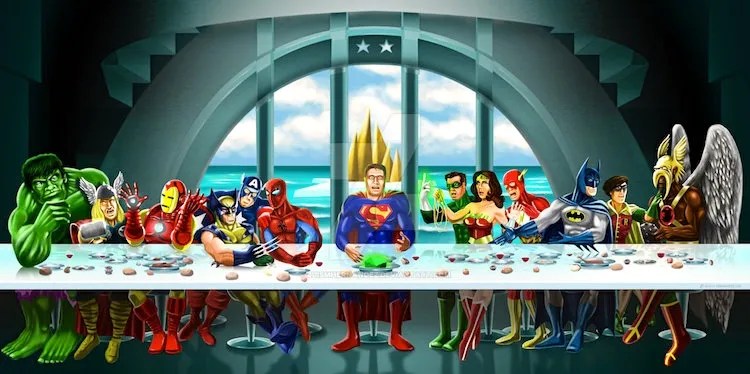
The other hot topic, of course, was the “Last Supper” tableau at the opening ceremonies of the Olympics in Paris, which allegedly mocked the Lord and Christianity itself by replacing Jesus and his apostles at the long table with a raft of drag queens and other presumably degenerate characters. 

I never saw so many Christians and especially Catholics (some of them my good friends) come out of the woodwork to profess their outrage at what they took to be willful sacrilege. And predictably, like wolves sniffing out red meat, many more friends from the other side piled on the “offendees” with mini-treatises on Bacchus and bacchanals, pagan elements in Christian ritual, art criticism, the French mentality and sensibility, and such other topics worthy of dissertations.

Now, as I’ve often confessed in this column (maybe losing five readers and FB friends every time I bring it up; in this context, maybe more), I’m not much of a churchgoer, and have continuing issues with the religion I was born into—and with all of organized religion for that matter, despite growing up in Catholic school. I prefer to pray on my own. I have nothing against people who stay in the fold, go to Mass regularly, post daily proverbs on Viber, and believe in the Bible as the one and only true source of, well, the truth. If their faith keeps them whole and happy—and I can see in many cases that it does—then well and good. Some may be hypocrites, but I’m sure many or most aren’t—and there are hypocrites as well (and worse) among apostates like me.

But back to Paris. What I’m not going to say is, “You shouldn’t have been offended.” If you were, you were. Even if you later changed your mind after listening to all the learned explanations (to some, I’m sure, excuses), the fact is, you saw something you didn’t like. (I just have to wonder—how many people responded directly to the tableau itself, and how many were nudged into seeing it and later objecting by another post screaming, “Hey, you have to see this! Look what they’ve done to Jesus!”? It works the same way on the right and on the left: a meme cascades swiftly down the Internet, and people react viscerally even before they can think.) 

Sure, the “Last Supper” is only a painting by one Leonardo da Vinci, that smart Italian fellow who also imagined flying machines, tanks, and other wonderful contraptions—so why not Jesus’ last meal? (I don’t think there’s an exact record in any of the four Gospels about how the scene was blocked for thirteen characters, except that Christ very likely sat in the middle for better reach, and certainly nobody knows who sat next to whom and leaned over whom. Some depictions down the centuries don’t even use a straight table but an inverted U, or have everyone reclining on mats and pillows, or sitting in a circle.) But even images and objects have symbolic meaning and power, so it’s easy to get hopping mad if someone, say, spits on a painting of your grandmother, or turns it into an unflattering cartoon. 

I do share the consternation over why a hyper-expensive and PR-conscious global enterprise like the Olympics would risk alienating half of France and a third of the world (presuming all Christians took umbrage at the Blue Guy) by—according to the charge sheet—deliberately, premeditatedly, and maliciously mounting a patently anti-Christian production for the whole planet to see. I know the French eat strange things like sheep testicles and have a law requiring skimpy trunks and head caps (yes, even if you’re bald) in public pools, but really now, mock the Last SupperSacré Dieu! (Or, excuse me, let’s use the milder sacré bleu!)

Given all of that, my only question is, where was all the outrage when that President was joking about raping captive nuns and cursing the Pope? And speaking of the Renaissance and the power of representation, remember that Pieta-like photograph of a grieving mother cradling her murdered son at the height of that same President’s tokhang campaign, that President who called Catholic bishops “gay SOBs”? Where was all the righteousness? But maybe we’re just getting started. There’ll be FB accounts I’ll be checking in on, the next time something wildly repulsive happens.

(Image from arnoldzwicky.org–Please condemn him. not me!)

Qwertyman No. 79: Hymns of Repentance

Qwertyman for Monday, February 5, 2024

A CERTAIN senator was quoted some time ago as saying that Filipinos supporting the intentions of the International Criminal Court to probe the Duterte administration’s bloody tokhang campaign should be made to sing the national anthem 1,000 times to regain their sense of patriotism. The clear message was that, if you were in favor of an international body looking into local crimes and liabilities, you were being anti-Filipino. 

It wasn’t surprising, of course, given that the good senator was among those prominently mentioned as possible defendants in the case. In jest, he said that if he were found guilty, he would miss his grandchildren if he were incarcerated in the Hague. And just to be sure, he added that not all people in jail are guilty—he certainly wasn’t.

Without commenting on the merits or demerits of a hypothetical ICC case against officials of the previous administration—something we have enough lawyers on both sides to perorate upon—I’ll just observe that the quality of justice the senator and his likely dock mates can expect from the ICC will surely be far better than that received by the victims of summary and extrajudicial executions under the regime of tokhang. In the very least, guilty or not, they will be alive and reasonably comfortable, although they might temporarily miss the company of family and friends, as those bereaved by tokhang have come to experience for all eternity.

I was intrigued by the suggestion that repeated singing of “Lupang Hinirang” would make a better Filipino out of me, or at least make me think of the ICC as some kind of fire-breathing Godzilla threatening to incinerate the Filipino race off the face of the earth.

There are far more effective songs  for instilling love of country. Yoyoy Villame’s “Philippine Geography” will teach us more about the country we say we’re dying for than our anthem, which must have been sung hundreds of times in the halls of Congress without much palpable effect on the patriotism of some occupants. At least I’m assuming it’s regularly sung there; if not, then perhaps our senator can start a little closer to home.

(As for professing one’s innocence, oldtimers will remember Diomedes Maturan’s “Huwag Kang Manalig sa Bulong-Bulungan” (remade by Victor Wood). Even Billy Joel warbled that “Although this is a fight I can lose, the accused is an innocent man!”)

On a more serious tangent, let me swipe a page from a recent talk given by UP President Angelo A. Jimenez, himself a lawyer, at a seminar of police officials on the thorny topic of national security and human rights:

“Our police officers should be commended for the seizure of a total of P6.2 billion worth of illegal drugs in the first half of 2023. The PNP’s Intensified Cleanliness Program, aligned with the Philippine Anti-Illegal Drugs Strategy, has employed a coordinated approach among government agencies to create drug-free communities. This shows that a serious and successful war on drugs can be undertaken without any needless loss of life, for as long as we observe the law, fight corruption, and remember the need for compassion in a just society. Even drug suspects have rights—indeed, even convicted prisoners—and we maintain our moral superiority by respecting those rights, even as we dispense justice. Only then and only thus can we regain our people’s trust.

“Ours is a society that operates on leadership by example. If people see their public officials and law enforcers doing the right thing, they will follow suit. If they see the law being flouted by these very same people—such as unauthorized government SUVs using the bus lanes along EDSA—they feel entitled and emboldened to do wrong themselves. Exemplary behavior at the top will create and strengthen the moral foundation for a responsible and law-abiding citizenry. We cannot demand what we ourselves cannot supply or enforce.”

Frankly, I myself doubt that a full-blown ICC investigation will prosper under the present dispensation, which reportedly promised the senator that not a hair of his (but then, where’s the hair?) would be touched by the ICC, back when the two camps were—just to use an idiomatic expression, and meaning no malice—as thick as thieves.

Now that the knives are out between the erstwhile allies, the ICC card seems to be in play again, teasing us with the possibility of justice being done, but I’m not holding my breath. It’s just too big a risk for those in power to take, too wide a door to open—like Cha-cha for ostensibly just economic provisions. Who knows what other crimes the ICC will unearth, who else they will indict, and how far back they will go? Once you give people a taste of respect for human rights, why, they’d be at it like potato chips—they’ll keep wanting more. There’d be chaos in the streets and no, sir, we can’t have any of that, just when we need law and order.

For this reason alone, I don’t think our good-humored senator has anything to worry about, neither from the Palace nor from the Hague. He can finish his term, retire to his farm in peace, shoot the breeze (or something else) with his old boss, and have his memoirs ghost-written. Unless, of course, a certain lady succeeds in clawing her way to the top, in which case the senator—still fairly young as senior politicos go—can expect a new lease on his public life and serve afresh, perhaps in the Cabinet, where men and women of action belong, rather than in the Senate, where they’re reduced to preening and tweaking their moustaches.

Someone with far greater and indisputable jurisdiction will take over this case and pronounce ultimate judgment; he will need no rapporteur, no investigating party, no authorization, no earthly prison; his verdict will be unappealable. His brand of justice will make the ICC look like talent-show judges by comparison. Those found guilty will be killing lots of time in a very warm place. Some people better start learning and singing hymns of repentance.

Penman No. 271: From Balagtas to Gloc-9

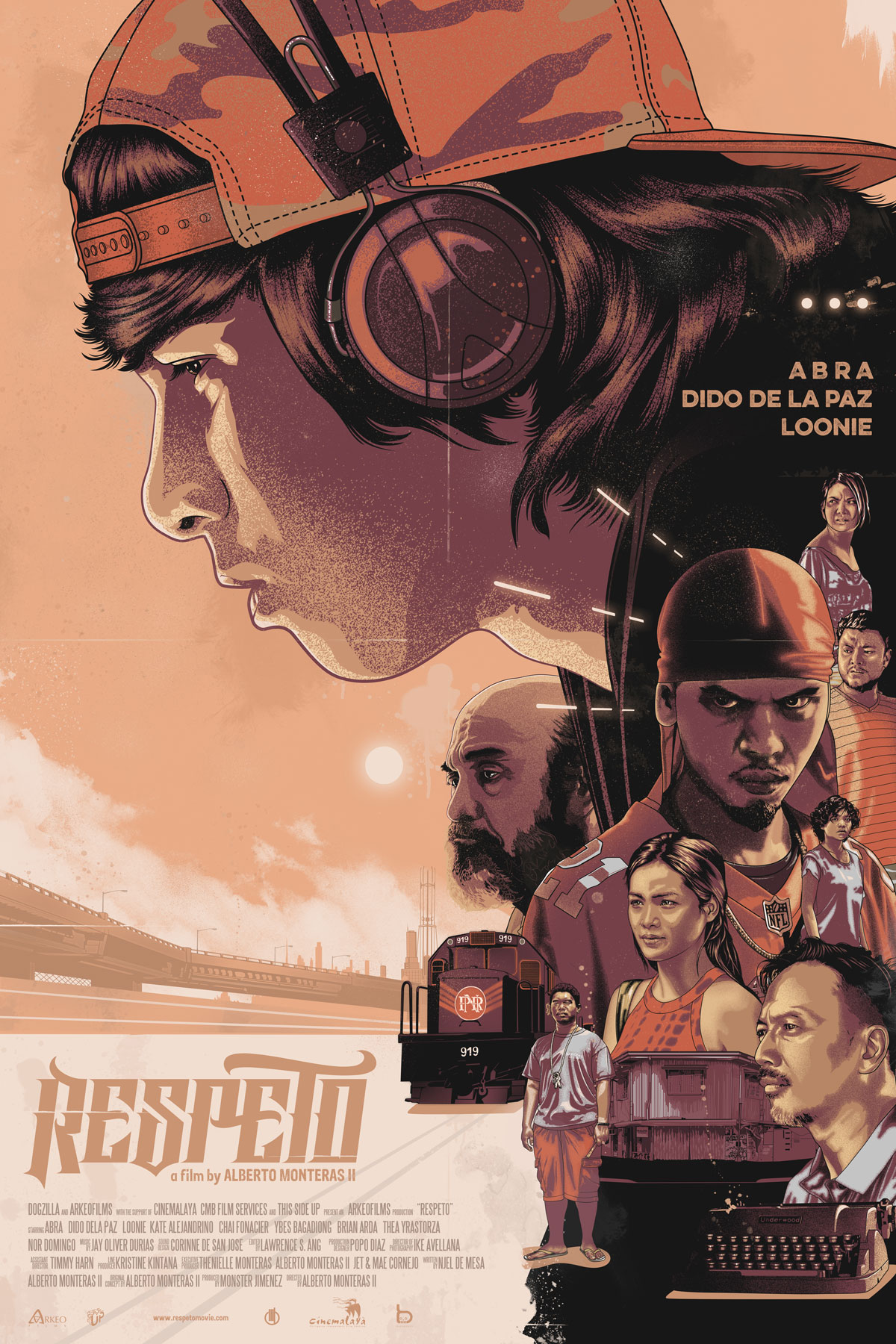
RespetoPoster.jpg

Penman for Monday, October 2, 2017


It would be easy and comforting to praise director Treb Monteras’ Respeto as a testament to the redemptive power of poetry, to art as a transcendent force in the universe—but it’s not that simple.

Yes, there’s quite a bit of that, and happily so for occasional poets like this viewer. We want to believe, in our heart of hearts, that poetry will save us, will elevate us from the sordidness of our surroundings and from our own sad and sorry failings. Two of my favorite quotations about poetry which I often bring up in class address that notion.

The first comes from that quintessential poet of the city, the Frenchman Charles Baudelaire: “When (like a poet) / the Sun descends into the city / It ennobles even / the vilest of its creatures.” So, poetry ennobles, raises up the poet from his or her pedestrian reality, no matter how vile that reality may be.

The second comes from Anne Sexton, who took her own life at age 45 after a long bout with depression, but who could still understand that “Suicide, after all, is the opposite of poetry.” Poetry was the life-force, the contributor to the poet’s heightened state of being, as Sexton would advert to in another line: “Saints have no moderation, nor do poets, just exuberance.”

These ideas were swilling in my head hours after my wife Beng and I stepped out of the cinema, still trying to figure out what I was supposed to think. We had missed Respeto during its Cinemalaya screening—they ran out of seats for us at its last showing—but had heard great things about it and weren’t about to miss it again during its regular run.

The movie itself isn’t hard to follow, even for a pair of senior citizens whose virgin ears opened up to Pinoy battle rap (always good to learn something new) for the first time. The Brockaesque descent into the urban jungle is such a familiar move for Filipino filmmakers (Hamog and Pauwi Na most recently come to mind) that it’s practically a given, but Respeto deepens the milieu by opening a door to the hip-hop subculture that many middle-class and middle-aged moviegoers have no inkling about whatsoever.

The fast and furious exchange of expletives aside, you could take Respeto as an Araby-type coming-of-age story where a young man falls for a woman, tries to gift her with something marvelous, and fails in the effort but learns something about himself in the process. Well, it’s a lot more complicated than that, because many other dualities and intersections abound in the story beyond just man and woman: that between youth and age (Hendrix, played by the ace rapper Abra, and Doc, played by Dido de la Paz), between apartment and slum, between bookshop and bar, between wisdom and wit, between Balagtas and Gloc-9, between Marcos and Duterte, and even between people who suffer and die for their beliefs and those who simply die out of poverty and crime. And perhaps, in the end, the movie asks, are they really so different? Is there some overarching reality that yokes them all together?

That reality seems to be that they’re all Filipinos living in the time of tokhang, a reality that pointedly intrudes into the narrative at key points and provides the inevitable climax. The environment seethes with menace and aggression—from the verbal violence (and blatant machismo) of the rap battles to the chilling corruption of the rogue cop Fuentes (played with understated competence by Nor Domingo). Without providing too much of a spoiler, I’ll just say that there’s no happy ending here, no triumphant reversals of fortune where the good guy bucks the odds, wins the prize, and gets the girl.

A perceptive review online by Tristan Zinampan puts it this way: “Respeto tells us that—given the cyclical oppression of Philippine society—going your own way, resignation, and apathy are not enough a vehicle to escape. Injustice is widespread; there’s simply no room to hide in this little archipelago. Just because you’re looking up, it doesn’t mean the chains on your feet aren’t there.”

Respeto’s Pinoy ‘hood is fertile ground for confrontation between good and evil in all their forms, with life and art insistently if desperately seeking to survive in the most hostile environments, even within the rap arena itself, where originality seems to be at a premium. The movie’s consistent use of a cemetery as a place for the creation of new art in words and images highlights this struggle.

Ultimately, however, at least for this viewer, Respeto affirms the inescapability of politics—especially the politics that kills—in our society, and its intrusion into our most private spaces, our most fervent dreams. There’s no doubt that the film draws much of its appeal from its running political commentary, but it’s less the topical references that create Respeto’s critical value for me than the power games that define it, some larger than others.

My takeaway isn’t a soothing one: poetry won’t save us, but guns—maybe even a rock—could, if that’s what it takes to overcome evil. And then again, the poetry—the truly great poetry, like all great art—will survive all of us: killers, victims, and bystanders alike. Catch Respeto the next chance you get, maybe on the campus film circuit, and tell me what you think.


Penman No. 250: Literature in the Time of Tokhang (2)

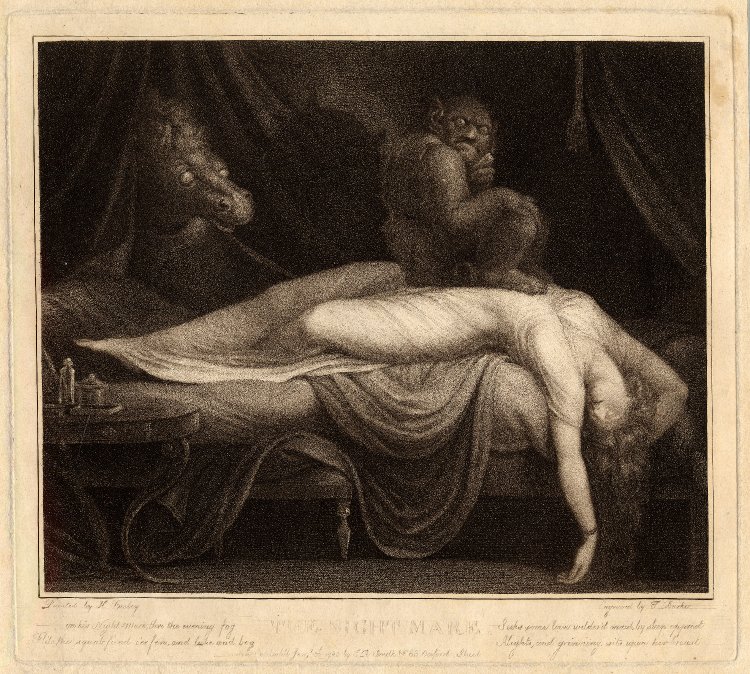
nightmare-after-henry-fuseli-print-made-by-thomas-burke-london-1783

Penman for Monday, May 8, 2017


IT’S BECOME almost a cliché in itself to say that a writer’s first responsibility is to the truth. This is no truer than today, in this age of fake news, post-truths, and alternative facts. Someone has to figure out what really happened, who’s lying, and why.

The fact that we respond to the news today mostly with consternation and skepticism only shows how difficult that task is, and how successful and how good the professional purveyors of lies, half-truths, and nuanced positions are at their job. Call them trolls, call them spin doctors—and yes, call them spokespersons—but whatever their motives are, whether they may be mercenaries or true believers, they have raised the bar for their white-hat counterparts.

The easiest and perhaps the most attractive role to take as an antagonist is that of a propagandist, especially online—to respond tweet for tweet, post for post, insult for insult, meme for meme.

But the harder and therefore the more important task is to see beyond the moment and to engage the reader on a deeper and more thoughtful level.

Clearly we need investigative journalists with the courage, integrity, and tenacity to uncover the facts. Clearly we need scholars and critics who can sift through the facts and data to make sense of this cleverly contrived and well-implemented confusion. For these writers, their mission is much more obvious.

But what can the rest of us who know nothing but to write stories, poems, plays, and essays do?

Propagandists employ the broad strokes of caricature, and there’s a time and place for that. But beyond propaganda, beyond memes and hugot lines, I submit that the creative writer’s true task is to do as we have always done, which is to go beyond the simple and the obvious to get at the truth of life—the complicated truth, the inconvenient truth, the truth that will drive evil out of the shadows into the withering light.

And by this I don’t mean just establishing the facts, although that is difficult and deserving enough. I mean the persistent affirmation of our worth and our infinite complexity as humans, against the political powers that seek to oversimplify and dehumanize people by affixing labels of convenience on their bloodied chests.

This we know as writers: life is complex; people are complex. The most trustworthy-looking person can tell a lie; the most damnable crook can tell the truth.

Our poems and stories return to this premise over and over again: things are never what they seem. Fiction is all about character revelation and transformation. Poetry dissects one moment into many. What others accept as conclusions, we take as beginnings. Our lodestar is our natural curiosity and skepticism, without which we merely echo what others have already said, and blindly accept the official narrative. The two most important words in our verbal armory are not even “truth” or “justice”—it’s “What if?”

And this is how we must respond to the stereotyping, the homogenization, and the dehumanization of people that takes place in a time of terror—to rescue and preserve the individuality and humanity not only of the victims but also of their killers, because even evil must have a recognizable face.

Fight the cliché. Resist the simple story. Refuse to be idiotized.

In the American Literature class I taught this semester, we took up three classic short stories that we could all learn from. (Not incidentally, whenever I teach American literature, I always make a point of reminding my students that we are studying the subject not to become Americans, but to become better Filipinos by replacing our awe of that country with critical understanding.)

These three stories are “The Lottery” by Shirley Jackson, in which a whole town gets together in an act of communal murder; “Good Country People” by Flannery O’Connor, in which a Bible salesman is revealed to be a perverted cynic; and “Going to Meet the Man” by James Baldwin, in which a Sunday picnic turns out to be the backdrop for the gruesome lynching of a black man.

These stories suggest to me that in the not too distant future, our own great stories, novels, and films will emerge out of this dark and turbulent period. We need a “Lottery” and a “Good Country People” and a “Going to Meet the Man” for our time and place. And when they get written, the story will no longer be just that of the rogue police going after innocent citizens, but also that of our collective complicity in it, in our people’s acceptance of EJKs as the norm. The biggest casualties of this present war have been justice and conscience.

I will not argue that the war on drugs is a popular war, and that much of that popularity derives from the fact that drugs have destroyed many lives while enriching others. But as writers, we have to remind our people and our government that there are things far worse than drugs, and that the most powerful narcotic of all is the lust for power.

Not all of us can be investigative journalists or soul-searching novelists. But I will consider that even the conscious assertion of life and beauty against a backdrop of death and terror can be an act of political resistance.

During the Second World War, when Leningrad was under siege by the German army and the Russians had resorted to eating leather belts, cats and dogs, and even flesh from corpses, a group of starving musicians came together to premiere Dmitri Shostakovich’s 7th Symphony. They played it on the radio, and even the Germans could not believe what they were hearing. The records say that “After the war, captured German officers admitted that it was when they heard The Leningrad, as the Seventh Symphony became known, that they knew they could never defeat the city.”

So our art, my friends, is what keeps us alive, and what keeps us human. Our art is our faith, the faith that will sustain us through our doubts and fears.

As Leo Tolstoy reminds us, “God sees the truth, but waits.” Only God knows when to impose justice upon the deserving. Meanwhile, we writers can serve as his eyes, his witnesses, keeping our faith in him, in our art, and in each other, praying for truth and justice to ultimately prevail.

(Image from ibtimes.com)