Qwertyman No. 145: The Devil on My Shoulder

Qwertyman for Monday, May 12, 2025
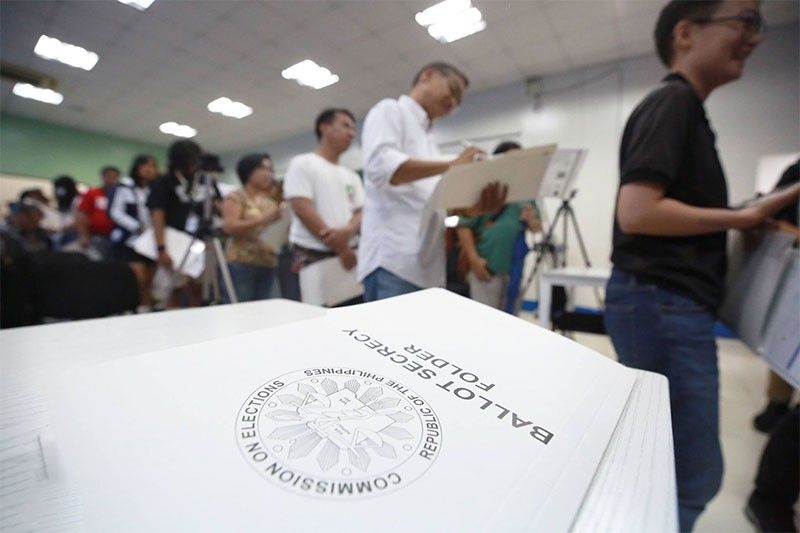
TODAY, ONCE again, we troop to the polling booths in the hope of making our votes matter—votes that, if the cynics are to be believed, might as well be dust in the wind. The surveys have spoken, the winners named. All that remains is for this day to be over, for the formalities to be done with, for the supposedly inevitable to play itself out. And then we’ll watch the new-old Senators of the Republic proclaimed in a ceremony that will showcase the state of our electoral mind. 

As absurd as it may seem, many Pinoys will actually be happy with the outcome—that’s what the surveys are all about, aren’t they? These are the senators we wanted—or most of us, anyway. “Most of them” is probably what you’re thinking, if you’re a regular reader of this column and agree with most of my views.

I can’t think of a more complicated election in recent times, in terms of an answer to the question of “What’s in our best interest as Filipinos, and how do we make that happen?”

The idealist in me has the simplest and probably the morally most unambiguous response: vote for the best candidates, period: the intelligent, the progressive, the principled, the proven, the humane, the hardworking, the uncompromised. Whether they win or lose, it shouldn’t matter—you’ve done your best as a responsible citizen; in a sense, you’ve won. I sorely want to believe this, and to do this today.

But persistently, impishly, like a little devil perched on my shoulder, a contrarian spirit urges me to temper my idealism with some consideration of its practical costs.

Last week in California, a Fil-Am friend asked me to explain the significance of these elections. In the US, midterms usually mean a referendum on the incumbent President’s performance, and next year will most definitely be one for the Orange Pope and his systematic dismantling of American democracy.

For us Filipinos, May 2025 isn’t that clear-cut—although it should have been, if the armies of May 2022 had remained in place, leaving us with a stark choice between the good and the bad.

But the ruling “Uniteam” alliance has since collapsed, with each side fielding its own troubled slate of aspirants, all seething with the most primal of motives: survival, revenge, profit, and opportunity.

The opposition seems to be a loose coalition of liberal, Left, and anti-administration forces. Among these, four names have consistently surged to the top in the kind of social media neighborhood I inhabit. I’ll call them my Triple A candidates, the ones I won’t have any second thoughts about, leaving me with eight more spots to fill.

It’s those eight that give me pause—not for any lack of qualified and virtuous prospects, but because there could be dire consequences for not filling up the rest of my ballot, as some have suggested, or voting for names without a prayer of winning, as a matter of principle (or, by this time, by force of habit).

It’s interesting to observe how, unlike in previous elections where voting straight for a party’s slate was the norm, various formulas and menus have emerged on social media—cafeteria or halo-halo style—to reflect this urge for some balance between the ideal and the practical in this three-cornered fight. Even opposition stalwarts, including Leni Robredo herself, have been excoriated for their previously unthinkable endorsements of certain candidates from the other side. Whatever happened to ideological purity? (It was always an illusion: note the Left’s earlier alliances with a notoriously bloodthirsty Digong Duterte and an unabashedly capitalist Manny Villar.)

I think many Filipinos understand what’s at stake in this election—not just who will compose the next Senate, but what that composition will mean. As I told my Fil-Am friend, Rodrigo Duterte may be safely imprisoned in the Netherlands, but his specter looms large and heavy over these midterms, through his proxies led by his daughter, VP Sara and their “DuterTEN” team (now more like DuterTWELVE, if you add one Marcos and one Villar). Sara was all set to be impeached for grave threats against the First Family and grand theft Piattos—which would not only have taken her out as VP but disqualified her from running for President in 2028. But that procedure—needing at least 16 votes in the Senate—got kicked down the road, after the election, leaving Sara’s fate up to the newly reconstituted Senate to seal.

So again, I told my friend, presuming that the BBM administration’s game plan here is to freeze Sara out of the presidency so it can install its own man, 2025 is really all about 2028. It’s a referendum, sure—not so much about the present President, but rather the past and maybe the future one. We’re not just—or not even—voting necessarily for the best candidates, but for senators who will push Sara out, or keep her in. Daddy Digong’s summary extradition to the ICC, while a relief for many, merely intensified that drama, raising the stakes to a matter of survival for the Dutertes.

It’s another sad and sorry spot to be in, for these elections to come down to choosing among the lesser or the least of 8, or 16, or 24 evils, against the statistical near-certainty of another wipeout for the truly good. Should I support this fairly familiar trapo, the devil I know, over that manifest idiot, just to help ensure that the latter stays out? Or, again, should I simply disregard all the surveys and scenarios, and vote from my purest and most innocent of hearts for the best people on that ballot? (Was this how the cardinals chose Pope Leo XIV, or did more pragmatic considerations come into play?)

By the time you read this, I shall have cast an early vote as a senior in my barangay. Like we often say, we are whom we vote for, and there’s a part of me that fears what I’ve become or may have to be. I need some of that Holy Spirit with me today—we all will.
Qwertyman No. 100: The Political Doghouse

Qwertyman for Monday, July 1, 2024


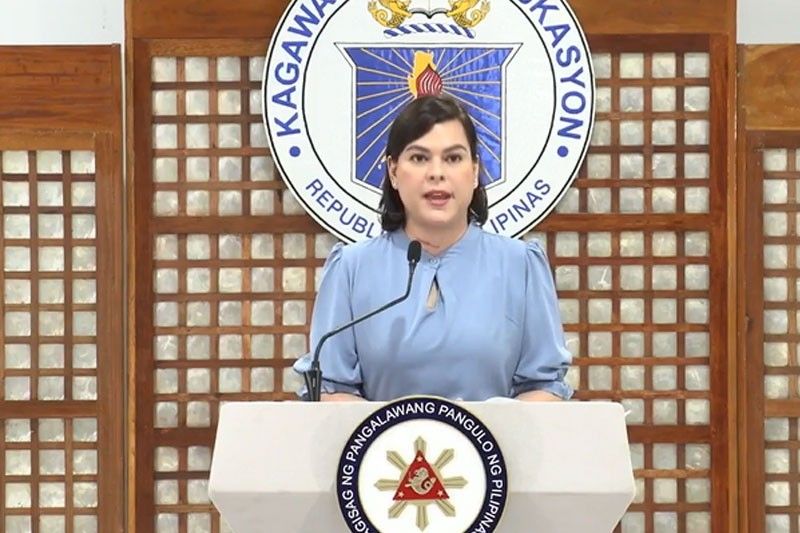
TO NO one’s great surprise, Vice President Sara Duterte resigned from her concurrent posts as Secretary of Education and vice-chair of that long-named (short name: red-tagging) council. Maybe because I was far away from Davao when the news came in, I heard no wailing and gnashing of teeth. A tree fell in the forest. The world moved on.

Inday Sara promised to continue to be a mother to the country’s teachers—the same people she had ordered to strip their walls bare of teaching aids. She was back in the news a week later after reportedly announcing that her father and two brothers were going to run for senator in next year’s elections. Her name was brought up as a possible “leader of the opposition.” None of these silly propositions generated the kind of groundswell she may have been hoping for, as someone once touted to be a shoo-in for the presidency who just got suckered into sliding down to No. 2 (to her Papa Digong’s boundless dismay) in a deal craftily brokered by former President Gloria Macapagal Arroyo.

To Duterte diehards—and let’s face it, there are still quite a few, although being out of office tends to lose people by the day—Sara will always be their golden girl, the victim of craven betrayal by their erstwhile “Uniteam” ally. To her non-fans, she will always be the bratty bureaucrat who demanded P650 million in confidential funds and who bragged about spending P125 million of DepEd money in the time it takes you to say “low PISA scores.”

Where she goes from here is the big question. In a touch of supreme irony, she now finds herself in almost exactly the same position as her predecessor, Leni Robredo, who was boxed out of Digong Duterte’s Cabinet and pretty much left on her own.

And there the inevitable and (for Sara) unfortunate parallels arise, because VP Leni shunned privilege, turned her exclusion into a challenge, and made the OVP a model of what a government office with meager funds could do, with honest, visionary and purpose-driven leadership. Leni became, and continues to be, beloved, as close to a saintlike figure as any elected official could aspire to be. That this quality failed to propel Robredo to the presidency says more about our electorate and political culture than about her—the dark, mutable, and serpentine side of Philippine politics that the Dutertes thrive in.

I have no doubt whatsoever that Sara Duterte will continue to be politically engaged and even run for the presidency in 2028, no matter what. In that, she will have less to worry about from Leni Robredo, who has expressed her desire to return to local politics in Naga, than from the likes of the eminent Sen. Raffy Tulfo, who topped Pulse Asia’s latest survey of presidential contenders at 35 percent against Sara’s 34 and Leni’s 11. Yes, that’s the kind of electorate we have, which can’t tell between meritocracy and mediocrity, so Sara will prosper in that environment and may even win against BBM’s anointed (Speaker Martin Romualdez scored a dismal 1 percent in the same survey).

Still, 2028 is four long years down the road, a lot of time for things to congeal and to unravel. Familia Duterte will close in and consolidate behind the name and the tough-guy brand, and in the event that all three Duterte boys make it to the Senate—an absurdity moderated only by the presence today of so many DNA matches in that august body—then Sara’s path to the Palace will have been cleared by a bulldozer. 

Of some minor interest is the fate of the two Digong acolytes in the Senate—Sens. Bong and Bato—who seem to be feeling orphaned. Both have been making the requisite pledges of fealty to the Dutertes, despite Bong Go being slammed by Davao Mayor Baste Duterte for not defending their home turf loudly enough from the lofty positions to which their patron raised them. Chastised, the two said they would support a Senate inquiry into the “excessive use of force” in the police raid against fugitive pastor Apollo Quiboloy, whom Sen. Bato had vowed to guard with his life should he appear in the Senate under subpoena—a degree of sensitivity and solicitude profoundly absent from the murderous “tokhang” campaign that both men supported.

So the Dutertes are far from dead and gone, but BBM—and let’s not forget the Kakampink forces simmering below the surface—has four more years to vaporize the Uniteam that never really was. (And then again, BBM claims that the Uniteam remains intact—nothing to worry about, folks!—because the Dutertes’ political party, the PDP, was never part of the coalition. Say that again?)

More important than preserving the fiction of the Uniteam, the opening provides Marcos with yet another opportunity to shore up his political capital—already boosted by his turnaround from his predecessor’s policies on Chinese aggression and on the war on drugs—by selecting a qualified, full-time professional for the post. Several names have been mentioned in a hypothetical shortlist, none of them apparently an expert in basic education, where most of our problems begin. And while it may be true, as Inday Sara herself noted, that you don’t have to be a teacher to be DepEd secretary, you have to understand that Philippine education needs more than mandatory toothbrushing to brighten up.

Ultimately, Sara Duterte’s resignation from her DepEd post may yet be her most valuable service to the nation, by opening the door to someone vastly more qualified to take on that critical job—unless, again, the DepEd is made to serve its other purpose as a doghouse for political strays.

Hindsight No. 10: A Princely Welcome

Hindsight for Monday, March 21, 2022

IT WAS a little burp in the flood of election-related stories that we’ve been wading through all month so it may have gone unnoticed by most, but it piqued my interest strongly enough to take note of it for a future column, and here it is.

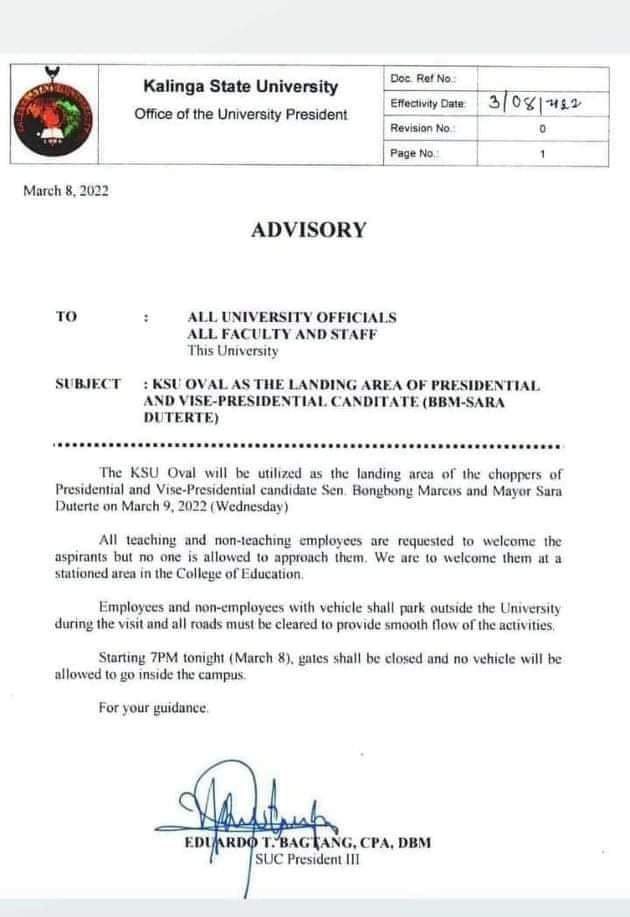
Last March 8, the faculty and staff members of Kalinga State University in Tabuk, Apayao received a memo from their president, Dr. Eduardo T. Bagtang, informing them that the KSU Oval was going to “be utilized as the landing area of the choppers” of presidential and vice-presidential candidates Bongbong Marcos and Sara Duterte the following day. Accordingly, all teaching and non-teaching employees were “requested to welcome the aspirants but no one is allowed to approach them. We are to welcome them at a stationed area in the College of Education.” 

The memo was replete with misspellings and other small infelicities that initially caught my attention as an English teacher, but let’s get past those to the substance of the memo, which was clearly aimed at giving the “Uniteam” combo a warm and hospitable reception. 

Was there anything wrong with that, legally or morally? I’m not entirely sure, which is why I’m raising the question. To be honest, my knee-jerk reaction—as a self-declared non-fan of candidates who avoid debates—was to say yes. To be fair, however, it’ll be good to look at it from both sides, as a study of our culture and its political aspects. The DepEd, the Civil Service Commission, and the Comelec all have rules prohibiting public officials and employees from electioneering. Did the KSU memo cross that line? Was a “request” tantamount to an order?

Just between us Pinoys, it seems the polite and civil thing for a state university president to welcome political candidates. State universities and colleges depend on government support, and whichever parties or officials come to visit, we deem it acceptable if not adroit for SUC presidents to (let’s not say “curry favor”) establish cordial relationships with those in power, or expect to be. (And before we forget, let’s congratulate CHED Chairman Dr. Prospero “Popoy” de Vera, last year’s KSU graduation speaker, for having been named an “adopted son” of Kalinga just this month on the occasion of his visit to KSU.)

Hospitality is arguably ingrained in the Filipino. When then vice-presidential candidate Mar Roxas visited Davao City in November 2009, then Mayor Rodrigo Duterte pulled out all the stops to give him a royal welcome, and even endorsed him for being “clean.” Of course seven years later, running against each other, Rody was calling Mar “the most incompetent Filipino ever to run for president,” but they could both look back to happy memories of walking the streets of Davao together, and of Mar even driving Rody’s pickup truck then. 

Political incumbents routinely welcome campaigning candidates to their territory, which the visitors can spin to their advantage. When Isko Moreno visited Cotabato to meet with BARMM Interim Chief Minister Ahod Ebrahim last month, newspapers were quick to interpret the Manileño’s introduction by Ebrahim as “our incoming president” as a “virtual endorsement” of his candidacy. It was denied the next day by the BARMM spokesman, but denials don’t stick that well in the memory. 

Of course there are thorny exceptions to this ritual politesse. The logistical obstacles reportedly thrown in the way of VP Leni Robredo’s massive rallies by some local politicians and their allies come to mind. Not only were these hosts inhospitable but openly hostile, as if they had been visited and threatened (they probably were) by a pink virus. 

In contrast to the red carpet prepared by KSU President Bagtang and his staff for the BBM-Sara team, a “welcome activity” being planned by the Baybayog National High School in Alcala, Cagayan for Leni set for March 12 had to be scrapped after questions about its “official” nature. The school had sent consent forms for parents to allow their children to attend the activity—deemed “official” because Leni was still, after all, the sitting Vice President, and waving as her convoy passed would have been part of their “civic duty”—but the plan was dropped, to avoid controversy.

This reminds me how it used to be pretty normal for us, when we were kids, to stand at attention under the hot sun for visiting dignitaries, wave flags or flowers, and cheer like our lives depended on it (and maybe, in some ways, they did). We thought politicians, priests, generals, and CEOs were all respectable people and worthy of our admiration. When we realized they were not, the flags and flowers turned into streamers and placards. This is why all but the bravest and most progressive politicians have been loath to set foot in liberal citadels like UP, where a reception of another kind awaits them.

Now, KSU is clearly not UP, by which statement I do not wish to denigrate the strides KSU has made in higher education, which can be found on its website. I refer to the intellectual atmosphere and spirit that inhabit each school and how these are fostered by their constituencies and leadership. KSU, I now recall, was also one of three SUCs that pulled out “subversive” books from their libraries last year in compliance with a much-criticized CHED memo urging them to toe the anti-Red line. Given that background, I shouldn’t have been surprised to find it opening its arms wide to the “Uniteam,” which says it wants national unity for and with everyone—as long as they don’t read, teach, and keep certain naughty books. 

But let’s not be too judgmental, as the campaign season is far from over, and it’s possible that candidates Robredo, Lacson, Pacquiao, Moreno, and de Guzman might yet decide to visit Tabuk, and land their choppers on the greens of KSU. In that case I expect Dr. Bagtang to be his old congenial self and to issue more memos requesting the faculty and staff to welcome the visitors, although I doubt that VP Leni and Ka Leody will be landing in such princely fashion.