Qwertyman No. 108: The Owl and the Parrot

Qwertyman for Monday, August 26, 2024

The Owl and the Pussy-Cat went to sea

In a beautiful pea-green boat.

They took some honey, and plenty of money

Wrapped up in a five-pound note.

WHO’S THE English-educated Pinoy of my generation who doesn’t remember this verse by Edward Lear, a so-called “nonsense” poem which we happily recited even if, as expected, it made no sense? It had animals who had fun doing outrageously improbable things together, and we were so caught up in the magic of a pig who sells his nose-ring so the owl and pussycat could get married by a turkey that we even believed a word like “runcible” existed, even if it didn’t, at least not before the poem. After the poem—and because of the poem, first published in 1871—“runcible spoon” entered the English dictionary as “a sharp-edged fork with three broad curved prongs.” That’s why MS Word no longer flagged “runcible” as a misspelling as I typed it on my computer a few minutes ago.

That’s the power of true literature, something that gets beneath your skin and deep into your subconscious imagination, more effectively than reason or logic can, so that it becomes more real and more credible than reality itself. There’s a disarming honesty to nonsense poetry that doesn’t pretend to be anything else but. (Of course, given how students of literature have to sound deathly scholarly to earn or deserve their PhDs, a lot more nonsense has been written and published in ponderous journals about what “The Owl and the Pussy-Cat” really, really means.) 

As adult readers or reciters, we can all just enjoy the image of the owl and the pussycat dancing “by the light of the moon,” and think about how good that would be to do with our owl, our pussycat, so why can’t or don’t we? We’re amused but wistful at the same time, and that’s a complex emotion—wistfulness or “regretful longing” especially cuts backward through time and experience to make spot valuations, mostly about losses.

But let’s get back to the fun part—or maybe not so fun. 

Last week, it came to our attention that our multi-talented Vice President Sara Duterte—fresh out of her role as the “mother of Philippine education”—is apparently also an author of children’s books, having come out with one titled Isang Kaibigan (A Friend). We should all be happy when our political leaders turn to writing (presumably without the aid of a ghost writer), because it offers proof that (1) they actually think; (2) they still know their subjects, predicates, and objects, and therefore understand that people commit acts that lead to consequences; and (3) they know they won’t be in power forever, and want to be remembered in a good way for a long time.

That said, it’s a pity that most politician-authors throw away their chance at real greatness (in literature, if not in politics) by churning out some commissioned biography inflating or embellishing his or her accomplishments while leaving out the tricky ((and truly interesting) stuff. Good business for peons like me, but usually so poorly done as to be forgettable, the worst fate a book can suffer. If you think of pole vaulting, the bar was set highest at 7 meters by Winston Churchill, who became both Prime Minister and Nobel Prize winner for Literature (yes, literature). At around 5.5 meters we have genuinely talented fellows like Jeffrey (now Baron) Archer, the colorful Conservative MP who wrote popular novels, one of which sold 34 million copies (out of 320 million total for his entire oeuvre). Most others can barely hop over the bar at one meter. 

Enter VP Sara, whose maiden venture, a 16-page book, reportedly touts the virtues of friendship among people in dire straits. While it makes me wonder why the VP’s thoughts are drifting in this direction, it’s surely a worthwhile message, given all the unfriendliness in Philippine politics—even in the Philippine Senate. 

That’s where VP Sara went to ask for a P2-billion budget for her office, including a paltry item of P10 million for the printing and distribution of 200,000 copies of her book. Rather reasonably, Sen. Risa Hontiveros asked the VP what her book was about, prompting this strangely tart reply:

“This is an example of politicizing the budget hearing through the questions of a senator. Her problem is, my name is listed in the book. And we will be giving that book to the children. And those children have parents who will be voting. And my name will be spread wherever the book is given.”

I became even more curious about what was in the book, so I went online and discovered that it was the story of an owl whose nest is destroyed by a typhoon and who then finds refuge with a friendly parrot. So, okay, maybe it won’t win any PBBY book prizes for writing for children. And I’m afraid to say that with answers like that, Author Sara won’t fare too well in the writers’ workshops, where the panelists are far nastier than Sen. Risa.

But Isang Kaibigan establishes an important point, right? Friendships are important; friendships can save you; what you do for a friend in need today will be remembered tomorrow. (Never mind what the naughty wags will say about the VP being left out in a political storm—who will offer succor? Who will prove her true friends while she rebuilds her house toward 2028?) And where more pretentious authors typically load their “About the Author” pages with cloying lists of “awards won” and annoying cliches like “He divides his time between Bacolod and Berlin,” VP Sara keeps it simple and gets straight to the point: “Isa siyang kaibigan.” She’s a friend!

So what’s not to like? Well, maybe the P10 million bill, which lesser writers like me can only be envious of, having to wait years to watch our print run of 1,000 copies vanish book by painful book. VP Sara’s 200,000 guaranteed sales will surely break bestseller records, and we can gnash our teeth all we want but it still won’t answer our question, “How to be you?”

I don’t know how many millions of pounds Sir Winnie asked for and got from His Majesty’s government to print and distribute his books during the war, but it must have been a lot and the Brits must have read all of them because they certainly came through with just their blood, tears, and sweat. Sometimes, some honey and plenty of money is all an author needs to shine and be happy.

Qwertyman No. 107: The Epalympics

Qwertyman for Monday, August 19, 2024

FIRST OF all, a definition of terms, particularly for the benefit of our foreign friends: “epal” is a Filipino word that has nothing to do with friendship over the Internet, although it does presume on some (unearned and likely bogus) level of familiarity between two people—one an achiever (e.g., an Olympic champion) and the other, a politician. The term is rooted in the Filipino word “kapal” or “thickness,” the complete phrase being “kapal mukha” (aka “kapalmuks”) or “thick-faced,” referring to the utter shamelessness some people can be capable of. (EDIT: I’ve been told that “epal” more likely derives from “papel” or “pumapapel” to mean “promoting oneself,” which makes even better sense.)

In the case of “epal,” the specific context is credit-grabbing or publicity-seeking, such as when a politician plasters his or her name all over a civil works project to suggest that it wouldn’t have happened without him or her—or, in recent weeks, when a politician posts a meme supposedly congratulating an Olympic champion, as if he or she had anything to do with that person’s sterling achievement. 

Closely related to “epal” in the Pinoy political vocabulary is “trapo,” which started out as “tradpol” for “traditional politician” but which quickly and sensibly devolved into the Filipino word for “rag”—yes, that piece of cloth you mop up the dirty and yucky stuff with. Trapos will find nothing wrong with being epal—it’s central to their trapo-ness—as they are pathologically incapable of modesty or self-awareness, and equate anything that promotes their well-being with the public good, the people being privileged to be served by them rather than the other way around.

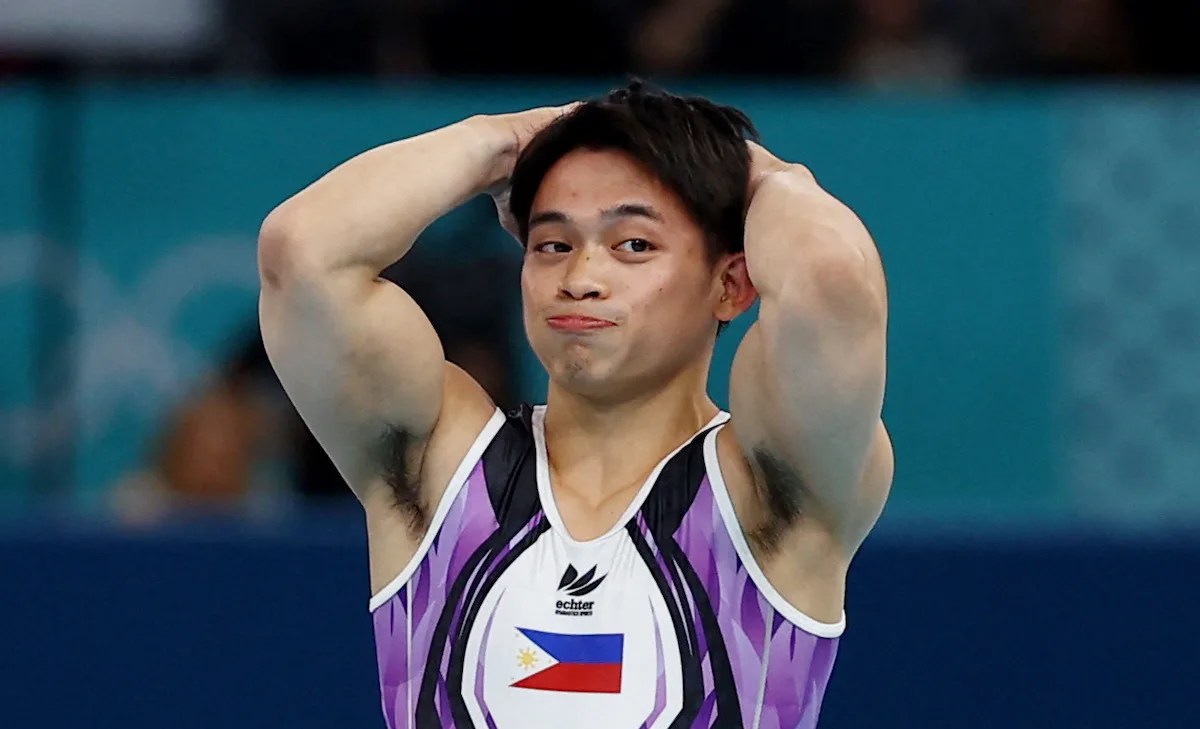
We witnessed this in abundance in the wake of the Paris Olympics, from which the Philippines came home with two golds and two bronzes. In what Netizens quickly dubbed the “Epalympics,” our medalists, especially gymnast Carlos Yulo, were showered not just with congratulatory memes from the usual politicos but with tons of cash and other goodies from both public and private donors. 

There’s nothing, of course, preventing our distinguished and hardworking public officials—and even those seeking to replace them—from sharing in the post-victory jubilation. Lord knows we needed that boost to our spirits, even if our national fantasies still revolve around basketball like nothing’s happened since Berlin 1936 (there’s something to be said here about our propensity for self-punishment and martyrdom, but we’ll leave that for another time). 

It’s possible that Caloy was looking forward to the chorus of fulsome praise from his favorite senators and congressmen, if only as a relief from all the messages urging him to either disown his mother or to find another girlfriend shaped more like, well, a gymnast. A politician, after all, represents a constituency and presumes to speak for them, so it has to be extra comforting to realize that it’s not only Cong. X speaking for himself, but all 250,000 voters in the third district of his province, even if none of the appear in the meme; heck, even Caloy himself may not be in the picture, but does it matter? He has all the glory he needs; let him share it with the less fortunate.

As a writer, however—and speaking on behalf of my fellow artists—I must register my complaint over the apparent partiality of our esteemed epals, who have never congratulated me or my colleagues despite our considerable achievements on both a national and global scale. Not even my local councilor or barangay captain greeted me when my novel was shortlisted for the Man Asian Literary Prize, nor did the UP Singing Ambassadors and UP Madrigal Singers receive online hosannas for their triumphs in Arezzo. (This list can go on and on to include our prizewinners in film, painting, sculpture, etc.) No, sir—our epals are staunchly and singularly sports-minded, perhaps in commiseration with athletes who have to run, vault, gyrate, box, and even shoot their way to victory; politics, after all, is an ancient blood sport, at which not necessarily the best but the strongest survive.

Come to think of it, I can’t recall a senator or congressman congratulating journalist Maria Ressa (save for a few brave souls in the opposition like VP Leni)—let alone give her a million-peso bonus—for winning the Nobel Prize, which will probably take another century for another Pinoy to get. 

Yes, let’s talk about those bonuses—which all of us are happy our sports heroes are receiving and frankly envy them for, there being no such generous windfalls in our line of work. It’s another sure sign of ka-epalan when the “incentive” is given after the fact of victory, and not before when it might have mattered more, and not just to one champion but to an entire program in dire need of such basics as food, uniforms, shoes, and transportation money. (One deathless politico even offered Yulo an extra P5 million if he were to reconcile with his estranged mom—awww, so touching! You can bet he’ll be there with an outsize check when the tearful moment happens.)

Yes, Yulo & Co. did receive government and private help on their way to the Olympics, for which they’ve been properly thankful, and yes, those investments clearly paid off. But where were all these mega-millions for the grassroots sports programs that could have produced a dozen more Caloys? Yulo himself has nobly announced that he will share his bounty with up-and-coming gymnasts, and bless him for that, but that’s not even his job. 

The most cringeworthy prospect yet lies ahead: who among our Epalympians will succeed in getting Caloy Yulo on his or her campaign poster come the elections in 2025? And God forbid, will Yulo himself do a Manny Pacquiao and tumble his way into the political arena down the road? As we say in these drama-dizzy islands, “Abangan.”

Qwertyman No. 106: For Our National Peace of Mind

Qwertyman for Monday, August 12, 2024

FOR A country starved for heroes, Carlos Yulo’s double-gold performance at the Olympics provided a sumptuous feast—a bacchanalian one, to use probably the newest and most notorious word in many people’s vocabulary. In one YouTube replay after another, we marveled at his seemingly magical flips and tumbles, and our eyes welled with tears when the Philippine anthem played over the stadium’s loudspeakers.

The euphoria effectively drowned out the previous week’s near-manic howls over the controversial Dionysian tableau of the opening ceremonies and the chorus proclaiming Paris as the most evil and corrupt city on the planet. Suddenly Paris acquired a golden halo; Yulo was beatified on social media as the exemplar of perseverance and tough-mindedness, and rightly so. His feat—sterling victories achieved despite overwhelming odds—was unprecedented and not likely to be equaled by another non-hyphenated Pinoy anytime soon.

But no sooner had Filipinos united in that moment of jubilation than they, almost by instinct, found cause to divide once again, this time over one’s choice of villainess in poor Caloy’s life: the bitter mother or the sexy girlfriend, behind either one of whom platoons of supporters rallied. Team Nanay exalted motherhood and filial piety above all else; Team GF cheered for the pursuit of happiness. Who will get to the podium remains to be seen.

I’m sure Caloy Yulo isn’t alone in his predicament. An assiduous journalist just has to comb through the life stories of all the 400+ gold medalists in the Paris Olympics to discover that 87.93 percent of them have problems with mothers, fathers, girlfriends, boyfriends, siblings, in-laws, best friends, neighbors, and pets. (For these, I would look most closely into places like Uzbekistan, Uganda, and, yes, Italy, where families seem to be big and noisy.) Statistically speaking, there has to be a champion shotputter or a synchronized swimmer somewhere whose miserable mama hates his shapely squeeze. (I’ve even heard someone posit over breakfast coffee that maybe EJ Obiena needed a mother/girlfriend problem to clear the bar at 6.0 meters.)

The big difference is that no one goes to town with family dramas quite like us Pinoys, especially Pinoys with social-media accounts normally given to showing off what they just ate or their OOTD. To show, at least once in a while, that there’s actually a thinking and feeling person behind the avatar (and online, feeling equals thinking), we post a strong opinion—never mind that it’s the millionth repost of someone else’s meme. We find it important—nay, obligatory—to take sides on vital issues (that do not include PISA scores, ICC probes, or jeepney modernization). We have to decide if the mother or the girlfriend is at fault; our national peace of mind depends on it. Never mind what Caloy Yulo himself thinks—this is bigger than him (like most things are).

And this is just the beginning, although it’s inextricably tied in with the next big question that 115 million Filipinos have to grapple with: what should Caloy do with all his money? (I don’t even want to think about whether he should go into showbiz or politics next—my friend Ige Ramos’ post on those prospects was probably the sanest of the past week, and one Caloy would do well to heed.)

In addition to all the lifetime supplies of ramen, litson manok, and colonoscopies that come with being a Pinoy Olympic laureate, will it be too much to offer Caloy Yulo a lifetime supply of peace? It costs nothing but our willful silence.

Seriously now, silence is a virtue, and withholding opinion can be as valuable and as helpful as giving one. It doesn’t mean you’re dumb or uncaring. On the contrary, it might mean that you know enough to understand that staying out of the fray and keeping your thoughts to yourself is the more sensible if not kinder option. But we Pinoys, the reigning world usisero and pakialamero champions, have never been known for excessive self-restraint, which manifests only when the neighbor’s wife is being beaten senseless by her husband (“Wala tayong kinalaman diyan”) or when witnesses are called to testify to their boss’ or their congressman’s misdeeds.

Sadly, social media has empowered everyone from nitwits to geniuses (and of course, everyone thinks of himself or herself as a genius, especially the nitwit) to hold forth on every conceivable subject, even and especially if the issue at hand is none of one’s bloody business. 

I say that with the ironic awareness that we opinion writers do pretty much the same thing, with some sort of official license; we even get paid for it. Indeed we may even be the ultimate pakialamero, poking our noses into all manner of secrets and scandals, particularly the government variety (or maybe not me, because I don’t hobnob with politicians or their secretaries, and so am useless when it comes to the saucy stuff). But the difference is that having to write 1,000 words instead of a ten-word tweet, we actually have to stop to think about how we feel, to contextualize, and perhaps even to decide that we have nothing truly important or useful or even amusing to say about the matter, and so should move on to something else.

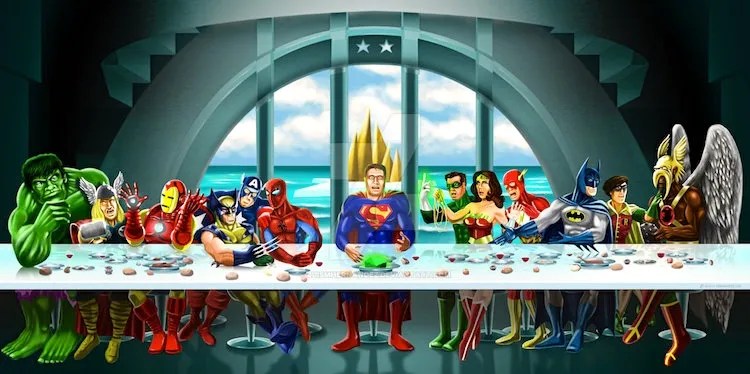
At least Caloy can rest assured that given the nature of the beast, this tempest will blow over soon. (Is anyone still posting about the Last Supper? That’s so last-week!) And before too long, he can rightfully enjoy the pommel horse in his P32-million condo. Wait—it does have a pommel horse, right? If not, it should! What do you think?

(Photo from rappler.com)

Penman No. 465: Back to the Nineties

Penman for Sunday, August 11, 2024

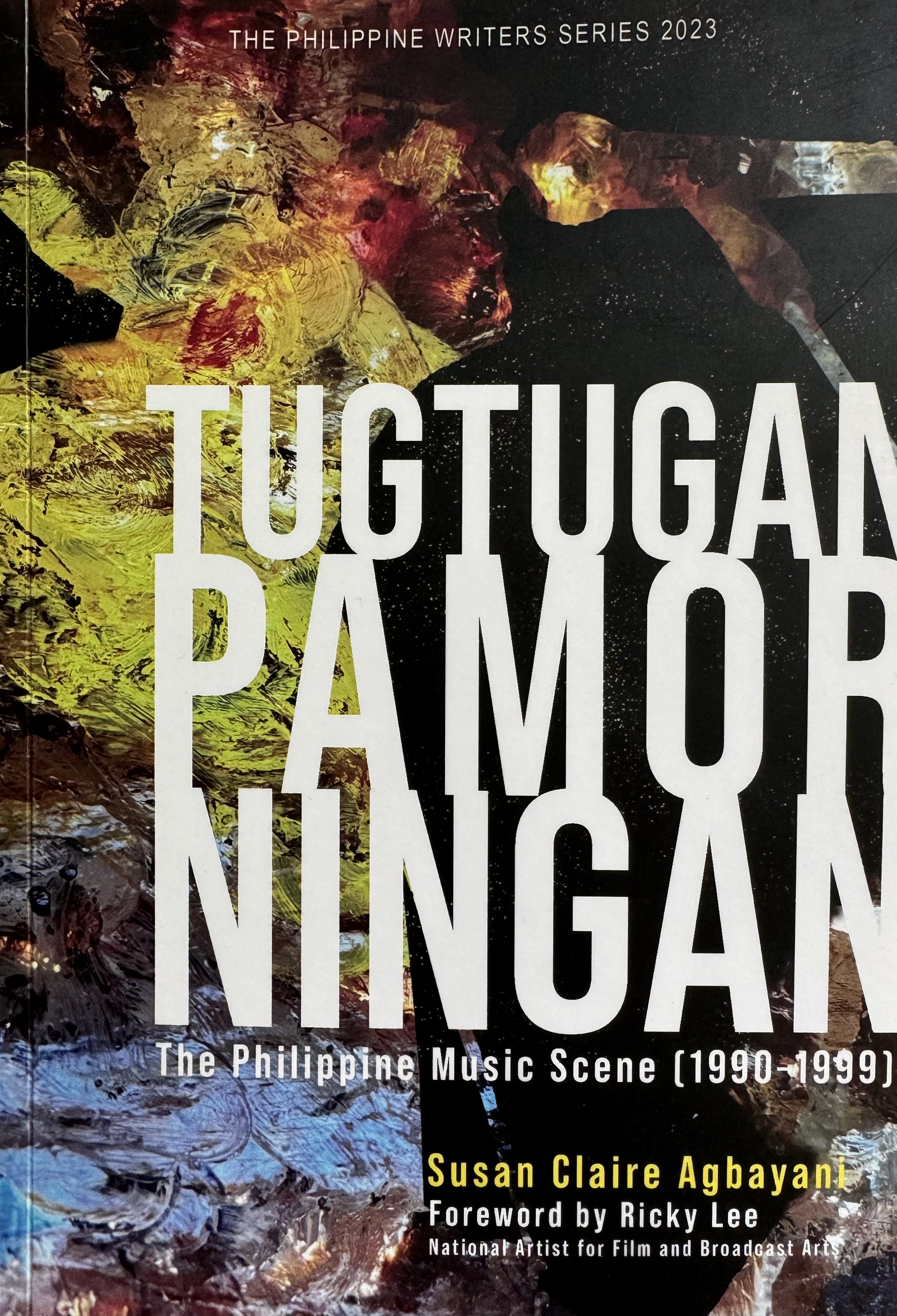
AMONG THIS year’s most interesting new books is one that’s neither a novel nor a political exposé, but a musical chronicle of a decade that many Filipinos now look back on with a certain nostalgia, albeit for different reasons—the 1990s.

Say “the Nineties,” and a range of responses will come to mind depending on how old you were then. For today’s seniors, the core of it was likely FVR’s infectious optimism over “Philippines 2000,” the relative stability we had gained after the anti-Cory coups and in anticipation of our centennial in 1998. For those younger but old enough to drink beer, it was the age of the Eraserheads, Clubb Dredd, the ‘70s Bistro, and Mayric’s, an explosion of OPM like we had seen back in the 1970s but with a harder and sharper edge.

It’s that latter scenario—set against the context of our transition from Cory to FVR to Erap—that’s captured in Susan Claire Agbayani’s landmark Tugtugan Pamorningan: The Philippine Music Scene 1990-1999 (University of the Philippines Press, 2024, part of the Philippine Writers Series of the UP Institute of Creative Writing). An indefatigable cultural journalist, publicist, and sometime concert producer (and also, I must proudly admit, my former student), Claire was among the very few writers who could have undertaken this job (Eric Caruncho, Jessica Zafra, and Pocholo Concepcion, all of whom she cites, would have been the others). 

Comprehensively, the book’s chapters cover bars and concerts, the music scene, personality profiles, duos and trios, pop/jazz/R&B/show bands, alternative/rock bands, the Eraserheads (yes, a chapter all to their own), Mr. and Mss. Saigon, and visiting acts, rounded out by a gallery of period pics.

As a compilation of pieces from Claire’s reportage at that time, the book revives not only the music but also the issues besetting the industry then, such as Sen. Tito Sotto’s wanting to ban the Eraserheads song “Alapaap” for supposedly promoting drug abuse. Priceless vignettes abound, such as that of Basil Valdez singing “Ama Namin” to composer George Canseco’s wife over the phone, three days before she died, and of Ely Buendia telling Nonoy Zuñiga that he had won a singing competition in school with the latter’s “Doon Lang.” We learn about Humanities teacher and all-around performer Edru Abraham’s Lebanese ancestry and how it connects him to world music.

The best scenes, I think, are the saddest ones, such as this piece on a jazz diva:

“She goes around greeting the waiters, then the manager. At last, she sits on a stool, and croons ‘Left Alone,’ the song after which the bar was named. She closes her eyes, closed them more tightly as a couple walks out in the middle of her song. The waiters laugh loudly in the background, occupied with their own concerns. Those who remain inside the bar talk not in whispers. No, they don’t know her. They don’t know Annie Brazil.”

But ultimately it’s the music, the sheer variety and vitality of it, that surges through, so innate to the Filipino and so necessary. If there were an Olympics for music, we’d make the podium in all the categories, and Tugtugan Pamorningan reminds us why. As the title implies, it’s a nightlong festival for us when the music starts. But like night itself, even the Nineties came to an end, with the 2000s bringing in MP3, iTunes, and Spotify, and somehow the smoky, small-bar intimacy that the previous decade connoted gave way to Taylor Swift mega-concerts that people actually flew out to instead of taking a taxi.

I contributed an afterword to the book, so here’s a bit more of what I had to say:

I was a bit too old by the time the ‘90s came along to experience it in the way Claire has so capably and faithfully chronicled in this book, but still young enough to imbibe its energy and its excesses. I was 36 in 1990, finishing my PhD in the States, and when I returned to Manila the following year after five years of being away, I found a radically different scene from the one I’d left just after EDSA. I had a lot to adjust to, and somehow San Miguel beer and the city’s new nightlife seemed to ease those pains, at least until the next morning. 

That was how, despite being too old to know the Eraserheads and their music, I managed to stumble once or twice into Club Dredd, Mayrics, the ‘70s Bistro, and a few other meccas mentioned here, but mostly just out of curiosity. I guess I was looking for something else, and found it on Timog Avenue with my partners-in-crime Charlson Ong and Arnold Azurin, finishing up with some coffee or a beer for the road at Sam’s Diner on Quezon Avenue at 3 am. I wasn’t even a Penguin person—I never thought of myself as being hip or cool—and I preferred hanging out with journos after work in that kebab place on Timog.

That was my life as a barfly—which was also how my newspaper column got that title—and its soundtrack consisted of Basia, Bryan Adams, and “Total Eclipse of the Heart.” I wasn’t much into bands—no one could beat the Beatles—and OPM for me meant APO and Louie Ocampo, whose songs were singable and could make me smile, which I needed a lot. It was a wild time, when I was smoking and drinking and messing around town in my white VW, courting disaster, until one day I found my way home and decided to stay there forever.

That makes the ‘90s sound like some kind of inferno, but now that I think about it, it was the last gasp of innocence before the 2000s and everything we associate with it—9/11, GMA and Erap, the Internet, the iPod, social media, K-pop, tokhang, Trump, the pandemic, the Marcos restoration, and AI—came in. There was a simple-mindedness even to our vices then; truth was truth, fake was fake, and it was easy to tell one from the other. It was rough and raw in many ways—even our 14.4K modems screeched like cats in heat when they connected—but we still got wide-eyed about the possibility of extra-terrestial menace in The X-Files, and we may even have believed that FVR’s “Philippines 2000” was going to be a better place even as we got worried sick over what Y2K would bring, so there remained a tender spot of credulity in us.

That’s all gone now, like Jacqui Magno’s voice, replaced by CGIs, deep fakes, and other synthetics produced by FaceMagic and ChatGPT. 

I can’t honestly say that I miss the ‘90s, and I feel much relieved to have survived them, but there’d be a huge hole in my life—and in the nation’s—if they didn’t happen. What’s in that hole is what’s in the music Claire writes about—and the music often gets it better than even we writers can.

Qwertyman No. 105: Pronouns and Parodies

Qwertyman for Monday, August 5, 2024

SOME DAYS, I swear, when I open my Facebook feed, I’m met by a flood of vexatious opinion certain to trigger my worst reflexes. Much as I’m tempted to respond, I rarely do, knowing that FB comments don’t really soften hearts and minds, but only make them harder. Also, I’m not the witty sort with one-liners that will go viral; my thoughts and words like to ramble and even lose their way, but at least you know it’s not AI or the “Forward” button at work.

Two topics did get me worked up a bit last week, and I’m going to use this column to write the kind of longish social-media comment no one will read. You’ll recognize both issues instantly if you haven’t been living under a rock.

The first was that picture of a seated gay “personality” (I’m never quite sure how persons become “personalities”) lecturing a waiter standing at parade-rest, reportedly for two hours, on gender sensitivity, all because he called her “Sir.” 

There’s a part of me that understands how and why that happened. Some will call this silly wokeness, but in UP, we take our students’ preferred pronouns and names seriously as a sign of respect for the person. 

But what I also know is, when I teach, I stand and my students sit. That’s not to emphasize my authority, but so they can relax, listen, and hopefully imbibe what I’m telling them. I realize that the lady said she invited the waiter to sit down, but I also understand why he declined. Staff don’t sit for a chummy chat with customers. And imagine this: if I (an old man, dirty or not) were the customer and I felt poorly served by a female employee, and I asked her to sit at my table for two hours while I educated her on the finer points of etiquette, would or should she oblige? And I hate listening to or giving long lectures. If I can’t get something across in twenty minutes max, then I’m a lousy teacher.

There’s politics which can be good and right—and people who may not be. Some of the most politically savvy people I’ve met have also been, as some would say, that part of you where the sun don’t shine. 

The other hot topic, of course, was the “Last Supper” tableau at the opening ceremonies of the Olympics in Paris, which allegedly mocked the Lord and Christianity itself by replacing Jesus and his apostles at the long table with a raft of drag queens and other presumably degenerate characters. 

I never saw so many Christians and especially Catholics (some of them my good friends) come out of the woodwork to profess their outrage at what they took to be willful sacrilege. And predictably, like wolves sniffing out red meat, many more friends from the other side piled on the “offendees” with mini-treatises on Bacchus and bacchanals, pagan elements in Christian ritual, art criticism, the French mentality and sensibility, and such other topics worthy of dissertations.

Now, as I’ve often confessed in this column (maybe losing five readers and FB friends every time I bring it up; in this context, maybe more), I’m not much of a churchgoer, and have continuing issues with the religion I was born into—and with all of organized religion for that matter, despite growing up in Catholic school. I prefer to pray on my own. I have nothing against people who stay in the fold, go to Mass regularly, post daily proverbs on Viber, and believe in the Bible as the one and only true source of, well, the truth. If their faith keeps them whole and happy—and I can see in many cases that it does—then well and good. Some may be hypocrites, but I’m sure many or most aren’t—and there are hypocrites as well (and worse) among apostates like me.

But back to Paris. What I’m not going to say is, “You shouldn’t have been offended.” If you were, you were. Even if you later changed your mind after listening to all the learned explanations (to some, I’m sure, excuses), the fact is, you saw something you didn’t like. (I just have to wonder—how many people responded directly to the tableau itself, and how many were nudged into seeing it and later objecting by another post screaming, “Hey, you have to see this! Look what they’ve done to Jesus!”? It works the same way on the right and on the left: a meme cascades swiftly down the Internet, and people react viscerally even before they can think.) 

Sure, the “Last Supper” is only a painting by one Leonardo da Vinci, that smart Italian fellow who also imagined flying machines, tanks, and other wonderful contraptions—so why not Jesus’ last meal? (I don’t think there’s an exact record in any of the four Gospels about how the scene was blocked for thirteen characters, except that Christ very likely sat in the middle for better reach, and certainly nobody knows who sat next to whom and leaned over whom. Some depictions down the centuries don’t even use a straight table but an inverted U, or have everyone reclining on mats and pillows, or sitting in a circle.) But even images and objects have symbolic meaning and power, so it’s easy to get hopping mad if someone, say, spits on a painting of your grandmother, or turns it into an unflattering cartoon. 

I do share the consternation over why a hyper-expensive and PR-conscious global enterprise like the Olympics would risk alienating half of France and a third of the world (presuming all Christians took umbrage at the Blue Guy) by—according to the charge sheet—deliberately, premeditatedly, and maliciously mounting a patently anti-Christian production for the whole planet to see. I know the French eat strange things like sheep testicles and have a law requiring skimpy trunks and head caps (yes, even if you’re bald) in public pools, but really now, mock the Last SupperSacré Dieu! (Or, excuse me, let’s use the milder sacré bleu!)

Given all of that, my only question is, where was all the outrage when that President was joking about raping captive nuns and cursing the Pope? And speaking of the Renaissance and the power of representation, remember that Pieta-like photograph of a grieving mother cradling her murdered son at the height of that same President’s tokhang campaign, that President who called Catholic bishops “gay SOBs”? Where was all the righteousness? But maybe we’re just getting started. There’ll be FB accounts I’ll be checking in on, the next time something wildly repulsive happens.

(Image from arnoldzwicky.org–Please condemn him. not me!)