Qwertyman N0. 117: Our Best Books Forward

Qwertyman for Monday, October 28, 2024
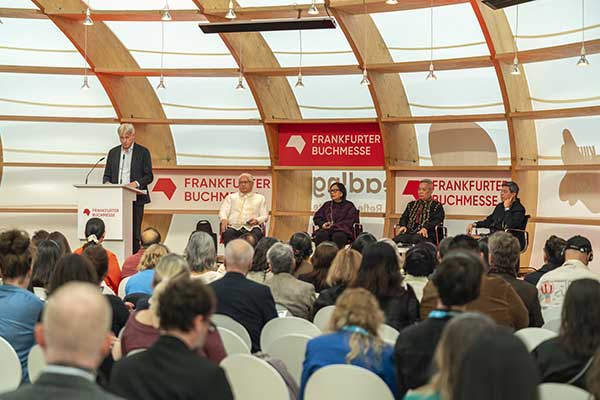
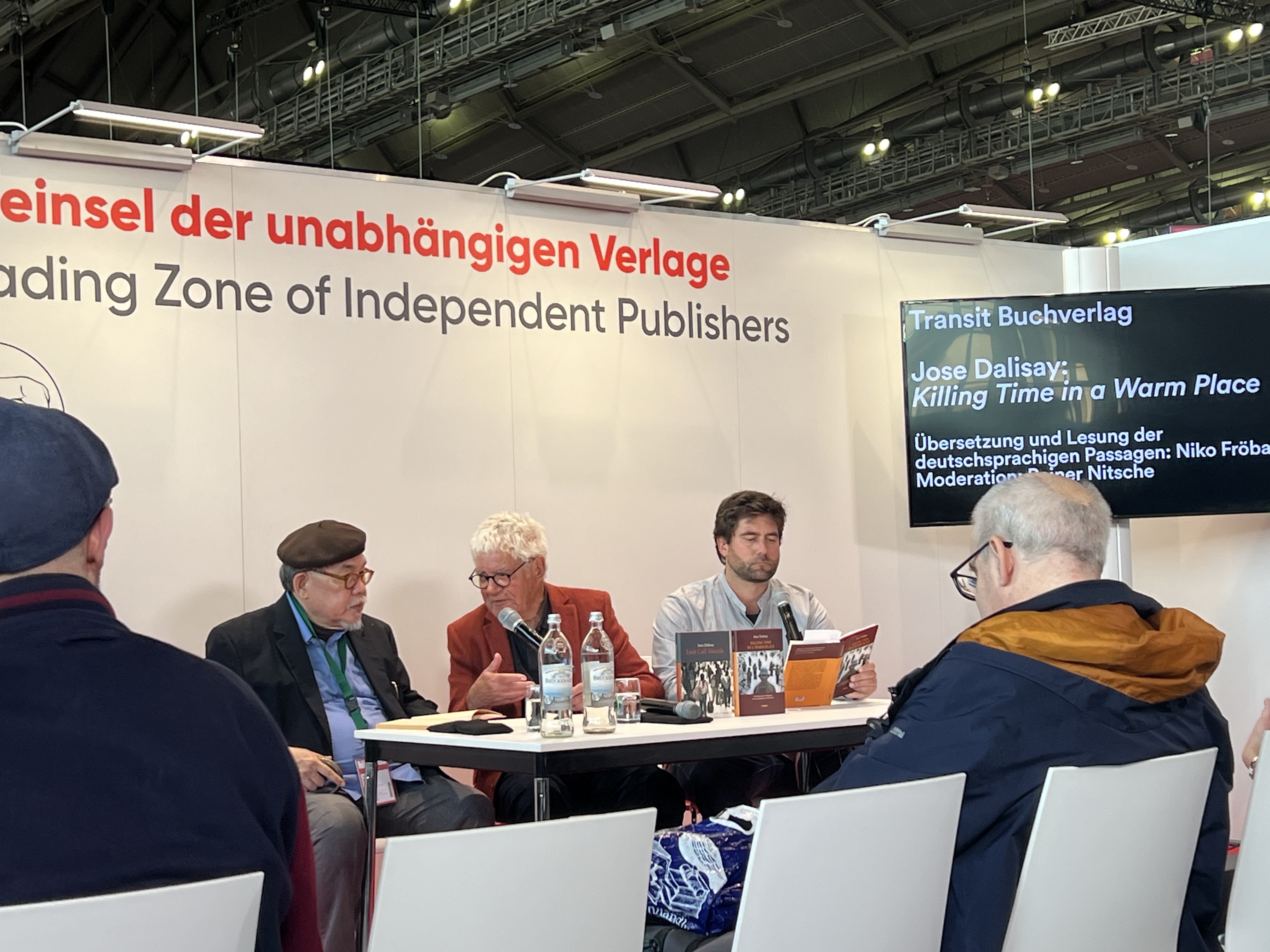
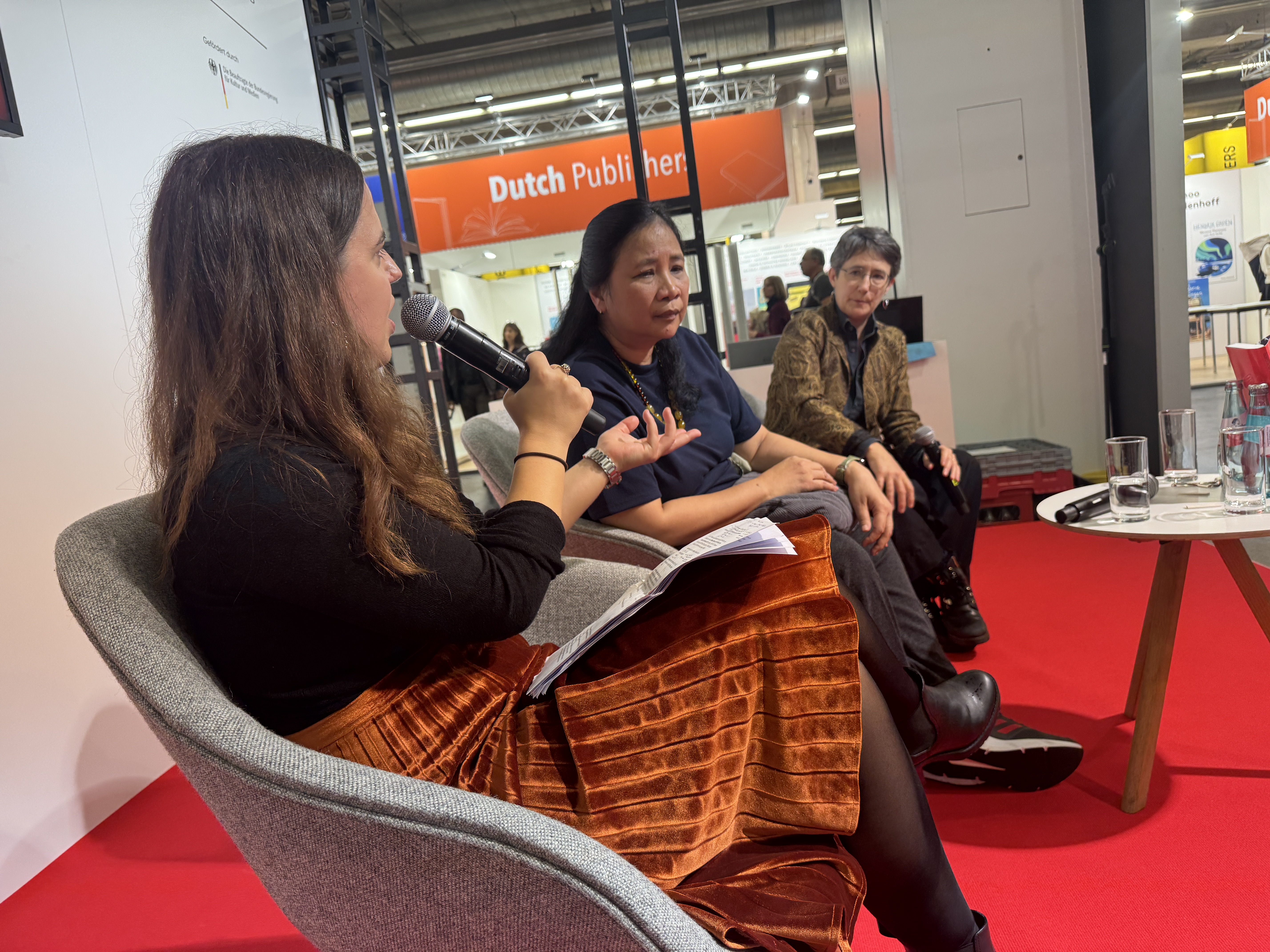
NOW ON its 76th year, the Frankfurter Buchmesse (FBM)—better known outside Germany as the Frankfurt Book Fair, the world’s oldest and largest such event—ended successfully last October 20 with a significant representation from the Philippines, which sent scores of authors, publishers, and book industry officials to the fair. All that was in preparation for FBM 2025, when the Philippines will be Guest of Honor (GOH), the country whose literature will be the focus of the fair’s attention.

You can think of the Frankfurt Book Fair as the Olympics of the global book industry, with over 200,000 participants (book industry persons and the public) representing over 100 countries. However, there are no prizes for Best Novel, Best Nonfiction Book, Best Children’s Book, and so on. Everyone is effectively in competition with everyone else, but the real rewards are in the professional and personal connections made between and among authors, publishers, agents, editors, and translators at the fair, connections that materialize into deals for translation and publication rights. Although exhibited books can be sold at the close of the fair, the FBM isn’t meant to sell books, but rights to books, for which it has become the world’s oldest and largest marketplace. This means that, through the right contacts, Filipino books can be translated into and sold in French, Turkish, Spanish, and Urdu editions, etc. and vice versa. 

Becoming GOH is a signal distinction—but it doesn’t come free. Nations vie and pay for the honor, which this year went to Italy and in 2026 will go to the Czech Republic. I’m sure that there have been and will be more criticisms of our participation in Frankfurt, chiefly of the costs of our foreign exposure vs. the local promotion of our literature, but it’s not a zero-sum game. We need both kinds of investments. We have impressive literary production from all over the country—much of it unknown even to ourselves—but we also need to share the best of it with the world, to raise their understanding of the Filipino above the stereotypes they know (Imelda’s shoes, Manny Pacquiao, DHs, cruise ship crewmen, etc.—not all of them bad, for sure, especially our OFWs, but in need of context).

If FBM 2024 was any indication, FBM 2025 will be an even more resounding success for the Philippines. All literary genres were represented this year in terms of books and panel discussions, and valuable connections were made with European publishers, translators, and agents. Philippine literature will never be the same after this. (This year’s upshot for me is that my novel Soledad’s Sister will be coming out soon in Spanish, after its versions in Italian, French, and German.)
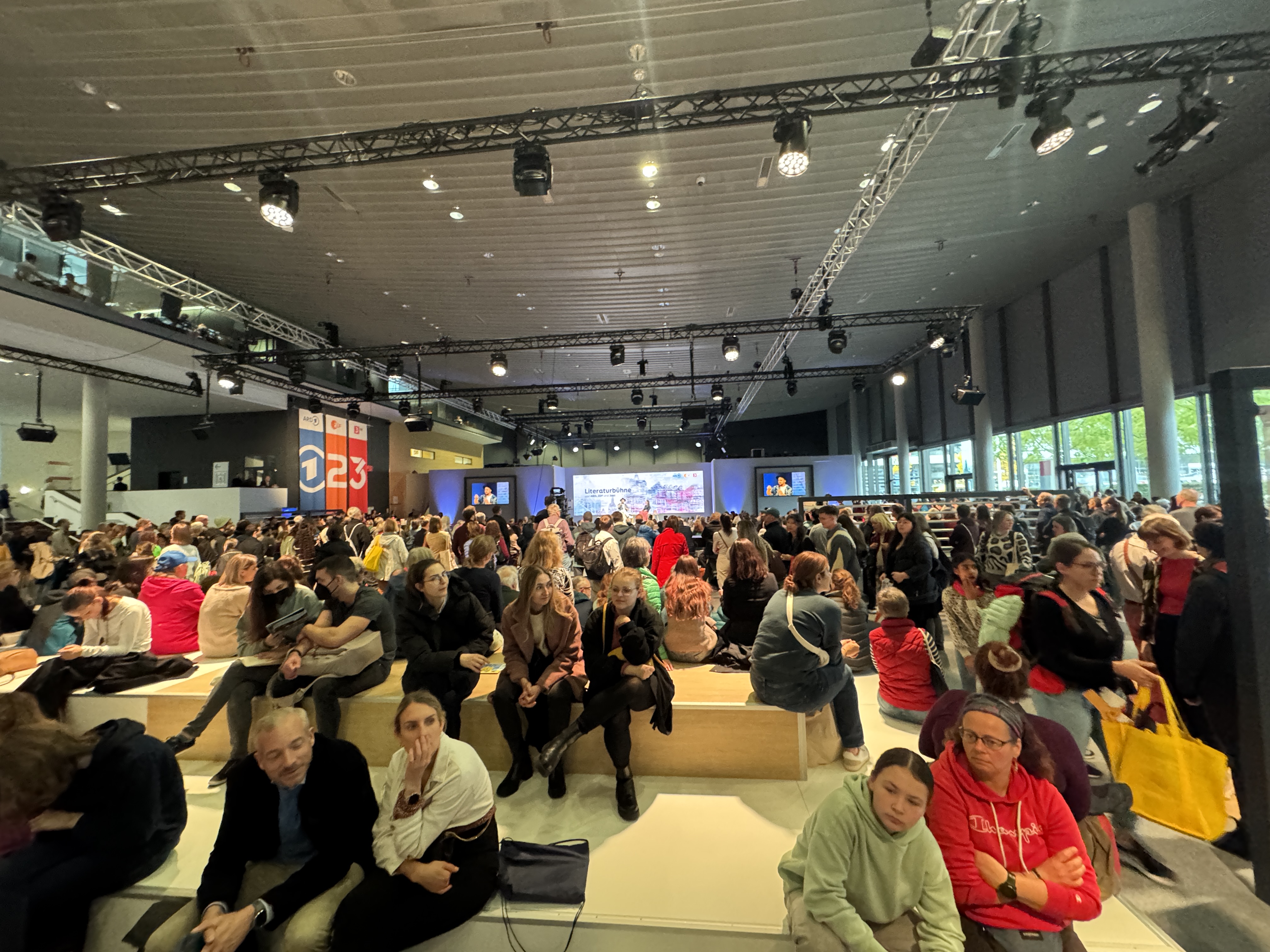
Having followed trends in international publishing for some time, I’m particularly impressed by the way the FBM has helped to promote our new writing by young authors in literary categories that have traditionally received less attention compared to what I’ve called “the big white whale” of publishing, the novel. Approach most publishers and agents at the FBM, and what they’ll ask you is, “Where’s your novel?” For primarily commercial reasons, the novel remains the most saleable and traded commodity at book fairs. (I know many who will wince at my reference to books as commodities, but let’s be absolutely clear about this: the bottom line of book publishing and book fairs is business, not “Kumbaya”-type international peace and understanding.) 

Sadly, however, Filipinos have historically not been a novel-writing, novel-buying, and novel-reading people. In this respect, Rizal’s Noli and Fili are aberrations, familiar to us only and thankfully because of the law requiring their study. That said, our writers are masters of the short literary forms—poetry and the short story in particular. I’ve often remarked that we Pinoys are world-class sprinters, not marathoners; our world-view is not Olympian, but pedestrian, formed close-quarters at street level. 

This year, I’m told that over 70 deals were made between Filipino authors and foreign agents and publishers for the translation and publication of works that went well beyond the traditional novel, including children’s stories (another of our strongest suits) and genre and graphic fiction. These authors were young, and some had their works translated from languages other than English. If anything, this surge in translations, long overdue, is one strategic benefit that our FBM participation has enabled, and our GOH status next year should boost it even further.

According to FBM Director Juergen Boos, “I am very excited about the Philippines’ Guest of Honor presentation in 2025. The motto ‘The imagination peoples the air’ resonates with the universality of storytelling. Even though the Philippines is the world’s thirteenth largest nation with more than 109 million citizens, I believe for many of us in Europe, Philippine literature is currently still rather unknown territory. As the country steps into its role as Guest of Honor, we will learn a lot about the importance of storytelling and today’s cultural scene for Philippine civil society. With an incredible 183 different languages spoken on its 7,641 islands, the country’s diverse influences are one of the aspects I am looking forward to seeing in Frankfurt in 2025.”
I did say that there are no prizes awarded at the FBM, but I have to correct that to acknowledge the Diagram Group Prize for the Oddest Title at the FBM, given since 1978 and now voted upon by the public, and won by such books as Proceedings of the Second International Workshop on Nude Mice, The Joy of Chickens, How to Shit in the Woods: An Environmentally Sound Approach to a Lost Art, and If You Want Closure in Your Relationship, Start with Your Legs. This is not a prize to which Filipino writers have so far aspired, but who knows? Pinoy wackiness (alongside wisdom) knows no bounds.

Many thanks to the National Book Development Board, the National Commission for Culture and the Arts, the German literary organization LitProm, culture champion Sen. Loren Legarda, and our other sponsors and supporters for this great opportunity to put our best books forward on the global stage. Mabuhay!
Penman No. 467: Recovering Our Memory of the Sea

Penman for October 20, 2024

I’VE OFTEN remarked, in academic conferences, about the glaring absence of the sea in our mainstream and modern literature, beyond serving as a decorative backdrop or romantic element. I recently learned that this may not be so true of the native literatures of the Philippine South, for whose people the sea is their economic and cultural lifeblood, but for most of the rest of us, the only sea we’ll ever know is Boracay, or the Dolomite Beach.

That’s a sad thing when we consider that the Philippines—the world’s second largest archipelago after Indonesia—also has one of the world’s longest coastlines (over 36,000 kilometers), is rich in marine biodiversity, and can look back to a long, proud, and continuing seafaring tradition. Despite the alarming depletion of our marine resources due to overfishing and damage to marine ecosystems, we continue to rank high among the world’s fish producers; ironically, our fishermen are among our country’s poorest citizens. And for many decades now, the Philippines has sent out its seafarers to crew the ships of the world—over 550,000 of them last year, making up a fourth of all the world’s seaborne workers.

To go back even farther into the past, pre-Hispanic Filipinos built the balangay that helped populate Austronesia as well as the speedy warship, the caracoa; in Spanish times our ancestors built the galleons that crossed the oceans. In Moby Dick, Herman Melville referred to Filipinos aboard the whalers as “Manila men.”

Behind these figures runs a compelling human and social drama, but it’s a story largely unknown and untold to our own people, and what little we know is fading even faster as more of us leave our islands for the big cities, slowly but surely losing our personal connections to the sea. We encounter sea life only in the fish market or the seafood section of the grocery, or in tin cans; our children do not know the names of fish, which many now refuse to eat, in favor of sausages and noodles.

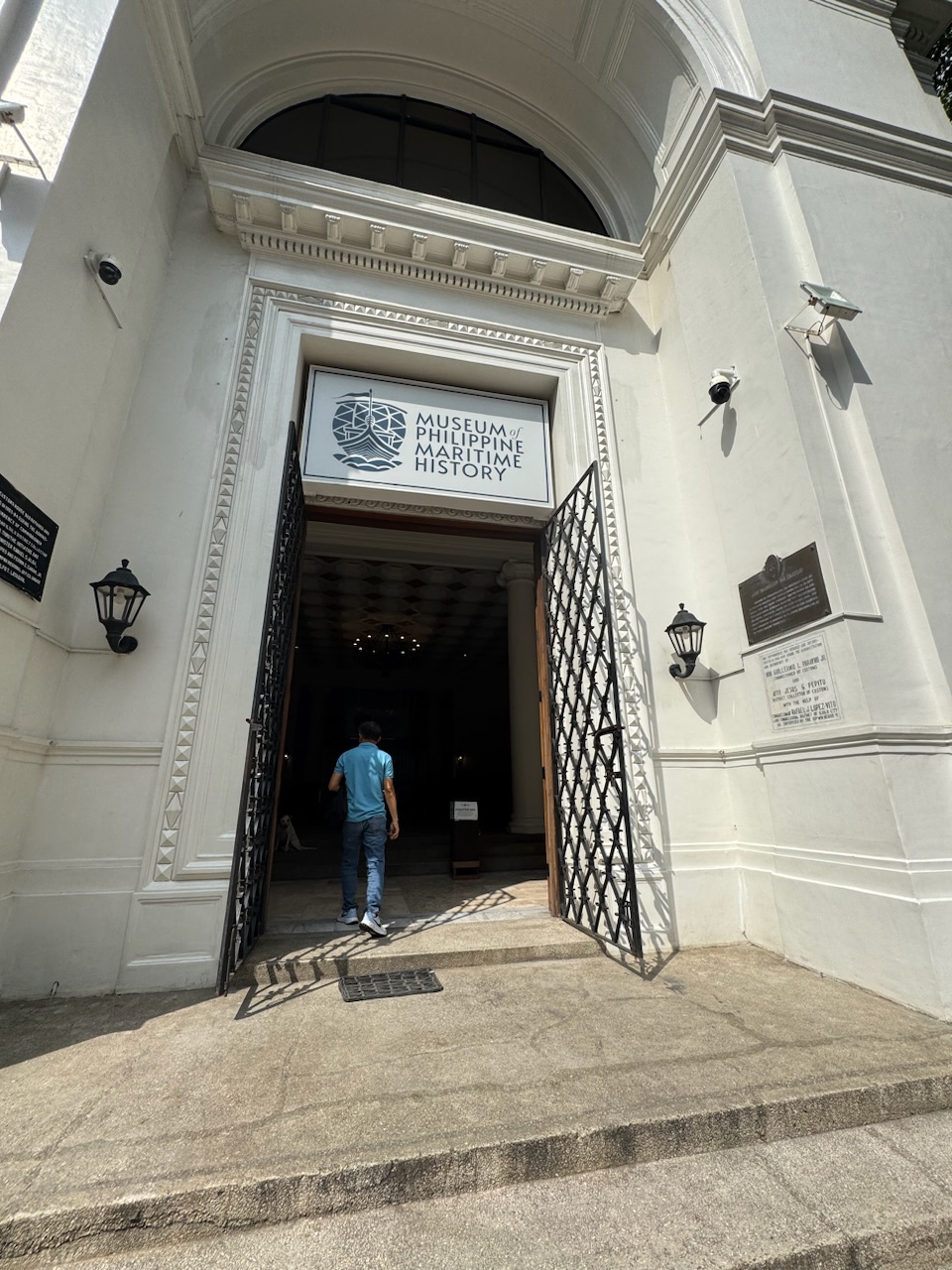
Thankfully, the National Historical Commission of the Philippines (NHCP) has done something critically important to fill this gap in our collective memory—by establishing a Museum of Philippine Maritime History (MPMH) that tells the story of our seafaring past. And it’s significant that this museum isn’t located in Manila, which would seem to be the logical first choice given Manila Bay and its port, but in Iloilo, which has also had a long and continuing affinity with the sea. Iloilo has historically supplied many if not most of the country’s seafarers to the global market. The city has a plethora of schools offering maritime courses, ensuring the continuity of talent.

I stumbled on the MPMH during a recent visit to Iloilo—among my favorite local destinations for all the obvious reasons (the food, the Esplanade, the heritage houses, the churches, the hospitality, the culture, and of course the people). The amazing boom it’s undergone over the past two decades under the sponsorship of former Sen. Frank Drilon and his local counterparts has dramatically transformed the city’s physical and economic landscape, but it hasn’t forgotten its past as it moves resolutely forward. 

Iloilo has long been known as the city of museums. Aside from the Museo Iloilo and any number of restored mansions, it now boasts the Museum of Philippine Economic History, which chronicles the city’s and region’s central role in sugar, shipping, and commerce; the Rosendo Mejica Museum, which celebrates Iloilo’s journalistic heritage (and I’m proud to say that my wife Beng descends from a Mejica); and the Iloilo Museum of Contemporary Art, which places Iloilo squarely in the center of cutting-edge art production.

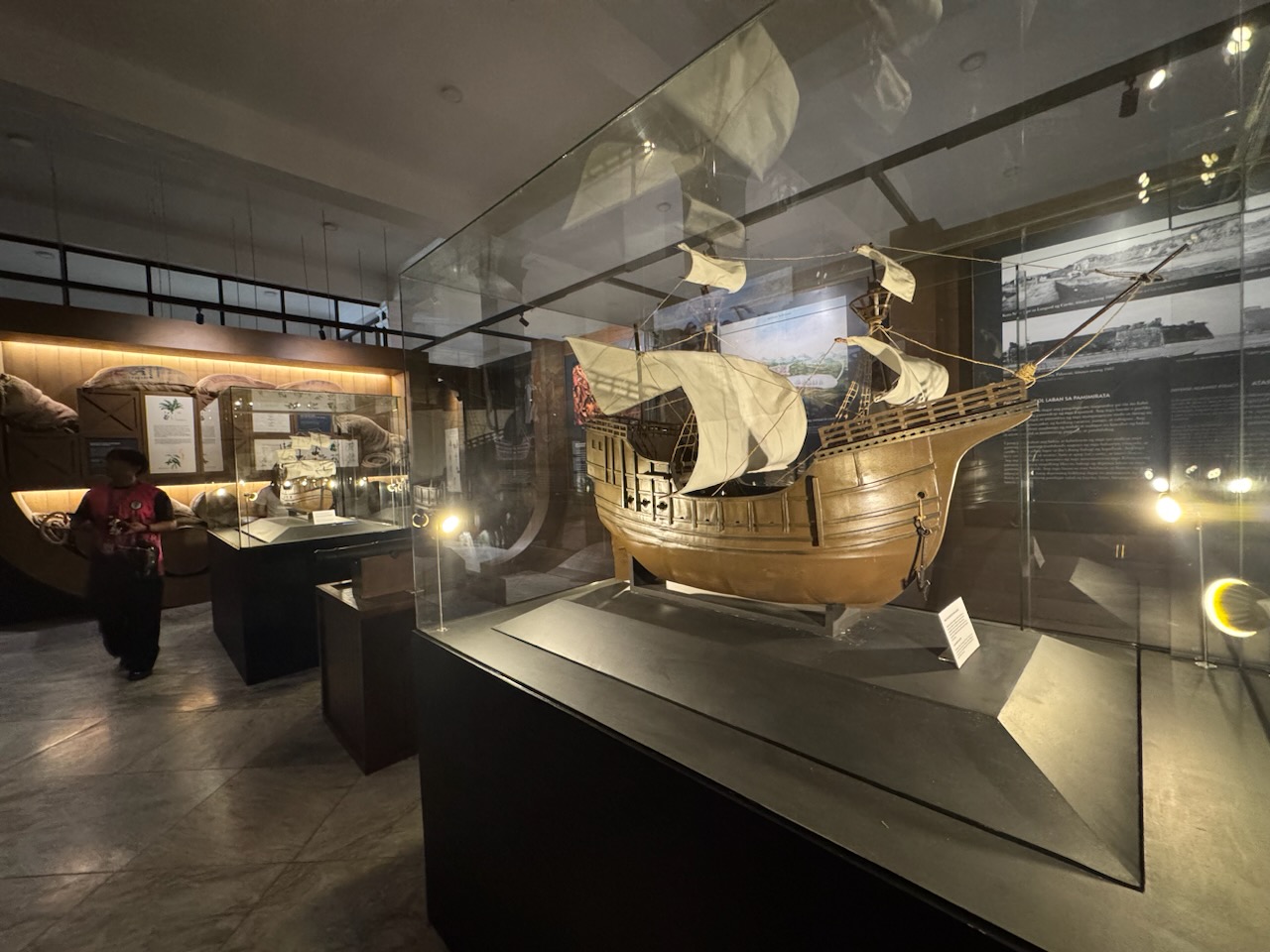
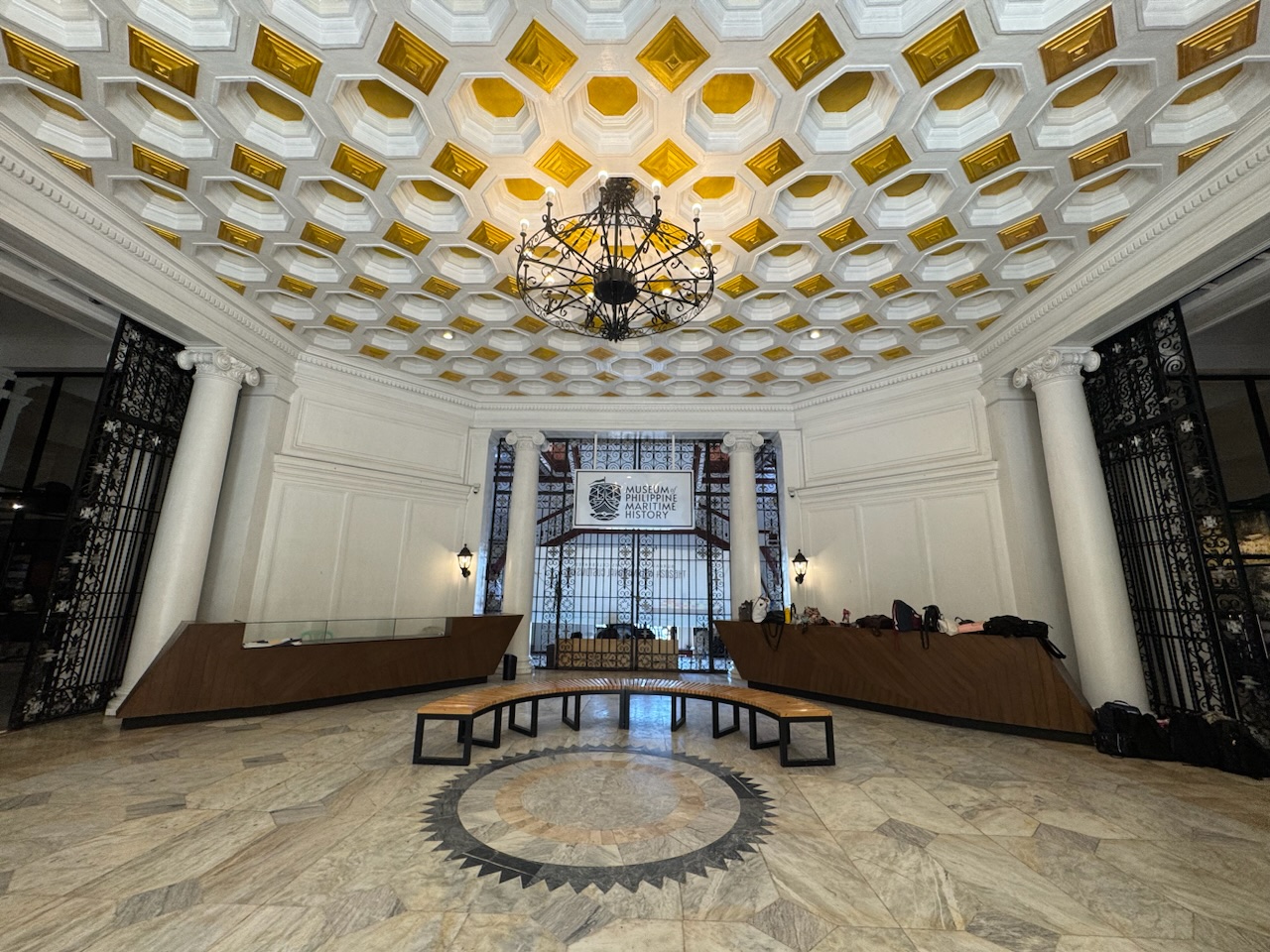
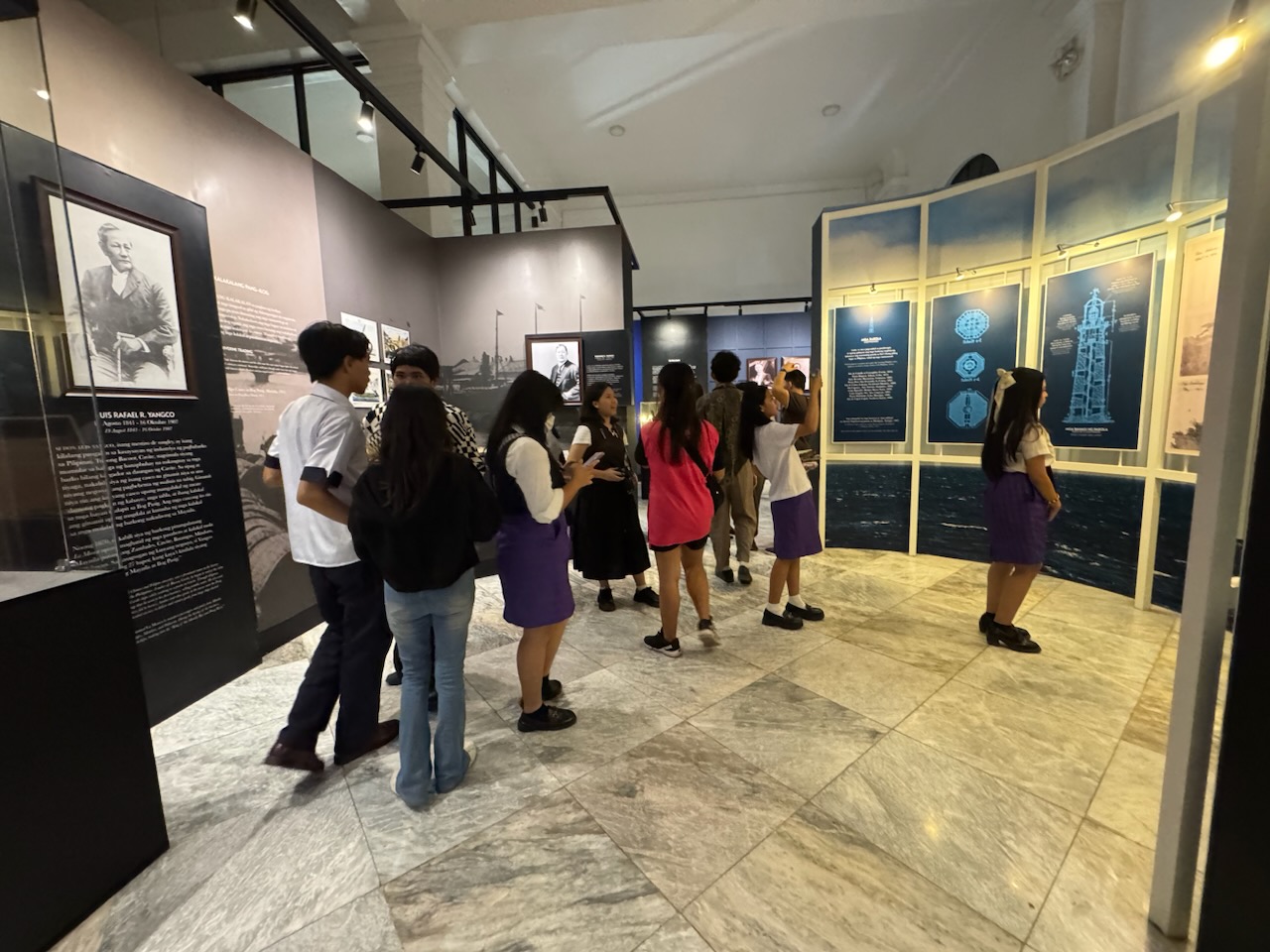
The MPMH, which opened in January 2023 at what used to be the Old Customs House on Calle Loney and Aduana in City Proper behind Sunburst Park, walks the visitor through exhibits covering the past until the Spanish era, and the American period to modern times. One very informative section presents the variety of Philippine boats (biray, casco, vinta, batil, etc.); scale models bring some to life. Key figures in our maritime history such as Luis Yangco (1841-1907), who had a shipping empire and supported the revolution are introduced. Historical photographs, posters, and other artifacts provide vivid visual proof of how vital the maritime industry was to our economy and society. Another panel notes the many waterborne festivals we Filipinos hold throughout the country, such as the Pista ‘Y Dayat in Lingayen, Pangasinan every May, and the Bangkero Festival in Pagsanjan, Laguna every March.

It’s not a huge gallery, and one wishes there were even more artifacts on display to ponder, but in terms of curation and presentation, the MPMH can hold its own, given its present limitations, against other international museums of its kind, with crisp, clear graphics, well-chosen items, and useful and interesting detail. (I’ve had the privilege of visiting the National Maritime Museum at Greenwich in the UK and the Museo Naval in Madrid, so as global standards go, those two maritime giants would be tough to match.) The MPMH’s best come-on—which probably accounted for the hordes of students present when we came by—is that it’s absolutely free, although donations are welcome. That’s a great start, with the kids, toward recovering our memory of the sea.

Penman No. 466: Desktop Delights

Penman for Monday, September 1, 2024

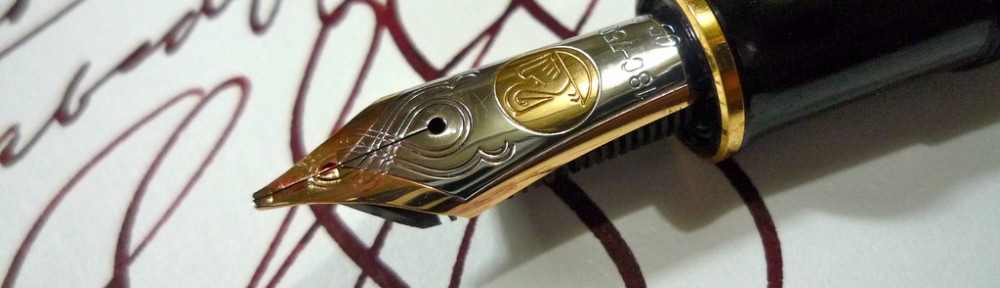
MY LONGTIME readers from way back know me as a collector of vintage fountain pens—and maybe of typewriters and antiquarian books as well. You’d think that would have kept me busy enough, but as all collectors know, it never ends with what you already have. The eye strays, new interests emerge, and whimsy soon turns into obsession, manifested in haggard looks that follow a night’s forays on eBay.

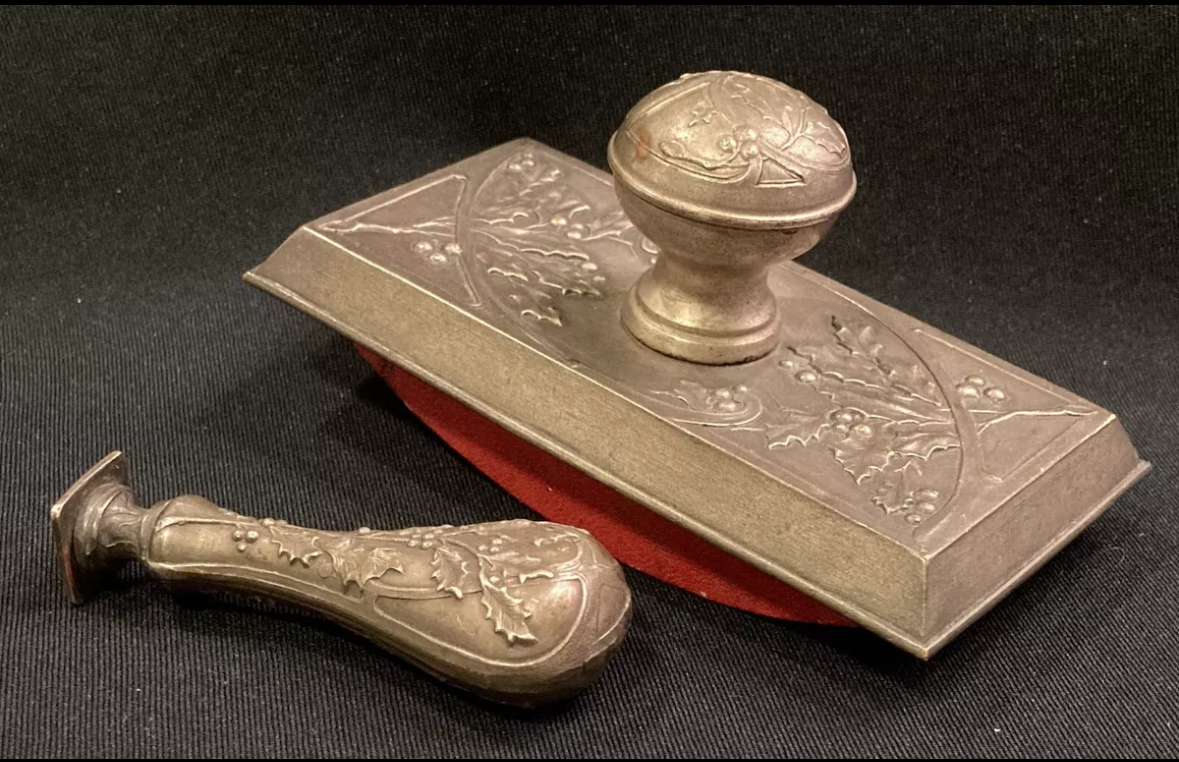
These past few months—all because of a chance encounter with a vintage brass rocker blotter at a flea market in Paris when we visited last April—I fell into the black hole of vintage writing accessories, and I still can’t see the bottom.

Of course, with my previous collections all linked to the writing trade, this was probably bound to happen. I mean, there’s more to the vintage table than pens and books, right?

If you have pens, then you have inks, ink bottles, inkwells, the aforementioned blotters (rockers and rollers), staplers, tape dispensers, pen trays, paperweights, letter holders, letter openers, etc. And let’s not forget the picture frames, gooseneck lamps, rotary phones, and steel-bladed fans that filled the rest of the acreage.

The nostalgic impulse behind this madness seems to be the recreation of our fathers’ desks, or our imagination of them. Whether boys or girls, we sat in their swivel chairs and rocked ourselves, our heads barely bobbing above the mahogany horizon. Instinctively we understood that we were in the seat of power, especially in those pre-feminist times when dads went to offices and moms stayed at home.

At least that’s how it works for me. My mythical prewar or midcentury modern (MCM in antiques parlance) desktop is now much larger and more crowded than my father’s office table ever was, but the oh what a gorgeous overflow it is of Art Nouveau, Art Deco, and Art Moderne beauties. 

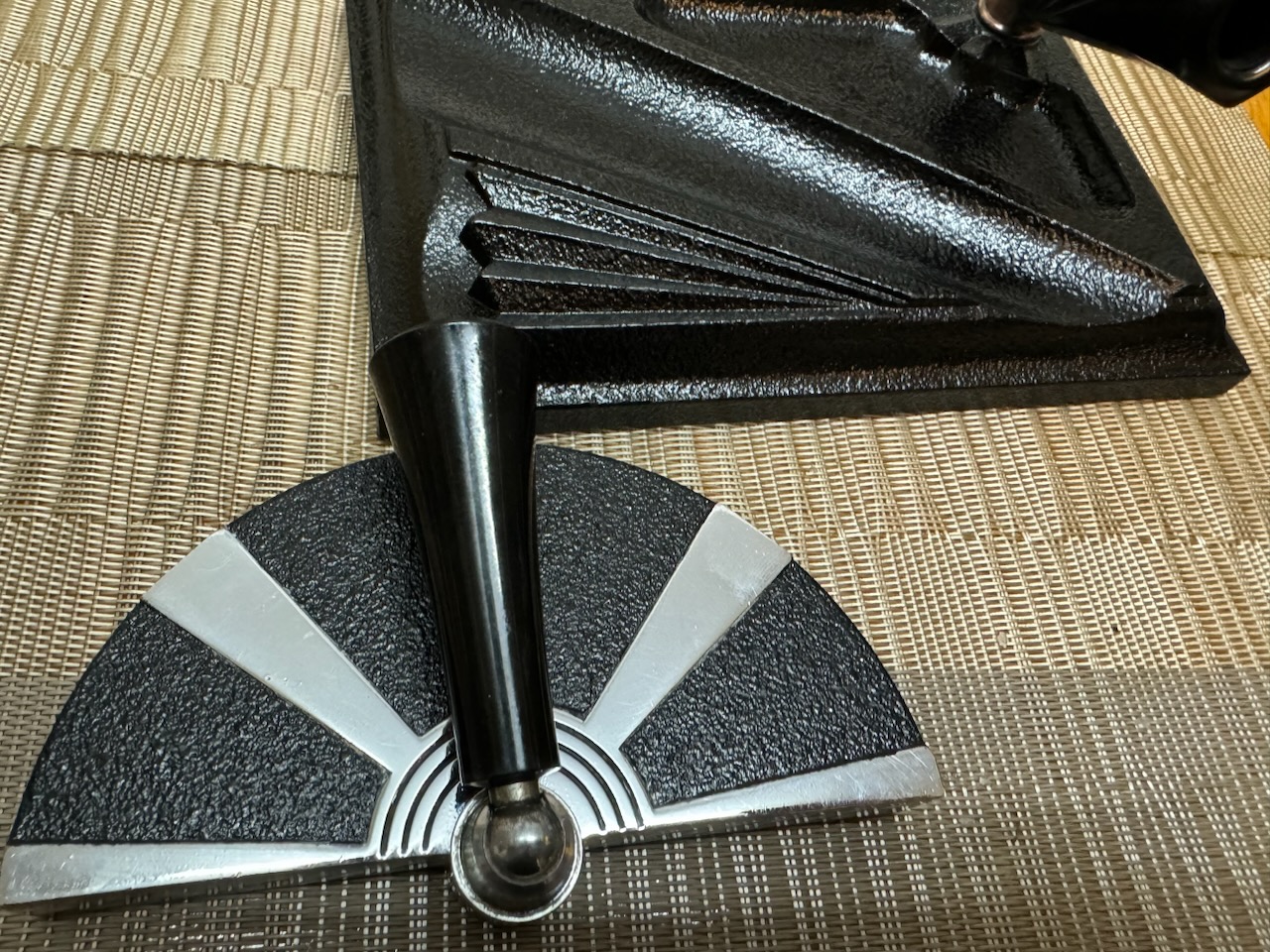
Like I said, this began when Beng and I found this huge brass ink blotter at the Porte de Vanves flea market in Paris, followed by a couple of others. Now, hardly anyone uses a blotter these days, or even knows what it is, and that’s because people stopped using fountain pens, which used ink that took a long time to dry. Blotters mopped up the excess ink, which you otherwise had to blow on or wait minutes to seep fully into the paper. As life sped up after the war, ballpoints, felt tips, and rollerballs with quick-drying ink took over, and blotters took a back seat. But with the recent resurgence of interest in fountain pens and the plethora of new inks available, blotters are back in business—and their charm as art pieces rediscovered by a whole new generation.

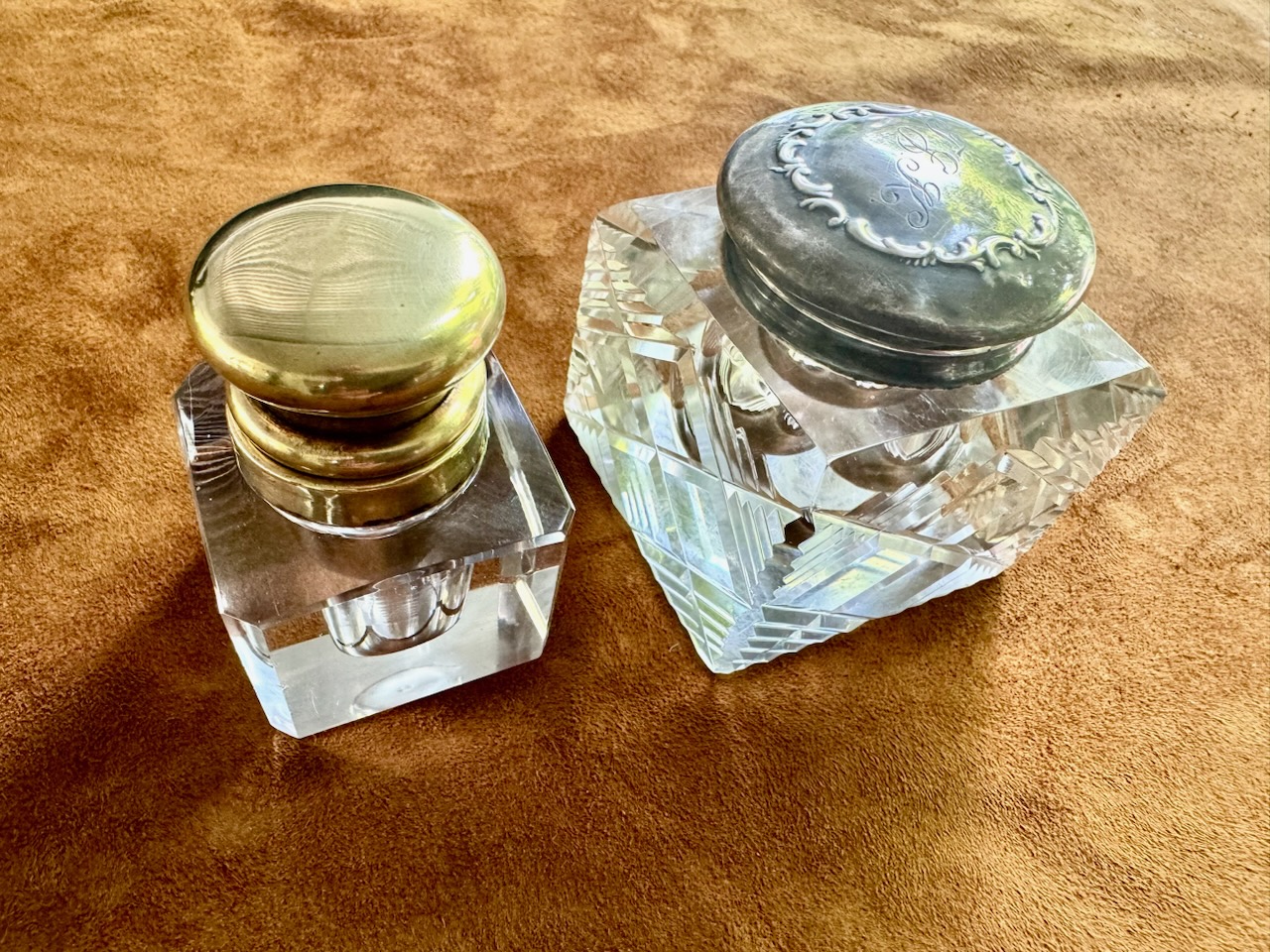
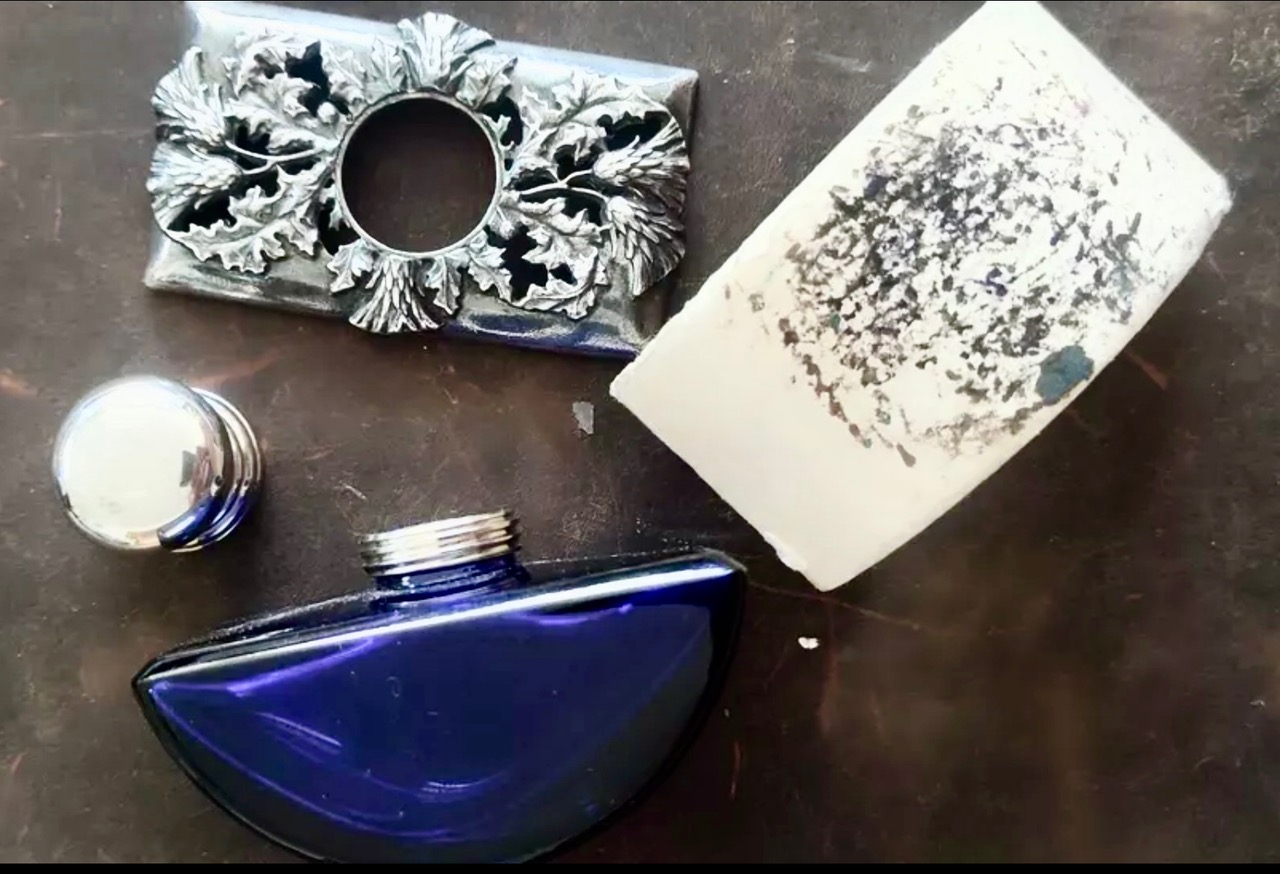
Ink bottles have always been collected on their own quite apart from pens, from their early versions in pottery and pewter to high-end cut glass and crystal. (Some inks themselves have become rare and collectible, such as the legendary Sheaffer’s Persian Rose from the 1950s and even the modern Montblanc Carlo Collodi and the original Lamy Dark Lilac.) Beyond individual bottles, inkwells often come in pairs, on ornate brass or smooth marble or carved wooden stands; they can be glass or porcelain inserts set in brass or porcelain, with a pen rest in front. Having been meant for dip pens, today they would be mostly decorative.

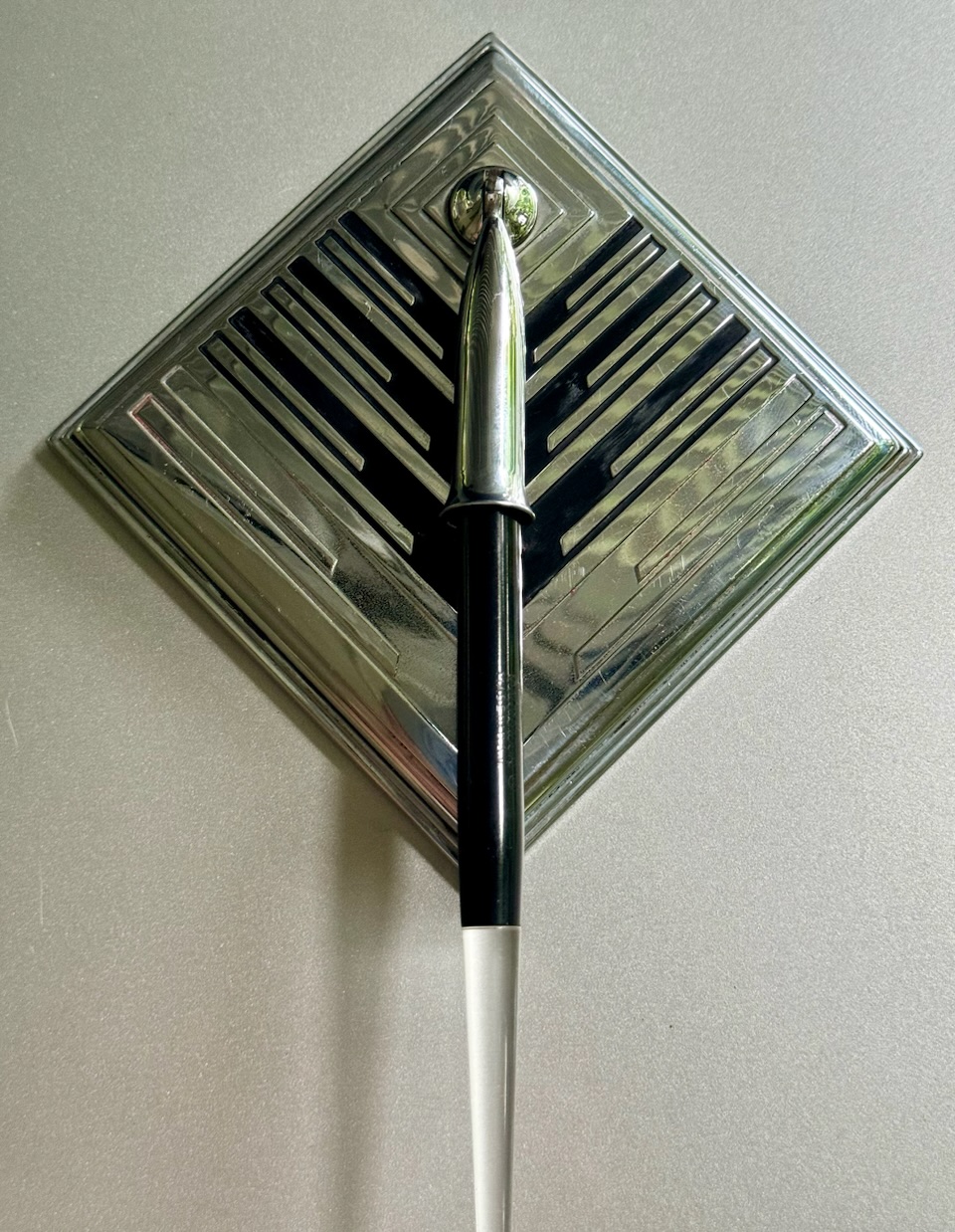
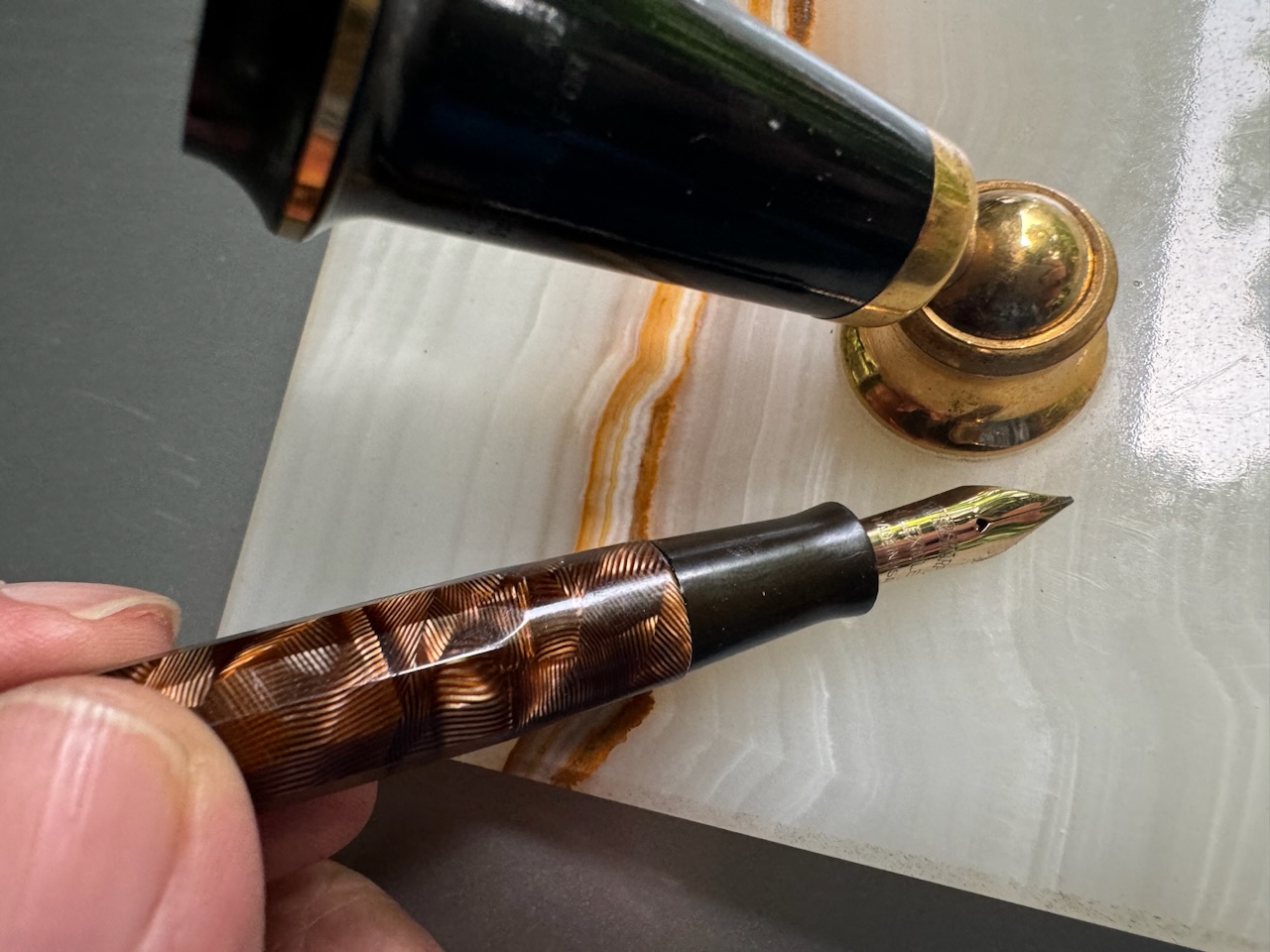
Desk pens and pen sets, however, remain functional. In our fathers’ time, they were the hallmark of consequence, a signifier that pens were meant for important signatures. Here, often more than the pens, the bases—usually marble, onyx, metal, or bakelite—provide artistic value. Art Deco desk sets from the 1930s and 1940s are most impressive, as well as those with figural elements such as animals.

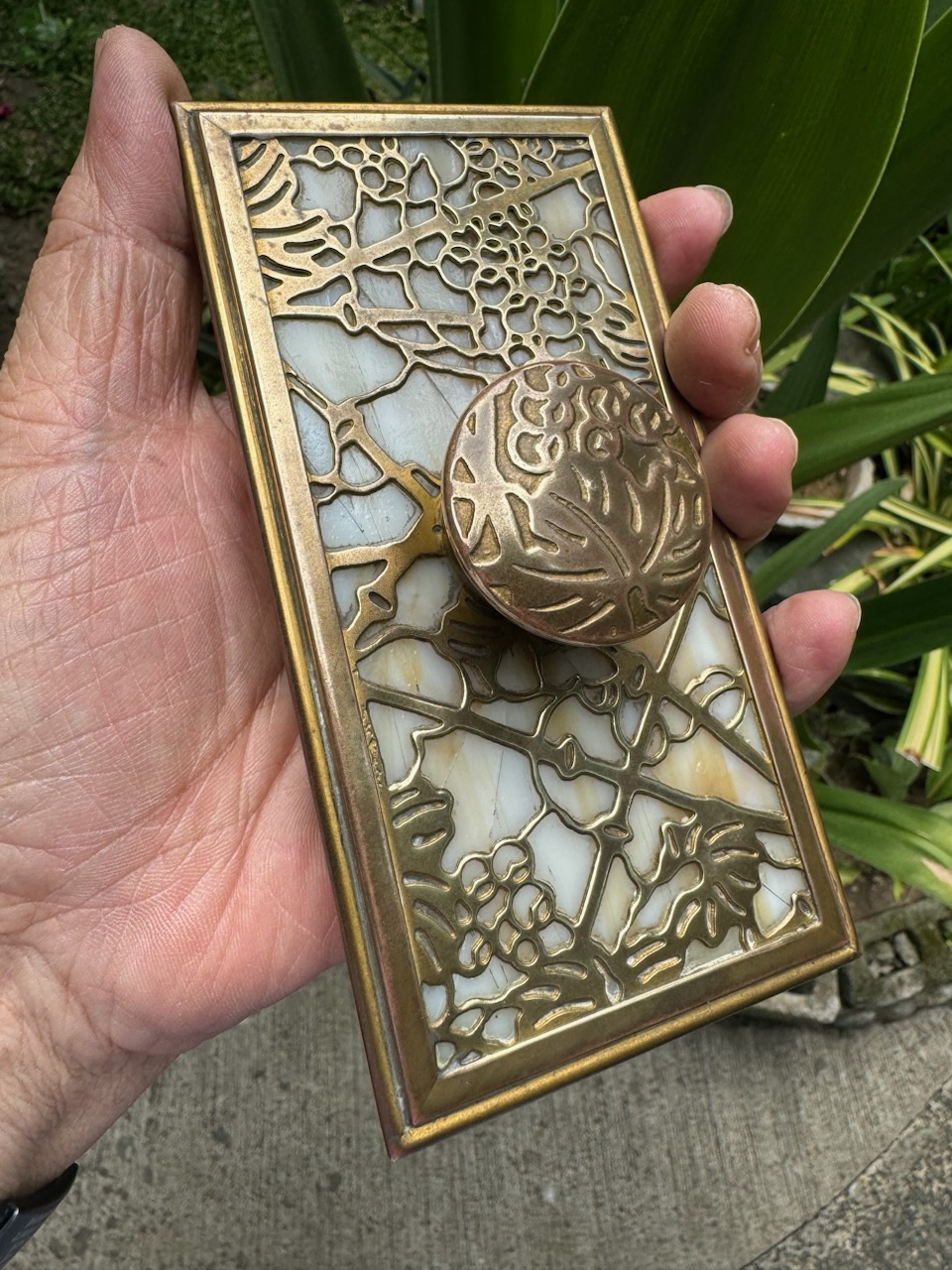
Trays for pens, paper clips, stamps, erasers, and such other 20th-century staples (and yes, let’s not forget the real staples and staplers) were produced in brass, wood, glass, and bakelite. Even these were turned into art pieces, and one by Tiffany could set you back a thousand dollars.

Not having that kind of money, I loiter around eBay—the world’s largest flea market—looking for these obscure objects of desire at prices I could afford, and I’ve even taken to buying and selling them both to pay my way and to share the bounty with friends. I don’t always get what I want—who would have thought that I would dream of rocker blotters and desk pen sets—but the quest itself is often worth it, the continuing discovery of treasures from the pre-computer, pre-cubicle past, when desktops were displays of taste and style and when you thought hard before putting indelible ink to paper.

Qwertyman No. 116: Dynasty

Qwertyman for Monday, October 21, 2024

“MAMA, PAPA, I wanna be a congressman!”

Senator Bebot Maybunga and Governor Kikay Maybunga looked up from their dinner plates at Mikmik, who sat at the far end of the table, to where they had deported him for a little peace of mind. Their younger son was given to wild outbursts that disrupted his parents’ serious deliberations about politics, business, and entertainment. Governor Kikay and her friends were planning for Paris Fashion Week, while Senator Bebot was thinking F1 at the Austrian Grand Prix.

“Well it’s about time Hamilton left Mercedes,” Bebot was saying while chewing at his bistek, “after all the crappy cars they built for him. A man’s got to go where he’ll do best. That’s why we joined the Federalistas, right? What’s the use of being a Progresibo if you can’t get any of your projects through? Pity our poor constituents! So we go with the Ferraris of Philippine politics—the Federalistas! And let me tell you something, honey—I’m going to be their Verstappen!”

“Who’s Fershwersh?” asked Kikay. “I want to know what really happened between Nicole Kidman and Selma Hayek. I mean, did Nicole really brush Selma off at the Balenciaga show?” She popped an overripe tomato into her mouth, savoring its sweet-sourness. “The only time I’d swat your hand away is if it was pawing someone else, like that starlet at the XYZ Awards. Don’t tell me you didn’t know she was coming on to you while you played Daddy-o!”

“I want to be a congressman!” cried Mikmik again, this time hitting his plate with his spoon four times for emphasis. Their housemaid Yeye hurriedly mopped the bistek sauce that scattered all around him.

“Stop yelling and finish your food!” said Bebot. “You can’t be a congressman if you don’t finish your food.” That had been Mikmik’s problem since early childhood—half his plate always went to the dogs, so they now had three Rottweilers and three dachshunds, despite which the boy got all puffed up like an Obemio painting. They’d sent him everywhere from the Mayo Clinic to a sanatorium in Switzerland, but all the doctors could tell the Maybungas was that Mikmik had low self-esteem, for which he tried to compensate by eating a little a lot—something called the Schlumpfegel Syndrome, which could be addressed only if the boy succeeded at something truly outstanding, after which he would then complete his meals. It was complicated—and expensive, but thankfully there was all that land that Kikay owned, which Bebot found ways to run public roads and bridges through.

“But what do you want to be a congressman for, hijo?” asked his mama, trying to play the part of the good parent, as Bebot groaned. “It’s a hard job. Look at your Kuya Pepito, he’s always out somewhere with the President, trying to make sure that everything will be okay for—well, everybody.”

“The only thing that bastard is looking out for is himself,” grumbled Bebot. “After everything I did for him, imagine, he goes to Singapore for F1 with the President and leaves me behind!”

“Don’t call him a bastard! He’s our son, he has a father and a mother!”

“Am I a bastard, Mama?” asked Mikmik. Kikay rushed over to where Mikmik sat to wrap her arms around him, as Bebot smirked. Their political enemies had spread the dastardly humor that Mikmik had actually been fathered by one of Kikay’s old flames—something Bebot himself had long suspected, for how could he possibly have spawned such an idiot, but had never pressed because he still needed Kikay’s old-family money for his higher ambitions.

“No, of course not, Mikmik! You too have a mother—and a father!”

“I wanna be a congressman!”

“But your Kuya Pepito is already congressman for the first district, hijo! When his next term ends, Mama will be congressman, because Kuya will be governor.”

“But I can be congressman for the second district, Mama—”

“No, hijo, we don’t live there—”

“But Papa has a house there! A nice house, with a swimming pool!” Bebot nearly choked on his ball of rice, as Kikay’s eyes narrowed into slits. Their political enemies had let it be known to one and all that the senator kept a mistress in the second district, but Kikay decided not to bring it up because, well, she was a firm believer in family unity, and her brothers and sisters would never have forgiven her if they lost their juicy contracts on account of some silly spat over a querida

“I know what we can do, hijo!” Kikay exclaimed, struck by a brilliant idea. “We can make you mayor! This nincompoop mayor of ours has been talking about getting his even more nincompoop wife to run against me for governor, so why not take his job? I agree, it’s about time you joined us in this noble profession!”

“Can a mayor drive a big car and go wang-wang? Because Kuya Pepito does that and it’s why I want to be a congressman!”

“Of course, hijo, you can drive a big car around town all day and go wang-wang if you like. You can even have a police escort and they’ll go wang-wang too.”

“And Papa won’t get mad and hit me over the head like he always does?”

Kikay glared at Bebot who was looking away, whistling.

“No, hijo, even senators can’t hit mayors over the head—”

“But if I’m mayor, then I can hit people over the head, right? Like a, a sheriff, right? I saw it on TV once!”

Bebot finally turned and said, “You can’t be congressman, you can’t even be mayor! The law says you have to be at least twenty-three to be mayor, and you’re only twenty-one—at best!”

“What does he mean by that, Mama? Look, Mama, Papa’s making a face at me again, like he’s going to hit me!”

Again Kikay wrapped her arms around Mikmik and flashed Bebot her meanest look. “No, baby, he won’t, and you’re going to be mayor, Mama will make sure of it. Don’t worry about your age, it’s only a birth certificate, and since when was that piece of paper a problem? Mayor Mikmik Maybunga—let’s not forget your middle name, Mikmik Macatangay Maybunga. Aren’t these people just so lucky to have us at their service?”

Qwertyman No. 115: Why I Teach

Qwertyman for Monday, October 14, 2024

LAST OCTOBER 5, we marked World Teachers Day—not one of our most popular or noisiest holidays (it isn’t even an official one), but one that gives us pause to remember some of the most important people in our young lives. I taught for 35 years before I retired in 2019, and I still teach one writing subject every semester as professor emeritus, so I suppose I wanted to be that “VIP” in someone’s life. 

When we teach writing—and not even creative writing, but composition—to freshmen, we take young people by the hand and help them make sense out of their lives and their ideas, such as they are. The term “composition” applies as much to the writer as to the text: one composes oneself, drawing out the essentials and leaving out the dross. Creative writing pushes that process one step farther, by turning to the imagination instead of one’s limited experience for material and insight. 

The creative writing teacher’s task is not only to encourage but also to guide and to train that imagination, sparing the student from having to reinvent the wheel but affording him or her the thrill of self-discovery. 

It’s an inarguably fine and noble mission. On the other hand, and in economic terms, the teaching of creative writing is brutally inefficient. In a typical workshop class of 20 people, an instructor would be fortunate to find two or three with real talent—an aptitude for language, a maturity of insight, a stylistic flair. Among those, far fewer will have the discipline and perseverance to write and write well for life.

So why should we even persist, or expend public funds to produce boatloads of people who will probably never write the kind of line you will mumble in your half-sleep, or will cry out to the heavens in your most painful or most euphoric moment?

For one, because producing good creative writers is like mining for precious stones, where a ton of ore might have to be torn out of the earth and sifted through to produce one small jewel-grade rock, which has yet to be cut and shaped by expert hands. 

We must also persist in teaching creative writing because the production of new literature reinvigorates and replenishes our imagination as a people, our imagination of ourselves. It is that imagination, however dark, that gives us hope and makes reality endurable. The truth of numbers—of GDP and ROI and per capita income and population growth rates—is important (I’ve often remarked what a terribly innumerate society we are); but it is a limited and even sometimes deceptive truth that barely begins to tell our story. History does this, but without much latitude for pure conjecture. As in painting and the other arts, creative writers have often simply done, and done first, what critics and theorists would later describe and systematize. Creative writing is a breath of intuition caught on paper.

But I also teach creative writing in the conviction that every student—no matter the person’s background—has at least one good story to tell, and that it is our task as teachers to release that story. Most of my students may come to my classes merely to pass the time, or fulfill a requirement, or satisfy a craving for some critical attention; many may never write another story in their lives. But I want them to come out appreciating and respecting the liberative and ameliorative power of art—which is a fancy way of saying that, for those of us who will never be mistaken on the street for Brad Pitt or Superman, here we can be and do anything, for as long as we make artistic sense.

As K. Patricia Cross, professor emerita of higher education at Berkeley, reminds us, “The task of the excellent teacher is to stimulate ‘apparently ordinary’ people to unusual effort. The tough problem is not in identifying winners: it is in making winners out of ordinary people.”

Anyone can write anything, but not everyone can be a writer. By the same token, not every writer can be a teacher. People who have no problems stringing seamless paragraphs of compound-complex sentences can’t give a lecture or an exercise worth an ATM receipt. It takes a different sensibility—and, yes, another set of talents (or what I call a whole bunch of P’s—preparation, perseverance, patience, and passion)—to teach well and to endure in the classroom.

I feel passionate about teaching in UP and in this country, and in giving back to them, through my students, what they have given me. But teaching is not a word I often say in the same breath as love. I cannot honestly say that I love teaching, in the sense of wanting to do it for most of my waking hours, or missing it terribly when I’m doing something else. Teaching is one of the most exhausting jobs you can get. The job doesn’t begin or end in the classroom; it just happens there.

Every time I step into a classroom, I pause at the doorway to expel a deep sigh and collect my thoughts, wondering if I have enough to sustain a 90-minute performance. As the American novelist Gail Godwin famously said, “Good teaching is one-fourth preparation and three-fourths theatre.” Indeed I spend the last ten minutes before class writing a script in my head: I will say this; I will do this; I will bring these props and use them at some point; I will ignite an argument; I will leave them with a question that will buzz in their ears for a week. Even bad stories can be turned to great lessons; where’s the teaching point? How can I say it without crushing or diminishing the person? 

It doesn’t always work—sometimes I simply collapse into my chair and count away the minutes—but we all attempt some variation of this drill. Basically, we are saying: I will do my best to make this day worth their time and mine. It’s what they expect; it’s what I promised.

It is not love but duty that drives me to teach—although duty, perhaps, can also be a form of love; a love not of the thing itself but of some larger principle. That principle to me is service—service to country, people, university, and service to the great and truly free republic of the imagination.

“How do you know that what you’re doing matters?” I was asked once. “How can you tell if you’re making a difference?” My answer was, I don’t know, I can’t tell. But for a teacher, the only distinguished achievement that counts is the quality of one’s students. You are distinguished by their achievement, and in this sense, I have been distinguished aplenty.

Qwertyman No. 114: That Viral Picture

Qwertyman for Monday, October 7, 2024

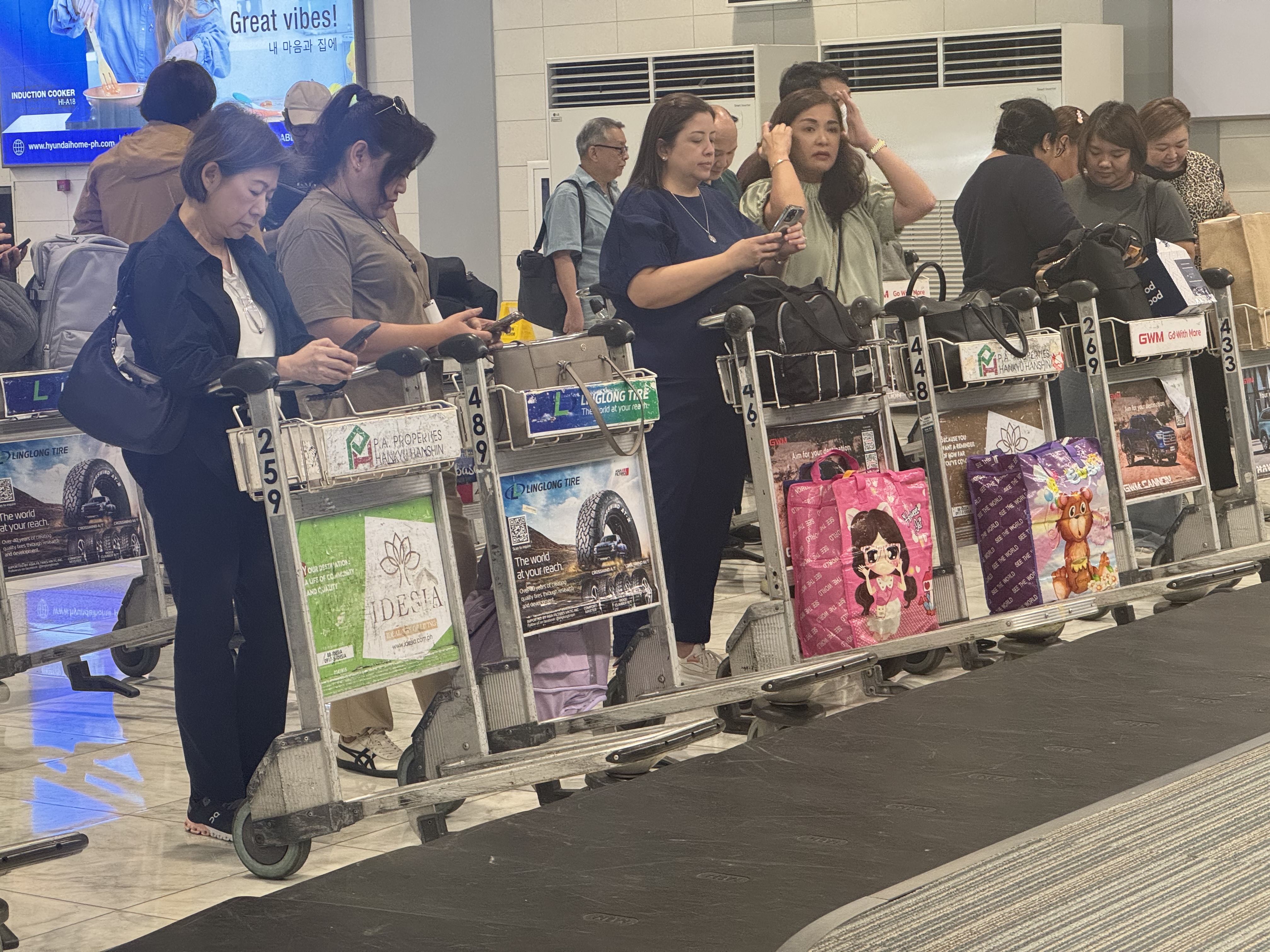
IT’S TOO bad that we don’t have space on this page for cartoons, because I would have asked for one to illustrate this piece for this week. Imagine this: a scene at the NAIA baggage claim area on a busy day, with throngs of passengers crowded around the carousel, waiting for their luggage. Behind the yellow line stands a slim senior lady in a simple black outfit, holding on to a cart, chatting casually with her companion. Across them, let’s show two other passengers, both watching the woman intently. The elderly man has this thought bubble: “Oh, wow, that’s Mrs. Billionaire CEO, waiting for her luggage.” The grim-faced young woman beside him is thinking: “Heartless capitalist! Too cheap to even pay a porter!” 

Now how and why did image cross my mind?

Last week, a picture I took of that same scene and which I (perhaps stupidly) posted on Facebook went viral. If I got a peso for every time that image was liked and reposted, I could get myself a new iPhone 16. But what really surprised me wasn’t the velocity with which my post went out there, but how sharply it divided the people who responded to it and the intensity—sometimes the vehemence—with which they expressed their thoughts. Maybe I should’ve expected that, knowing how social media works. As psychologists will tell us, the same picture can mean very different things to different people.

Most responses—especially the initial ones—were positive, and praised the subject for her “just-like-us” simplicity and humility. I saw a lot of messages attesting to this being her usual behavior, harking back to her family’s rise from modest and hard-working origins to their present prominence and affluence. Sure, some of the praise may have been effusive, but it was consistent and anecdotal, drawn from personal knowledge of and encounters with the lady (whom, I have to say, I’ve never formally met, although I interviewed her briefly once on Zoom for a book project). 

And then, perhaps inevitably, the backlash came. Someone accused me of being a stalker and a marites, of invading a celebrity’s privacy. And what was the big deal, someone else said, when we all have to wait for our luggage? In other places like Scandinavia, even prime ministers carry their own bags. Why praise a billionaire for doing what the rest of us do? Why get starstruck by the rich and powerful?

That puzzled me, because I thought that was the whole point. The rich are not like you and me, as Fitzgerald said: they have others do their menial chores for them. (When was the last time you saw a senator or a CEO pick up his or her own bags?) This is the Philippines, not Scandinavia, where entitlement is king; the lady’s noteworthiness comes not from her being one of us, but her being one of them doing something like one of us.

It went on from there to a dissection of the lady’s family fortune and how it was allegedly fattened by the blood and sweat of underpaid contractual workers, particularly at her family’s department store chain. “You’re blind to capitalist exploitation!” someone screamed. (I was aware of the labor issues, which have yet to be fully resolved, but all I decided to reply was “If you say so.” I was blind because it wasn’t what I saw at that moment or was looking for.) “How many UP students have been truncheoned by the police because they marched with that company’s striking employees?” another asked. (I honestly don’t know, but UP being UP, it would have been quite a few. “How many UP students shop at that department store?” I had to ask back. I’d be a hypocrite if I didn’t admit to being a suki of that store and a holder of its card; I can’t afford upscale boutiques.) And so on.

I could’ve been snarkier in my retorts, but what for? I’m a quiet and largely benign (I think) presence on Facebook, a platform I eschewed for the longest time before finally giving in a few years ago, out of the need for its marketplace (yes, I was looking for things, not people, which probably tells you something). Since then, despite my natural tendency to stay away from what the Desiderata calls “loud and aggressive persons… vexatious to the spirit,” I’ve run into a good number of them—some even happen to be my friends with good reason to be loud and aggressive over causes they feel passionate about. When you get into social media, that comes with the territory. But at my age, I have to pick my fights, no longer having the kind of moral stoutness that can comprehensively and intensely feel outrage at every instance of perceived injustice; I keep trying to do right, but am happy for small graces in an unkind world.

Much of this goes to how we view the rich from our middle-class perches. There’s a part of us that suspects that all that wealth has to be the fruit of evil, with so many exemplars around to prove it, and another part that yearns for all that ease and comfort (or the lifestyle and the luxury, for the younger set). Having dealt with a number of them because of my work, I’ve come to see the rich and famous as characters in stories with surprisingly unsurprising and fairly predictable arcs, so I’m gratified when now and then I come across an interesting deviation. 

Historians, journalists, and critics will exhaust the complexity of the big picture; they like landscapes. My inner fictionist responds to telling moments in isolation; I draw portraits. To write good stories, we script the unscripted. I often say at lectures that characters become most interesting when they go out of character—when they do something that they were never expected to do, whether good or bad, but which had always been in them in wait for the right confluence of conditions to emerge. I challenge my students to bring their characters out of their usual context to reveal more of their true selves: don’t show a priest in church, but bring him to a fish market, or a construction site (or even a girlie bar, but Somerset Maugham already did that, sort of, in “Rain”).

Social media is a huge lens that hyper-magnifies everything—virtue and vice alike. It’s also a mirror that ultimately tells us that what we see (or decide to see) is who and what we are. My little experiment with a picture that went viral just showed us how.