Penman No. 468: A Game of Prompts

Penman for Sunday, November 17, 2024
I WAS in Dumaguete recently for a seminar organized by the Intellectual Property Office of the Philippines to encourage local authors and publishers to break out into the international market, following through on our participation at the Frankfurt Book Fair. I was asked to talk about “The Future of Literature,” but I chose to turn that around and talk instead about the literature of the future.

Taking off from the challenges and opportunities posed by artificial intelligence, I put forth a series of “provocations” that writers and publishers could think about. Let me share part of what I said:

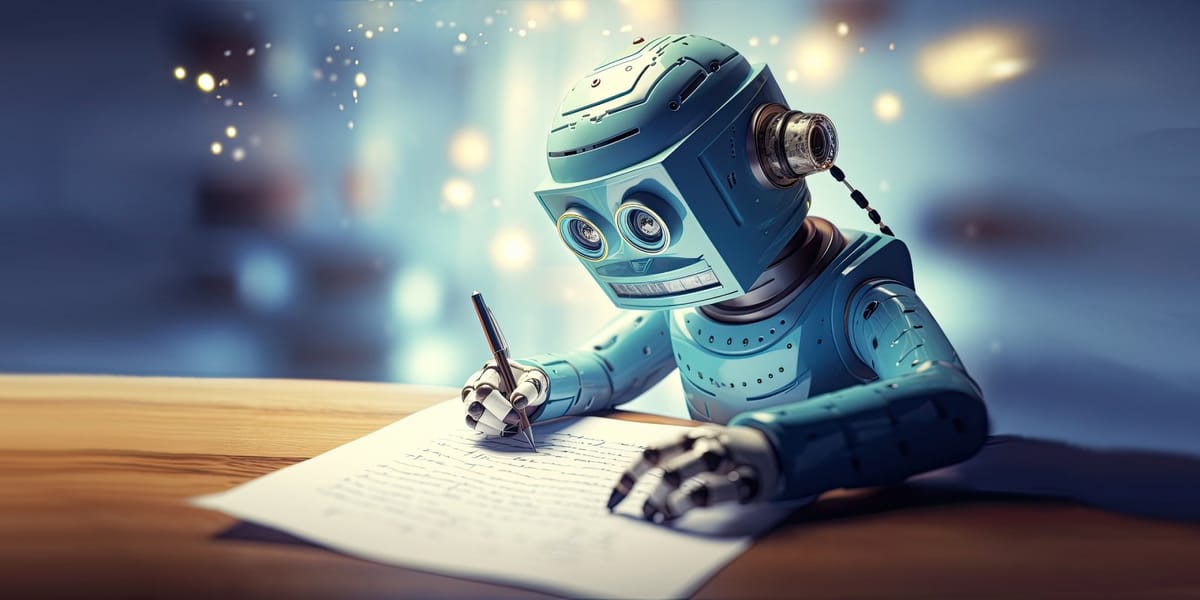
My first provocation: the literature of the future, or some part of it, will be a game of prompts: not just or not mainly to copy existing writers, but to produce results that will be a hybrid of the author’s creativity in prompt-making and AI’s selectivity, drawing from its enormous stock of possible responses. This will be writing as a form of play, of co-authorship between man and machine.

Following through from this is Provocation No. 2: Expect the growth of the literature of hybridity—of more crossovers from one genre or form to another, from one language to another, from one sensibility to another. This is by no means new and has been happening for some time now, but there will be an even greater and more deliberate blurring of traditional boundaries, more experimentation.

To some extent, that will be because—and here’s Provocation No. 3, and to use this generation’s favorite trigger-word—there will be less gatekeeping. Or, if not less, then more resistance to or disregard of it. There will be more independent publishing and self-publishing to counter the influence of traditional publishing houses. But this free-for-all will also likely lead to a general decline of standards, as writers forgo the services of editors and the critical evaluations of quality- and market-minded publishers.

Provocation No. 4: The big novel will survive, simply because of the power of inertia, and because there will always be a need for something as capacious to contain and possibly comprehend the ever-growing complexity of human life. Our exposure to the international market at the Frankfurt Book Fair will also provide more impetus to the production of novels, something at which we Filipinos have not been particularly good at, historically speaking. 

On the other hand—Provocation No. 5—there will be a general shortening and simplification of form, as writing seeks to approximate the meme, or Tiktok. I don’t know exactly how this will happen, or what form it will take, but when I look at the frankly scary popularity of Lang Leav, I worry that people will see that kind of poetry as the new standard. Of course Emily Dickinson was just as short if not even shorter 150 years ago; she would have made a fine poet for our time.

Given what the world is going through, and the even bleaker future humanity faces, I propose—Provocation No. 6—that the literature of the future will be one of survival, of coping, of enduring. I have recently been advocating the need to produce a literature of hope, but that will be a difficult ask for young writers just trying to keep their heads above the water, and more understandably concerned with this life than with anything that may follow. Science fiction and fantasy will always go over the visible horizon, anticipating a distant future albeit in often dystopian terms, but for most, it will be the literature of next week.

And in that increasingly diminishing and threatening universe—Provocation No. 7—when our precious selves are all we have left to cling to, the literature of “I am,” the first-person narrative, and the politics of identity will prevail. When we no longer trust the government, business, education, our parents, the Church, and even God, and on the verge of losing control of our own petty lives, we will desperately fight to be recognized, acknowledged, and maybe even loved. We will leave nations and societies to the editorialists and social scientists; in fiction and poetry, we will seek solace and sense.

Let me just say a few words about the Frankfurt Book Fair, the 2024 edition of which I and some of us here attended last month. As you know, the Philippines will be Guest of Honor next year, which will do much to project the visibility of Philippine literature overseas. Even this year, many gains were already achieved by our writers and publishers, with dozens of deals signed for the translation and publication of our books in foreign markets.

Post-Frankfurt, Filipino writers will think of writing for the world—not necessarily in English although that’s always an option, but through translation, which will be the great equalizer. The huge surge in translation coming out of Frankfurt—not just from Filipino to English but from our other Philippine languages, including English, to other global languages—will forever change our literary culture, which has traditionally and quite unfairly favored our writers in English when it comes to recognition beyond our shores.

Also, and this may be a controversial point, I’ve long had this suspicion—and maybe Frankfurt proves it—that the rest of the world doesn’t really care about (because it doesn’t know about nor understand) the differences between Tagalog, Iluko, Bikol, and Cebuano etc. literature. When we reach foreign readers in translation, we’re all Filipino—and only Filipino—just as African or Indian literature  appear to us as cultural blocs rather than deeply variegated constructs. This has its positives and negatives, but I tend to lean on the positives, which are a reminder that our literature helps define a cohesive national experience and identity above the regional and ethnic markers otherwise so precious to us.

In one of my sessions in Frankfurt, I was asked a question, to which I replied: “I will always be more optimistic about literature than politics.” Given what has just happened in America, and what that will mean for the rest of the world, I have to believe this even more than ever.

Qwertyman No. 121: Fame, Fortune, and the Filipino Writer

Qwertyman for Monday, November 25, 2024

CREATIVE WRITERS don’t earn much in this country, unless they lend their talents to someone else, for far less literary reasons than writing a novel or a collection of poems. A senator might need to deliver an important speech to an international audience; a taipan might be marking a milestone like a 75th birthday, and fancy having his biography written; a conglomerate might want to have its history written and published, to trumpet its accomplishments and contributions to society. 

For all these, many novelists, poets, and essayists will drop their pens and exchange their metaphors for the plainer but more remunerative prose of public relations. I know I have; I’m one of these people for whom writing isn’t just an art but a profession, a means of livelihood, a trade I’m grateful to be able to ply instead of hauling gravel or fixing carburetors. 

I’ve been writing for a living since I dropped out of college and became a newspaper reporter at eighteen, and I’ve been at it ever since, even throughout my whole other life as an academic (yes, I went back to school and got all the right degrees just so I could teach). At seventy, I’m still working on three or four simultaneous book projects for clients, with my own third novel in the back burner. (I’ve already drawn the line at seventy; after these, no more, so I can focus on my own work, and live modestly off my professor’s pension.)

I daresay, however, that most Filipino writers don’t operate like this, either because they can’t (you have to park your ego at the door and be extremely adaptable) or they won’t (for some, writing for money is selling your soul, although you can always say no to jobs and clients you don’t like, as I have). So creative writers have to keep day jobs like teaching or lawyering or newswriting and editing, and tap away at their magnum opuses on the side.

Why do they even bother? It’s not as if they’re hoping to write novels that will become bestsellers, make them millions, and get sold to Hollywood or Netflix. Ours is also a culture and society not known for buying and reading books, unlike, say, the Japanese whose faces you’ll find buried between pages on the Tokyo subway. In a country of around 115 million people, a new book will still typically be published in a first (and likely only) print run of 1,000 copies, which will probably take a year to sell out, if ever (Filipino relatives and friends also expect to be given free signed copies, which they won’t even read).

So again, what are we writing for? Perhaps thanks to Jose Rizal (who, let’s not forget, was shot for what he wrote), to be a writer still carries with it an aura of honor and fame, the suggestion of some extraordinary talent, a special way with words. We may not pay or read our writers, but w e admire them, maybe because they seem to know something most people don’t, like saying “I love you” in enchanting ways, or drafting convincing letters and papers, or even just fancy words like “somnolent” and “adumbrate.” There’s some glory to be won in writing—maybe even a little cash, if you know how to market yourself.

Last Friday, at the PICC, many of the country’s best writers got together to bask in that shared glory. In one of the highlights of the literary year, 54 authors were feted at the 72nd edition of the Carlos Palanca Memorial Awards for Literature. Begun in 1950 and faithfully and generously endowed by the Palanca family, the Palancas are the country’s longest-running and most prestigious literary competition, and for the past seven decades (almost uninterrupted except for the pandemic) have heralded the emergence of our finest writers—in English, Filipino, and more recently our other major Philippine languages.

According to the foundation that oversees the awards, this year’s competition drew in 1,823 entries in 22 categories, with 60 winning works produced by 54 writers. New winners outnumbered previous ones by 31 to 23, a good sign of new talent emerging—and not just new but young. Five winners were 20 and below, the youngest being only 14 years old (and the oldest 78). That’s quite a range, which tells us that the future of Philippine literature is safe and strong.

I myself won my first Palanca when I was 21, and of course I thought I was God’s gift to literature—until I lost for the next four years straight. I probably learned more from those losses than from my lucky win, and as I grew older the writing became more important than the winning, but the incentives—a little of both fame and fortune—that the Palancas provided never diminished in their attractiveness, especially during the martial law years when there was very little publishing going on.

You certainly don’t have to join the Palancas or win one to gain a literary reputation, and the value of such awards can easily get overblown, such as when egos get the better of writers starved for attention. Ultimately prizes don’t count nearly as much as publication, and all those honors will be meaningless until and unless one’s books are read, understood, argued about, and maybe even cherished. (With the Philippines poised to become Guest of Honor at next year’s Frankfurt Book Fair, we can expect the global readership for Filipino works to increase, and international publication will be a new goal for our writers to aspire for.)

Not everyone who writes for a living can win a Palanca, but not everyone who wins a Palanca can make a living out of writing, either. I’m blessed and thankful to have been able to do both, but at this point in my life I’ve come to realize that even more than seeking fame or fortune, a writer’s greatest mission is to tell and spread the truth, in that moving and memorable form only art can deliver.

Qwertyman No. 120: Greatness of Spirit

Qwertyman for Monday, November 18, 2024

AFTER A week marked by sordid political revelations, reversals, and antics that make us despair over the future of democracy in this country and elsewhere in the world, it was refreshing and inspiring to be reminded last Saturday that goodness, reason, and justice still prevail somewhere, even against monumental odds.

Saturday was when the 2024 Ramon Magsaysay Awards were handed out to five Asian champions who made landmark contributions to their societies and the world at large  by manifesting “greatness of spirit,” the lofty benchmark established by the foundation granting the prestigious awards, often referred to as Asia’s Nobel Prize.

I was privileged to attend the award ceremonies at the Metropolitan Theater, and thereby to meet this year’s laureates. There were no Filipinos among them this time around (last year, they had peace negotiator Miriam Coronel-Ferrer), but the causes and concerns that each laureate represented would have resonated well with Filipinos on many levels.

The Thai Rural Doctors Movement (RDM), for example, addressed a problem that has plagued many developing countries around the world: the chronic lack of doctors to provide adequate medical care in the countryside. In the 1970s, idealistic young doctors joined the popular pro-democracy movement in Thailand, but a government crackdown forced them to seek refuge in the rural areas. The doctors formed close bonds with their host communities and attended to their needs. When these doctors later gained national influence, they maintained their focus on the rural poor, to the point that Thailand now has one of the best Universal Health Coverage systems in the world.

In Vietnam, Dr. Nguyen Thi Ngoc Phuong confronted a lethal legacy of the war that had nearly destroyed her country half a century earlier. Despite the passage of so much time, many Vietnamese, including newborn babies, continued to suffer from one of the war’s cruelest after-effects: the damage caused by TCDD or “Agent Orange,” one of the most toxic chemicals known, used freely by the American military to flush out their enemy. Dr. Phuong took it upon herself to discover the truth about Agent Orange, seek justice for its victims, and help the afflicted.

Indonesia’s Farwiza Farhan took on a most formidable challenge despite her relative youth: the environmental damage wrought on the Leuser Ecosystem in her home province of Aceh on the island of Sumatra. Working with fellow activists and especially local women, she founded the Forest Nature and Environment of Aceh Foundation or Yayasan Hutan Alam dan Lingkungan Aceh (HAkA), which has succeeded, among others, in gaining a court verdict that led to USD26 million in fines against a palm oil company that burned forests, and stopped a hydroelectric dam that would have threatened the elephant’s habitat. Most importantly, her organization has trained local communities to protect their environment through sustainable forest management.

Mountainous Bhutan is a country often idealized as an idyllic Shangri-la and prime tourist destination, but it is in fact a low-income country plagued by unemployment, inadequate social services, and threatened traditions and values. Taking these problems by the horns, a young Oxford-trained monk has combined his religious devotion and historical scholarship with modern management to help bring Bhutan into the 21st century. Karma Phuntsho established the Loden Foundation to promote education, practice social entrepreneurship, and document the country’s cultural heritage. Phuntsho himself has written a definitive history of Bhutan, whose next stages he and the Loden Foundation will help define.

And finally, Japan’s Miyazaki Hayao has created some of the world’s most memorable animated films through Studio Ghibli, established in 1985 and today a byword in digital animation. While animated films in the West have fed off a broad audience employing superheroes with lucrative market appeal, Miyazaki and Studio Ghibli have focused on an audience most difficult to please—children. Nevertheless, Ghibli classics such as My Neighbor Totoro have also called out to an adult fan base charmed by Miyazaki’s craft. This director has taken animation beyond entertainment and even education to enlightenment, always in an engaging manner.

That such good people exist and persist in their passions offers a bracing antidote to the creeping pessimism in which we seem to be wallowing today, an easy and perhaps fatalistic surrender to inaction, tyranny, and hopelessness. We Filipinos are no strangers to distress and despair, with millions remaining in abject poverty, left behind by any growth in our economy. Adequate healthcare remains beyond the reach of most of us, with even middle-class families left devastated by just one catastrophic illness. But neither do we lack for champions and heroes seeking to alleviate these hardships.

Instructively, for the Ramon Magsaysay laureates, their life’s mission often began with dark epiphanies. For Dr. Phuong—who would go on to head Vietnam’s largest obstetric hospital—it was her encounter as a young doctor with babies severely deformed by Agent Orange and their mothers’ anguished and then-unanswerable questions. For Farwiza Farhan, it was returning to Indonesia from her studies abroad, only to discover that the island home whose forests she had embraced as a child was now being ravaged by commercial exploitation. For rural doctors in Thailand, it was seeing poor farmers sell their daughters just so they could pay for the medical care they needed. But rather than be paralyzed by the enormity of the challenge, they decided to do something about it, rolled up their sleeves, and have yet to roll them down.

Something that stands out to me is that these Magsaysay awardees were hardly fire-breathing revolutionaries who sought sweeping changes in one convulsive action, but reformers who pursued their objectives over decades with as much patience as passion—and, of course, vision, anchored on a unquenchable faith in the attainability of a better world, starting with one’s own space and sphere. And beyond individual actions, they set up networks of influence to spread the message and the work, and ensure that whatever they began would survive them. It was never about them, and that’s greatness of spirit.

Qwertyman No. 119: The MAGAverse

Qwertyman for Monday, November 11, 2024

IT’S NEVER good to write out of rage, no matter how righteous you think your rage might be; the anger clouds your reasoning and could reduce you to incoherence. So as I’m writing this—on the afternoon of November 6, our time, and early morning in America where Donald Trump has already claimed victory in a bitterly fought election—I’m taking deep breaths and thinking of happy and pleasant things, far away from politics, before returning to the task at hand.

After the initial sting, it isn’t so much anger as sadness and consternation that stay with me, a deep sense of regret over what could have been, had the outcome been different. There are at least 15 million Filipinos who know what I’m feeling, having gone through a similar shock that May two years ago, when what we most dreaded happened.

Of course, to many Filipinos, a Trump return won’t make one bit of difference, and why should it? We have enough of our own problems to worry about. But for those like me who see the world today as a widening battleground between good and evil, November 5 was a loss not only for American Democrats, but for freedom-loving and truth-seeking people all over the planet, whose lives will eventually be affected by whatever comes out of Washington, like it or not.

On the eve of November 5, perplexed and dismayed by the statistical closeness of a fight that good sense should have blown wide open, I sent a message to friends saying that “My inner cynic almost wants Trump to win so Americans will see for themselves exactly what MAGA means over the next four years.” So I guess I got my cruel wish, except that to “America” we can now add “the rest of us.” Welcome to the MAGAverse.

But before this moment passes, let me just put this out there to those whom we should hold responsible for trusting a felon with the White House and for whatever he may do hereon.

If you didn’t vote for Harris and stayed home because of what you saw to be her lack of support for the Palestinian cause, just wait until Trump dances with Netanyahu over the graves of Palestinians in Gaza and the West Bank.

If you thought that voting for Trump was a vote for the precious life forming in an unborn fetus, start counting the bodies of the living that will pile up in Ukraine when Trump greenlights Putin to take what he wants, with America looking on.

If you’re a legal immigrant from Asia, Africa, and Latin America (one of those “garbage” countries, in Trump-speak) who went for Trump because you think he knows and cares about how hard you worked for your citizenship and sees you as his co-equal American, let’s see how well his Justice Department defends you at your next run-in with the police or with a gun-toting redneck.

If you didn’t vote for Harris because you made a fine point of her waffling on the fracking issue, wait till Trump puts climate-change deniers in charge of the Environmental Protection Agency—which he did, by the way, in 2016, when he appointed a lawyer who led 28 states in a fight against the EPA’s Clean Power Plan.

If you’re a normally bright and decent person who chose to overlook Trump’s moral flaws and lack of character because you thought he would stabilize and grow the economy, and appoint geniuses to manage the store, wait until the likes of Elon Musk play with government like he did with Twitter. 

(And never mind national security, with Trump being chummy with Putin, Kim Jong Un, and the Hungarian tyrant Orban, who just congratulated Trump for “the biggest comeback in US political history…. A much-needed victory for the world!” Who needs counterintelligence when these guys have direct access to the White House? Worry about tooth decay, when RFK Jr. pulls fluoride out of your tap water, because it was supposedly part of a Cold War communist plot to poison America.)

If you took pity on Trump because you felt that Joe Biden had “weaponized” the Department of Justice against him (on cases he had only himself to blame for, like sleeping with a porn star and paying her to shut up), wait until Trump unleashes the DOJ on his political opponents, as he has sworn to do, and anything and anyone else that gets in his way—including you. (I thought that the best endorsement for Kamala was the one from Harrison Ford: “Vote for Harris if you want to protect your right to disagree with her.”)

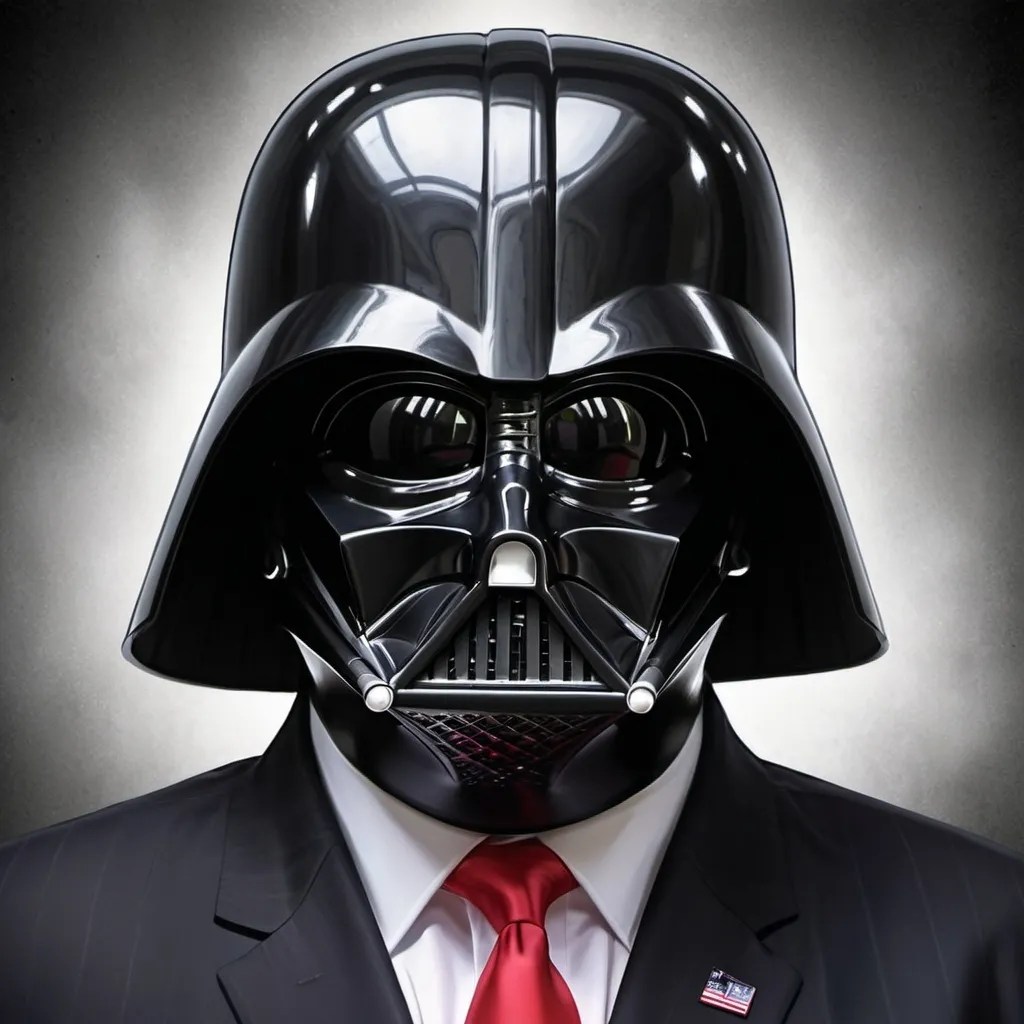
If this is nothing but doomsaying, what do you think Donald Trump did all throughout his campaign? He is doom, and doom won. This round goes to Darth Vader and the Dark Side.

Excepting Ukraine and Gaza, much of the world will move on like it always has, and so will we. America itself already had a foretaste of Trump in his first incarnation; they survived him and the pandemic as well. We Filipinos survived martial law, right? 

The question is, what did people learn? Or, since those who learn anything eventually die, are people fated to make the same mistakes all over again from generation to generation? There hasn’t even been enough time for the generations to roll over in America since Trump 1.0—didn’t those voters learn anything?

With our own midterm elections coming up next year, we could be telling each other the same things. I better keep my inner cynic in check.

Qwertyman No. 118: A Flickering Flame

Qwertyman for Monday, November 4, 2024

TOMORROW, NOVEMBER 5 (or Wednesday, November 6, our time), American voters will choose who between Republican Donald J. Trump and Democrat Kamala Harris will lead them from the White House over the next four years.

For more than four million Filipino-Americans, the outcome will bear a direct impact on their daily lives, their choices, their standing in society, their future. For the rest of the world, including those of us here in the Philippines, the result will shape not only how we see America, but also how America sees us in the global scheme of things.

Only the foolish will think that we have no stake in this election, and that America’s position in the world will be the same regardless of who wins. For the people of Ukraine, a Trump victory might as well be his friend Putin’s; for the Taiwanese, the Filipinos, and others dependent on at least the deterrence if not the active deployment of American military power vis-à-vis Chinese expansionism in Asia, Trumpian isolationism can only invite more unbridled aggressiveness from the region’s bullies.

As I’ve often said here before, like many millions of Filipinos, my stake is more personal than that: our daughter lives and works in California, and my sister is also a US citizen, both of them contributing productively to that country’s economic and social well-being. Both are proudly voting and campaigning for the only candidate who offers real hope for the future of America and the world: Kamala Harris. To them, she represents not just the right political but also and even perhaps more importantly the right moral choice.

Of course, I totally agree. Why anyone would vote for a man who even many of his supporters admit is a convicted felon, a habitual liar, a womanizer, a pervert, a racist, a chauvinist, and a would-be dictator is beyond me. But apparently enough Americans will, enough to make all polls point to a dead heat between the two candidates, with the outcome likely to be decided by voters in a handful of so-called “battleground” states.

Among those many millions of Trumpists willing to overlook his not-insubstantial shortcomings are legions of Fil-Ams who—despite having historically voted Democrat as an ethnic minority—now find common cause with Trump’s blatantly racist anti-immigrant rhetoric (it isn’t even about illegal immigration anymore, but about immigrants from “garbage” countries in Asia, Africa, and Latin America) and his supposed “anti-abortion” stance (since diluted for political expediency). Among other single-issue MAGA voters, “the economy” remains their strongest reason for choosing Trump, despite 23 Nobel-prizewinning economists writing that Trump’s tariff-based economic plans will be disastrous for the US.

Eighty-two Nobel laureates, in fact, are on record supporting Harris, but that clearly matters little in an election driven more by primal fear than by truth and reason. As astrophysicist Neil deGrasse Tyson lamented, “How sad it must be—believing that scientists, scholars, historians, economists, and journalists have devoted their entire lives to deceiving you, while a reality TV star with decades of fraud and exhaustively documented lying is your only beacon of truth and honesty.”

My own sense is that many Trump voters won’t be voting for Trump the man, whom his sharper and more hidebound supporters—many of whom, like Sen. Ted Cruz, he has savagely maligned but who have masochistically endured his insults to ensure their own survival—will admit before God to be the lowest of the execrably low. They will be voting for the deep grievances and resentments that Trump has so craftily stoked in them, and against the idea of an “elite” and a “swamp” that Trump and his new acolyte Elon Musk, strangely enough, represent more visibly than most Democrats.

Thus the very real possibility remains that we may wake up Friday morning to the specter of Trump 2.0 and whatever it will bring. Should that happen, we can imagine the global wave of consternation and dismay that will ensue among liberals and progressives everywhere. On the other front will resound the triumphant cheers and chuckles of global despots and their minions.

All this brings me to what I suspect has been my real worry all along—not the US election, about which we can do nothing, but our own political horizon, on which familiar dangers are looming large.

At least one online pundit with an unusual point of view has lauded the recent performances of Vice President Sara Duterte and her father former President Rodrigo Duterte at their Senate hearings as a kind of resurrection—in the very least, an affirmation of their continuing political viability, if not resurgent power. 

The Dutertes mastered their fumbling inquisitors, this commentator crowed, reporting that the gallery even clapped for the senior Duterte at the end of a raucous session at which he virtually confessed to willfully causing the summary execution of suspects without ever being prosecuted. The Dutertes, he seemed to imply, remain above and beyond the law; with their cohorts in office, they are the law, or shall soon be again.

Indeed Philippine politics has become a theater where bravado, bluster, and buffoonery matter. We cannot even tell the actors from the characters any longer. Lies resound louder than the truth, and the audience rewards the best “hugot line” with wild applause.

The upcoming midterm election already promises to showcase the worst of our political predilections, with family dynasties and patently unfit candidates crowding the top of the poll rankings.

So if the Americans choose Trump over Harris, why should we be surprised? Where character, reason, and talent no longer matter, the tyrants rule with fools at their feet to keep the populace amused.

But if Kamala Harris wins, whatever it brings to America, it will mean for me that, however fragile, hope remains for good sense to prevail even in extremely fraught situations such as ours. If only for that flickering flame, I pray she wins.

(Image from newsweek.com)